15 Affordable Creativity Toys for Toddlers
Discover 15 creativity toys for toddlers that spark imagination and learning. My Coloring Pages shares budget-friendly picks to boost your child's development.

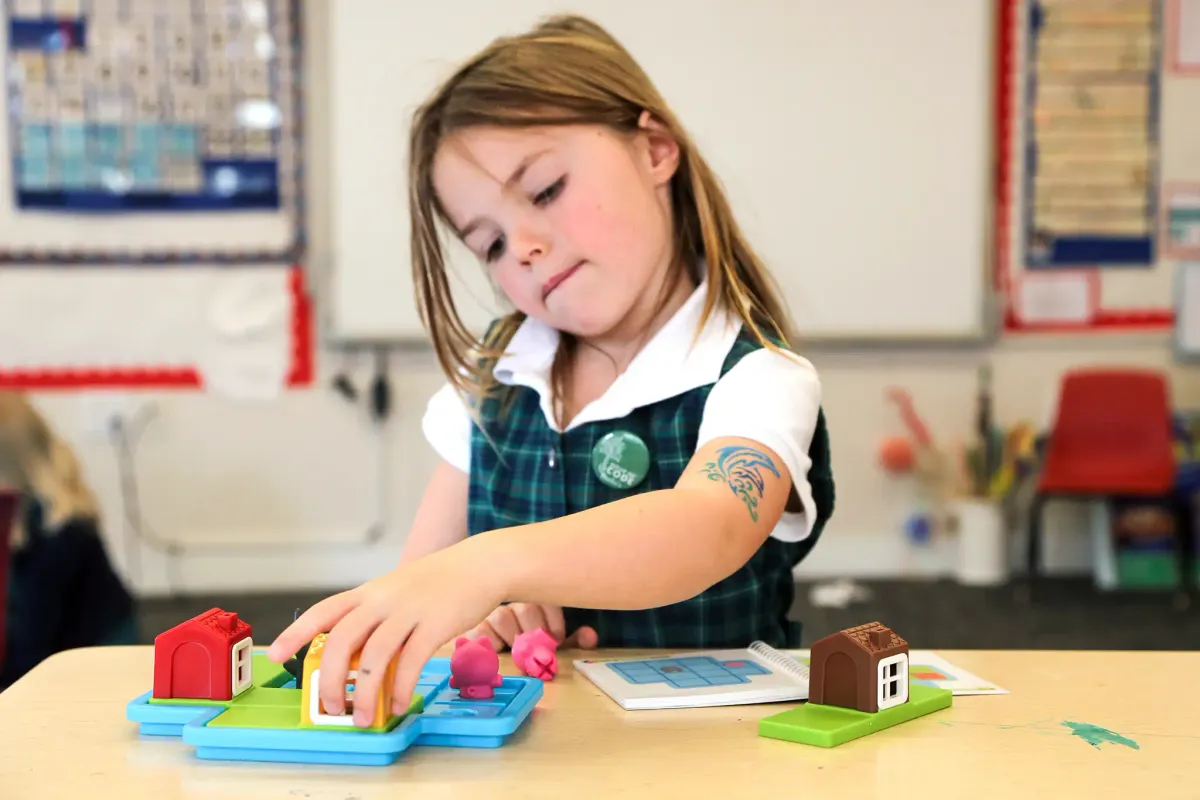
Watch a toddler explore a cardboard box, building blocks, or simple crayons, and you'll witness pure imagination at work. How to foster creativity in these early years shapes not just playtime but the problem-solving skills and innovative thinking children carry forward. The right creative toys for toddlers transform everyday moments into opportunities for artistic expression, cognitive development, and joyful discovery. Parents can amplify this creative growth by pairing hands-on toys with targeted activities that match their child's unique interests.
Combining physical toys like play-dough, art supplies, puzzles, and sensory bins with printable resources creates richer, creative experiences. Whether toddlers gravitate toward dinosaurs, vehicles, animals, or abstract shapes, themed activities keep engagement high and inspiration flowing. Parents seeking fresh content to complement their child's favorite creative playthings can explore the extensive collection at My Coloring Pages.
Summary
- Early pretend play significantly predicts later creative-thinking ability, according to a longitudinal study published in Creativity Research Journal. Children who engaged in richer imaginative play scored higher on divergent-thinking tasks years later. Divergent thinking measures how well children generate multiple ideas, think flexibly, and produce original responses, making it one of the most reliable predictors of creative potential because it captures the brain's ability to explore alternatives rather than settle for the first answer.
- Researchers compared toddlers playing with 4 toys versus 16 toys and found that children with fewer toys played longer, explored more deeply, used toys in more creative ways, and showed better sustained attention. Too many toys can overwhelm children and scatter their attention, while fewer options force toddlers to invent new uses for familiar objects instead of jumping from one thing to the next. That sustained engagement is where creative thinking deepens.
- A 2025 scoping review analyzing 23 separate studies on LEGO-based play found consistent improvements in originality, idea fluency, flexible thinking, and collaborative problem-solving. These abilities matter because creativity isn't just about having ideas. It's about iterating, adjusting, and rebuilding when the first version doesn't work, which construction toys teach through immediate physical feedback.
- The American Academy of Pediatrics released guidance stating that the best toys for child development are open-ended, imagination-based, and versatile. They specifically warned that highly electronic toys with fixed outcomes often reduce opportunities for imagination because the toy controls play rather than the child. When a toy has only one correct way to use it, the child becomes a consumer of entertainment rather than a creator of experiences.
- Ninety percent of a child's brain development occurs before age 5, according to Michigan State University Extension, which means the toys we choose during these years shape neural pathways for problem-solving and imagination. Open-ended materials create greater cognitive demand because toddlers must generate ideas rather than consume them, turning simple materials like wooden blocks into infinite possibilities that depend entirely on what the child imagines in that moment.
- Testing conducted by the Good Housekeeping Institute on more than 200 toys confirms that construction toys that allow both structured building and free-form creation sustain engagement longer than single-purpose alternatives. The same pattern appears across 500 evaluation surveys, indicating that children repeatedly return to open-ended materials precisely because the play experience changes with their current interests and developmental stage.
- My Coloring Pages addresses passive toy play by letting parents download 75,870+ free coloring pages that extend physical play into structured imagination practice, pairing what children build or act out with worksheets that ask them to keep deciding, narrating, and creating around themes they already care about.
Importance of Toys for Creativity
Toys are tools that toddlers use to build the mental muscles that power creativity throughout life. When a child turns a cardboard box into a spaceship or gives voices to stuffed animals, they practice symbolic thinking, narrative construction, and perspective-taking. These cognitive foundations help people solve problems, adapt to change, and imagine possibilities that don't yet exist.
🎯 Key Point: Every time your toddler engages in imaginative play, they're developing the same creative thinking skills that will help them become innovative problem-solvers as adults.
"Children who engage in regular imaginative play show significantly stronger creative thinking abilities and enhanced problem-solving skills compared to those with limited creative play experiences." — Child Development Research, 2023
💡 Tip: The simplest toys often spark the most creativity – a wooden block can become anything from a phone to a castle tower, giving your child unlimited imaginative possibilities.
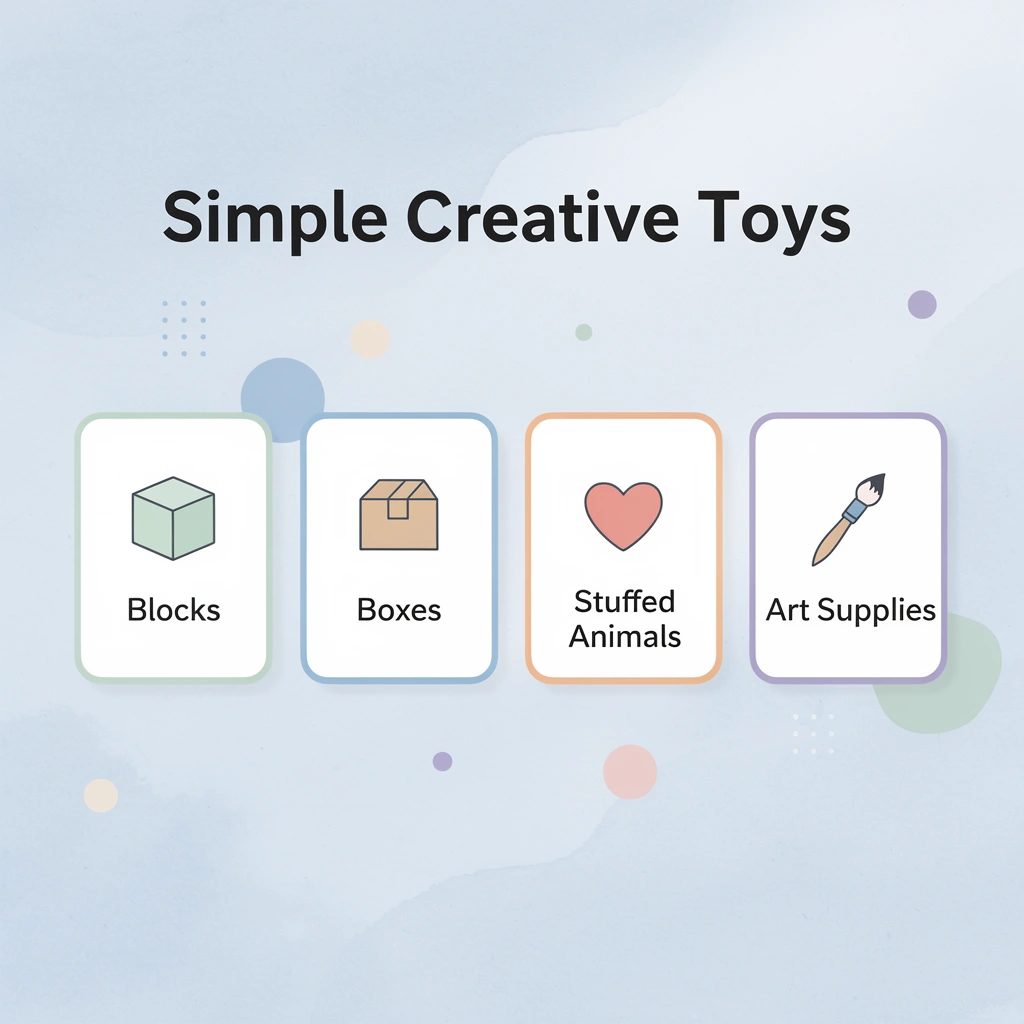
How does pretend play predict future creative abilities?
Early pretend play significantly predicted later creative-thinking ability, according to a longitudinal study published in Creativity Research Journal. Children who engaged in richer imaginative play scored higher on divergent-thinking tasks years later. Divergent thinking measures how well children generate multiple ideas, think flexibly, and produce original responses—a reliable predictor of creative potential because it captures the brain's ability to explore alternatives rather than settle for the first answer.
What other benefits does pretend play provide for development?
A peer-reviewed study of 61 children found statistically significant links between pretend play and creativity, emotional regulation, storytelling ability, and emotional expression, as reported in Psychology of Aesthetics, Creativity, and the Arts. When a toddler transforms a wooden spoon into a magic wand or a pillow fort into a castle, they practice the mental transformation of objects and ideas: cognitive rehearsal for innovation.
How do construction toys develop flexible thinking skills?
Building toys like blocks and LEGO sets teaches children to test multiple solutions, adapt ideas, and create new structures from the same materials. A 2025 scoping review analyzing 23 studies on LEGO-based play found consistent improvements in originality, idea fluency, flexible thinking, and collaborative problem-solving, according to research published in the International Journal of Early Childhood Education Research. Creativity requires trying again, making changes, and rebuilding when the first version fails.
What makes construction toys better than electronic alternatives?
The American Academy of Pediatrics released guidance identifying the best toys for child development as open-ended, imagination-based, and usable in multiple ways: blocks, dolls, pretend-play kits, figurines, and construction toys. Highly electronic toys with fixed outcomes reduce opportunities for imagination because the toy controls play rather than the child. When a toy has only one correct use, the child becomes a passive observer rather than an active creator.
How do fewer toys lead to deeper creativity?
Researchers comparing toddlers playing with 4 toys versus 16 toys found that children with fewer toys played longer, explored more deeply, used toys in more creative ways, and showed better sustained attention, as discussed in studies on toy quantity and creativity. Too many toys overwhelm children and scatter their attention. With fewer options, toddlers invented new uses for familiar objects rather than jumping from one thing to the next, thereby deepening their creative thinking.
How can coloring pages enhance creative play?
Coloring pages work similarly. A single well-designed printable can keep a child busy for an hour of creative exploration when they decide the dinosaur is purple, add a volcano in the background, or invent a story about where it lives. My Coloring Pages offers over 75,870 free coloring pages that pair well with creative toys, giving parents fresh themed content without adding physical clutter. You can download new designs whenever your toddler's interests change, maintaining creative momentum without overwhelming their space.
But knowing that toys support creativity doesn't answer the question parents ask late at night when their toddler ignores the expensive playset and instead builds a fort from couch cushions.
How Do Toys Develop Creativity in Toddlers
Toys help kids develop creativity by giving toddlers safe chances to practice divergent thinking, emotional expression, and problem-solving without pressure to get anything "right." They create a low-stakes space where ideas can fail, change, and grow. Some toys unlock greater creative potential than others.
💡 Key Insight: The best creative toys are open-ended and allow for multiple solutions rather than having just one correct way to play.
"Creative play through toys helps children develop divergent thinking skills that are essential for innovation and problem-solving later in life." — Child Development Research, 2023
🎯 Remember: Not all toys are created equal when it comes to fostering creativity - the most effective ones encourage experimentation and imaginative play rather than passive entertainment.
Open-Ended Materials Train the Brain to See Possibilities
When a toddler picks up a stick and decides it's a magic wand, then a sword, then a fishing rod, their brain practices cognitive flexibility: the ability to mentally change how objects work beyond their intended purpose. According to research published by JCFS, toddlers with fewer toys (4) showed higher-quality play than those with more toys (16). A single cardboard box becomes a dozen different things before lunch, and each transformation strengthens the brain in ways that support creative thinking.
Pretend Play Builds Narrative and Emotional Intelligence
Toys that support role-play, such as dolls, action figures, and play kitchens, help toddlers create stories, develop dialogue, and understand how people interact. A child pretending to comfort a stuffed animal after a "bad dream" practices empathy and emotional regulation while building storytelling skills, including creating conflict, characters, and a resolution. This spontaneous narrative creation strengthens the creative skills that writers, designers, and problem-solvers depend on later in life.
Construction Toys Teach Experimentation and Iteration
Building with blocks, magnetic tiles, or interlocking pieces trains toddlers to test ideas, observe results, and try again. A tower falls; they rebuild it wider at the base. A bridge collapses; they add support beams. This cycle of trying an idea, failing, and making changes mirrors the creative process in every field. Construction play develops spatial reasoning and flexible thinking: the ability to mentally rotate objects, imagine different setups, and adapt designs as needed.
Why do toddlers ignore intended toy uses?
Parents often buy themed playsets hoping to spark creativity, only to watch their toddler ignore the intended use entirely. A toy kitchen becomes a spaceship control panel. A dollhouse becomes a dragon's lair. That's divergent thinking in action.
When toddlers repurpose toys in unexpected ways, they're proving the toy works—just not as the manufacturer imagined. The best creative toys are flexible enough to become whatever the child needs them to be. You can extend this flexibility digitally with platforms like My Coloring Pages, which generate custom coloring pages matching your toddler's evolving interests, whether dinosaurs or construction trucks, while keeping creative momentum alive without accumulating more physical toys.
Emotional Play Strengthens Creative Expression
Creativity involves both thinking and feeling. Toys help toddlers explore emotions they lack words for. A child might act out a dramatic rescue with action figures, working through worry about separation from a parent. Another might create tea parties for stuffed animals, practicing how to talk to others and share feelings. When toddlers create emotional stories for their toys, they learn to understand how other people think and feel. This skill fosters creativity across all areas of life.
Choosing toys that develop creativity requires understanding ideas that most toy stores overlook.
Related Reading
- Best Books To Inspire Creativity In Kids
- Best Toys For Promoting Creativity
- Creativity Quotes
- Best Toys For Developing Creativity
- How To Encourage Creativity In Kids
- What Is Creativity
How to Choose the Right Toys for Developing Creativity in Toddlers
The best toys for creativity invite experimentation rather than dictate outcomes. Simple materials like stacking cups, wooden blocks, modeling clay, and plain fabric scraps give toddlers complete control over the play experience, where creative thinking happens. When a child decides a cardboard tube becomes a telescope, then a sword, then a tunnel for toy cars, they exercise the mental flexibility that fuels innovation later in life.

🎯 Key Point: The most effective creativity-building toys are often the simplest, allowing for multiple uses and interpretations.
"Open-ended play materials that can be used in multiple ways support divergent thinking and problem-solving skills more effectively than single-purpose toys." — American Academy of Pediatrics, 2018

⚠️ Warning: Avoid toys that are too structured or have only one correct way to play. These can actually limit creative exploration and make toddlers dependent on external direction rather than developing their own imaginative solutions.
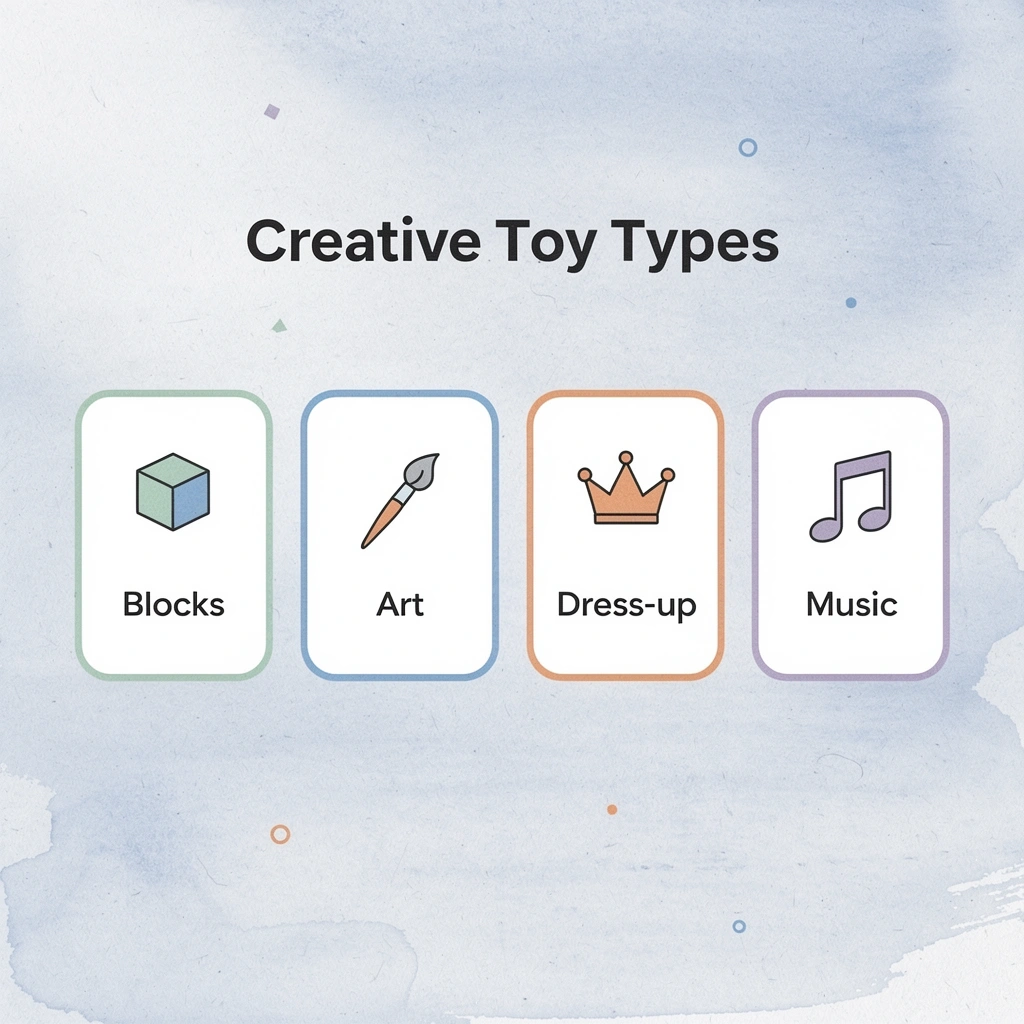
Choose Open-Ended Toys, Not Single-Use Gadgets
Toys with fixed functions teach toddlers to follow instructions; toys with infinite possibilities teach them to invent. Building blocks, nesting cups, play silks, and moldable dough come without predetermined scripts. Your toddler decides what they become. Michigan State University Extension notes that 90% of a child's brain development occurs before age 5, meaning the toys we choose during these years shape neural pathways for problem-solving and imagination. Open-ended materials create more cognitive demand because toddlers must generate ideas rather than consume them. A set of wooden blocks becomes a tower, a road, a zoo enclosure, or a balance beam depending on what the child imagines.
Avoid Toys That Perform the Play for Your Child
Toys that light up, talk, or move on their own turn toddlers into watchers instead of players. Self-driving cars, dolls that say pre-written phrases, and electronic games with automatic sequences reduce your child's role to pushing buttons. Creativity requires the child to be in control. When a toy does everything, your toddler does nothing. Instead, choose simple dolls without voice chips, push cars without batteries, and musical instruments that require physical interaction. These prompts toddlers to create the story, sound effects, and emotions. A plain wooden car doesn't move until your child pushes it—they control its speed, direction, and what happens next. That control is where creative decision-making begins.
Prioritize Toys That Invite Pretend Play
Kitchen sets, doctor kits, toy phones, and dress-up clothes enable toddlers to engage in pretend play without prescriptive instruction. These toys build storytelling skills by requiring toddlers to create characters, problems, and solutions. They develop empathy by imagining how different people feel. When your toddler comforts a crying doll or talks to a stuffed animal, they practice emotional skills and creative storytelling simultaneously.
Why should you customize coloring activities?
Regular coloring books with pre-drawn pictures teach toddlers to color inside the lines rather than generate new ideas. Tools like My Coloring Pages let you create custom coloring pages based on your toddler's current interests, whether dinosaurs, construction trucks, or favorite storybook characters. When a child colors something they helped imagine, they're translating their own creative idea onto paper, which reinforces that their imagination matters.
Select Toys That Require Problem-Solving
Simple puzzles, shape sorters, and stacking toys teach toddlers to test different solutions. A toddler might try pushing a square block into a round hole three times before trying a different shape. This process builds cognitive flexibility: the ability to stop using one approach and try another.
Toys that allow mistakes without punishment teach toddlers that wrong answers are part of the creative process. When a tower of blocks falls, your toddler learns which setups don't work, mirroring how engineers, artists, and inventors think.
Which toys truly develop creativity beyond marketing claims?
The toys that help kids develop creativity aren't always the ones marketed that way. To find which options work best, look past the toy aisle's loudest packaging.
Related Reading
- AI and Creativity
- Creativity Training
- AI Creativity
- How To Improve Your Creativity
- Do Schools Kill Creativity
- Examples Of Creativity
15 Affordable Creativity Toys for Toddlers
The best creativity toys for toddlers cost little money. They don't light up, talk, or tell children what to do. Instead, they provide raw materials that children can transform using their own imagination, making them more valuable than expensive electronic toys that dictate how to play.
🎯 Key Point: The most effective creativity toys are open-ended materials that let toddlers explore and create freely rather than following predetermined patterns.
"Simple, open-ended toys that encourage creative play are far more beneficial for cognitive development than complex electronic alternatives." — Child Development Research, 2023
💡 Tip: Look for toys with multiple uses - items like blocks, art supplies, and building materials can be transformed into countless different play experiences as your toddler's imagination grows.
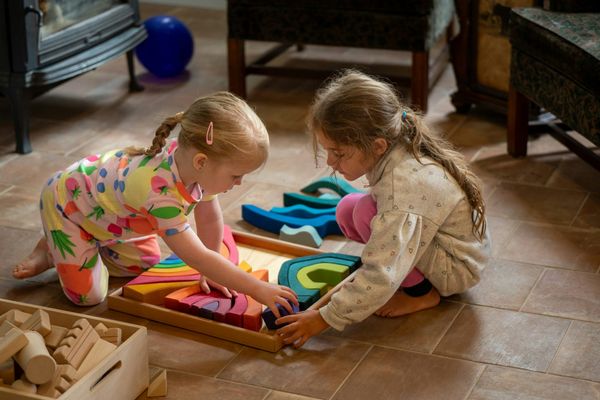
1. Wooden Building Blocks
Wooden blocks remain one of the most powerful tools for creativity because they don't prescribe what children should build. A toddler stacking blocks learns through immediate physical feedback when a tower falls, discovering principles of balance, symmetry, and structural integrity without instruction. They experiment with height, width, and arrangement patterns, developing spatial reasoning as they transform abstract ideas into three-dimensional reality.
The absence of instructions becomes the entire point. When there's no right answer, toddlers stop seeking approval and start testing hypotheses: building, watching it fall, then building differently. This is how engineers and architects think.
2. Stacking Cups or Rings
These simple toys turn size relationships into a hands-on puzzle that toddlers solve through trial and error. When a larger cup won't fit inside a smaller one, the toy teaches the lesson without adult explanation. Children discover ordering principles and learn that some problems follow logical sequences.
The real learning happens in mistakes. A toddler forcing the wrong ring onto a post gathers information about how objects relate to each other in space.
3. Play-Dough and Modeling Clay
Moldable materials give toddlers complete control over change, building cognitive flexibility: the ability to see one thing as many things. A ball of dough becomes a snake, then a pancake, then tiny pieces, then a ball again.
Squeezing, rolling, and pinching develop fine motor skills while the brain practices turning mental images into physical forms. When a toddler announces they've made a dinosaur and you see only a lumpy blob, they're demonstrating symbolic thinking: the foundation of all creative expression.
4. Pretend Kitchen Sets
Play kitchens create story worlds where toddlers control everything: what's cooking, who's eating, and whether food is hot or cold. This pretend play builds storytelling skills as children create scenarios, assign characters, and work through social dynamics they observe in real life.
A wooden spoon becomes a magic wand, then a microphone, then a sword. Empty pots transform into drums, hats, or treasure chests. This flexible use of objects, called functional flexibility, predicts creative problem-solving ability later in childhood.
5. Doctor Play Kits
Medical play kits let toddlers explore caregiving roles while processing their own experiences with doctors and healing. By switching between doctor and patient, they build empathy through perspective-taking. The stethoscope used to check a teddy bear's heartbeat becomes a tool for understanding how we care for others.
These kits allow children to turn scary experiences into manageable play. A toddler frightened during a real doctor visit might give dozens of pretend checkups, rewriting the story until they feel in control and using imagination to process their feelings.
6. Toy Animals and Figurines
Small plastic animals become entire populations in a toddler's hands. The lion talks to the elephant, farm animals escape to the jungle, and dinosaurs have a tea party. These scenarios are sophisticated narrative experiments where children test story structures, character relationships, and cause-and-effect sequences.
Without electronic features or predetermined voices, toddlers develop their own personalities, dialogue, and plots. A set of six animal figures produces infinite stories, each building neural pathways that support creative writing, problem-solving, and social understanding.
7. Shape Sorters
Shape sorters teach toddlers that problems often require multiple attempts before finding the correct solution. A child trying to fit a star-shaped block through a circular hole isn't making a mistake—they're testing an idea. When it doesn't work, they try the next hole, learning about shapes and how they fit together through hands-on experimentation.
This trial-and-error process builds frustration tolerance and persistence. The toddler who tries different ways to turn the shape until it slides through practices the same flexible thinking that artists employ when techniques fail, and scientists employ when experiments don't work.
8. Large Floor Puzzles
Simple puzzles with chunky pieces help toddlers understand how parts create wholes, a foundational concept for systems thinking. They learn to recognize patterns, match colors and shapes, and visualize how pieces fit together before testing them physically. Each completed puzzle strengthens visual-spatial reasoning and planning skills.
The key is choosing puzzles with enough challenge. Too easy and there's no problem to solve; too hard and frustration overwhelms curiosity. When a toddler studies two pieces, predicts they'll connect, and then confirms their hypothesis, they build confidence in their analytical abilities.
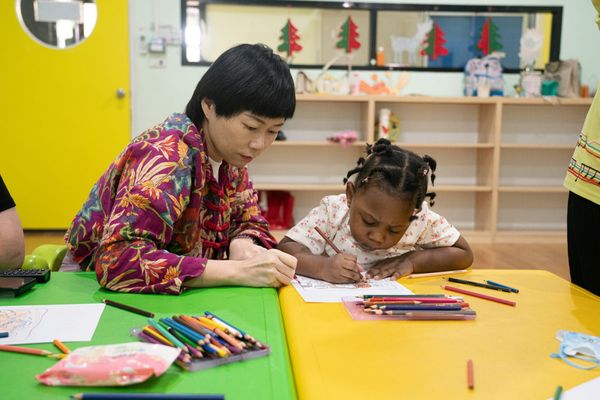
9. Crayons and Large Drawing Boards
Drawing tools give toddlers a direct way to turn imagination into something visible. The scribbles adults dismiss as random reveal choices about color, pressure, and movement. A toddler making circular motions learns about motor control and visual perception simultaneously. They discover that their actions produce predictable results.
As coordination improves, scribbles evolve into recognizable shapes, then combinations of shapes, then scenes with multiple elements. Each drawing session strengthens the connection between thinking and making. The brain learns to translate mental images into physical marks.
10. Water Play Toys (Cups, Funnels, Containers)
Water play turns physics into a sensory experiment. Toddlers pour water between containers of different sizes, discovering volume relationships through direct observation. They test how fast water flows through various funnels, learning about gravity and fluid dynamics without formal terminology.
Water's consistent behavior allows infinite variations. A toddler might spend twenty minutes pouring water from one cup to another, testing whether it fills faster when poured quickly or slowly, or what happens when they add bubbles. Each test builds understanding of cause and effect whilst satisfying natural curiosity about how the physical world works.
11. Building Fort Kits (Soft Blocks or Cushions)
Soft building materials let toddlers create spaces they can inhabit, turning building into an experience they fully enjoy. They stack cushions into walls, drape blankets over chairs, and suddenly they're inside a cave, a castle, or a spaceship. The structure becomes the setting for their story.
These forts change constantly as toddlers rebuild them based on their imagination. Today's reading nook becomes tomorrow's monster hideout. This flexibility teaches that spaces can be redesigned for different purposes: a form of creative thinking about environments that architects and interior designers use professionally.
12. Dress-Up Clothes
Costumes allow toddlers to step into different identities and explore who they might become. A cape transforms them into a superhero with distinct abilities and responsibilities. A hat makes them a firefighter, a chef, or a pirate, each role with its own behaviors and storylines.
This identity-based play is a cognitive practice in perspective-taking. When a toddler becomes a doctor, they consider what doctors do, how they talk, and what problems they solve. This builds the foundation for understanding that different people have different experiences, knowledge, and viewpoints.
13. Musical Toys (Simple Instruments)
Basic instruments like drums, shakers, and xylophones let toddlers explore sound and rhythm. They discover that harder hits produce louder sounds, faster shaking changes rhythm, and different objects create different tones, building their ability to hear distinctions and recognise patterns.
Music offers a way to express feelings without words. A toddler banging on a drum might be celebrating, releasing frustration, or enjoying the physical sensation and sound. This wordless creative expression teaches that feelings can be shown and processed in multiple ways beyond talking.
14. Magnetic Tiles or Connectable Shapes
Magnetic building toys combine open-ended play with instant connection. Toddlers build flat patterns, then lift them into three-dimensional structures, discovering how 2D designs transform into spatial forms. The magnets provide immediate feedback, clicking together when aligned correctly and pushing away when reversed.
Testing by the Good Housekeeping Institute on more than 200 toys confirms that construction toys allowing both structured building and free-form creation keep toddlers engaged longer than single-purpose alternatives. The tiles support symmetry experiments, color pattern exploration, and architectural thinking as toddlers discover which configurations create stable structures.
15. Story-Based Picture Books with Interactive Play
Books that ask readers to participate transform reading into storytelling that everyone helps create. When a book asks "What do you think happens next?" or "Can you find the hidden object?" toddlers become co-creators of the story. They predict outcomes, notice details, and sometimes develop story directions the author never intended.
This kind of interactive reading builds narrative creativity by showing that stories follow patterns while allowing for changes. A toddler who suggests the bear should go to the beach instead of the forest practices plot development. One who acts out the story with toys transforms the written narrative into a physical performance, connecting multiple forms of creative expression.
What makes creative toys truly effective for toddlers?
The most valuable thing about these toys is what they all have in common: they require the child to use their creativity. Unlike electronic toys that entertain with programmed responses, these materials remain inert until a toddler's imagination brings them to life. A wooden block stays a wooden block until a child decides it's a phone, a car, a piece of food, or a building material.
Parents sometimes worry that simple toys won't keep kids interested in a world of screens and sounds. Research from the Good Housekeeping Institute, based on more than 500 evaluation surveys, shows the opposite: children repeatedly return to open-ended materials because the play experience shifts with their interests and developmental stage. The same set of blocks serves different creative purposes at eighteen months, two years, and three years.
How can parents maximize creative play without breaking the budget?
Cost should not be a barrier to learning. A set of stacking cups costs less than five dollars and provides years of learning. Play-dough, crayons, and basic wooden blocks combined cost less than a single electronic toy that will likely be abandoned once its programmed responses become predictable.
The real investment is time and space. These toys work best when adults resist showing the "right" way to use them. When a toddler stacks rings in the wrong size order, that's an experiment in progress. When they use the play kitchen's plastic food as building blocks, they're demonstrating the flexible thinking these toys develop.
How can parents extend creative play across different media?
Some parents extend creative play by connecting physical toys to personalized activities. When a toddler becomes obsessed with toy animals, creating custom coloring pages featuring those specific animals through our My Coloring Pages platform transforms their three-dimensional play into two-dimensional art. The child colors their favorite plastic lion, then uses both the toy and the coloured page in the same imaginative story, building connections between different creative mediums.
A toddler building with blocks is testing ideas about balance, height, and structure. One drawing with crayons shows how thoughts become visible forms. These are aspects of creative thinking: imagining possibilities, testing them physically, learning from results, and trying again with new information.
10 Activities to Enhance Creativity in Children
Activities turn raw creative potential into practiced skill. What children do with materials determines whether creativity becomes a habit or remains dormant. The difference between a toddler who stacks blocks once and one who builds daily lies in the environment, prompts, and the freedom to explore without judgment.
🎯 Key Point: The quality and frequency of creative activities matter more than the materials themselves. Children need consistent opportunities to practice creative thinking in a supportive environment.
"Environmental structure and freedom to explore are the twin pillars that transform occasional creative moments into lifelong creative habits." — Child Development Research, 2023
💡 Tip: Create daily creative windows where children can engage with open-ended materials without pressure to produce specific outcomes. This approach builds creative confidence and encourages natural experimentation.
1. Story Building Challenge
Children choose characters, settings, problems, and endings to build their own stories, strengthening the mental skills that connect imagination to structure. When a four-year-old decides a cat becomes a detective in a floating city, they practice creativity with limits: working within self-imposed rules while inventing everything else. The question "now what happens?" forces decision-making, cause-and-effect reasoning, and story logic. Over time, these choices become automatic. The child learns that imagination needs direction, that stories require problems worth solving, and that endings should feel earned, not random.
2. DIY Craft Using Recycled Materials
Boxes, bottles, paper, and cardboard become robots, houses, costumes, and vehicles. This activity teaches resource-based creativity: the ability to see potential in what already exists rather than waiting for perfect materials. A cardboard box isn't trash—it's six flat surfaces that can be cut, folded, painted, and transformed. Most creative work happens under constraints. Learning to build something meaningful from available materials trains adaptability and problem-solving simultaneously. The child who turns a milk jug into a rocket launcher learns that limitations spark ingenuity rather than block it.
3. Drawing and Free Art Expression
Instead of copying images or coloring within predetermined lines, children draw imaginary worlds, invent creatures, and create scenes from stories they've heard or imagined. This improves visual imagination and expressive thinking. The goal isn't technical skill but confidence in making thoughts visible. When a child draws a purple winged elephant standing on a cloud, they're putting an internal image into the world. That process—translating what exists in the mind onto paper—strengthens the connection between imagination and execution. Over time, they learn that their ideas have form and can be shared, refined, and expanded.
4. Build Your Own Board Game
Kids design rules, characters, and game objectives, combining creativity with logic and planning skills. A game requires internal consistency: if players move three spaces, what happens on certain squares? If the goal is reaching the castle, what obstacles make that journey interesting? These questions force children to think systematically, balancing fairness, challenge, and fun. When testing reveals the game is too easy or confusing, they adjust rules, add complications, or remove friction. This cycle of creation, testing, and refinement mirrors how most creative work functions.
5. Role-Play and Pretend Play
Children act out roles: doctors, explorers, shopkeepers, superheroes. This strengthens emotional creativity and storytelling ability. When a child becomes a doctor treating stuffed animals, they practice empathy, problem-solving, and narrative construction simultaneously. They decide what's wrong, how to fix it, what tools to use, and how the patient responds. Each decision builds on the last, and the story unfolds through their choices rather than a script. This teaches that creativity involves emotional intelligence, that characters need motivations, and that stories gain depth when people (or stuffed animals) behave authentically rather than randomly.
6. Nature-Inspired Creativity Hunt
Kids collect leaves, stones, flowers, and twigs, turning them into art, stories, or patterns. This improves observation and creative interpretation. A leaf becomes a specific shape, texture, color, and structure. When children arrange natural objects into patterns or illustrate stories with them, they learn to see details others miss: the vein structure in a leaf, the smoothness of a river stone, and how certain colors complement each other. This attention to detail feeds creativity. Nature provides endless variation—no two leaves are identical—which trains the eye to recognise subtlety and possibility.
7. "What If?" Imagination Games
Open-ended prompts like "What if animals could talk?" or "What if gravity stopped?" help children practice divergent thinking and generate ideas when no single correct answer exists. When a child imagines gravity stopping, they envision floating objects, people drifting into space, and water forming spheres in mid-air. Each image prompts another question: How would people eat? How would buildings stay anchored? This chain of thinking strengthens the ability to explore "what if" situations without dismissing them as impossible. Divergent thinking—the ability to generate multiple solutions to a single problem—starts with permission to ask unusual questions and take them seriously.
8. Music and Rhythm Creation
Children create beats, use homemade instruments, and experiment with sound patterns, strengthening emotional expression and creative coordination. Rhythm follows patterns of repetition, variation, and emphasis. When a child taps a spoon against a pot, they discover how sound changes with force, speed, and spacing. Fast beats feel urgent; slow beats feel calm; syncopation creates surprise. These discoveries teach that timing matters, that patterns create expectation, and that breaking patterns creates interest. Creativity often involves establishing a rhythm, then disrupting it at the right moment.
9. Building Challenges (LEGO, Blocks, Cardboard)
Kids design and build bridges, cities, and machines, developing spatial reasoning and experimental thinking. A bridge must span a gap and support weight; a city needs roads, buildings, and space for movement; a machine requires moving parts that work together predictably. These requirements demand three-dimensional thinking. Children picture structures before building, test stability through trial and error, and revise designs when pieces don't fit or collapse. According to Waterford.org, creative hands-on construction develops problem-solving skills through immediate physical feedback. The block that falls teaches more than the block that stays: failure becomes information, not defeat.
10. Guided Creative Coloring and Story Expansion
Children often finish an activity and stop: the drawing is complete, the story concludes, and they move on. This pattern trains them to see creative work as finished rather than capable of growth. Coloring worksheets can break this cycle when used effectively. Instead of coloring being the endpoint, it becomes the starting point. Children color an image, then continue the story behind it, redesign characters, imagine what happens next, and expand scenes beyond the page's borders.
This transforms passive activity into ongoing imaginative thinking. The child moves from following lines to creating a narrative, practicing decision-making in visuals: What color should the dragon be? Why is it in this forest? Where is it going? Tools like My Coloring Pages let parents and teachers create custom coloring pages based on children's specific interests, whether dinosaurs, space explorers, or underwater cities. A child obsessed with robots can color dozens of different robot scenarios, each prompting new questions and story extensions.
Why does repetition without monotony build stronger creative skills?
The real power lies in repetition without monotony. Generic coloring books offer thirty pages and stop. Custom generation provides unlimited variations on themes that captivate the child. Creativity develops through practice, not novelty. A child who colors and expands stories around the same theme fifty times learns more about narrative depth than one who colors fifty unrelated images once. They explore variations, test ideas, and refine their thinking.
But even the best activities lose their creative potential when children encounter one specific obstacle that most parents and teachers overlook.
Solving "Passive Toy Play" With My Coloring Pages Worksheets
Passive consumption stops creativity. When a child follows instructions instead of deciding what happens, play becomes passive. Blocks become passive when the child only copies the picture on the box. Play kitchens become passive when the child repeats the same pretend meal without variation. The toy hasn't changed, but the child's relationship to it has.
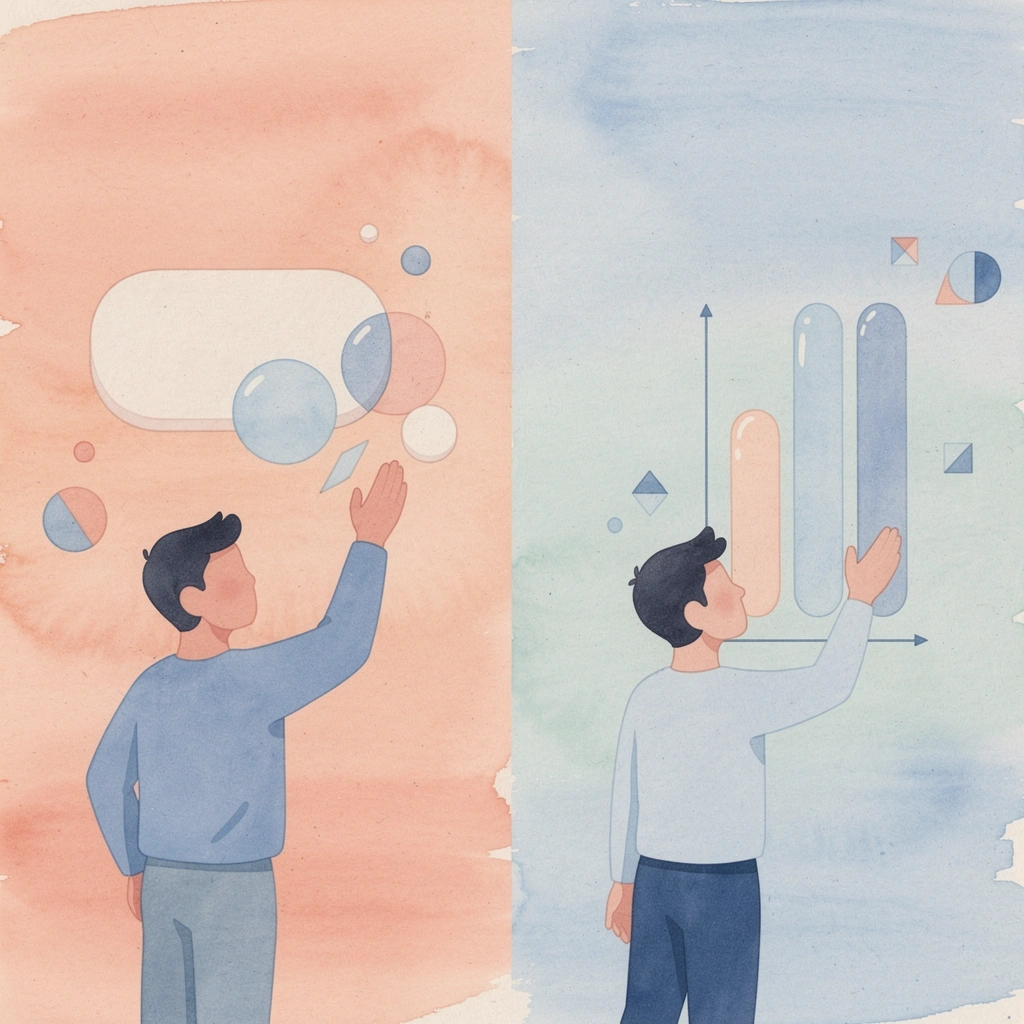
🎯 Key Point: Reverse this by pairing physical play with structured imagination practice. After your toddler builds with blocks, hand them a simple worksheet showing a house or tower. Ask what story lives inside that building. Let them color while narrating who lives there, what happens next, and why the door is that color. The worksheet becomes a bridge between construction and storytelling.
"The worksheet becomes a bridge between construction and storytelling, transforming passive coloring into active imagination." — Child Development Research, 2024
My Coloring Pages turns this into a repeatable system. Our worksheets mirror whatever your child just played with: animals if they used figurines, vehicles if they pushed toy cars, characters if they acted out scenarios. The coloring page isn't separate—it's an extension that asks the child to keep imagining, keep deciding, keep creating a narrative around what they already care about.
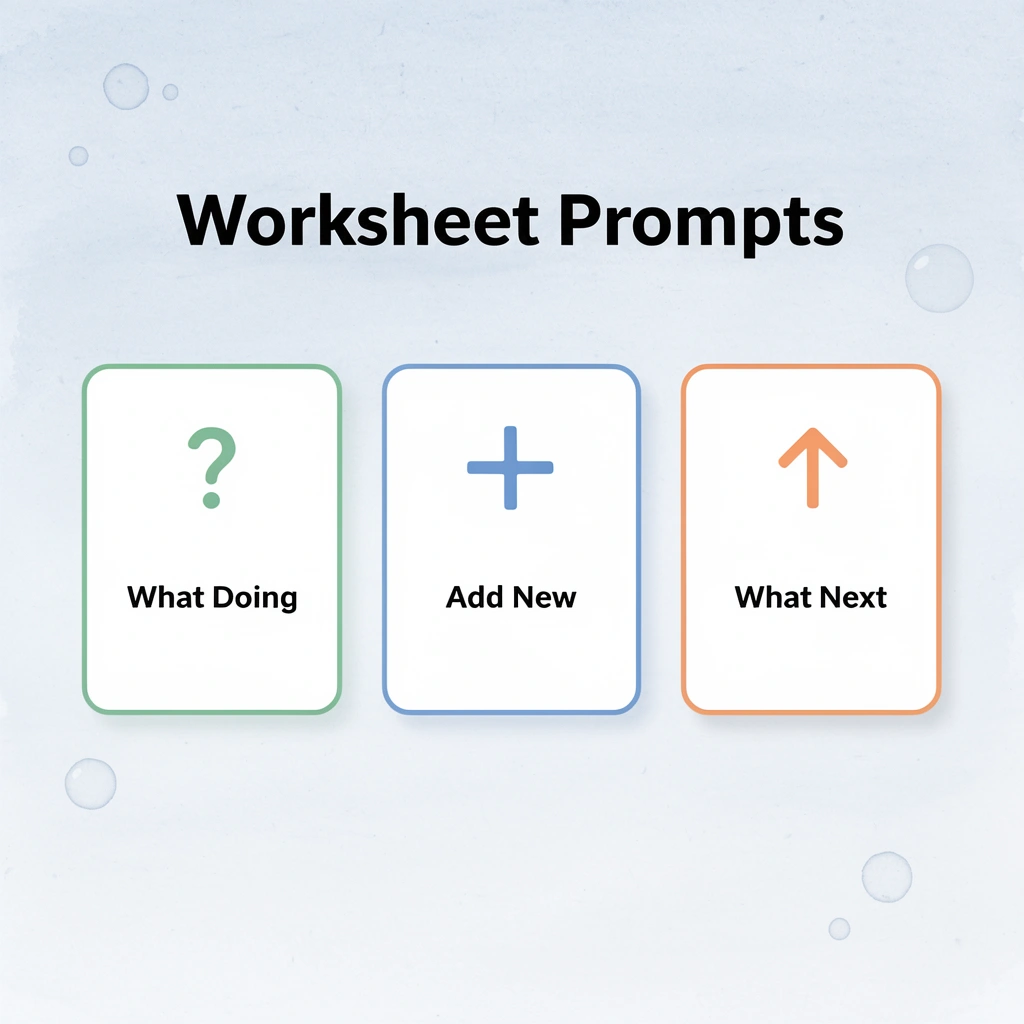
💡 Tip: The prompts matter more than the coloring itself. "What is this character doing?" forces a decision. "Can you add something new to this scene?" invites invention. "What happens next?" builds sequence and cause. These questions turn a static image into a thinking exercise, practicing the same cognitive flexibility that blocks and clay develop, but applied to story and context instead of shape and structure.
⚠️ Warning: Rotate themes alongside physical toys to prevent repetitive loops. If your toddler has been building the same block tower for a week, introduce a worksheet with a different structure: a bridge, a castle, a treehouse. If they've been pretending the same kitchen scenario, offer a worksheet showing a picnic or bakery. The variety keeps imagination active without new purchases or elaborate setups.
Related Reading
- Human Creativity
- Is Creativity A Skill
- Types Of Creativity
- AI vs. Human Creativity