45 Homeschool Room Ideas for Driving Creativity
Discover 45 homeschool room ideas to boost creativity and learning at home. My Coloring Pages shares practical setups that inspire focus.

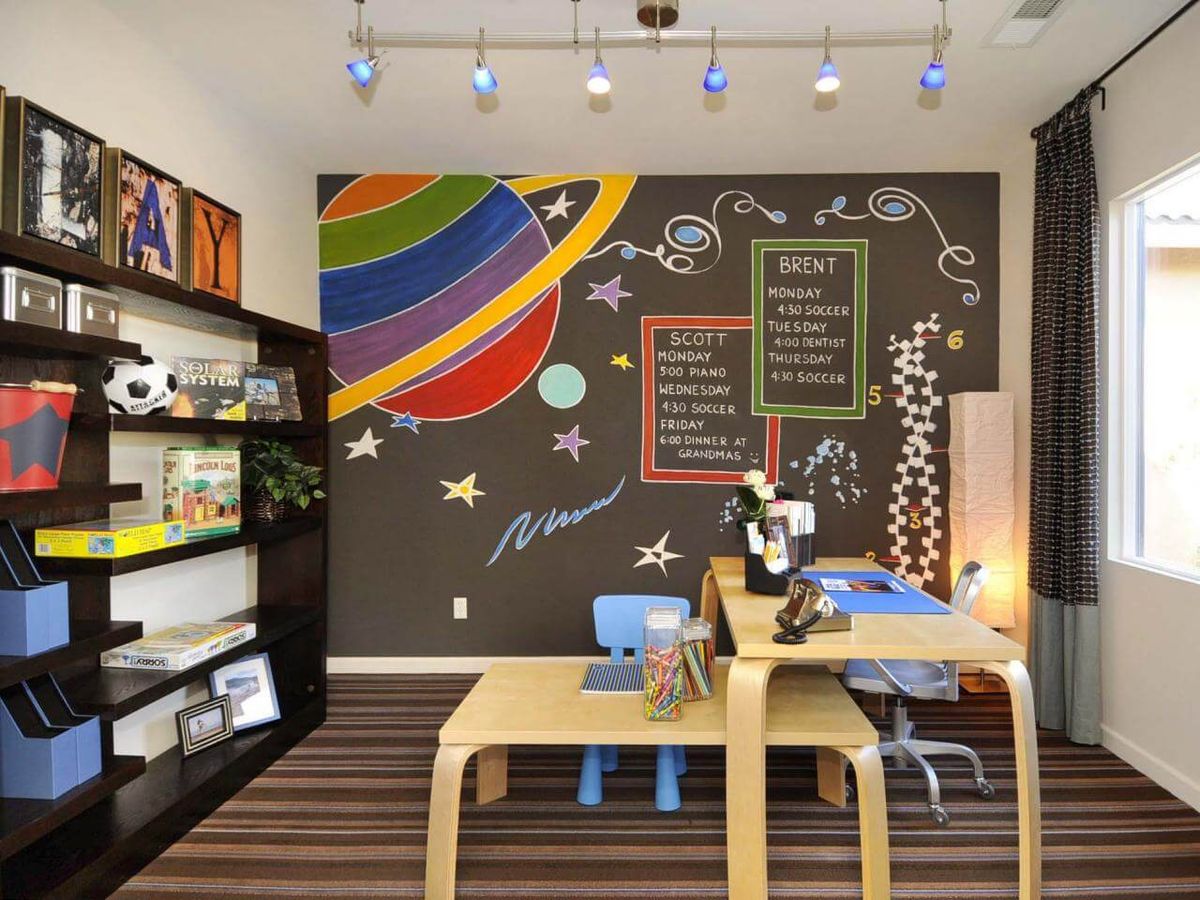
Creating a productive homeschool room requires having the right resources at your fingertips when you need them. Fresh, engaging materials that match your daily lessons keep preschoolers excited about learning while supporting your teaching goals. The key lies in accessing quality resources that adapt to your curriculum needs rather than forcing your lessons to fit available materials.
Parents who build effective learning spaces focus on flexibility and instant access to diverse educational content. Having a comprehensive library of worksheets, activities, and themed materials means less time searching for resources and more time focused on teaching. To build this foundation for your learning space, download 67,338+ free coloring pages that you can print instantly to match any lesson or theme.
Summary
- Homeschool rooms function as a learning infrastructure, not decoration. A research analysis of 173 articles found that the classroom environment significantly impacts mental health, cognitive development, and learning effectiveness, with children spending over 70% of their time in these spaces. When researchers tested 96 children ages 10-14 in different configurations, six design factors (lighting, wall colors, decorations, seating layout, plants, and natural elements) measurably changed stress levels, attention span, mood, and cognitive response.
- High-quality learning environments directly trigger creative thinking rather than simply supporting it. Studies show that open atmosphere, visual stimulation, and positive emotional environment all increase divergent thinking, the core creativity skill. When students work in environments with displayed student work, visual boards, and personalized elements, they show improved emotional connection, engagement, and creative output that curriculum alone cannot generate.
- Physical learning spaces send psychological signals before instruction begins. A designated homeschool room establishes boundaries that separate learning time from living time, helping children shift mental gears through spatial transition. The physical move from couch to a learning table changes posture, sharpens eye contact, and creates a visible readiness that sprawling on the living room floor simply doesn't elicit.
- Natural light produces measurable academic gains beyond simple illumination. The Heschong Mahone Group found that students in classrooms with maximum daylight progressed 20% faster on math tests and 26% faster on reading tests compared to those in rooms with minimal natural light. Sunlight regulates circadian rhythms that affect attention span and mood stability throughout the school day.
- An environmental organization directly impacts cognitive capacity during lessons. Visual clutter creates cognitive overload by presenting too many stimuli simultaneously, fragmenting attention that should focus on instruction. When materials stay in designated spots and non-essential items are stored outside the learning space, children can give full attention to concepts rather than processing competing visual inputs.
- My Coloring Pages offers 67,338+ free downloadable worksheets that transform material preparation from a weekly burden into a five-minute task, letting homeschool families create exactly what reinforces today's concepts rather than adapting lessons to whatever generic materials they find.
Importance of an Engaging Homeschool Room
Your homeschool room is important infrastructure. The physical space shapes how your child thinks, focuses, and whether they feel curious or trapped. This isn't about aesthetics—it's about creating conditions where learning happens instead of fighting the environment.
"The physical space shapes how your child thinks, focuses, and whether they feel curious or trapped." — Learning Environment Research
🎯 Key Point: Your homeschool room serves as the foundation for learning activities and directly impacts your child's academic success.
🔑 Takeaway: An optimized learning environment eliminates distractions and enables focus, creativity, and knowledge retention.

The measurable impact of learning environments
A review of 173 research articles found that the classroom environment affects mental health, cognitive development, and student learning outcomes. Since children spend more than 70% of their time in these spaces, classroom design significantly influences outcomes. When researchers tested 96 children ages 10–14 in different setups, six design factors (lighting, wall colors, decorations, seating layout, plants, and natural elements) produced measurable differences in stress levels, attention span, mood, and brain response.
Environment triggers creativity, not just supports it
High-quality learning environments directly foster creative thinking. Research shows that an open atmosphere, visual stimulation, and a positive emotional environment increase divergent thinking, a core creativity skill. When students work in spaces with displayed student work, visual boards, and personalized elements, they show improved emotional connection, engagement, and creative output. The walls, light, and arrangement of materials are not neutral: they either open possibilities or close them.
When the environment fails, everything suffers
The pattern is clear: students in poorly designed or isolating homeschool spaces experience serious academic regression. One student described losing basic skills like multiplication tables despite prior proficiency, comparing the experience to solitary confinement. Without structure and stimulation, children struggle to motivate themselves, and significant academic damage accumulates before intervention. The absence of engaging, supportive learning spaces leads to academic decline, as well as deteriorating social skills and emotional wellbeing.
Resources that adapt to what you're teaching today
According to Discovery Education Research, sustained student engagement improves school performance. Your homeschool room needs materials aligned with your daily lessons. My Coloring Pages provides instant access to over 67,338 free printable coloring pages and worksheets you can customize for any subject or theme. Download resources that support this week's science unit or complement today's story, keeping your space as dynamic as your teaching plan.
Small design choices create compound effects
The physical learning environment fuels your curriculum. Modern schools invest in flexible seating, natural lighting, interactive walls, and creative zones because research shows the environment drives performance. Your homeschool room doesn't require institutional budgets, but it does need thoughtful choices about light sources, visual organization, accessible materials, and defined learning zones. Each decision either strengthens your teaching or limits what's possible.
Knowing the environment matters and designing one that works are completely different challenges.
Related Reading
- Homeschool History Curriculum
- Easy Peasy Homeschool
- Homeschool Curriculum
- Homeschool Math Curriculum
- Online Homeschool Curriculum
- Homeschool Resources
- Online Homeschool Programs
- Christian Homeschool Curriculum
- Homeschool Planner
- Homeschool Schedule
- Kindergarten Homeschool Curriculum
- Best Homeschool Programs
- Free Homeschool Curriculum
- Homeschool Schedule
- Best Homeschool Curriculum
- Accredited Homeschool Programs
- How To Homeschool
- Time For Learning Homeschool
- K12 Homeschool
Why a Dedicated Homeschool Room Matters
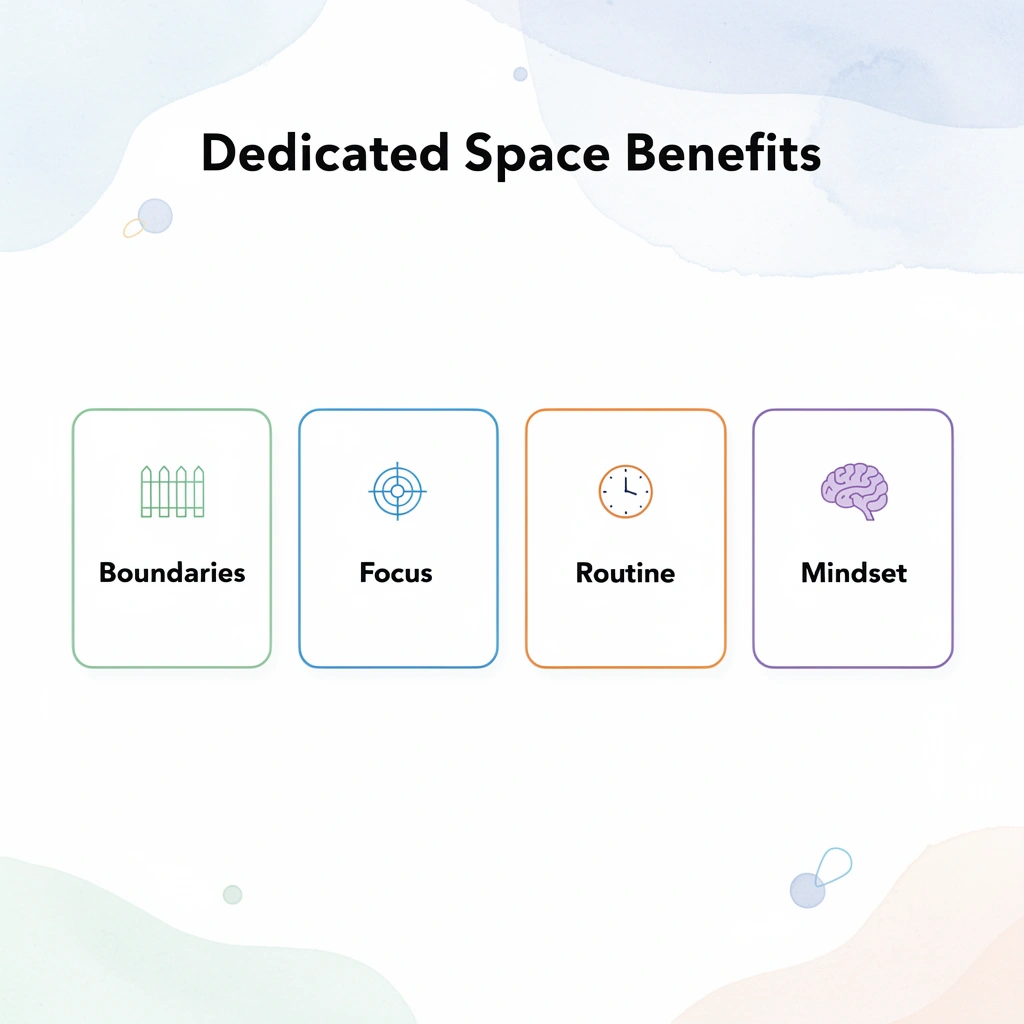
A designated homeschool room creates psychological boundaries that separate learning time from living time, something a kitchen table cannot provide. This fosters an environment conducive to focus without recreating institutional classrooms.
🎯 Key Point: Physical separation between learning and living spaces helps children mentally transition into study mode and maintain better concentration throughout their homeschool day.
"Creating dedicated learning environments at home helps establish the psychological boundaries necessary for effective education outside traditional classroom settings." — Educational Psychology Research
💡 Tip: You don't need a large space—even a small corner or converted closet can serve as an effective, dedicated learning zone that signals to your child that it's time to focus on education.
The message your space sends
Your child reads the room before you say a word. When they walk into a space you've intentionally organized for learning, with materials accessible and visual aids displayed, they understand this matters. According to the PRiME Center at St. Louis University, more than 3.4 million children in America are homeschooled, and families who sustain this approach long-term typically create physical environments that demonstrate commitment. A folding table with a whiteboard works as well as expensive furniture—the investment is intentional, not financial. You're showing your child that their education deserves dedicated space.
Shifting mental gears through physical space
Watch what happens when your child moves from the couch to the homeschool table. Their posture changes, their eye contact sharpens, and their readiness to receive instruction becomes visible. The physical transition triggers a mental one. Sitting in a designated learning space activates focus in ways that sprawling on the living room floor does not. When the whiteboard, maps, and timeline are already visible, you're not fighting to capture attention—you're building on the readiness that the environment itself created. A defined homeschool room doesn't eliminate distractions, but dramatically reduces competing stimuli that pull focus from the lesson.
Protecting your own attention
You need boundaries as much as your child does. The laundry, emails, and dinner prep whisper for attention during school hours, and without physical separation, those whispers become shouts. A dedicated space gives you permission to ignore everything else temporarily because it can wait. It provides the mental container to stay present during instruction, rather than mentally cataloging household tasks while explaining fractions.
Central hub for materials and momentum
A homeschool room works as a command center for your teaching day. Everything you need—whiteboard markers, scissors, rulers, coloured pencils, teacher manuals, reference books—stays within arm's reach. You're not stopping lessons to search the house for supplies, so you're not breaking your child's concentration every 15 minutes. This becomes essential when teaching multiple children at different levels. Our My Coloring Pages platform lets you download 67,338+ free coloring pages and worksheets customized for each child's current unit. You pull this week's materials on Sunday, print what matches your lesson plans, and keep your homeschool room stocked with exactly what today's learning requires.
How does a homeschool room help manage interruptions?
A designated homeschool room teaches everyone in the house where the learning boundary sits. Younger siblings learn that this space requires quieter activities, such as coloring or blocks, instead of dance parties, and internalize these spatial rules faster than verbal ones.
Why is having a mess-ready zone important?
The room becomes your mess-ready zone. Art projects, science experiments, and maths tools spread across surfaces without worry. Your folding table bears crayon marks and glue spots—that's what the space is for. You're letting learning get messy in a space designed to handle it.
But knowing you need a dedicated space and knowing what belongs in it are different problems.
11 Things You Need for Your Homeschool
The right supplies transform scattered effort into consistent learning. You don't need fancy equipment or big budgets—only tools that keep materials organized, document progress, and keep children engaged. These eleven essentials create the infrastructure your homeschool room needs to function day after day.
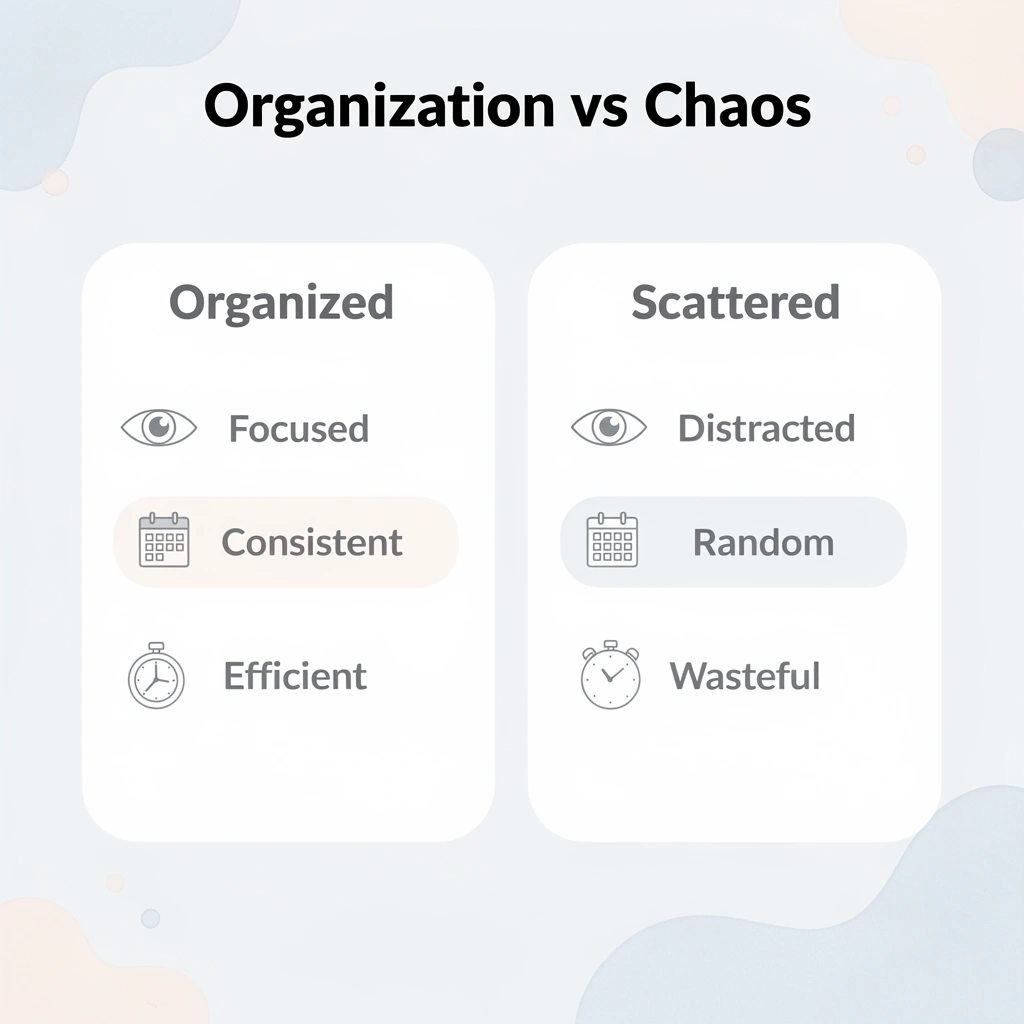
🎯 Key Point: The most successful homeschool families focus on organization and consistency rather than expensive materials. Simple tools that support daily routines will outperform fancy gadgets every time.
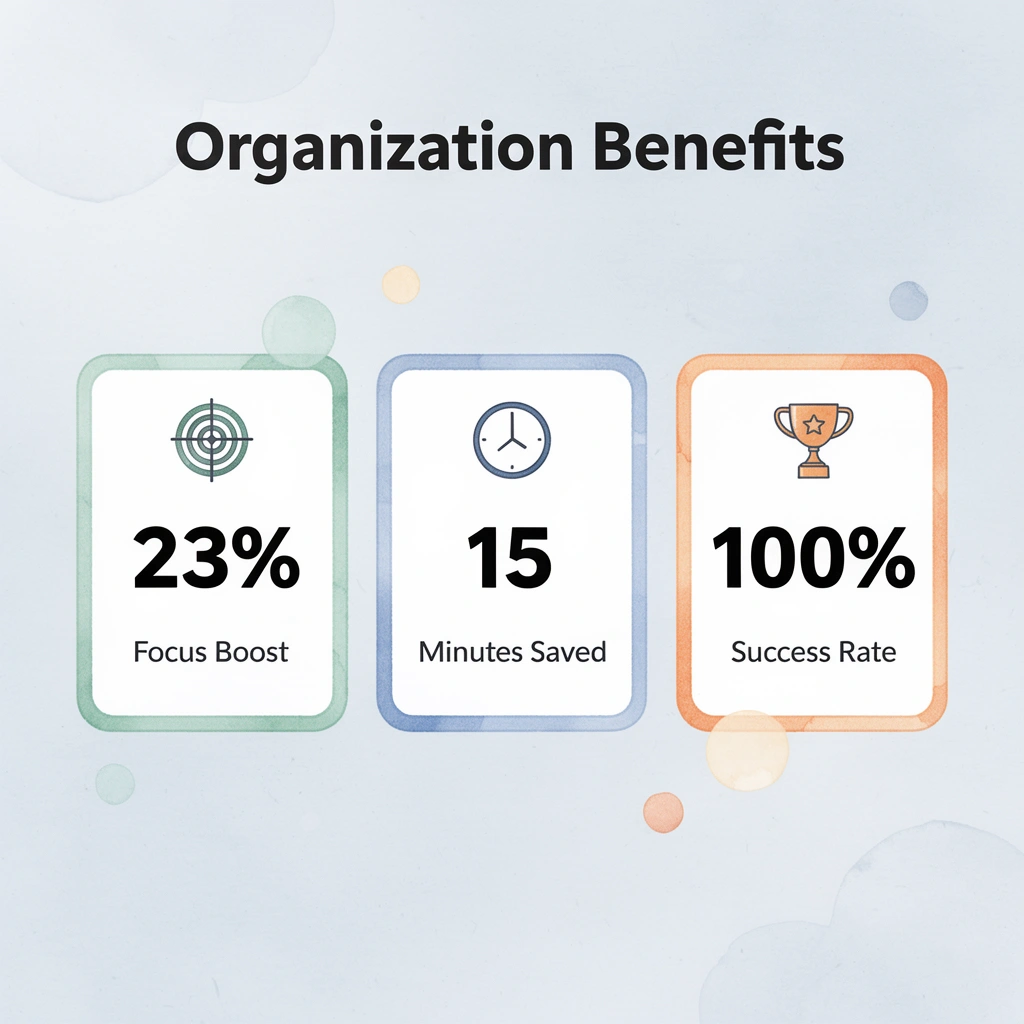
"Organized learning spaces increase student focus by 23% and reduce lesson preparation time by 15 minutes per day." — National Home Education Research Institute, 2023
💡 Tip: Start with the basic essentials first, then add specialized supplies as you discover what works best for your family's learning style. Quality organization beats quantity of materials.
1. A Homeschool Planner
Your planner prevents your curriculum from falling apart when life disrupts your teaching schedule. It tracks which lessons you've completed, which skills need more practice, and what state paperwork requirements you've met. When teaching multiple children at different grade levels, it's the only dependable way to ensure nobody gets left behind while you help someone else with maths.
How does a planner help during difficult homeschool periods?
The planner also protects you during moments of self-doubt. Every homeschool parent hits weeks where nothing seems to work. Your planner shows the progress that panic obscures: completed units, skills you've learned, finished books. That record keeps you moving forward instead of abandoning approaches that work but feel slow.
2. Basic Art and School Supplies
Stock your homeschool room with notebooks, pencils, markers, highlighters, scissors, glue sticks, and construction paper. These tools transform abstract concepts into hands-on learning experiences. When your child color-codes notes, builds timelines with cut paper, or illustrates vocabulary words, they process information through multiple pathways instead of passively reading.
How do you choose the right supplies for your child's learning style?
Start with basic supplies before spending money on specialized materials. Through actual use, you'll discover which tools your child uses repeatedly and which remain unused. Some children think better with coloured pencils; others need plain paper and a single black pen to focus. Your supply drawer should reflect how your child actually learns, not what homeschool catalogs suggest.
3. Functional Storage
Labeled bins, rolling carts, and open shelving keep your homeschool room functioning well. When scissors live in the blue bin and maths manipulatives stay on the second shelf, you avoid stopping lessons to search for supplies. Your child can retrieve materials independently, building responsibility while protecting teaching momentum.
Storage systems reveal themselves through use, not planning. Wait to see which supplies you use daily, which get used weekly, and which sit untouched for months. Then build storage that matches your actual patterns, not your imagined ones.
4. A Library Card
Free access to thousands of books, educational DVDs, audiobooks, and research databases makes your library card one of the highest-value tools in your homeschool arsenal. Regular visits let your child explore interests beyond the curriculum—dinosaurs, ancient Egypt, poetry—discovering that curiosity itself feels rewarding.
Libraries offer programs that complement your teaching without additional planning. Story times, science demonstrations, art workshops, and teen writing groups provide structured activities led by trained librarians, exposing your child to group learning and new instructors while you gain respite from being the sole adult directing their education.
5. Curriculum You Love
Pick a curriculum that matches how you like to teach and how your child learns best. You can mix materials from different publishers. A boring, difficult curriculum will drain your energy and signal disinterest to your child, while an engaging one will help you push through challenging concepts and frustrating days. According to the National Home Education Research Institute, homeschooling families succeed with many different curriculum approaches because parental involvement matters more than which specific materials you use.
What learning patterns should guide your curriculum choice?
Your curriculum choice should match how your child learns, not their grade level on paper. Some children thrive with structured lessons that have clear daily goals, while others excel with unit studies that allow deep focus on one topic for weeks. The right curriculum works with how your family naturally operates.
6. A White Board
Put a whiteboard where both you and your child can see it during the school day. Use it for daily schedules, current lesson content, weekly goals, and quick problem-solving during instruction. Visibility keeps everyone focused on the same objectives instead of drifting into unrelated activities.
How do whiteboards transform abstract learning into visual thinking?
Whiteboards help turn abstract ideas into visible pictures. When explaining fractions, you can draw diagrams in front of your child, erase and revise them as their understanding deepens, and keep the final picture for reference while they work independently. Your child learns that thinking involves changing and improving ideas, not simply getting the right answer on the first attempt.
7. A Designated Learning Space
Create a designated area for homeschool activities: a spare bedroom, a corner of the dining room, or a folding table. This physical boundary helps your child shift into learning mode and signals that school is in session. The space doesn't need to be large or permanent, but it must be consistent.
Your learning space should handle the mess that real learning creates. Science experiments spill, art projects spread across surfaces, and maths manipulatives scatter during problem-solving. When you're not worried about protecting furniture or cleaning up immediately, your child can engage more freely with materials, leading to deeper exploration and better retention.
8. A Laptop and Headphones
Good technology helps students access virtual classes, educational videos, interactive learning platforms, and research resources that are not available in physical materials alone. Quality headphones reduce distractions during online lessons and allow siblings to work in the same space without interrupting each other's focus.
Technology connects your child to learning communities beyond your homeschool room: online book clubs, coding collaborations with students across the country, and virtual museum field trips. These connections prevent isolation while expanding their perspective beyond what you can provide on your own.
9. A Reliable Printer
Print worksheets, maps, timelines, reading comprehension questions, and custom materials that match this week's lessons. A working printer converts digital curriculum into physical resources your child can write on, mark up, and reference without screen time. This is especially helpful for subjects that require repeated practice, such as handwriting, maths facts, or spelling patterns.
Keep extra ink cartridges and paper stocked to avoid scrambling mid-lesson. Running out of supplies halts momentum and creates frustration.
10. A Homeschool Co-Op
Join a homeschool co-op to access specialized instruction, group activities, and community support that individual families cannot provide alone. Co-ops often offer classes in chemistry labs, foreign languages, and advanced maths taught by parents with specific expertise. Your child gains exposure to different teaching styles and peer interaction while you share the instructional load with other families.
How do co-ops provide social structure and motivation?
Co-ops give children the social structure they need to stay motivated. Weekly meetings create accountability, deadlines for assignments, and opportunities to present work to audiences beyond their parents. The community becomes a resource for both school support and emotional encouragement during difficult times.
11. Engaging Worksheets and Coloring Pages
Worksheets that combine pictures with hands-on activities keep children engaged longer than reading or listening alone. When complex ideas like the water cycle, photosynthesis, or historical timelines are presented as pictures children can color and label, they learn through multiple senses simultaneously. This strengthens retention and makes reviewing material more engaging.
How can you find worksheets that match your curriculum?
Most parents spend hours searching for worksheets that match their curriculum, then settle for generic materials that don't work well. Our platform at My Coloring Pages offers 67,338+ free coloring pages and worksheets customized for any subject or theme, reducing preparation from a weekly burden to a five-minute task. You create exactly what reinforces today's concepts—whether vocabulary illustrations for literature study or labeled diagrams for science—rather than adapting lessons to available materials.
Why do visual activities work as brain breaks?
Visual learning tools give your brain natural breaks during intensive instruction. When your child's attention flags during a challenging maths lesson, switching to a related coloring activity lets them continue processing the same concepts while their focus resets. Our collection of 67,338+ free coloring pages provides the perfect resource to support this approach.
Tips for Effectively Decorating a Homeschool Room
Your homeschool room needs intentional design choices that support focus, accessibility, and daily function. The six decisions below determine whether your space helps learning or works against it. They're structural choices that shape how easily your child enters learning mode, how quickly you can adapt to different subjects, and whether materials stay organized or scatter into chaos.
🎯 Key Point: The physical environment directly impacts your child's ability to concentrate and engage with learning materials effectively.
"A well-designed learning space can improve focus and productivity by up to 25% compared to cluttered or poorly organized environments." — Educational Space Research, 2023
💡 Tip: Start with these six core elements before adding decorative touches - they form the foundation that makes everything else work better.
Designate learning zones based on how you actually teach
Pick your homeschool location by mapping out your daily reality, not your ideal vision. If you're teaching a six-year-old while caring for an infant, placing your learning space two floors away creates impossible logistics. The dining room table works well if it sits near the kitchen, where you can watch younger children while teaching older ones.
A spare bedroom works well when your students can work independently for extended periods without constant supervision.
What factors should guide your homeschool room placement?
Your space choice should reflect how you split attention during school hours. Parents who work from home while homeschooling need their learning area visible from their desk, not tucked behind closed doors.
The corner of your living room might feel less official than a dedicated room, but if it keeps everyone in visual range while managing multiple responsibilities, it's the right choice.
Select furniture that matches your teaching approach
Start with a work surface large enough for your current curriculum and reference materials. Cramped tables force constant shuffling, which breaks concentration. Comfortable seating matters because discomfort becomes a distraction: a child squirming in a too-hard chair cannot focus on fractions.
Storage furniture should keep daily-use supplies within arm's reach and reference materials visible but organized. Open shelving works better than closed cabinets for frequently accessed items, as it eliminates the need to open and close doors between activities. Use enclosed storage for seasonal materials, supplies needing protection, or finished curriculum you want to preserve.
Maximize natural light and supplement strategically
Position your work surface near windows whenever possible. Research from the Heschong Mahone Group (1999) found that students in classrooms with the most daylight made 20% faster progress on math tests and 26% faster progress on reading tests than those in minimal light. Sunlight regulates your body's natural sleep and wake cycles, improving attention and mood stability throughout your school day.
Add task lighting for overcast days and late afternoon sessions when natural light fades. Overhead fixtures alone cast shadows across work surfaces, causing eye strain during reading and writing. A desk lamp positioned to eliminate glare enables sustained focus.
Stock supplies based on what this month requires
Read your curriculum instructor guides before buying anything to determine which supplies you'll need repeatedly versus once. Walk through your house collecting items you already own—scissors, rulers, coloured pencils, glue sticks—before purchasing duplicates. Buy only what's missing, not what homeschool supply lists suggest you might eventually need.
How can you reduce the time spent searching for materials?
Most parents waste hours weekly searching for worksheets that match their current lessons, then settle for materials that don't fit their plans. Platforms like My Coloring Pages offer 67,338+ free coloring pages and worksheets for any subject or theme, reducing preparation time from a weekly task to five minutes.
You can create exactly what helps students learn today's ideas: labeled diagrams for biology units or vocabulary pictures for literature study, instead of changing your teaching to fit generic worksheets.
Remove distractions systematically
Turn off televisions in nearby rooms during school hours. Background noise disrupts attention even when your child isn't actively watching. Keep phones in a drawer or a different room; their mere presence prompts checking, even without notifications.
What's the best way to manage visual clutter in your homeschool room?
Reduce visual clutter by storing non-essential items outside your learning space. A room crowded with toys, sports equipment, and household items creates competing stimuli that distract from lessons.
Rotate toys and recreational items regularly if your homeschool room doubles as a play space. Keep only two or three options visible at any time, swapping them weekly to maintain interest without overwhelming the environment. This containment strategy works better than constant negotiations about learning versus play time, because the physical environment itself answers the question.
Add visual elements that support current learning
Display maps, timelines, multiplication charts, or subject-specific posters that connect directly to your current teaching. These reference tools support independent work and reinforce concepts without requiring your help. A periodic table during chemistry units or a world map during geography lessons transforms empty wall space into active learning support.
How can you involve your child in creating visual displays?
Get your child involved in picking out and making visual displays. When they choose which artwork to frame or help design a bulletin board showcasing recent projects, they develop ownership of the space, leading to increased engagement during lessons.
Watch for the point where visual stimulation becomes visual chaos: too many competing images lead to fragmented attention. Rotate displays as your curriculum changes, rather than accumulating layers of materials from past units.
45 Homeschool Room Ideas for Driving Creativity
Creativity grows from visual prompts, hands-on materials, and flexible spaces that invite exploration. The 45 ideas below transform your homeschool room into a space that generates curiosity, experimentation, and original thinking.
🎯 Key Point: A well-designed creative space doesn't just happen—it requires intentional design choices that encourage rather than restrict imaginative thinking.
"Creative environments significantly impact learning outcomes, with students showing increased engagement and improved problem-solving abilities when surrounded by inspiring and flexible learning spaces." — Educational Design Research, 2023
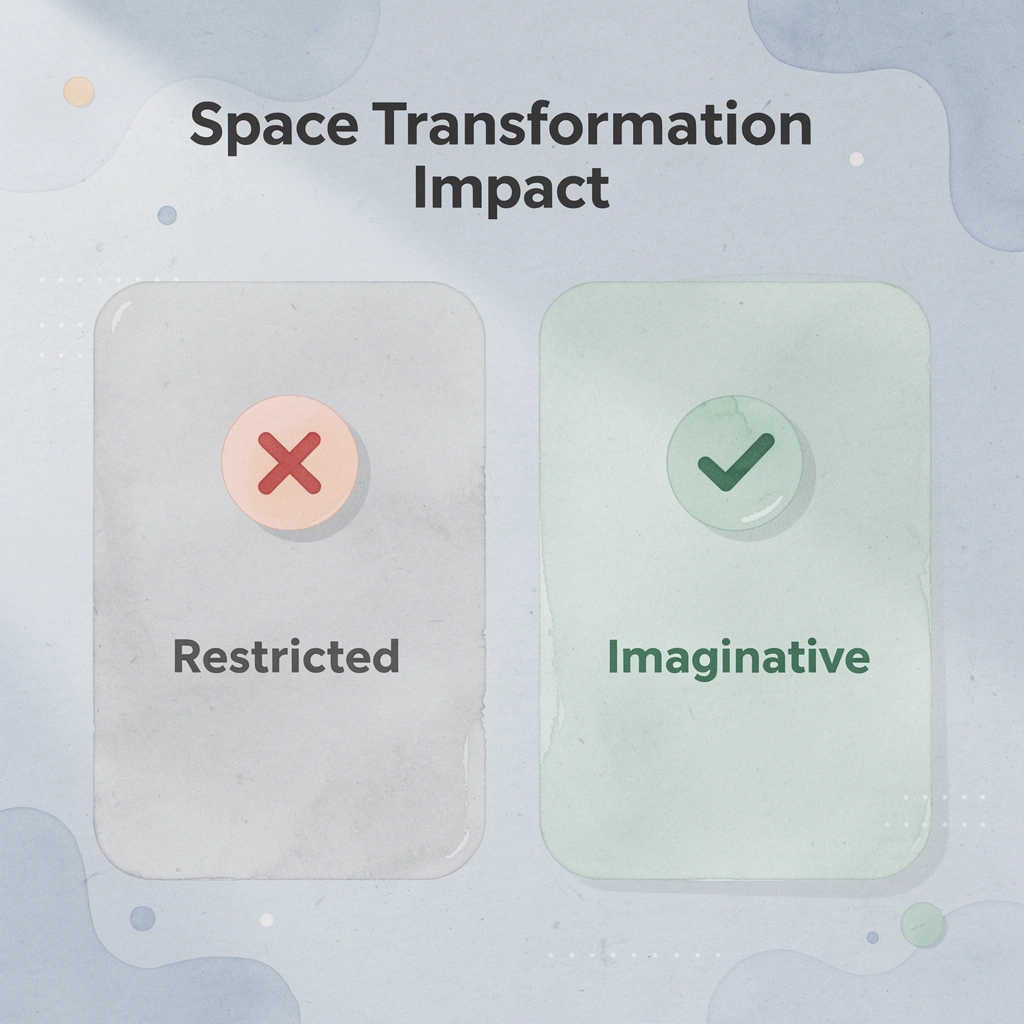
💡 Tip: Start with one creative zone in your homeschool room and gradually expand as you discover what sparks your child's imagination most effectively.
1. Interactive World Map Wall
Put a large world map at your child's eye level with pushpins, small flags, or removable stickers nearby. Each time your child studies a new country in history or literature, they mark the location and add a short note about what they learned. The pins that accumulate over time create a visual record of their growing knowledge, something textbook exercises cannot provide.
2. History Timeline Wall
Run a horizontal timeline across one wall using string, painter's tape, or butcher paper marked with centuries or decades. As you progress through your history curriculum, your child adds events, illustrations, or printed images in chronological order. This spatial arrangement helps them see how the American Revolution connects to the French Revolution, how inventions cluster during certain periods, and how simultaneous events relate. The physical distance between markers makes time intervals visible rather than abstract.
3. "Today I Learned" Board
Put a small whiteboard or corkboard where your child writes one thing they learned each day before school ends. This daily reflection strengthens memory because retrieving information reinforces brain connections more than passive review. The board creates accountability: your child cannot write "nothing" after three hours of learning. Over time, these entries reveal learning patterns and knowledge buildup that weekly tests miss.
4. Alphabet and Phonics Wall
Show alphabet cards with matching pictures and phonics sounds for early readers. Repeated exposure to these cards, combined with direct instruction, helps children learn letters and sounds more quickly. Your kindergartener learns patterns naturally, reducing the need for formal practice drills while increasing daily learning opportunities.
5. Math Formula Wall
Keep important formulas, number patterns, and worked examples visible on a dedicated section of the wall. Your child learns mathematical structures through repeated casual exposure rather than memorizing under pressure before tests. When they need to calculate area or solve for x, the formula serves as a reference point rather than a blank space they struggle to recall.
6. Science Discovery Wall
Save wall space for diagrams, experiment results, or scientific illustrations that your child creates. A labeled solar system diagram, for example, stays visible for weeks, reinforcing concepts and demonstrating that science is active exploration rather than textbook theory. The wall becomes a running record of investigations completed and questions answered.
7. Student Work Gallery Wall
Frame or clip your child's strongest work—a well-written paragraph, detailed drawing, or completed maths worksheet. Displaying their best efforts builds confidence and provides visual proof of their capabilities during frustrating moments. The gallery also motivates improvement as your child wants newer work to match or exceed what's already hanging.
8. Growth Mindset Quote Wall
Show short phrases that help children think positively. "Mistakes help me learn" or "I can improve with practice" reshape how children talk to themselves when lessons become difficult. Over time, these reminders become part of how your child thinks, shaping how they handle difficulty—remembering that struggle comes before mastery rather than giving up when fractions get confusing.
9. Current Events Board
Share simplified news articles or event summaries weekly and discuss them at set times. This connects classroom learning to real-world events and makes abstract concepts like government more concrete by linking them to current events, such as elections.
10. Art Rotation Wall
Create a display space where artwork changes every week or two. Fresh visuals stop habituation, the brain's tendency to stop noticing unchanging things, keeping the environment interesting rather than invisible background noise.
11. Mini Home Library Corner
Organize books by subject or reading level on shelves within children's reach. When children can browse independently, they learn to select books to read. Varied book types encourage exploration during free time instead of screen time.
12. Reading Tent or Cozy Nook
Set up a small tent, canopy, or cushioned corner with soft lighting for reading. Comfortable spaces increase independent reading time because children associate books with relaxation rather than obligation. The physical separation from the main learning table signals a mental shift from work mode to pleasure reading.
13. Book Recommendation Shelf
After finishing a book, your child writes a short recommendation card and places it on a special shelf. This builds critical thinking about what made the story interesting and develops communication skills as they explain their thoughts to future readers.
14. "Book of the Week" Display
Pick one book each week and display it on a noticeable stand or in a special spot. When people can easily see a book, they're more likely to read it. This focused attention increases completion rates because visibility creates gentle accountability and generates more reading sessions than books on general shelves.
15. Quiet Reading Basket System
Fill rotating baskets with leveled books suited for independent reading, swapping contents weekly. Limited choices prevent decision paralysis while providing variety.
16. Storytelling Chair Area
Pick a specific chair for reading aloud or telling stories. Speaking aids understanding because saying words out loud requires deeper thinking than silent reading and reveals gaps that silent reading conceals.
17. Audiobook Listening Station
Set up headphones and an audiobook device in a comfortable spot. Audiobooks suit auditory learners and build vocabulary by exposing you to challenging words you might not encounter in reading. The narrator's voice also models proper pronunciation and expressive reading.
18. Biography Shelf
Books about true stories of scientists, inventors, leaders, and historical figures inspire children differently from fiction because they show that real people overcame obstacles and achieved remarkable things. These books provide context for curriculum topics, making abstract historical periods feel populated by real individuals with recognizable human struggles.
19. Poetry Corner
Set aside space for poetry collections and your child's original poems. Regular exposure to rhythm, meter, and figurative language improves linguistic creativity and expands vocabulary. Poetry provides an accessible writing practice since short forms feel less intimidating than essays.
20. Vocabulary Wall
Add three to five new words every week with definitions and example sentences. Seeing words daily helps your child retain them better than studying word lists before tests. Your child picks up vocabulary naturally while working on other subjects and encounters the words again when reading.
21. Worksheet Station
Organize printed worksheets in labeled subject folders. This eliminates decision fatigue and allows your child to start independent work without interrupting your teaching to locate materials.
22. Coloring-Based Learning Area
Keep educational coloring worksheets on hand where children can color, label, or complete activities related to classroom learning. This engages fine motor skills while reinforcing content through visual processing. A child coloring and labeling the parts of a cell processes that information differently than reading about cell structure; the multi-sensory approach improves retention. Our My Coloring Pages library offers 67,338+ free coloring pages and worksheets, customized for any subject or theme, reducing material preparation to a five-minute task that produces exactly what is needed to reinforce today's concepts.
23. Craft and Project Table
Pick a surface for cutting, building, and creating models related to lessons. Hands-on construction increases retention because children physically interact with concepts rather than read about them—building a model of the Colosseum while studying ancient Rome creates spatial and tactile memories that textbook descriptions alone cannot generate.
24. Map Drawing Desk
Give students tracing paper, blank outlines, and coloured pencils to redraw maps or locations. This builds understanding of space and geography through active reproduction rather than passive observation. Redrawing maps requires attention to coastlines, borders, and spatial relationships.
25. Science Experiment Tray
Keep basic safe-experiment materials—vinegar, baking soda, food coloring, and measuring cups—organized in a designated tray. Easy access encourages spontaneous investigation and lets your child test ideas while motivation is high, rather than waiting for supplies to be gathered.
26. Timeline Craft Station
Stock materials for physically building timelines using paper cutouts, drawings, and written descriptions. Constructing timelines by hand helps children understand sequencing and historical flow by deciding where events belong and how much space separates them, building chronological thinking.
27. Flashcard System Wall or Box
Use flashcards to practice math facts, vocabulary, historical dates, or science terms. Active recall—pulling information from your memory instead of passively reviewing it—is one of the best ways to remember things long-term, according to cognitive science research. It strengthens memory pathways far better than rereading notes.
28. Math Manipulative Box
Use blocks, counting beads, fraction bars, or base-ten blocks. Physical objects make abstract math concepts concrete and visible. A child struggling with fractions can physically see that four quarters equal one whole when manipulating fraction pieces, an understanding that explaining numbers alone might not achieve.
29. Puzzle and Logic Corner
Provide puzzles, brain teasers, riddles, and problem-solving games. These improve critical thinking and patience by requiring sustained attention to complex challenges and teaching that difficult problems often require multiple attempts and different approaches.
30. Role-Play Learning Box
Keep costumes, props, or simple materials on hand for historical or social role-play. Acting out lessons creates emotional connections to content that reading alone cannot provide. When your child plays a colonial shopkeeper or scientist presenting findings, they process information through imagination and empathy, deepening understanding and retention.
31. Natural Light Setup
Put your main work surface near windows where sunlight enters during school hours. Research from the Heschong Mahone Group (1999) found that students in classrooms with the most daylight made 20% faster progress on maths tests and 26% faster progress on reading tests compared to students in rooms with minimal natural light. Natural light directly affects cognitive performance and reduces fatigue.
32. Indoor Plants
Add low-maintenance plants to your homeschool room. Plants improve air quality by filtering toxins and releasing oxygen, and, according to research in environmental psychology, reduce stress levels, supporting sustained focus.
33. Soft Color Theme
Paint walls or add decorations in calm colors like beige, light blue, sage green, or soft grey. Bright, overstimulating colors such as neon shades reduce focus by creating visual agitation, while neutral tones provide a backdrop that doesn't compete with learning materials.
34. Flexible Seating
Add bean bags, floor cushions, or a small couch next to a regular desk chair. Movement and position changes help many children focus better by allowing them to shift when restless. Some children think better while lying on the floor; others need to sit upright.
35. Calm Background Music
Play soft instrumental music during independent work time. For some learners, a gentle background sound reduces environmental noise distractions and improves focus. Test whether your child concentrates better with music or silence, as individual responses vary.
36. Clutter-Free Storage System
Use organized shelves and bins to keep materials accessible without spreading them throughout the space. Visual clutter creates cognitive overload by presenting too many elements at once, diverting students' attention from the lesson.
37. Daily Reset Table
Set up a routine where all materials return to their designated spots at the end of each school day. This builds discipline, ensures tomorrow's session starts organized, and creates a psychological break between school and free time.
38. Sensory Break Corner
Create a small calming space with soft toys, stress balls, or fidget tools for breaks during intensive lessons. This helps children control their emotions and physical restlessness, allowing them to return to learning focused and preventing a complete attention breakdown.
39. Goal Tracking Board
Set weekly learning goals and track progress visually with checkmarks, stickers, or coloured markers. Visible progress improves motivation and accountability: your child sees accumulated achievements rather than feeling like they're working endlessly. The tracking system also helps you identify when goals need adjustment.
40. Reward Chart System
Use positive reinforcement when tasks are completed, especially with younger learners. Consistent small rewards build habits by creating positive connections with sustained effort.
41. Learning Journal Station
Give your child a notebook to record what they learned each day or week. Writing about learning strengthens memory and understanding by requiring deep thinking to explain ideas. The journal also creates a record of growth that builds confidence during difficult periods.
42. Personalized Name Zone
Label sections with your child's name, such as "Maya's Reading Corner" or "Jordan's Science Station." This builds ownership and emotional connection, encouraging children to take greater care of their space.
43. Future Vision Board
Have your child paste images showing future dreams, careers, places they want to visit, or skills they want to learn. This builds long-term motivation by connecting what they learn today to what they want to do tomorrow.
44. Presentation Corner
Pick a small area where your child can demonstrate what they've learned to you, siblings, or stuffed animals. Teaching others deepens learning because explaining ideas requires more thinking than completing assignments. It also builds communication skills and confidence.
45. Monthly Theme Room Rotation
Change your room's visual theme monthly to match your curriculum—Ancient Egypt one month, ocean ecosystems the next, space exploration after that. Thematic learning deepens student engagement and curiosity by creating immersive environments that connect subjects while keeping the space fresh.
But ideas only matter if you can use them without adding hours to your already overwhelming schedule.
Related Reading
- How To Homeschool Your Kids
- Colorado Homeschool Laws
- Abeka Homeschool Curriculum
- Georgia Homeschool Laws
- 6th Grade Homeschool Curriculum
- Homeschool Preschool
- Homeschool Room Ideas
- 1st Grade Homeschool Curriculum
- How To Homeschool In Texas
- Homeschool Vs Public School
- Homeschool Coop
- Pre K Homeschool Curriculum
- Kentucky Homeschool Laws
- Homeschool Report Card Template
- Texas Homeschool Requirements
- Florida Homeschool Requirements
Download 67,338+ Free Worksheets For Your Homeschool Set-up
Choose one creativity anchor zone first—either a learning wall (world map, history timeline, vocabulary display) or a reading nook. This single zone becomes the visual and emotional center, transforming how your child interacts with the space. Parents often fail by attempting to build an entire system in one weekend, then abandoning it when overwhelmed.
🎯 Key Point: Start with one anchor zone to avoid overwhelming yourself and your child while creating a strong foundation for learning.
Add one active learning station next, such as a worksheet desk, craft table, or science tray. This ensures your child actively engages with concepts through doing, creating, and experimenting rather than passively viewing information on walls. The combination of passive visual learning and active construction creates multiple pathways for information to stick.
"The combination of passive visual learning and active construction creates multiple pathways for information retention, significantly improving long-term memory formation." — Educational Psychology Research, 2023
Layer creativity triggers gradually over weeks and months. Introduce elements like student work displays, goal boards, or thematic corners as you discover what gets used. This prevents sensory overload while continuously sparking curiosity as new elements appear.
💡 Tip: Resources like My Coloring Pages worksheets integrate into your homeschool room as interactive visual learning tools. Display completed sheets to reinforce current units, use them in activity stations for hands-on practice, or rotate them based on weekly themes. Our collection helps you download exactly what reinforces today's biology lesson or complements this week's history unit, instead of spending hours searching or settling for generic materials.
Build a creativity-driven space that develops over time, where every wall, corner, and activity area actively supports curiosity, focus, and independent learning. Your room grows with your child's expanding knowledge rather than remaining frozen in its initial configuration.
Related Reading
- 5th Grade Homeschool Curriculum
- How To Homeschool In California
- Georgia Homeschool Requirements
- Alabama Homeschool Laws
- 2nd Grade Homeschool Curriculum
- Homeschool Reading Curriculum
- California Homeschool Laws
- 4th Grade Homeschool Curriculum
- North Carolina Homeschool Laws
- Homeschool Art Curriculum
- Accredited Homeschool Curriculum
- 3rd Grade Homeschool Curriculum
- Illinois Homeschool Laws
- Michigan Homeschool Laws
- Science Homeschool Curriculum