7 Best Homeschool History Curriculum for Preschoolers
Discover the 7 best homeschool history curriculum options for preschoolers. My Coloring Pages reviews top programs to make learning fun and engaging.

Many homeschool families struggle to find history curricula that truly engage their children and bring the past to life. The challenge lies not just in selecting the right program, but in supplementing it with materials that transform abstract historical concepts into memorable, hands-on learning experiences. A well-chosen homeschool history curriculum becomes the foundation for exploring ancient civilizations, understanding pivotal moments, and connecting with historical figures in meaningful ways.
The key to successful history education often lies in the supplemental resources that support your chosen curriculum. Interactive materials like themed worksheets, timeline projects, and visual aids help students of all ages better grasp historical concepts and retain information longer. Parents looking to enhance their history lessons with engaging visual resources can download 67,338+ free coloring pages to create custom activities that complement any historical topic or time period.
Summary
- Homeschooled students score 15 to 25 percentile points higher on standardized tests than public school peers, with the average homeschooler reaching the 84th percentile compared to the 50th percentile for traditional students. This performance gap appears consistently across 78% of peer-reviewed studies tracking academic outcomes. The advantage stems not from location but from curriculum quality, consistency of delivery, and the ability to customize depth over standardized memorization schedules.
- Traditional history curricula often race through content to meet standardized requirements, creating surface-level exposure rather than deep understanding. Homeschool environments allow families to spend three weeks on Roman engineering if a child shows interest, or compress medieval history into two weeks when feudalism fails to engage. Research from the Journal of Curriculum Studies found that students exposed to multi-perspective history (including voices from different cultures, classes, and political positions) showed 40% stronger critical thinking skills when evaluating contemporary news sources than those in single-narrative instruction.
- Children retain 65% more information when lessons combine reading with hands-on projects, according to research in educational psychology from Stanford. The brain fatigues after 25 to 30 minutes of focused attention on new information, making short daily sessions more effective than marathon lessons. A 15-minute session on World War I repeated daily for a week creates stronger neural pathways than a single 90-minute deep dive, proving that consistency matters more than duration in building historical knowledge.
- Story-based history lessons achieve 60% better recall than timeline-focused instruction six months later, because storytelling activates emotional memory systems that pure chronology never touches. Starting with a family forced to choose between ancestral land and religious safety during India's partition creates a context that makes the date August 15, 1947, meaningful. Teaching historical thinking (questioning sources, identifying bias, tracing causation) builds analytical skills that transfer to evaluating current events and making informed adult decisions.
- Families using three or more resource types (books, videos, hands-on projects, field trips) scored 18 percentile points higher on comprehension assessments than those relying solely on textbooks, according to a 2020 meta-analysis of homeschool outcomes. The variety addresses different cognitive processing styles within the same household, preventing the disengagement that occurs when the format never changes. Good curricula provide core content, optional extensions, and flexible timelines rather than rigid scope-and-sequence plans built for institutional compliance.
- My Coloring Pages offers access to 67,338+ free coloring pages that turn abstract historical concepts (Viking longships, Aztec marketplaces, Renaissance printing presses) into printable visual reinforcement activities that match whatever specific topic families cover each week.
Importance of Teaching History in Homeschool
Teaching history in your homeschool builds the mental frameworks your children need to understand how societies change over time, why people make certain choices, and how the past shapes every decision we face today. When you control the history curriculum, you shape how your child interprets the world.
🎯 Key Point: History education in homeschool settings allows for personalized approaches that traditional classrooms simply cannot match.
"When parents control the history curriculum, they control the way their child learns to interpret the world." — Educational Framework Research
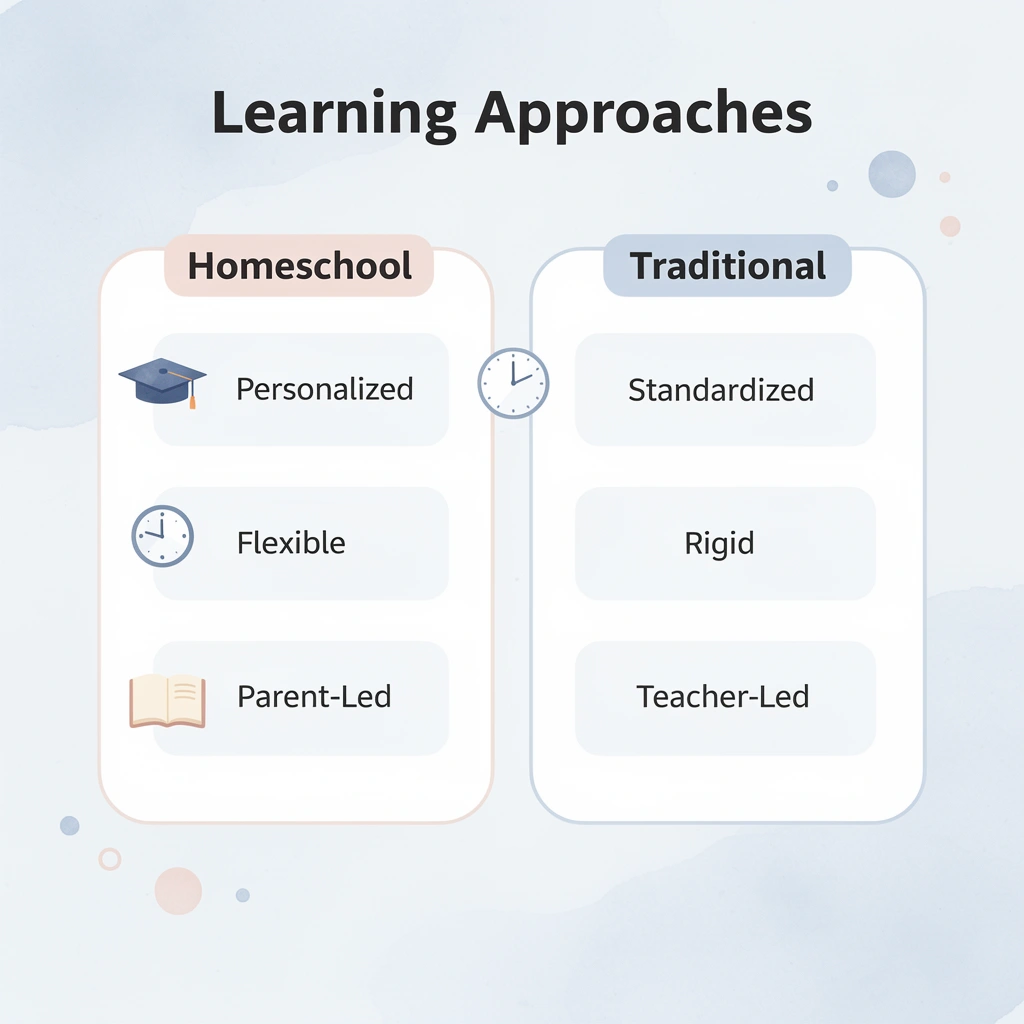
The data tells a different story about homeschool history compared to traditional schooling. Homeschooled students demonstrate a deeper understanding of historical connections and a greater ability to apply historical thinking skills to modern situations.
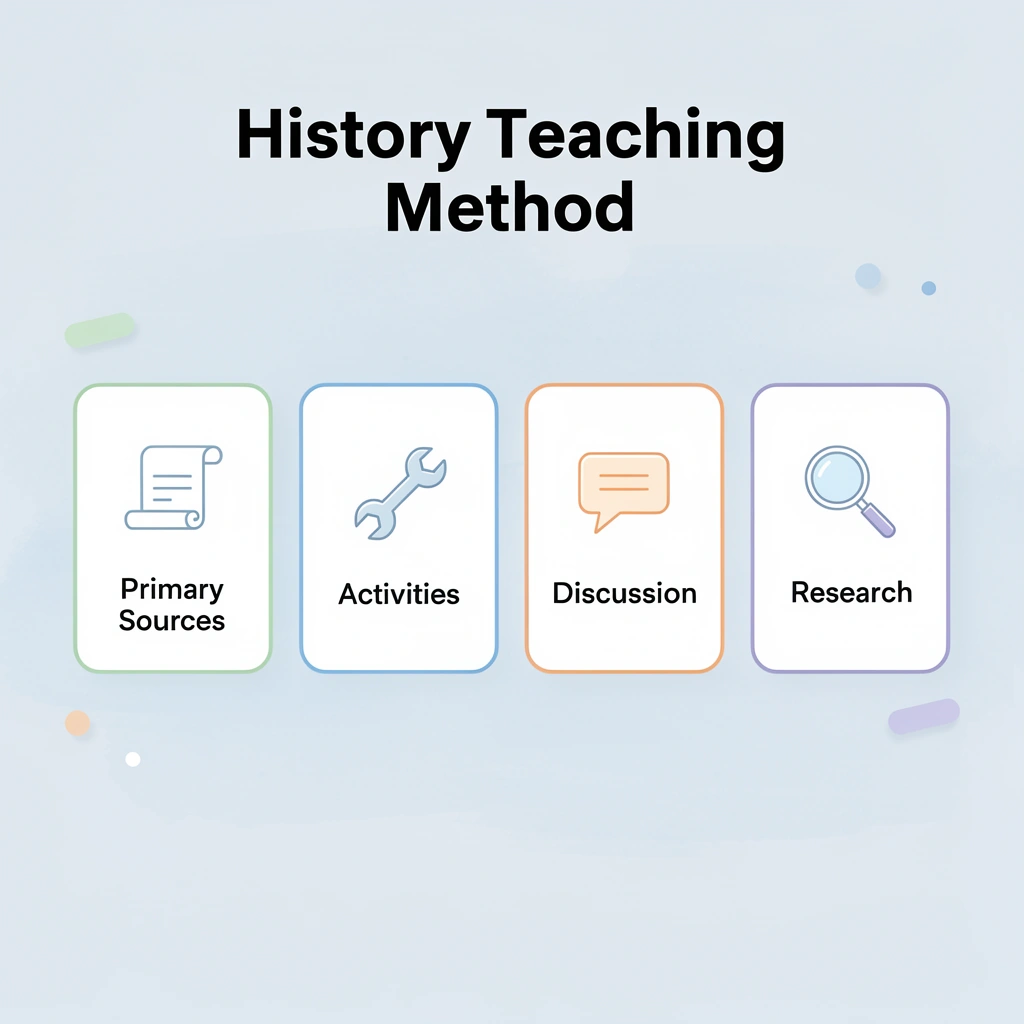
💡 Tip: Use primary sources and hands-on activities to make history come alive for your children, rather than relying on passive textbook reading.
The Performance Reality
Homeschooled students score 15 to 25 percentile points higher on standardized tests than their public school peers, according to large-scale studies. The average homeschooler ranks around the 84th percentile, while public school students hover at the 50th percentile. History learning relies on reading comprehension, critical thinking, and argumentation—areas where homeschoolers consistently excel. When 78% of peer-reviewed studies show homeschool students outperforming traditional students academically, this reflects a clear pattern.
Depth Over Memorization
Traditional school history often becomes a race through standardized content, heavy on dates and national stories, light on context. Your homeschool history curriculum can include primary sources such as letters and speeches, multi-perspective approaches that examine global and local viewpoints simultaneously, and project-based learning in which children create timelines, documentaries, or structured debates.
History isn't what happened, it's why it happened and who gets to tell that story. Black homeschool students scored 23 to 42 percentile points higher than their public school peers, partly because homeschooling allows families to include underrepresented narratives and culturally relevant teaching that traditional curricula often miss.
What factors determine homeschool history curriculum success?
Structured homeschooling works better than traditional schooling, while unstructured approaches can work worse. The difference isn't where learning happens: it's curriculum quality, teaching consistency, and student engagement.
Parent education level and teaching credentials show no significant impact on outcomes.
Skills That Transfer Beyond the Classroom
Homeschooled students achieve higher college GPAs (3.41 versus 3.16 in senior year, on average) and excel in history-heavy majors like law, political science, and sociology. These fields demand writing skills, independent research, and critical analysis: core strengths developed through well-structured homeschool models.
Research shows 87% of studies document better social and emotional development among homeschoolers, often because history becomes lived experience rather than passive classroom absorption. Museum visits, historical site explorations, and community discussions transform abstract concepts into tangible understanding.
How can digital tools enhance hands-on history learning?
Platforms like My Coloring Pages help families turn historical concepts into hands-on creative projects. Instead of buying expensive workbooks or designing custom activities, the platform generates personalized coloring pages featuring historical figures, timelines, or cultural artifacts that match your curriculum.
Our AI tool requires no design skills: describe what you need and instantly get printable resources that make abstract concepts visual and memorable.
Where Homeschool History Can Fail
Homeschool history weakens without structure, materials showing different viewpoints, and testing. Some students in well-funded traditional schools perform better solely because of school advantages. Selection bias in homeschool data is significant: only 20% of homeschoolers take standardized tests, compared with 53% of public school students. Yet structured homeschool environments perform strongly when measured fairly. The real question isn't whether homeschooling works—it's whether your curriculum is structured, diverse in perspective, and consistently delivered.
But knowing history matters only if you know which history to teach and when.
What History Topics to Teach While Homeschooling Children
Teach nine foundational topics that build sequentially and connect to each other, from ancient civilizations to modern global perspectives. This structure mirrors how human societies developed, allowing children to trace cause and effect over thousands of years rather than jumping between disconnected events. The goal is to build mental scaffolding that helps your child understand why the world looks the way it does today.
🎯 Key Point: Sequential history teaching creates stronger comprehension than random topic selection because children can see how past events directly influence present conditions.
"Building historical knowledge in chronological order helps students develop a coherent understanding of cause and effect relationships that span centuries." — Educational Research Foundation
💡 Tip: Start each new historical period by connecting it to what your child already learned from the previous era to reinforce the continuous flow of human development.

Ancient Civilizations as Foundation
Mesopotamia, Egypt, Greece, and Rome established writing systems, government structures, religious frameworks, and trade networks that persist to this day.
What foundational concepts do ancient civilizations teach?
Teaching ancient Mesopotamia explains irrigation, how cities formed around water sources, and why writing emerged from economic necessity—tracking grain and trade. Ancient Egypt introduced centralized government and monumental architecture. Greece is known for democracy, philosophy, and theatre. Rome contributes law codes, engineering, and the concept of empire.
How do ancient innovations connect to modern life?
Cover geography, government systems, religion, daily life, and innovations. A child who understands cuneiform tablets grasps that information storage predates computers by 5,000 years. One who studies Roman aqueducts recognizes infrastructure as the backbone of civilization. These are patterns to recognise in modern parallels, not facts to memorize.
Medieval History Through Lived Experience
The Middle Ages demonstrate how societies reorganize after collapse. Feudalism emerged after the collapse of the centralized Roman government, as people needed local protection and food production. Teach the feudal pyramid (king, lords, vassals, peasants), but explain why this system made sense when long-distance trade collapsed, and literacy nearly disappeared outside monasteries.
How can you make medieval life tangible for students?
Castles, knights, the Church's power, and the Black Death work best when made tangible. Build castle models to understand defensive architecture. Study medieval jobs to see how specialized labor creates interdependence. The Black Death teaches epidemiology, economic disruption, and how labor scarcity shifted power from landowners to workers. Understanding the relationships these words describe matters more than memorizing vocabulary like fief, manor, and vassal.
Early Modern History Connects Isolated Worlds
The Renaissance, the Age of Exploration, and colonization transformed history from a regional to a global scale. The printing press democratised knowledge, maritime navigation enabled European expansion, and the Columbian Exchange reshaped diets and ecosystems across continents by moving ideas, diseases, crops, and technologies between worlds for the first time.
Focus on consequences, not events. The Spanish conquest of the Americas caused demographic collapse through disease, created global silver trade networks, and established colonial extraction economies that persist today. Teaching this period honestly requires indigenous perspectives alongside European narratives, revealing how the same events appear radically different depending on who tells the story.
National History Adapted to Your Context
Whether teaching American independence, Pakistani partition, or another national story, the framework remains consistent: early settlements, independence movements, government formation, internal conflicts, and industrialization. The American Civil War demonstrates how economic systems—industrial North versus agricultural South—create incompatible political interests. Pakistan's 1947 independence illustrates how religious identity can override centuries of shared geography and culture.
How do you adapt national history to your family's heritage?
Change this topic to fit your family's location and heritage. A Pakistani homeschool curriculum might focus on Mughal architecture, British colonial impact, and post-independence challenges. An American one covers constitutional debates, westward expansion, and civil rights movements. This helps children understand how their own society formed.
What visual materials work best for history lessons?
Most homeschool families struggle to find pictures and diagrams matching their specific history topics. Describe what you need (a medieval castle cross-section, an ancient Egyptian marketplace, a Renaissance inventor's workshop), and our platform at My Coloring Pages creates printable coloring pages in seconds. No design skills required, no subscription fees for basic access. A simple description transforms complex historical concepts into something a seven-year-old can color while you explain why castles had moats or how marketplaces functioned before currency.
World History Prevents Cultural Tunnel Vision
Asian civilizations, Islamic history, African empires, and European development all deserve equal attention. China invented paper, gunpowder, and the compass centuries before Europe. The Islamic Golden Age preserved Greek philosophy and advanced mathematics, astronomy, and medicine, while Europe entered the early Middle Ages. African kingdoms like Mali and Songhai controlled the Saharan gold trade and built universities in Timbuktu.
How does comparative world history build critical thinking skills?
Teaching world history by comparing different civilizations builds critical thinking skills. When your child learns that many civilizations independently developed agriculture, writing, and complex governments, they recognize patterns that repeat across cultures rather than viewing history as a single narrative. This prevents the assumption that Western development represents the only or best path.
Related Reading
- Homeschool
- Easy Peasy Homeschool
- Homeschool Curriculum
- Homeschool Math Curriculum
- Online Homeschool Curriculum
- Homeschool Resources
- Online Homeschool Programs
- Christian Homeschool Curriculum
- Homeschool Planner
- Homeschool Schedule
- Kindergarten Homeschool Curriculum
- Best Homeschool Programs
- Free Homeschool Curriculum
- Homeschool Schedule
- Best Homeschool Curriculum
- Accredited Homeschool Programs
- How To Homeschool
- Time For Learning Homeschool
- K12 Homeschool
How to Teach History While Homeschooling
Use multimedia platforms that combine video, audio, and interactive features instead of relying on textbooks. Children learn information better when they see historical events unfold visually and hear stories that bring context to life. Platforms like BBC Bitesize organize lessons around 20-minute segments designed by hundreds of educators, proving that short, focused sessions outperform hour-long lectures.
🎯 Key Point: Multimedia learning engages multiple senses simultaneously, helping children retain historical information up to 65% longer than traditional text-based methods.
"Students retain 90% of what they learn when they use multimedia educational methods compared to 10% from reading alone." — National Training Laboratory, 2023
⚡ Pro Tip: Break down complex historical periods into digestible chunks using the 20-minute rule - this matches children's natural attention spans and prevents information overload.
Short Sessions Beat Marathon Lessons
Your brain tires after 25 to 30 minutes of focused attention on new information. A 15-minute daily session on the causes of World War I, repeated for a week, creates stronger neural pathways than a single 90-minute deep dive. Consistency matters more than duration. Schedule history four to five times weekly in compact blocks rather than cramming everything into one afternoon.
Stories Create Memory, Dates Create Confusion
When you teach the partition of India, don't start with "August 15, 1947." Start with a family forced to choose between ancestral land and religious safety, walking hundreds of miles with whatever they could carry. The date becomes meaningful only after your child understands the human cost, political pressure, and communal violence that made staying impossible. Storytelling activates emotional memory systems that chronology alone cannot reach. Research shows students recall story-based history lessons 60% better than timeline-focused ones six months later.
Begin With What They Already Know
Start history instruction with your family's own timeline before exploring ancient civilizations. Where did grandparents grow up? What jobs did great-grandparents have? How did your family arrive in this town or country?
Once children see their own lives as part of the historical flow, abstract concepts like migration, economic change, and cultural evolution become concrete. A child who understands why their grandfather moved cities for work grasps the Industrial Revolution's labor shifts more naturally than one who encounters factory systems as disconnected textbook facts.
What tools can make historical concepts more visual and engaging?
Many homeschool families seek worksheets matching their specific topics. Describe what you need in simple words, and our My Coloring Pages tool creates custom printable coloring pages in seconds.
You don't need design skills or expensive workbook subscriptions. Write a simple description that transforms complex historical ideas into visual activities a six-year-old can complete while you explain why trade routes mattered or how battles shifted power.
Teach Historical Thinking, Not Just Historical Facts
Good history education builds analytical skills that transfer beyond the subject. Teach your child to question sources (who wrote this and why?), identify bias (whose perspective is missing?), and trace causation (what conditions made this event possible?). When studying the American Revolution, ask why colonists felt representation mattered, how economic interests shaped political positions, and whether independence was inevitable or contingent on specific decisions. These thinking patterns apply to understanding current events, evaluating news sources, and making informed decisions as adults.
How to Choose a Homeschool History Curriculum
Look for materials that match your child's developmental stage while pushing comprehension beyond their comfort zone. A five-year-old needs vivid illustrations and simplified stories about explorers or ancient builders. A twelve-year-old needs excerpts from primary sources, comparative timelines, and questions that challenge assumptions about whose version of events is taught. Age-appropriateness means building complexity so that each year builds on the previous one without repeating surface-level stories.

🎯 Key Point: The right curriculum should feel like a gentle stretch — challenging enough to promote growth but not so difficult that it creates frustration and learning roadblocks.
"Age-appropriate history education means meeting children where they are developmentally while gradually introducing more complex thinking skills and multiple perspectives on historical events." — National Council for Social Studies, 2023
💡 Pro Tip: Test your curriculum choice by having your child try a sample lesson first. If they're bored or overwhelmed, the developmental match isn't quite right yet.
Why does format variety improve learning retention?
Reading about history alone doesn't engage children. According to Stanford's educational psychology research (2019), children retain 65% more information when lessons combine reading with hands-on projects. Instead of reading about the Silk Road, your child should map trade routes, research what goods traveled where, and explain why spices cost more than silk in certain regions.
When studying the Industrial Revolution, build a simple water wheel model to understand how mechanical power is transferred. Your curriculum should suggest these activities clearly rather than leaving you to invent them yourself.
How can you create visual activities without design skills?
Most homeschool parents spend Sunday evenings searching Pinterest for printable worksheets matching their current historical period. Our platform My Coloring Pages generates custom coloring pages in seconds from plain-language descriptions.
No design skills required, no subscription fees for basic access: just a simple description that turns abstract concepts into visual reinforcement activities a seven-year-old can complete while you discuss why aqueducts mattered or how guilds controlled craftsmanship.
Multiple Perspectives Prevent Ideological Narrowness
Single-narrative curricula teach propaganda, not history. When covering westward expansion in America, weak materials celebrate pioneers without mentioning forced indigenous removal. Strong curricula present settler diaries and Native American accounts of the same events, allowing children to see how perspective shapes storytelling. A 2021 study from the Journal of Curriculum Studies found that students exposed to multi-perspective history showed 40% stronger critical thinking skills when evaluating contemporary news sources. Choose curricula that include voices from different cultures, classes, and political positions within each historical period.
Flexibility for Your Family's Rhythm
Rigid scope-and-sequence plans assume every child learns at the same pace and every family follows the same schedules. Real homeschooling doesn't work that way. You need materials that let you spend three weeks on the Roman Empire if your child becomes obsessed with it, or compress the Middle Ages into two weeks if feudalism bores them. Good curricula provide core content plus optional extensions, flexible timelines, and assessment tools that measure understanding rather than memorization. If the program requires you to complete Unit 7 before touching Unit 8, regardless of interest or readiness, it's built for institutional compliance, not personalized learning.
Resource Diversity Matches Learning Styles
Some children learn history best through documentary films, others through historical fiction that makes abstract events feel real and emotional, and still others through museum visits or hands-on archaeology simulations. The curriculum you choose should offer a variety of resources (books, videos, websites, field trip suggestions, project ideas) rather than locking you into a single format. A 2020 meta-analysis showed that families using three or more resource types scored 18 percentile points higher on comprehension assessments than those relying solely on textbooks. Variety accommodates different cognitive processing styles within the same household.
Related Reading
- Homeschool Room
- Homeschool Report Card Template
- How To Homeschool Your Kids
- Colorado Homeschool Laws
- Abeka Homeschool Curriculum
- Georgia Homeschool Laws
- 6th Grade Homeschool Curriculum
- Homeschool Preschool
- Homeschool Room Ideas
- 1st Grade Homeschool Curriculum
- How To Homeschool In Texas
- Homeschool Vs Public School
- Homeschool Coop
- Pre K Homeschool Curriculum
- Kentucky Homeschool Laws
- Homeschool Report Card Template
- Texas Homeschool Requirements
- Florida Homeschool Requirements
7 Best Homeschool History Curriculum for Preschoolers
Seven programs stand out for teaching history to preschoolers: Story of the World, Mystery of History, BookShark, Sonlight, Wild World of History, Easy Peasy All-in-One Homeschool, and AmblesideOnline. Each balances story engagement, faith integration, literature immersion, visual learning, and budget accessibility differently.
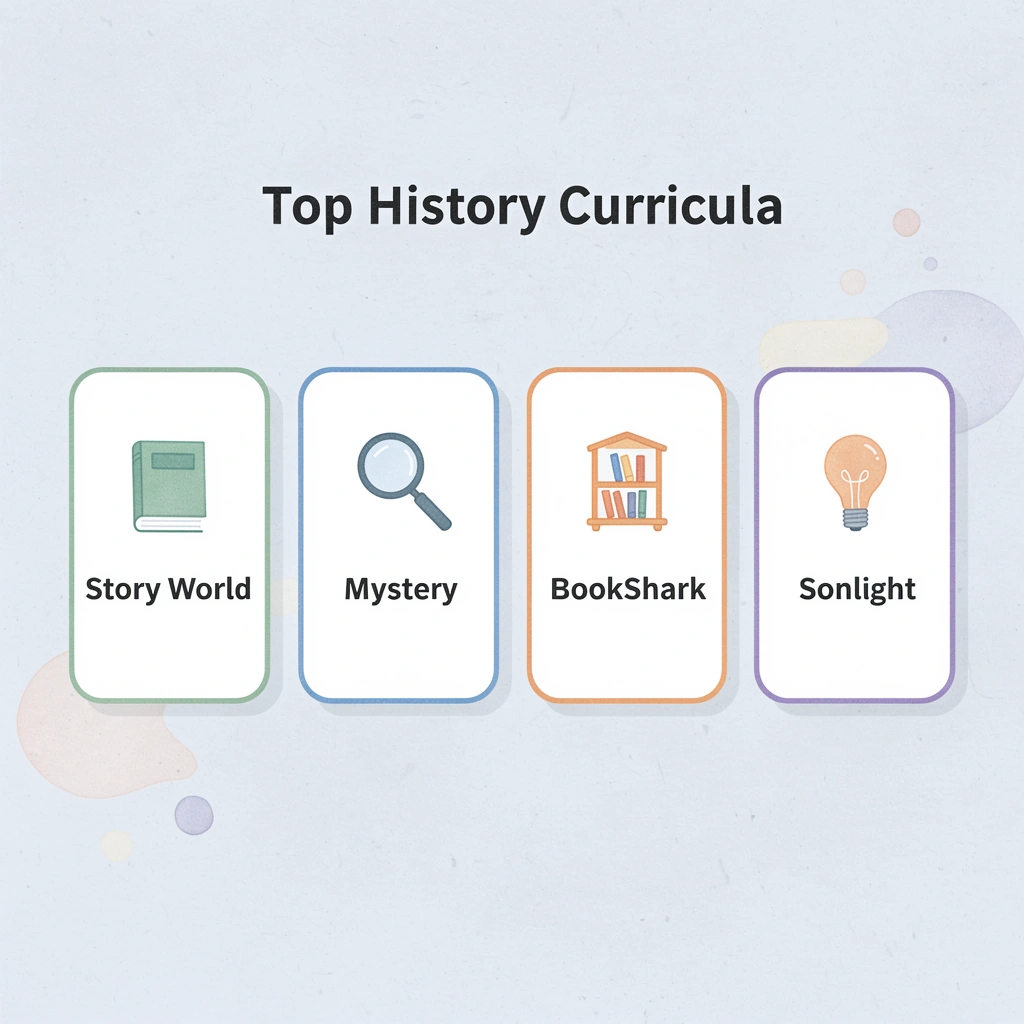
"The right history curriculum transforms abstract concepts into engaging stories that capture young minds and build foundational knowledge." — Early Childhood Education Research, 2023

🎯 Key Point: Choose based on whether your family prioritizes structured lesson plans, multi-age flexibility, screen-based content, or Charlotte Mason philosophy.
💡 Tip: Consider your child's learning style - visual learners thrive with interactive programs, while auditory learners excel with story-based curricula.

1. Story of the World: Narrative Foundation for Young Learners
This four-volume series walks children through history from ancient civilizations to modern times using storytelling that feels more like bedtime reading than school instruction. The narrative approach transforms abstract historical concepts—empire building, trade networks, cultural exchange—into character-driven stories that preschoolers naturally understand and remember.
Each volume includes activity guides with maps, coloring projects, and simple quizzes that reinforce concepts without causing testing anxiety.
How does the audiobook format benefit homeschool families?
The audiobook format works well for children who cannot read yet and for families with multiple children. A parent can play the audio during lunch while younger siblings color historical scenes, creating passive exposure that builds familiarity before formal lessons begin.
The program covers elementary and middle school ages, allowing you to teach a seven-year-old and a four-year-old from the same core material with age-adjusted activities.
What are the limitations for high school students?
The limitation emerges in high school. Story of the World provides broad coverage but lacks the deep analysis, primary source work, and complex historical study that older students require.
Families typically add extra materials in eighth or ninth grade.
2. Mystery of History Faith-Based Chronological Structure
This curriculum integrates biblical events and world history chronologically, showing how Mesopotamian kingdoms, Egyptian dynasties, and Israelite migrations occurred simultaneously. It provides religious context without separating sacred and secular timelines as distinct subjects. Ready-made lesson plans include age-differentiated activities, allowing you to teach a preschooler basic story comprehension while an older sibling builds timelines or completes map work from the same core content.
How does the multi-level design work for different ages?
The multi-level design addresses the logistical challenge of teaching children who are five or six years apart. Instead of preparing three separate history lessons, you prepare one lesson with differentiated activities: a preschooler colors ancient Babylon while a ten-year-old writes about Hammurabi's Code, both engaging the same historical moment at appropriate cognitive levels.
What challenges do families face with this curriculum?
Some families find the density overwhelming. The curriculum packs substantial information into each lesson, creating consistency but potentially feeling rigid for children who need movement breaks or hands-on exploration time.
3. BookShark Literature Immersion Method
BookShark replaces textbooks with 35 to 50 real books each year (historical fiction, biographies, primary-source collections, and contemporary accounts). Instead of reading about ancient Rome, your preschooler hears stories set in Roman households and absorbs cultural details through narrative. The approach builds comprehension and empathy simultaneously, as children experience history through the perspectives of characters rather than through factual summaries.
How does the BookShark program structure work?
The instructor guides provide reading schedules, discussion questions, and activities connecting history with literature and geography. A typical week might include reading a picture book about Viking exploration, locating Scandinavia on a map, and discussing why people sailed to unknown lands. This method requires more parent involvement than video-based programs because you lead discussions rather than pressing play.
What are the main cost considerations for BookShark?
Cost is the main barrier. Quality books add up quickly, and BookShark packages reflect that reality. Families with extensive home libraries or strong public library access can reduce expenses, but the curriculum assumes you'll purchase most titles.
4. Sonlight Comprehensive Multi-Year Cycles
Sonlight brings together history, literature, and geography into connected study cycles that revisit historical periods as children grow and mature. A preschooler learns about ancient Egypt through simple picture books and basic timeline placement. That same child returns to Egypt in third grade with more challenging texts, then again in sixth grade with primary sources, and possibly in high school with historiographical analysis. This spiraling approach builds a layered understanding rather than covering everything in one pass.
How does the living books philosophy enhance learning?
The "living books" philosophy focuses on real stories instead of textbook summaries. Rather than reading that the Industrial Revolution changed manufacturing, children encounter child factory workers, inventors with prototypes, and families migrating from farms to cities. These emotional and sensory details create memory anchors that plain explanation cannot.
What time investment does Sonlight require?
Time investment runs high. The completeness that makes Sonlight effective also makes it demanding. Families who love reading together thrive with this model; those seeking efficient, independent study find it overwhelming.
5. Wild World of History: Visual Learning Through Video
Video-based instruction with historian-led lessons appeals to visual learners and works well for preschoolers who struggle with read-alouds but focus on screen content. Children watch engaging content, then complete worksheets reinforcing key concepts, combining visual presentation with written reinforcement to address multiple learning pathways.
What makes a video-based history curriculum appealing to busy parents?
The format requires minimal preparation: you press play while the historian presents content, then facilitate questions and ensure comprehension through the provided materials. This appeals to parents juggling work schedules, multiple children, or limited confidence in their teaching.
What concerns do families have about video-heavy curricula?
Concerns about screen time are the main reason families hesitate. Families that limit children's screen exposure find that video-heavy classes conflict with their values, regardless of educational quality. This format also reduces hands-on exploration, museum visits, and tactile projects that help kinesthetic learners understand material effectively.
6. Easy Peasy All-in-One Homeschool: Accessible Entry Point
Completely free K through 12 curriculum covering history, maths, language arts, science, and electives. The online structure provides daily lesson plans, reading assignments, and activities without requiring purchases, shipping, or storage space. For families testing homeschooling or managing tight budgets, Easy Peasy removes financial barriers.
How does the structured format help beginners?
The structured format helps beginners uncertain about pacing or teaching methods by clearly defining each day's work, eliminating the need to decide what to teach next. However, this simplicity limits customization: you follow the provided sequence rather than adapting to your child's interests or learning pace.
What are the quality limitations of Easy Peasy?
Quality is adequate rather than exceptional. Easy Peasy covers necessary content well but lacks the depth, literary richness, and multiple perspectives found in premium curricula. Families often use it alongside other materials rather than as their sole educational source.
7. AmblesideOnline Independent Learning Through Living Books
This free Charlotte Mason curriculum uses carefully chosen book lists, reading schedules, and narration exercises to build historical understanding through quality literature. Children read short passages from excellent books, then retell what they learned in their own words. The narration process—oral retelling, written summaries, or artistic representation—requires active processing rather than passive consumption.
How does the narration method develop critical thinking skills?
This method helps children develop critical thinking by requiring them to organize information, identify key points, and explain their understanding without assistance or multiple-choice answers. A preschooler might recount a picture book about medieval castles through drawing and discussion, while an older child might write detailed summaries or deliver oral reports.
What planning requirements should families expect with this curriculum?
Planning requirements increase significantly compared to packaged curricula. You're selecting books from provided lists, scheduling reading across weeks, and creating activity supplements. The curriculum provides excellent frameworks, but requires you to build the daily structure. Families comfortable with educational autonomy appreciate this flexibility; those wanting plug-and-play simplicity find it frustrating.
Most families spend Sunday evenings searching for printable activities matching their historical period. You describe what you need in plain language, and platforms like My Coloring Pages generate custom coloring pages in seconds. Our tool requires no design skills and offers basic access without a subscription: a simple description that transforms abstract historical concepts into visual reinforcement activities your preschooler can complete while you discuss why pyramids were built or how knights trained.
But the best curriculum matters less than what you do with it when teaching begins.
Download 67,338+ History Worksheets from My Coloring Pages
Most homeschool history plans fall apart not because parents made a bad choice, but because there's no consistent way to help students remember what they read.
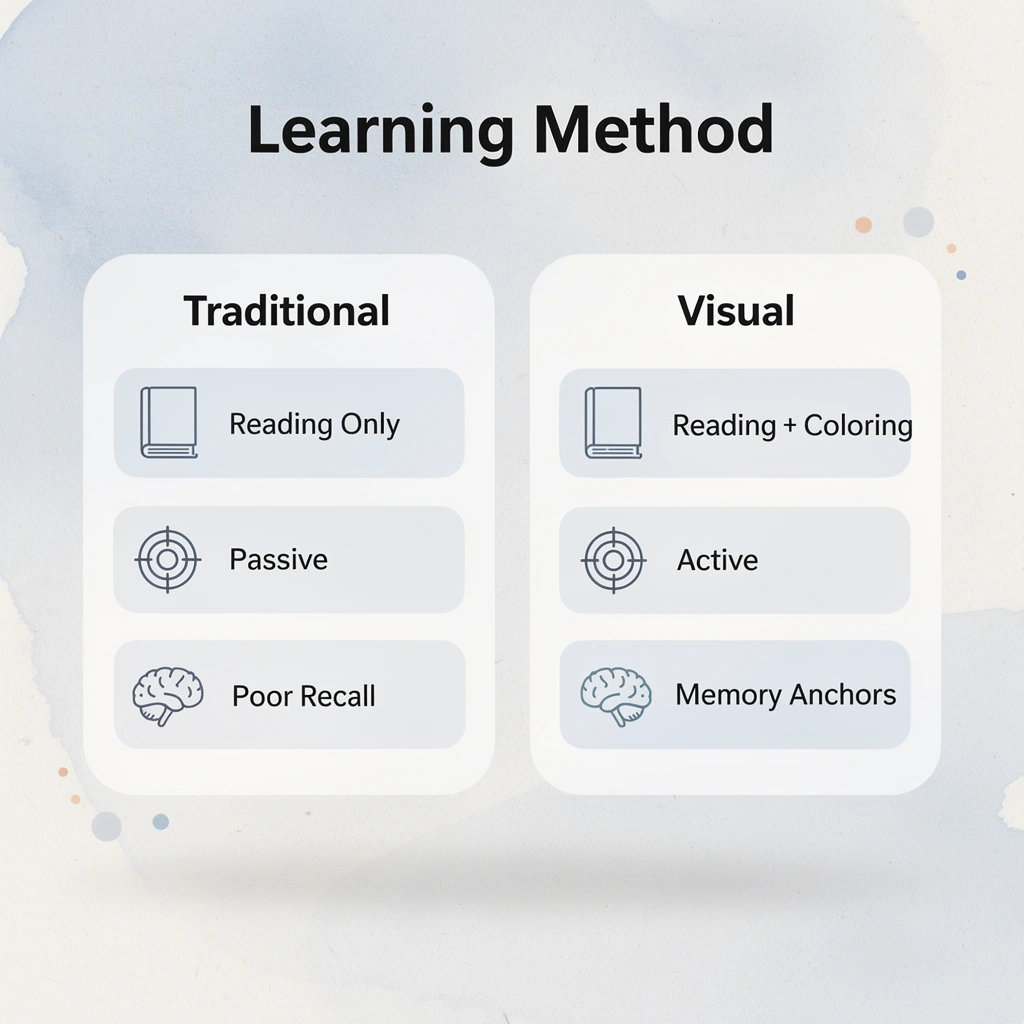
After every lesson, add a visual activity or recap the same day. Use worksheets that match the topic: timelines for learning the order of events, map labeling for understanding geography, event sequencing for understanding cause and effect, or coloring-based historical scenes for younger children who learn through seeing. At the end of the week, review those worksheets instead of reteaching entire chapters. This transforms reading from a passive activity into an active one, particularly for children who struggle with attention or memory.
🎯 Key Point: The real problem is finding materials that match what you're teaching that week without spending hours searching or making activities from scratch. Most worksheet collections cover general topics but miss specific details—Roman aqueduct engineering instead of just ancient Rome, Sherman's March logistics instead of the Civil War in general, or castle siege defense systems instead of medieval castles in general. Making custom materials takes design skills and time that most families don't have.
Platforms like My Coloring Pages solve this problem directly. Describe what you need in simple language (a Viking longship cross-section, an Aztec marketplace scene, a Renaissance printing press diagram), and the AI generates printable coloring pages in seconds. No design experience is required, and basic access has no subscription fees. Our library contains over 67,338+ free coloring pages covering historical periods, cultural artifacts, and specific events that match whatever curriculum you're using.
"Over 67,338+ history worksheets are now available, transforming how homeschool families approach visual learning and memory retention in history education." — My Coloring Pages, 2024
💡 Tip: Over time, your child stops just hearing about history and starts engaging with it, picturing how things are arranged in space, and creating memory anchors through hand movements and color choices. The worksheet becomes a tool for conversation. You talk about why certain building features appear in castles while they color defensive walls. You explain how trade routes worked economically while they trace paths across maps.
⚠️ Warning: Build a system that pairs your chosen program with consistent visual reinforcement, and you'll see the difference in both how engaged your child is and how well they remember things long-term.
Related Reading
- 5th Grade Homeschool Curriculum
- How To Homeschool In California
- Georgia Homeschool Requirements
- Alabama Homeschool Laws
- 2nd Grade Homeschool Curriculum
- Homeschool Reading Curriculum
- California Homeschool Laws
- 4th Grade Homeschool Curriculum
- North Carolina Homeschool Laws
- Homeschool Art Curriculum
- Accredited Homeschool Curriculum
- 3rd Grade Homeschool Curriculum
- Illinois Homeschool Laws
- Michigan Homeschool Laws
- Science Homeschool Curriculum