Is Creativity a Skill & 15 Ways to Enhance it in Children
Is creativity a skill? My Coloring Pages reveals 15 proven methods to develop creative abilities in children through engaging activities.

Children transform cardboard boxes into spaceships while some adults struggle to generate a single fresh idea. This contrast raises an important question about whether creativity flows from natural talent or develops through practice and the right environment. Research shows that creative thinking can indeed be strengthened through deliberate practice, supportive surroundings, and engaging activities that challenge the imagination. Understanding how to foster creativity opens doors to enhanced problem-solving, innovation, and personal expression across all areas of life.
Hands-on creative activities provide some of the most effective training grounds for developing imaginative thinking. Visual exercises like coloring and pattern work help strengthen creative muscles through experimentation with color combinations, design choices, and artistic problem-solving. These activities make creative practice accessible to people of all ages and skill levels, offering low-pressure opportunities to explore and grow. For those seeking structured creative practice, My Coloring Pages offers thousands of customizable options designed to spark imagination and support creative development.
Summary
- Creativity functions as a trainable cognitive skill rather than a fixed genetic gift, with decades of research confirming that creative thinking strengthens through deliberate practice and responds to environmental conditions much like physical fitness. A meta-analysis published in Psychological Bulletin examined 169 creativity training studies spanning five decades and found that structured creativity training produced a moderate improvement effect of 0.53 standard deviations in creative performance, directly contradicting the myth that creative ability remains frozen regardless of effort.
- George Land's longitudinal study tracking 1,600 children revealed that 98% scored at "creative genius" level at age five, but this dropped to 30% by age ten, 12% by age fifteen, and only 2% among 280,000 tested adults. This dramatic decline doesn't reflect genetic limits but rather how environments gradually suppress experimentation, divergent thinking, and imaginative behavior through social conditioning, rigid educational systems, and fear of judgment throughout development.
- Modern neuroscience research demonstrates that creative neural pathways physically deepen through repeated use of imagination, brainstorming, experimentation, and problem-solving due to neuroplasticity, the brain's ability to restructure itself throughout life. A 2024 randomized experiment with 1,100 participants found that while AI assistance boosted short-term creative performance during assisted tasks, users later showed weaker independent creative performance when working without support, proving that creativity deteriorates without active practice just as muscles atrophy without exercise.
- Research published in the Children journal in February 2025 confirms that creativity links closely to well-being, social adjustment, and personal development in children and adolescents, while a 2025 study by Talker Research for Crayola found that 87% of parents believe creativity is essential for their child's future success. According to the World Economic Forum Future of Jobs Report 2025, 57% of employers now consider creative thinking a core skill, recognizing that innovation, problem-solving, and adaptability depend on cognitive flexibility rather than inherited genius.
- Studies show that children who engage in art activities for at least 30 minutes daily demonstrate 45% better fine motor skills development, while 72% of parents report that creative activities improve their children's problem-solving skills. Research from PLOS ONE examining creativity in early childhood education, with 18 participants, found that physical environments that support open-ended exploration and structured creative activities, such as game design, significantly increase children's ability to generate novel solutions to unfamiliar challenges.
- My Coloring Pages addresses this by offering 75,890+ free coloring pages for download that serve as creativity workouts rather than passive activities, providing structured starting points that reduce intimidation while leaving open space for children to practice imagination, narrative thinking, and visual problem-solving through repeated engagement with customizable designs.
Is Creativity a Skill?
Yes. Creativity is a skill you can learn and improve, not something you are born with. Research from brain science, psychology, and workplace studies shows that creative thinking strengthens with practice, weakens without use, and changes based on your surroundings—like physical fitness. Many people believe you either have creative talent or you don't, and this belief has caused millions to abandon imaginative thinking entirely. However, evidence shows this belief is wrong. Studies prove that deliberate practice strengthens creative thinking.
💡 Tip: Think of creativity like a muscle—the more you exercise it through deliberate practice, the stronger it becomes.
"Creative thinking strengthens with practice, weakens without use, and changes based on your surroundings—like physical fitness." — Brain Science Research
🔑 Key Takeaway: The myth that creativity is an innate talent has prevented millions from developing their creative potential, but scientific evidence proves creativity can be systematically improved through targeted practice.

Why do people believe creativity can't be developed?
Too many people stop trying new things because they believe creativity comes from innate luck rather than effort. This belief creates a self-reinforcing cycle: those who think they aren't creative skip brainstorming sessions, fear visible mistakes, reuse familiar solutions, and gradually weaken the neural pathways that generate new ideas.
Their ability to imagine and create actually gets worse, not because they didn't have the talent to begin with, but because they stopped using it.
How has the professional world's view of creativity changed?
The professional world has moved past this outdated view. According to the World Economic Forum Future of Jobs Report 2025, 57% of employers consider creative thinking a core skill.
Organizations recognize that innovation, problem-solving, and adaptability depend on cognitive flexibility rather than inherited genius. Yet many adults still treat creativity as the domain of artists, writers, or designers, when it powers everything from strategic planning to customer service.
What does the largest creativity study reveal about training effectiveness?
Researchers publishing in Psychological Bulletin analyzed 169 creativity training studies spanning five decades and involving 844 effect sizes. They found that structured creativity training produced a moderate improvement of 0.53 standard deviations in creative performance. After adjusting for publication bias, results remained positive. Creativity training works for children, students, professionals, and adults alike, contradicting the notion that creativity is fixed at birth.
How do environments suppress natural creative abilities over time?
George Land conducted a famous study using a creativity test originally developed by NASA engineers. He tested 1,600 children over time. At age five, 98% scored at the "creative genius" level. By age ten, that number dropped to 30%. By fifteen, it fell to 12%. When 280,000 adults were tested later, only 2% retained the same level of creative ability. This decline revealed how environments suppress divergent thinking, risk-taking, and imagination. Social conditioning, rigid school systems, and fear of others' judgment all contribute.
How does your brain physically change through creative practice?
Modern neuroscience shows that creative thinking activates semantic processing systems, associative networks, and multiple brain regions connected to flexible thought. The brain restructures itself through repeated use. As muscles strengthened through exercise, creative neural pathways deepen through imagination, brainstorming, experimentation, storytelling, and problem-solving.
This process, called neuroplasticity, works throughout your entire life. You don't inherit a fixed creativity quota; you build or erode it based on how often you engage in imaginative thinking.
What does research reveal about AI and creative performance?
A 2025 meta-analysis of 28 studies with 8,214 participants found that people working with generative AI performed better at creative tasks, with an effect size of g = 0.27. However, the same research showed that AI use reduced idea diversity among participants (g = -0.86).
This shows that creativity improves with practice but weakens when you rely on AI to do the work for you. Your creative skill grows through active practice and deteriorates through delegation to AI.
How does dependency on AI affect independent creative thinking?
A 2024 randomized experiment with 1,100 participants studied how AI affects divergent and convergent thinking. AI assistance boosted short-term creative performance during assisted tasks, but users later showed weaker independent creative performance when working without AI support. The more people outsource imagination, the less they practice idea generation and independent thinking.
Physical activity research adds another dimension: even brief movement, such as climbing stairs or walking, improves divergent thinking within minutes. Creativity changes and improves based on habits, environments, physical activity, mental stimulation, and consistent practice.
Why do adults struggle more with creativity than children?
Most people believe creativity requires special permission or rare talent. They wait for inspiration, avoid open-ended challenges, and gradually stop using the cognitive flexibility that enables innovation. Creative ability grows through active use, exploration, repetition, curiosity, and cognitive flexibility.
People who become highly creative rarely have magical talent. They simply exercise creativity consistently, while others stop. The difference isn't genetic; it's behavioral.
But if creativity strengthens through practice, why do so many children seem naturally imaginative while adults struggle to generate a single novel idea?
Importance of Creativity in Children
Why Creativity Matters More Than Parents Realize
Creativity shapes how children solve problems, express emotions, build confidence, and adapt to uncertainty. Without it, many struggle with independence, resilience, and the ability to think beyond instructions. The critical question is whether we're protecting it during the narrow window when imagination either strengthens into a lifelong skill or disappears.

🎯 Key Point: Creativity isn't just about art or play—it's the foundation for critical thinking, emotional intelligence, and problem-solving skills that children will need throughout their lives.
"Creativity is the currency of the future. Children who develop creative thinking skills early are better equipped to navigate uncertainty and complex challenges as adults." — Educational Psychology Research

💡 Tip: The window for creative development is most open during early childhood. Parents who prioritize creative activities and open-ended play are investing in their child's cognitive flexibility and adaptive thinking abilities.
Problem-Solving Under Pressure
Children who lack creative practice often freeze when facing unfamiliar challenges. They've learned to wait for instructions, memorize correct answers, and avoid mistakes. Creative activities break this pattern by teaching children to experiment, adapt, and explore solutions independently. When a child builds with blocks, invents a game with friends, or fixes a broken toy, they're practicing flexible thinking that no worksheet can teach. This difference emerges when they encounter open-ended tasks, unexpected obstacles, or situations where no adult can provide the answer.
Emotional Expression and Confidence
Many children have feelings they can't yet name or explain—fear, frustration, excitement, confusion. Without safe ways to express these emotions, they get pushed down or emerge suddenly. Creative activities let children communicate beyond words. A child who draws a storm might be working through worry; one who builds detailed fantasy worlds during play might be figuring out social situations they don't fully understand. According to research published in the Children journal (February 2025), creativity is closely linked to well-being, social adjustment, and personal development in children and adolescents. When children create something, they begin to believe their ideas matter and that their voices deserve to be heard.
How does passive consumption weaken creative development?
The modern childhood challenge isn't screen time itself: it's the ratio of consumption to creation. Children spend hours watching, scrolling, and reacting, but rarely building or inventing. This imbalance weakens attention span, curiosity, and self-directed play.
Creative activities reverse the pattern by shifting children from passive receivers to active generators. A 2025 study conducted by Talker Research for Crayola found that 87% of parents believe creativity is essential for their child's future success. The child who designs custom coloring pages, builds a cardboard city, or writes a story exercises cognitive muscles that passive entertainment cannot.
What practical solutions exist for screen-free creativity?
Parents seeking screen-free creative activities often face a practical problem: most craft supplies require planning, cleanup, and supervision. Generic coloring books lose appeal quickly because children want designs matching their specific interests.
Platforms like My Coloring Pages let children generate custom coloring pages on demand. A child obsessed with dinosaurs can create dozens of unique designs in minutes. One interested in space exploration can print planets, rockets, and astronauts tailored to their imagination. The barrier between idea and creative output disappears.
How does creative expression help children process emotions?
Kids today face school pressure, friendship challenges, and overstimulation—emotional difficulties that many adults struggle to manage without adequate coping strategies. Creative expression provides an outlet that requires neither advanced speaking skills nor emotional maturity.
A child who feels stressed can work through those feelings through art, music, pretend play, or storytelling without needing to explain what's wrong. Holding in emotions during childhood doesn't disappear; it resurfaces later as anxiety, behavior problems, or difficulty controlling emotions under stress. Creativity creates space for feelings to exist without judgment, giving children practice managing their emotions before they become overwhelming.
Why do parents accidentally suppress creativity despite good intentions?
So if creativity protects imagination, builds resilience, and strengthens problem-solving, why do so many well-meaning parents suppress it?
Related Reading
- Best Books To Inspire Creativity In Kids
- Best Toys For Promoting Creativity
- Creativity Quotes
- Best Toys For Developing Creativity
- How To Encourage Creativity In Kids
- What Is Creativity
How to Enhance Creativity in Children in 15 Ways
The mistake parents make isn't removing what they do—it's removing space, time, and permission for creativity to exist without constant correction. Creativity doesn't need fancy programs or expensive classes. Most families stop creative development by overscheduling, controlling outcomes, or treating imagination as something that happens only during set "art time." Creativity grows when children have access to materials, freedom from judgment, and unstructured time to experiment with their own ideas.
"Children who have regular access to unstructured play time show 33% higher creative problem-solving abilities compared to their overscheduled peers." — American Academy of Pediatrics, 2023
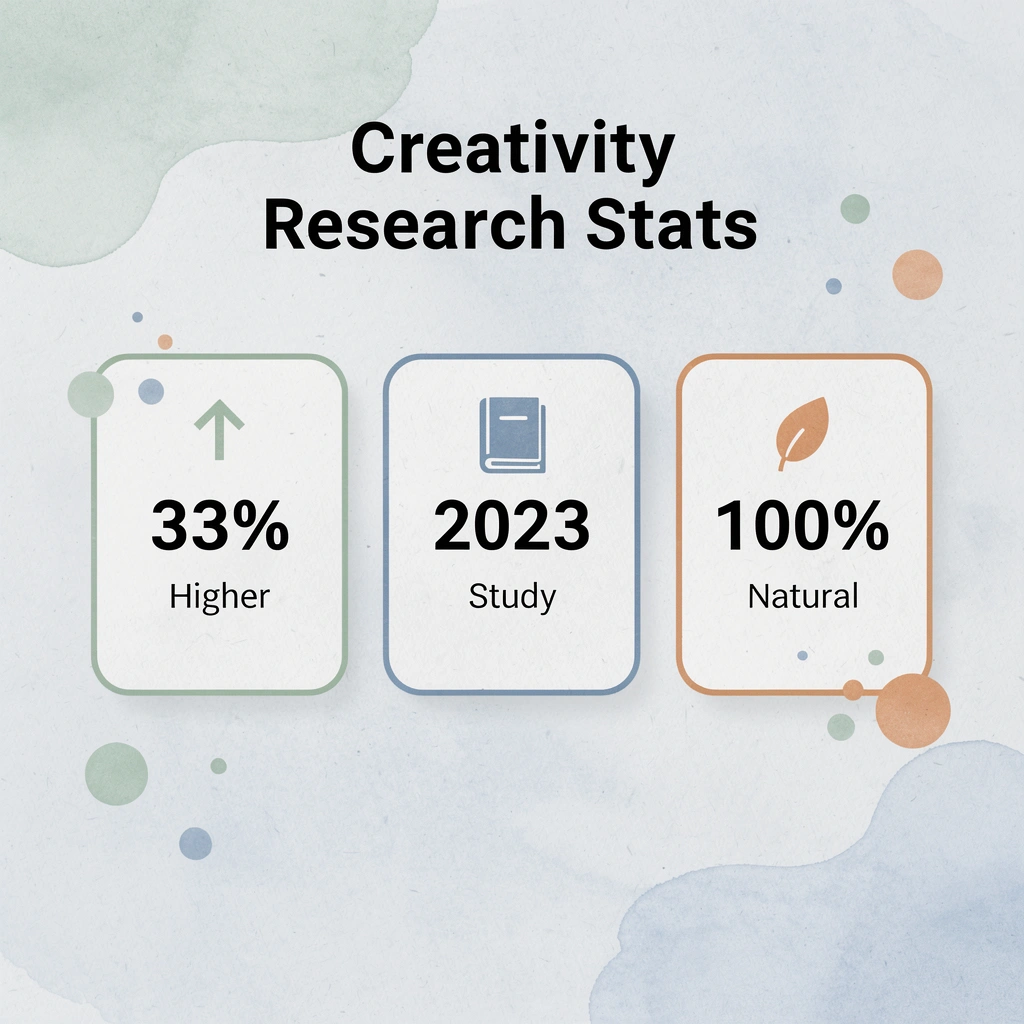
🎯 Key Point: The foundation of childhood creativity isn't what you add to your child's schedule—it's what you remove. Unstructured time is where true innovation happens.
⚠️ Warning: Over-programming your child's day with structured activities can actually hinder their natural creative instincts and independent thinking abilities.
1. Create a Dedicated Space Where Experimentation Feels Normal
Kids become more creative when they have a physical space where making a mess or trying something new feels safe. A small corner with art supplies, blocks, costumes, paper, or recycled materials signals that imagination is encouraged.
The key is to always have these materials available. When materials are locked away or require adult permission, creative ideas stop before they start.
How do physical environments influence creative activity initiation?
According to research published in PLOS ONE on creativity in early childhood education, physical environments supporting open-ended exploration directly influence how often children initiate creative activities.
A cardboard box left in the corner becomes a spaceship one day, a store the next, a hiding place the third. The environment itself grants permission, saying "you can invent here" without requiring adult approval for each idea.
2. Give Kids More Unstructured Time
Overscheduling kills creativity. When every hour is filled with tutoring, screens, or planned activities, children never experience the productive discomfort of boredom, where imagination begins.
How does boredom spark creative thinking?
When the brain lacks external stimuli, it generates its own activities: inventing games, stories, and problems to solve. This doesn't occur when devices or structured activities fill every empty moment.
What happens when children direct their own time?
Leave open time where children direct themselves—no agenda, no learning objectives, no adult-led outcomes. They'll build elaborate worlds with forgotten toys, invent rule systems that make perfect sense to them, and ask for materials to create what they've been thinking about. This is creative thinking in its most natural form.
3. Encourage Open-Ended Play Instead of "Correct Answers."
Creative thinking grows when activities have multiple possible outcomes rather than one right answer. Building with LEGO without instructions, pretend restaurants, cardboard-box inventions, and storytelling games all share a common trait: no single correct result. A child building with blocks experiments with balance, height, structure, and collapse—each attempt teaches something different.
How does focusing on correct answers limit creative development?
Introducing a "right way" to complete a creative activity shifts focus from exploration to following rules. Children stop asking "what happens if I try this?" and start asking "is this what you wanted?" That question kills creative confidence faster than criticism. Open-ended play teaches children that their ideas have value independent of adult approval.
4. Ask More "What If?" Questions
Questions help children think in different ways and develop the ability to generate multiple solutions to one problem. Factual questions like "What color is this?" have one answer, while speculative questions like "What if animals could talk?" or "What if your bedroom became a spaceship?" have many answers. Each asks the child to imagine something that doesn't exist, then build logic around it.
What types of hypothetical questions work best for developing creativity?
Try asking: "How would you redesign your school?" or "What would happen if it rained candy?" These questions have no wrong answers and require both imagination and reasoning. Children who regularly practice thinking through hypothetical scenarios develop flexibility in problem-solving and learn to approach unfamiliar situations by asking, "What could this become?" rather than "What is this supposed to be?"
5. Let Kids Make Mistakes Without Fixing Everything
Kids stop trying new things when they're afraid of making mistakes. If every drawing gets fixed, every craft project gets changed by an adult, and every creative choice gets overruled, the message is clear: your ideas aren't good enough. The child learns to wait for instructions instead of trying things independently. Creative confidence dies quietly, one correction at a time.
How can you encourage creative exploration instead?
Instead of fixing outcomes, ask, "Tell me about your idea." This shifts the conversation from judgment to curiosity, helping you understand their intention. Even if the execution looks messy, the creative process held value for them. A child who feels safe making mistakes will attempt harder projects, take creative risks, and develop resilience when ideas don't work the first time.
6. Introduce Different Creative Materials
Creativity grows when children work with diverse textures, tools, and sensory experiences. Clay feels different from paint. Chalk creates different effects than markers. Beads, recycled cardboard, costumes, kinetic sand, and fabric scraps each invite different kinds of thinking.
A child who tries many different materials develops flexibility in their creative approach, while one limited to crayons develops only a narrow set of skills.
Why does material variety improve problem-solving abilities?
New materials encourage children to see objects as raw potential instead of fixed items. A cardboard tube can become a telescope, a tunnel, a building support, or a musical instrument. This thinking transfers directly to problem-solving in other areas.
7. Read Stories, Then Change the Ending
Storytelling builds vocabulary and narrative understanding, but the creative leap happens when you ask: "What would you change?" or "What if the villain won?" These questions transform passive listening into active creation.
A child who reimagines a familiar story practices narrative thinking: considering character motivation, plot consequences, and alternative outcomes. They learn that stories can be reshaped and extended, building a greater creative skill of transforming something existing into something new. This is the foundation of innovation.
8. Encourage Pretend Play
Pretend play is one of the strongest activities for building creativity in childhood. Role-playing improves imagination, emotional understanding, social skills, and flexible thinking. When a child pretends to be a doctor, they imagine another person's perspective, invent dialogue, create scenarios, and solve problems within that role.
Simple examples work best: doctor games, shopkeeper play, superhero missions, puppet shows, and imaginary restaurants. Blankets and cardboard boxes become powerful tools for creativity when children transform them into castles, caves, spaceships, or secret headquarters.
9. Spend More Time in Nature
Natural environments spark children's curiosity and sensory exploration in ways indoor spaces cannot. Outdoor exploration encourages children to invent games, build structures, observe patterns, and create stories from their surroundings. A stick transforms into a wand, sword, fishing pole, or building material. Rocks become money, art supplies, or construction blocks. Nature provides open-ended materials without instructions.
Nature reduces overstimulation from screens and structured environments. Children notice details they'd miss indoors: how water flows, how shadows change, how insects move. This observation supports creative thinking and sparks curiosity about how things work.
10. Rotate Toys Instead of Overloading Them
Too many toys reduce imaginative engagement. When children have constant access to dozens of toys, they play superficially with each one before moving to the next. Creative play experts recommend rotating toys instead of constantly introducing new ones. Fewer visible options encourage children to invent new uses, create narratives, and engage more deeply with what's available.
Which types of toys work best for creative development?
Open-ended toys work best: blocks, magnetic tiles, dolls, art materials, costumes, and building kits. These items don't prescribe a single use—a set of blocks can become a city one day, a maze the next, a sculpture the third. When children use the same materials repeatedly, they improve their skills and discover new ideas beyond their initial concepts.
11. Encourage Creative Activities Without Judging the Result
Children become less creative when constantly evaluated. Judgment shifts their focus from exploration to performance: from "what happens if I try this?" to "will this be good enough?" That question kills experimentation.
Instead of saying "That doesn't look right," try "How did you make this?" or "What inspired you?" or "What happens next?" These questions treat the child's creation as legitimate and worth discussing. Displaying children's work and discussing it positively builds confidence and sends a clear message: your ideas matter, your process has value, and your creativity deserves encouragement.
12. Limit Passive Screen Time
Too much screen time reduces opportunities for imaginative play, independent problem-solving, and creative exploration. Replace some passive viewing time with building, drawing, storytelling, crafting, or music activities. Watching someone else's story unfold is passive; creating your own requires active imagination.
The brain develops differently when it creates versus when it consumes. Creating requires decision-making, problem-solving, emotional expression, and iterative thinking; consuming requires attention but not invention. Let children watch shows they love, but also give them time to build the worlds they imagine.
13. Let Kids Help With Real-Life Tasks Creatively
Creativity extends beyond art. When you involve children in cooking, decorating, organizing, gardening, or DIY projects, they develop creative problem-solving skills in real-life situations. Ask questions such as "How should we decorate this?" "What ingredients could we add?" or "How would you build this?" to encourage creative thinking in everyday activities.
What do children learn from creative real-world activities?
A child who rearranges furniture learns spatial reasoning. A child who chooses dinner ingredients learns about flavor combinations and experimentation. A child who plans a garden learns about growth, timing, and design. These activities teach that creativity applies everywhere, not just during designated art time: a realization that changes how children approach problems throughout their lives.
14. Encourage Music, Dance, and Movement
Making music and moving to it helps children express their feelings, understand rhythm, improve coordination, and use their imagination. You can make up songs together, create dance challenges, build instruments from household items, and combine music with stories. These activities engage different brain regions than visual art does, fostering creativity in new ways.
Making up songs practises rhyme, rhythm, and storytelling. Making up dances involves moving your body to express yourself and understanding spatial awareness. Building instruments from household items involves engineering and sound exploration. Each activity strengthens creative thinking by engaging different senses.
15. Coloring Activities as Creative Exploration
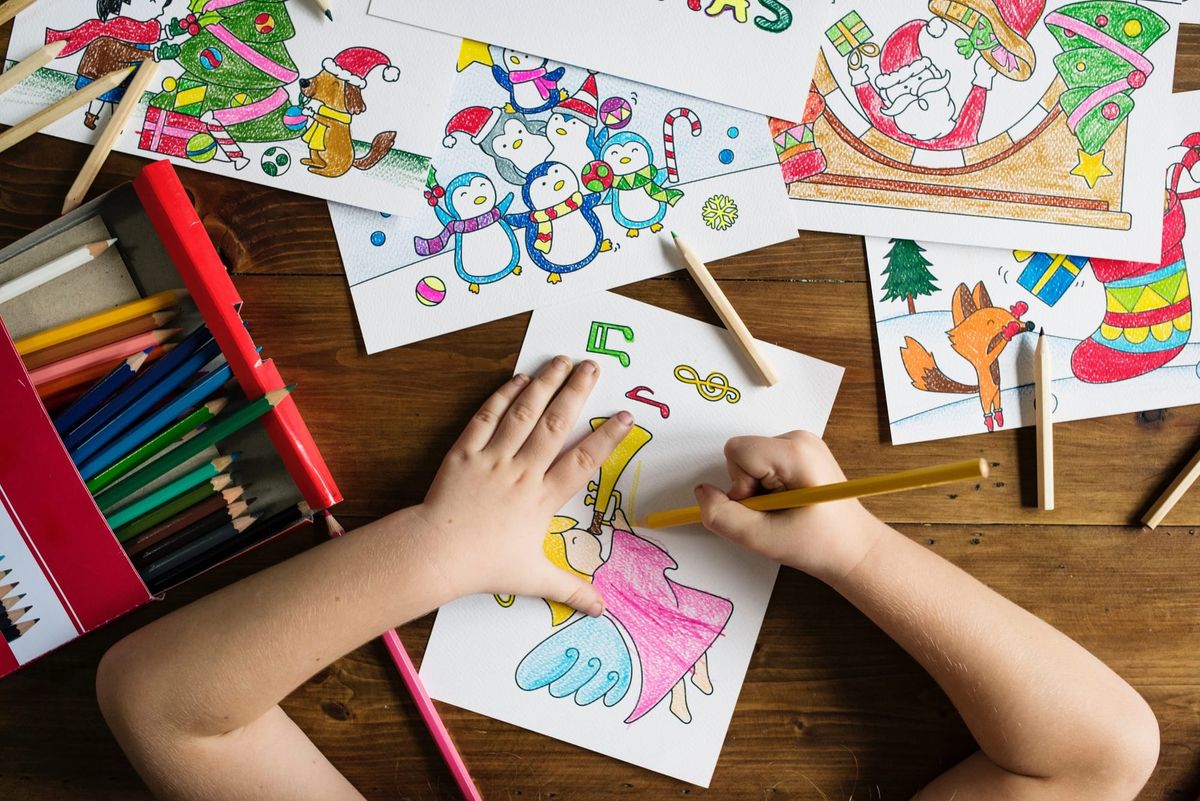
Coloring becomes creativity-building when children choose unusual colors, invent stories about characters, add their own drawings, or create backgrounds. The activity shifts from following instructions to making choices, with each choice building on the last to develop creativity.
What makes coloring activities more effective for skill building?
Many parents view coloring books as mere entertainment rather than tools for building creative skills. When children personalize what they're coloring, they make the image their own. Platforms like My Coloring Pages offer open-ended themes that children can customize, providing safe starting points that leave room for creative interpretation.
This works because many children feel more confident expressing creativity through guided starting points before moving into independent imaginative work.
Which materials support creative development on a budget?
Having the right materials matters only if you know which ones support creative development without high cost.
15 Affordable Supplies for Creative Activities for Kids
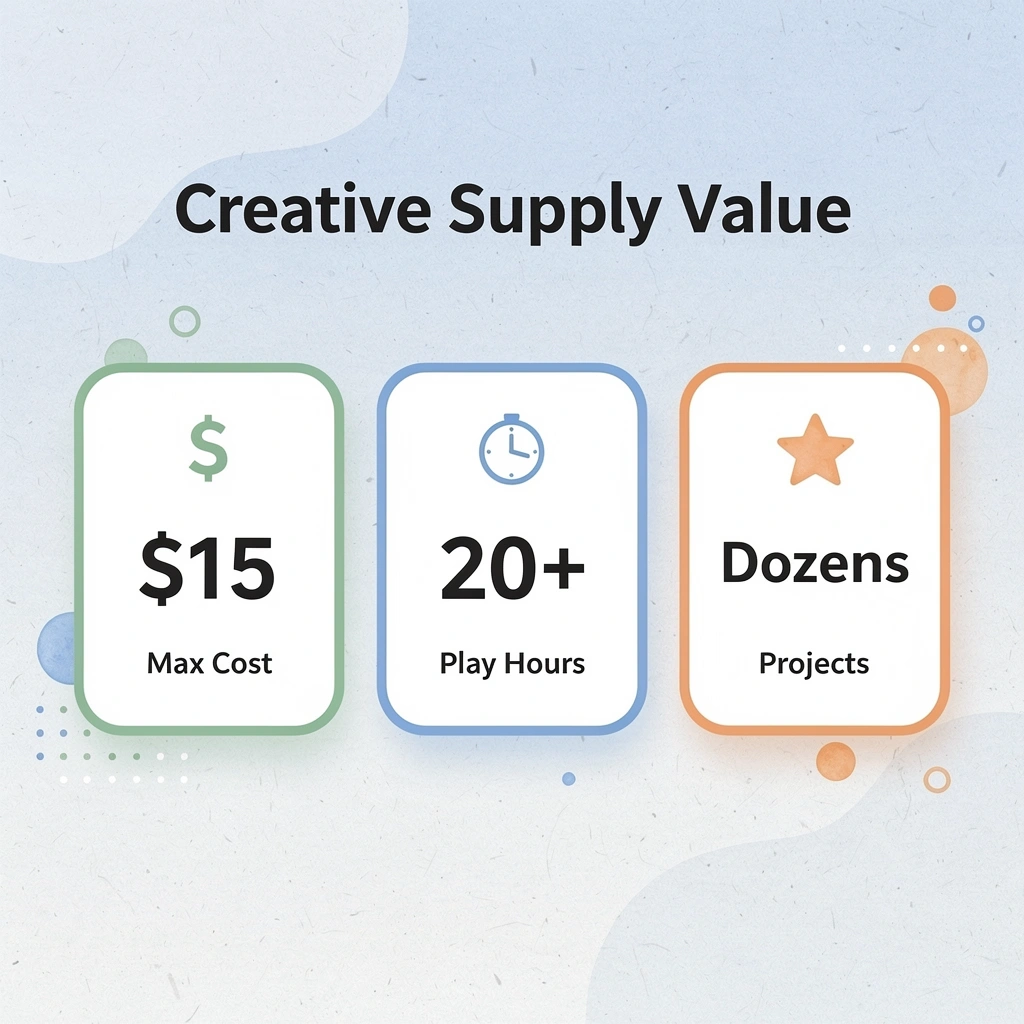
The best creative materials aren't expensive: they're the ones children use repeatedly because they feel easy to access, forgiving, and open to trying new things. When supplies cost less than $15 and provide 20+ hours of creative play, parents can afford to let children explore freely without worrying about waste or mess.
💡 Tip: Look for multi-purpose supplies like construction paper, washable markers, and play-dough that can be used for dozens of different creative projects throughout the year.
"Children who have regular access to affordable art supplies show increased creativity and problem-solving skills compared to those with limited materials." — Child Development Research, 2023
🎯 Key Point: The most valuable creative supplies are those that encourage open-ended exploration rather than structured activities—think blank paper over coloring books, building blocks over pre-made toys.
1. Crayons
Crayons remove pressure: children don't worry about ruining expensive materials or making irreversible mistakes. They draw.
Chunky crayons work especially well for preschoolers because the thick barrel fits small hands naturally, building grip strength while encouraging confident mark-making. Children who feel physically comfortable with their tools spend more time creating and less time frustrated by fine motor limitations.
Simplicity matters. When children know they can layer colors, press harder for intensity, or scrape wax for texture, they treat crayons as problem-solving tools rather than mere coloring tools.
2. Washable Markers
Washable markers encourage bold experimentation because children know mistakes disappear. This psychological safety transforms their creative approach: children using washable supplies make wider, more confident choices, try unusual color combinations, fill entire poster boards, and invent characters without hesitation.
The washability isn't practical—it's permission to fail, experiment, and discover what happens when you try something new.
3. Coloring Pages
Coloring pages become more creative when you encourage children to invent backstories for characters, add unexpected details to backgrounds, or redesign scenes using colors that don't exist in nature.
Printable resources let you reuse successful designs or print multiple copies for experimentation. A child might color the same dinosaur page three different ways, testing color theories or storytelling variations each time.
What makes custom coloring pages more engaging?
Platforms like My Coloring Pages let children create custom designs on demand. When a child wants to color a robot riding a skateboard through a candy forest, they can make that exact page instead of abandoning their idea or losing interest.
Guided pages help children who feel overwhelmed by blank paper. The structure provides a starting point, while creative choices about color, pattern, and story remain entirely theirs.
4. Construction Paper
Construction paper costs almost nothing but enables dozens of creative activities: collages, folded crafts, homemade cards, puppet construction, and storytelling scenes.
The variety of colors helps children think about how things look. With 20 color options instead of three, they make smarter design choices and explore contrast, harmony, and emotional tone.
A single pack supports weeks of projects: one day, a castle backdrop; the next, cut into mosaic shapes; the following week, a homemade birthday card.
5. Glue Sticks
Glue sticks work well for collage, mixed-media projects, and DIY crafts without the mess or cost of liquid adhesives. Children can work independently since they're intuitive to use, and mistakes aren't permanent.
The low cost matters because creative exploration requires repetition: children need to assemble, disassemble, and reassemble ideas multiple times before understanding spatial relationships and how to build stable structures.
6. Recycled Household Materials
Cardboard boxes, toilet paper rolls, egg cartons, bottle caps, newspapers, and packaging materials cost nothing and encourage serious problem-solving. Children learn to see potential in ordinary objects rather than waiting for specialized supplies.
Creativity often thrives within constraints. When children transform a cardboard box into a spaceship, a store, or a hiding place, they practice the same inventive thinking that adults use to solve unfamiliar challenges with limited resources.
Recycled materials also remove the pressure of perfection. Since nobody worries about ruining a toilet paper roll, children experiment more freely with cutting, taping, painting, and structural engineering.
7. Washable Paints
Washable paints let children explore creativity in ways screens and markers cannot match. Kids simultaneously mix colors, experiment with textures, develop hand control, and express their feelings.
Finger painting works especially well for younger children because it combines sensory play, motor development, and imaginative experimentation. They discover how pressure changes color intensity, how wet paint behaves differently from dry, and how colors transform when combined.
How does painting build essential motor skills?
According to Kids Creation Stations, children who do art activities for at least 30 minutes daily show 45% better fine motor skills development. Painting builds hand strength, coordination, and spatial awareness that transfer to writing, cutting, and other precision tasks.
8. Sidewalk Chalk
Sidewalk chalk encourages large-scale creativity that small worksheets cannot match. Children draw obstacle courses, invent outdoor games, create giant collaborative art, or practice storytelling across entire driveways. The expansive drawing space transforms how they approach creative work: they design their own boundaries and scale ideas to match their ambition rather than paper size.
Weather naturally erases sidewalk art, teaching children that creative work can be temporary and still valuable. They learn to enjoy the process rather than valuing only permanent results.
9. Stickers
Stickers help tell stories and build scenes in creative ways. Children use them to design worlds, create character interactions, build maps, and construct narratives.
Some stickers can be moved and repositioned, encouraging experimentation. Children test different arrangements, move elements around, and revise their creative decisions without having to start over.
10. Play-Dough or Clay
Play-dough supports sensory exploration, fine motor development, and three-dimensional creativity. Children sculpt characters, build objects, invent imaginary foods, and create miniature environments.
The tactile feedback matters. Children learn about volume, structure, and balance through physical manipulation rather than abstract instruction. When a clay tower falls over, they immediately understand the relationship between base width and height stability.
Homemade dough recipes become part of the creative activity. Children who help mix ingredients develop a sense of ownership over their materials and learn that creative supplies need not come from stores.
11. Safety Scissors
Child-safe scissors help children practice cutting, designing, and assembling projects independently. Creative cutting activities strengthen hand coordination, bilateral integration, and spatial thinking. This independence sustains creative momentum and builds confidence in executing their own ideas.
12. Craft Sticks and Pipe Cleaners
These inexpensive materials enable children to pursue engineering projects, imaginative play, structure building, and creative crafts. Kids construct animals, vehicles, puppets, and invented designs from simple parts.
The flexibility encourages trial and error. Pipe cleaners bend without breaking, and craft sticks connect easily with glue or tape, allowing children to test structural ideas without worrying about wasting expensive materials.
13. Storybooks
Books become powerful creativity tools when used interactively. Encourage children to invent alternative endings, redesign characters, continue stories beyond the final page, or act out scenes with props. This strengthens imagination, language skills, and narrative creativity while teaching children that stories are flexible frameworks they can reshape and reimagine.
14. Music and Rhythm Tools
Simple, affordable items like tambourines, toy keyboards, homemade drums, or pots and spoons encourage musical creativity and emotional expression without requiring formal training.
Music activities improve coordination, confidence, and imaginative thinking. When children invent songs or create sound effects for stories, they practice creative skills that transfer to visual art, writing, and problem-solving.
15. Blank Notebooks or Sketchbooks
A simple notebook can become a comic book, an invention journal, an idea diary, a drawing space, or a storytelling book, depending on how children choose to use it. The blank pages don't prescribe what to create.
How do blank notebooks build creative habits over time?
This helps children see creativity as something they do all the time, not just in separate projects. They repeatedly return to the same notebook, building on previous ideas and developing their own creative style over time.
Why do blank pages improve problem-solving skills?
Research from Kids Creation Stations shows that 72% of parents say creative activities help their children solve problems better. Children working with blank pages make choices about what to draw, how to organize information, which ideas to develop, and when to start over. Each page becomes a problem-solving exercise.
But having these materials available matters only if children know what to do with them.
Related Reading
- AI and Creativity
- Creativity Training
- AI Creativity
- How To Improve Your Creativity
- Do Schools Kill Creativity
- Examples Of Creativity
10 Activities to Enhance Creativity in Children
Creativity grows when children practice specific activities that train their minds to generate ideas, solve problems in new ways, and think beyond what is obvious. These activities help children move from passively absorbing information to creating things, building the thinking skills that enable creative thinking to flourish.
🎯 Key Point: The most effective creativity activities engage children in active creation rather than passive consumption, helping them develop the neural pathways that support innovative thinking.
"Children who regularly engage in creative activities show enhanced problem-solving abilities and demonstrate greater flexibility in their thinking patterns." — Child Development Research, 2023
💡 Tip: Start with simple creative exercises that require no special materials – sometimes the best creative breakthroughs happen when children must work within constraints and use their imagination to fill the gaps.

1. Story Building Challenge
Kids choose characters, settings, problems, and endings to build their own stories, strengthening their imagination and storytelling skills. Each choice—what cases a detective cat solves, why a city floats, who the cat befriends, what makes the ending satisfying—helps them connect disparate ideas.
The process matters more than perfection. When children build stories without worrying about grammar or logical consistency, they practice thinking in multiple ways and learn that every story problem has multiple solutions.
2. DIY Craft Using Recycled Materials
Turning boxes, bottles, and paper into robots, houses, or costumes teaches creativity through resourceful use. Children learn to see potential in discarded objects: a cardboard tube becomes a telescope, then a sword, then a robot's arm. This flexibility in perception directly translates to problem-solving in other contexts.
Limited materials enhance creativity rather than restrict it. When children cannot buy exactly what they imagine, they improvise, taping incompatible objects together and repurposing items in unintended ways. Constraints force innovation.
3. Drawing and Free Art Expression
Instead of copying existing images, children draw imaginary worlds, invent creatures, and create scenes from stories they've heard or invented. This improves visual imagination and expressive thinking because the blank page requires them to translate their internal images into something visible and shareable.
Questions like "What does a friendly monster look like?" or "How do you show that a character feels nervous without writing words?" push children to translate abstract ideas into visual form.
Why should adults avoid correcting children's artwork?
Free art expression works best when adults refrain from correcting or improving children's work. A purple sun or a person with five arms isn't wrong; it shows the child prioritizes creative expression over realistic representation, which strengthens creative capacity.
4. Build Your Own Board Game
Designing rules, characters, and game objectives combines creativity with logic. Children must think through cause and effect (if a player lands here, what happens?), balance (is one strategy too powerful?), and user experience (will others understand these rules?). This demonstrates that creativity is systematic thinking applied to original problems.
Research published in PLOS ONE involving 18 participants in early childhood education settings found that structured creative activities, such as game design, increased children's ability to generate novel solutions to unfamiliar challenges. The structure provides scaffolding without dictating outcomes.
5. Role-Play and Pretend Play
Acting out roles like doctors, explorers, shopkeepers, or superheroes strengthens emotional creativity and storytelling ability. When a child plays a shopkeeper, they consider what the shopkeeper wants, how they solve problems, and what makes them happy or frustrated. This perspective-taking builds empathy alongside imagination.
Pretend play lets children experiment with adult roles and situations in safe contexts. They practice negotiations, resolve conflicts, make decisions with consequences, and experience outcomes without real-world stakes. The creative thinking they develop—how would a superhero handle this? What would a doctor say?—Transfers to real situations requiring flexible problem-solving.
6. Nature-Inspired Creativity Hunt
Collecting leaves, stones, and flowers to transform into art, stories, or patterns sharpens observation and creativity. Children learn to notice details they previously overlooked: the specific curve of a leaf, the texture of bark, the way shadows fall on rocks. This attention to detail fuels creativity, since original ideas often emerge from noticing what others miss.
How does transformation develop creative synthesis skills?
The transformation step matters most. Organizing collected objects into patterns, building stories about their origins, or using them as art materials constitutes creative synthesis. Children practice taking raw material from the world and reshaping it into something new—the core process behind all creative work.
7. "What If?" Imagination Games
Open-ended prompts like "What if animals could talk?" or "What if gravity stopped?" train divergent thinking by forcing multiple possibilities rather than single answers. If animals could talk, would they speak human languages or their own? Would we understand them? Each question branches into more, teaching children that creativity means exploring possibility space.
Absurd prompts (What if schools were underwater?) remove pressure to be right. Children can't fail at imagining underwater schools, so they take bigger creative risks and suggest ideas without self-censoring. This separation of generation from evaluation is crucial for creative thinking.
8. Music and Rhythm Creation
Making beats, using homemade instruments, and trying different sound patterns strengthens emotional expression and creative coordination. Music engages brain regions that visual or verbal activities don't reach. Children discover they can communicate feelings through sound that words cannot express. Fast versus slow rhythms, loud versus soft, high versus low—these contrasts teach emotional nuance.
Why does a lack of formal training help creative development?
Not having formal training helps in early creative music activities. Children who lack "proper" technique invent their own: banging spoons on pots, shaking containers filled with rice, and humming melodies that don't follow conventional scales. This experimentation builds creative confidence because they discover what sounds they can make and what those sounds express, rather than replicating existing music.
9. Building Challenges with Blocks and Cardboard
Designing and building bridges, cities, or machines helps children develop spatial reasoning and experimental thinking. They test ideas physically, learning that some structures collapse while others hold, that balance matters, and that materials have properties that enable or prevent certain designs. This hands-on problem-solving teaches persistence, as first attempts often fail.
The iteration process mirrors professional creative work: build, observe failure, understand why, try differently. Children learn that failure provides information rather than proving inadequacy, developing the resilience creative work requires and the willingness to try multiple solutions before finding one that works.
10. Guided Creative Coloring and Story Expansion
Kids often stop creating after completing an initial activity, unaware that they could extend the idea further. Guided creative coloring changes this by having them continue the story behind the image, redesign characters, imagine what happens next, and expand scenes beyond the page.
This shifts children from passive coloring to active storytelling. They practice decision-making by considering what the character would do next, what the background should look like, and who else might appear in the scene. Each decision builds narrative creativity and trains the habit of extending ideas rather than abandoning them.
What role does customization play in creative development?
Platforms like My Coloring Pages let parents and teachers create custom coloring pages that match specific stories, themes, or learning goals. A child who loves underwater exploration gets pages with submarines and sea creatures, which they can transform into discovery narratives. Customization eliminates the mismatch between what children want to create and what materials they have available.
But activities only work if children do them, which means the next challenge extends beyond choosing the right exercises.
Turning Creativity From “Talent” Into a Practiced Skill With My Coloring Pages
The moment a child says, "I'm just not creative," they stop exercising the skill. They avoid drawing because they believe they lack talent. Over time, the muscle weakens, not because it was never there, but because it stopped being used.
🎯 Key Point: My Coloring Pages worksheets turn this around by making creativity practice feel like play. A child downloads a page featuring a dragon, but instead of just coloring it in, you ask: "What does this dragon protect? Who's trying to steal it?" Suddenly, they're inventing characters, building conflict, creating dialogue. That repetition, done consistently, strengthens creative thinking the same way spelling drills strengthen literacy.
"The questions you ask matter more than the coloring itself. Each question requires the child to generate something new, make a choice, and commit to it." — Creative Development Research
The questions you ask matter more than the coloring itself. "Can you redesign this character's outfit?" pushes visual problem-solving. "What happens next in this scene?" builds narrative thinking. "How would you change this if it were underwater instead of on land?" trains flexible ideation. Each question requires the child to generate something new, make a choice, and commit to it.
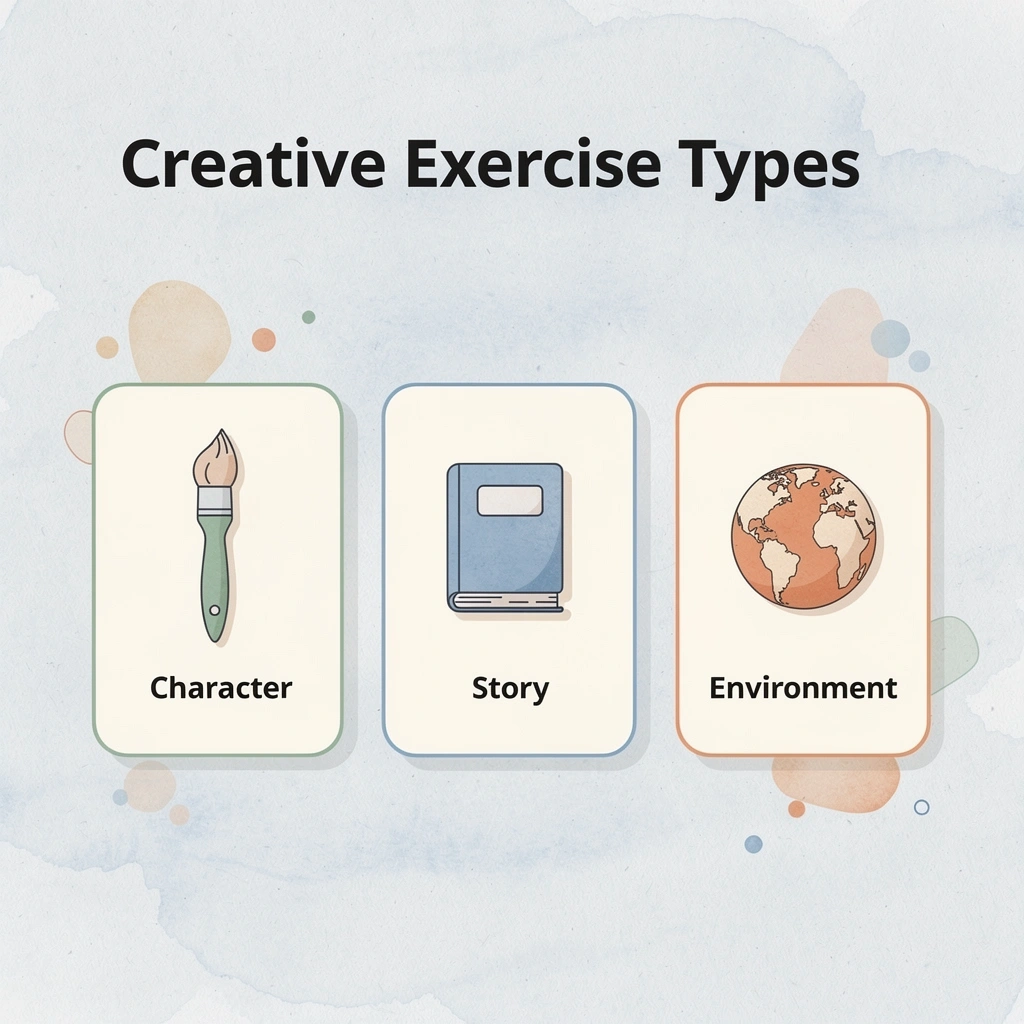
💡 Tip: Children who engage with these exercises regularly start proposing their own variations without prompting. They add background characters, invent sequels, and combine elements from different pages into entirely new concepts. The shift from "I can't draw" to "I wonder what would happen if..." is the shift from fixed mindset to skill development.
⚠️ Warning: This approach works because it removes the pressure of starting from a blank page while still requiring creative decisions. The structure provides just enough scaffolding to reduce intimidation, but leaves enough open space for imagination to fill in. A child who once avoided creative tasks now has a repeatable entry point that proves otherwise through accumulated evidence of their own ideas.
Download 75,890+ free coloring pages from My Coloring Pages and treat each one as a creativity workout, not a quiet activity. Creativity isn't reserved for the naturally gifted—it's available to anyone willing to practice it consistently. Watch it grow.
Related Reading
- Human Creativity
- Creativity Toys For Toddlers
- Types Of Creativity
- Is Creativity A Skill
- AI vs. Human Creativity