Cognitive Development in Early Childhood & How to Promote It
Cognitive development in early childhood shapes how kids think and learn. My Coloring Pages shows you how to nurture it.


Those small moments when a toddler stacks blocks, matches shapes, or figures out a simple puzzle are not just cute milestones. They reflect how rapidly cognitive development in early childhood builds the foundation for memory, language, attention, and problem-solving. Children's brains grow faster during these early years than at any other point in life, and the activities they engage with daily play a direct role in shaping that growth.
Parents and caregivers who want to support this development often struggle to find activities that match where their child actually is, not too simple, not too advanced. Targeted, hands-on activities like coloring and visual puzzles keep children engaged while reinforcing real cognitive skills through play. For ready-to-use options that span a wide range of learning stages, families can download 75,000+ free coloring pages from My Coloring Pages.
Table of Contents
- Is Academic Work Important for Cognitive Development in Early Childhood?
- Importance of Promoting Cognitive Development in Early Childhood
- What Happens When You Neglect Cognitive Development in Early Childhood
- How to Promote Cognitive Development in Early Childhood
- 15 Fun Activities for Fostering Cognitive Development in Early Childhood
- Why These Activities Foster Cognitive Development
- Give Them a Starting Point—Then Let Their Thinking Take Over
Summary
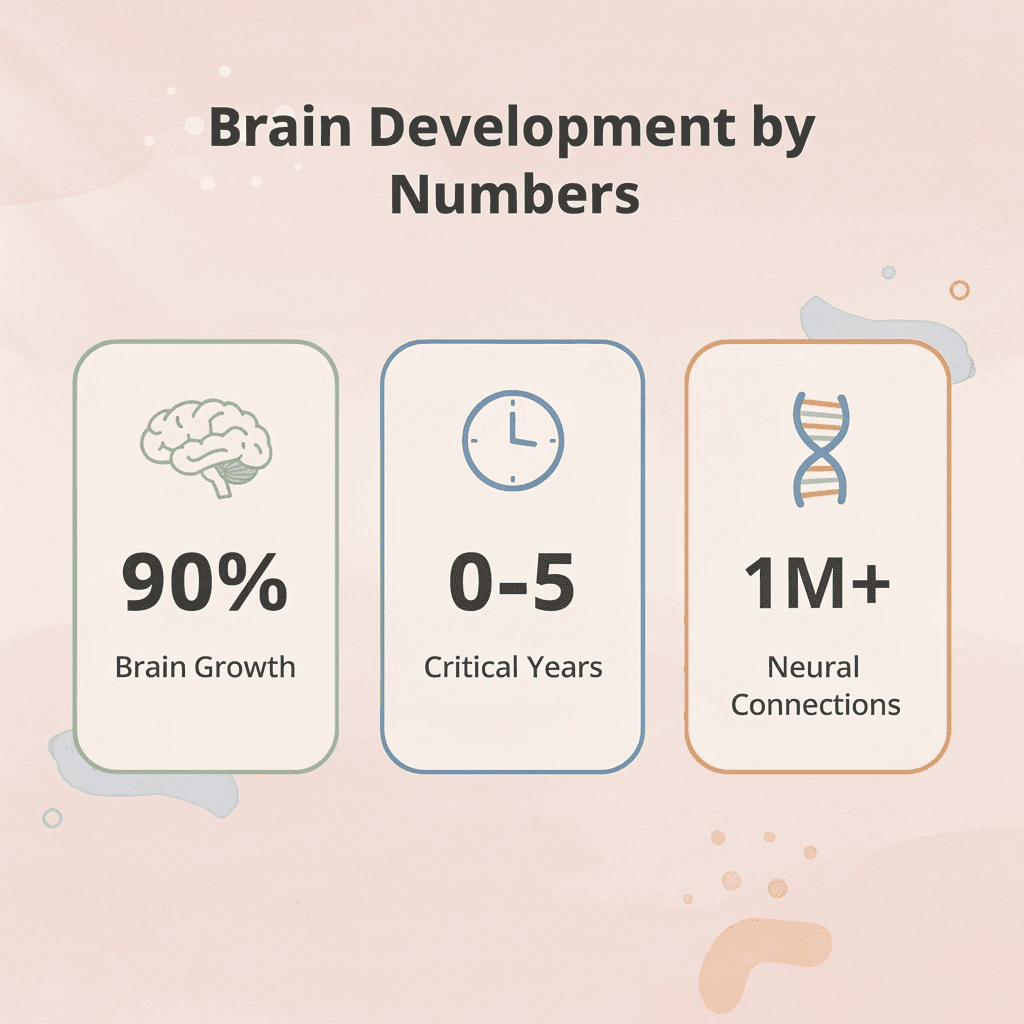
- Early childhood is the most critical window for brain development, with 90% of brain growth occurring before age 5, according to Post University's research on cognitive development. This means the conditions children experience in their earliest years shape not only what they know but also how they think, regulate attention, and approach unfamiliar problems for the rest of their lives.
- Executive function skills, specifically attention control, working memory, and cognitive flexibility, are stronger predictors of long-term academic success than early academic content alone. Research from NCBI Bookshelf confirms these capacities are built through the full range of a child's daily experiences, not through instructional volume. The quality of the cognitive environment matters far more than how much structured learning is delivered.
- Neural development during early childhood is extraordinarily fast, with more than 1 million new neural connections forming every second during this period, according to NCBI Bookshelf. Those connections are shaped by whether children are regularly asked to predict, compare, generate ideas, and revise their thinking, not by how often adults give them correct answers.
- Neglected cognitive development leaves measurable gaps that go beyond academic performance. Research published in PMC found that neglected children scored approximately 10 IQ points below non-neglected peers on cognitive functioning measures, and showed receptive and expressive language scores averaging more than one standard deviation below the normative mean. These gaps reflect not just vocabulary but the internal scaffolding needed to connect and communicate ideas.
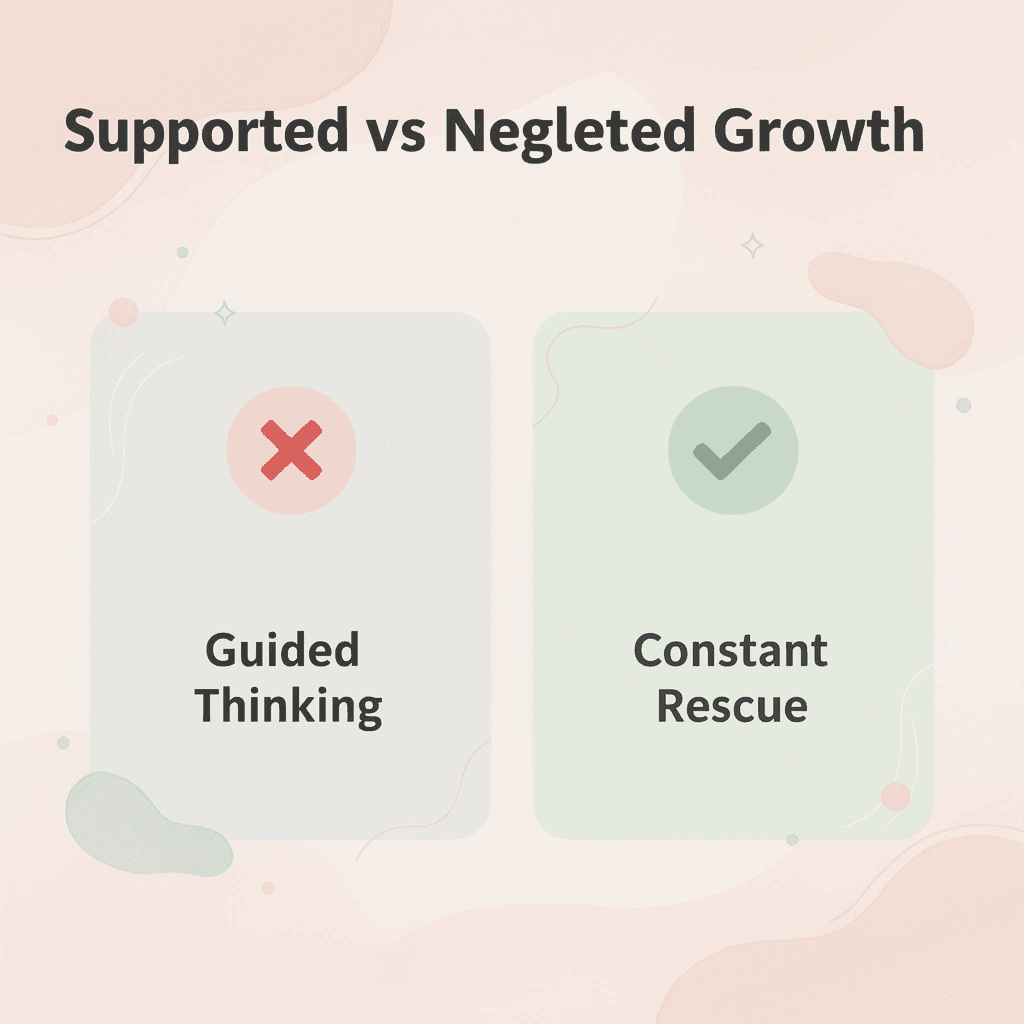
- Children who are consistently rescued before finishing a problem gradually stop expecting themselves to attempt one. The thinking cycle shifts from noticing, reasoning, and attempting toward locating an adult, and that shift becomes a self-concept over time. Reversing it requires repeated practice with problems that are just difficult enough to require real effort, paired with questions that return the cognitive work to the child rather than removing it.
- Open-ended creative activity builds the same executive function skills as structured tasks but with less resistance and more self-direction, since children make sequencing, prediction, and decision-making choices before any adult intervenes. My Coloring Pages's Download 75000+ Free Customized Worksheets addresses this by giving children a structured starting point across 75,000+ customizable pages, removing the blank-page barrier while leaving every decision after that outline to the child.
Is Academic Work Important for Cognitive Development in Early Childhood?
School work matters in early childhood, but it is not the main driver of cognitive growth. It is one tool among many: treating it as the only tool limits the breadth of development young children need.
💡 Tip: Think of academic work as a single ingredient in a much larger recipe for early cognitive development — essential, but never sufficient on its own.
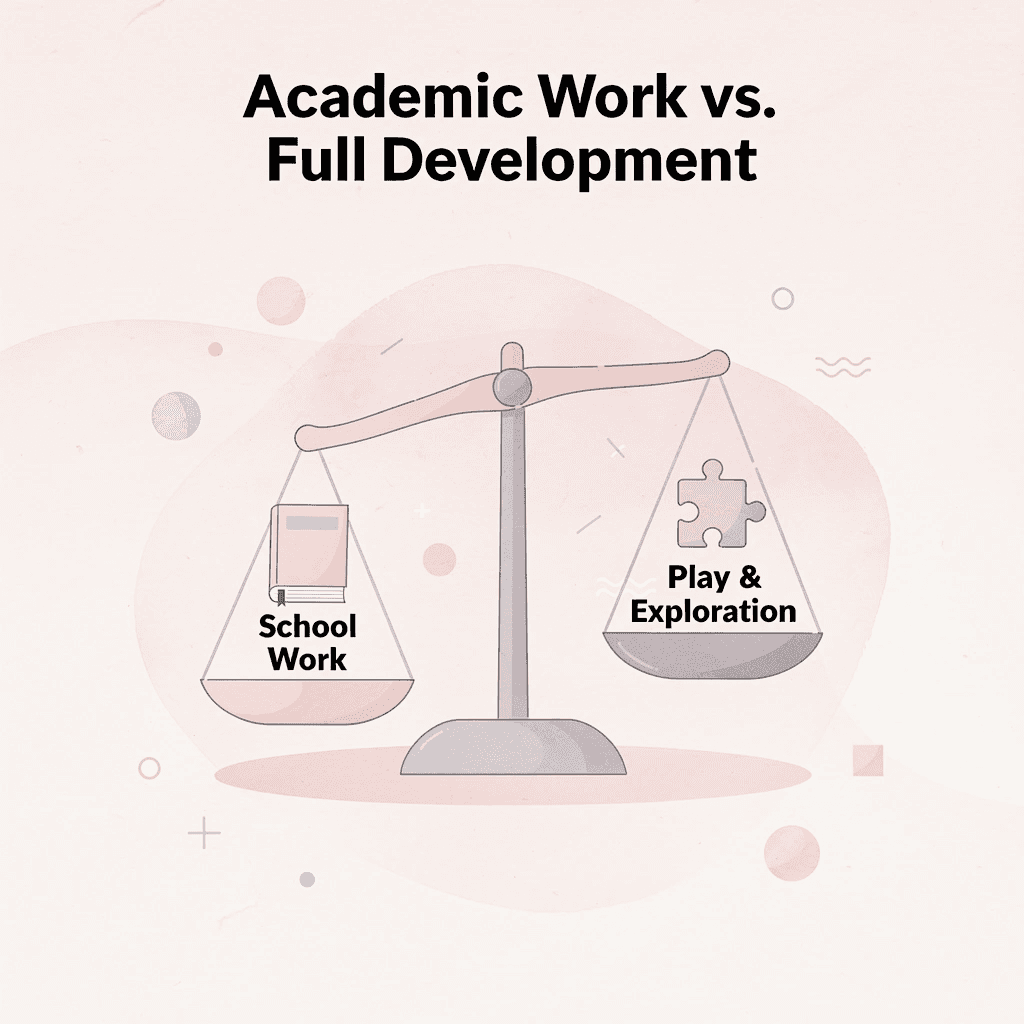
According to the NCBI Bookshelf's report on Child Development and Early Learning, executive function and self-regulation skills developed during early childhood are directly connected to academic achievement and long-term cognitive outcomes. The skills that predict future academic success — attention control, working memory, and mental flexibility — are built through all the experiences a child encounters each day, not primarily through academic drills.
"The skills that predict future academic success — attention control, working memory, and mental flexibility — are built through all the experiences a child goes through each day, not mainly through academic drills." — NCBI Bookshelf, Child Development and Early Learning
🔑 Takeaway: Executive function and self-regulation are the primary predictors of long-term success and are forged through everyday experiences, not isolated academic exercises.
⚠️ Warning: Over-relying on academic drills in early childhood risks neglecting the broader developmental experiences that build the most critical cognitive foundations.
What does structured academic work actually do well?
Organized school activities give children a reliable framework for learning specific knowledge. A child who practices letter sounds gains a concrete tool for reading. A child who works through early number patterns builds a mental scaffold for arithmetic. Targeted practice has value, particularly when it matches the child's developmental stage. The problem arises when academic content crowds out the experiences that build the thinking skills underlying all future learning.
Why do visible results make worksheets the default choice for parents?
Most parents use worksheets and flashcards because results are easy to see and count. You can see seven letters become nine, but you cannot easily see a child's working memory strengthen during a block-building session, even though that session may do more for long-term brain development than the worksheet. Our Download 75,000+ Free Customized Worksheets bridges that gap by offering printable activities, including coloring pages tied to early learning themes, that provide structured creative engagement without reducing the experience to memorization and repetition. When a child colors a scene and narrates what is happening, they practice language, sequencing, and focused attention at the same time.
Why the balance point is harder than it looks
The critical difference between academic work that supports cognitive development and academic work that replaces it comes down to one question: is the child doing the thinking, or is the adult doing it for them? A worksheet asking a child to circle the correct answer leaves little room for the child to generate, test, or revise an idea. An activity asking a child to sort objects, build something, or explain a drawing they created puts the cognitive load where it belongs. NCBI Bookshelf's research on the developing workforce for children from birth through age 8 confirms that more than 1 million new neural connections form every second during this period, shaped by the quality and variety of experiences, not by the volume of academic content delivered. Filling that window with instruction alone squanders an extraordinarily wide opportunity. That realization—that the window is wider and richer than most people assume—is exactly what makes what comes next worth paying close attention to.
Importance of Promoting Cognitive Development in Early Childhood
How your child's brain develops in early childhood is the foundation for every skill they will ever use. According to the Post University Blog's research on cognitive development in early childhood, 90% of brain development happens before age 5, making this period uniquely powerful for influence.
"90% of brain development happens before age 5, making early childhood the single most critical window for cognitive influence." — Post University Blog
🎯 Key Point: The first 5 years of a child's life are irreplaceable. Nearly all foundational brain architecture is built during this narrow window, so the experiences, stimulation, and support a child receives will shape every cognitive skill they develop for the rest of their life.
🔑 Takeaway: Because 90% of brain growth occurs before age 5, promoting cognitive development in early childhood is essential. Parents, caregivers, and educators have a uniquely powerful opportunity to influence lifelong learning outcomes during this critical stage.
What is actually developing during these early years?
The development happening in those years concerns process, not content. A child who learns to pause before reacting, hold a thought long enough to act on it, and switch strategies when the first one fails builds executive function skills: attention regulation, working memory, and cognitive flexibility. These determine not what a child knows, but what a child does when they don't know.
Children given consistent answers struggle to generate their own. When adults habitually fill silence, complete sentences, or demonstrate every step, children get fewer chances to practice the pause-think-test-adjust cycle that independent reasoning requires. The goal is to give children problems difficult enough to require real thinking, then stay close enough to support without solving.
How does unstructured creative time build real cognitive skills?
Most parents choose structured activities because they seem productive. But a child coloring a scene they picked, guessing what a character might do next, or deciding how to fill a blank page is making decisions, paying attention to a self-set goal, and observing the consequences of their choices. Platforms like My Coloring Pages offer over 100,000 printable and customizable coloring pages that parents, teachers, and therapists can adapt to a child's specific interests, turning creative time into a genuine cognitive challenge.
Why does the quality of the cognitive environment matter most?
The EduVision Journal of Innovations in Pedagogy and Educational Advancements found that quality early childhood education leads to measurable gains in intellectual performance. These gains stem from creating a thinking environment where children are regularly asked to predict, explain, compare, and adjust. Children who develop curiosity as a process build the inner support system that facilitates all future learning. Cognitive development is not a phase you complete and move past—it is a foundation that either holds weight or does not.
Related Reading
- Kids Learning
- Best Learning Games For Kids
- What Are Fun Learning Activities for Kids?
- How to Help Kids With Learning Difficulties
What Happens When You Neglect Cognitive Development in Early Childhood
Neglecting cognitive development in early childhood doesn't look dramatic. It shows up as a child who always needs the next instruction, stops at the first wrong answer, and asks "is this right?" before the pencil touches the paper. The gap builds quietly, one rescued moment at a time.
"The most dangerous developmental delays aren't loud — they're the silent patterns of dependency that form when a child's cognitive growth goes unsupported in the earliest, most critical years." — Early Childhood Development Research
⚠️ Warning: The signs of neglected cognitive development are easy to miss precisely because they look like normal childhood behavior — but repeated patterns of learned helplessness are a red flag that demands attention.
🔑 Takeaway: Every time a child is rescued from the discomfort of thinking independently, it costs them a critical opportunity to build the problem-solving pathways their developing brain needs most.
Healthy Cognitive Signal | Warning Sign of Neglect |
|---|---|
Attempts the task before asking for help | Waits for instruction before starting |
Tolerates a wrong answer and self-corrects | Stops immediately at first mistake |
Works with independent confidence | Seeks constant validation |
Persists through mild frustration | Gives up or shuts down quickly |
How does repeated rescue change the way a child thinks?
When children are consistently rescued before they finish struggling, they stop expecting themselves to try first. The sequence shifts from "problem appears, think, attempt, adjust" to "problem appears, find an adult." This practiced response develops through hundreds of small moments when someone else did the thinking for them. Research published in PMC found that neglected children scored approximately 10 IQ points below their non-neglected peers on cognitive functioning measures, demonstrating how consistent environmental input shapes a developing mind.
How do early language gaps reflect deeper cognitive scaffolding?
The same pattern shows up in language. A child who rarely makes predictions, explains things, or thinks out loud falls behind in school and weakens their ability to organize thoughts into words at the most basic level. According to the same PMC study from 2012, neglected children showed receptive and expressive language scores averaging more than one standard deviation below the normal mean: a 15-point gap reflecting not vocabulary alone, but the internal structure needed to connect ideas and communicate reasoning.
When structure disappears, so does the performance
The trickiest version of this problem is the child who seems capable when someone guides them. Give them a worksheet with clear steps, and they finish it. Show them an example, and they copy it. But remove the structure, and their performance disappears. The issue isn't intelligence—they have gained more experience following someone else's plan than making their own. Most caregivers respond by adding more structure and reminders, but each extra layer of help reduces how often the child practices thinking independently, worsening dependence instead of improving it.
Why does open-ended creative activity build cognitive independence?
This is where open-ended creative activity becomes essential. When a child sits with a blank coloring page and decides what colors to use, where to start, and how to fill the space, they practice self-directed initiation that structured tasks rarely require. Our My Coloring Pages library offers over 100,000 printable, customizable pages children can approach on their own terms, without a correct answer waiting at the end, creating a low-pressure space to build the cognitive independence that guided worksheets alone cannot develop.
The identity shift nobody sees coming
The most serious consequence of neglected cognitive development is not a skill deficit: it's an identity shift. When a child repeatedly experiences that thinking is something adults do and children wait for, they internalize it as fact about themselves. "I need help to figure things out" stops being a description of one moment and becomes a self-concept. Mistakes start feeling personal rather than informative. Unfamiliar questions trigger anxiety before any attempt is made.
Why do some children give up before they even try?
What looks like attitude or ability problems—"They give up too fast," "They won't even try"—has a simpler explanation: the child has had fewer repetitions of the full thinking cycle, from noticing a problem through adjusting after a failed attempt. Every gap in that cycle creates gaps in cognitive flexibility, working memory practice, and self-regulation.
How to Promote Cognitive Development in Early Childhood
Fixing the thinking gap is more doable than most parents expect. The strategies that build executive function, working memory, and cognitive flexibility are already part of ordinary moments in a child's day. The shift required is less about adding new activities and more about changing how you respond within the ones that already exist.
"The strategies that build executive function, working memory, and cognitive flexibility are already embedded in ordinary moments — the real lever is how caregivers engage within them." — Early Childhood Development Research
💡 Tip: You don't need a structured curriculum or expensive tools to promote cognitive growth — your everyday interactions are the most powerful resource you already have.
⚠️ Warning: A common mistake parents make is overcomplicating the process by searching for special programs or add-on activities, when the highest-impact changes happen inside routines that already exist.
Cognitive Skill | Everyday Moment to Target | Simple Shift to Make |
|---|---|---|
Executive Function | Morning routines | Let the child lead the sequence of steps |
Working Memory | Storytime | Ask the child to recall what happened before continuing |
Cognitive Flexibility | Playtime | Introduce a rule change mid-game and adapt together |
Ask Better Questions Before You Reach for a Solution
The most reliable way to strengthen a child's problem-solving ability is to pause before helping. When a block tower collapses, or a puzzle piece refuses to fit, ask: "What do you think you could try?" This transfers the thinking work back to the child, preserving the full cycle of noticing, reasoning, and attempting. If they draw a blank, narrow the problem rather than solving it: "Which part keeps falling?" gives them something specific to observe and act on.
When a child says "I don't know," ask for a best guess. This requires them to combine what they observe with what they know, then commit to a prediction. According to Science Teaching, children who read at least three times a week are almost twice as likely to score in the top 25% in reading readiness. Repeated exposure to language-rich, prediction-heavy interactions builds thinking skills that transfer across all learning contexts. Guessing, testing, and revising are thinking skills.
How can you build the habit of holding more information?
Children who struggle to follow multi-step instructions lack working memory practice, not defiance. Start with one instruction, add a second when stable, then a third. Before repeating, ask the child to recall them. Songs, gestures, and visual sequences support this naturally. Through repetition, the progression moves from the adult holding the plan to the child holding it independently.
Does creative play build working memory as well as structured tasks?
Open-ended creative activity develops working memory as effectively as worksheets, with less resistance. A child decides which colors to use and in what order across a scene they chose; they sequence actively, predict, and correct their own mistakes. Platforms like My Coloring Pages offer over 100,000 printable pages organized by theme and interest, so the activity feels chosen rather than assigned. When a child picks a page about dinosaurs, space, or their favorite animal, they bring existing knowledge and start making decisions before the first crayon touches paper.
Turn Mistakes Into the Next Question
The way children recognize patterns, bounce back from failure, and persist comes down to one thing: whether mistakes are treated as problems to solve or final verdicts to accept. When a child's guess is wrong, the best approach is curiosity, not correction. "Were you surprised? What do you think made it float?" transforms the mistake into closer observation and new discovery. When this happens repeatedly in small moments, children learn that a wrong answer is information, not judgment. Many adults recall Highlights magazine with warmth for exactly this quality: the hidden picture puzzles and open-ended challenges never told you that you were wrong. They simply gave you another place to look.
Give Real Choices and Ask for the Reasoning Behind Them
Children build trust in their own thinking when decisions belong to them. Letting a child choose which material to use, which solution to test first, or what their character does in a story is practice in reasoning. The cognitive sequence of choosing, experiencing the result, and explaining the reasoning is one of the most powerful development loops available in everyday life. The goal is to move a child from asking "Is this right?" after every decision to making choices and explaining why—the foundation of flexible, independent thinking. What happens next depends entirely on where you place the starting point.
15 Fun Activities for Fostering Cognitive Development in Early Childhood
1. Create a Personalized “What Happens Next?” Picture With My Coloring Pages
This tackles: difficulty starting independently, constantly seeking approval, passive learning, and adults doing too much of the thinking. Instead of giving your child a picture and telling them exactly how to complete it, start with a question:
“What would YOU like to create?”
Maybe they choose:
- A dinosaur living underwater
- A cat flying to the moon
- A jungle full of imaginary animals
- Themselves exploring a new planet
With My Coloring Pages, their description or image can provide a personalized printable starting outline. They can also explore 75,000+ existing coloring pages for inspiration. But keep the cognitive work with the child.
Use this sequence:
Child generates idea → My Coloring Pages removes the blank-page/drawing barrier → print → child chooses colors and details → child adds something new → child explains why → parent asks what happens next.
For example:
“Why does your dinosaur live underwater?”
“What would it need to survive there?”
“What could you add to show that?”
Now the activity requires:
- Memory
- Decision-making
- Imagination
- Reasoning
- Language
It directly tackles:
- “What should I make?” → The child supplies the idea.
- “Is this right?” → Multiple creative choices can work.
- Blank page → “I can’t” → The outline provides a starting scaffold.
- Passive screen use → The digital step becomes an offline activity.
- Adult does the thinking → The parent asks questions instead of supplying additions.
The tool gives the child somewhere to start.
The child decides where the thinking goes next.
2. Build a Bridge for a Toy
This tackles: every small problem becoming a big one.
Give your child:
- Blocks
- Paper
- Cardboard
- Cups
- Tape
- Craft sticks
Place two objects a short distance apart.
Then ask:
“How could your toy get across without touching the floor?”
Do not immediately demonstrate a bridge.
Let them design one.
If it collapses, ask:
“What do you notice?”
Then:
“What could you change?”
The cognitive cycle becomes:
Problem → plan → build → test → observe → revise.
Instead of:
Problem → “Mom, fix it.”
The bridge itself is not the main goal.
Learning what to do when the bridge fails is.
3. Play “What’s Missing?”
This tackles: difficulty holding information in working memory.
Place four or five familiar objects in front of the child.
Let them look carefully.
Ask them to close their eyes, remove one object, then ask:
“What disappeared?”
As they improve:
- Add more objects.
- Change their positions.
- Remove two at once.
The child needs to:
Pay attention → hold information → compare → retrieve.
That turns memory practice into a mystery rather than:
“Remember these because I said so.”
4. Make a Three-Step Mission
This tackles: struggling with multi-step instructions.
Turn directions into a challenge.
Say:
“Your mission is to touch the door, bring me the blue block, and put the teddy on the chair.”
Then let them complete it without repeating the instructions immediately.
If they forget, ask:
“What do you remember?”
Start with two steps and gradually increase the challenge.
The progression becomes:
Hear → hold sequence → complete steps → remember independently.
This directly practices the same cognitive demand behind everyday instructions such as:
“Get your shoes, bring your bag, and wait by the door.”
5. Go on an “I Spy With a Rule” Hunt
This tackles: attention depending on constant adult redirection.
Instead of saying:
“Pay attention.”
Give attention a job.
Try:
“Find five things that are round.”
Or:
“Find everything in this room that starts with B.”
Or:
“Can you spot three things made of wood?”
Now the child has to hold the rule in mind while scanning the environment.
That creates:
Goal → selective attention → search → result.
Their attention is being directed by the problem rather than by an adult repeatedly saying:
“Focus.”
6. Play the “Different Way” Building Challenge
This tackles: one failed strategy making the entire task feel impossible.
Ask your child to build a tower.
Then say:
“Great. Can you make another tower a completely different way?”
Or after one falls:
“Let's find two other ways we could build it.”
You can repeat this with:
- Bridges
- Houses
- Roads
- Ramps
The child learns:
One problem ≠ one possible solution.
The cognitive shift is:
First idea fails → “I can’t”
to:
First idea fails → “What is another way?”
That directly practices cognitive flexibility.
7. Create a Sink-or-Float Prediction Experiment
This tackles: “I don’t know” becoming the end of thinking and mistakes becoming personal.
Collect safe household objects.
Before placing each one in water, ask:
“Do you think it will sink or float?”
If they say:
“I don't know.”
Respond:
“You don't have to know. What's your best guess?”
Then test it.
If they are wrong:
“Interesting! What happened?”
Now the cycle becomes:
Uncertainty → prediction → test → evidence → rethink.
There is no punishment for guessing incorrectly.
A wrong prediction actually makes the experiment more interesting.
That teaches:
“I can think before I know for sure.”
8. Invent Three Uses for One Object
This tackles: being good at following instructions but weak at generating ideas.
Give the child an ordinary object, such as:
- A cardboard tube
- A paper cup
- A box
- A wooden spoon
Ask:
“What else could this be?”
A cardboard tube might become:
- A telescope
- A tunnel
- A microphone
- Part of a rocket
Try to reach three different ideas.
There is no model to copy.
The child must:
Generate → imagine → choose → explain.
That directly practices the ability needed when somebody eventually says:
“Create something of your own.”
9. Open a Pretend Shop
This tackles: knowing information but struggling to apply it somewhere new.
Give the child pretend products and money.
Let them:
- Set prices
- Count items
- Make shopping lists
- Take orders
- Divide objects between customers
Now numbers leave the worksheet.
Instead of only knowing:
“2 + 3 = 5,”
the child might need to solve:
“The customer bought two apples and three bananas. How many things are in the basket?”
That requires:
Known concept → unfamiliar context → application.
The child learns that knowledge can be used, not simply reproduced.
10. Play “Fix My Silly Mistake”
This tackles: mistakes feeling threatening and children depending on adults as the person who is always correct.
Deliberately do something wrong.
Put a shoe on your hand.
Build a tower with an obviously unstable top.
Say:
“Dogs have six legs, right?”
Then let your child correct you.
Ask:
“How did you know I was wrong?”
Now mistakes become:
- Something to notice
- Something to laugh about
- Something to investigate
- Something to correct
The child gets to experience:
“Being wrong isn't scary—and I can figure out why something is wrong.”
That can help reduce the pressure behind:
“Is this right?”
11. Invent an Animal for a Strange Environment
This tackles: unfamiliar problems causing panic and children searching for one correct response.
Say:
“Let's invent an animal that could live somewhere extremely cold.”
Then ask:
“How does it stay warm?”
“What does it eat?”
“How does it move?”
“What protects it?”
There is no answer key.
But the child's choices still need to make sense.
That means they have to:
Use what they know → imagine possibility → make a decision → justify it.
The activity gives them experience facing:
A problem they have never seen before
without immediately thinking:
“Nobody taught me how to answer this.”
12. Make Up a Story One Sentence at a Time
This tackles: weak working memory, difficulty explaining ideas, and passive learning.
Start:
“One morning, a tiny elephant appeared in our kitchen…”
The child adds the next sentence.
Then you add one.
Keep alternating.
The child must remember:
- The characters
- What already happened
- Where the story is going
- Whatever surprising detail you just introduced
If you say:
“But then the elephant suddenly started flying…”
they have to adapt their next idea.
That combines:
- Working memory
- Language
- Cognitive flexibility
- Creativity
And because they must add to the story rather than merely listen, they remain cognitively active.
13. Let the Child Plan a Simple Snack
This tackles: adults planning every step and children struggling to start tasks independently.
Instead of preparing everything yourself, ask:
“What do we need to make your snack?”
Then:
“What should we do first?”
Let them help:
- Choose ingredients
- Put steps in order
- Count pieces
- Divide portions
- Notice if something has been forgotten
Now the child practices:
Goal → plan → sequence → act → check.
If they forget a step, avoid supplying it immediately.
Ask:
“What haven't we done yet?”
This makes planning something they practice, not something adults always do for them.
14. Turn Their “Why?” Into a Mini Investigation
This tackles: curiosity shrinking into instant answer-seeking.
Suppose your child asks:
“Why does ice melt?”
Instead of answering immediately:
“Let's find out.”
Put ice cubes:
- In sunlight
- In shade
- In different containers
Ask:
“Which one do you think will melt first?”
Then observe.
The sequence becomes:
Question → prediction → test → observe → explain → new question.
That keeps curiosity alive much longer than:
Question → adult provides answer → done.
And it teaches the child:
“When I wonder about something, I can investigate it.”
15. Make the Child the Teacher
This tackles: struggling to explain thinking and relying on adults as the source of all knowledge.
After the child learns or completes something, say:
“Now teach me how to do it.”
They might teach you:
- How their building works
- How they solved the puzzle
- Why something sank
- How to play their game
- What happens in their story
Ask:
“Why did you do that first?”
“What would happen if I did this instead?”
“How did you figure that out?”
Now the child has to:
Retrieve → organize → explain → respond to questions.
That is a much stronger test of understanding than simply asking:
“Did you get the right answer?”
It also reverses the dynamic where the adult is always the thinker and the child is always the follower.
Why These Activities Foster Cognitive Development
These 15 activities were not chosen simply because they are fun.
Each directly reverses one of the problems discussed in “What Happens When You Neglect Cognitive Development in Early Childhood.”
- Small problems become adult problems → Bridge-building makes the child test solutions first.
- “I don't know” stops the thinking → Sink-or-float requires a prediction before knowing.
- Multi-step instructions are quickly forgotten → Mission games practice holding and using sequences.
- Attention needs constant adult redirection → I Spy gives attention a goal.
- Knowledge cannot transfer to a new situation → Pretend shops put familiar maths inside real problems.
- One failed strategy becomes “I can't” → Different-way challenges require another strategy.
- Unfamiliar tasks cause panic → Invented-animal problems have no memorized template.
- Mistakes feel personal → Experiments and silly-error games make errors useful.
- Every decision needs adult approval → My Coloring Pages and open-ended creation leave meaningful choices with the child.
- They follow instructions but struggle to start → Inventing uses and planning snacks requires generating a plan.
- Curiosity becomes answer collection → Mini investigations make children predict and test.
- They struggle to explain reasoning → Teacher time requires them to communicate how and why.
- Parents do more of the thinking → Each activity deliberately gives the problem, choice, or next step back to the child.
And that creates the stronger cognitive-development cycle:
Interesting problem → child remembers what they know → makes a choice or prediction → tries → sees what happens → changes strategy if necessary → explains → does slightly more independently next time.
That is the solution bridge.
The measure of a good cognitive-development activity is not simply:
“Did my child complete it?”
Ask:
“What did my child have to think through in order to complete it?”
Because the goal is not a child who gets through more educational activities.
It is a child who gets more practice thinking when nobody has already provided the answer, method, or next step.
Related Reading
- Free Learning Websites For Kids
- How To Make Learning Fun For Kids
- Best Online Learning Platforms For Kids
Give Them a Starting Point—Then Let Their Thinking Take Over
Start with one behavior you notice: your child freezes without an example, asks what to do next before trying, or takes in ideas rather than coming up with them. Choose an activity that exercises that specific skill. If the blank page is the barrier, My Coloring Pages provides a printable starting point from 75,000+ customizable pages, so your child can begin thinking right away.
💡 Tip: Identify the exact friction point first—freezing, prompting, or passive intake—then match the activity to that specific gap. Targeted practice builds independent thinking faster than general creativity exercises.
"The blank page isn't a creativity problem—it's a starting point problem. Remove the barrier, and the thinking can finally begin." — Learning & Development Principle
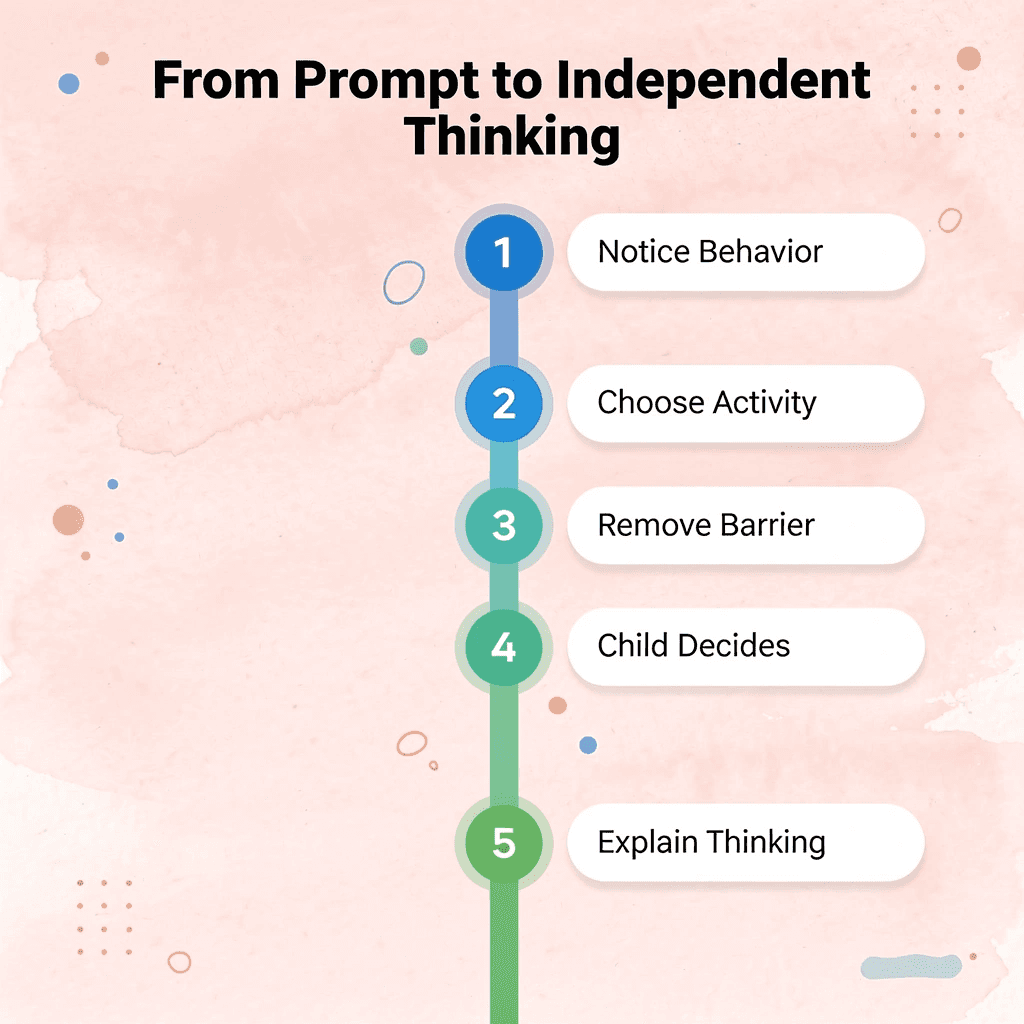
Let the tool stop at the outline. From there, your child decides what to add, runs into real problems, adjusts, and explains their thinking. This sequence—child comes up with the idea, tool removes the blank-page barrier, child makes every decision after—is where working memory, cognitive flexibility, and independent reasoning develop.
Stage | Who Leads | Skill Developed |
|---|---|---|
Generate the idea | Child | Creative ownership |
Remove the blank page | Tool | Reduces friction |
Make every decision | Child | Cognitive flexibility |
Solve problems that arise | Child | Independent reasoning |
Explain their thinking | Child | Working memory & reflection |
🎯 Key Point: The goal isn't a finished page—it's a child who started with an idea, made meaningful choices, solved real problems, and can articulate their own thinking.
⚠️ Warning: If the tool makes decisions beyond the starting point, the cognitive work transfers away from your child. Guard the line between removing barriers and replacing thinking.