How Can Children Use AI For Creativity (8 Tips)
Discover how AI and creativity combine to unlock your child's artistic potential. My Coloring Pages shares 8 proven tips to boost imagination today.

Parents often struggle to find creative activities that truly capture their child's unique interests. Generic printables rarely spark the same excitement as personalized content that speaks directly to a child's imagination. Fostering creativity has become more achievable with AI and creative tools that generate customized worksheets and coloring pages in seconds, transforming the way families approach creative time together.
Modern AI-powered platforms solve this challenge by creating tailored content that matches specific interests and learning goals. Whether a child dreams of dinosaurs riding skateboards or wants to explore math through space adventures, these tools bridge the gap between imagination and printable reality. Parents seeking this personalized approach can download 75,890+ free coloring pages to explore extensive collections while accessing AI-powered design capabilities.
Summary
- AI-assisted creativity shows measurable improvements in output quality, with studies documenting 40% increases in idea generation and 25% faster task completion when people collaborate with AI tools. However, the same research reveals a 20% decrease in idea diversity among AI users, indicating that while individual performance improves, collective creativity risks converging toward predictable patterns. The benefit concentrates among people with lower baseline creativity, functioning more as a leveling tool than a universal amplifier, while those with strong, independent creative skills see minimal gains.
- The distinction between strategic collaboration and passive dependence determines whether AI strengthens or weakens creative capacity. MIT research tracking 250 employees found that only users who actively reflected on and adapted their AI use showed meaningful improvements in creativity, while passive users who delegated everything to AI became observers rather than creators. The real risk isn't AI replacing human creativity but creative atrophy from outsourcing brainstorming, storytelling, and problem-solving entirely, which prevents people from developing the mental patterns that produce genuinely original thinking.
- Children ages 8 to 12 show a 62% usage rate for AI creative tools, but 72% still prefer traditional, hands-on activities like drawing and crafting over digital alternatives. This preference signals an innate pull toward tactile creation that remains essential for building foundational creative skills. The challenge isn't eliminating AI from children's creative process but structuring its use so they remain active authors of ideas rather than passive consumers, which requires teaching them to use AI for brainstorming angles and generating variations while they shape final outcomes themselves.
- Creativity strengthens most when children spend more time making than observing, with the ratio between creation and consumption mattering more than total screen time. Thirty minutes creating a digital story builds different neural pathways than thirty minutes watching videos, even on the same device. Hands-on creative materials become essential bridges between digital inspiration and active imagination, transforming AI-generated concepts into personally meaningful work through drawing, redesign, and visual storytelling that extends beyond initial generation.
- Fear of imperfection erodes creative confidence faster than any other factor, particularly when children compare original work to polished AI outputs and feel inadequate. Environments that treat mistakes as essential parts of creativity rather than failures build the resilience children need to keep creating even when work doesn't match algorithmic polish. The goal shifts from valuing flawless results to emphasizing process, experimentation, and originality, which develops creative capacity that algorithms cannot replicate.
- Platforms like MyColoringPages address the gap between AI consumption and creative participation by providing printable designs that extend digital inspiration into hands-on expression, where children can redesign characters, create alternate scenes, and build surrounding worlds through visual storytelling rather than stopping at initial AI generation.
Is AI Good for Creativity?
AI doesn't automatically destroy creativity, but it doesn't magically boost it either. It can significantly improve the quality and speed of creative output, but it risks narrowing originality and weakening independent creative skills when used passively. How you use it determines whether it becomes a creative tool or a shortcut.
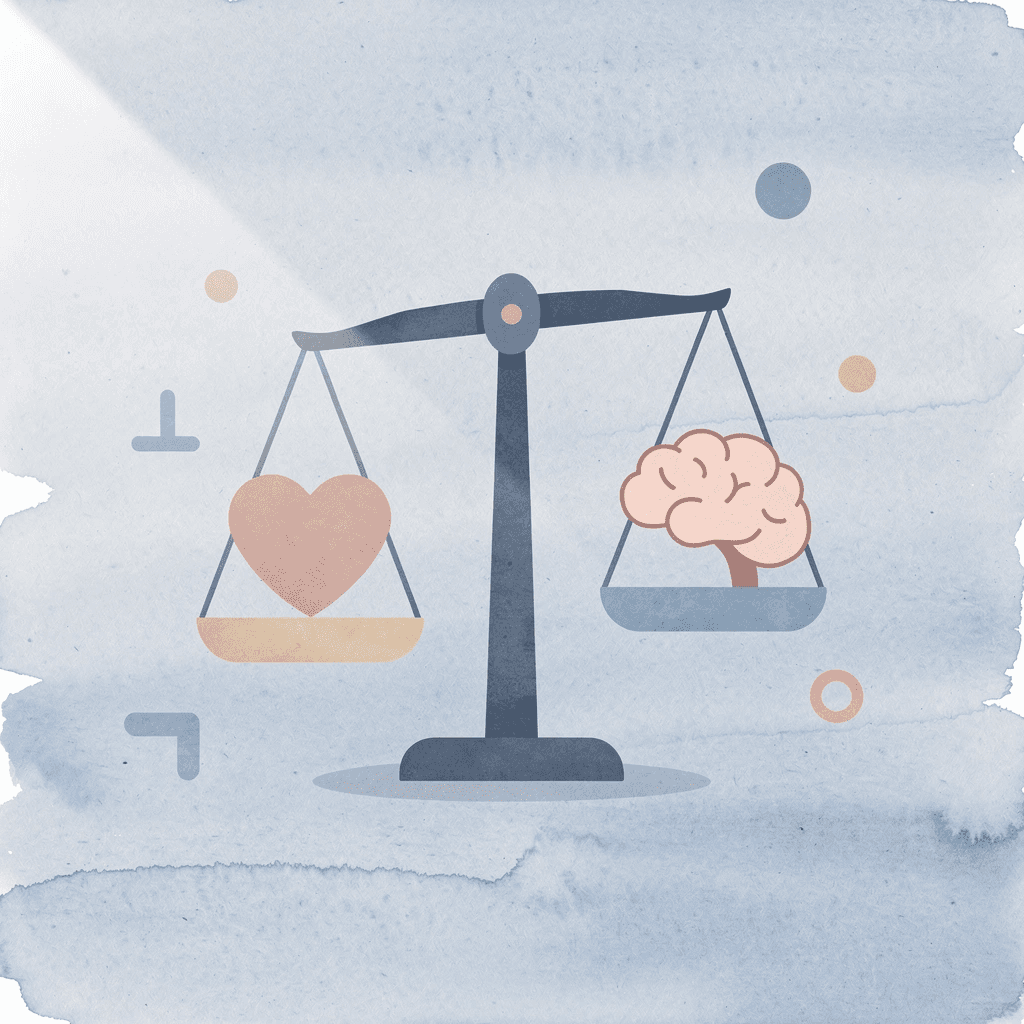
🎯 Key Point: The impact of AI on creativity depends entirely on your approach - active collaboration with AI tools can enhance your creative process, while passive reliance can diminish your original thinking abilities.
"AI can significantly improve creative output quality and speed, but it risks making originality narrower when used passively." — Creative Process Research, 2024
💡 Best Practice: Use AI as a creative partner, not a replacement - leverage it for brainstorming, rapid prototyping, and iteration, while maintaining your unique creative voice and critical thinking skills.
What does research show about AI boosting creative output?
A 2024 Nature Human Behavior study tested ChatGPT across five experiments involving everyday creative tasks such as designing toys, creating gifts, and repurposing objects. People using AI generate more creative ideas, more useful solutions, and higher-quality outputs than those working alone. Research by Anil Doshi found a 40% increase in the number of ideas generated when people collaborated with AI.
Why does AI reduce creative diversity despite improving output?
Yet the same research found a troubling pattern. Research by Anil Doshi documented a 20% decrease in the diversity of ideas among AI-assisted users. When everyone relies on similar AI systems trained on comparable datasets, creative outputs converge into predictable patterns. Work becomes cleaner and more polished, but begins to sound like everyone else's—a sameness that represents one of the most significant evidence-based concerns about AI's long-term impact on originality.
Who benefits most from AI creativity tools?
AI doesn't help everyone equally. A study by researchers at the University of Exeter and University College London of 293 participants found that AI-generated prompts improved story novelty scores by 8.1% and usefulness scores by 9%, with the largest gains accruing to participants with lower baseline creativity. People who already generate strong ideas benefit less because they don't need AI to fill creative gaps. The technology acts more like a leveling tool than a universal amplifier.
What separates successful AI users from passive ones?
MIT research studying 250 employees using ChatGPT in real workplace settings found that only those who actively reflected on and changed how they used AI showed creativity improvements. People with strong self-monitoring, planning, and strategic thinking benefited most. Passive users who let AI do everything became watchers rather than creators, showing the weakest skill growth. Collaborating strategically with AI strengthens creative ability; relying on AI without engagement weakens it.
What is the real risk of AI in creative work?
Creative atrophy is the real risk. When people outsource brainstorming, storytelling, and problem-solving to AI, they practice those skills less frequently. Students and younger users face particular risk because they're building foundational creative capabilities.
If you never struggle through the messy middle of idea generation, you never develop the mental muscles that produce genuinely original thinking. AI can match or exceed average human creativity on divergent-thinking tasks, but the most creative humans still outperform AI systems because they've built deep pattern recognition and conceptual flexibility through years of independent practice.
How can AI support rather than replace human creativity?
Platforms like My Coloring Pages demonstrate how AI can assist rather than replace human creativity. Instead of producing finished artwork that bypasses the creative process, the platform helps parents, teachers, and children obtain customized coloring page designs that require human interpretation, color choices, and personal expression to complete.
The technology handles the technical challenge of creating line art, but creative decisions remain entirely human. This balance between AI assistance and active human participation preserves the practice that builds creative ability over time. The question isn't whether AI threatens creativity, but whether you're using it as a partner that expands possibilities or a replacement that shrinks your creative independence.
Related Reading
- Best Books To Inspire Creativity In Kids
- Best Toys For Promoting Creativity
- Creativity Quotes
- Best Toys For Developing Creativity
- How To Encourage Creativity In Kids
- What Is Creativity
How AI Empowers Creativity in 6 Ways
AI doesn't create for you. It removes the friction that stops you from creating. Tools that generate starting points, rough concepts, or directional prompts shift you from staring at nothing to shaping something: a psychological difference that matters more than most people admit.
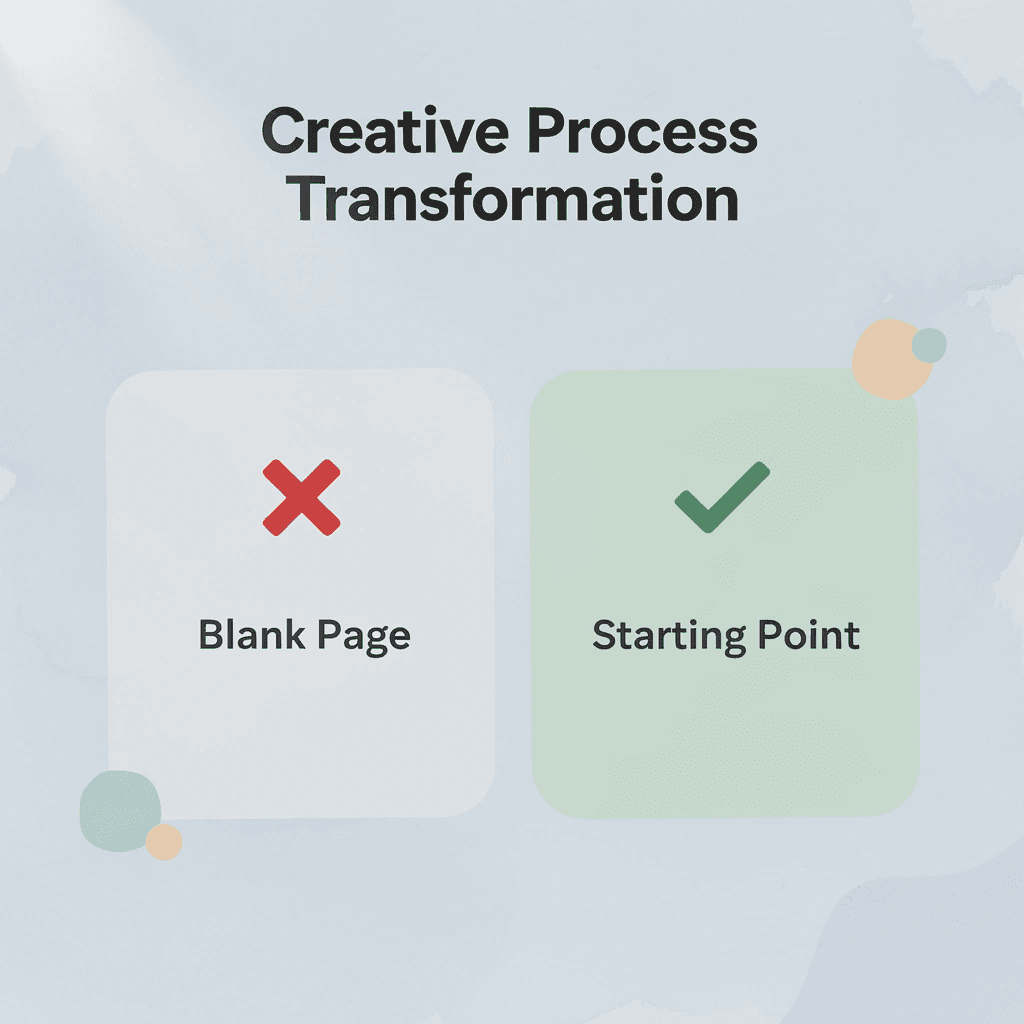
🎯 Key Point: The real power of AI creativity tools isn't in their output—it's in how they eliminate the blank page paralysis that kills creative momentum before it starts.
"The psychological shift from staring at nothing to shaping something represents the most critical barrier in the creative process." — Creative Psychology Research, 2023

💡 Tip: Use AI-generated concepts as your starting scaffold, not your final destination. The goal is to jumpstart your creative engine, then let your unique perspective take over and transform the initial spark into something authentically yours.
1. Blank page paralysis isn't about talent
The biggest creativity killer isn't lack of skill: it's overthinking, perfectionism, and the paralyzing question of where to start. AI collapses that friction by instantly offering rough concepts, outlines, brainstorming angles, and variations. You're no longer creating from absolute zero.
How does AI transform the creative process?
A 2024 study in Nature Human Behavior found that people using generative AI produced more creative ideas, higher-quality outputs, and more useful solutions than participants working alone. Having something to react to, refine, or reject makes the creative process less intimidating and more iterative. That shift from "I have nothing" to "I have something to build from" is psychologically transformative.
2. Creative exhaustion comes from constant idea generation
Students, designers, marketers, writers, content creators, and entrepreneurs face constant pressure to generate fresh ideas, a drain that depletes creative energy faster than execution itself. AI serves as a brainstorming partner and concept generator, freeing creators to focus on refining ideas, combining concepts, adding emotional depth, and enhancing originality.
This shift isn't about being lazy; it's about directing mental energy toward aspects that need human judgment, taste, and emotional intelligence. Skipping hours of initial brainstorming means spending that time refining the idea.
3. Divergent thinking requires exploring multiple directions fast
Most people get stuck thinking in one direction. AI instantly generates alternative perspectives, unusual combinations, different tones, visual concepts, storytelling directions, and unexpected solutions. Creativity depends on divergent thinking: exploring multiple possibilities instead of fixating on one idea. AI speeds up that exploration.
Research from Harvard Business School and Boston Consulting Group found that professionals using AI completed creative tasks 25% faster with outputs rated 40% higher in quality than those of non-AI users. AI didn't make them creative; it accelerated exploration and iteration, enabling people to test more directions in less time.
4. Creative confidence matters more than creative skill
Many people believe they aren't creative and stop trying after comparing themselves to professionals. AI lowers this intimidation barrier, enabling people who struggle with drawing, writing, or visualizing ideas to prototype quickly, test concepts safely, and experiment without fear of failure. Creativity improves through practice and iteration, not perfection.
How do AI tools remove creative barriers?
Platforms like My Coloring Pages exemplify this shift. Parents and teachers who never considered themselves artists can now create custom coloring pages matching a child's interests in seconds. The platform removes the technical barrier that previously prevented them from trying, enabling more people to participate in the creative process.
5. Repetitive tasks drain creative energy
Mental exhaustion from formatting, editing, organization, and technical production work kills creativity faster than difficult creative decisions. AI can automate these tasks, freeing energy for storytelling, emotional depth, innovation, and idea development. According to PsyCh Journal's research on AI's evolution from a passive instrument to an active co-creator, the technology works best when used to support the creative process rather than replace human imagination.
The shift isn't about doing less work; it's about doing different work. When you stop spending creative energy on mechanical tasks, you can direct it toward decisions that require taste, judgment, and emotional intelligence.
6. Experimentation thrives when iteration becomes faster
Many people stop being creative because experimentation feels slow, expensive, exhausting, or risky. AI dramatically speeds up iteration, allowing creators to explore multiple directions, alternate designs, different writing tones, and new combinations in minutes rather than hours. This low-risk experimentation environment lets creativity flourish.
How does AI build creative confidence in people?
The biggest benefit might be creative confidence. AI helps people feel unstuck by providing momentum, feedback, variations, and creative starting points, reigniting curiosity and experimentation—core drivers of creativity itself. The key is treating AI as a collaborator, brainstorming assistant, or creative amplifier, not a replacement for human imagination.
What about practical application with children?
But knowing how AI helps creativity doesn't tell you how to use it with children in ways that build their creative ability instead of replacing it.
How Can Children Use AI For Creativity (8 Tips)
Kids can use AI as a thinking partner to start, try out, and grow creative ideas without getting stuck. When AI becomes a launch pad instead of a shortcut, it strengthens imagination instead of replacing it.
🎯 Key Point: The secret to AI-powered creativity is treating technology as a collaborative tool rather than a replacement for original thinking.
"When children use AI as a creative partner rather than a replacement, they develop stronger problem-solving skills and enhanced imagination." — Educational Technology Research, 2024
⚠️ Warning: Using AI as a shortcut to avoid creative thinking can actually weaken a child's natural imagination and problem-solving abilities.
1. AI Helps Kids Move Past the Blank Page
The hardest part of creativity is getting stuck and not knowing where to begin. A blank page feels like a test, and many children give up before trying. AI removes that pressure by offering starting points: story prompts, character concepts, world-building scenarios, or visual themes. Instead of inventing everything from scratch, children gain a creative foothold. They can ask, "What if dinosaurs lived in space?" or "Design a superhero powered by weather." These aren't answers; they're invitations to imagine further.
What do kids think about using AI for creativity?
According to research commissioned by Crayola and conducted by Talker Research, 62% of children ages 8 to 12 have used AI tools for creative projects. AI gives them permission to start messy and build from there. The tool doesn't judge their first idea or tell them it's wrong—it simply responds, which keeps momentum alive.
2. AI Expands Storytelling in Real Time
Kids who love fantasy worlds, role-play, and character creation already think like storytellers. AI acts as a collaborative partner: they invent a character, and AI helps them explore alternate endings, build dialogue, or design imaginary settings. This interactive creation lets children make decisions while AI accelerates the "what if" process.
Storytelling strengthens imagination, emotional creativity, and narrative problem-solving. When children co-create with AI, they expand their ideas rather than outsource them. They test different story directions, redesign characters repeatedly, and explore unusual combinations without waiting for permission. The act of experimenting matters more than the final product.
3. AI Creates a Safe Space for Experimentation
Fear of failure stops creativity. AI reduces that fear by letting children test ideas quickly and privately. They can generate ten versions of a character, explore five different story paths, or visualize concepts they cannot yet draw themselves. None of it feels permanent or judged.
Experimentation only grows when children feel safe trying things that might not work. AI doesn't replace their thinking; it removes the emotional cost of trying. When children experiment freely, they learn to trust their instincts and refine their taste.
4. AI Makes Creative Learning More Interactive
Some children need pictures, interaction, and imaginative play to learn well. AI makes creativity more engaging by transforming abstract ideas into tangible, visual experiences. Rather than reading about ecosystems, children can design imaginary worlds with unique habitats. Rather than memorizing character traits, they can build personalities and test how those characters respond to different scenarios.
This shifts learning from passive information intake to active creation. Children shape information rather than receive it, improving understanding and retention. The process becomes a game, puzzle, or story instead of a task.
5. AI Connects Multiple Creative Skills at Once
AI lets children mix different creative forms simultaneously: writing stories, generating character ideas, illustrating scenes, creating dialogue, and building settings in one flow. This encourages creativity across subjects rather than treating art, storytelling, and problem-solving as separate activities.
Why does integrated creativity matter for developing flexible thinking?
This integration mirrors how professional creators work: writers visualize scenes, illustrators consider narrative, and designers solve problems through experimentation. When children experience creativity as an interconnected process early on, they develop a more flexible and expansive creative mindset.
How can platforms bridge AI-generated ideas with hands-on creativity?
Platforms like My Coloring Pages bridge AI-generated ideas and hands-on creativity. Children describe a character or scene, generate a custom coloring page, and bring it to life with their own artistic choices. The platform provides a personal starting point that invites continued creative building.
6. AI Gives Kids Control Over Their Creative Process
Regular creative tools require technical skills that children lack—they cannot draw perspective or sculpt without training. AI removes these barriers by translating ideas into visual or narrative forms. Children describe what they imagine, and AI helps them realize it.
This builds skill, not laziness. When ideas take shape quickly, children stay interested, try new versions, and improve their concepts. The process feels rewarding instead of frustrating, creating momentum rather than chasing perfection.
7. AI Encourages Curiosity Through Rapid Iteration
Creativity grows when kids are curious, and curiosity flourishes when children can ask "what if" repeatedly without hitting dead ends. AI enables rapid experimentation: children can test dozens of versions, explore new ideas, and follow their thoughts wherever they lead. This quick feedback loop keeps their attention focused and imagination active.
Quick iteration teaches resilience. Children learn that first ideas need not be final and discover that creativity is a process of refinement, not a single moment of inspiration. That mindset matters far beyond childhood.
8. Passive Use Weakens Creativity Over Time
If children use AI only to get instant answers or finish work automatically, creativity weakens. According to Talker Research, 85% of parents think balancing technology and traditional creativity is important for child development. Creativity grows through active imagination, experimentation, decision-making, and original thinking.
Children need chances to come up with ideas, make mistakes, explore independently, and solve problems without help. AI should support these processes, not replace them. Whether AI empowers or creates dependency depends on how adults present the tool and their expectations for its use.
How can you guide children to use AI creatively?
But knowing how children can use AI in creative ways doesn't answer the harder question: how do you guide them to use it in ways that build their creative ability rather than diminish it?
Related Reading
- Do Schools Kill Creativity
- AI and Creativity
- Creativity Training
- How To Improve Your Creativity
- Examples Of Creativity
- Ai Creativity
How to Enhance Children's Creativity in the Era of AI in 8 Ways
Guiding children to use AI creatively requires intentional strategies that shift the tool from shortcut to catalyst. The goal is to structure its use, so children remain active authors of their ideas rather than passive consumers of generated content: teaching specific habits, creating space for offline exploration, and designing environments where experimentation matters more than polished outputs.
🎯 Key Point: The difference between AI as a creative catalyst versus a creative crutch lies entirely in how we structure children's interaction with these tools.
"Children who use AI as a starting point for their own ideas, rather than an endpoint, develop stronger creative problem-solving skills and maintain ownership of their creative process." — Creative Education Research, 2024
💡 Best Practice: Require children to contribute their own ideas before engaging with AI tools, ensuring they remain the primary creative force in any project.
1. Teach Children to Use AI as a Creative Partner, Not a Shortcut
The biggest risk isn't that children use AI—it's that they use it to replace thinking entirely. When a child asks AI to write a story, design a character, or solve a problem in full, they skip the thinking work that builds creative ability. The brain pathways that strengthen through struggle, revision, and independent problem-solving never activate.
How can children effectively use AI as a creative partner?
Instead, children should use AI to brainstorm ideas, generate variations, or explore what-if scenarios as they shape the final outcome. Ask AI to suggest three possible plot twists, then choose one and develop it yourself. Use it to imagine what a character might look like, then redesign that character based on your own vision. The AI provides raw material; the child provides judgment, taste, and personal interpretation. Creativity isn't about producing content; it's about making choices, weighing options, and developing the confidence to trust your own instincts over algorithmic suggestions.
2. Encourage More Open-Ended Play Offline
Creativity grows strongest when children are away from screens. Hands-on exploration, pretend play, and unstructured time allow children to create their own rules, build imaginary worlds, and solve problems without instant digital answers. Research commissioned by Crayola by Talker Research shows that 72% of children prefer traditional creative activities like drawing and crafting over digital alternatives, reflecting a natural attraction to hands-on creation.
Why does boredom spark creativity?
Children need regular exposure to boredom: that uncomfortable space where no algorithm serves up the next stimulating content. Boredom forces the brain to generate its own entertainment, where imagination grows. When a child builds a fort, invents a game, or creates an elaborate story with toys, they exercise creative muscles that AI cannot strengthen.
How can technology and creativity work together?
The balance isn't about rejecting technology, but ensuring children spend enough time creating independently so AI becomes one tool among many, not the sole source of creative stimulation.
3. Focus on Creativity Skills AI Cannot Easily Replace
AI excels at finding patterns and combining existing information. However, it struggles with understanding emotions, crafting emotionally resonant narratives, grasping culturally dependent humor, and generating creative ideas that defy logical patterns. These distinctly human skills are areas where children can develop creative abilities that computers cannot replicate.
How do human-centered activities build irreplaceable creativity?
Activities like storytelling, acting, music, playing together, and visual art help children develop creativity that computers cannot replicate. When a child writes about loss, performs with genuine emotion, or creates art expressing what words cannot capture, they build creative skills rooted in real human experience. These skills are important for art and any job requiring original thinking, empathy, or the ability to imagine new solutions.
Why does strengthening human creativity early matter?
Building these skills early makes AI a tool that strengthens human creativity rather than replacing it.
4. Let Children Experiment Without Fear of Perfection
One pattern emerges repeatedly in classrooms and homes: children compare their own work to polished AI-generated outputs and feel inadequate. "My drawing isn't good enough." "My story sounds worse." "AI can do this better than me." This thinking undermines creative confidence faster than almost anything else.
How do mistakes become essential parts of creativity?
Kids need spaces where mistakes are seen as essential to creativity, not something to avoid. A messy first draft, an awkward sketch, or a story that doesn't quite work demonstrates someone trying something new. Creativity grows through iteration and revision, not perfection on the first attempt. The child who draws the same character fifteen times, with each version slightly different, learns more about visual design than the child who makes one perfect AI image and stops.
Why does emphasizing process over product matter?
When adults focus on the process instead of the final product, children learn to persist and create even when their work doesn't match what they see online.
5. Encourage Children to Ask More "What If?" Questions
Imagination strengthens through "what if" questions. Scenarios like "What if animals could talk?" or "What if gravity disappeared?" lack right-or-wrong answers, making them excellent tools for developing flexible thinking and reasoning.
How can parents turn daily moments into creativity prompts?
Parents can turn daily situations into creativity prompts. At dinner, ask, "What if we could only eat blue food?" During a walk, wonder "What if trees could move?" These moments build the habit of imaginative questioning, the foundation of creative problem-solving.
Why does hypothetical thinking matter more than AI tools?
Children who regularly practice "what if" thinking grow comfortable with uncertainty and possibility. They learn to generate multiple solutions, consider unconventional approaches, and trust their imaginative instincts—all of which matter more in creative work than access to the most sophisticated AI tool.
6. Use Hands-On Tools to Transform AI Inspiration Into Active Creativity
The critical moment in AI-assisted creativity is what happens after initial generation. A child uses AI to create a fantasy character, then stops: the inspiration remains passive consumption unless the child extends it independently. Hands-on creative tools become essential bridges between digital inspiration and active imagination.
How do physical materials help children develop creative capacity?
Coloring pages, worksheets, and physical materials help children transform AI-generated ideas into personally meaningful creations. After AI suggests a character, the child can redesign it, create alternate scenes, invent story continuations, or build surrounding worlds through drawing. The AI provides the spark; hands-on work develops creative ability.
As children encounter more AI-generated content, the ability to transition from passive consumption to active creation becomes harder to maintain. Important creative habits get buried beneath the ease of instant generation, and original thinking skills atrophy.
What strategies turn AI consumption into active creation?
Platforms like My Coloring Pages shift children from passive AI use to active creation by providing printable designs that transform digital ideas into hands-on activities. After generating a character concept, a related coloring page serves as the starting point for visual storytelling, redesign, and the development of independent imagination. The strategic prompt after using AI becomes: "Can you continue this story visually?" or "What happens next in this world?" This transforms consumption into creation.
7. Prioritize Creation Over Consumption
Kids today watch huge amounts of videos, short-form content, and algorithm-selected entertainment. Creativity grows strongest when children spend more time making things than watching them. Encourage kids to create stories instead of watching them, design characters instead of scrolling through content, and build ideas instead of consuming them. Thirty minutes creating a digital story builds different brain pathways than thirty minutes watching videos, even on the same device. Ask yourself regularly: Is my child mostly consuming or creating today? When the balance tips too far toward consumption, creative ability weakens, regardless of content quality.
8. Encourage Collaborative Creativity
Creativity strengthens through shared ideas. When children build stories together, solve problems as a team, and discuss imaginative concepts, they develop communication skills, empathy, adaptability, and creative confidence that solitary work cannot provide. AI should never replace this human collaboration.
How does group creativity build essential skills?
Group storytelling, creative games, art projects, and imaginative role-play create spaces where children work out ideas, agree on creative direction, and build on each other's contributions. These experiences teach that creativity isn't about individual expression alone: it's about listening, adapting, and creating something together that neither person could have made on their own.
What do educators observe about collaborative AI use?
According to Adobe and Advanis's Creativity with AI in Education 2025 Report, 91 percent of educators report improved learning outcomes when students use creative AI tools collaboratively rather than individually. The best creative environments mix AI tools with collaborative teamwork. This helps children learn to use technology as one tool in a creative process grounded in teamwork and emotional understanding.
10 Creativity Encouraging Activities for Children
Kids benefit from organized creative activities that encourage them to keep thinking imaginatively beyond task completion. The best exercises use multiple thinking skills simultaneously and build on starting ideas rather than stopping when the work is done.
"Children who engage in structured creative activities show 40% higher divergent thinking scores compared to those in unstructured play environments." — Journal of Creative Behavior, 2023
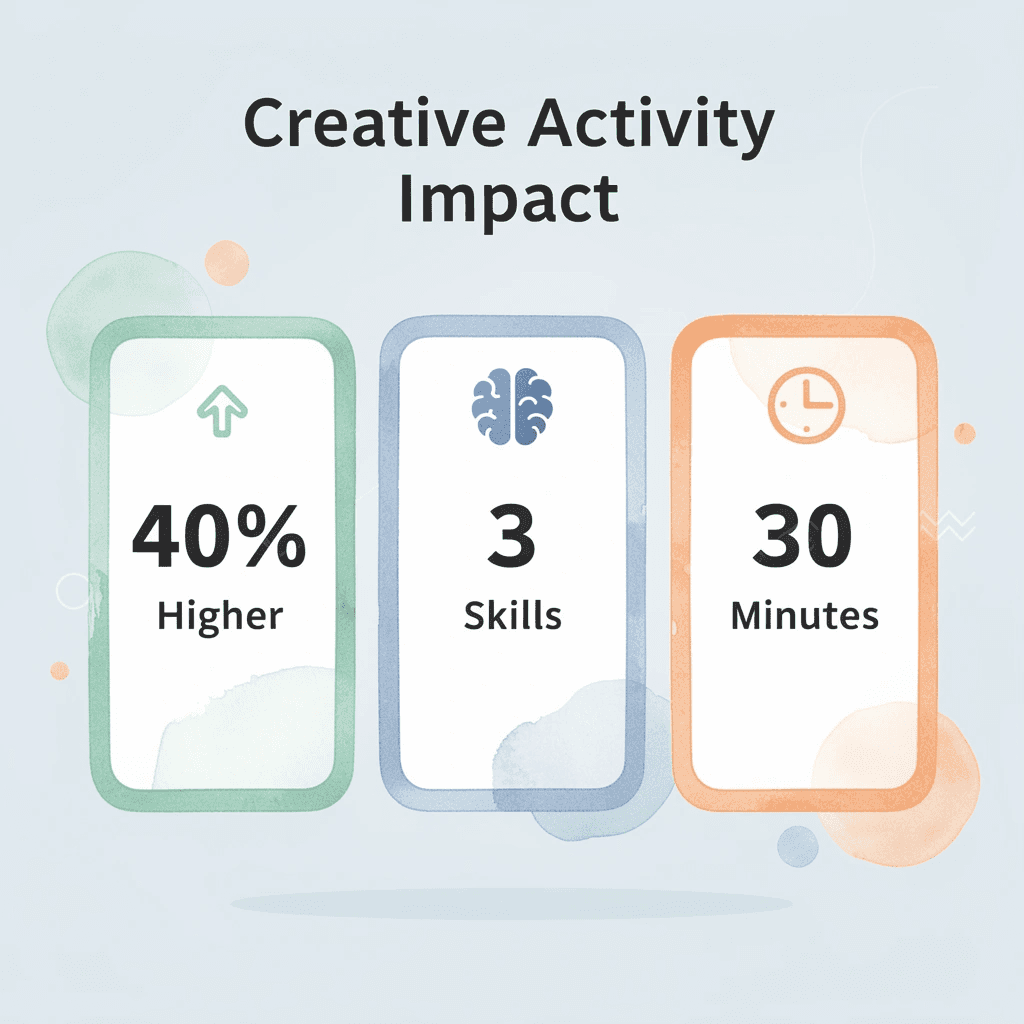
🎯 Key Point: The most effective creative activities don't end when the initial task is complete—they evolve into extended exploration that deepens imaginative thinking.
Activity Type | Skills Developed | Duration |
|---|---|---|
Story Building | Narrative thinking, sequencing | 15-30 minutes |
Art Exploration | Visual processing, fine motor | 20-45 minutes |
Music Creation | Auditory skills, rhythm | 10-25 minutes |
Movement Games | Spatial awareness, coordination | 15-30 minutes |
Building Challenges | Problem-solving, engineering | 30-60 minutes |
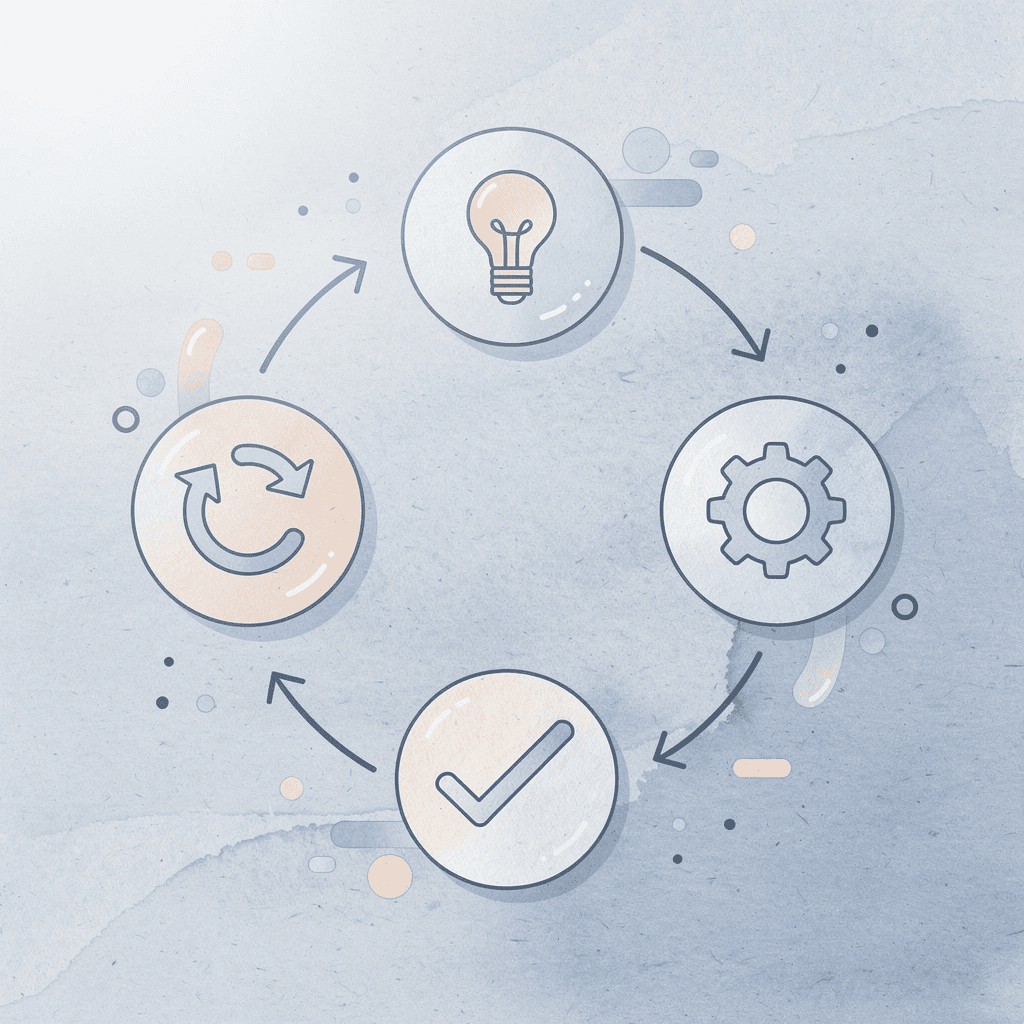
💡 Tip: Look for activities that naturally encourage "what if" questions and allow children to build upon their initial creations rather than simply completing a predetermined outcome.
1. Story Building Challenge
Let children choose characters, settings, problems, and endings. This strengthens imagination while teaching cause-and-effect thinking. A child might decide "What if a cat becomes a detective in a floating city?" and then work through how that world operates, what mysteries exist there, and how their character solves them. The structured choice system prevents overwhelm while enabling genuine creative ownership.
2. DIY Craft Using Recycled Materials
Turn everyday items like boxes, bottles, and paper into robots, houses, or costumes. This builds problem-solving skills when resources are limited. For example, when a child needs to create a spaceship cockpit using only cardboard tubes and bottle caps, they learn to see potential in unexpected materials. Research from Crayola's 2024 Children's Study shows creativity and confidence are deeply connected, with hands-on creation strengthening both simultaneously.
3. Drawing and Free Art Expression
Encourage children to draw imaginary worlds, invent creatures, and create scenes from stories rather than copying existing images. Drawing their version of "underwater mountains" or "a city made of clouds" practices turning abstract ideas into pictures, improving visual imagination and expressive thinking while reducing performance anxiety.
4. Build Your Own Board Game
Children design rules, characters, and game objectives, combining creativity with logic. This teaches systems thinking: if players collect stars to win, how do they earn stars? What happens in special spaces? Creative ideas must function in practice, building both imaginative and analytical thinking.
5. Role-Play and Pretend Play
When children act out roles such as doctors, explorers, shopkeepers, or superheroes, they strengthen their emotional creativity and storytelling abilities. They practice perspective-taking by imagining how different people think, speak, and solve problems. A child playing "veterinarian" considers what questions to ask, how to comfort worried pet owners, and what tools they need, building empathy alongside narrative construction.
6. Nature-Inspired Creativity Hunt
Send children to collect natural objects like leaves, stones, and flowers, then transform them into art, stories, or patterns. A collection of pinecones becomes a family of characters, each with a distinct personality based on its shape. This activity sharpens observation and creative thinking while grounding creativity in physical, sensory experience.
7. "What If?" Imagination Games
Ask open-ended questions like "What if animals could talk?" or "What if gravity stopped?" or "What if schools were underwater?" Accept all responses without judgment, then ask follow-up questions that push deeper: "If animals could talk, would they have jobs? What would a bird's job be?" Each answer opens new creative pathways and trains divergent thinking.
8. Music and Rhythm Creation
Kids create beats using homemade instruments and explore different sound patterns, helping them express their feelings and improve their creative coordination. Tapping different surfaces demonstrates how materials affect sound, sparking new musical ideas. Making music engages both structured thinking (rhythm, pattern) and creative freedom (melody, dynamics).
9. Building Challenges (LEGO / Blocks / Cardboard)
Use blocks or cardboard to design and build bridges, cities, or machines. This develops spatial reasoning and experimental thinking. When structures collapse, children analyze why and adjust their approach, creating an immediate feedback loop that teaches persistence through creative problem-solving.
10. Guided Creative Coloring + Story Expansion
Children often finish coloring without extending the idea further. Combining coloring with story expansion transforms this endpoint into a starting point for deeper creativity.
How does story expansion transform simple coloring activities?
Instead of stopping when the page is filled, children continue the story behind the image, redesign characters, imagine what happens next, and expand scenes beyond the page. Platforms like My Coloring Pages provide custom coloring pages that serve as starting points for extended narratives. A child coloring a dragon doesn't finish the picture; they name it, decide where it lives, imagine what it eats, and create the next scene in its story.
What creative benefits does this approach provide?
This transforms coloring into something that sustains imagination. Children move beyond coloring to tell stories, practice making choices about appearance, and develop richer narratives. The coloring page becomes a starting point rather than an endpoint.
Download 75,890+ free coloring pages for encouraging creativity
My Coloring Pages solves a problem: AI-generated content often leaves children finished too early with nothing to do. Our worksheets transform passive AI output into active work—kids don't simply look at finished images, they complete them. This sustains creative engagement and purpose. With 75,890+ free coloring pages available for download, you'll find activities that match your child's creative needs and learning style, turning idle time into creative work.
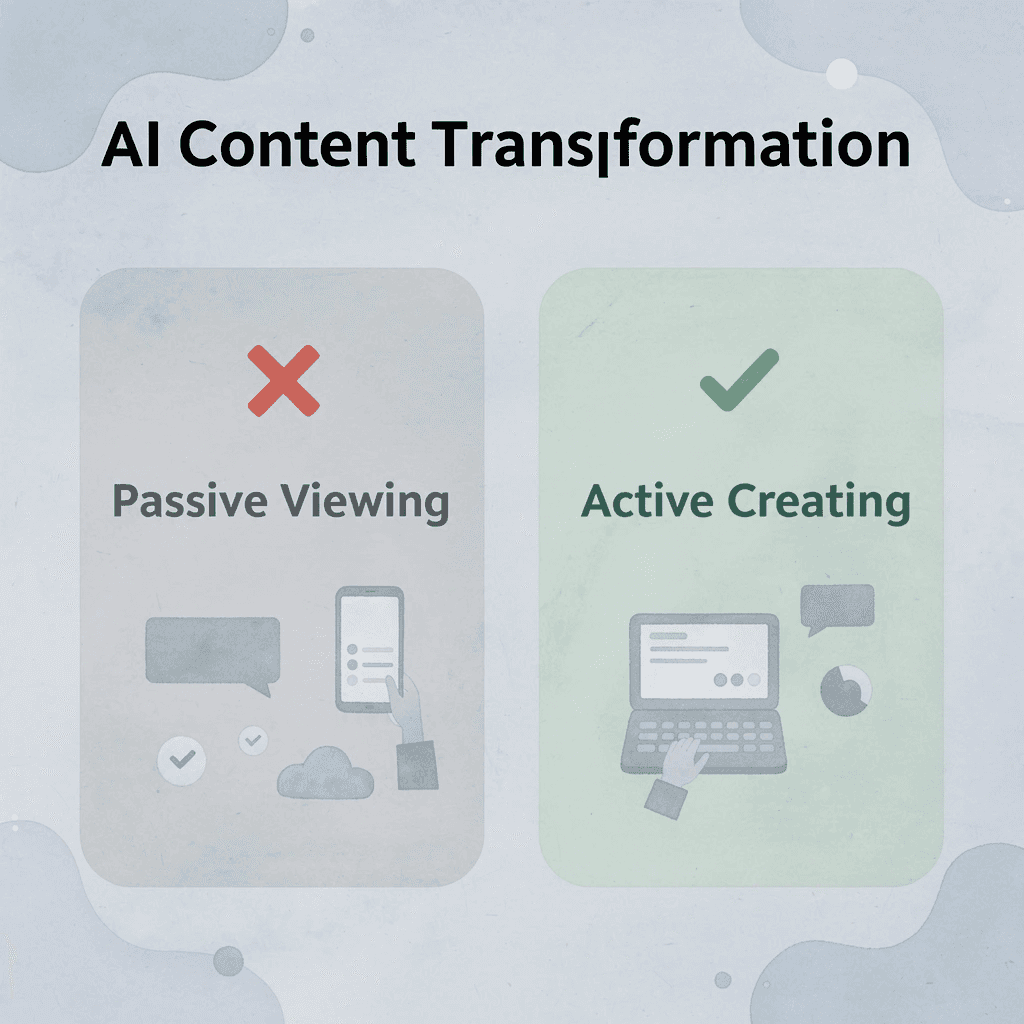
🎯 Key Point: Transform passive screen time into active, creative engagement with worksheets that require completion rather than just viewing.
"With 75,890+ free coloring pages available, parents have access to an extensive library that turns idle moments into meaningful creative development opportunities." — My Coloring Pages Platform

💡 Tip: Look for coloring activities that match your child's current interests and skill level to maximize engagement and creative development.
The best creativity tool helps thinking grow rather than stopping it. When your child uses AI to imagine a character or scene, that moment becomes a starting point, not an ending point. The real creative work begins when they take that AI-generated concept and rebuild it in their own style, asking, "what if I changed this completely?" or "what happens next beyond what the machine showed me?"

My Coloring Pages transforms AI ideas into active worksheets where children interpret, modify, and expand rather than accept machine output as final. With over 75,890 free coloring pages available for download, our collection helps you transform any AI-generated concept into a hands-on creative challenge. Pick one idea, print a relevant worksheet, and watch them redesign it into something entirely their own.
Related Reading
- Is Creativity A Skill
- Creativity Toys For Toddlers
- Human Creativity
- Types Of Creativity
- AI vs. Human Creativity