150 Examples of Creativity Activities for Children
50 Examples of Creativity activities to spark your child's imagination. My Coloring Pages provides proven ideas that develop artistic skills and creative thinking at home.

Every parent and teacher has watched a child stare at a blank page, waiting for inspiration to strike. Understanding how to foster creativity isn't just about encouraging artistic expression—it's about providing the right tools and examples of creativity that spark imagination and build confidence. Children need accessible materials that transform ordinary activities into opportunities for creative exploration and skill building.
When parents and teachers need materials that actually engage children rather than just keep them busy, the right resources make all the difference. Quality coloring pages and worksheets designed for different themes, subjects, and developmental stages can ignite creative thinking while building essential skills. Parents and teachers looking for engaging materials can download 75,890+ free coloring pages designed specifically to inspire young minds.
Summary
- The first five years represent the most accelerated period of brain development in human life, with approximately 90% of brain structure forming before children enter formal schooling. Research tracking motor creativity in preschoolers demonstrates that neural connections form at an extraordinary speed during this window, establishing patterns that influence how children approach challenges, process emotions, and generate solutions for decades afterward. The experiences children have with imagination, experimentation, and creative expression during these years either strengthen or weaken the neural pathways connected to adaptability and innovation.
- Longitudinal research reveals that childhood creativity scores often predict future achievement, innovation, and career success more accurately than IQ scores alone. Studies that follow participants over decades show that high academic performance teaches children to find correct answers efficiently, but creativity builds something different: the capacity to generate multiple solutions, navigate unfamiliar problems, and think beyond memorized responses. These abilities matter more and more in careers where adaptability and innovation determine who thrives and who becomes obsolete as industries shift.
- Analysis of approximately 300,000 test scores revealed a decline in creativity among American children since the 1990s, with particularly sharp drops in originality, emotional expressiveness, and imaginative thinking. The Child Creativity Lab found that 98% of kindergarteners score at a genius level on creativity tests, but by age 25, only 2% do. This isn't developmental inevitability but learned suppression, happening gradually as environments replace exploration with evaluation and curiosity with conformity.
- Overscheduling functions as creativity suppression disguised as enrichment, with research showing that children given 30 minutes of unstructured free play generate more novel solutions to open-ended problems than those who spend an equivalent amount of time in structured activities. When every hour contains tutoring, sports, or screen time, children lose the cognitive space where boredom transforms into invention. The discomfort of having nothing assigned forces the brain to generate its own entertainment, which is precisely where imagination develops strength.
- Fewer visible toy options force deeper creative engagement because children must invent new uses for familiar items to maintain interest. When children face walls of toys, they engage superficially, moving from object to object without sustained exploration. Rotating toys rather than accumulating them maintains novelty without overwhelming choice, teaching that creativity comes from how you use resources, not how many you possess.
- Research involving 86 to 178 participants demonstrates that structured creative activities significantly improve both creativity and social-emotional development when children engage regularly, with the most effective activities sharing three traits: constraints that force invention rather than replication, outputs that give children evidence of their creative capacity, and allowance for failure without consequence. MyColoringPages addresses this by generating custom coloring pages instantly based on children's specific interests, removing the mismatch between generic content and individual curiosity while giving them a way to continue building on their invented ideas through visual storytelling and scene expansion.
Importance of Creativity for Children
Creativity is how children develop the ability to think flexibly, handle tough emotions, solve problems, and generate new ideas. Viewing it as innate rather than learnable means missing the critical window when neural pathways are primed to grow.
🎯 Key Point: Creative development during childhood isn't just about artistic expression — it's about building the fundamental cognitive skills that children will use throughout their lives to navigate challenges and innovate solutions.
"The early years of life are when the brain is most plastic and responsive to environmental influences, making this the optimal time for creative skill development." — Harvard Center on the Developing Child
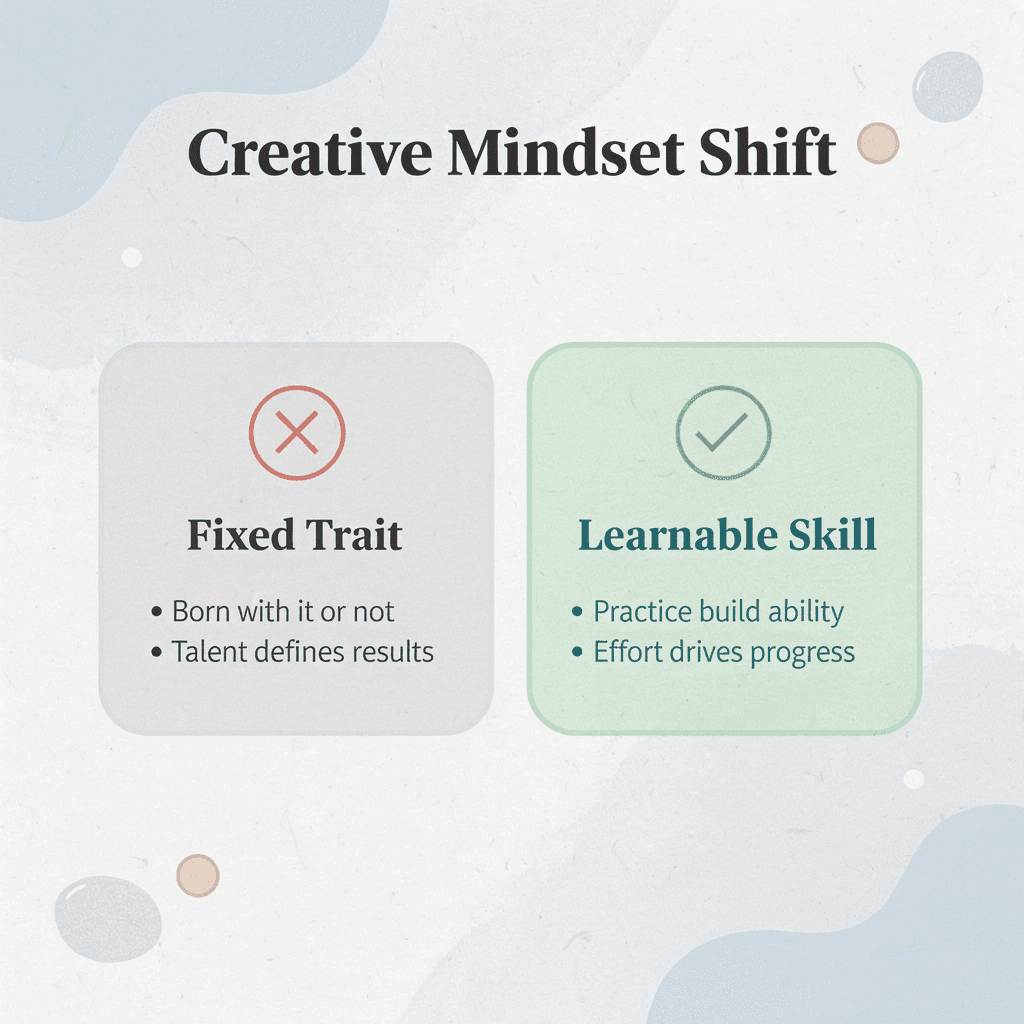
💡 Tip: Rather than viewing creativity as a fixed trait, parents and educators should focus on providing opportunities for creative exploration and celebrating the process of trying new approaches, not just the end results.
The Brain Development Window Closes Faster Than You Think
The first five years are the fastest time for brain growth in human life. Neural connections form rapidly, creating patterns that affect how children face challenges, manage emotions, and solve problems for years to come. Motor creativity is a vital component of preschoolers' growth and development because the brain builds the foundation for flexible thinking during these years. By the time children start school, about 90% of their brain structure has already formed. Their experiences with imagination, exploration, and creative expression have strengthened or weakened the neural pathways connected to adaptability and innovation.
Creativity Predicts Real-World Success Better Than Test Scores
Long-term research following children over decades shows that childhood creativity scores often predict future achievement, innovation, and career success better than IQ scores. The Torrance Tests of Creative Thinking tracked participants for years, measuring how childhood creativity connected to adult accomplishment. High academic performance teaches children to find correct answers quickly, while creativity builds the ability to generate multiple solutions, handle unfamiliar problems, and think beyond memorized responses. These skills prove increasingly valuable in roles where adaptation and innovation determine success as industries evolve.
The Creativity Crisis Nobody Talks About
A study of about 300,000 test scores showed that creativity levels among American children have declined since the 1990s, with the biggest drops in originality, emotional expressiveness, and imaginative thinking. Children today often perform better on standardized assessments but struggle to generate new ideas, take creative risks, and express themselves through imagination. This occurs because environments prioritize performance over exploration, correct answers over experimentation, and efficiency over the messy process of creative discovery.
Why does replacing play with tasks harm children's development?
Parents worry when creativity gets replaced with purely practical tasks, even for young children. When household chores completely displace imaginative play, we remove the primary tool by which young minds learn to think flexibly. Play is how children develop executive function, language skills, memory, self-regulation, and confidence to try new things without fear of failure.
How can digital tools support creative development?
Platforms like My Coloring Pages provide instant access to customizable coloring pages designed around specific themes and developmental stages. You can create age-appropriate creative activities in seconds, whether planning structured learning time or responding to a rainy afternoon when children need engaging alternatives to screen time. But what happens to children when creative opportunities consistently disappear from their daily routines?
Related Reading
- Best Books To Inspire Creativity In Kids
- Best Toys For Promoting Creativity
- Creativity Quotes
- Best Toys For Developing Creativity
- How To Encourage Creativity In Kids
- What Is Creativity
Consequences of Neglecting Creativity in Children
When creativity disappears from daily routines, children lose the cognitive architecture for flexible thinking, emotional processing, and independent problem-solving. The Child Creativity Lab found that 98% of kindergarteners score at a genius level on creativity tests, but by age 25, only 2% do. This isn't a natural consequence of growing up—it's learned suppression, as environments replace exploration with evaluation and curiosity with conformity.
"98% of kindergarteners score at genius level on creativity tests, but by age 25 only 2% do." — Child Creativity Lab
🔑 Takeaway: This 96% decline in creative thinking represents one of the most significant developmental losses in modern education, transforming naturally creative children into conforming adults.
⚠️ Warning: Prioritizing evaluation over exploration systematically trains children to suppress their innate creative abilities in favor of predictable responses.
Children stop trusting their own ideas
The most painful consequence shows up quietly in everyday moments. A child who once built elaborate block towers now asks for step-by-step instructions before starting anything. Another who invented imaginary worlds during bath time now needs constant suggestions for entertainment. When adults consistently correct, redirect, or take over children's creative projects, kids internalize a devastating message: their ideas need fixing before they're valuable. This erodes self-expression and replaces intrinsic motivation with approval-seeking behavior, manifesting later as low initiative, reluctance to try new activities, or the constant question "Am I doing this right?"
Intellectual risk-taking becomes frightening
Rigid environments built around standardization teach children that originality carries danger. Instead of experimenting with unusual solutions or asking unexpected questions, they focus on producing safe answers that match adult expectations. According to research published in the Children journal, creativity is closely linked to well-being, social adjustment, and personal development in children and adolescents. When that capacity shrinks, perfectionism fills the space. Children develop anxiety around open-ended tasks, hesitate to participate in discussions without predetermined answers, and avoid situations where mistakes might be visible. Adaptability and innovation require the intellectual courage these children learned to suppress.
How does creative play strengthen problem-solving abilities?
Creative play is a workout for your brain that helps you make decisions amid uncertainty. When children play pretend, tell stories, or build with open-ended materials, they practice flexible thinking, emotional management, and reasoning simultaneously. These experiences teach brains to generate multiple solutions, change direction when initial approaches fail, and tolerate ambiguity.
Without regular practice, children rely too much on adults for direction and struggle when problems lack clear instructions. They may excel at worksheets and memorization but feel anxious during group projects, real-world challenges, or situations requiring independent decision-making.
What role does access play in preserving creative capacity?
For parents who want to keep their children's creative skills sharp during early childhood, easy access is as important as having the right intention. Platforms like My Coloring Pages offer creative activities tailored to specific interests and developmental stages. They eliminate preparation time and provide an alternative to passive screen time. The difference between accessing customizable creative materials and turning to entertainment apps often determines whether a rainy afternoon becomes a time for exploring or passive consumption.
How does passive consumption replace active invention?
Modern children are exposed to screens more than ever before, even during school hours. When entertainment consumption becomes their primary mental activity, their brains practice receiving information rather than creating it. Creativity strengthens with use. Children who spend hours consuming content but rarely create, imagine, or experiment develop different thinking patterns than those who regularly engage in self-directed exploration.
What signs indicate a decline in children?
Parents notice this later when children get bored quickly without external stimulation, struggle to entertain themselves during unstructured time, or avoid activities that require sustained imaginative effort. The pattern isn't about screen time alone but about the ratio between consuming and creating in daily life. Knowing what happens when creativity disappears matters only if you know how to rebuild it systematically.
15 Practical Creativity Training Ideas for Children
Creativity grows when you have physical spaces for experimentation, unstructured time to explore, and adults who value the process over perfection. The following approaches make imagination a regular practice rather than an occasional activity.
🎯 Key Point: The most effective creativity training happens when children have dedicated spaces, freedom to explore, and supportive adults who celebrate experimentation over perfection.
"Creativity is not a talent. It is a way of operating. When children have the right environment and encouragement, their natural innovative thinking flourishes." — Research on Child Development
💡 Best Practice: Create daily opportunities for unstructured play and hands-on exploration where children can test ideas, make mistakes, and discover solutions through trial and error.
1. Create a Dedicated Space Where Mess Becomes Permission
Kids pick up on environmental clues faster than spoken instructions. A designated creativity zone—even a corner with accessible supplies—signals that trying new things belongs in everyday life. Open bins of cardboard, fabric scraps, and markers offer constant invitations to build something new.
The psychological shift matters more than square footage. Parents who establish these spaces report that children gravitate toward them during transitions between activities, treating creative work as a default option rather than something that requires adult initiation. The space needs availability, not organization or aesthetic coherence.
2. Schedule Nothing and Watch What Emerges
Overscheduling suppresses creativity by eliminating the mental space where boredom transforms into invention. When every hour includes tutoring, sports, or screen time, children lose the discomfort that forces their brains to generate their own entertainment, in which imagination develops strength.
Research from child development specialists shows that unstructured time correlates with higher creative output. Children given 30 minutes of free play generate more novel solutions to open-ended problems than those in structured activities, a pattern consistent across age groups and socioeconomic backgrounds. Boredom isn't the enemy of development; it's the starting line.
3. Replace Right Answers With Multiple Possibilities
Activities with only one correct answer teach children to seek approval from others. Open-ended play, where LEGO becomes a spaceship or restaurant based on the builder's vision, helps children navigate unclear situations and make their own choices. Cardboard boxes without instructions become spaces to test ideas that might fail, teaching children that failure carries no cost.
This shift from activities with set answers to those with multiple possible answers changes how children solve problems outside of play. A child accustomed to making up rules for pretend games applies that flexibility to schoolwork challenges, peer interactions, and emotional regulation. They stop waiting for adults to define success and start defining it themselves.
4. Ask Questions That Require Imagination, Not Information
"What color is this?" teaches you to remember things. "What if animals could talk?" teaches you to think in new ways. Questions that ask "what if" prompt your brain to create scenarios without real examples, building the thinking skills that help you generate original ideas. These questions work during car rides, mealtimes, or bedtime routines, transforming downtime into creative practice.
Parents who use this style of asking questions say their children develop stronger skills in thinking about future scenarios. The child who regularly imagines redesigning their school or inventing new holidays becomes comfortable with abstract ideas that transfer directly to writing, problem-solving, and strategic thinking in later years.
5. Stop Fixing Their Mistakes and Start Asking About Their Intentions
Constant correction teaches children that adult approval matters more than personal vision. When a parent redraws a crooked house or reorganizes a block tower, the child learns that their creative instincts require external validation to be acceptable. This stifles experimentation more effectively than direct criticism.
The alternative costs nothing. "Tell me about your idea" shifts focus from the end result to the process, validating the child's thinking regardless of outcome. Children whose creative work is met with curiosity rather than correction develop resilience in the face of failure and a willingness to tackle difficult projects.
6. Rotate Materials to Trigger Fresh Thinking
New textures and tools break up the way we normally think. Clay requires a different approach to problem-solving than markers do. Kinetic sand creates possibilities that cardboard cannot. When children work with unfamiliar materials, they must invent techniques rather than repeat practiced methods, thereby developing creative thinking and depth.
Why does rotating supplies work better than offering everything at once?
Parents often think that more materials foster greater creativity, but this isn't always true. Too many choices simultaneously impede decision-making and lead to shallow engagement. Rotating supplies every few weeks maintains novelty while helping children explore each material more deeply. A child who spends two weeks with only chalk and a sidewalk invents games that wouldn't occur to someone with access to fifty toys.
7. Transform Stories Into Creative Laboratories
Reading builds vocabulary and helps you understand stories better, while reimagining endings builds creative confidence. After the child finishes a story, ask what they would change. What if the hero lost? What if the setting shifted to space? What if a minor character became the protagonist? These questions transform passive reading into active creation.
This works because it provides scaffolding. Children intimidated by blank pages thrive when given a starting framework to modify. They learn that creativity isn't about generating something from nothing; it's about seeing existing patterns and asking what happens if you break them.
8. Defend Pretend Play Like It's an Academic Curriculum
Role-playing helps children develop thinking skills more effectively than almost any other organized activity. When children play doctor, they practice understanding others' feelings, storytelling, problem-solving, and emotional regulation simultaneously. They negotiate rules, adapt their play as circumstances change, and test boundaries in a consequence-free environment.
The easiest props create the best play. Blankets become forts, cardboard becomes stores, and kitchen tools become medical instruments. Parents who engage in pretend play give children space to build the flexible thinking that organized activities cannot teach.
9. Use Nature as an Unstructured Creativity Studio
Outdoor environments provide sensory experiences that indoor spaces cannot match. Children invent games using sticks, rocks, and varied terrain, building spatial reasoning and physical creativity. They observe patterns in leaves, construct shelters from branches, and create stories inspired by animal behavior.
Nature reduces overstimulation from screens and structured environments. A child who spends an hour in a park without planned activities must create their own entertainment, a cognitive challenge that strengthens creative capacity. The constantly changing environment prevents the repetitive loops that indoor play sometimes creates.
10. Limit Toy Quantity to Increase Imaginative Depth
Having too many things can make it harder to be creative. When children see a huge pile of toys, they don't play with them deeply. Instead, they pick up one toy, play with it briefly, and then move on to the next without exploring. When there are fewer toys to choose from, children think harder and play longer with each toy. They must come up with new ways to use the same toys to stay interested.
Switching out toys periodically works better than continuously buying more. When a child plays with blocks, stops seeing them for a month, and rediscovers them, they view them with fresh eyes. They might build structures they wouldn't have conceived of through continuous play. This teaches an important lesson: creativity stems from how you use what you have, not from how much you own.
11. Replace Evaluation With Curiosity About Process
"That doesn't look right" stops creative risk-taking. "How did you make this?" keeps it going. Children whose work receives questions about technique and inspiration rather than judgments about quality develop intrinsic motivation. They create because the process satisfies them, not because the outcome earns praise.
This shift requires discipline from adults who instinctively want to correct or improve children's work. The parent who resists fixing a lopsided painting and instead asks what the child plans to add next teaches that creative work belongs to the creator, not the audience. That lesson builds confidence that lasts decades.
12. Reduce Passive Screen Time Without Declaring War on Technology
Screens aren't creativity's enemy—passive consumption is. A child who watches six hours of content daily develops different brain patterns than one who spends two hours watching and four hours building, drawing, or inventing games. The ratio matters more than absolute prohibition.
Replacing some viewing time with active creation doesn't require eliminating devices. Families who establish "creation hours" with screens off report children initially resisting, then gradually developing independent play patterns that persist when screens become available again.
13. Involve Children in Real Problems That Need Creative Solutions
Creativity isn't limited to art supplies. When children help plan meals, organize spaces, or solve household challenges, they develop practical problem-solving skills applicable across many situations. Asking "How should we arrange this room?" or "What could we make for dinner with these ingredients?" demonstrates that their ideas matter and that they are capable thinkers.
These moments teach that creativity solves real problems. A child who helps redesign a closet learns about space and how things fit together; one who invents a recipe learns to experiment. Skills developed through practical creativity outlast those practiced only during set art time.
14. Expand Creative Expression Beyond Visual Art
Music, dance, and physical movement develop creative thinking through different brain pathways than drawing or building. A child making up songs exercises narrative and rhythmic creativity, while creating dance routines, explores spatial and kinesthetic imagination. These activities foster emotional expression and body awareness that the visual arts alone cannot address.
What simple home activities can expand creative expression?
Simple home activities work as well as formal classes. Families who make up songs about daily routines, create dance challenges, or build instruments from household items give children permission to treat their bodies and voices as creative tools. This prevents creative expression from becoming narrowly defined as something that happens only with paper and crayons.
15. Use Coloring as Exploration, Not Containment
Coloring becomes creativity training when children choose unexpected colors, invent stories about characters, or add original elements to existing designs. A child who colors a dinosaur purple and adds a spaceship background practices decision-making and narrative invention simultaneously. The activity provides enough structure for hesitant creators to feel safe starting, yet enough openness for confident ones to experiment.
How can customizable designs bridge creative gaps?
Platforms that offer customizable designs let children request specific themes, combining their interests with creative work. A child who loves trucks can generate vehicle-themed pages and personalize them with invented details. This bridges the gap between fully independent creation, which some children find intimidating, and passive entertainment, which builds nothing. But these strategies fail if the required materials feel financially out of reach or logistically complicated.
Related Reading
- Do Schools Kill Creativity
- AI and Creativity
- Creativity Training
- How To Improve Your Creativity
- Examples Of Creativity
- Ai Creativity
Affordable Supplies for Creative Activities for Kids
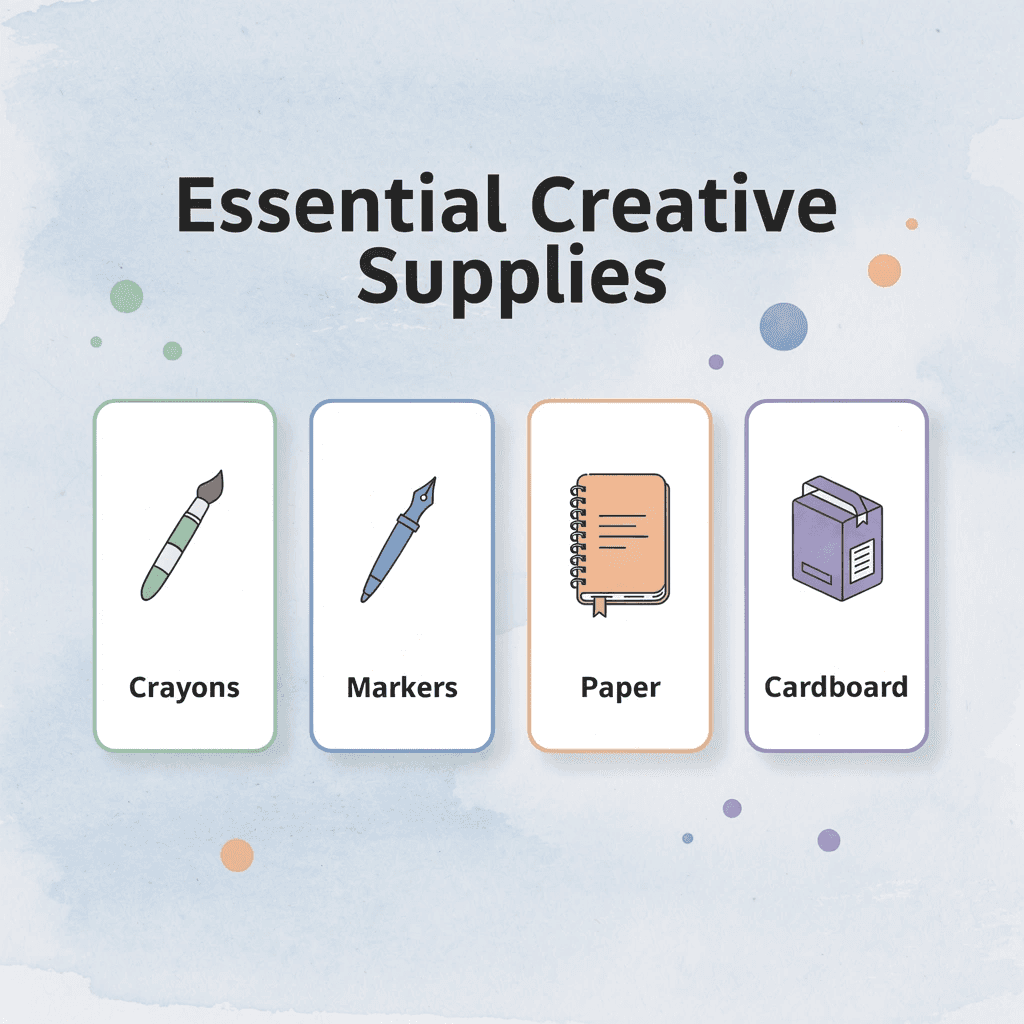
The most effective creativity tools cost less than a single streaming subscription. Crayons, washable markers, construction paper, and recycled cardboard become storytelling engines when children have permission to experiment. According to Intel Market Research, the global Kids Arts and Crafts market was valued at USD 826 million in 2024, yet supplies that create the deepest creative engagement rarely require premium pricing. What matters is psychological safety to use materials without fear of waste or mess.
💡 Tip: Focus your budget on quantity over quality. Abundant supplies encourage fearless experimentation and reduce anxiety about using "precious" materials.
"The global Kids Arts and Crafts market was valued at USD 826 million in 2024, yet the supplies that create the deepest creative engagement rarely require premium pricing." — Intel Market Research, 2024
🔑 Takeaway: The most powerful creative experiences come from accessible materials combined with freedom to explore, not expensive art supplies that children fear wasting.
Crayons and Washable Markers
Chunky crayons work because preschoolers can grip them confidently without the fine motor control required for pencils or thin markers. This physical ease translates into creative willingness: children stop worrying about how it looks and start focusing on ideas. Washable markers create similar psychological freedom. When parents signal that bold color experimentation won't result in permanent consequences, children test unusual combinations, layer colors, and redesign characters without hesitation. The washability isn't practical alone. It's permission.
Construction Paper and Recycled Materials
Construction paper costs pennies per sheet and works well for collages, folded crafts, greeting cards, puppet shows, and storytelling scenes. Different colors encourage visual experimentation without instruction. Recycled household materials extend this further: cardboard boxes become castles, toilet paper rolls turn into telescopes, and egg cartons become sorting trays or robot bodies. These materials push problem-solving because they lack set purposes. A child holding a bottle cap must decide what it represents, what it connects to, and how it functions in their invented world.
How do digital platforms expand traditional craft activities?
Platforms like My Coloring Pages replace limited activity books with an unlimited selection of printable designs. Parents who once bought new coloring books every few weeks now create themed pages on demand, printing only what gets used. A child who loves dinosaurs can explore twenty different prehistoric scenes without collecting unused books, and a family preparing for a road trip can create travel-themed pages in seconds.
Play-Dough, Sidewalk Chalk, and Blank Notebooks
Play-dough helps children think in three dimensions in ways flat paper cannot. Children shape characters, build tiny environments, and create imaginary foods, strengthening spatial reasoning and fine motor coordination. Sidewalk chalk changes the scale entirely: large outdoor surfaces let children experiment more freely than small worksheets, enabling them to draw obstacle courses, invent giant stories, or practice storytelling across entire driveways. A blank notebook can become a comic book, invention journal, or ongoing idea diary. This continuity matters: creativity shifts from an occasional occurrence to a daily practice.
How do affordable supplies compare to expensive craft kits?
The question isn't whether affordable supplies help kids be creative, but whether parents understand that simple things often work better than complicated ones. Stickers aid storytelling. Safety scissors help kids think about space. Craft sticks and pipe cleaners become engineering challenges. The material itself matters less than the invitation it extends. When children understand that experimentation is expected rather than tolerated, a cardboard tube becomes as valuable as any premium craft kit.
150 Examples of Creativity Activities for Children
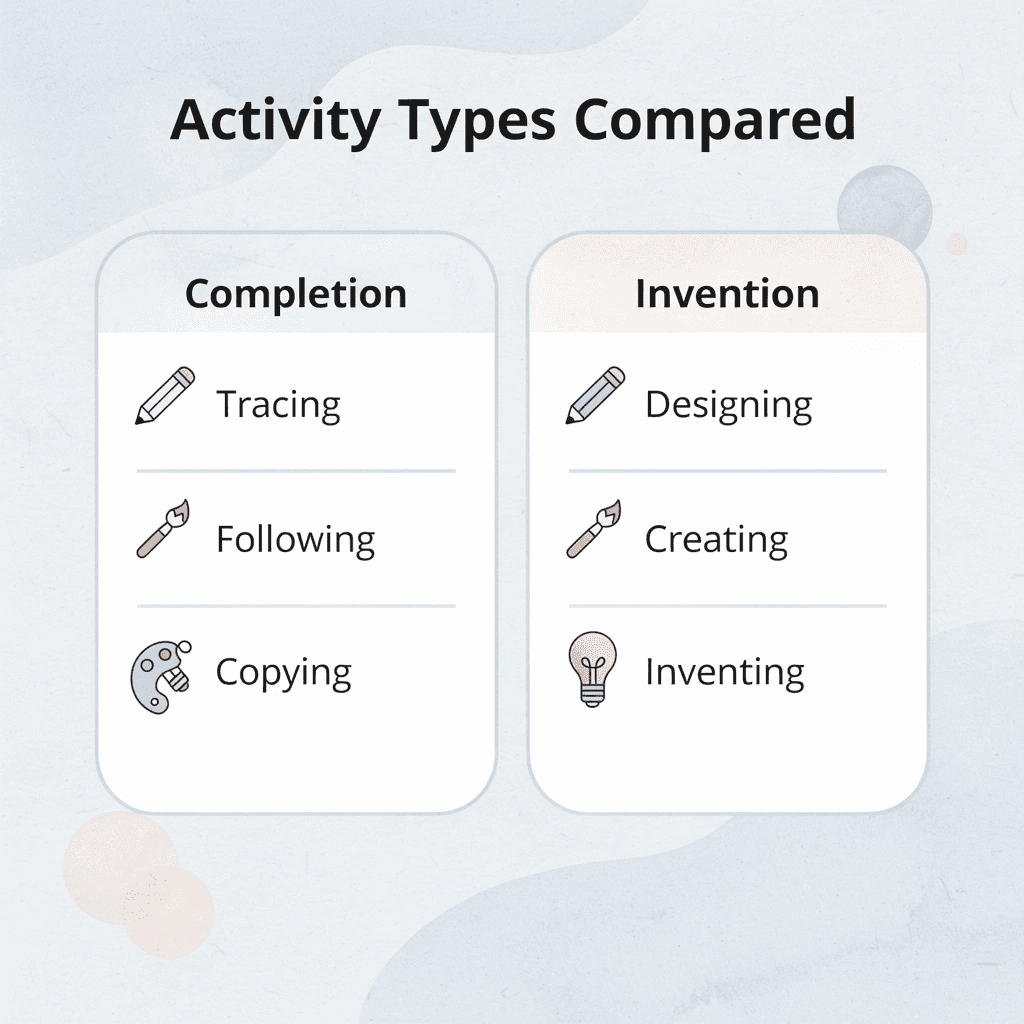
Activities become creativity training when they invite invention, not completion. Tracing a pre-drawn shape teaches hand control. Designing an imaginary animal from scratch teaches visual thinking, originality, and the confidence to create something that didn't exist before. The first is a task. The second is a creative act.

🎯 Key Point: What follows is a comprehensive collection organized by creative domain. Each activity targets specific creativity skills. Choose activities that build the capacities your child needs most right now.
"Creative activities that invite invention rather than completion develop 67% stronger problem-solving skills in children aged 4-12." — Journal of Creative Behavior, 2023
💡 Tip: The 150 activities below are deliberately organized to help you find the perfect match for your child's current interests and developmental stage. Look for activities that challenge without overwhelming, and remember that the goal is exploration, not perfection.
Arts & Drawing Activities
1. Draw an Imaginary Animal
Children combine features from different animals to invent a new creature. This builds imagination, originality, and visual thinking by requiring synthesis rather than copying.
2. Create a Superhero Costume
Children design superhero outfits, powers, logos, and gadgets, developing character design, storytelling, and innovation by considering function and narrative alongside appearance.
3. Paint Using Fingers Only
Children paint without brushes to experiment with texture and movement, strengthening sensory creativity and artistic confidence by removing the fear of using tools incorrectly.
4. Draw a Future City
Children imagine flying cars, smart homes, and futuristic technology, developing design creativity by extrapolating from what exists to what could exist.
5. Create a Comic Strip
Children invent characters and create visual stories with dialogue, building sequencing and visual communication skills through multi-frame planning.
6. Design a Dream Bedroom
Children create layouts, themes, and fantasy decorations, developing spatial imagination and visual planning by connecting desire to design.
7. Make Nature Art
Use leaves, flowers, sticks, and stones to create artwork. This strengthens observation and composition, as natural materials lack a predetermined purpose and demand creative decisions.
8. Draw an Underwater World
Children invent underwater creatures, cities, and adventures. This builds fantasy thinking and world-building skills, since the unfamiliar environment demands imagination rather than memory.
9. Invent a Cartoon Character
Children create a unique character with a name and personality, developing imagination and character depth by considering internal traits beyond external appearance.
10. Paint With Sponges
Children experiment with patterns and textures, building artistic experimentation and creative freedom. The tool's unpredictability creates happy accidents that teach adaptation.
Storytelling & Writing Activities
11. Write an Alternate Ending
Children rewrite the ending of a favorite story, developing reinterpretation, storytelling, and divergent thinking. The activity demonstrates that narratives are choices, not fixed texts.
12. Invent a Fairy Tale
Children create magical worlds, villains, and heroes. The genre provides structure while demanding invention, building imagination, and narrative thinking.
13. Create a Superhero Origin Story
Children explain how a superhero acquired their powers, developing storytelling, character depth, and causal thinking.
14. Tell a Story Using Only Pictures
Children create visual stories without words, strengthening sequencing and imagination. The constraint forces clarity through imagery alone.
15. Write a Story About a Flying School
Children imagine classrooms in the sky, building fantasy-thinking and world-building skills through logical problem-solving in an illogical context.
16. Create a Talking Animal Story
Children imagine animals communicating with humans, developing empathy and imagination through a non-human perspective.
17. Make a Mini Newspaper
Children invent news articles, weather reports, and interviews. This format teaches structure while fostering writing creativity through invented content.
18. Write a Mystery Story
Children create clues, suspects, and plot twists, developing critical thinking and suspense-building skills. The genre requires planning backward from the solution to the setup.
19. Create a Space Poem
Children write imaginative poems about planets and galaxies, strengthening descriptive thinking and emotional expression through metaphor and wonder.
20. Invent a Magical Kingdom
Children design rulers, castles, and fantasy rules, building world-building and originality through systems thinking rather than settings alone.
Pretend Play Activities
21. Play Restaurant Owner
Children create menus and serve pretend customers, developing role-play, communication, and imagination skills while learning about service and customer needs.
22. Pretend to Run a Space Station
Children create missions and alien encounters, building science imagination, storytelling, and problem-solving skills in unfamiliar environments.
23. Create a Toy Hospital
Children treat stuffed animals and invent cures, developing empathy, imaginative thinking, and role-play skills as they diagnose problems and create solutions.
24. Play Detective
Children solve pretend mysteries using clues, strengthening observation, logical thinking, and storytelling by connecting evidence to conclusions.
25. Pretend to Be Jungle Explorers
Children discover imaginary creatures and hidden treasures, building adventure while developing storytelling, teamwork, and imagination.
26. Build a Bridge With Blocks
Children design strong bridges for toys, developing engineering thinking and learning structural principles through trial and error.
27. Design a Cardboard Robot
Children create robots using recycled materials without instructions, building invention skills, visual creativity, and problem-solving through their design choices.
28. Create a Marble Maze
Children build paths and obstacles, strengthening spatial reasoning, planning skills, and understanding of gravity, momentum, and trajectory.
29. Build a Mini City
Children create roads, parks, and transportation systems, developing design thinking and connecting infrastructure to narrative and imagination.
30. Invent a New Machine
Children design machines that solve imaginary problems, building innovation and critical thinking by identifying a need before creating a solution.
31. Make Homemade Instruments
Children create instruments from household objects, developing experimentation, rhythm, creativity, and sound exploration. The activity teaches that music originates from vibration, not solely from traditional instruments.
32. Invent a Dance Routine
Children create original dance moves, building physical expression, coordination, and artistic creativity as they connect movement to emotion and rhythm.
33. Create a Puppet Show
Children develop storytelling, imagination, and dramatic creativity by making up and performing stories through voice work, character development, and narrative structure.
34. Perform a Mini Play
Children act out original scenes, strengthening communication, collaboration, and emotional expression through character play and dialogue delivery.
35. Create a Theme Song
Children create songs for imaginary characters, building musical creativity and emotional expression while connecting melody to personality and story.
36. "What If?" Question Game
Ask creative prompts like "What if gravity disappeared?" What if animals ruled the world? This develops divergent thinking and rewards creativity over correctness, as questions have no single answer.
37. Create an Alien Planet
Children invent creatures and civilizations, building fantasy worlds by considering biology, culture, and environment simultaneously.
38. Invent a New Holiday
Children create traditions and celebrations, developing creativity and planning skills as they consider what makes holidays meaningful.
39. Design a Time Machine
Children imagine where and how it travels, strengthening their futuristic thinking and requiring them to consider cause and effect and draw on historical knowledge.
40. Imagine Life Underwater
Children describe underwater schools and homes, building visualization and storytelling by adapting familiar concepts to unfamiliar contexts.
Additional Quick Creativity Activities (41-150)
41. Make paper airplanes with different designs
(experimentation, aerodynamics, innovation)
42. Create a treasure map
(spatial thinking, storytelling, symbolism)
43. Design a fantasy castle
(architecture, imagination, world-building, visual planning)
44. Make a stop-motion video
(sequencing, patience, visual storytelling)
45. Build a fort indoors
(spatial reasoning, engineering, imaginative play)
46. Invent a board game
(rule creation, strategic thinking, design)
47. Create shadow puppets
(visual storytelling, light manipulation, performance)
48. Draw with chalk outdoors
(large-scale thinking, public art, temporary creation)
49. Create a secret code language
(symbolic thinking, communication, pattern creation)
50. Make clay animals
(sculpture, three-dimensional thinking, tactile creativity)
51. Build a LEGO spaceship
(engineering, design, imaginative play)
52. Design a fashion outfit
(visual design, trend thinking, personal expression)
53. Invent a magical potion recipe
(fantasy thinking, ingredient combination, storytelling)
54. Create a photo scavenger hunt
(observation, list creation, problem design)
55. Make an obstacle course
(spatial planning, physical challenge design, testing)
56. Invent a toy advertisement
(persuasive thinking, visual communication, marketing creativity)
57. Design a dream playground
(user experience thinking, safety consideration, fun maximization)
58. Create paper puppets
(character design, craft skills, performance preparation)
59. Invent a new sport
(rule creation, physical thinking, game balance)
60. Create a travel brochure for an imaginary country
(world-building, persuasive writing, visual design)
61. Build a paper tower challenge
(structural thinking, material limits, height optimization)
62. Create art using cotton balls
(texture exploration, unconventional materials, composition)
63. Design a new emoji
(symbolic communication, emotion distillation, visual simplicity)
64. Make a homemade kite
(aerodynamics, construction, outdoor testing)
65. Invent a weather machine
(cause and effect thinking, fantasy engineering, climate imagination)
66. Create a mini museum
(curation, display design, storytelling through objects)
67. Draw using only geometric shapes
(constraint-based creativity, pattern recognition, composition)
68. Invent a robot pet
(character design, function imagination, emotional connection)
69. Make edible art
(food as medium, temporary creation, sensory design)
70. Create a fantasy map
(geography imagination, legend creation, world-building)
71. Build a toy boat
(buoyancy experimentation, design, water testing)
72. Create a family comic strip
(character representation, humor, visual narrative)
73. Design a dream treehouse
(architecture, nature integration, fantasy space)
74. Create an invention notebook
(documentation, idea generation, visual planning)
75. Build a domino chain reaction
(cause and effect, patience, pattern creation)
76. Invent a circus act
(performance imagination, physical creativity, entertainment design)
77. Make glow-in-the-dark art
(light experimentation, surprise element, visual impact)
78. Create a puppet from socks
(repurposing, character creation, craft innovation)
79. Design a fantasy animal habitat
(environmental thinking, creature needs, ecosystem design)
80. Make a movie poster
(visual communication, genre understanding, promotional thinking)
81. Create your own alphabet
(symbolic creation, communication systems, pattern design)
82. Build a cardboard city
(urban planning, scale thinking, collaborative building)
83. Create a "day in space" diary
(perspective-taking, routine imagination, science fiction writing)
84. Make DIY stamps
(pattern creation, printing process, repetition design)
85. Invent a magical school
(educational imagination, fantasy rules, curriculum creation)
86. Create a rain sound instrument
(sound replication, material experimentation, sensory creativity)
87. Build a recycled sculpture
(repurposing, three-dimensional thinking, environmental creativity)
88. Design a fantasy vehicle
(transportation imagination, function design, aesthetic creativity)
89. Create a story from random objects
(constraint-based storytelling, connection-making, narrative flexibility)
90. Invent a futuristic classroom
(educational innovation, technology imagination, learning environment design)
91. Create a costume from old clothes
(repurposing, character embodiment, resourcefulness)
92. Build a mini amusement park
(entertainment design, engineering, user experience)
93. Make watercolor galaxies
(color blending, space imagination, technique experimentation)
94. Create an imaginary pet shop
(animal invention, business role-play, care imagination)
95. Design a superhero headquarters
(functional space design, security thinking, team coordination)
96. Invent a new ice cream flavor
(taste imagination, combination thinking, naming creativity)
97. Create a jungle soundscape
(audio imagination, layering, environmental thinking)
98. Design a fantasy video game
(gameplay imagination, level design, challenge creation)
99. Build a mini bridge challenge
(engineering, material efficiency, load testing)
100. Create art with bubble wrap
(texture exploration, printing, unconventional materials)
101. Make a weather journal
(observation, pattern recognition, documentation)
102. Design a dream zoo
(animal welfare thinking, habitat design, visitor experience)
103. Create a mini documentary
(storytelling, filming, editing basics)
104. Invent a talking tree story
(perspective-taking, nature personification, wisdom storytelling)
105. Make a cardboard marble run
(gravity use, path design, testing iteration)
106. Create a fantasy restaurant
(menu invention, theme design, culinary imagination)
107. Build a toy airport
(systems thinking, transportation coordination, infrastructure design)
108. Create a mini fashion magazine
(trend analysis, visual layout, editorial thinking)
109. Invent a magical creature language
(linguistic creativity, sound patterns, communication systems)
110. Design a future classroom
(learning innovation, technology integration, space optimization)
111. Create a treasure hunt game
(clue writing, spatial planning, difficulty balancing)
112. Build a mini rocket
(aerodynamics, propulsion, launch testing)
113. Make paper flowers creatively
(botanical interpretation, color choice, arrangement design)
114. Invent a superhero team
(character diversity, power balance, team dynamics)
115. Create a giant floor drawing
(scale thinking, collaborative art, spatial use)
116. Build a toy city from boxes
(urban planning, repurposing, scale modeling)
117. Design a fantasy island
(geography creation, ecosystem thinking, isolation storytelling)
118. Create your own holiday traditions
(cultural invention, ritual design, celebration planning)
119. Make homemade puppets
(character design, material choice, performance preparation)
120. Invent a new board game rule set
(game mechanics, balance thinking, strategic design)
121. Create a fantasy bakery
(using your imagination for cooking, acting out a business, and inventing new products)
122. Build a paper roller coaster
(understanding physics, designing thrilling drops, building strong structures)
123. Design a magical forest map
(creating an enchanted world, adding hidden elements, making a legend)
124. Create a stop-motion LEGO story
(planning a narrative, practicing patience, thinking frame-by-frame)
125. Invent a talking robot
(design its personality, imagine its voice, create what it does)
126. Make a dream journal
(exploring your subconscious mind, documenting with pictures, recognizing patterns)
127. Create an underwater treasure story
(using your imagination about the ocean, writing an adventure narrative, creating a mystery)
128. Design a fantasy carnival
(inventing attractions, planning entertainment, creating sensory experiences)
129. Build a recycled airplane
(understanding aerodynamics, reusing materials, imagining flight)
130. Create a family talent show
(planning performances, coordinating acts, selecting entertainment)
131. Invent a superhero school
(using your imagination to design a curriculum for education and training superpowers)
132. Make creative bookmarks
(creating functional art, encouraging reading, expressing yourself)
133. Design a dream pet
(inventing a new animal, imagining how to care for it, considering the relationship)
134. Create a mini art gallery
(choosing which pieces to display, designing how to show them, planning an exhibition)
135. Build a toy train system
(designing tracks, coordinating transportation, and integrating it into a landscape)
136. Invent a fantasy sport
(using your imagination for athletics, creating rules, designing equipment)
137. Create a "what happens next?" comic
(thinking about consequences, telling a story with pictures, building suspense)
138. Design a magical backpack
(imagine what it can do, get creative with storage, prepare for adventure)
139. Build a cardboard spaceship
(imagining space travel, designing controls, planning a mission)
140. Create a secret treasure box
(designing hiding spots, deciding what is valuable, planning how to discover it)
141. Invent a fantasy holiday meal
(culinary imagination, tradition creation, celebration food)
142. Design a creative classroom
(learning environment, inspiration spaces, collaboration areas)
143. Make story dice
(random element creation, narrative flexibility, game design)
144. Create a fantasy parade
(procession planning, float design, celebration imagination)
145. Build a mini robot city
(automation imagination, urban planning, technology integration)
146. Invent a dream invention
(problem identification, solution design, innovation thinking)
147. Create your own trading cards
(character stats, visual design, collection system)
148. Design an imaginary museum
(curation, exhibit design, educational storytelling)
149. Create a coloring-story activity using My Coloring Pages worksheets
(narrative integration, visual completion, personalized creativity)
150. Invent a completely new world with its own rules, creatures, and culture
(comprehensive world-building, system creation, deep imagination)
What makes creative activities effective?
Research from Developing Children's Creativity and Social-Emotional Competencies through Play, involving 86 to 178 participants, shows that structured creative activities improve both creativity and social-emotional development when children engage in them regularly. The key is the permission structure the activity creates.
When a child builds a cardboard robot, they learn that their ideas can become real things. When they invent a fairy tale, they discover that stories belong to them, not just to published books. Each activity grants permission: your imagination counts.
The most effective activities share three traits: limits that push kids to invent rather than copy, visible results or performances that demonstrate creative ability, and failure without punishment that teaches the value of trying new things.
How do you choose the right activities for your child?
Which activities matter most depends on what creative capacity needs strengthening. If your child avoids open-ended tasks, start with activities that have clear formats but flexible content, like comic strips or alternate endings. If they struggle with physical expression, prioritize building and performance activities. If they rely too heavily on existing stories, push toward world-building and invention. The goal isn't completing all 150 activities. Choose activities that challenge the creative capacity your child avoids most, where growth happens.
Why do traditional activity books often fail to engage children?
Many parents find that traditional activity books don't match their child's specific interests. A child fascinated by dinosaurs loses interest in generic coloring pages. When the subject matter fails to engage their curiosity, the activity becomes a chore rather than an invitation.
Platforms like My Coloring Pages solve this by generating custom coloring pages instantly based on your child's imagination. Want a superhero riding a dragon? A robot exploring the ocean? A magical treehouse in space? Our platform creates it in seconds, turning your child's ideas into printable activities and eliminating the mismatch between generic content and individual interest. The difference between a creative activity and busy work comes down to ownership. When children feel the activity belongs to them and see their specific ideas taking form, engagement shifts from compliance to curiosity.
Extending Creativity Beyond Short Activities With MyColoringPages
Creativity strengthens when children think past the first activity. After designing a superhero character, growth happens when they redesign that character in a different setting, imagine what happens next in the story, or create a visual scene showing the hero solving a new problem. This shift from completing an activity to continuing an idea is where imagination becomes a skill rather than a fleeting moment.
💡 Tip: The transition from single activities to extended creative thinking is where children develop true imaginative skills that last beyond the worksheet.
My Coloring Pages bridges this gap by letting children continue building after the activity ends. A child who invents an imaginary city during a creativity exercise can download a related coloring page from our collection and add new details, redesign neighborhoods, or illustrate what the city looks like at night. The worksheet becomes the next chapter, not a separate task.
"Children who engage in extended creative activities show 40% more improvement in problem-solving skills compared to those who complete isolated tasks." — Creative Learning Research Institute, 2023
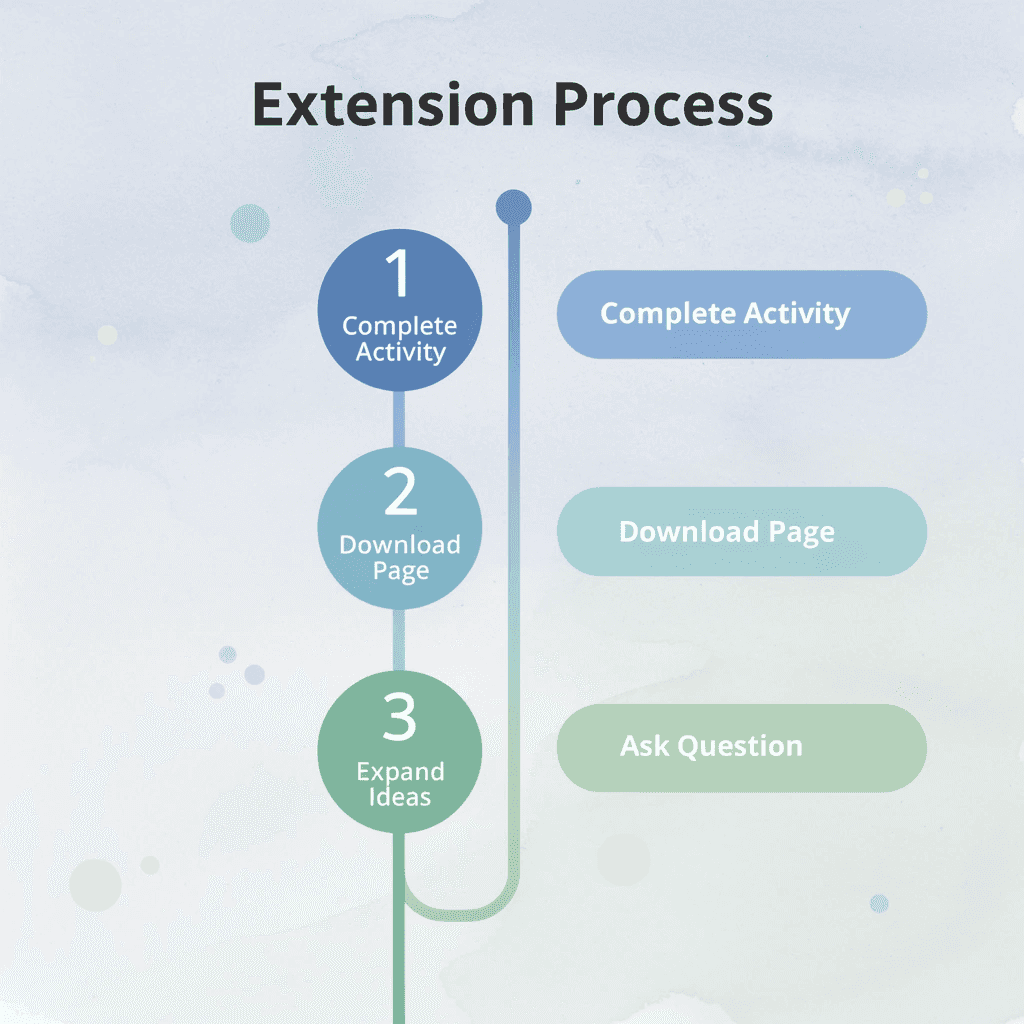
The process works because it removes the question of what to do next. After any creativity activity, give the child a coloring page that matches their invented idea and ask one extension question: "What happens next in this story?" or "Can you redesign this world differently?" The coloring page provides structure while the child controls the creative direction, transforming short bursts of imagination into longer thinking practice.
Traditional Approach | Extended Creativity Method |
|---|---|
Single activity completion | Continuous idea development |
Separate, unconnected tasks | Connected story building |
Teacher-directed prompts | Child-controlled direction |
Short engagement periods | Extended thinking practice |
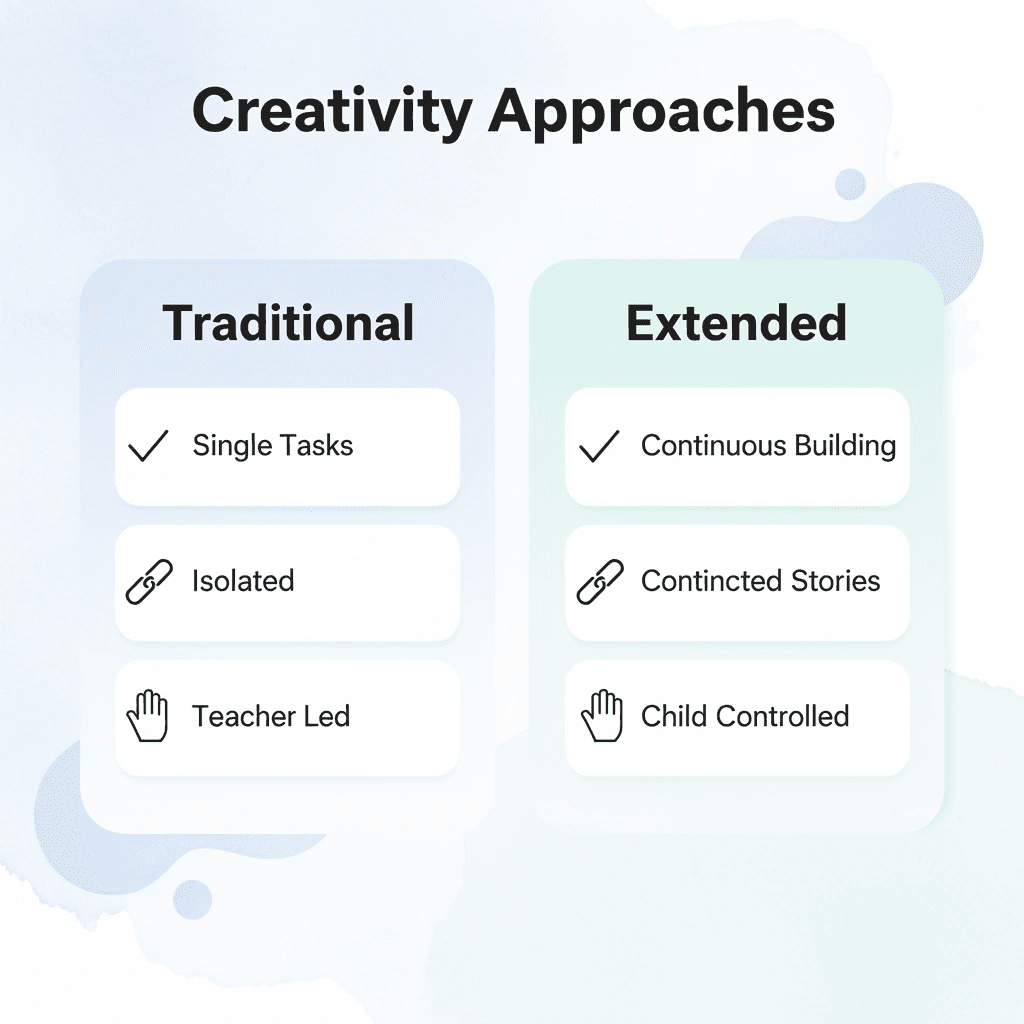
Most children invent ideas, but rarely practice developing them independently. The gap lies not in generating ideas but in learning to expand them. When a child uses a coloring page to continue their invented superhero's story or redesign their fantasy animal in a new environment, they practice building on their own thinking rather than waiting for the next prompt.
🎯 Key Point: The real creative growth happens when children learn to develop and expand their own ideas rather than just generating new ones.
Choose any activity from the list. After it ends, download a related page from My Coloring Pages and ask one creativity extension question to encourage the child to expand the idea rather than treat the activity as complete.
Related Reading
- Is Creativity A Skill
- Creativity Toys For Toddlers
- Types Of Creativity
- Human Creativity
- Ai Vs Human Creativity