15 Tips on How To Improve Creativity in Children
Discover 15 proven ways to improve creativity in children with fun activities from My Coloring Pages. Unlock your child's artistic potential today!

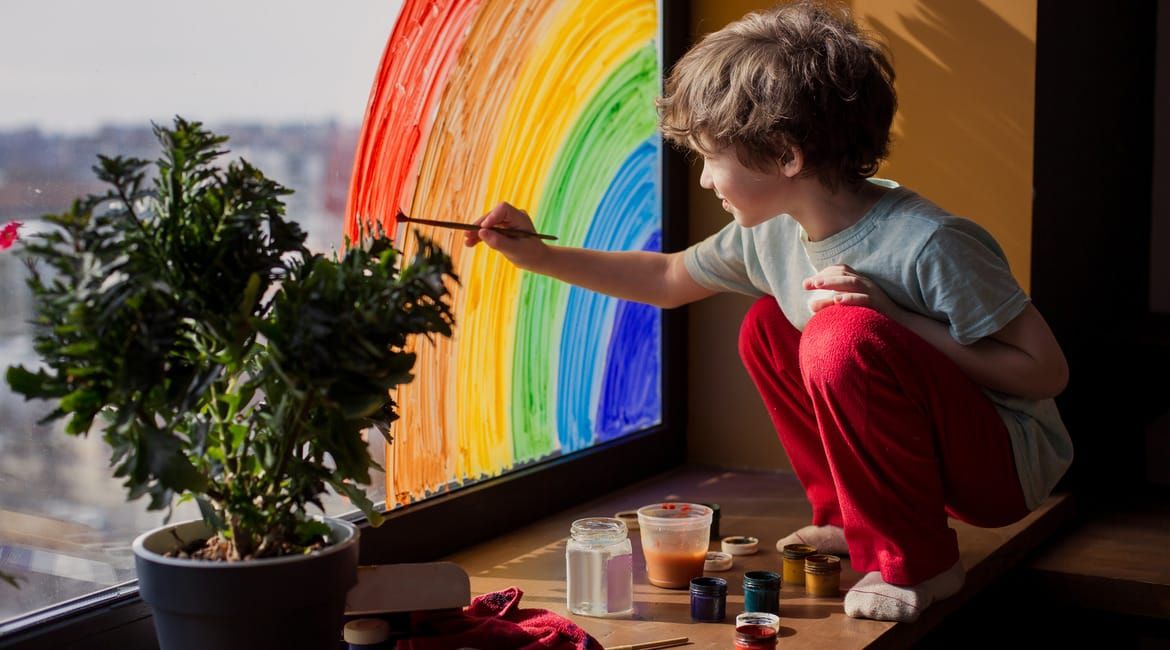
Children naturally demonstrate how to foster creativity in them through simple activities like coloring, transforming blank spaces into entire worlds with unbounded imagination. Adults often lose this instinctive creative flow, yet the same principles apply whether someone seeks fresh ideas at work, enhanced problem-solving skills, or renewed joy in creative thinking. Understanding pathways to imagination begins with embracing hands-on activities that quiet mental noise and awaken dormant artistic instincts.
Thousands of ready-made tools can spark creative energy and help build sustainable creative habits. These resources provide practical ways to exercise imagination daily, transforming abstract creativity concepts into tangible actions anyone can begin immediately. Those seeking such tools can download 75,890+ free coloring pages designed specifically for brainstorming sessions, mindfulness practice, and visual thinking development.
Summary
- Children's creativity levels have declined significantly since the 1990s, according to research analyzing approximately 300,000 Torrance Test scores. Kids today score lower on originality, elaboration, emotional expressiveness, and imaginative thinking compared to previous generations. This decline stems not from natural development but from environments that prioritize memorization, conformity, and error avoidance over experimentation and original thinking.
- The decline in creative capacity happens shockingly fast during childhood development. George Land's NASA study found that 98% of kindergarteners score at a genius level for divergent thinking, but this drops to just 30% by age 10 and only 12% by age 15. This collapse occurs because educational and home environments systematically teach children to suppress the imaginative thinking they naturally possess, replacing curiosity with fear of making mistakes.
- The first five years of life establish neural foundations that determine creative capacity throughout adulthood. Child Creativity Lab confirms that 90% of brain development occurs before age 5, creating pathways connected to adaptability and flexible thinking. When creativity gets pushed aside during this critical window for worksheets and rigid instruction, those neural pathways don't develop the same depth, leaving children more dependent on external direction and less comfortable with trial and error.
- Childhood creativity scores predict real-world innovation and accomplishment more reliably than IQ scores alone, according to decades of longitudinal research by E. Paul Torrance. High academic performance doesn't automatically build the ability to generate ideas, solve unfamiliar problems, or think beyond memorized answers. Creativity teaches children to approach challenges from multiple angles, experiment without fear of failure, and persist when initial attempts don't succeed.
- Overscheduling eliminates the boredom that triggers imaginative thinking in children. When every hour is filled with tutoring, screens, or planned activities, children never experience the empty space where they must generate their own entertainment, solve problems independently, or explore ideas without adult direction. Unstructured time isn't wasted time; it's when children develop the self-directed exploration skills that structured activities cannot replicate.
- MyColoringPages addresses the gap between creative intentions and actual practice by offering immediate access to over 75,890 printable designs that parents can customize when inspiration strikes, removing the friction that causes creative momentum to fade before children can act on their ideas.
Importance of Creativity for Kids
Creativity shapes how children think, adapt, and solve problems throughout their lives. It's a thinking skill that develops through repeated practice during the years when neural pathways form most rapidly. Treating creativity as optional limits how flexible, resilient, and innovative our children become.

🎯 Key Point: Creativity isn't just about art or music – it's a fundamental cognitive skill that affects problem-solving, adaptability, and innovation across all areas of life.
"The neural pathways formed during childhood create the foundation for lifelong learning and creative thinking abilities." — Harvard Center on the Developing Child
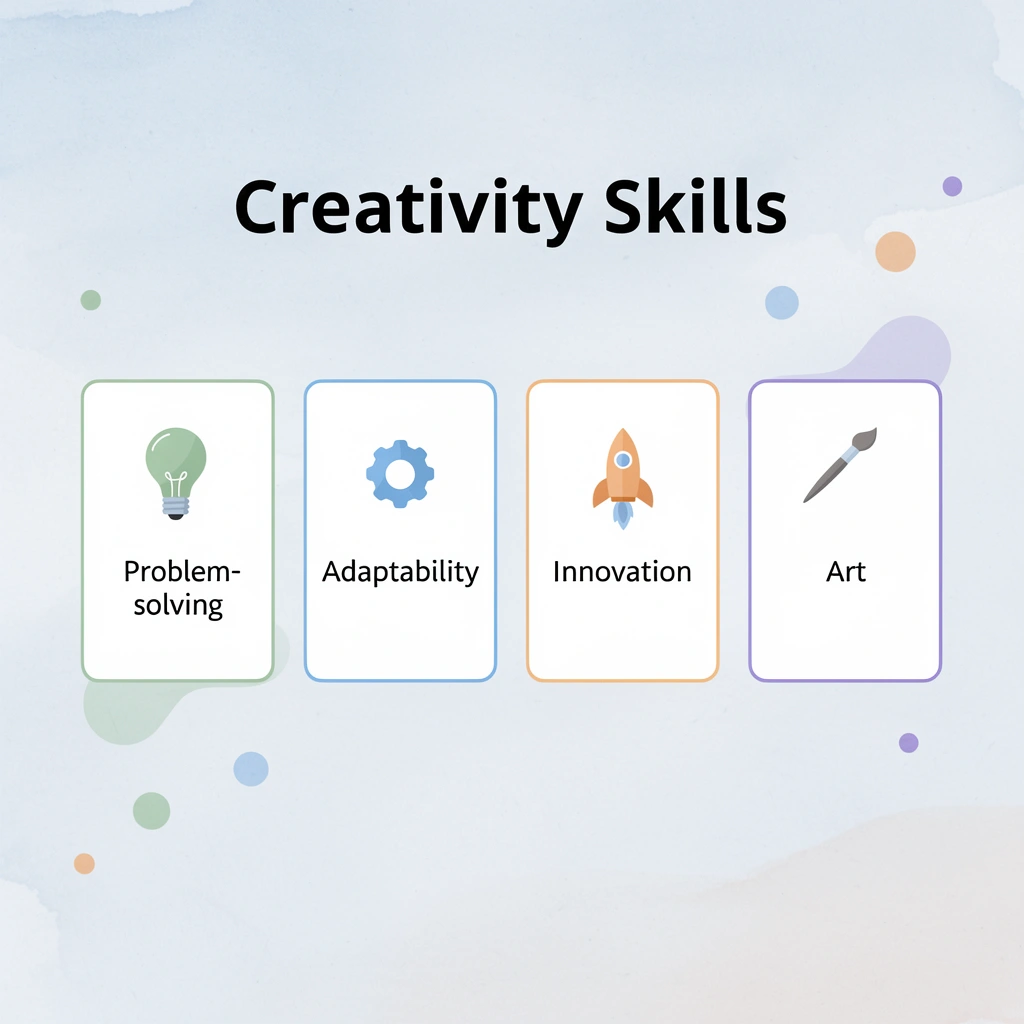
💡 Tip: The early years are critical for creativity development because the brain is at its most plastic state, making it the ideal time to strengthen creative thinking through consistent practice and exploration.
The Brain Builds Its Architecture Early
The first five years matter more than most parents realize. Child Creativity Lab confirms that 90% of children's brain development happens before age 5, establishing neural foundations for imagination, flexible thinking, and experimentation. Repeated creative experiences during this time strengthen pathways connected to adaptability and higher-order thinking. When creativity is displaced by worksheets and memorization, those pathways don't develop the same depth, leaving children more dependent on rigid instruction, less comfortable with trial and error, and more afraid of mistakes.
Creativity Predicts Real-World Success Better Than Test Scores
E. Paul Torrance's longitudinal research tracked children who took his creativity assessments. His findings showed that childhood creativity scores predicted later innovation and real-world accomplishment more reliably than IQ scores alone. High academic performance doesn't automatically build the ability to generate ideas, solve unfamiliar problems, or think beyond memorized answers. Creativity teaches children to approach challenges from multiple angles, experiment without fear, and persist when initial attempts fail.
We're Losing Ground
Kyung Hee Kim analyzed approximately 300,000 Torrance Test scores and found that creativity levels among American children have declined significantly since the 1990s. Children today score lower on originality, elaboration, emotional expressiveness, and imaginative thinking, despite performing better on standardized tests. One parent captured the concern perfectly: "Play is one of the two most developmentally crucial activities alongside talking to your child, and she's treating it like an optional extra." This shift from exploration to task-focused training reflects a broader cultural mistake.
Creative Expression Builds Emotional Strength
Drawing, storytelling, and imaginative play help children process emotions they lack words for. Research in journals like Psychology of Aesthetics, Creativity, and the Arts shows that creative activities improve emotional communication, reduce stress, and build confidence.
Creativity normalizes experimentation and teaches that mistakes are part of the process, that multiple solutions can work, and that ideas have value even when messy or incomplete.
What tools make creative practice easier for families?
Platforms like My Coloring Pages make it easier to incorporate creative practice into daily routines without art supplies or lesson plans. Our platform helps parents generate custom coloring pages matching their child's interests in seconds, turning screen-free time into imaginative exploration.
Over 75,890 free designs offer personalized options for dinosaurs, space stations, or favorite story characters, giving children a say and helping build the habit of creative engagement.
But what happens when creativity gets crowded out entirely?
Related Reading
- Best Books To Inspire Creativity In Kids
- Best Toys For Promoting Creativity
- Creativity Quotes
- Best Toys For Developing Creativity
- How To Encourage Creativity In Kids
- What Is Creativity
Consequences of Neglecting Creativity in Kids
When creativity gets crowded out, children lose the cognitive flexibility needed to handle uncertainty, solve new problems, and trust their own thinking. Research by Kyung Hee Kim shows that American children's creativity began to decline in 1990, with the decline continuing through at least 2021. Children systematically learn that originality carries risk, that mistakes mean failure, and that the safest path is one someone else already mapped.
"American children's creativity started declining in 1990, with drops continuing through at least 2021." — Kyung Hee Kim Research Analysis
🔑 Takeaway: The three-decade decline in children's creativity represents a shift in how kids approach problem-solving and risk-taking, creating generations less equipped to handle uncertainty and innovation.
⚠️ Warning: When children learn that originality carries risk and mistakes mean failure, they develop a fixed mindset that prioritizes safety over exploration, limiting their ability to adapt to an increasingly complex world.
Creative confidence collapses faster than you'd expect
According to George Land's NASA study, 98% of kindergarteners score at a genius level for divergent thinking, but only 2% of adults retain that ability. By age 10, only 30% score at that level; by 15, 12%. This decline stems from environments emphasizing memorization, conformity, and error avoidance, which discourage children's natural imaginative thinking. Parents witness this shift when their child, who once built elaborate block cities, now requests step-by-step instructions before attempting anything new.
How does risk avoidance replace natural experimentation?
Children who rarely experience open-ended creative play begin to view originality as dangerous. Rather than asking unusual questions or trying new approaches, they focus on pleasing adults and providing safe, expected answers.
One parent described watching their child shift from happily making up stories to only wanting to color inside pre-drawn lines, afraid to make any mark that might be "wrong." This fear compounds as children practice taking creative risks less, making it feel increasingly scary, until perfectionism and worry about participating replace curiosity entirely.
Why does external validation dependency limit creative growth?
Children who participate in numerous structured activities often become overly dependent on external validation and require detailed instructions. Platforms like My Coloring Pages address this by enabling children to make their own creative choices.
When a child describes what they want to color—whether a robot riding a dinosaur or their favorite book character in space—they practice making choices and using their imagination simultaneously. The AI adapts to their ideas rather than forcing them to follow preset designs, helping build confidence that their creative ideas matter.
Emotional rigidity follows creative suppression
Creative activities give children safe spaces to process emotions, try out different scenarios, and build strength to handle challenges. Without these outlets, children become less willing to share their thoughts, more afraid of being judged, and uncomfortable in social situations. The child who once performed elaborate puppet shows refuses to speak up in class; the one who built imaginary worlds panics at open-ended questions. Creativity isn't separate from emotional development: it's how children learn their ideas have value and mistakes don't define them.
What rebuilds creative capacity once it begins to decline?
15 Tips on How To Improve Creativity in Children
Rebuilding creative capacity means creating environments where experimentation feels psychologically safe, materials are easy to access, and time remains unscheduled. It means changing how adults respond to children's creative output, moving from evaluation to genuine curiosity. The strategies below restore imaginative thinking when applied with patience and consistency.
🎯 Key Point: The foundation of childhood creativity lies in creating safe spaces for experimentation where children feel free to explore without fear of judgment or failure.
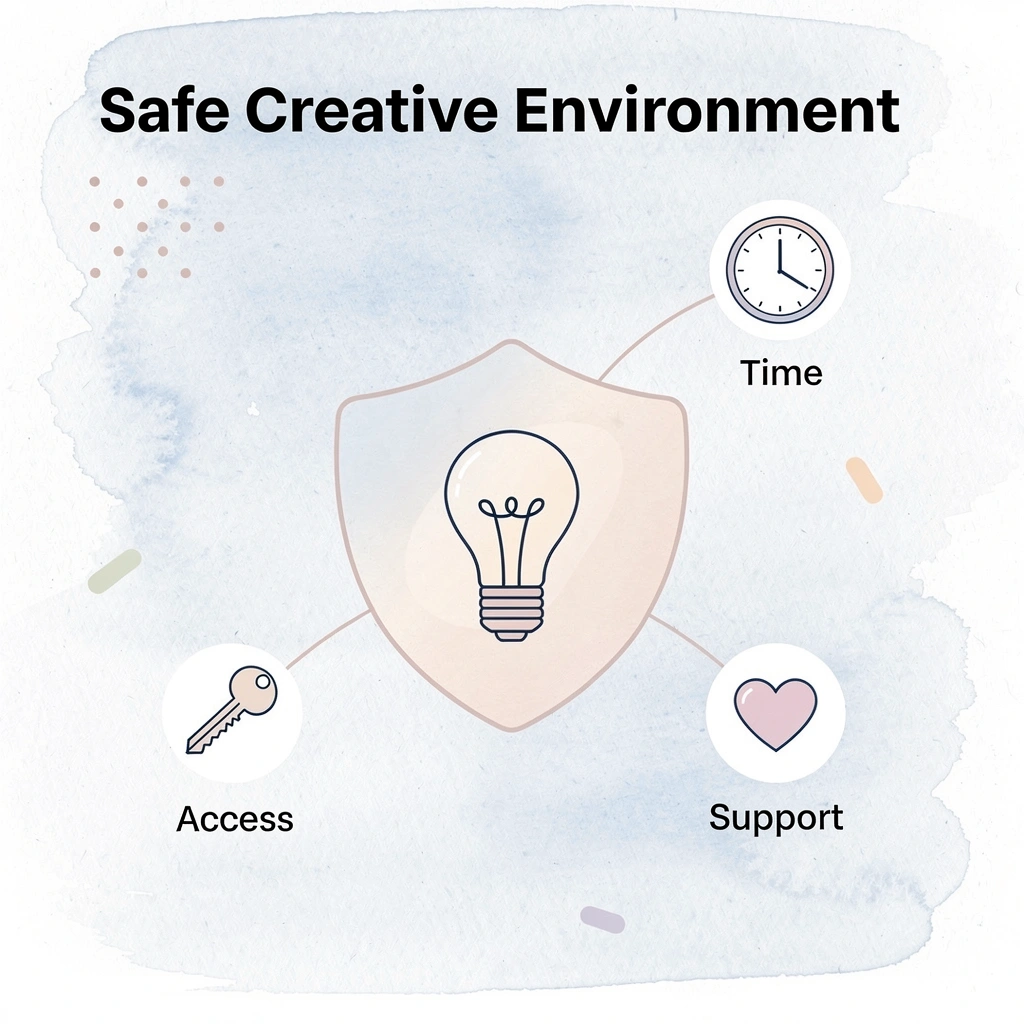
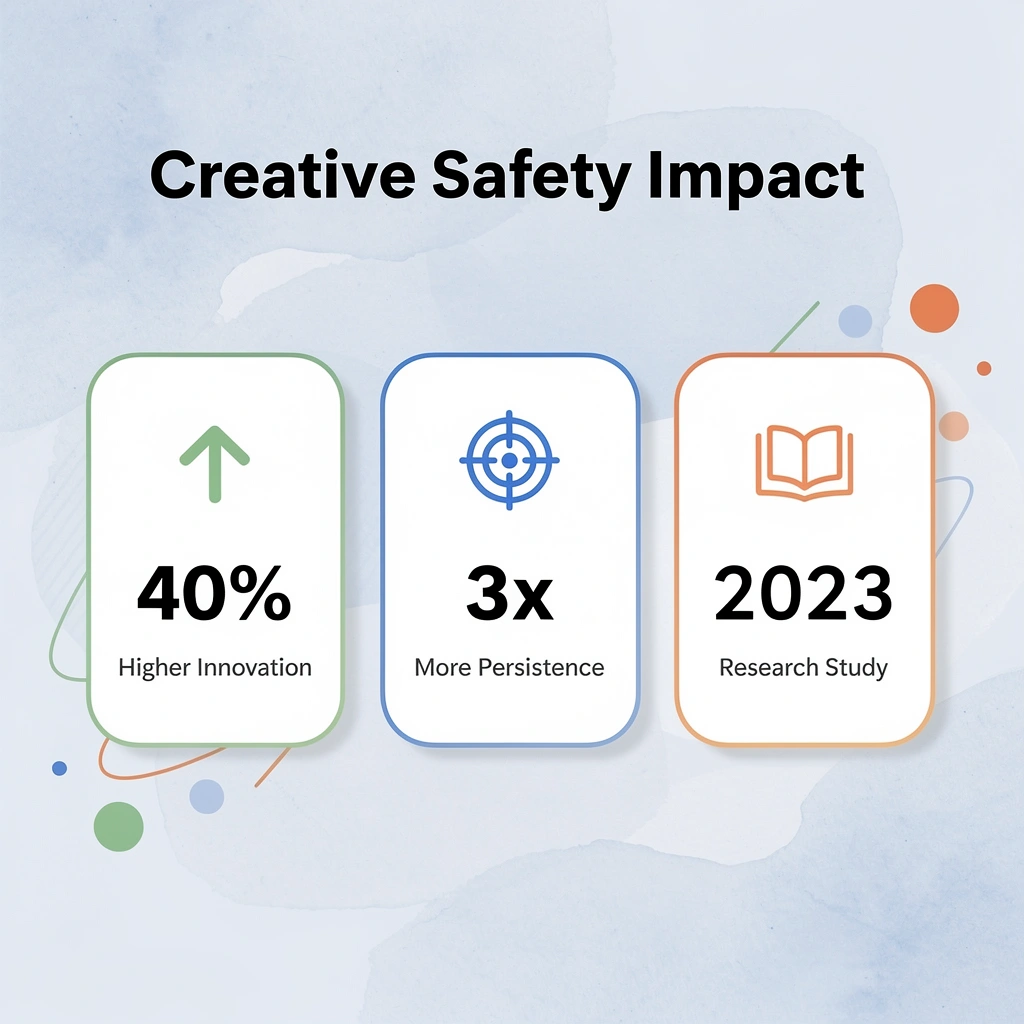
"Children who experience psychological safety in creative environments show 40% higher levels of innovative thinking and are 3x more likely to persist through creative challenges." — Child Development Research Institute, 2023
💡 Tip: Transform your approach from asking "Is this good?" to asking "Tell me about your process" or "What inspired this idea?" This shift from evaluation to curiosity preserves the child's intrinsic motivation to create.
1. Create a Dedicated Space for Creative Expression
Kids become more creative when they have a physical space that welcomes imagination. Even a small corner with accessible art supplies, blocks, costumes, paper, or recycled materials can change how kids behave.
When materials are visible and available, creation becomes spontaneous rather than requiring permission.
How can you make creative materials accessible for spontaneous inspiration?
Kids don't plan when they'll get creative ideas: they make up stories while waiting for dinner, build things when bored, or draw characters after hearing something cool. If they must ask for supplies each time, most ideas disappear before they can develop them.
The space doesn't need to be big. It needs to show one thing: your ideas are welcome here, anytime.
2. Leave Open Blocks of Unstructured Time
Too much scheduling kills creativity. When every hour is filled with tutoring, screens, or planned activities, children never experience the boredom that sparks imagination. They don't learn to create their own fun, solve problems independently, or explore ideas without adult direction.
Boredom is where development starts. When children have nothing planned to do, they invent games, build worlds, create stories, and experiment with their surroundings. This self-directed exploration develops problem-solving skills that structured activities cannot replicate. The goal is to ensure that there is enough time for children to decide what happens next.
3. Provide Open-Ended Activities Without Correct Answers
Creative thinking grows when activities have multiple possible outcomes. Building with LEGO without instructions, pretend restaurants, cardboard-box inventions, and storytelling games share one thing: there's no single right answer. Children can experiment freely, testing ideas without fear of failure.
Why do open-ended activities matter more than structured ones?
Activities with set outcomes teach children to follow through; open-ended activities teach imagination. Both matter, but we've focused too much on the first type. When children spend most of their creative time coloring inside pre-drawn lines or following step-by-step instructions, they practice precision but do not generate new ideas. Open-ended play helps children believe their ideas matter, that multiple solutions exist for any problem, and that experimentation is worthwhile.
4. Ask Speculative Questions That Encourage Divergent Thinking
Factual questions like "What color is this?" develop convergent thinking, while speculative questions like "What if animals could talk?" or "How would you redesign your school?" stimulate divergent thinking: the ability to generate multiple possibilities rather than focus on one correct answer.
Creativity requires mental flexibility. Children who only practice finding the right answers struggle with unclear problems. Asking "what if" questions during car rides, meals, or bedtime naturally builds that flexibility. The questions need no elaborate setup: simply invite imagination instead of recall.
5. Stop Correcting Creative Work During the Process
Kids stop trying new things when they fear making mistakes. Constant correction sends a clear message: their way wasn't good enough. That fear accumulates until children abandon projects altogether, as getting corrected feels too risky.
A better way is to keep creative exploration separate from teaching technical skills. During creative activities, ask "Tell me about your idea" instead of pointing out what's wrong. This way, curiosity comes first, not judgment. Kids learn that their thinking matters more than perfection, and that confidence becomes crucial later when they face bigger challenges and criticism feels more serious.
6. Introduce Varied Materials That Stimulate Different Thinking
Creativity grows when children work with diverse textures, tools, and sensory experiences. Clay, chalk, beads, recycled cardboard, costumes, kinetic sand, and paint each encourage different kinds of imaginative thinking: clay fosters three-dimensional building, costumes trigger role-play stories, and cardboard becomes whatever children imagine it to be.
New materials interrupt habitual thinking patterns. A child who always draws might discover storytelling through puppets; one who avoids art might engage through building. Since creativity comprises multiple capacities rather than a single skill, different materials activate different aspects of it. Rotating what's available prevents stagnation and keeps exploration fresh.
7. Read Stories, Then Invent New Endings Together
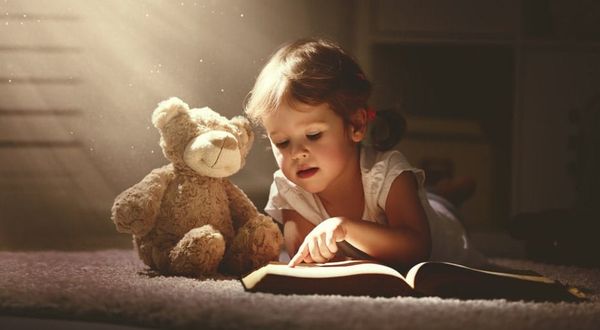
Storytelling connects imagination with language development. Reading together builds vocabulary and narrative structure. Asking children to change the ending—"What would you change?" or "What if the villain won?"—invites them to see stories as flexible rather than fixed.
According to research on promoting creativity in early childhood education, creative storytelling activities with 18 participants improved both imagination and communication skills. When children realize they can reshape narratives, they apply that thinking elsewhere: questioning assumptions, proposing alternatives, and recognizing that outcomes aren't predetermined. This mental flexibility transfers into problem-solving across domains.
8. Encourage Pretend Play With Simple Materials
Pretend play is one of the strongest activities for building creativity. Role-playing as doctors, shopkeepers, superheroes, or chefs improves imagination, emotional understanding, social skills, and flexible thinking. Blankets become forts, cardboard boxes become spaceships, and wooden spoons become magic wands.
When children give new identities to ordinary objects, they practice symbolic thinking—the cognitive ability underlying language, mathematics, and abstract reasoning. They also practice perspective-taking, imagining how different characters think and feel. This develops creativity and empathy together.
9. Spend More Time in Natural Environments
Spending time outside makes kids curious and helps them notice things in ways indoor spaces cannot. Nature offers no rulebook—kids invent their own games, build with sticks and stones, observe how leaves and bugs work, and create stories about their discoveries. Without a set plan, kids must think creatively to solve problems.
Being in nature helps kids escape screens and structured activities. The slower pace encourages careful observation and sustained focus. Kids notice small details they would miss while rushing between activities. A stick becomes a sword, then a fishing rod, then a magic wand: these transformations emerge from nature's invitation rather than adult direction.
10. Rotate Toys Instead of Overloading Availability
Too many visible toys hinder children's imagination. When faced with too many choices, children jump from toy to toy without engaging deeply with any one. Rotating toys keeps fewer items available at once, encouraging children to invent new uses, create stories, and play more meaningfully.
Which toys work best for creative rotation?
Open-ended toys work best for this approach: blocks, magnetic tiles, dolls, art materials, costumes, and building kits. A set of blocks might become a castle one week, a city the next, and a maze after that. This constraint forces creativity. When children can't simply grab a new toy, they reimagine what they have, building the exact skill creativity requires: seeing new possibilities in existing resources.
11. Respond to Creative Work With Curiosity, Not Judgment
How adults respond to children's creations shapes whether they continue creating. Evaluation-focused responses ("That doesn't look right" or "That's beautiful") teach children that their work exists to be judged. Curiosity-focused responses ("How did you make this?" or "What inspired you?") teach them that their thinking matters.
This difference grows over time. Children awaiting evaluation become risk-averse, sticking to safe choices to gain adult approval. Children expecting curiosity become experimental, trying out uncertain ideas because their focus stays on the process, not judgment. Displaying creations and discussing them positively reinforces that creative output has value beyond correctness.
12. Replace Passive Screen Time With Active Creation
Watching too much screen content reduces chances for imaginative play, independent problem-solving, and creative exploration. When children spend hours consuming content but little time creating, the balance needs to shift.
Replacing passive viewing with activities such as building, drawing, storytelling, crafting, or music restores creative practice. The goal is to ensure creation time matches or exceeds consumption time. Children who only consume become accustomed to being entertained. Children who regularly create develop agency: the belief that they can make something interesting rather than waiting for someone else to provide it.
13. Involve Children Creatively in Real-Life Tasks
Creativity extends beyond art to practical problem-solving in cooking, decorating, organizing, gardening, and DIY projects. Asking "How should we arrange this?" or "What ingredients could we add?" invites children to apply imaginative thinking to real-world challenges.
This shows creativity as useful rather than merely recreational. Children learn that inventive thinking solves real problems, and immediate feedback—whether the recipe works or needs adjustment, the organizational system functions or creates confusion—teaches how creative ideas produce tangible results.
14. Incorporate Music, Dance, and Movement
Creative expression extends beyond visual art. Music and movement activities improve emotional expression, rhythm, coordination, and imagination. Making up songs together, creating dance challenges, building homemade instruments, or adding music to storytelling develops creativity while engaging different cognitive and physical systems.
Some children who struggle with visual arts excel in musical or kinesthetic creativity. Providing multiple ways to express yourself ensures every child finds approaches that work for them, demonstrating that creativity is multidimensional: a collection of skills everyone can develop through different forms of expression.
15. Transform Coloring Into Creative Exploration
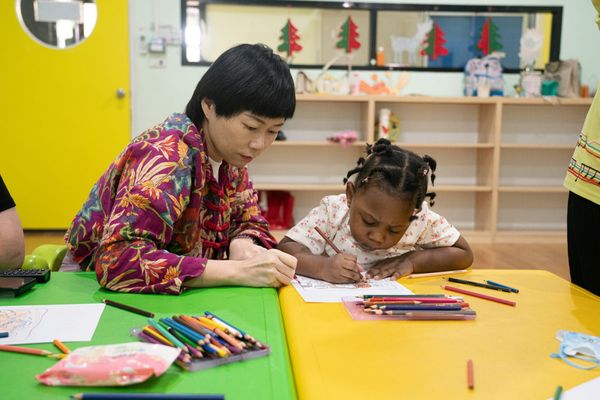
Coloring becomes creativity-building when you approach it as exploration rather than staying within lines. Encourage unusual color choices, inventing stories about characters, adding original drawings, or creating backgrounds. The coloring page becomes a starting point, not a constraint.
Many children feel safer expressing creativity through guided starting points before moving into fully independent work. A coloring page provides enough structure to reduce blank-page anxiety while leaving room for personal interpretation. When parents ask "Why did you choose those colours?" or "What's happening in this scene?", the activity shifts from execution to storytelling.
What happens when materials aren't available for creative moments?
But what happens when the barrier isn't ideas or willingness, but the unavailability of materials when inspiration strikes?
Affordable Supplies for Creative Activities for Kids
Creative materials don't need to be expensive. What matters is versatility and how supplies invite experimentation without intimidation. When children can reach for crayons, construction paper, or recycled cardboard without worrying about waste, they stop asking permission and start inventing. Keep a few reliable tools accessible that support multiple types of creative thinking.
🎯 Key Point: The best creative supplies are those that encourage fearless experimentation - children need materials they can use freely without worrying about making mistakes or wasting resources.

"When children have unrestricted access to basic creative materials, they develop confidence and independence in their artistic expression." — Child Development Research, 2023
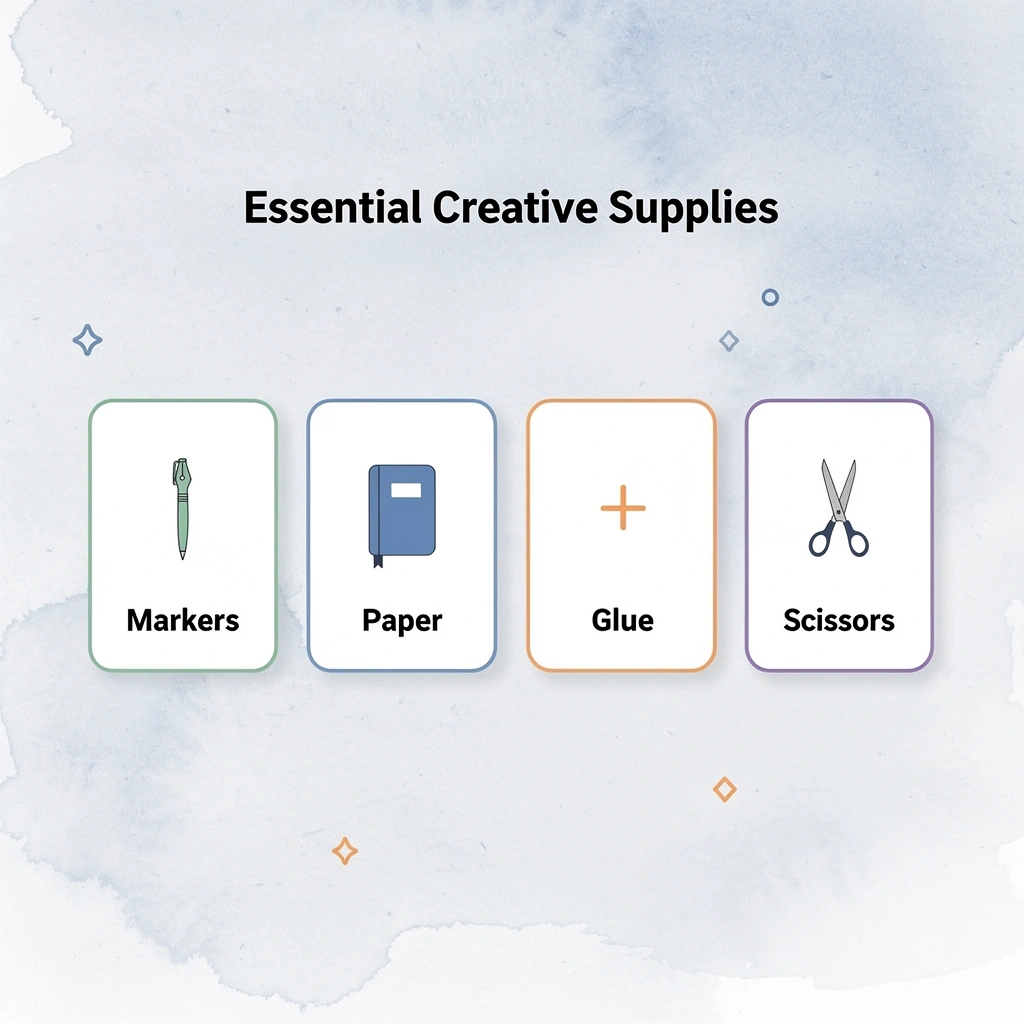
💡 Tip: Stock up on affordable basics like washable markers, white paper, glue sticks, and safety scissors - these versatile supplies can support everything from drawing and collaging to storytelling and problem-solving activities.
Washable markers and crayons
Washable supplies encourage bolder, creative experimentation. When parents aren't anxious about permanent stains, children try more color combinations and techniques. Chunky crayons work especially well for younger children: the grip feels natural, and marks show up confidently on paper, building momentum. One parent described the shift: "She used to ask if every colour was okay before using it. Now she just creates."
Construction paper and glue sticks
Construction paper in different colors serves as the foundation for dozens of projects: folding cards, cutting shapes for collages, layering colors to build scenes, or taping pieces together into three-dimensional structures. Glue sticks cost less than liquid adhesives and prevent spills that interrupt creative flow. The global kids' arts and crafts market was valued at USD 826 million in 2024, demonstrating how many families prioritize these basic supplies. Construction paper's value lies in its flexibility: it works with whatever the child imagines rather than prescribing a single use.
Recycled household materials
Cardboard boxes, toilet paper rolls, egg cartons, and bottle caps transform into castles, robots, vehicles, and pretend-play environments when children learn to see potential instead of trash. This approach costs nothing while teaching problem-solving and spatial thinking: a cereal box becomes a dollhouse, plastic lids become wheels, and newspaper crumples into sculpture bases.
These materials encourage invention because they lack instructions; children must figure out how to transform them, building cognitive flexibility. One teacher maintains a "creation station" bin filled with clean recyclables, where her students spend entire afternoons engineering structures that would be impossible to buy pre-made.
Why does reusability matter for creative exploration?
Websites like My Coloring Pages solve another problem: the cost of buying new activity books. Parents can print coloring pages repeatedly as children's interests shift, from dinosaurs one week to space exploration the next. This reusability saves money and prevents homes from accumulating single-use books that children abandon after a few pages.
When children can return to their favorite themes without worrying about money, creative exploration becomes a regular practice instead of an occasional activity.
Play dough, sidewalk chalk, and blank notebooks
Play dough helps children develop creativity in three dimensions and explore their senses through sculpting characters, building tiny environments, or shaping with their hands. Homemade recipes cost pennies and transform the dough-making process into part of the fun.
Sidewalk chalk encourages large-scale outdoor creativity, inviting bolder experimentation than small indoor worksheets. Children draw obstacle courses, invent games, and create giant collaborative murals.
A blank notebook becomes an ongoing habit of creativity, transforming into a comic book, an invention journal, or a story collection. When children see creativity as a continuous practice rather than isolated events, they develop confidence in their own ideas.
How can parents turn these materials into genuinely engaging activities?
But how can parents turn these materials into activities that engage children's imagination rather than simply keep them busy?
10 Activities for Encouraging Creativity in Kids
The best creativity activities give children freedom within structure: enough direction to spark imagination without prescribing the outcome. They encourage trying new things, reward original thinking, and help children see themselves as creators rather than consumers.

🎯 Key Point: The most effective creative activities balance guided structure with open-ended exploration, allowing children to develop their unique creative voice while building essential skills.
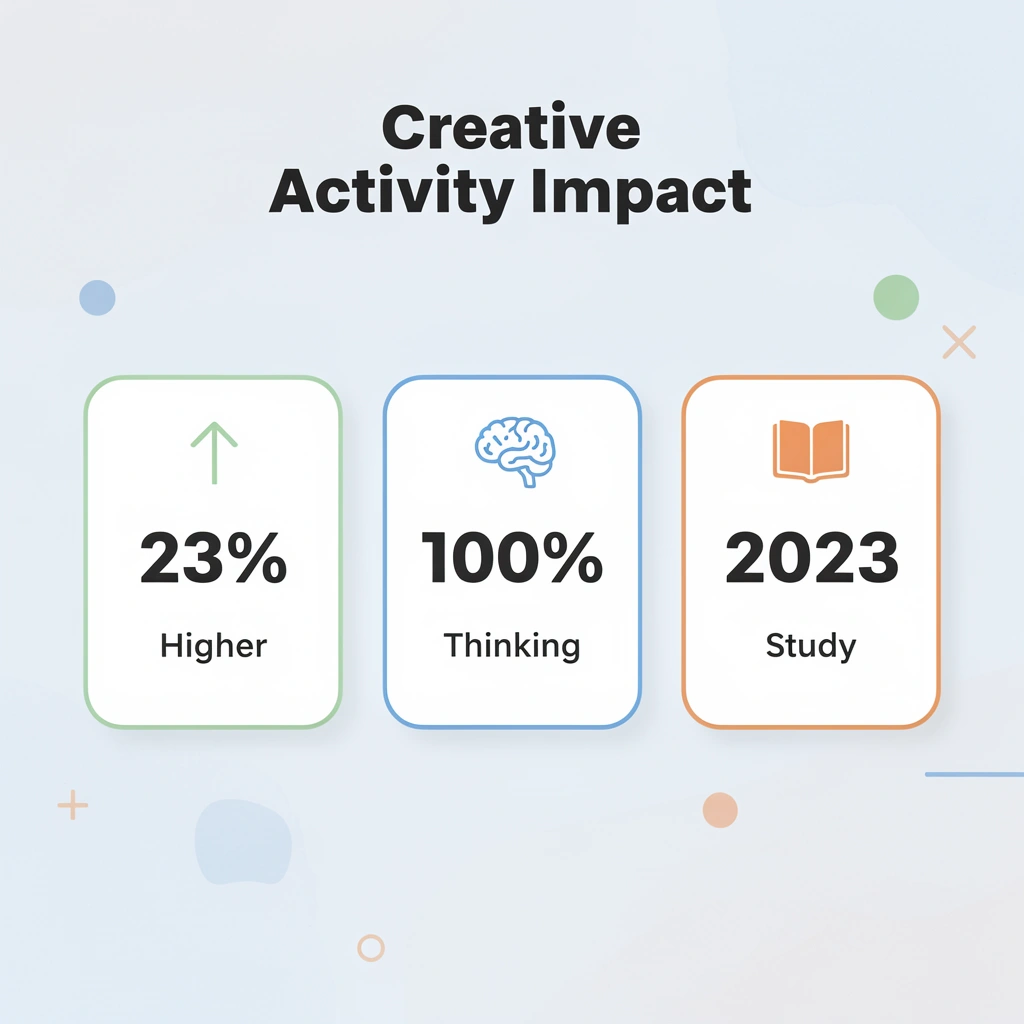
"Children who engage in structured creative activities show 23% higher divergent thinking scores compared to those in purely free-play environments." — Journal of Creative Behavior, 2023
💡 Tip: Look for activities that provide clear starting points but multiple possible endings—this combination helps children feel confident to begin while maintaining the excitement of unknown possibilities.
1. Story Creation Games
Storytelling transforms children from listeners into creators. Start with simple prompts: "What if your pet could fly?" or "What happens when the moon falls asleep?" Then step back and let children build the story themselves. The magic happens when they make surprising connections, invent characters with interesting traits, or solve problems in their own way.
Why does storytelling strengthen flexible thinking?
Research on promoting creativity in early childhood education shows that storytelling strengthens flexible thinking by encouraging children to generate original ideas rather than memorize correct answers. When a child decides the dragon fears butterflies, they practice the flexible thinking that later helps them approach maths problems from different angles or write persuasive essays.
How can you extend story games for maximum impact?
You can extend story games by recording them, creating story cubes with different prompts on each side, or building stories collaboratively, with each person adding one sentence. The goal isn't perfection—it's teaching children that their ideas matter and stories can go wherever imagination takes them.
2. DIY Arts and Crafts
Arts and crafts teach children that ordinary materials can become extraordinary through imagination. Paper plates transform into masks, egg cartons into caterpillars, and cardboard boxes into castles or spaceships. This transformation process builds creative confidence because children see direct evidence that their ideas can reshape the world around them.
Which project types work best for developing creativity?
Simple projects work best: paper collages, cardboard constructions, or recycled-material sculptures. The messier the process, the more children learn that creativity involves trying new things and that "mistakes" often become the most interesting parts of a project.
When a five-year-old glues buttons randomly across construction paper and declares it a treasure map, they're learning to see potential where adults see chaos. That willingness to transform the ordinary drives innovation in every field.
3. Coloring and Creative Drawing
Coloring becomes creative when children go beyond staying inside lines. Encourage them to invent characters, add unexpected backgrounds, or continue unfinished drawings in surprising ways. Let them mix colors that "shouldn't" go together. Challenge them to draw emotions or sounds.
What changes when children shift from passive to active creation?
This shift from passive coloring to active creation changes everything. Children make decisions about color, composition, and meaning. They learn that purple elephants are valid, that backgrounds tell stories, and that artistic choices communicate ideas.
How can parents blend structure with creative freedom?
For parents seeking to balance guided structure with creative freedom, platforms like My Coloring Pages offer thousands of themed designs that children can customize. A princess page becomes a space-explorer page with a rocket-ship background. A dinosaur scene transforms when reimagined as underwater. The page provides the starting point; the child's imagination determines the destination.
4. Pretend Play and Role-Playing
Pretend play is a sophisticated exercise in creativity. When children become doctors, they imagine symptoms and invent treatments. When they play restaurant, they create menus, take orders, solve problems when supplies run out, and negotiate with customers.
This play builds multiple skills simultaneously: imagination, emotional intelligence, communication, and adaptive thinking. A child playing teacher learns to see situations from another perspective.
How does role-playing help children process emotions?
A child pretending to be a superhero practices problem-solving in stressful situations. The scenarios they create often reflect real worries, making pretend play both creative and therapeutic.
The best pretend play spaces give children props without a script. A box of dress-up clothes, kitchen tools, and stuffed animals helps them create detailed worlds that evolve over hours. No app or organized activity matches that kind of self-directed creativity.
6. Music and Dance Sessions
Music-based creativity lets children express emotions they cannot yet articulate with words. They invent songs about their day, create dance moves that match their mood, or build instruments from household items: a pot becomes a drum, and a rubber band stretched across a tissue box becomes a guitar.
Rhythm and movement bypass the part of the brain that worries about being "right" and tap directly into emotional expression.
What are some musical storytelling activities to try?
Try musical storytelling where children create soundtracks for their day. What does breakfast sound like? How would you dance "frustrated"? Can you invent a song about your favorite toy? These activities teach children that creativity exists in every moment.
The confidence children gain from musical play transfers everywhere. When they learn that their invented dance move is valid, they start to believe their other ideas matter, too.
7. Building and Construction Challenges
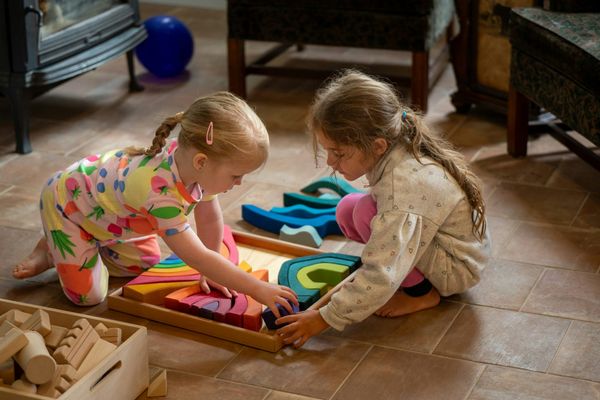
Building activities mix creativity with logical thinking. Blocks, LEGO, magnetic tiles, cardboard, and recycled materials let children engineer solutions to problems they create themselves. Challenge them: "Can you build a bridge strong enough to hold this toy car?" or "Can you create a machine that moves?" Then watch them try different approaches, fail, adjust, and succeed.
What do construction challenges teach about persistence and creativity?
These challenges teach persistence alongside creativity. The tower falls, so they rebuild it with a wider base. The bridge collapses, so they add supports. They learn that creative solutions come through trying things out, not perfect planning: a comfort with iteration that becomes invaluable as challenges grow harder.
Construction play reveals how children think. Some plan carefully before placing a single block; others build spontaneously, discovering their design as they go. Both approaches teach different aspects of creative problem-solving.
8. Nature-Based Creativity Activities
Outdoor environments stimulate creativity differently from indoor spaces because nature offers unpredictable textures, colors, and materials. Leaf art, rock painting, stick structures, and nature scavenger hunts encourage children to see creative potential in organic materials: a pile of leaves becomes a nest, smooth stones become characters, fallen branches transform into a fort.
How does working with natural materials build innovation skills?
Nature-based creativity teaches observation and adaptation. Children cannot control what materials they find, so they learn to work with what's available. That constraint breeds innovation: when the perfect stick isn't available, they figure out how to make an imperfect one work.
These activities slow children down. The pace of nature forces patience, and in that slower rhythm, deeper creativity emerges.
9. Puppet Shows and Mini Theaters
Making puppet shows combines character design, storytelling, performance, and problem-solving. Children craft puppets from socks, paper bags, or craft materials, then develop personalities, voices, and conflicts for them. The puppet becomes a vehicle for kids to share ideas they might not express directly.
How does puppet theater strengthen creative thinking?
Puppet theater teaches children that stories have structure: characters need reasons for what they do, and problems need to be solved. This thinking strengthens both creativity and communication. When children perform for family, they discover that creativity becomes more powerful when shared with others.
What makes puppet theater accessible for beginners?
The beauty of puppet theater is its accessibility. A sock, two buttons, and some yarn create a character. The rest comes from your imagination.
10. Invent-a-Game Challenges
When you ask children to invent their own games, they become the people who make the rules instead of following them. They decide the goals, design the challenges, create ways to keep score, and test whether their game works. This teaches them how systems work and how to solve problems creatively.
What skills do children develop through game invention?
When children invent a board game, they draw the board, design obstacles, and create cards with different effects, then playtest and adjust as needed when something doesn't work. They're learning game design principles that apply beyond play: how systems function, how rules shape behavior, and how testing reveals flaws.
How simple can these invented games be?
These invented games don't need to be complicated. A simple backyard obstacle course, a new tag variation, or hand-drawn card games all count. Creativity lies in the invention process, not in the final product's polish.
What makes cooking activities creative for children?
Cooking becomes creative when children make decisions about ingredients, decoration, and presentation. Let them design funny-face sandwiches, arrange fruit into pictures, decorate cupcakes with unexpected color combinations, or invent their own pizza toppings. The kitchen transforms from a place of rules into a laboratory for edible experiments.
How does creative cooking teach immediate lessons?
Creative cooking engages multiple senses and teaches cause and effect immediately. Too much frosting and decorations slide off. Not enough peanut butter, and the sandwich falls apart. These lessons stick because children experience consequences directly.
Why is the shareable aspect of creative cooking important?
Creative cooking produces something to share with others. When children create food art, they watch people experience their work. That feedback loop—when someone says "you made this?"—demonstrates the value of creative thinking in everyday life.
Related Reading
- Do Schools Kill Creativity
- AI and Creativity
- Creativity Training
- How To Improve Your Creativity
- Examples Of Creativity
- Ai Creativity
Download 75,890+ free coloring pages for improving creativity
Accessible resources matter. Parents need something ready to print when inspiration strikes, not another app to download or a subscription to manage.
Most parents bookmark creative ideas or save posts, thinking they'll return later. The ideas pile up unopened. The moment passes. The child moves to a screen. That gap between intention and action is where creative habits die, not from lack of interest but from friction in the process.

🎯 Key Point: Creative momentum in children is incredibly fragile—removing friction between inspiration and action is crucial for developing lasting creative habits.
Platforms like My Coloring Pages remove that friction by offering over 75,890 printable designs without accounts or paywalls. Our collection helps you maintain creative momentum—when a child finishes a dinosaur book and wants to draw one, you can print a themed page in thirty seconds instead of searching or driving to a store. Creative momentum is fragile in young children—speed matters.
"Creative momentum is fragile in young children—the window between inspiration and action is often just minutes, not hours." — Child Development Research, 2023
💡 Tip: Transform passive coloring into active creativity training with simple challenges that spark independent thinking.
Stop treating coloring pages as quiet time fillers and use them as creativity training. After any inspiring activity, print a related page and add one challenge: redesign this scene completely, create a backstory for these characters, or combine two unrelated images into something new. That habit transforms passive consumption into active creative practice. Your child stops waiting for entertainment and starts generating ideas independently.

Related Reading
- Is Creativity A Skill
- Creativity Toys For Toddlers
- Ai Vs Human Creativity
- Types Of Creativity
- Human Creativity