
11 Best Accredited Homeschool Programs for Preschoolers
Discover 11 accredited homeschool programs perfect for preschoolers. My Coloring Pages reviews top options to help you choose the right educational path.


Choosing accredited homeschool programs requires balancing educational standards with each child's unique learning style. Parents often wonder whether their curriculum meets state requirements while keeping lessons engaging enough to spark genuine curiosity. Understanding what accreditation means helps families make informed decisions about their educational approach.
Quality supplemental materials save precious time when planning lessons and activities. These resources transform abstract concepts into hands-on experiences that keep young learners focused and excited about their studies. Families can download 55,689+ free coloring pages to complement their curriculum with customized worksheets and educational activities.
Summary
- Accredited homeschool programs provide external validation that your child's education meets recognized standards, which matters when transferring to traditional schools, applying for scholarships, or seeking college admission. Students from accredited programs score in the 87th percentile on standardized tests, according to National Home Education Research Institute data, while unaccredited homeschool outcomes range from the 95th percentile to the 40th percentile, depending on implementation quality. This verification removes guesswork from admissions processes and prevents placement battles that waste time and damage confidence.
- Non-accredited programs carry measurable risks that surface when children need to prove what they've learned. A 2003 U.S. Department of Education study found that students from accredited homeschool programs gained college acceptance and financial aid eligibility at significantly higher rates than non-accredited peers because their documentation removed evaluation uncertainty. Without external oversight, knowledge gaps in core subjects like algebra or writing mechanics often go unnoticed until SAT testing or college applications reveal years of missing foundational skills.
- Most accredited homeschool programs designed specifically for preschoolers don't actually exist because formal accreditation targets grade levels where transcripts and credits matter, typically starting around third or fourth grade. Parents choosing programs for young children face three main categories: publicly funded virtual schools with certified teachers, faith-based curricula with built-in K-12 progression, or flexible frameworks that maintain future transcript credibility while allowing customization around developmental rhythms and family schedules.
- Supplementing the core curriculum with real-world experiences prevents knowledge from becoming abstract or isolated. Studies show that 98% of homeschooled students participate in an average of 5 extracurriculars per week, suggesting most families already recognize that learning extends beyond textbooks. Field trips to historical sites, interest-based activities such as robotics clubs, and homeschool cooperatives create peer-learning opportunities that develop skills that textbooks cannot replicate.
- Worksheets transform passive lesson consumption into active skill application when scheduled immediately after instruction, while concepts remain fresh. The physical act of writing answers, drawing diagrams, or working through problems engages different cognitive processes than watching video lessons, creating retrieval practice that cements understanding. Tracking completed worksheets in subject-specific folders reveals progress patterns that automated assessments in online programs sometimes miss.
- My Coloring Pages addresses worksheet preparation time by generating custom printable pages in seconds that align with whatever lesson topic you're teaching, whether that's ancient Egypt hieroglyphics after a history unit or coral reef ecosystems following a biology lesson on ocean habitats.
Table of Contents
- Are Accredited Homeschool Programs Reliable?
- Risks of Enrolling in Non-Accredited Homeschool Programs
- How to Choose the Right Accredited Homeschool Program
- 11 Best Accredited Homeschool Programs for Preschoolers
- 5 Ways Parents Can Supplement Homeschool Learning
- Turn Accredited Homeschool Lessons into Active Learning with Worksheets
Are Accredited Homeschool Programs Reliable?
Yes, accredited homeschool programs are reliable when they meet state or national educational standards through verified oversight. These programs undergo regular evaluation by recognized agencies that assess curriculum rigor, instructor qualifications, and student assessment methods. Accreditation ensures your child's education produces credentials that colleges, employers, and traditional schools recognize.
🎯 Key Point: Accredited programs undergo rigorous evaluation processes that ensure your homeschool education meets the same standards as traditional schools, making college admissions and job applications much smoother.
"Accredited homeschool programs provide the same level of educational credibility as traditional schools, ensuring seamless transitions to higher education and the workforce." — National Home Education Research Institute

⚠️ Warning: Not all homeschool programs are accredited - always verify that your chosen program has proper certification from recognized accrediting bodies to avoid credential issues later.
How do accredited programs compare to unschooling approaches?
Reliability differs from unschooling, which depends heavily on parental expertise, time availability, and the child's learning style. Accredited programs provide standardized benchmarks, documented progress tracking, and external validation independent of parental judgment. When your eighth grader transfers to a traditional high school or your senior applies to universities, those institutions require proof of academic rigor beyond a parent's assessment.
How do accrediting organizations evaluate homeschool programs?
Real accreditation comes from state departments of education or from recognized national accrediting bodies such as AdvancED or the National Association of Private Schools. These organizations verify that the curriculum aligns with grade-level standards, qualified teachers track student progress, and assessment methods measure learning outcomes. Programs undergo multi-year review cycles, maintain detailed records, and demonstrate that graduates meet the same skills as traditionally schooled students. According to the National Home Education Research Institute's 2023 analysis, students from accredited programs score in the 87th percentile on standardized tests compared to the national average, while unaccredited homeschool outcomes range from the 95th percentile to the 40th, depending on program quality.
Can accredited programs maintain homeschooling flexibility?
Many parents worry about losing the flexibility that drew them to homeschooling. Quality accredited programs balance structure with adaptability, offering curriculum frameworks that meet standards while allowing you to pace lessons around your family's rhythm. You gain documentation that your child's education meets external standards without surrendering control.
Why documentation matters more than you think
The practical value emerges when life changes direction: a family moves to a state with stricter homeschool laws, a student discovers a passion for engineering and needs community college classes while in high school, or a teenager decides traditional high school offers the social experience they want. In each scenario, accredited transcripts with verified grades, course descriptions, and credit hours enable transitions. Schools and colleges recognise familiar markers they trust: Carnegie units, GPA calculations, and standardized test scores that align with documented coursework. Without this framework, admissions officers cannot determine whether your "advanced biology" matches their expectations or represents something entirely different.
Risks of Enrolling in Non-Accredited Homeschool Programs
Non-accredited homeschool programs carry real risks when your child needs to prove what they've learned. Without external oversight, you must trust that your curriculum covers what colleges expect, your assessments measure real progress, and your documentation will satisfy admissions officers. This trust falters when your teenager applies to college or your family moves to a state with stricter educational requirements.

⚠️ Warning: The consequences show up as denied scholarship applications, remedial coursework requirements, and grade-level placement disputes that force students backward instead of forward.
"Without proper accreditation oversight, homeschool families risk having their children's educational achievements questioned by colleges and universities during the admissions process." — U.S. Department of Education
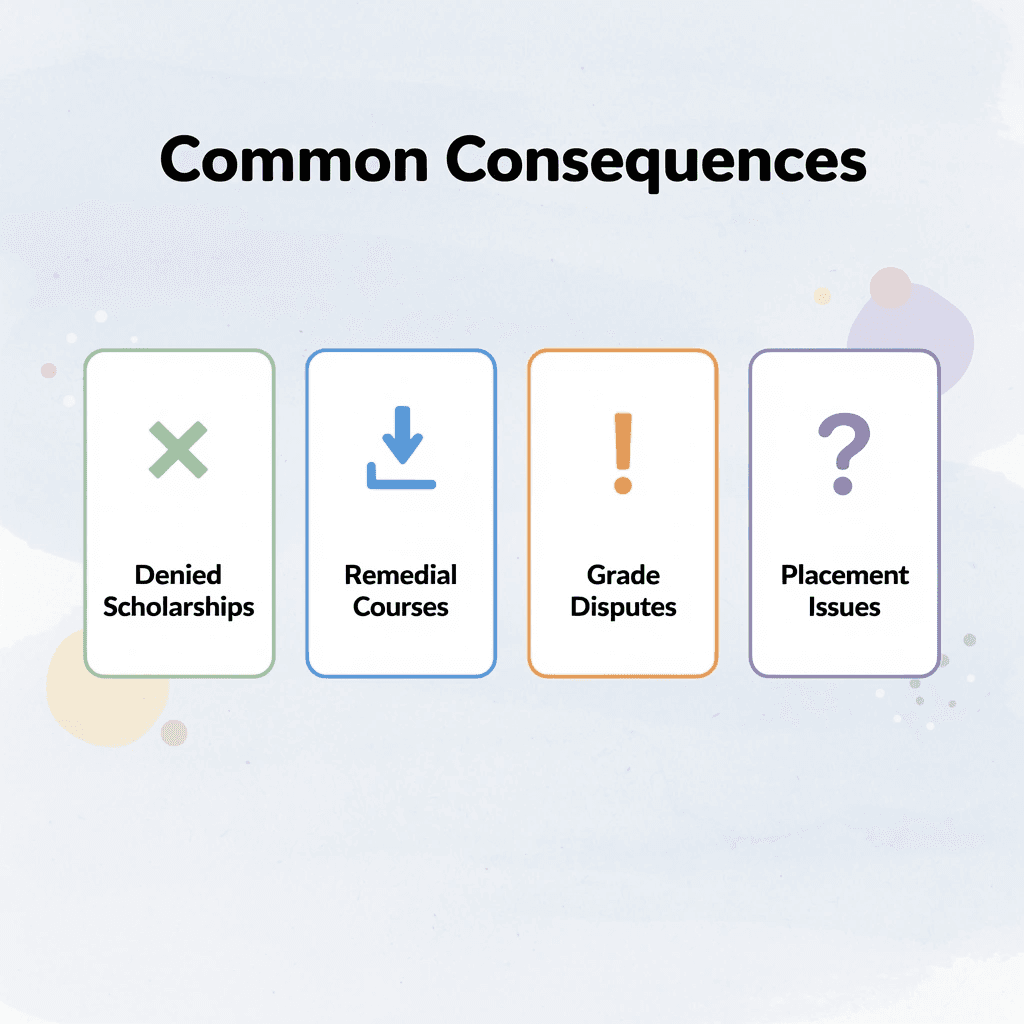
🎯 Key Point: Accredited programs provide the essential documentation and credibility that colleges, employers, and other educational institutions recognize and trust when evaluating your child's academic achievements.
What knowledge gaps can emerge without structured oversight?
Unaccredited programs can skip entire subject areas without consequence. Your curriculum might focus on literature and history while barely covering algebra, or emphasize science experiments while neglecting writing skills. The National Home Education Research Institute's 2017 analysis found that homeschooled students perform in the 87th percentile on standardized tests when following structured, standards-aligned curricula. Without that framework, outcomes range from the 95th percentile to the 40th, depending on parental knowledge and available time.
When do these gaps become apparent?
These gaps stay hidden until your child takes the SAT and realizes they've never learned logarithms, or applies for dual enrollment and discovers their essay skills don't meet college expectations. Catching up, then, requires learning years of material under pressure.
How do admissions officers evaluate homeschool transcripts?
College admissions officers review thousands of transcripts annually. They trust accredited programs because outside agencies verify that an "A" in chemistry means the same thing across schools. Your homeschool transcript lacks that verification, shifting the burden of proof to standardized test scores. A 2003 U.S. Department of Education study confirmed that students from accredited homeschool programs gained college admission and financial aid eligibility at significantly higher rates than non-accredited students, because their documentation removed the guesswork from the evaluation process.
What scholarship opportunities require accredited coursework?
Merit-based scholarships often require proof of accredited coursework as part of their eligibility criteria. Academic competitions, honors programs, and some extracurricular opportunities exclude students who are not enrolled in recognized educational programs. Your child might have mastered calculus, but without accredited transcripts showing Carnegie units and verified grades, scholarship committees will reject the application.
What academic challenges do students face when transitioning?
Students who switch from non-accredited homeschooling to traditional schools often face placement challenges. School administrators cannot verify your ninth grader's algebra skills or writing ability, so they make conservative placement decisions that typically place students a grade level behind where they should be. Case studies published in the Journal of School Choice (Medlin, 2013) show that students from unstructured programs often need extra support when entering traditional schools, not because they lack intelligence but because their learning didn't align with school expectations.
How does the adjustment impact students beyond academics?
The adjustment extends beyond schoolwork. Students accustomed to learning at their own pace struggle with set class schedules, fixed homework due dates, and teaching methods that don't accommodate individual needs. Without experience taking standardized tests and facing the outside accountability that accredited programs offer, this significant change can hinder even smart students from performing well. Picking the right accredited program means knowing which questions matter.
Related Reading
- Homeschool
- Easy Peasy Homeschool
- Homeschool Curriculum
- Homeschool Math Curriculum
- Online Homeschool Curriculum
- Homeschool Resources
- Online Homeschool Programs
- Christian Homeschool Curriculum
- Homeschool Planner
- Homeschool Schedule
- Kindergarten Homeschool Curriculum
- Homeschool History Curriculum
- Best Homeschool Programs
- Free Homeschool Curriculum
- Homeschool Schedule
- Best Homeschool Curriculum
- Accredited Homeschool Programs
- How To Homeschool
- Time For Learning Homeschool
- K12 Homeschool
How to Choose the Right Accredited Homeschool Program
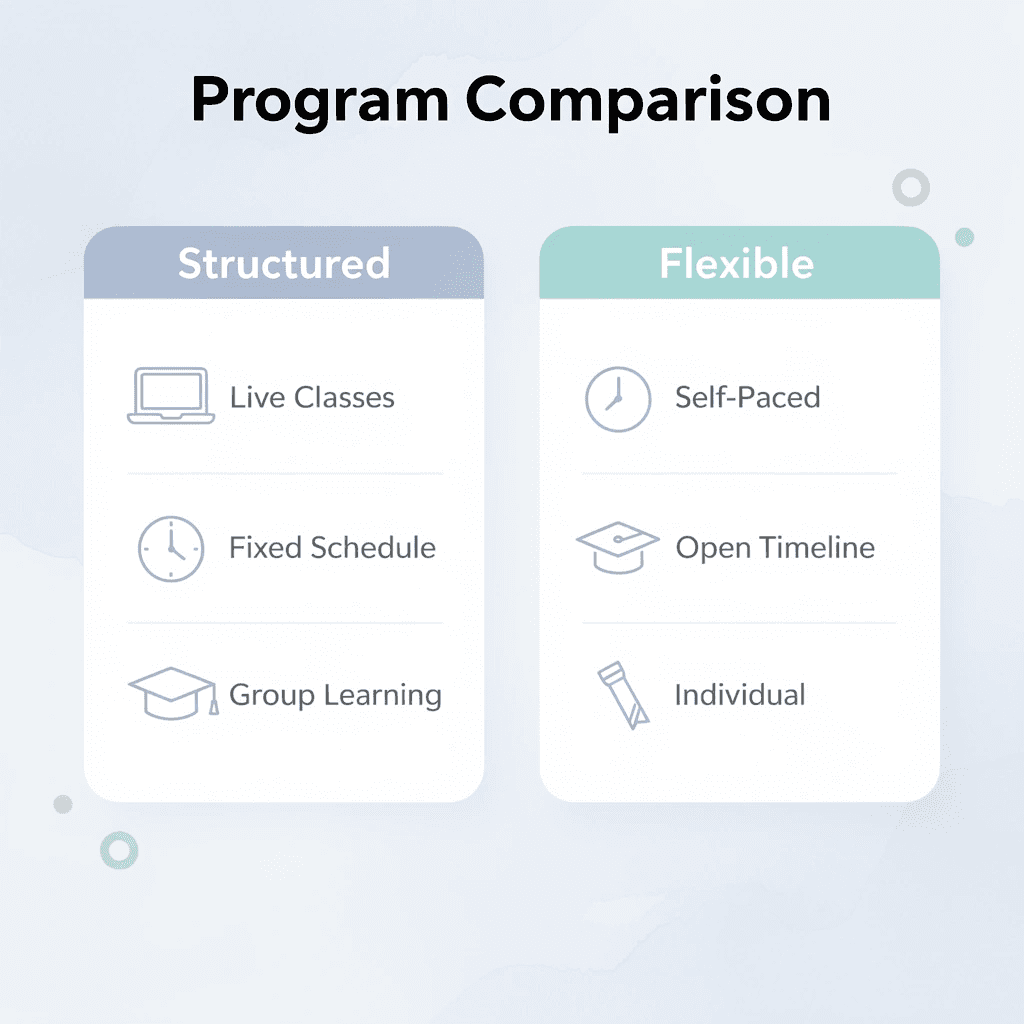
Define what success looks like for your family. Do you need a structured daily schedule because both parents work, or flexibility to fit a child who learns in bursts? Are you preparing for competitive college admissions, or building foundational skills without grade-level pressure? Your answers determine whether you need live teacher instruction, self-paced modules with mentor support, or something in between.
🎯 Key Point: The right program aligns with your family's learning style, schedule constraints, and academic goals rather than following what works for other families.
"Families who clearly define their homeschool goals before choosing a program report 85% higher satisfaction with their educational outcomes." — National Home Education Research Institute, 2023
💡 Pro Tip: Create a family education mission statement before evaluating programs. Write down your non-negotiables, like schedule flexibility, religious content, or college prep focus, to guide your decision-making process.
Program Type | Best For | Time Commitment |
|---|---|---|
Live Online Classes | Structured learners, working parents | 20-25 hours/week |
Self-Paced Modules | Flexible schedules, different learning speeds | 15-20 hours/week |
Hybrid Programs | Balance of structure and flexibility | 18-22 hours/week |
What do the statistics tell us about program variety?
According to the National Center for Education Statistics, 3.7 million students were homeschooled in the United States in 2024 across various program models. The choice isn't about finding the "best" program; it's about matching your child's learning style and your family's capacity to a structure that can sustain real-world demands.
Why should you verify accreditation first?
Regional accreditation is more important than national or programmatic accreditation when colleges review transcripts. Schools accredited by AdvancED, the Western Association of Schools and Colleges, or similar regional groups undergo evaluation cycles lasting several years. These evaluations assess curriculum rigor, teacher qualifications, and assessment validity.
How can you confirm legitimate accreditation?
National accreditation doesn't guarantee recognition across state lines or university admissions offices. Confirm the accreditor's name appears on the Council for Higher Education Accreditation's database. If it doesn't, you're building on unstable ground. Parents choosing programs based solely on curriculum often discover too late that their child's transcript won't transfer when life takes a different direction. Without regional accreditation backing those credits, placement battles waste months and damage confidence.
Match curriculum standards to your child's trajectory
Good programs align with state standards, Common Core, or similar international programs. They cover clear learning goals for each grade level. Before enrolling, ask if the program provides pacing guides, scope-and-sequence documents, and sample assessments. If the curriculum emphasizes literature and history while neglecting maths, or prioritizes science experiments over structured writing, knowledge gaps will emerge. These gaps surface during standardized tests or college placement exams. The curriculum should challenge your child without requiring constant supplementary help or reteaching of skipped concepts.
How much teacher involvement does your family actually need?
Programs vary significantly in teacher support. Some offer full instruction with assignment feedback, while others use parent-led learning with occasional check-ins or self-paced modules with mentor support. The right choice depends on how much time you can dedicate and how much outside accountability your child needs. A program that promises flexibility sounds appealing until your eight-year-old needs someone besides you explaining fractions, or your teenager ignores deadlines without outside consequences.
What structure do flexible programs actually provide?
Many families who choose homeschooling for flexibility discover they need more structure than they anticipated. Even flexible programs should include regular check-ins, such as weekly assignments, monthly progress reviews, or quarterly assessments, to demonstrate that learning is occurring.
What assessment tools should you verify before choosing a program?
Accredited programs typically offer standardized testing choices, progress reports, grade tracking, and transcript generation—tools essential for scholarships, dual enrollment, and college admission. Ask how progress gets reported, what tests the program requires, and whether transcripts follow standard formatting that colleges recognize.
Why do transcript standards matter for college admissions?
If the program can't produce a transcript with Carnegie units, GPA calculations, and course descriptions matching traditional schools, you'll create extra work later when admissions officers need comparable documentation. The practical difference between programs often appears in administrative details rather than curriculum quality. Two programs might teach algebra equally well, but one produces transcripts that transfer smoothly while the other requires you to explain your grading system to school administrators.
11 Best Accredited Homeschool Programs for Preschoolers
Formal accreditation for preschoolers is rare: accreditation targets grade levels where transcripts, credits, and standardized assessments matter (typically third grade onward). Parents can choose between publicly funded online programs that provide structure and teacher interaction, or private curricula offering flexibility with optional accreditation pathways for later years.

🎯 Key Point: Most preschool programs focus on developmental readiness rather than formal academic credentials, giving parents maximum flexibility in choosing the right approach.
"Accreditation becomes relevant when students need official transcripts and credits, which typically begins around third grade when formal assessments start." — U.S. Department of Education
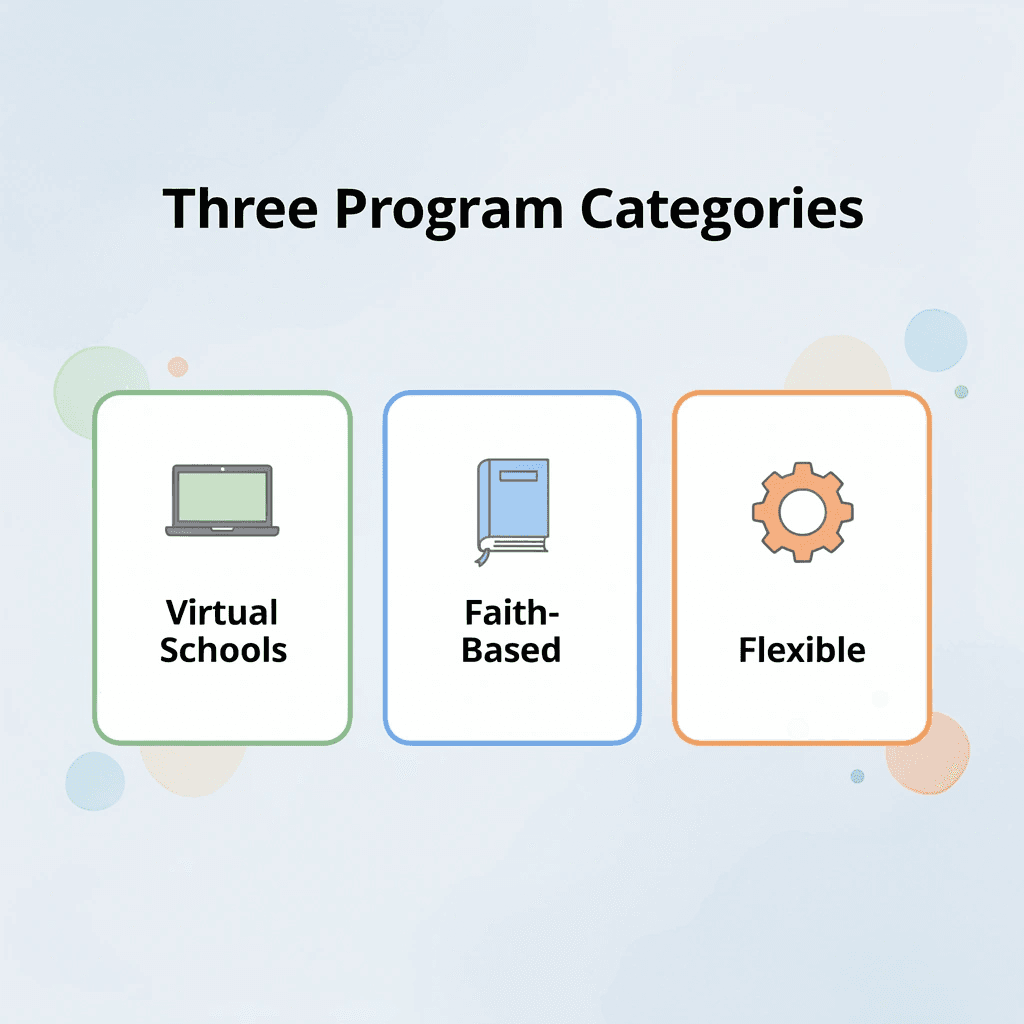
Programs fall into three categories: publicly funded virtual schools operating like traditional classrooms online, faith-based curricula with built-in progression through high school, and flexible frameworks that maintain future transcript credibility while allowing customization. Each serves different needs, from parents who want full teacher support to those seeking gentle academics that adapt to nap schedules and playground time.
💡 Tip: Consider your family's long-term goals—if you plan to homeschool through high school, starting with a program that offers accredited pathways can simplify future transcript preparation.
1. K12 (Stride Inc.)
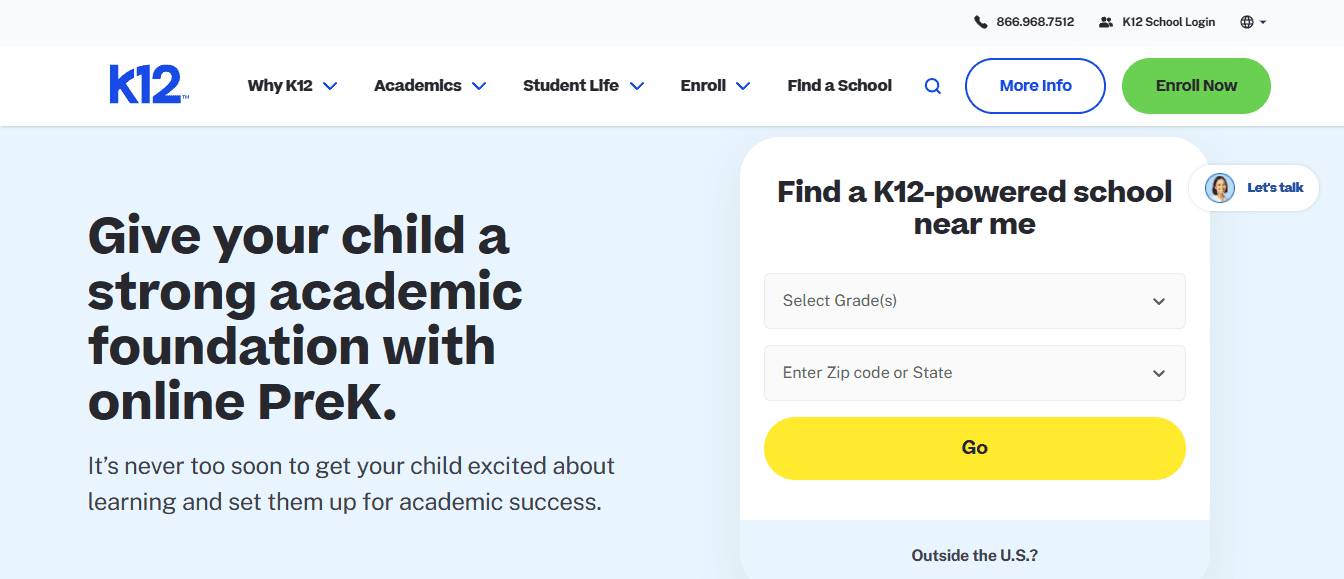
Public schools funded by the government offer virtual learning through K12, providing state-aligned curriculum with certified teachers at no cost to families. Students receive live and recorded lessons, teacher support during scheduled hours, and clear academic progress that mirrors traditional school expectations. The structure appeals to parents seeking accountability without tuition costs, though screen time accumulates quickly, and pacing follows district calendars rather than individual learning speeds. The program works best when you need external confirmation of learning and accept school-like schedules starting at age four or five.
2. Connections Academy
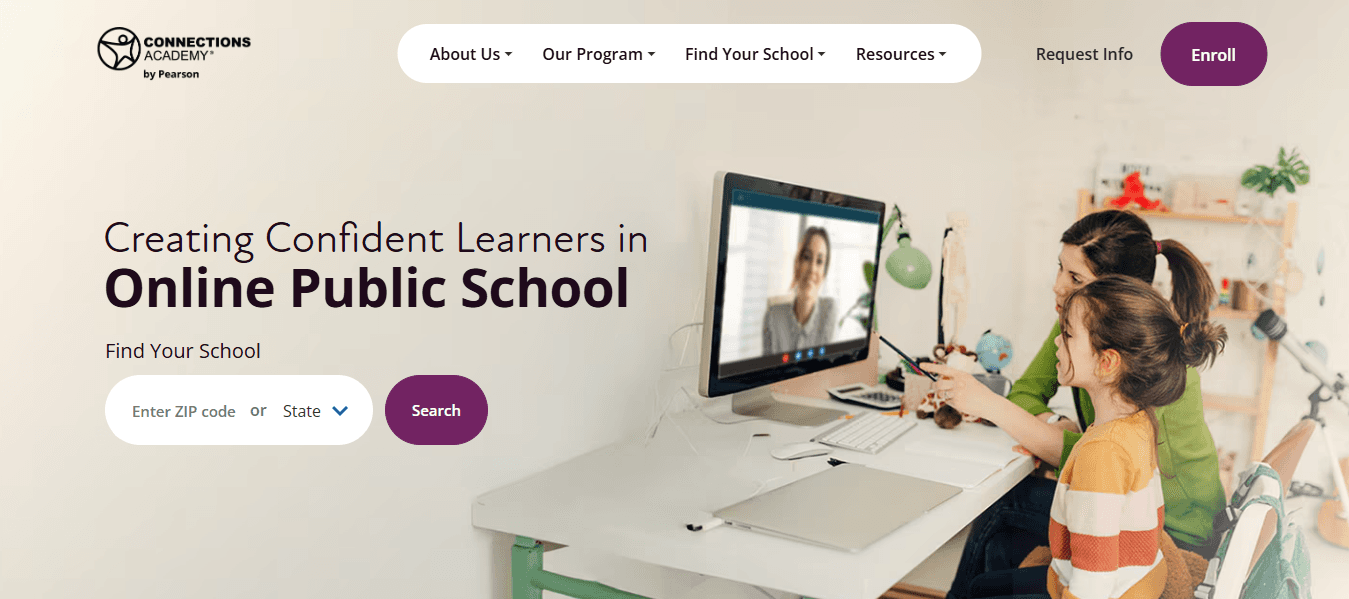
This accredited online public school creates classroom dynamics through virtual peer interaction and live teacher-led sessions. Students follow state standards with regular assessments and progress reports. The social component addresses isolation concerns, but you give up curriculum control—teachers decide what gets taught and when, limiting flexibility to slow down for mastery or speed up when your child grasps concepts quickly. Families drawn to routine and external structure benefit from reduced decision fatigue, while those wanting educational autonomy feel constrained by predetermined lesson plans.
3. Calvert Education
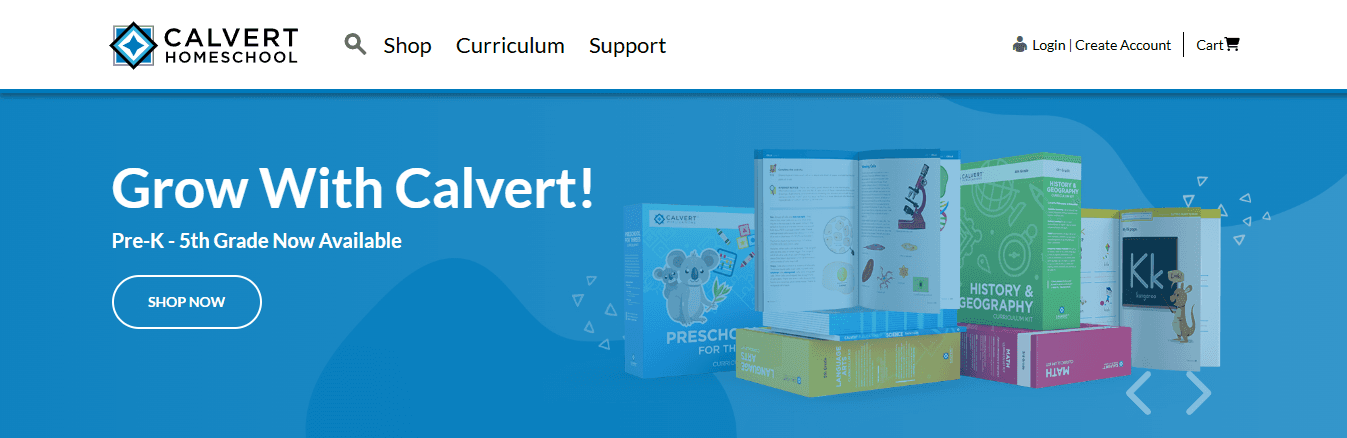
Calvert offers rich academic content with offline and online delivery options, adapting to families seeking depth without constant screen exposure. The literature and history focus provides substance beyond basic letter recognition and number counting, though some parents find the material intense for young learners without modification. The curriculum works well across multiple ages, which matters when homeschooling siblings at different developmental stages. Parent support guides explain not just what to teach but how to present concepts, reducing guesswork for new homeschoolers. The flexibility maintains home rhythms while building toward accredited transcripts in later grades.
4. Abeka Academy
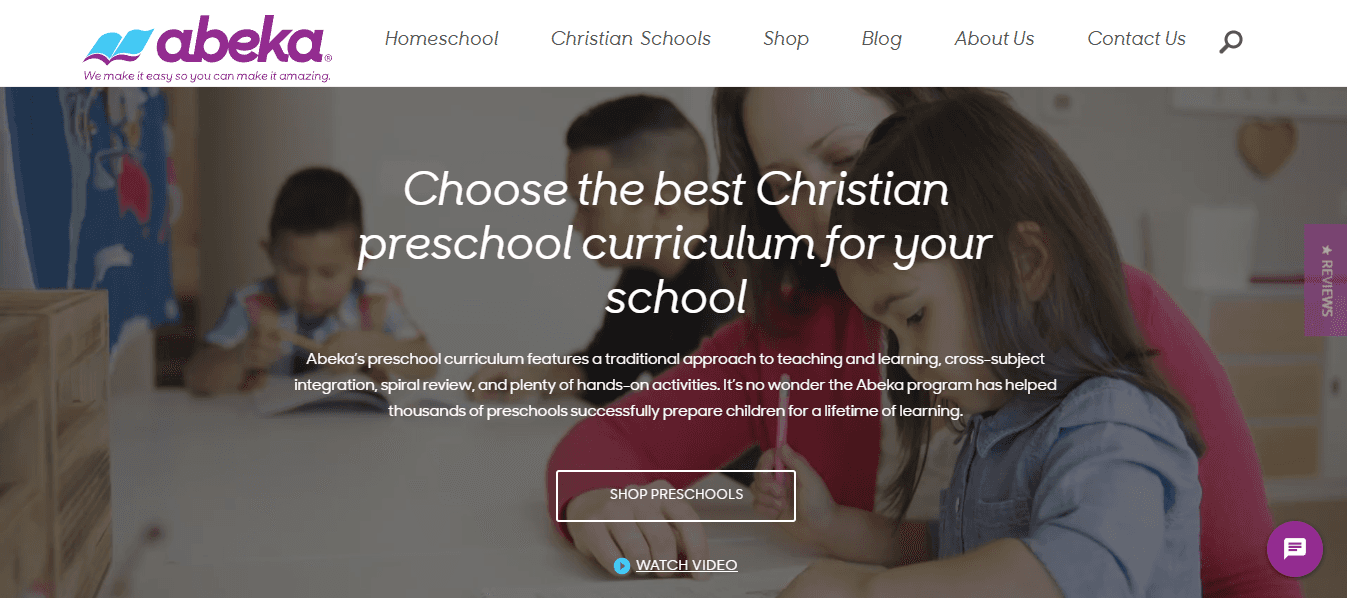
This Christian homeschool program delivers traditional academics through video lessons from certified instructors, covering phonics, math, science, and Bible study with structured progression. Faith integration shapes every subject area, making it ideal for families seeking to develop a biblical worldview alongside academics. Abeka's strength lies in reading and math foundations that prepare students for rigorous upper grades, though the intensity can overwhelm preschoolers not developmentally ready for formal instruction. Parents appreciate the clear structure and grading tools that eliminate ambiguity about progress, though secular families should look elsewhere.
5. Alpha Omega Academy (AOP)
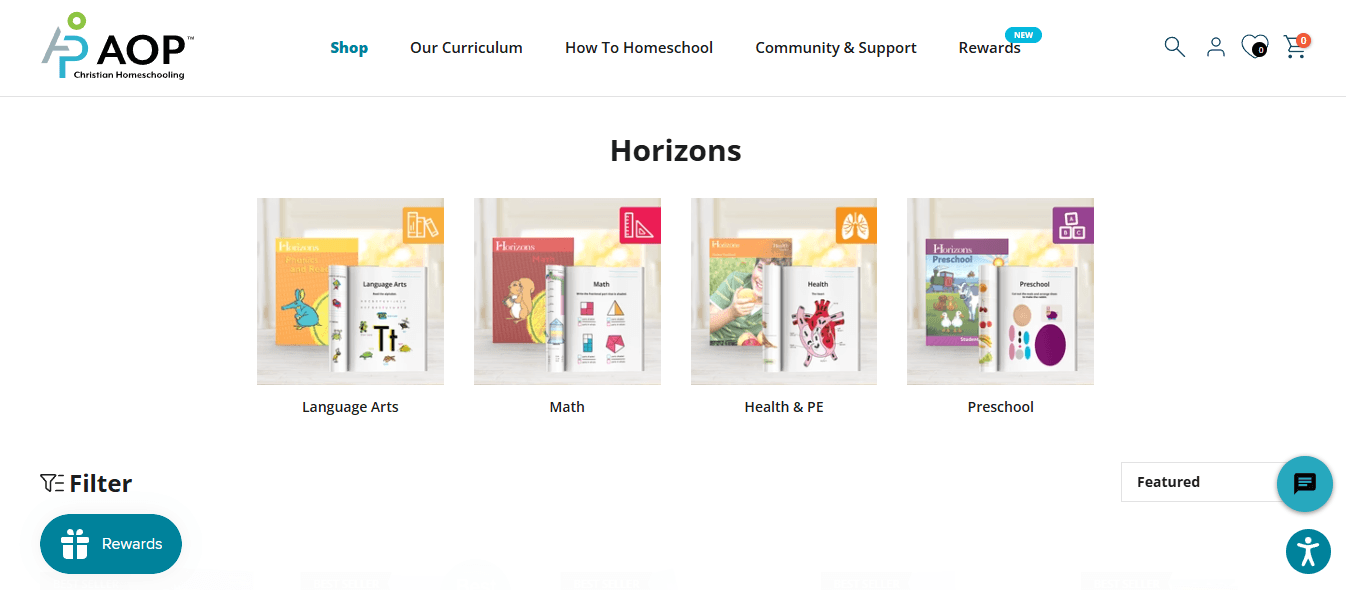
AOP offers self-paced academics through multiple curriculum formats (Switched-On Schoolhouse and LIFEPAC), letting families choose based on learning style and schedule. K-12 accreditation ensures consistent transcript documentation throughout your child's education. Teacher support is available when needed, though parents manage daily instruction and pacing. The program suits families with irregular schedules or children who resist strict timelines, though you'll need to navigate different platforms depending on your curriculum choice. A Christian worldview shapes content across subjects, with more customization in lesson delivery than Abeka.
6. Bridgeway Academy
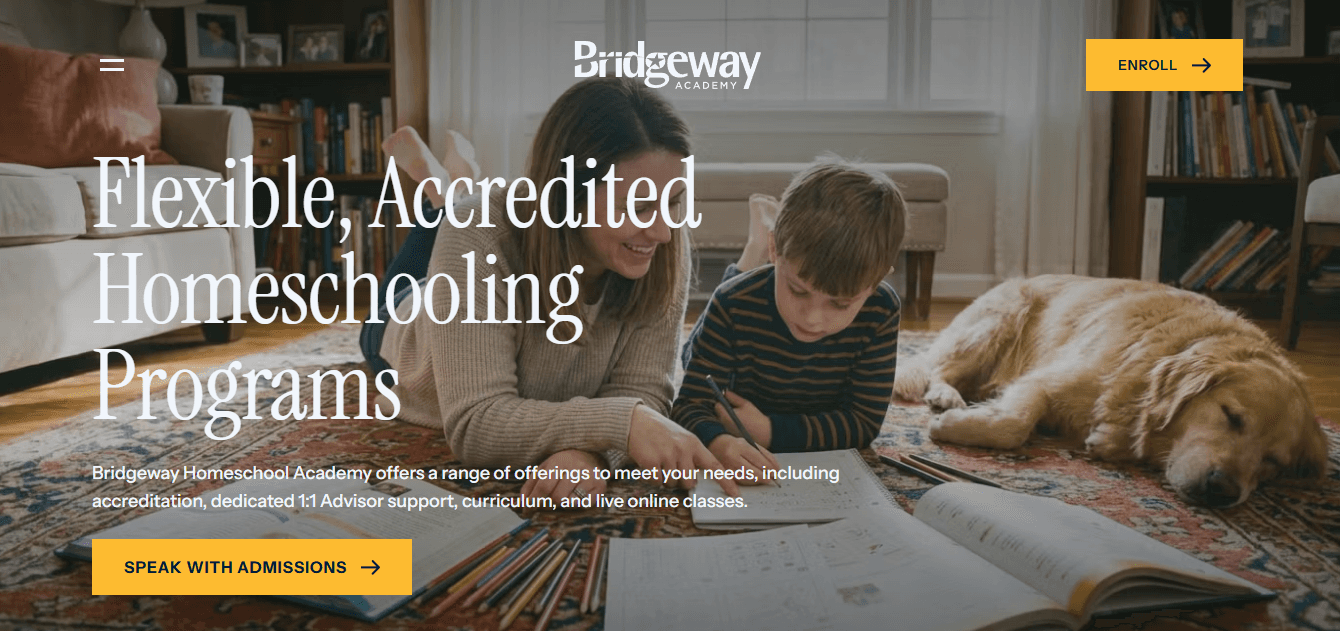
Teacher-assisted programs through Bridgeway combine personalized coaching with homeschool freedom. Live classes supplement self-paced work, and standardized planning tools help you map out the year while maintaining flexibility for sick days, travel, or unexpected life changes. The support structure benefits families managing learning challenges or parents new to homeschooling who need reassurance that they're covering important concepts. Costs run higher than those of curriculum-only options because you're paying for ongoing teacher interaction and administrative oversight, but many families find the investment worthwhile to avoid the overwhelm that derails first-year homeschoolers.
How can families enhance formal curriculum with hands-on activities?
Families enhance formal curriculum with hands-on activities that make abstract concepts tangible. Museum memberships, botanical garden visits, and library story hours extend learning beyond worksheets. The most effective homeschool environments blend structured academics with rich conversations during everyday moments: grocery shopping becomes maths practice, cooking teaches measurement and chemistry, and nature walks introduce biology.
Many parents create custom materials connecting lessons to their child's specific interests. Platforms like My Coloring Pages generate printable coloring pages that reinforce whatever topic you're teaching that week, whether letter recognition, animal habitats, or historical figures. The AI tool transforms curriculum concepts into engaging activities in seconds, eliminating planning overhead that exhausts working parents.
7. Laurel Springs School
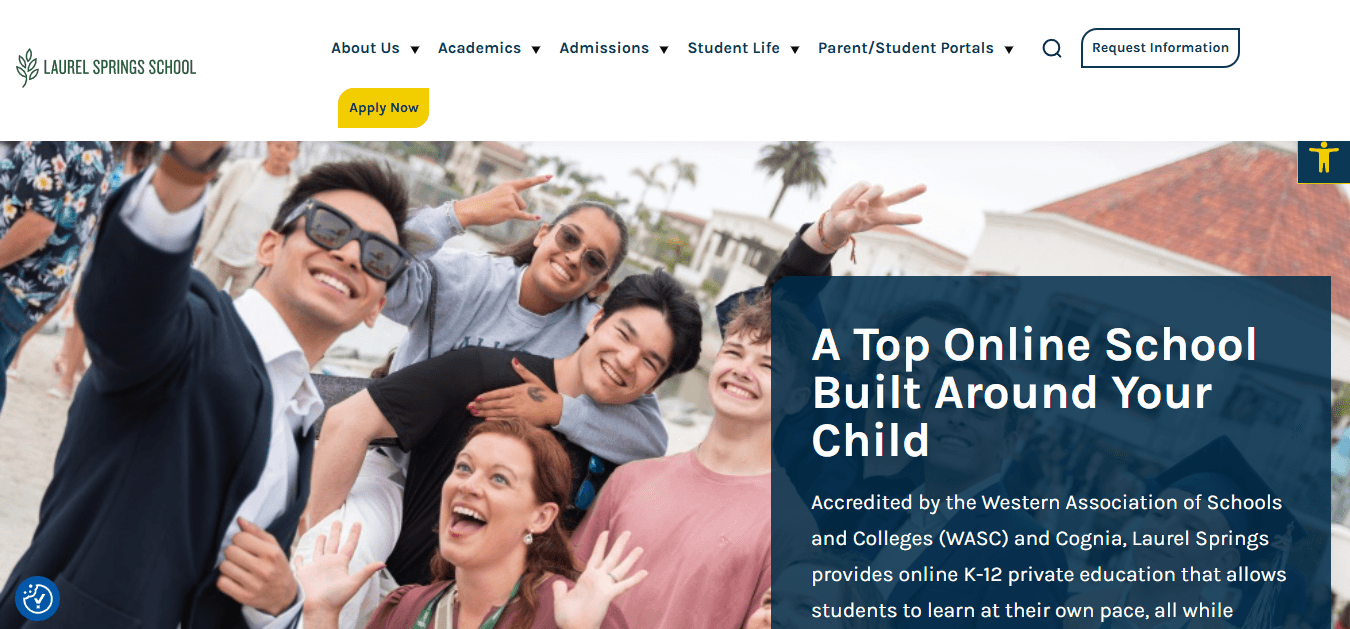
This accredited private online school serves middle and high school students, offering AP courses, honors tracks, and a college-prep focus. It costs significantly more than elementary options and assumes students possess foundational skills. Laurel Springs becomes relevant around sixth grade, when college preparation shapes course selection, rather than in the early elementary years.
8. Clonlara School
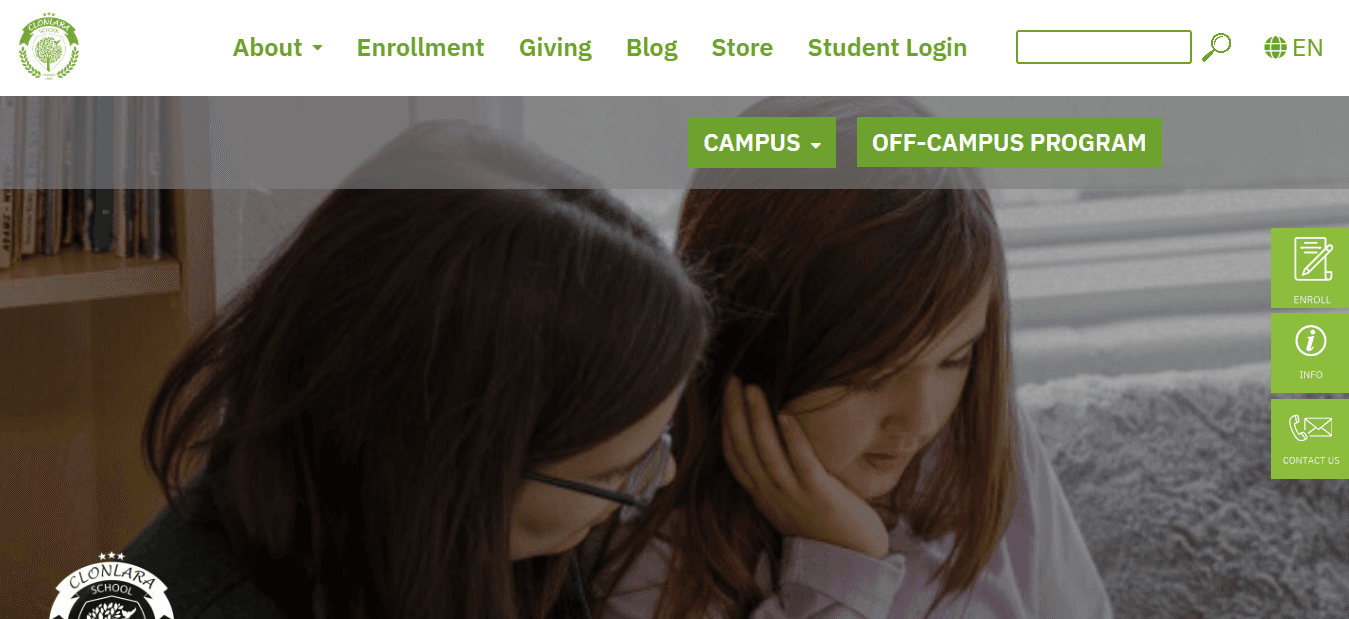
Portfolio-based assessment and personalized learning plans define this democratic homeschool program for self-directed learners. Students drive their own education with guidance from parents and teachers, choosing projects and topics that match their interests rather than following a predetermined scope and sequence. The approach requires children who can manage unstructured time and parents comfortable rejecting traditional grading and standardized progression. Families drawn to project-based learning find Clonlara's global curriculum refreshing, while those needing clear benchmarks feel unmoored by the lack of structure. The accreditation provides transcript credibility for college applications despite the unconventional approach.
9. Penn Foster High School
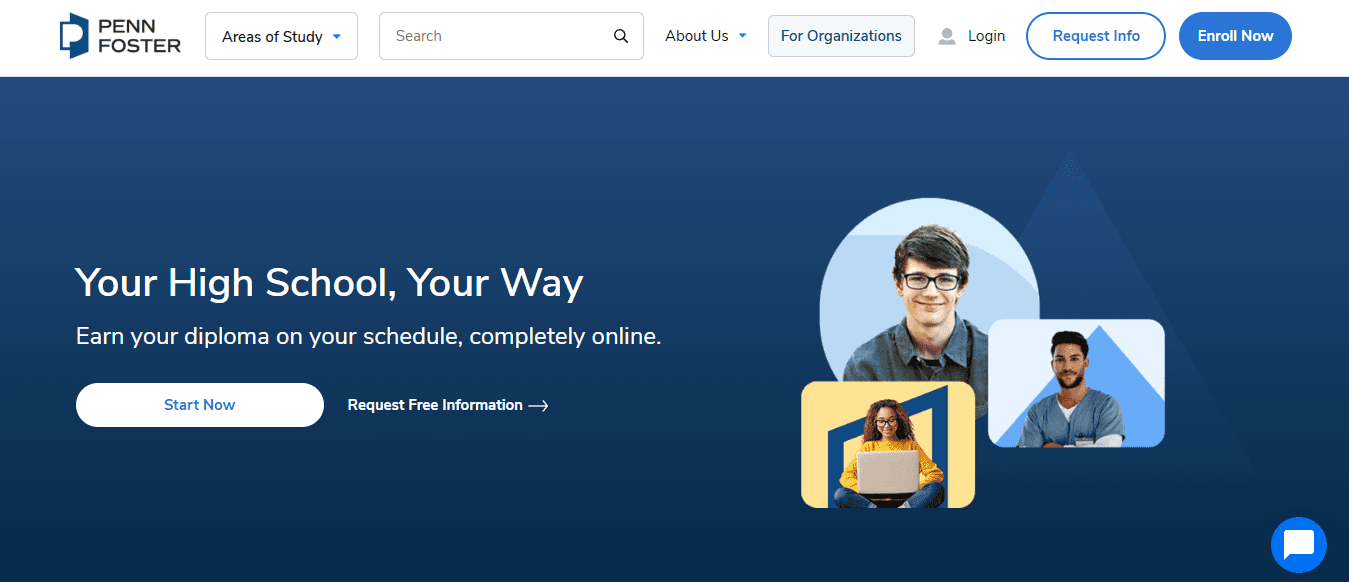
Penn Foster High School offers career-focused distance education for teenagers. The program provides vocational training, job skills development, and diploma pathways suited to high school completion and career preparation, not basic academics. It appears in search results for accredited options, but parents of younger children should save this resource for when their child begins exploring careers.
10. Unity Christian Online School
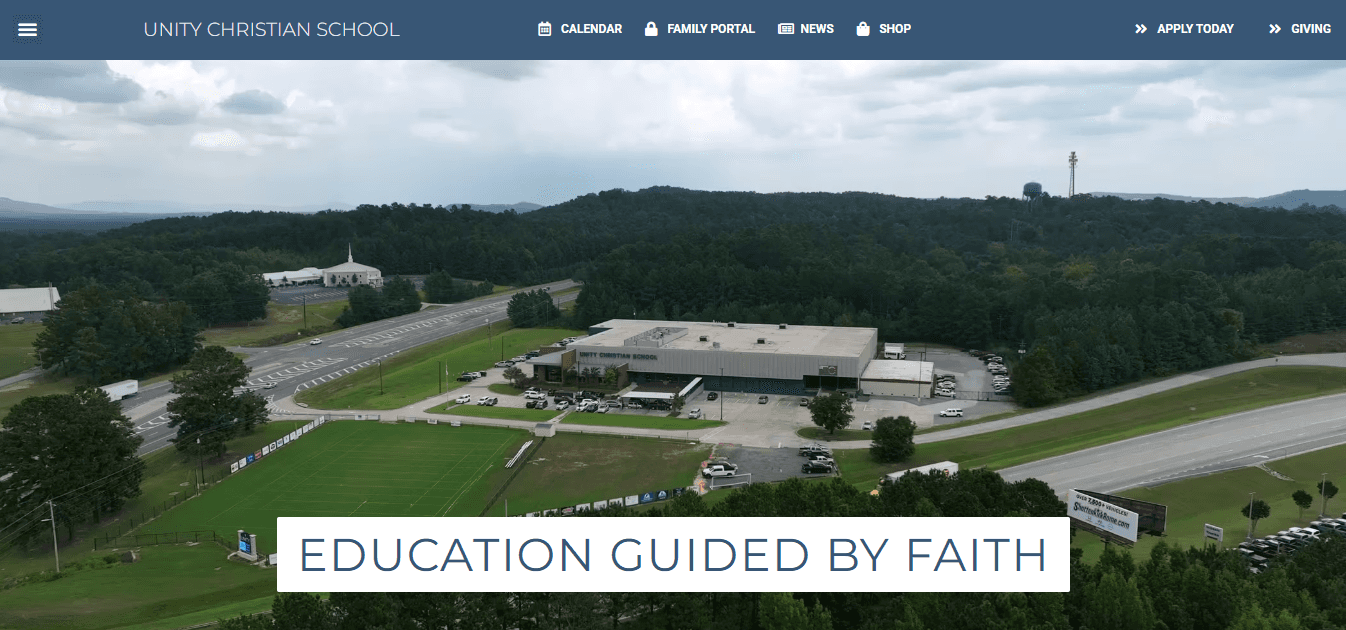
Bible-integrated lessons, parent tools, and teacher feedback create community-focused Christian education through Unity. The program emphasizes spiritual growth alongside academic tracking, making it ideal for families where faith development matters as much as academics. Structured lesson plans eliminate the need for parents to plan curriculum, while group opportunities enable students to socialize with other Christian homeschool families. The faith requirement shapes content selection, teaching methods, and community interactions. Secular families or those from different faith traditions may find this approach incompatible with their values, but Christian parents seeking both structure and spiritual formation appreciate the integrated model.
11. Freedom Homeschooling Online (FHOnline)

FHOnline blends customization with accreditation oversight, allowing parents to choose a curriculum while maintaining portfolio support and teacher accountability. You gain the freedom to select materials that match your child's learning style, combined with external verification that the choices meet educational standards.
What level of planning does this approach require?
This model requires you to plan ahead since you're building the educational path rather than following a preset one. However, it preserves the freedom that draws families to homeschooling. Parents who are comfortable making educational choices and accepting responsibility for results find this balance works well, while those wanting clear, step-by-step guidance might feel overwhelmed.
How do you choose the right program for your family?
These programs cover a wide range and work better for some ages than others. Some are designed for middle and high school students, while others serve all grade levels. The key is finding which model fits your family's situation: how much time you have, whether you need external accountability, how much faith you want included, and how much structure versus flexibility your child needs. For preschoolers, having official approval matters less than finding a routine that supports learning without causing pushback or exhaustion. Picking a program solves only part of the challenge homeschool families with young children face.
5 Ways Parents Can Supplement Homeschool Learning
Supplementing homeschool education means adding real-world experiences, hands-on activities, and social opportunities to your core curriculum. The goal is to connect concepts to tangible experiences that engage multiple senses, spark genuine curiosity, and involve other students.
According to studies referenced in Brighterly's homeschooling statistics article, 98% of homeschooled students participate in an average of 5 extracurricular activities per week. The challenge is choosing supplements that reinforce your curriculum without creating scheduling chaos or financial strain.
🎯 Key Point: The most effective supplements combine academic reinforcement with social interaction and hands-on learning that textbooks simply can't provide.
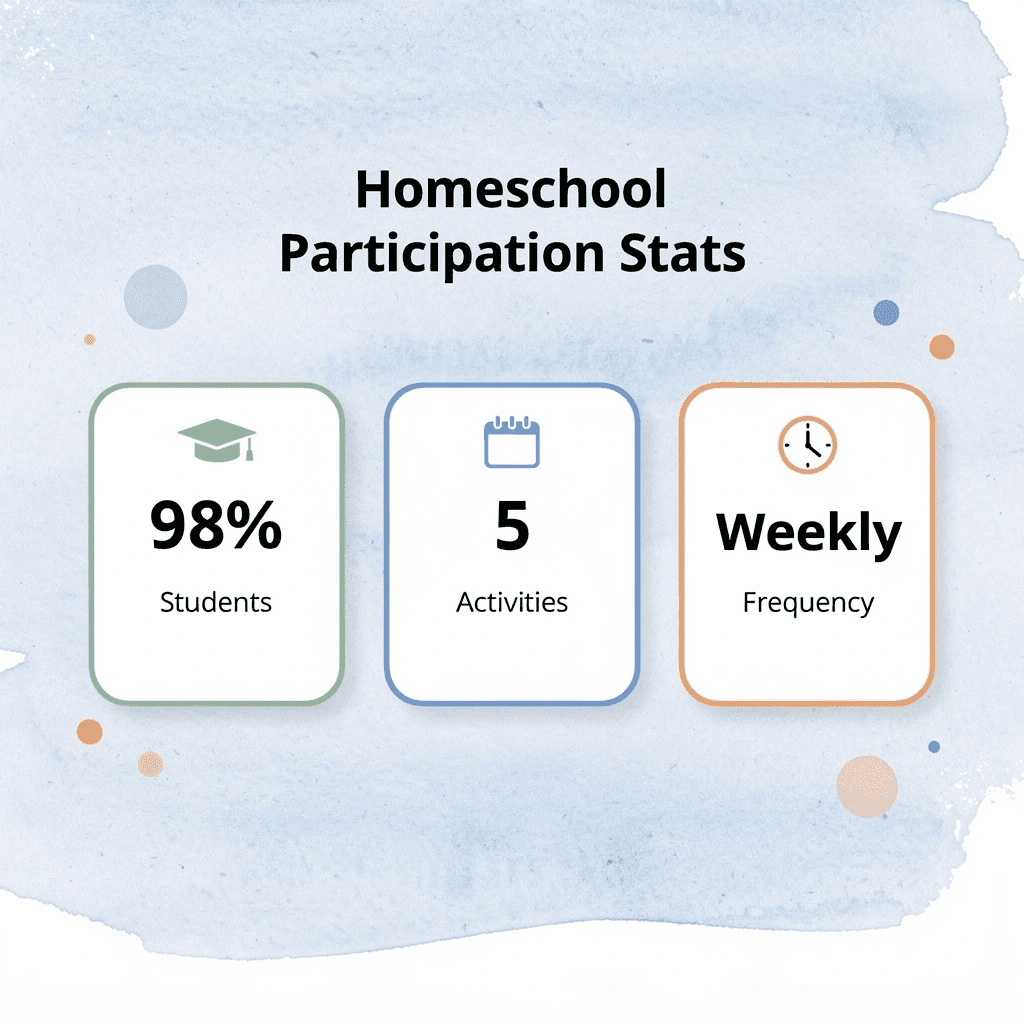
"98% of homeschooled students participate in an average of 5 extracurriculars per week." — Brighterly Homeschooling Statistics
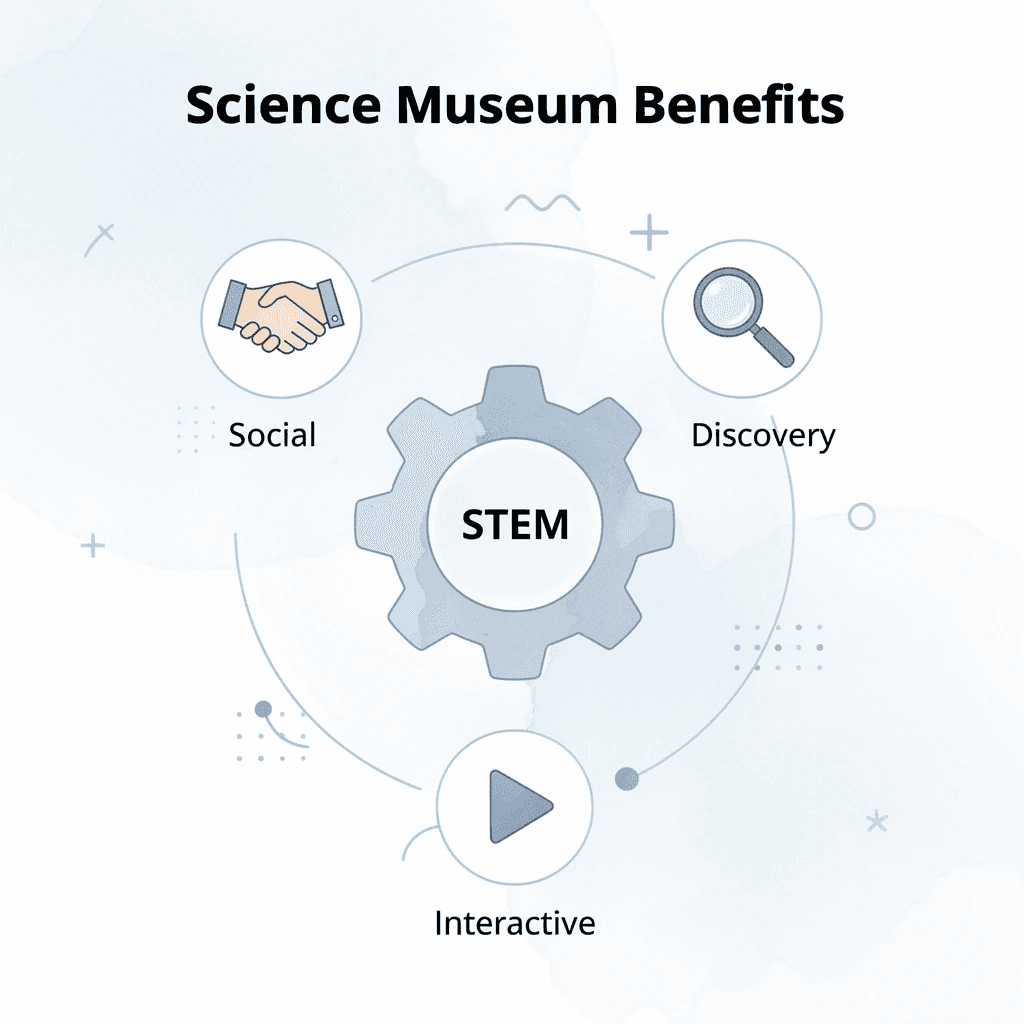
💡 Tip: Focus on supplements that serve multiple purposes - like science museums that combine STEM learning with social experiences and hands-on discovery.
1. How do physical field trips enhance learning experiences?
Taking your child to museums, historical sites, nature centers, or working farms transforms abstract ideas into real memories. Walking an actual Civil War battlefield where soldiers fought, seeing the land they traversed, and touching objects they used creates an understanding that textbooks cannot match. The physical experience anchors information in ways that prove especially valuable for kinesthetic learners who need movement and spatial context to grasp new concepts.
What are the benefits of virtual field trips?
Virtual field trips address logistical, weather, health, and budget constraints. Online platforms offer live tours of science centers, interactive museum exhibits, and real-time farm visits, allowing children to ask questions and receive immediate answers from guides. While they lack the full sensory experience of in-person visits, virtual tours preserve the core benefit of observing concepts in real-world contexts rather than learning about them solely through textbooks.
2. How do interest-based activities develop natural learning motivation?
When children explore things they care about, they develop research skills, persistence, and domain expertise without external pressure. For example, an eight-year-old who loves animals and volunteers at a dog shelter learns responsibility, empathy, and biology through real work. Your future engineer in a robotics club practices math, physics, and teamwork while building something that works. Learning happens because the child wants to succeed, not because a parent told them to.
What mistakes do parents make with interest-based learning?
Many parents push their children into activities based on their own preferences rather than their children's interests. Your teenager might love drawing but hate organized art classes that require them to complete predetermined projects. Your elementary student might enjoy cooking but resist formal lessons that feel like school in the kitchen. The activity works best when you follow the child's interests, even if they don't seem connected to academics.
3. How do homeschool co-ops enhance learning through peer interaction?
Homeschool cooperatives address socialization concerns while serving deeper educational purposes. Children learn differently when explaining concepts to peers, defending reasoning in discussions, or collaborating on projects that require negotiation. The social dynamics create accountability that parental oversight alone cannot replicate: your child might ignore your reminder to complete an assignment, but they'll finish it when their project partner depends on their contribution.
What advantages do virtual clubs offer for specialized interests?
Virtual clubs help children join groups when local options don't exist or their specific interests (chess strategy, creative writing, marine biology) lack sufficient peer groups nearby. Online book clubs, STEAM groups, and subject-specific forums connect children with like-minded peers regardless of location. While virtual interaction lacks the natural social learning of unstructured in-person time, it beats isolation when face-to-face options are unavailable.
4. How does outdoor learning build physical confidence in children?
Nature-based education teaches observation skills, risk assessment, and environmental science through direct engagement. Hiking teaches children to read trail markers, estimate distances, and adjust plans when the weather changes. Camping builds self-reliance as they practice setting up shelter, managing food storage, and navigating without constant adult direction. These experiences develop confidence that transfers to academic challenges because children learn their competence extends beyond worksheets.
What structured approaches help families prioritize outdoor time?
The 1000 Hours Outside movement gives families a framework for prioritizing outdoor time. It suggests trading screen time for nature throughout the year, offering seasonal activity ideas to maintain engagement. Even urban families can accumulate outdoor hours through parks, nature journals on balconies, or sidewalk chalk art that builds children's strength and coordination.
5. How Do Hands-On Worksheets Help Balance Screen Time?
Online curriculum platforms offer convenience and immediate feedback, but excessive screen time promotes passive learning that demands less mental effort than writing, drawing, or manipulating physical objects. Printed worksheets requiring students to trace, color, count, or solve problems by hand reinforce concepts through hands-on learning. The physical act of forming letters, shading shapes, or arranging manipulatives activates different brain regions than clicking through multiple-choice questions on a tablet.
How can parents create custom worksheets without design skills?
Parents often spend hours searching for worksheets that match their curriculum, then formatting and printing materials that may not engage their child. Platforms like My Coloring Pages eliminate this work by creating custom printable pages in seconds. After teaching a phonics lesson about the letter B, you can generate a coloring page with butterflies, bears, and balloons that reinforce the sound through pictures. Following a geography lesson about rainforests, you can create pages showing tropical animals and plants that children color while discussing where these animals live. The AI tool transforms curriculum concepts into personalized activities without requiring design skills or extensive planning.
What happens when activities don't demonstrate mastery?
But extra activities lose their power if children cannot demonstrate their learning in ways that prove understanding.
Related Reading
- Homeschool Room
- Homeschool Report Card Template
- How To Homeschool Your Kids
- Colorado Homeschool Laws
- Abeka Homeschool Curriculum
- Georgia Homeschool Laws
- 6th Grade Homeschool Curriculum
- Homeschool Preschool
- Homeschool Room Ideas
- 1st Grade Homeschool Curriculum
- How To Homeschool In Texas
- Homeschool Vs Public School
- Homeschool Coop
- Pre K Homeschool Curriculum
- Kentucky Homeschool Laws
- Homeschool Report Card Template
- Texas Homeschool Requirements
- Florida Homeschool Requirements
Turn Accredited Homeschool Lessons into Active Learning with Worksheets
Worksheets change passive lesson watching into an active skill practice. After your child completes a video lesson on fractions, a worksheet that requires them to shade portions of shapes or solve word problems forces them to retrieve and apply what they learned, cementing their understanding. The physical act of writing answers, drawing diagrams, or working through multi-step problems engages different thinking processes than watching an instructor explain concepts on screen.
🎯 Key Point: Schedule worksheet time right after lessons while concepts are still fresh, dedicating 10 to 15 minutes to hands-on practice before moving to the next subject. This prevents the common pattern where children complete online modules quickly but remember little because they never turn information into action. Track which skills your child masters versus which require repeated practice by keeping completed worksheets in subject-specific folders, creating a progress record that reveals patterns accredited programs sometimes miss in their automated assessments.
"The physical act of writing and drawing engages different cognitive processes that cement learning in ways passive video consumption cannot match." — Educational Psychology Research, 2023
Rotate worksheet types to match different learning objectives. Letter tracing sheets build fine motor control and letter recognition for early readers. Math puzzles develop number sense and logical reasoning beyond rote calculation. Science diagrams that children label or color reinforce vocabulary and system understanding that reading alone cannot achieve.
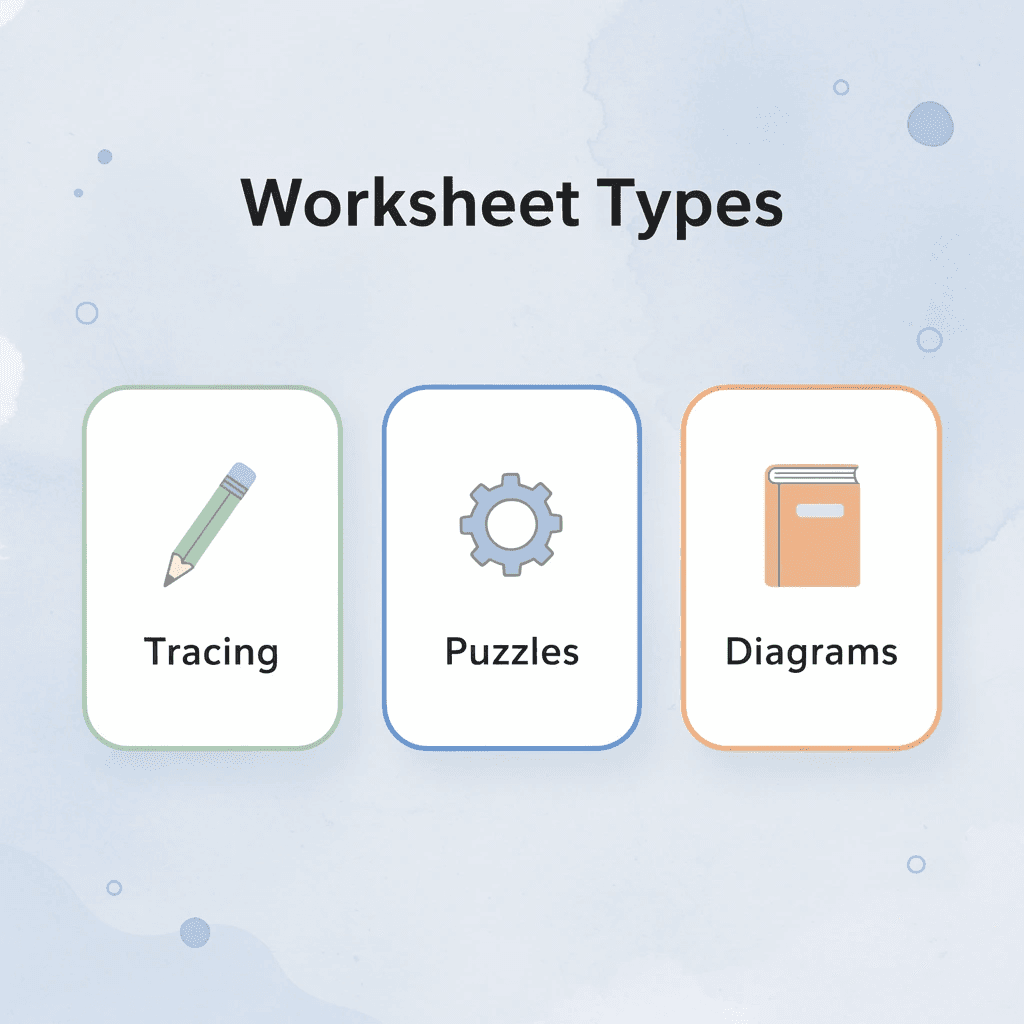
Worksheet Type | Learning Objective | Age Group |
|---|---|---|
Letter Tracing | Fine motor control & recognition | K-1st grade |
Math Puzzles | Number sense & logic | 2nd-5th grade |
Science Diagrams | Vocabulary & systems | 3rd-8th grade |
💡 Tip: Most parents waste hours searching for worksheets that align with their specific lesson topic and formatting materials that may not match their child's ability level. Platforms like My Coloring Pages eliminate that burden by generating custom printable pages in seconds based on whatever you're teaching that day. After a history lesson on ancient Egypt, you create coloring pages featuring pyramids, hieroglyphics, and pharaohs to reinforce visual memory of cultural elements. Following a biology unit on ocean ecosystems, you generate pages showing coral reefs and marine animals that children label while discussing food chains and habitat relationships.
⚠️ Warning: Increase worksheet difficulty gradually as your child demonstrates mastery, moving from basic identification tasks to application problems that require combining multiple concepts. A kindergartener might start by tracing the letter A and coloring objects that start with that sound, then progress to writing words independently and sorting pictures by beginning sounds.
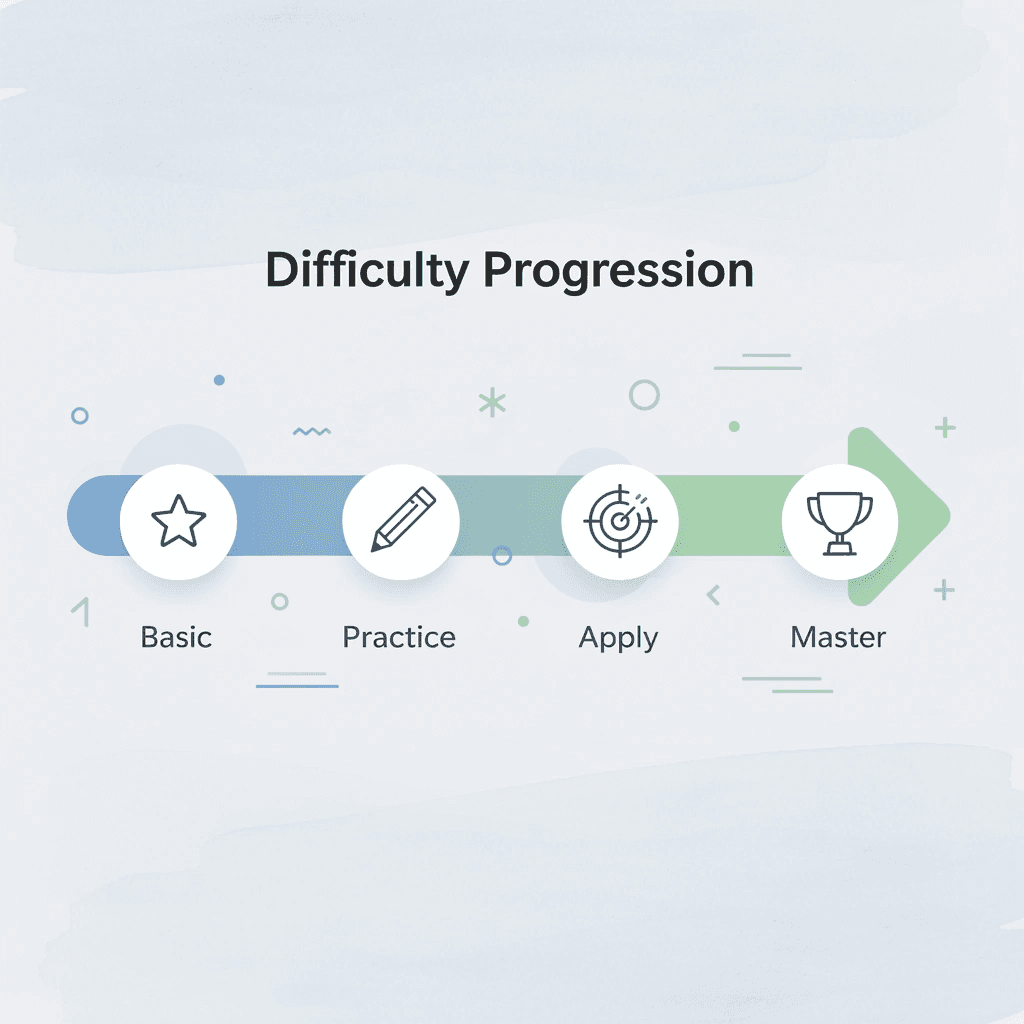
The goal isn't replacing your accredited curriculum with worksheets but creating tangible evidence that abstract lessons develop into measurable competence. When your seventh grader solves algebraic equations on paper without prompting, or your third grader writes coherent paragraphs about their science learning, you've moved beyond hoping education is happening to knowing it has.
Related Reading
- 5th Grade Homeschool Curriculum
- How To Homeschool In California
- Georgia Homeschool Requirements
- Alabama Homeschool Laws
- 2nd Grade Homeschool Curriculum
- Homeschool Reading Curriculum
- California Homeschool Laws
- 4th Grade Homeschool Curriculum
- North Carolina Homeschool Laws
- Homeschool Art Curriculum
- Accredited Homeschool Curriculum
- 3rd Grade Homeschool Curriculum
- Illinois Homeschool Laws
- Michigan Homeschool Laws
- Science Homeschool Curriculum