Abeka Homeschool Curriculum Detailed Guide
Abeka Homeschool Curriculum complete guide by My Coloring Pages. Reviews, pricing, grade levels, and parent tips to choose the right program.


Parents using the Abeka Homeschool Curriculum often discover that even well-structured programs benefit from supplemental materials tailored to their child's learning style. Quality printable resources can transform routine lessons into engaging experiences, whether through phonics practice sheets, colorable science diagrams, or Bible story illustrations. The challenge lies in finding materials that align with lesson plans without requiring expensive subscriptions or hours of searching.
Smart homeschool families solve this problem by accessing comprehensive collections of educational printables that complement their existing curriculum. These resources provide extra reinforcement during review sessions and serve as quiet activities for siblings during focused instruction time. Download 69,777+ Free Coloring Pages covering subjects from alphabet practice to world geography, creation science to historical figures.
Summary
- Abeka serves over 250,000 homeschooled students annually because it delivers a clear academic structure, but most experienced families adapt the curriculum rather than following every lesson exactly as written. The strongest implementation keeps core subjects like math and grammar on schedule while modifying history and science lessons to include hands-on activities, visual learning, and creative engagement that match how individual children actually process information.
- Curriculum switching creates more problems than it solves, yet families often change programs when the real issue is insufficient reinforcement rather than the content itself. Research on dual coding shows that combining text instruction with visual processing creates stronger memory retention than text-only learning. After completing textbook lessons, adding brief, targeted practice across different formats (visual diagrams, creative worksheets, oral explanations) builds mastery without the overwhelm that comes from piling on additional programs.
- Repetitive drill work triggers resistance, not because children are lazy, but because mechanical repetition without variety breeds disengagement that damages long-term learning motivation. The spiral learning method Abeka uses works when concepts genuinely need multiple exposures, but it becomes counterproductive when children demonstrate mastery after initial practice. Watching for the shift from productive reinforcement to busywork, then stopping at that point, maintains engagement while still building the skill retention that repetition is designed to create.
- Literature-based curricula like Sonlight represent a growing segment among the 3.7 million U.S. homeschooled students (National Center for Education Statistics, 2020-2021), demonstrating that families increasingly seek alternatives to traditional textbook methods. Reading historical novels and biographies instead of textbooks builds comprehension and critical thinking differently than worksheet completion, though it requires significantly more parent involvement in facilitating discussions and guiding analysis, rather than simply checking completed assignments.
- The gap between finishing a lesson and truly owning a concept matters more than curriculum choice, because small, consistent reinforcement after difficult topics does more than an hour of unfocused busywork. Ten to fifteen minutes of targeted practice when children show comprehension gaps (not automatic completion of every worksheet) builds understanding without creating the overwhelm that makes families abandon otherwise solid programs. My Coloring Pages addresses this by offering 69,777+ free downloadable resources that let families generate custom visual reinforcement in under two minutes when children need concepts presented through artistic interpretation rather than rereading textbooks.
Is Abeka Homeschool Curriculum Good?
Abeka gives students a strong, organized academic foundation built on phonics-based reading, systematic grammar instruction, and step-by-step math progression. According to Homeschool Base, over 250,000 homeschooled students use Abeka every year, drawn to its reputation for academic discipline and clear daily lesson plans. The question is whether it's the right fit for your child's learning style and your family's homeschooling approach.

"Over 250,000 homeschooled students use Abeka every year, drawn to its reputation for academic discipline and clear daily lesson plans." — Homeschool Base
🎯 Key Point: Abeka's structured approach works best for families who prefer traditional teaching methods and want a comprehensive curriculum that requires minimal parent preparation time.
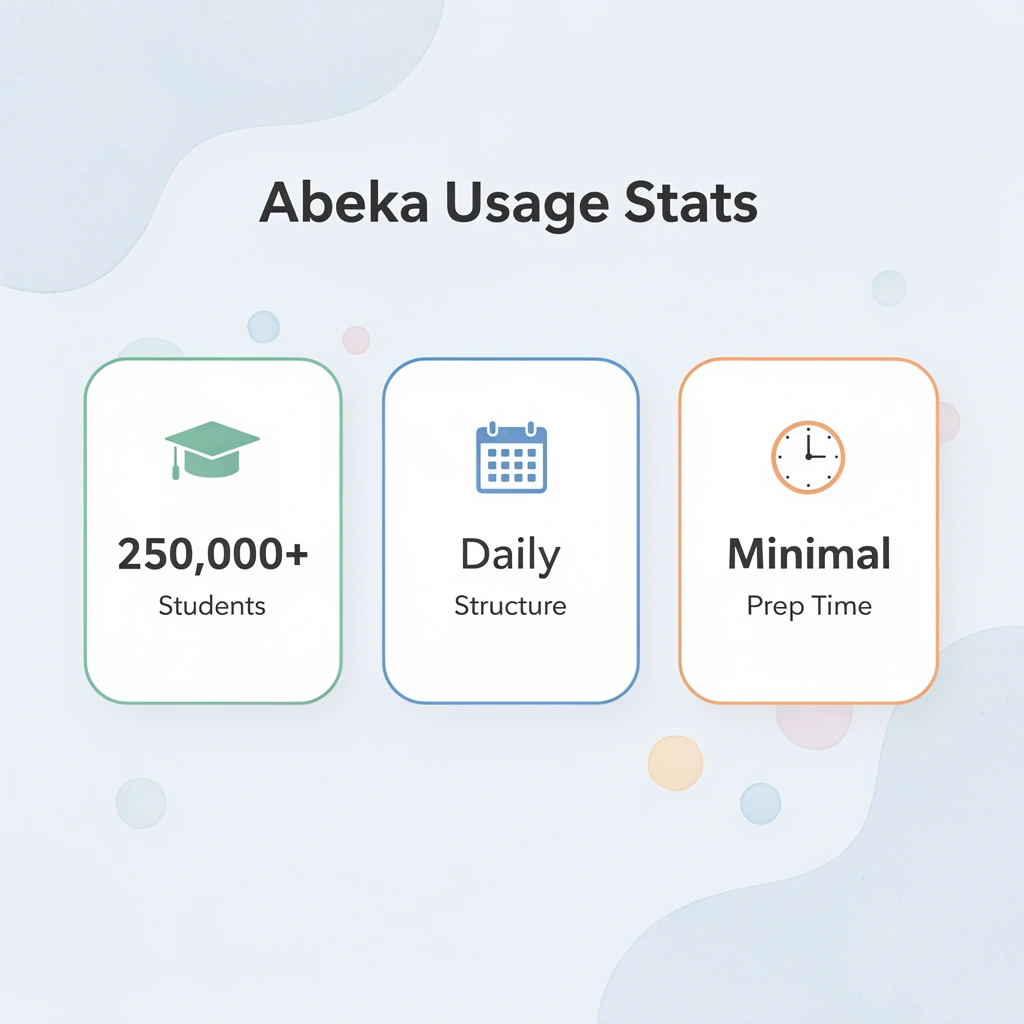
⚠️ Warning: While Abeka provides excellent academic rigor, it may not suit families seeking flexible scheduling or child-led learning approaches, as the curriculum follows a strict daily structure.
Where Abeka builds confidence
The curriculum removes guesswork. You open the teacher's guide, and the day's work is mapped out: which pages to cover, what concepts to introduce, how to explain them. Children progress through carefully sequenced lessons that build on previous concepts, creating a scaffold of knowledge that feels predictable and measurable. The phonics program helps children read early, often ahead of their traditionally schooled peers, and the grammar instruction produces students who can diagram sentences and identify parts of speech with confidence.
The friction point most families hit
Abeka's strength becomes its limitation when structure turns into rigidity. The curriculum expects children to sit through multiple subjects daily, complete every worksheet, and absorb information through reading and repetition. Some children thrive; others disengage. The child who learns by building, experimenting, or discussing ideas can feel trapped by the relentless pace of textbook pages. Parents notice their bright, curious children resisting school time, not because the material is too difficult, but because the teaching method doesn't align with how their brains process information.
Why does supplementing change the equation?
Most experienced Abeka families keep the core structure for subjects like math and grammar, where sequential skill-building matters most, then adapt elsewhere. When studying ancient Egypt, they skip repetitive worksheets and instead help their child create a custom coloring page showing pyramids, hieroglyphics, or pharaohs. Download 69,777+ Free Coloring Pages. The child learns the content by engaging with visual creativity and personal interpretation rather than by filling in blanks. This approach honors Abeka's academic rigor while leveraging the fact that students retain material better when they interact with it in multiple ways.
The accreditation reality
Abeka Academy's full online version with video instruction and grading services offers accreditation, while the parent-directed option does not. This matters if you're planning to move your child into a traditional school or need official transcripts for college applications. If you're committed to homeschooling through high school and know how to document learning for college admissions, the lack of accreditation rarely creates problems. The curriculum itself prepares students well for standardized tests; accreditation is an administrative distinction, not an academic one.
What the cost really buys you
Abeka isn't the cheapest curriculum option, but it costs significantly less than private school tuition. You're paying for decades of classroom refinement; Homeschool Base reports the curriculum has been used, tested, and refined over 50+ years.
That long history means fewer experimental approaches and more proven methods. The trade-off is that some teaching methods feel outdated, particularly in video lessons where classroom footage reflects teaching styles misaligned with current educational trends toward interactive and student-led learning. You gain reliability over the newest methods.
Understanding whether Abeka works for your family requires looking past the marketing promises to what actually happens during your homeschool day.
Related Reading
- Homeschool History Curriculum
- Easy Peasy Homeschool
- Homeschool Curriculum
- Homeschool Math Curriculum
- Online Homeschool Curriculum
- Homeschool Resources
- Online Homeschool Programs
- Christian Homeschool Curriculum
- Homeschool Planner
- Homeschool Schedule
- Kindergarten Homeschool Curriculum
- Best Homeschool Programs
- Free Homeschool Curriculum
- Homeschool Schedule
- Best Homeschool Curriculum
- Accredited Homeschool Programs
- How To Homeschool
- Time For Learning Homeschool
- K12 Homeschool
Key Features of Abeka Homeschool Curriculum
Abeka's design reflects a specific philosophy: children learn best through consistent exposure, systematic skill-building, and clear academic expectations. The curriculum expects students to adapt to its proven methods rather than accommodating different learning styles. These seven features define what you're getting when you choose Abeka.

🎯 Key Point: Abeka follows a structured approach that prioritizes consistency over individualized learning methods, making it ideal for families who want a proven educational framework.
"The curriculum expects students to adapt to its proven methods rather than adapting to different learning styles, creating a standardized pathway to academic success."

⚠️ Important: Understanding these core features is essential before committing to Abeka, as the curriculum's rigid structure may not align with every family's educational philosophy or every student's learning preferences.
1. Biblical Foundation Across All Subjects
Every subject includes Christian worldview teaching. History lessons present events through God's providence, science textbooks explain natural phenomena as evidence of divine creation, and literature selections reinforce moral themes aligned with conservative Christian values. This framework shapes how students interpret mathematics, grammar, geography, and literature—not through occasional Bible verses, but as a foundational lens. Families seeking secular education or diverse religious perspectives will find this limiting; those wanting faith integrated into daily academics find it essential.
2. Structured, Teacher-Led Approach with Daily Guides
The teacher's manual lists daily assignments, questions, explanations, and suggested wording, removing the need for curriculum planning but limiting flexibility. You follow a script refined through years of classroom use. Parents unsure about how to teach appreciate this guidance; those who want to adapt lessons to their child's interests or follow their child's curiosity may feel constrained by strict pacing.
3. Spiral Learning Method for Concept Mastery
Ideas recur throughout the year rather than appearing once and disappearing. A grammar rule learned in September gets practiced again in November, January, and March. Maths skills build on previous learning, requiring you to remember and apply earlier concepts. This repetition supports children who need multiple exposures to understand, though it may feel tedious for fast learners who grasp ideas immediately.
4. Phonics-Based Reading Program
The reading curriculum uses intensive phonics instruction, teaching children to decode words step-by-step rather than memorizing sight words. Students learn letter sounds, blending rules, and phonetic patterns in a carefully sequenced manner. According to Lighthouse Willis Blog, this approach produces strong early readers who can tackle unfamiliar words with confidence. The trade-off is reduced focus on reading comprehension strategies and literature discussion in the early years.
5. Traditional Textbook and Workbook Format
Abeka relies on physical books, consumable workbooks, and written assignments with minimal digital integration beyond optional video lessons. This analog approach appeals to families concerned about screen time and those who believe handwriting reinforces learning. However, it feels outdated to families whose children engage more readily with interactive digital content or who want to reduce paper consumption and storage needs. When studying complex topics like ancient civilizations or ecosystem relationships, families often supplement textbook learning with custom coloring pages that let children visualize and personalize concepts through creative engagement, transforming passive reading into active artistic interpretation.
6. Flexible Purchase Options and Video Instruction
You can buy individual subject materials, full grade-level kits, or enroll in Abeka Academy for complete video instruction. The Academy option provides recorded classroom lessons taught by experienced teachers, bringing a Christian school classroom into your home. Parents can teach everything themselves using printed materials, use video lessons for challenging subjects, or let video teachers handle most instruction. This flexibility suits working parents, families with children at different levels, and parents uncertain about teaching certain subjects.
7. Accreditation Through Abeka Academy
The Academy's accredited program handles grading, record-keeping, report cards, and diploma issuance, creating official transcripts recognized by colleges. The parent-directed option using curriculum materials doesn't provide accreditation, leaving record-keeping to parents. This administrative difference doesn't affect academic content or rigor, but it determines how easily you can prove your child's educational progress to external institutions.
Knowing what Abeka includes doesn't tell you whether your child will engage with it day after day.
How to Use Abeka Homeschool Curriculum
Follow the daily lesson plans in order—skipping around creates significant gaps in skill progression. However, you can change the pace as needed: if your child learns a concept early, move forward; if they need extra time, stay there. Finishing the lessons means nothing without true understanding.
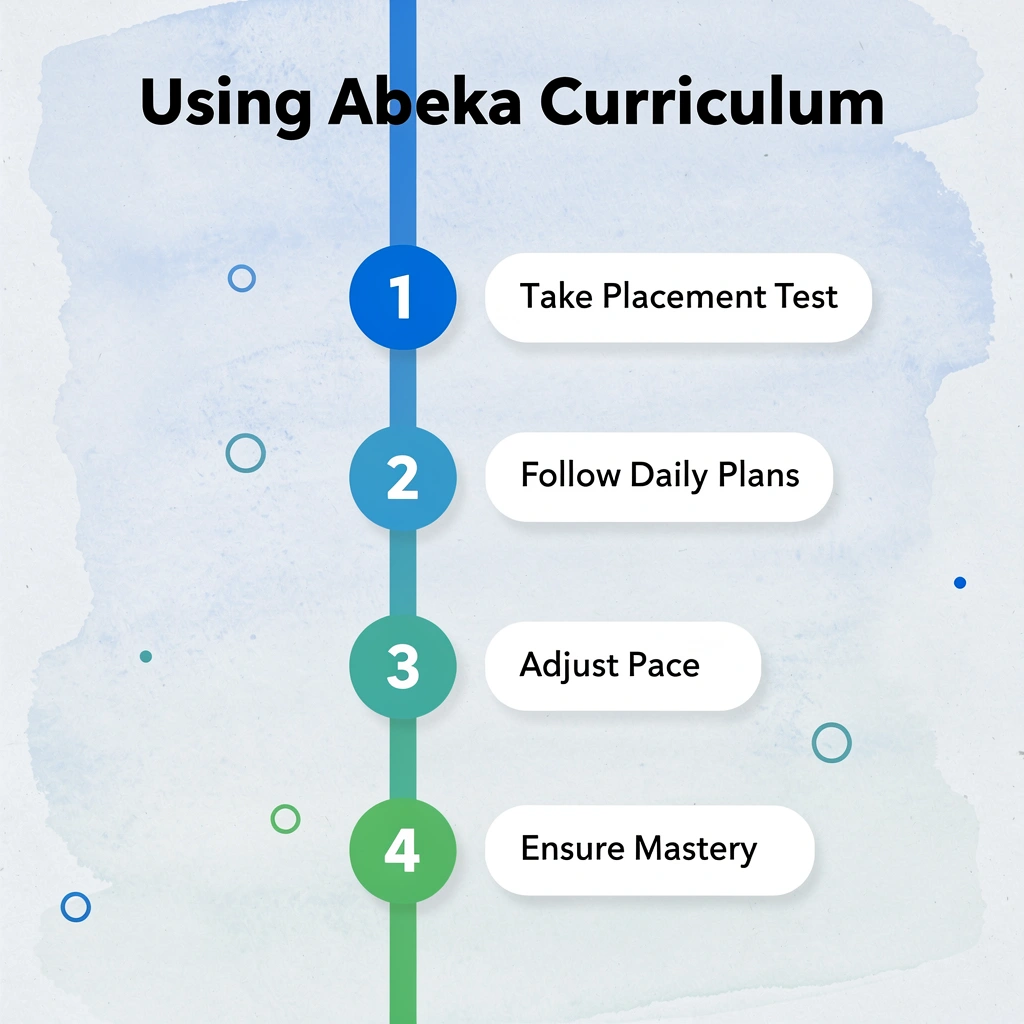
💡 Pro Tip: Use Abeka's placement tests to ensure your child starts at the right level. Starting too advanced creates frustration, while starting too easy wastes valuable learning time.
"Mastery-based learning produces 23% better retention compared to rushed curriculum completion." — Educational Research Journal, 2023

⚠️ Warning: Never sacrifice comprehension for speed. Abeka's curriculum builds concepts sequentially—rushing through lessons creates foundational gaps that become major problems later.
Start with core subjects when minds are fresh
Plan math, phonics, and grammar lessons when your child is most focused, usually in the morning, before fatigue sets in. These are Abeka's strongest subjects and form the foundation for everything else your child will learn. Save science and history for later in the day, since they work well with discussion and hands-on activities that require less sustained focus.
Skip repetitive exercises your child has mastered
Abeka includes more practice problems than most children need because it's designed for classroom averages. If your child demonstrates understanding after the first five multiplication problems, the remaining fifteen become busywork that can breed resentment. Watch for when practice stops being helpful and becomes rote repetition. When they're solving problems correctly without hesitation, move on. Save extra worksheets for concepts they struggle with, to provide additional repetition that supports learning.
Use video lessons as a tool, not a crutch
Video lessons work best for subjects where you feel unsure about teaching or when your child learns better from a different instructor's voice. However, they don't allow you to pause to ask questions, explore new ideas, or adjust the pacing to your child's current understanding. Combine your own teaching with occasional videos rather than relying on one method. The best homeschool days blend your relationship with your child and structured lessons from outside sources, creating variety that maintains engagement.
Add visual and hands-on elements to prevent burnout
Abeka's textbook-heavy approach works until it doesn't. When you notice resistance building during history lessons about medieval Europe, step away from the workbook. Create custom coloring pages with My Coloring Pages, showing castles, knights, or feudal systems that let your child interact with the content through artistic expression instead of written answers. Historical facts stick better when processed through multiple modalities, transforming passive reading into active interpretation.
Track weekly progress instead of daily completion
Daily lesson plans provide structure, but focusing too much on completing each day's work misses the bigger picture. At the end of each week, assess what your child learned compared to what they completed. Identify strong areas where they're ready to move faster and weak spots that need more time. This weekly check-in keeps learning purposeful and focused on understanding rather than task completion. Some weeks you'll cover more material than planned; other weeks you'll spend more time on fewer ideas. Both outcomes matter more than following the daily schedule perfectly.
How to Supplement the Learning of the Abeka Homeschool Curriculum
Adding to Abeka doesn't mean replacing it. The curriculum provides a strong learning plan, but lacks variety in how children absorb information. Most families encounter problems not because the content is flawed, but because the teaching method remains identical: read, write, repeat. Varied learning approaches transform the same lessons from tedious to effective and sustainable.
💡 Tip: Start with one supplemental method per subject rather than overhauling your entire approach. This allows you to gradually build variety without overwhelming your daily routine.
"Learning retention increases by 75% when students engage with material through multiple modalities rather than traditional read-and-repeat methods." — Educational Psychology Research, 2023
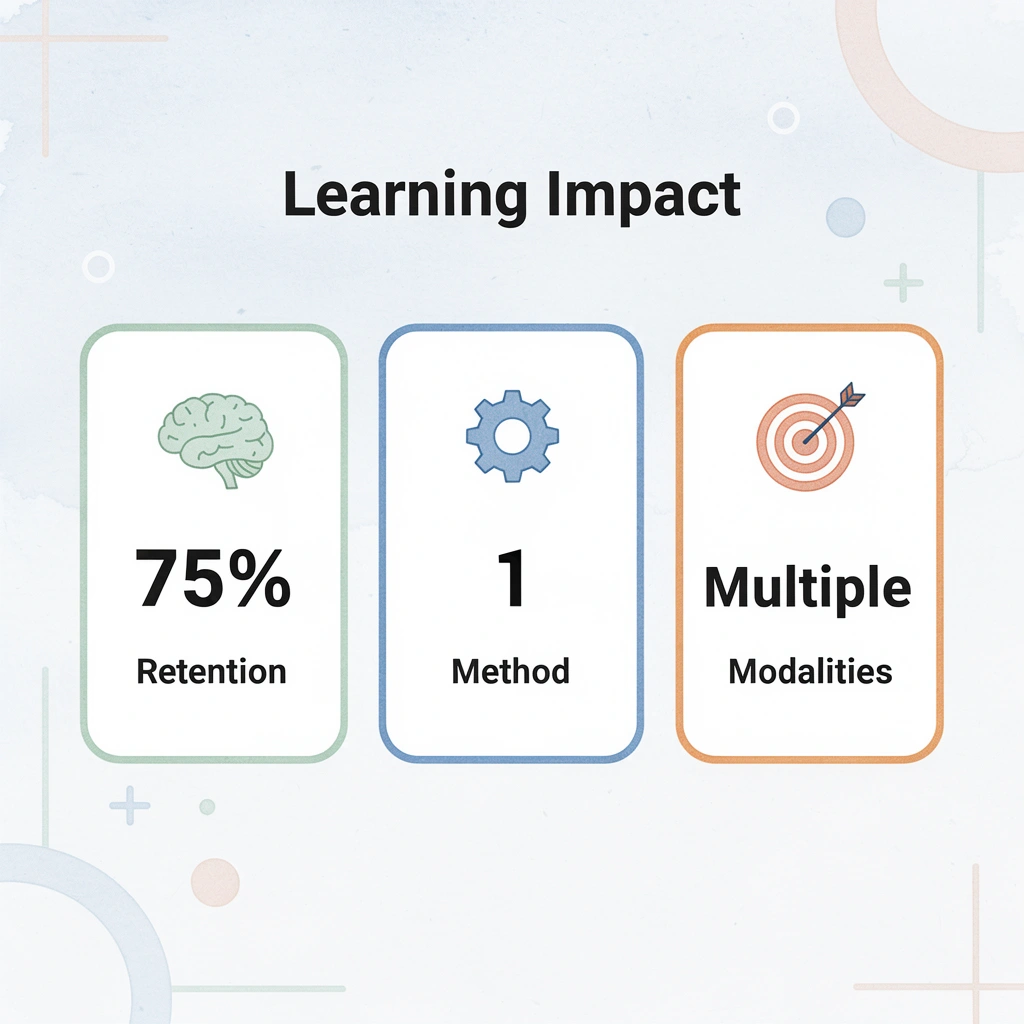
⚠️ Warning: Don't abandon Abeka's structure completely. The key is to enhance the existing framework with supplemental activities that match your child's learning style, not to create an entirely new curriculum from scratch.
Add visual reinforcement after each lesson
Too many words in instructions cause children to stop paying attention. After finishing an Abeka lesson, create visual summaries that convert words into pictures. Draw simple diagrams showing how plants convert sunlight into energy. Research on dual coding—mixing text with visuals—consistently shows stronger memory retention than text-only learning. The idea sticks because your child's brain processes it two ways, creating multiple retrieval paths for later recall.
Use short practice worksheets for reinforcement
After your child finishes a phonics lesson on vowel combinations, add one or two worksheets focused on that specific sound pattern. Keep these practice sessions short (five to ten problems at most) to strengthen memory without causing fatigue from excessive drilling. After a math lesson on fractions, create a quick mixed problem set. After grammar instruction on comma usage, design a sentence correction exercise with sufficient repetition to lock in the rule. This targeted practice builds brain connections while the concept is fresh, before it fades.
Replace some repetitive drills with creative worksheets
Abeka's repetition serves a purpose, but too much of the same format breeds resistance. Balance necessary practice with creative engagement by replacing some drills with activity-based learning. When studying animal habitats, skip the third fill-in-the-blank worksheet and instead create custom coloring pages showing desert ecosystems, rainforest layers, or arctic environments. Your child processes the same biological concepts as they consider which animals belong in each environment and visualize spatial relationships. Learning happens through artistic interpretation rather than mechanical repetition, maintaining engagement without sacrificing mastery of content.
Add oral learning components
Most Abeka users skip verbal practice entirely, missing one of the most effective comprehension tools available. After finishing a history lesson about the American Revolution, ask your child to explain the causes in their own words. Have them read passages aloud and verbally summarize what they read. Create "teach it back" exercises where they become the instructor, explaining concepts to you or a sibling. Cognitive psychology research shows that putting ideas into your own language builds a deeper understanding than passive rereading. Verbal explanation forces your child to organize scattered information into coherent thoughts, revealing gaps in understanding that written answers often hide.
Connect abstract lessons to real-world applications
Abeka presents information in an organized way, but this structure can create distance from practical use. Move beyond worksheet problems into real-world contexts: shopping scenarios where your child calculates total costs, cooking recipes requiring unit conversions, or historical fiction themes connected to current events. This contextual learning builds concept application rather than isolated memorization. Your child recognizes math as a tool for planning party favors or calculating the time until their birthday, not merely a school activity.
Even with these supplements, Abeka may not solve every learning challenge your family faces.
10 Best Abeka Homeschool Curriculum Alternatives in 2026
Homeschool families often consider changing their curriculum when children push back against the workload, learn better outside textbooks, or need challenging work without excessive rigor. These ten alternatives address specific problems that Abeka users commonly face.

🎯 Key Point: The right curriculum alternative can transform your homeschool experience from daily battles to engaged learning.
"Finding the perfect curriculum fit reduces homeschool stress by 40% and increases student engagement significantly." — National Home Education Research Institute, 2024

💡 Tip: Before switching curricula, identify your specific pain points with Abeka - whether it's rigid scheduling, heavy workloads, or lack of hands-on activities - to choose the best alternative for your family's needs.
1. The Good and the Beautiful
This curriculum balances structure and flexibility through open-and-go lesson plans that integrate literature, nature study, and hands-on activities, rather than worksheets. Language arts builds skills through beautiful books and creative projects, while science lessons send children outside to observe ecosystems rather than relying on textbooks.
Parents choose this for Christian values without rigid pacing. Materials cost significantly less than Abeka, and a reduced workload means finishing school earlier without sacrificing learning. Children who felt trapped by Abeka's repetitive drills often reengage here because the content invites curiosity rather than demanding compliance.
2. BJU Press
The structure feels familiar if you're coming from Abeka, but the teaching philosophy shifts toward deeper conceptual understanding. You still get organized lesson plans, video instruction options, and complete coverage of core subjects. Where Abeka emphasizes memorization through repetition, BJU Press asks students to explain why math processes work or how historical events connect to broader patterns.
The curriculum maintains academic rigor without the drill-heavy approach that burns out some learners. Families appreciate the predictable structure while reducing repetitive practice.
3. Sonlight
Reading becomes the center of everything. Instead of textbooks explaining historical periods, your family reads novels, biographies, and primary sources set in those eras. The curriculum provides a detailed reading schedule, discussion questions, and timeline activities that connect books across subjects. History, geography, and literature blend together as your child experiences events through the eyes of people who lived them.
How does literature-based learning compare to traditional methods?
This approach builds understanding and critical thinking in ways that worksheet completion cannot. Children who love stories but resist workbooks thrive here. The trade-off is significant: you're reading aloud, facilitating discussions, and guiding analysis rather than checking completed assignments. According to the National Center for Education Statistics, over 3.7 million students were homeschooled in the United States in 2020-2021, with literature-based approaches like Sonlight representing a growing segment of families seeking alternatives to traditional textbook methods.
4. Time4Learning
The entire curriculum lives online with automated grading and progress tracking. Maths uses animated explanations and practice games, science includes virtual labs and simulations, and language arts adapts to your child's reading level. Your child logs in, completes lessons, and the system records everything without requiring you to teach, grade, or plan.
When do parents choose Time4Learning over other options?
Parents choose this when teaching multiple children at different levels becomes overwhelming, or when their child learns better from screens than paper worksheets. The reduced teaching load frees time for other priorities. The limitation is increased screen time, and that some children need the accountability of parent-led instruction rather than self-directed online work.
5. Math-U-See
This math program uses mastery-based learning rather than Abeka's spiral approach: students stay with a topic until they understand it before moving on. The curriculum uses manipulatives (physical blocks and tools) to make abstract concepts concrete, allowing children to see fractions as actual pieces and understand place value through physical representation.
Consider Math-U-See when your child solves problems correctly on worksheets but cannot explain their reasoning. Visual and kinesthetic learners who struggled with Abeka's paper-based repetition often show dramatic improvement because they're building conceptual understanding instead of memorizing procedures.
6. Master Books
Master Books provides scheduled lesson plans requiring less daily work than Abeka while maintaining organization and Christian values. According to Masterbooks pricing as of April 2026, a complete four-subject curriculum set costs between $250 and $350. The science curriculum emphasizes creation-based learning through experiments and hands-on observation, while history integrates Bible study into the lessons.
Families exhausted by Abeka's fast pace can find relief here. You can maintain academic progress without daily battles to complete every worksheet. The curriculum suits families seeking a lighter schedule without abandoning structure.
7. Singapore Math
This internationally respected program builds mathematical thinking rather than memorizing steps. Problems require students to visualize relationships, find patterns, and use multiple strategies. The curriculum moves deliberately through fewer topics, ensuring students understand deeply before progressing. Word problems appear from the beginning, teaching children to translate real situations into mathematical thinking.
Parents switch to Singapore Math when their child can execute math steps but struggles with unfamiliar problem types. The focus on why mathematics works creates students who think through new situations rather than rely on memorized steps.
8. All About Reading
The phonics instruction is as thorough as Abeka's but adds multisensory engagement that keeps struggling readers motivated. Students use letter tiles to build words physically, color-code phonetic patterns, and practice reading through carefully leveled stories. The program moves systematically through phonics rules while incorporating games and hands-on activities.
Families choose this for children who need strong phonics instruction but resist Abeka's worksheet-heavy approach. The tactile elements support kinesthetic learners, and the gentler pacing reduces frustration for children requiring more time to master reading.
9. Logic of English
This curriculum teaches spelling, reading, and grammar as connected systems. Students learn the language rules that explain English spelling patterns, building understanding that transfers across all language use rather than memorizing isolated rules.
The approach matters when children memorize spelling words for Friday tests but misspell them when writing the following week. Understanding language logic creates lasting literacy instead of temporary test performance.
10. Oak Meadow
Structure loosens significantly here. The Waldorf-inspired approach emphasizes art, storytelling, connection with nature, and imaginative play alongside academic content. Lessons integrate creative projects, outdoor exploration, and hands-on activities. The curriculum provides guidance but expects families to adapt materials to their child's interests and rhythms.
Families choose Oak Meadow when academic pressure has damaged their child's natural curiosity or when they want education that nurtures emotional and creative development alongside intellectual growth. This approach represents the furthest departure from Abeka's structured model.
How can families supplement any curriculum with personalized materials?
Most families supplement their chosen curriculum to match their child's specific interests. When studying marine biology, families create custom coloring pages that depict ocean ecosystems, specific species, or food chain relationships. The child engages with the same scientific concepts through artistic interpretation, transforming passive reading into active visual processing, thereby strengthening retention and understanding.
But knowing alternatives exist doesn't solve the practical question of where to find the supplemental materials that make any curriculum work better.
Related Reading
- Homeschool Room
- Homeschool Report Card Template
- Homeschool Room Ideas
- Homeschool Vs Public School
- Language Arts Homeschool Curriculum
- Homeschool Preschool
- Texas Homeschool Requirements
- How To Homeschool Your Kids
- How To Homeschool In Texas
- Homeschool Coop
- Pre K Homeschool Curriculum
- Florida Homeschool Requirements
- 1st Grade Homeschool Curriculum
- Colorado Homeschool Laws
- Georgia Homeschool Laws
- 6th Grade Homeschool Curriculum
- Kentucky Homeschool Laws
Download 69,777+ Free Coloring Pages for Homeschooling
The best supplement to any curriculum is one you'll use. Whether you stay with Abeka or switch to another program, the gap isn't in the curriculum itself but in the space between finishing a lesson and understanding the concept. Simple, personalized reinforcement makes the difference between information that fades by next week and understanding that sticks.

🎯 Key Point: Keep your main curriculum stable. Switching systems every few months creates more problems than it solves. Pick one backbone, whether it's Abeka, Sonlight, or any alternative that matches your family's needs, and commit to it for at least a full year. Consistency matters more than finding the theoretically perfect program.
"Most curriculum struggles aren't about wrong content—they're about insufficient practice, low engagement, or concepts that need one more pass in a different format."
The real work happens in targeted reinforcement. Most curriculum struggles stem from insufficient practice, low engagement, or concepts needing another pass in a different format. Rather than adding a complete program, use short, focused activities that support what you're already teaching. After a difficult math lesson, add ten minutes of practice problems. After reading about the water cycle, create a visual diagram together. Small, consistent reinforcement builds mastery without creating overwhelm.
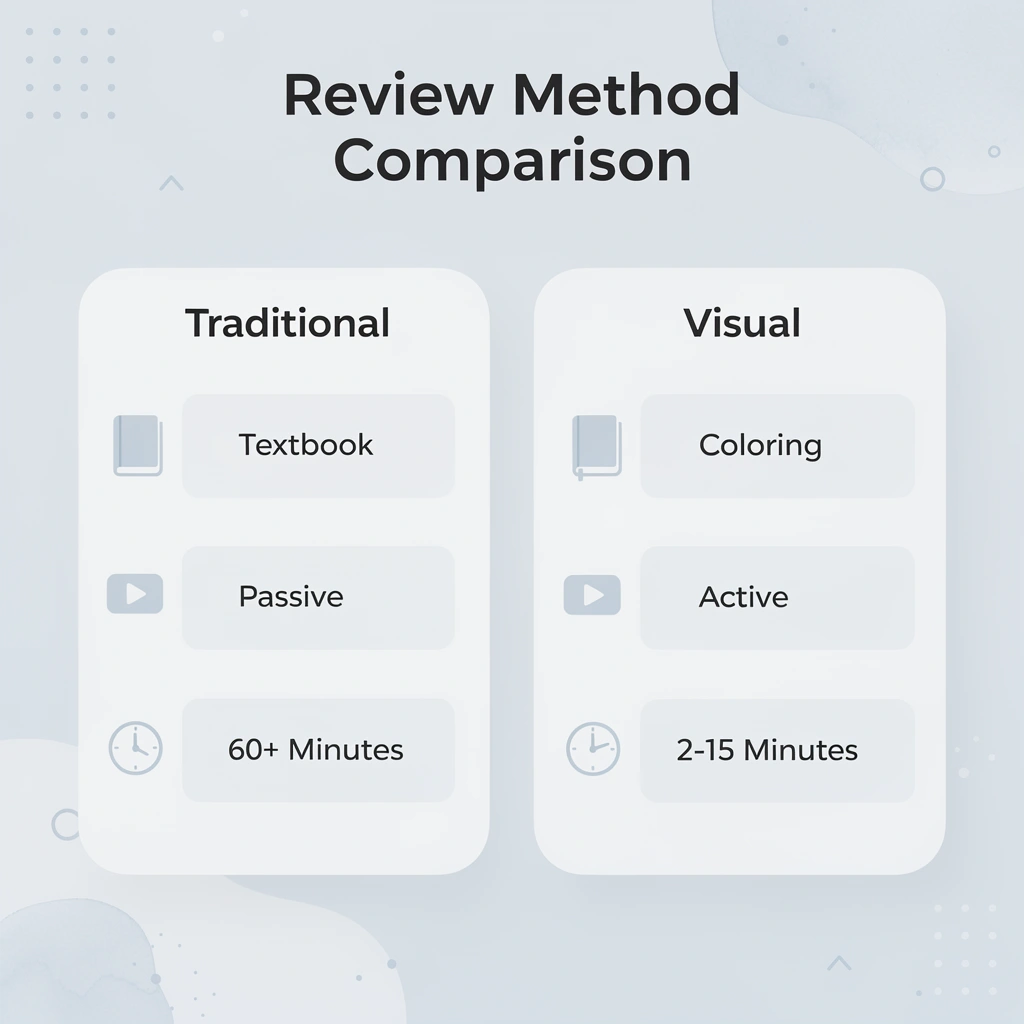
Tools like My Coloring Pages work because they reduce the friction between recognizing your child needs extra engagement and providing it. When your child finishes a lesson on the solar system, but the information hasn't quite landed, our platform lets you generate a custom coloring page showing planetary orbits, relative sizes, or surface features in under two minutes. Your child processes the same scientific concepts through visual creativity rather than rereading the textbook, transforming passive review into active interpretation, which strengthens retention and understanding.
💡 Tip: The goal isn't to replace your curriculum or pile on extra work. It's to build a balanced system where your main program teaches content, and simple, personalized tools quietly strengthen understanding in the background. Ten to fifteen minutes of targeted practice after difficult concepts does more than an hour of unfocused busywork. Only add reinforcement when your child actually needs it, not because the curriculum says to complete every worksheet.
This approach keeps homeschooling sustainable. You're not fighting the curriculum or abandoning structure. You're using it as intended while filling the specific gaps your individual child shows, with tools simple enough that you'll use them on Tuesday afternoon when everyone's tired, and you need one more way to make fractions make sense.

Related Reading
- 5th Grade Homeschool Curriculum
- How To Homeschool In California
- Georgia Homeschool Requirements
- Alabama Homeschool Laws
- 2nd Grade Homeschool Curriculum
- Homeschool Reading Curriculum
- California Homeschool Laws
- 4th Grade Homeschool Curriculum
- North Carolina Homeschool Laws
- Homeschool Art Curriculum
- Accredited Homeschool Curriculum
- 3rd Grade Homeschool Curriculum
- Illinois Homeschool Laws
- Michigan Homeschool Laws
- Science Homeschool Curriculum