10 Best 5th Grade Homeschool Curriculum in 2026
Discover the best 5th-grade homeschool curriculum options for 2026. My Coloring Pages reviews top programs to help you choose the perfect fit.

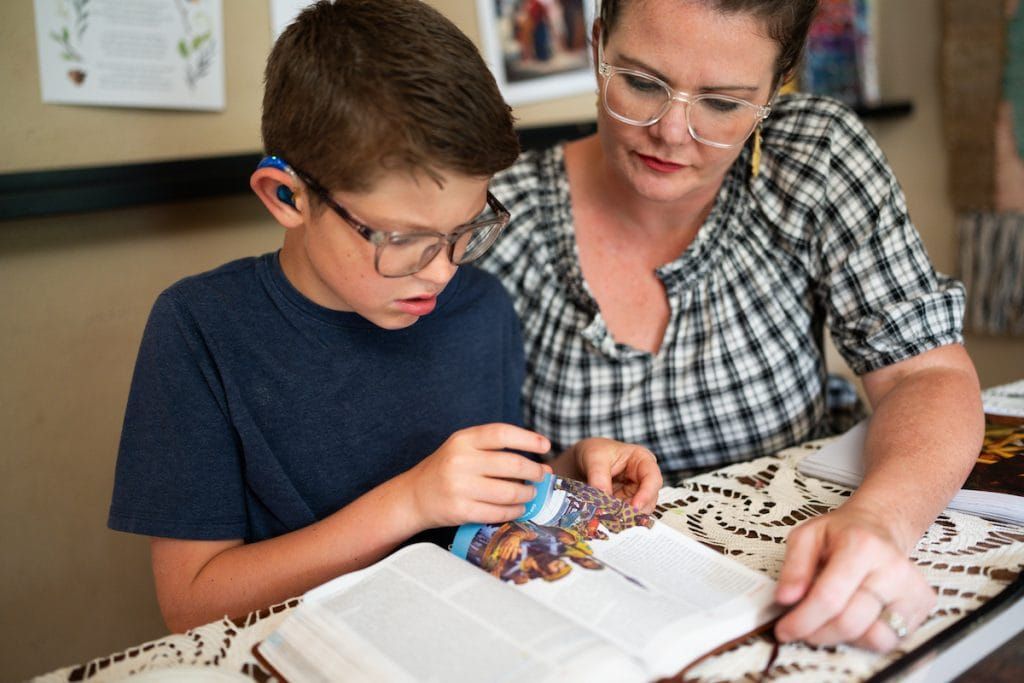
Fifth grade marks a crucial transition, as students move beyond foundational skills to tackle complex concepts across core subjects. Children at this level analyze literature with greater depth, solve multi-step mathematical problems, and conduct hands-on science experiments that build critical thinking abilities. Selecting the right 5th-grade homeschool curriculum requires balancing comprehensive coverage of language arts, mathematics, social studies, and science with engaging materials that keep students motivated. Parents need resources that align with their teaching approach while providing flexibility to adapt lessons for their child's unique learning style.
Supplementing the curriculum with visual learning tools helps reinforce abstract concepts and keeps students engaged throughout their educational journey. Creative activities transform challenging topics like fractions, geography, and scientific processes into memorable learning experiences that stick with students long after the lesson ends. Parents seeking fresh, budget-friendly materials to enhance their teaching can download 698,999+ free coloring pages, turning any subject into an interactive learning opportunity.
Summary
- On average, homeschooled fifth graders score at the 87th percentile on standardized tests, compared to the 50th percentile for public school students, according to the National Home Education Research Institute. This performance advantage appears consistently across math, reading, science, and social studies, with homeschooled students typically working one to one and a half grade levels ahead in core subjects. The gap persists even when controlling for variables like family income and parent education level.
- Parent teaching credentials don't predict homeschool success as strongly as most families fear. Academic outcomes for homeschooled students show a weak correlation with parents' educational attainment or formal teaching certifications. What drives results is consistency, engagement, and the ability to customize learning to match how a specific child processes information. A mother without a college degree who adapts instruction to her child's learning style often produces better outcomes than a credentialed teacher managing 28 students with varying needs.
- Homeschooled fifth graders accomplish equivalent learning in two to three focused hours compared to six or seven hours in traditional schools, where students spend less than 70 minutes in actual active learning, according to research. The efficiency comes from eliminating transitions, classroom management overhead, and waiting for peers to catch up or slow down. This time savings creates space for deep project work, real-world application, and exploration of topics that conventional schedules crowd out.
- The academic performance data tell only part of the story, as 87% of peer-reviewed studies on social and emotional development show that homeschool students perform statistically significantly better than those in conventional schools. Homeschooled students report lower anxiety and depression levels, participate in an average of two or more activities outside the home regularly, and develop self-directed learning skills through choosing between project approaches and structuring their own study time rather than following compliance-based classroom routines.
- Curriculum selection should start with observing how your child processes information in everyday moments, not with comparing publisher scope-and-sequence charts. A visually oriented fifth grader struggles with text-heavy workbooks regardless of content quality, while kinesthetic learners need physical manipulation of concepts rather than better explanations. The mismatch between the curriculum delivery method and a child's dominant learning pathway creates unnecessary friction that even expensive, comprehensive programs can't overcome with superior content alone.
- Generic worksheets and practice materials create the appearance of reinforcement without the engagement that makes learning stick, particularly when they treat all fifth graders as interchangeable rather than connecting required skills to individual interests. My Coloring Pages addresses this by offering over 698,999 free downloadable coloring pages that let homeschooling parents generate custom educational materials that match specific student fascinations, whether that's creating fraction practice through rocket-fuel calculations or ecosystem diagrams featuring favorite biomes.
Is Homeschooling Enough for 5th Graders?
Homeschooled 5th graders consistently outperform traditionally schooled peers, scoring significantly better than national benchmarks across core subjects. Research shows that homeschooling does not leave children academically behind, directly contradicting common concerns.

"Homeschooled students consistently outperform traditionally schooled peers across core academic subjects, exceeding national benchmarks." — National Home Education Research Institute
🔑 Key Takeaway: The data reveals that 5th-grade homeschoolers not only keep pace with traditional education but also exceed expectations in academic performance.
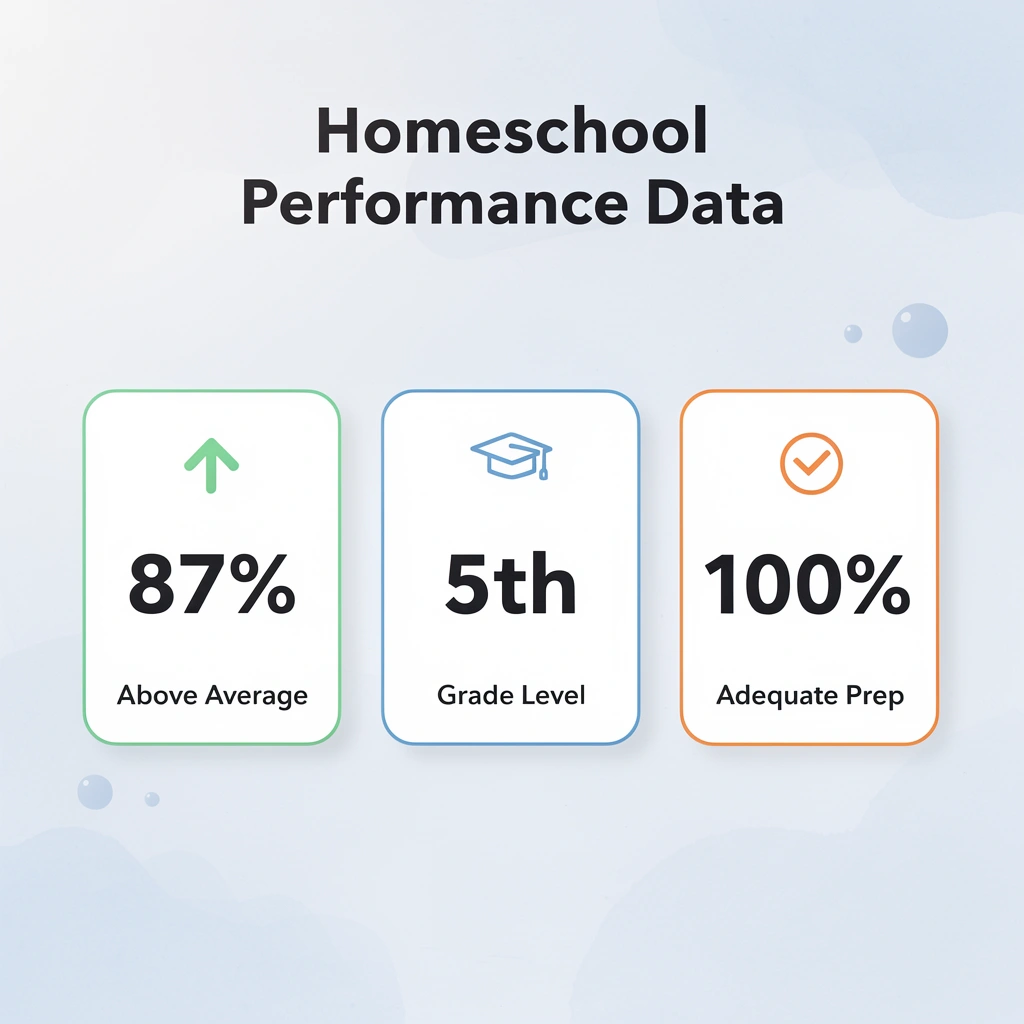
💡 Research Insight: These consistent results demonstrate that well-structured homeschooling provides adequate academic preparation for middle school students without the social limitations many parents fear.
The Performance Gap Works in Your Favor
According to the National Home Education Research Institute, homeschooled students score at the 87th percentile on standardized tests, compared to the 50th percentile for public school students.
This advantage shows up across math, reading, science, and social studies. The Rudner study, which examined 20,760 homeschool students, found consistent performance in the 70th to 80th percentile range across all subject areas. Fifth grade is where individualized instruction is most effective, building on basic skills while introducing more advanced concepts that benefit from personalized pacing.
Parent Credentials Don't Predict Success
Most parents worry that they lack formal teaching credentials or advanced degrees in every subject. Research shows this concern is unfounded. Academic outcomes for homeschooled students aren't strongly linked to parent education levels or teaching certifications. A mother without a college degree who teaches consistently and adapts to her child's learning style often achieves better results than a credentialed teacher managing 28 students with varying needs.
What actually drives homeschool success?
What drives homeschool success is consistency, engagement, and customized learning. When your fifth grader struggles with fractions, you can slow down and approach the concept from multiple angles until it clicks. When they grasp a history topic quickly, you can accelerate into deeper material without waiting for the rest of the class. This responsiveness matters more than formal pedagogy training.
The Grade Level Advantage
Studies show that homeschoolers perform one to one and a half grade levels ahead in math and reading, with 78-90% meeting or exceeding grade-level standards. Most homeschooled fifth graders work at a sixth- or seventh-grade level in at least some subjects.
This advancement occurs because homeschooling eliminates the wasted time inherent in traditional schooling. Your fifth grader avoids 20-minute class transitions, attendance delays, and material review. A focused three-hour homeschool day often delivers more actual learning than a seven-hour school day diluted by administrative overhead and one-size-fits-all pacing.
Peer-Reviewed Consensus
A meta-analysis of peer-reviewed studies found that 63% show homeschool students performing statistically significantly better than traditional school students. Independent researchers across multiple studies, different methodologies, and various student populations reach the same conclusion.
The 2020 meta-analysis published in Review of Educational Research found homeschoolers scoring around the 80th percentile on average. These studies control for variables like family income, parent education, and geographic location. The performance gap persists when comparing homeschoolers to public school students from similar socioeconomic backgrounds.
What Actually Drives Results
Expensive curriculum packages and elaborate learning materials don't predict success. What matters is regular, focused instruction tailored to how your child learns: some need visual demonstrations, others hands-on manipulation, and some grasp ideas best through reading and discussion.
When teaching the water cycle, generic worksheets treat every student identically. Platforms like My Coloring Pages let you generate custom coloring pages matching your child's specific interests, whether ocean ecosystems, weather patterns, or plant biology. You can create visual learning tools connecting abstract concepts to their existing interests, making material stick without expensive supplemental resources.
The Social Engagement Reality
Critics claim that homeschoolers lack socialization, but data from the National Home Education Research Institute show that 87% of homeschooled students regularly participate in two or more activities outside the home. They engage in sports leagues, music lessons, community theater, scout troops, and co-op classes, providing more diverse age mixing and real-world social contexts than age-segregated classrooms.
How do homeschooled children develop social skills differently?
Homeschooled children interact with younger kids, teenagers, adults, and elderly community members throughout their week, unlike traditional fifth graders who mainly engage with same-age peers in structured, supervised settings. They develop social skills in contexts that mirror adult life rather than the artificial hierarchy of school hallways.
The Flexibility to Address Gaps
When assessment shows a skill gap, you can address it immediately without shame. If your fifth grader struggles with multi-digit multiplication, you can spend extra time on place value concepts without the embarrassment of remedial help. If they're reading three grade levels ahead, you can provide appropriately challenging literature without bureaucratic restrictions.
Why does responsive teaching prevent larger deficits?
This responsiveness prevents small gaps from becoming significant deficits. Traditional classrooms advance on schedule regardless of student comprehension. Homeschooling allows you to ensure real understanding before building the next layer of knowledge.
But academic performance data tells only part of the story about what homeschooling offers fifth graders.
Related Reading
- Homeschool History Curriculum
- Easy Peasy Homeschool
- Homeschool Curriculum
- Homeschool Math Curriculum
- Online Homeschool Curriculum
- Homeschool Resources
- Online Homeschool Programs
- Christian Homeschool Curriculum
- Homeschool Planner
- Homeschool Schedule
- Kindergarten Homeschool Curriculum
- Best Homeschool Programs
- Free Homeschool Curriculum
- Homeschool Schedule
- Best Homeschool Curriculum
- Accredited Homeschool Programs
- How To Homeschool
- Time For Learning Homeschool
- K12 Homeschool
Benefits of Homeschooling 5th Graders
Homeschooling helps students develop critical thinking, problem-solving, and self-directed learning skills beyond test scores. According to the National Home Education Research Institute, 87% of peer-reviewed studies show homeschool students perform significantly better in social, emotional, and psychological development than conventional school students. These benefits are particularly valuable in fifth grade, when children transition from concrete to abstract thinking and form their identity as learners.
🎯 Key Point: The fifth-grade transition is a critical developmental window when homeschooling's personalized approach can have the greatest impact on a child's academic confidence and independence in learning.
"87% of peer-reviewed studies show homeschool students perform statistically significantly better in social, emotional, and psychological development than conventional school students." — National Home Education Research Institute
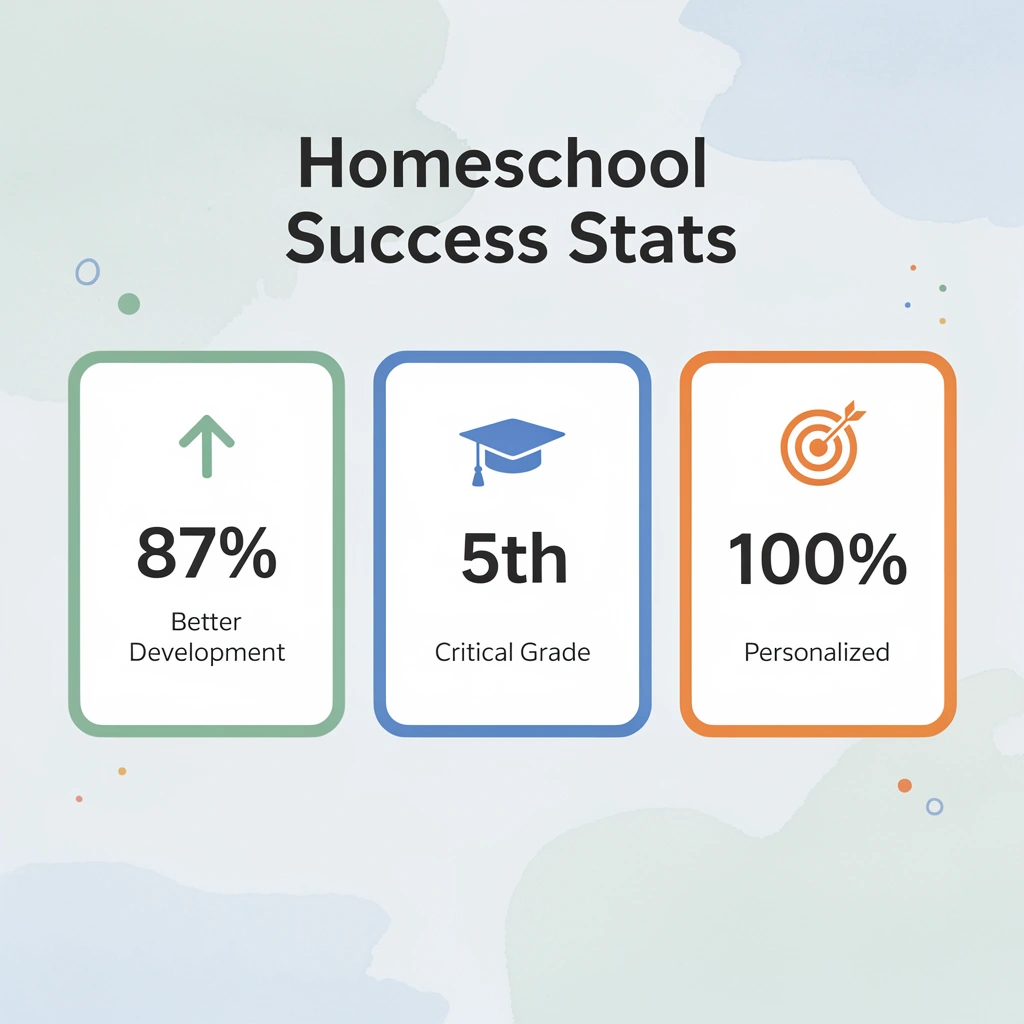
💡 Tip: Focus on building metacognitive skills during this crucial fifth-grade year - teaching your child how to learn, not just what to learn, will pay long-term dividends in their academic journey.
Efficient Use of Learning Time
Traditional school schedules consume six to seven hours daily, but research shows students spend less than 70 minutes learning. The remainder goes to transitions between classes, classroom management, announcements, and waiting. Homeschooled fifth graders accomplish the same learning in two to three focused hours because every minute addresses their specific needs.
This efficiency creates time for what traditional schedules push out: building a model of the solar system, interviewing a local business owner about economics, or reading ahead in a captivating book. Learning becomes expansive rather than compressed into artificial time blocks.
Real-World Problem Solving
Textbook exercises teach procedures; real-world application teaches judgment. When a homeschooled fifth grader analyzes whether their family should switch dental plans, they use percentages, compare costs, evaluate tradeoffs, and present recommendations that affect actual decisions. The maths becomes meaningful because the outcome matters.
This practical engagement develops critical thinking that worksheets cannot replicate. Your child learns to ask: What information am I missing? What assumptions am I making? How would I verify this? These habits transfer across subjects and into adult life.
Mastery Over Coverage
Traditional classrooms focus on covering material and moving through the curriculum on schedule, even if students don't fully understand it. Homeschooling prioritizes mastery, ensuring students understand concepts before moving on. If fractions don't make sense, you can teach them through cooking measurements, visual models, or physical objects until the concept clicks.
This flexibility prevents knowledge gaps that harm students who advance before they're ready. Your fifth grader builds on strong foundations instead of shaky ones, developing both confidence and genuine skill.
Deep Parental Engagement
Research shows that when parents are involved, children perform better in school and develop more robustly overall. Homeschooling integrates parental involvement into everyday learning rather than limiting it to homework help or conferences. You gain direct insight into where your child struggles, what excites their learning, and how they process new information.
Fifth grade is an important time when students often lose motivation in regular schools due to increased social pressures and more challenging material. Your presence provides your child with consistency, support, and quick feedback that sustains their engagement during this transition.
Practical Life Integration
Maths happens during grocery shopping when your child figures out unit prices. Science emerges as they cook, observing chemical reactions and heat transfer. History connects to current events through dinner table conversations. Learning becomes part of everyday life rather than confined to one place at set times.
This mix of learning helps children understand why they're learning ideas rather than how to do the steps.
How can you create personalized learning materials without artistic skills?
Many homeschoolers struggle to create visual learning materials matching their child's specific interests without art skills or expensive resources. Generic worksheets about photosynthesis don't engage a child fascinated by carnivorous plants. Our My Coloring Pages platform generates custom coloring pages from simple text descriptions, creating personalized educational activities that connect abstract concepts to what already captivates your child, whether dinosaurs, space exploration, or medieval castles.
Emotional and Mental Well-Being
Homeschooled students report lower anxiety and depression levels compared to traditionally schooled peers. Fifth grade brings increased academic pressure, social complexity, and self-consciousness in conventional settings. Homeschooling removes the constant social comparison, performance anxiety, and peer pressure that undermine confidence during these formative years. Your child learns in an environment where mistakes become teaching moments rather than sources of embarrassment and develops at their own pace without the stigma of being ahead or behind classmates.
Self-Directed Learning Skills
Traditional classrooms teach students to follow rules; homeschooling helps students take charge of their own learning. When your fifth grader chooses how to do a history project or plans their study time, they develop executive function and self-regulation: skills that matter more for long-term success than knowing specific facts.
This change from listening and receiving information to actively participating transforms how children think about learning. They stop asking "What do I have to do?" and start asking "What do I want to understand?"
Rapid Adaptation to What Works
Public schools require committee approvals, board meetings, and bureaucratic processes to change curriculum. If a maths program confuses your child, you can switch approaches that afternoon, preventing prolonged frustration and wasted learning time.
You can experiment with different methods until you find what works. Some fifth graders need manipulatives, others need visual diagrams, and some grasp concepts best through verbal explanation. Discovering your child's learning style takes days, not semesters.
Support for Diverse Learning Needs
Research shows that homeschooling works well for gifted students who need to move faster and struggling learners who need more help. By fifth grade, children often differ significantly: some are ready for algebra while classmates are still learning multiplication, and others need extra help with reading while classmates are reading chapter books.
Personalized instruction addresses these differences without the labeling, tracking, or social consequences of ability grouping in traditional schools. Your child receives exactly what they need without the identity implications of being "advanced" or "remedial."
Character and Purpose Development
Homeschooling lets you focus on character development alongside academics in a purposeful way. You can pause a history lesson to discuss ethical dilemmas, spend extra time on a science concept your child is curious about, or adjust the schedule when your child needs time to process difficult emotions. Learning becomes whole and connected rather than fragmented.
Fifth graders begin to form their sense of purpose and values. The flexibility to explore interests deeply, whether marine biology, creative writing, or mechanical engineering, helps them discover what matters to them before outside pressures limit their choices.
Implementing these benefits effectively requires understanding strategies that work for this age group.
How to Homeschool a 5th Grader Effectively
Match your approach to how your specific child learns, not how curriculum publishers think children should learn. Fifth graders learn differently: some understand math through visual patterns, others need physical objects to touch and move, and some need someone to explain it out loud, followed by time to practice on their own. The curriculum that works for your neighbor's child might completely frustrate yours.

🎯 Key Point: There's no one-size-fits-all approach to homeschooling a 5th grader. Your child's unique learning style should drive your curriculum choices, not the other way around.
"Children have different learning modalities, and when instruction matches their preferred style, academic performance can improve by up to 23%." — Educational Psychology Research, 2023
💡 Pro Tip: Spend the first 2-3 weeks of your homeschool year observing how your child naturally approaches problem-solving and information processing before committing to any specific teaching methods or materials.
Why should you first match the curriculum to the learning style?
Most curriculum shopping starts off on the wrong foot. Parents compare scope-and-sequence charts, read reviews, and check alignment with state standards before deciding whether the format suits their child's learning style. A visually oriented fifth grader struggles with text-heavy workbooks, regardless of the content's completeness. A kinesthetic learner needs hands-on activities, not better explanations.
How can you identify your child's natural learning patterns?
Watch how your child approaches new information outside formal lessons. Do they sketch diagrams when thinking through problems? Do they need to move while processing ideas? Do they ask for definitions first or prefer examples? These patterns reveal which curriculum structures will feel natural and which will create friction.
Build Structure Without Rigidity
Fifth graders need predictable routines but resist strict schedules. A consistent morning routine that starts with maths when their brain is fresh works better than rigid time blocks. Some days fractions click in twenty minutes; other days they need an hour plus a break before the concept solidifies.
The framework matters more than the clock. Math happens before lunch, reading and writing occupy the middle portion of the day, and science or social studies follows a physical break. This sequence creates reliability without the stress of racing against arbitrary time blocks when understanding requires more time.
Define Outcomes Instead of Completion
Traditional schooling measures progress by the number of pages completed and assignments turned in. Homeschooling lets you focus on what matters: can your child explain their reasoning, apply concepts to new situations, and demonstrate genuine understanding?
A fifth grader who completes thirty fraction worksheets but cannot explain why common denominators are necessary hasn't learned fractions; they've practiced procedures without comprehension.
How do you set clear learning targets for each subject?
Set clear learning targets for each subject. By the end of this unit, your child should be able to compare fractions with different denominators, convert between fractions and decimals, and solve word problems involving fraction operations.
How they get there matters less than whether they arrive with real understanding.
Use Reinforcement Tools Strategically
Learning without practice creates an illusion of understanding that fades within days. After teaching a concept, your fifth grader needs multiple opportunities to recall and apply it in varied contexts. This spacing effect, where practice occurs over time rather than all at once, significantly improves retention.
How can you make reinforcement more engaging than generic worksheets?
Regular worksheets provide practice but often fail to engage children. When your child loves astronomy, math problems about pizza slices feel disconnected from their interests. Platforms like My Coloring Pages let you create custom coloring pages that teach concepts through topics your child enjoys. A fifth grader learning about ecosystems can color detailed food-web diagrams of their favorite biome, connecting observations to learning without purchasing specialty workbooks.
Connect Learning to Physical Experience
Abstract ideas become real when fifth graders work with them using their hands. Cooking teaches fractions through measuring cups. Budgeting an imaginary shopping trip applies percentages and decimals. Building a model demonstrates geometric principles and spatial reasoning. These hands-on activities foster the deepest understanding.
The traditional separation between "real subjects" and "hands-on activities" creates artificial boundaries. When your child calculates ingredient ratios for a recipe, that's applied mathematics. When they research the historical context of a period they're interested in, that's primary-source analysis. Integration makes learning stick because the purpose becomes obvious.
Teach Across Subject Boundaries
Fifth graders benefit from seeing how knowledge connects across subjects. A unit on westward expansion combines geography, economics, ethics, and narrative writing. Studying the solar system incorporates maths (scale and distance), physics (gravity and motion), and research skills (evaluating sources about space exploration).
This integration mirrors how adults solve real problems: pulling from multiple areas simultaneously rather than compartmentalizing tasks. Teaching this way from fifth grade forward develops more flexible, transferable thinking.
Develop Independent Work Habits
Fifth grade marks the shift from dependence to independent learning. Your child should manage their own task lists, complete assignments without constant supervision, and check their work before seeking help. Show them how to break large projects into steps, use answer keys to correct their own mistakes, and distinguish between being truly stuck and simply uncertain.
Students who reach sixth grade unable to work without an adult present struggle with the increased independence that higher grades require. Building executive function skills now prepares them for middle school and beyond.
Include Creative and Physical Activities
Art, music, and physical education develop different neural pathways, provide processing breaks that improve retention, and reveal strengths that traditional academics miss. A fifth grader who struggles with written expression might excel at visual storytelling; one who finds sitting still difficult might think clearly while moving.
These subjects sustain motivation through challenging academic periods. When fractions feel impossible, success in art class or physical skill development maintains confidence and engagement with learning.
Track Progress Simply
Complicated record-keeping systems create extra work without improving results. A simple weekly checklist of concepts covered, a folder of work samples, and short notes about what worked well or caused confusion provide sufficient documentation. The tracking helps you identify patterns and gaps, not satisfy external authorities.
Review these records monthly. If your fifth grader consistently struggles with a particular problem type, it signals a foundational gap that requires attention. If they're moving through material easily, they're ready to progress faster. The data lets your teaching respond to your students' needs rather than follow a predetermined plan.
Lead With Curiosity, Not Coverage
The most effective lessons begin with questions that spark genuine interest rather than announcements of what you'll cover. Instead of "Today we're learning about ecosystems," try "What would happen if every bee disappeared tomorrow?" The question creates tension that the lesson resolves, turning passive reception into active investigation.
Fifth graders retain natural curiosity. When you tap into that wonder, teaching becomes easier because you work with their motivation rather than against their resistance.
Choosing materials that support this approach requires understanding what separates an effective curriculum from expensive shelf decoration.
How to Choose the Right 5th Grade Homeschool Curriculum
Watch how your child takes in information during everyday moments. Notice whether they draw diagrams when explaining thoughts, walk around while thinking through problems, or need spoken examples before written work. These patterns reveal their dominant learning pathway. Curriculum that matches this pathway feels natural; materials that don't match create unnecessary struggle.

A curriculum marketed as complete or rigorous becomes ineffective if it delivers content through channels your child doesn't use. Visual learners struggle with text-heavy workbooks regardless of quality. Kinesthetic learners need to physically engage with concepts rather than receive clearer explanations.
Identify Your Child's Natural Learning Channel
Watch what happens when your fifth grader encounters something new outside structured lessons. Do they immediately search for videos or diagrams? Do they talk through their reasoning aloud before writing anything down? Do they need to build, touch, or move objects to understand spatial relationships? These preferences aren't weaknesses that need fixing—they're how your child's brain works. When you use these strengths, learning happens faster and sticks better. Curriculum selection should build on these strengths rather than forcing your child to adapt to a single teaching method.
Match Content to Genuine Interest
Ask what topics make your child lose track of time. Do they read extensively about ancient civilizations, space exploration, or animal behavior? Do they build detailed structures, create drawings, or write stories independently?
Interest drives engagement more powerfully than instructional design. A fifth grader passionate about marine biology will tackle complex reading and research when studying ocean ecosystems, but will resist the same skill development through generic passages.
Align With Your Teaching Approach
Your homeschooling philosophy shapes which curriculum structures will feel sustainable versus exhausting. Traditional textbook-based programs require consistent daily teaching and guided practice. Child-led approaches need rich resource libraries and parental comfort with emergent learning paths. Eclectic methods demand skill in identifying quality materials across multiple publishers.
The curriculum you choose must match your capacity to implement it consistently. A brilliant program requiring two hours of intensive parent instruction daily fails if your schedule allows only thirty focused minutes.
Assess Time Requirements Realistically
Some curricula require minimal supervision, while others demand active teaching and immediate feedback. A mismatch between curriculum demands and available time creates daily friction.
Calculate your reliable, focused instructional time. If you have two concentrated morning hours, choose materials that deliver maximum learning in that window. For fragmented schedules, select a curriculum designed for modular completion.
Set Budget Parameters Without Guilt
Expensive all-in-one programs promise convenience through bundled materials and structured lesson plans. Budget-conscious approaches using library books, free online resources, and targeted workbooks produce identical outcomes when implemented thoughtfully. The connection between cost and results is weaker than curriculum companies suggest.
Figure out what you can spend without financial stress, then optimize within that constraint. A $200 program you can afford beats a $1,500 package that creates budget anxiety.
Customize for Specific Learning Needs
Every fifth grader brings different strengths, challenges, and processing speeds to their education. Some need to accelerate in maths while requiring extra help with phonics. Others read three grade levels ahead but struggle with writing. Some can focus for ninety-minute blocks; others need to move around more frequently.
The best curriculum lets you make changes without replacing everything. Look for programs that offer placement tests to identify what students know rather than assume all fifth graders are at the same level, and modular structures that let you move faster in some subjects while giving extra time to others.
Verify Core Subject Coverage
A complete fifth-grade curriculum covers reading comprehension and literary analysis, writing in different formats, mathematical reasoning, including fractions and decimals, science inquiry and experimentation, and social studies, covering geography and historical thinking.
Make sure materials develop these skills through real use: your child should practice explaining their thinking, defending conclusions with evidence, and applying skills to new situations, not completing exercises.
What are the benefits of all-in-one versus mix-and-match curricula?
All-in-one curricula offer administrative simplicity and a cohesive scope and sequence. Mix-and-match approaches let you select the strongest program for each subject, matching different learning needs across domains. Many successful homeschoolers use structured programs for subjects requiring sequential skill building, such as maths, while taking literature-based or project-based approaches to history and science.
The decision depends on whether consistency across subjects or optimization within subjects matters more for your situation. Neither path is inherently better, but understanding this tradeoff prevents defaulting to convenience when customization would serve your child better.
How can you personalize learning materials for better engagement?
Traditional curriculum often provides generic practice activities disconnected from what interests your fifth grader. When studying ecosystems through standard worksheets, a child who loves rainforests completes the assignment without genuine investment.
Platforms like My Coloring Pages let you create custom coloring pages that match specific interests, turning required concepts into personalized learning tools. A student can color detailed food web diagrams featuring their favorite biome, transforming abstract ecological relationships into visually engaging content that strengthens memory.
Built-in Experimentation
You won't pick the perfect curriculum on the first try. After four to six weeks of regular use, assess how well it's working. If your child continues to struggle despite genuine effort, or if lessons run from 30 to 90 minutes, the curriculum likely doesn't match your child's learning style or skill level.
Homeschooling's flexibility lets you make mid-year changes that regular schools cannot accommodate. Switching approaches when something isn't working prevents wasted months and accumulated frustration.
Include Your Child's Perspective
Fifth graders can explain what helps them learn and what confuses them. Ask them to review sample lessons from programs you're considering and identify which formats feel easy to understand versus hard to follow. Let them have input on topics they want to explore.
This involvement increases their care and motivation while demonstrating self-awareness as learners. Children who help pick the curriculum stay more engaged because the materials reflect their interests, not solely parental preferences.
Related Reading
- Homeschool Room
- Homeschool Report Card Template
- Homeschool Room Ideas
- Homeschool Vs Public School
- Language Arts Homeschool Curriculum
- Homeschool Preschool
- Texas Homeschool Requirements
- How To Homeschool Your Kids
- How To Homeschool In Texas
- Homeschool Coop
- Pre K Homeschool Curriculum
- Florida Homeschool Requirements
- 1st Grade Homeschool Curriculum
- Colorado Homeschool Laws
- Georgia Homeschool Laws
- 6th Grade Homeschool Curriculum
10 Best 5th Grade Homeschool Curriculum in 2026
The programs below represent different teaching philosophies, delivery methods, and cost structures. Identify which approach aligns with how your fifth grader learns, what you can sustain, and your budget.
These ten options span online platforms requiring minimal parent teaching, literature-based programs demanding active discussion, traditional textbook systems, and creative experiential models.
1. Time4Learning
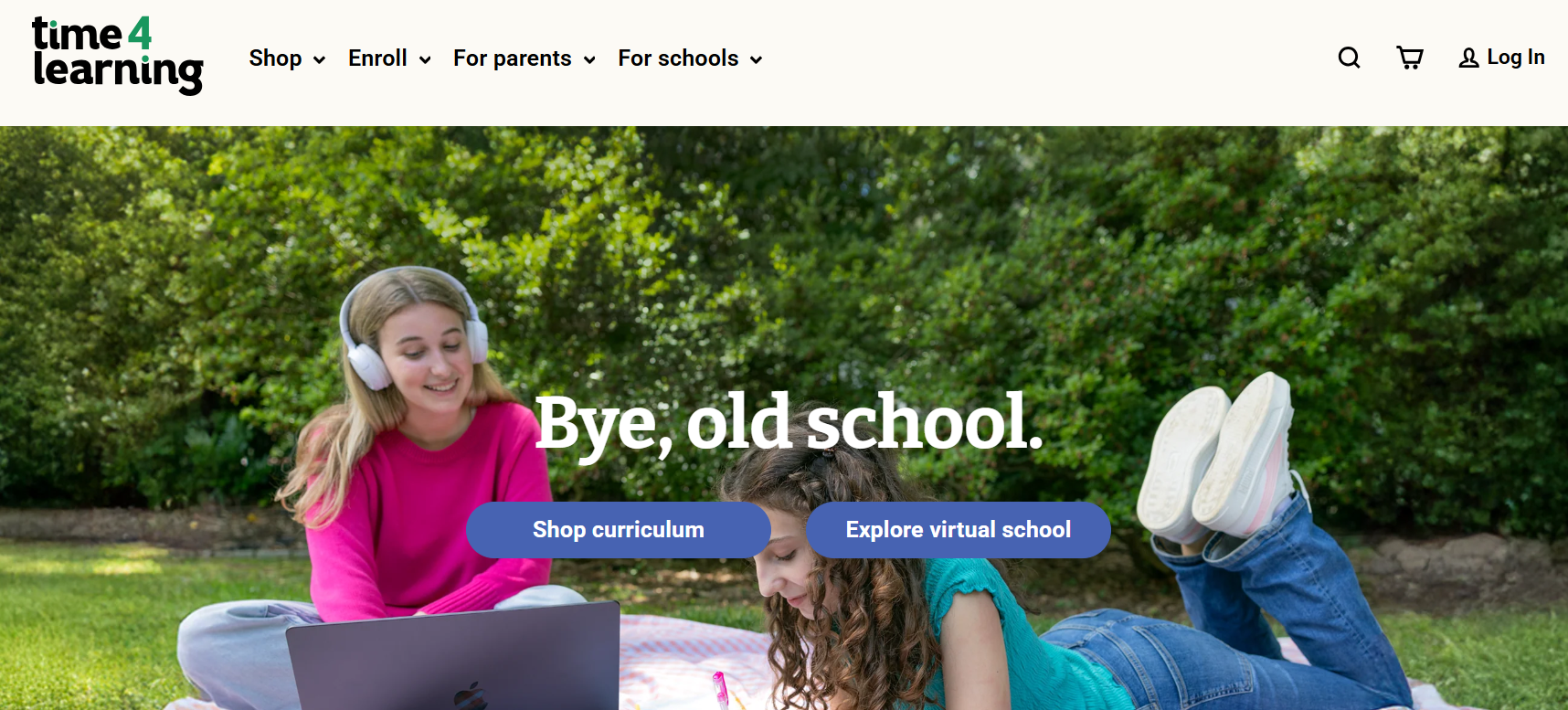
This online platform teaches core subjects through video lessons, interactive activities, and automatic grading. Fifth graders progress through maths, language arts, science, and social studies at their own pace. The system tracks progress and adjusts difficulty based on student performance.
How does Time4Learning support independent learning?
The structure helps parents whose children need to work productively without constant supervision. Your fifth grader logs in, follows the lesson sequence, completes assignments, and receives immediate feedback—you review progress reports instead of teaching every concept directly.
What are the potential drawbacks of screen-based learning?
The tradeoff: screen time adds up fast. A child spending three hours daily on Time4Learning has little chance to work with concepts hands-on or engage in physical activity during learning. You'll need to supplement with offline projects, physical movement, and non-digital reading to balance it out.
Best for families where parents work from home and need their fifth grader engaged in structured learning with minimal interruptions for help or directions.
2. Sonlight

This literature-based curriculum builds history, science, and critical thinking through carefully selected books instead of textbooks. Fifth graders read historical fiction, biographies, and informational texts while parents facilitate discussions using detailed instructor guides.
How does this approach develop deeper learning?
This approach helps children understand complex ideas more deeply than workbooks allow. They learn through stories, retain information because it's embedded in narrative, and practice thinking skills through guided conversation.
What level of parent involvement is required?
Parent involvement isn't optional. You're reading aloud, asking discussion questions, and connecting themes across multiple books. The time investment is higher than for self-directed programs, but the intellectual engagement yields stronger retention and more sophisticated thinking.
Families who love reading together and prioritize discussion-based learning find that this approach transforms their homeschool from a focus on task completion to genuine intellectual exploration.
3. BookShark
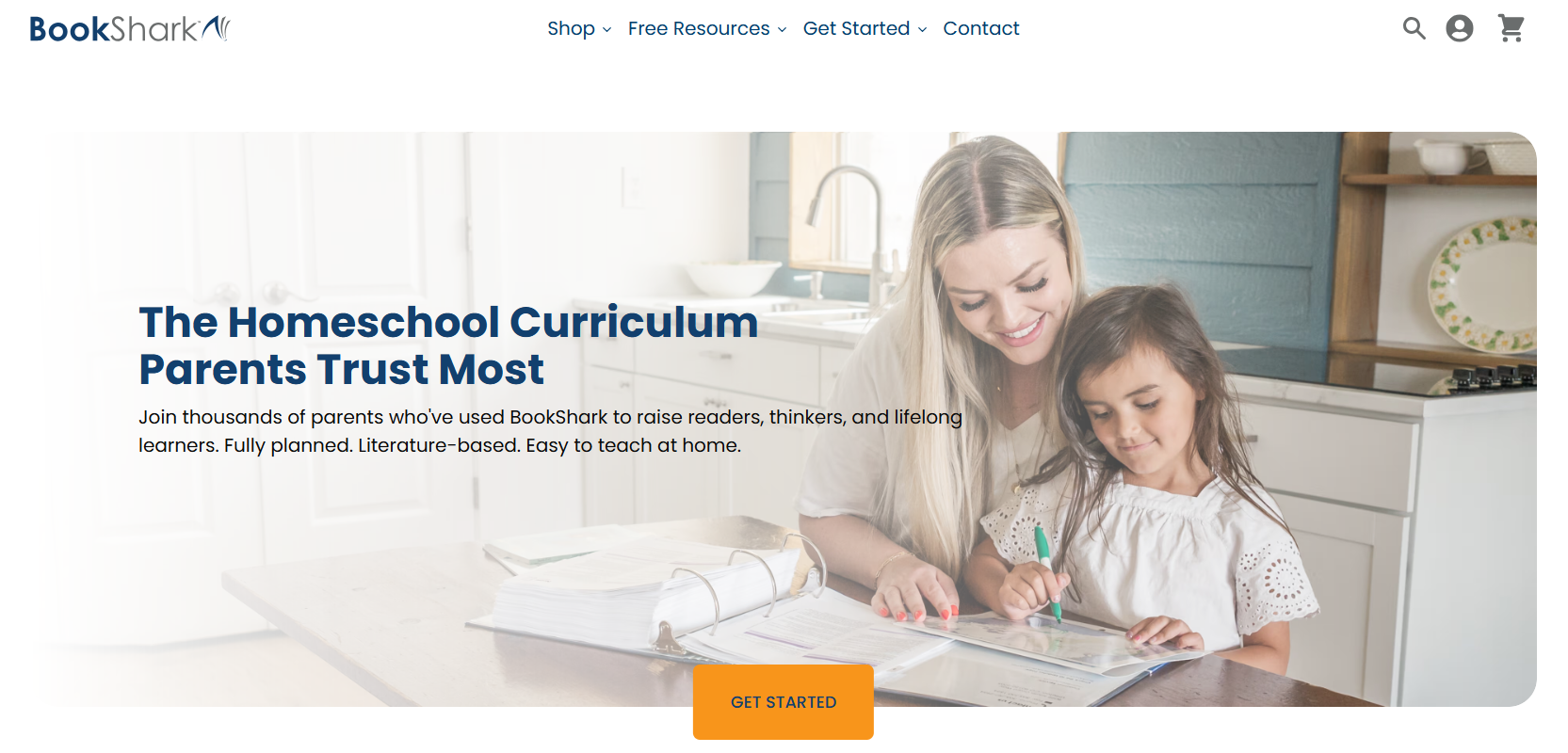
This secular alternative to Sonlight follows the same literature-based philosophy without religious content. Fifth graders learn through real books, hands-on activities, and integrated subjects that reflect diverse worldviews and scientific perspectives.
What subjects does BookShark cover for fifth grade?
The curriculum covers all core subjects with an emphasis on reading comprehension and critical analysis. Writing assignments connect to the books students read. Science includes experiments and observation activities. History unfolds through multiple perspectives rather than single narratives.
How much parent involvement does BookShark require?
Like Sonlight, this requires active teaching: helping students learn through conversation, guiding projects, and making connections across subjects rather than having them work independently through workbooks.
Best for families seeking literature-based learning without Christian content shaping book selections and discussion questions.
4. BJU Press Homeschool
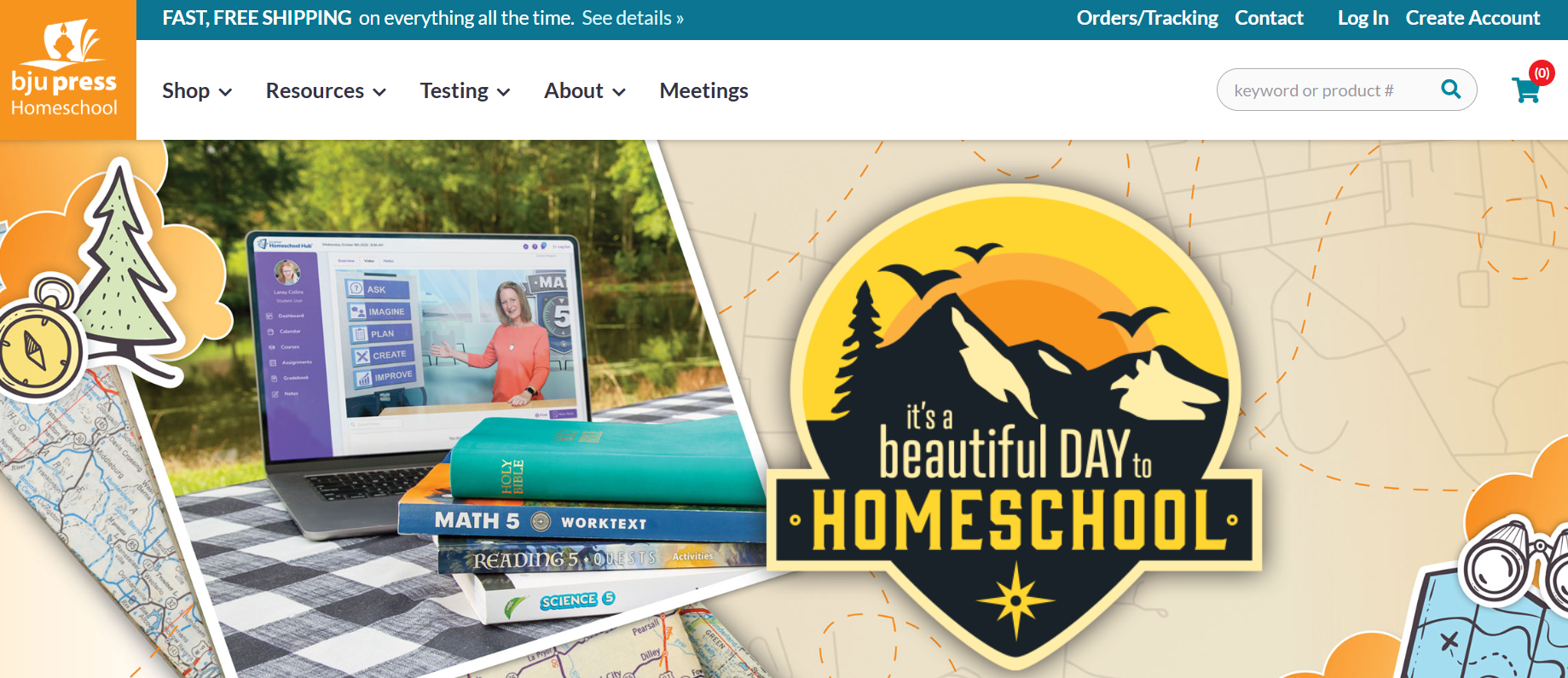
This traditional textbook system with optional video lessons replicates classroom-style teaching at home. Fifth graders work through organized lessons covering advanced skills in fractions, multi-paragraph writing, and scientific inquiry, each with clear learning goals.
What makes this approach appealing to families?
The predictability appeals to children who thrive with routine and parents seeking clear daily guidance. Teacher manuals explain concepts step-by-step, student workbooks provide ample practice, and video options let students learn from professional teachers when parents feel less confident.
How does the structured format affect flexibility?
You have less flexibility than literature-based or eclectic approaches. You follow a predetermined scope and sequence designed for typical fifth-grade progression. Acceleration requires purchasing higher-grade materials, while slowing down means falling behind schedule.
Parents seeking school-like structure without traditional enrollment find this approach provides the familiarity and clear expectations they need.
5. LIFEPAC
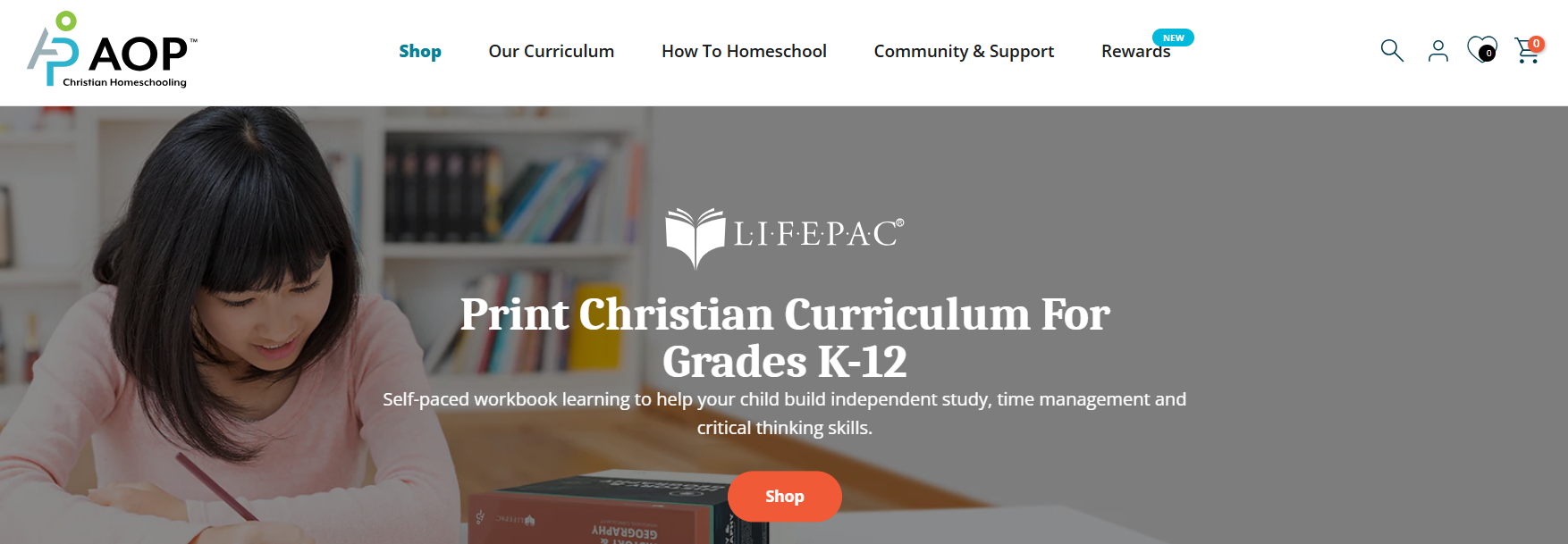
These workbooks allow fifth graders to progress independently through separate units in each subject. Students read instructions, complete exercises, and take tests to demonstrate understanding without requiring a parent to teach every lesson.
What are the benefits of this independent format?
This format supports time management and self-direction. Your child can see exactly what needs to be done, work at their own pace, and feel accomplished upon finishing each unit. Progress is easy to see and measure, which builds responsibility.
What are the potential drawbacks?
The limitation: interaction stays minimal. Students aren't discussing ideas, conducting experiments, or creating projects, only reading and completing written exercises. For children who need movement, conversation, or hands-on activities to understand concepts, this format feels restrictive.
Which students thrive with this approach?
Best for independent learners who prefer working alone, like clear completion markers, and don't need extensive discussion or hands-on practice to grasp new material.
6. Apologia

This science-focused publisher creates hands-on curriculum that encourages curiosity through experiments, nature study, and detailed observation. Fifth graders test hypotheses, record results, and draw conclusions from their own investigations rather than reading about concepts passively.
How does the notebooking approach work?
The notebooking approach has students documenting their learning through drawings, written explanations, and organized observations rather than traditional worksheets. This develops scientific thinking and documentation skills while accommodating different learning styles.
What materials and time commitment are required?
You'll need to buy materials for experiments and spend time doing investigations together. This requires you to take an active part, watch over experiments as they happen, and discuss the results.
What subjects does Apologia cover?
Apologia doesn't provide a complete curriculum for all subjects. You're choosing this for science instruction while selecting separate programs for maths, language arts, and social studies.
7. Homeschool Complete
This all-in-one system puts every subject into a single, organized package with literature-based instruction and clear daily schedules. Parents get everything they need for the full year without coordinating with multiple publishers or creating lesson plans.
What are the main benefits of complete curriculum packages?
The convenience reduces decision fatigue: you're not researching which math program pairs with your history curriculum or whether your science materials match students' developmental level. Someone has already made those choices and integrated the subjects into one plan.
What limitations should parents consider?
Customization becomes harder when everything is bundled together. If your fifth grader excels in maths but struggles with reading, you cannot easily swap out one subject without disrupting the integrated structure.
Best for parents overwhelmed by curriculum choices who value simplicity and cohesion over perfect optimization for their child's specific needs.
8. Oak Meadow
This project-based curriculum emphasizes learning through doing rather than traditional academics. Fifth graders explore ideas through art projects, hands-on activities, and integrated units that connect multiple subjects around central themes.
What type of child thrives with this approach?
This approach works well for children who dislike strict structure and learn best through hands-on exploration. Instead of maths worksheets, they might build a scale model requiring measurement and calculation. Rather than answering comprehension questions, they create pictures or visuals depicting the story.
How does the daily structure work?
The traditional structure disappears here. You're not following textbook chapters or checking off daily assignments. Instead, you're helping students work on open-ended projects and trusting that deep engagement with the material leads to learning.
Families comfortable with non-traditional education and children who shut down under rigid academic demands find this approach reignites curiosity and engagement.
9. Moving Beyond the Page

This unit study curriculum serves gifted or advanced learners who need intellectual challenge beyond their grade level. Students engage with complex texts, critical-thinking activities, and topics explored in depth that the standard curriculum does not cover.
How does the curriculum integrate multiple subjects?
The integration crosses subject boundaries naturally. A unit on ancient civilizations includes reading primary sources, calculating with historical number systems, conducting science experiments using period-appropriate technology, and creating detailed projects that demonstrate understanding.
What level of challenge should parents expect?
The intensity level runs high. Students analyze, break down, and create at levels demanding significant thinking effort. For children who coast through typical fifth-grade work, this provides necessary challenge. For those working at grade level, it may be overwhelming.
Best for intellectually curious children who find regular schoolwork boring or too easy, and parents prepared to support advanced learning.
10. Khan Academy
This free online platform offers video lessons and practice exercises primarily for maths, with some content in other subjects. Fifth graders work through concepts at their own pace and receive immediate feedback on practice problems.
What are the benefits of using Khan Academy?
You can get quality instruction and unlimited practice without spending hundreds of dollars on a curriculum. For families with tight budgets or those supplementing other programs, Khan Academy offers exceptional value.
What limitations should you consider?
The limitation: it's not a complete curriculum. You'll need separate resources for comprehensive language arts, writing instruction, and social studies. Khan Academy works best as part of a larger educational plan.
How can you create personalized learning materials?
Regular science coloring worksheets rarely match what your specific fifth grader enjoys. A child who loves volcanoes might have to color a generic plant cell diagram without genuine interest.
Platforms like My Coloring Pages let you create custom coloring pages from simple text descriptions, making personalized learning tools that connect what students need to learn with what they love. Our platform helps your student color detailed cross-sections of volcanic formations while learning about geological processes, turning abstract earth science into something visually engaging that aids retention. This eliminates the need for specialty workbooks that gather dust after one unit.
How do you match curriculum to your child's learning style?
Online platforms like Time4Learning suit children who focus well on screens and work independently. Literature-based options like Sonlight or BookShark serve readers who learn through stories. Structured programs such as BJU Press or LIFEPAC appeal to students who need clear expectations and predictable routines. Flexible creative approaches like Oak Meadow or Moving Beyond the Page work for children who prefer open-ended projects over traditional schoolwork. Free resources like Khan Academy complement any approach when the budget is tight or skill gaps need focused practice.
What factors should guide your curriculum choice?
Choose based on an honest assessment of how your child learns best, your teaching capacity, available time, and budget. A curriculum that works well and you use consistently is better than a perfect one you abandon because it demands more than you can give.
How does consistent implementation impact curriculum success?
The curriculum you choose matters less than how consistently and thoughtfully you use it. A basic program implemented with engagement, adaptation to your child's needs, and regular assessment produces better outcomes than an expensive comprehensive system followed rigidly without attention to whether learning is occurring.
What signs indicate your curriculum selection isn't working?
Watch for signs your selection isn't working. If your fifth grader consistently struggles despite sufficient effort, if lessons that should take thirty minutes take two hours, or if resistance worsens over weeks, the program probably doesn't match their learning style or current skill level.
Homeschooling's advantage is the ability to change course when something isn't helping your child. You're not locked into a district's adopted curriculum for the entire year. Switching after six weeks of genuine effort beats continuing with materials that create daily frustration.
Why do supplemental resources matter as much as primary materials?
The resources you use to reinforce concepts, provide practice, and keep students engaged between formal lessons often matter as much as your primary instructional materials.
Download 728,900+ Free Worksheets for Homeschooling 5th Graders
The problem isn't finding worksheets—it's finding ones your child will actually complete. Generic practice sheets covering the same concepts in identical formats create the appearance of reinforcement without the engagement that makes learning stick. Your fifth grader needs materials connecting required skills to what truly captures their attention.
🎯 Key Point: Most homeschoolers collect worksheets from multiple free sites, printing dozens of pages that sit unused because they feel like busywork. The disconnect happens when materials treat all fifth graders as interchangeable rather than recognizing that one child loves space exploration while another obsesses over medieval history. Fractions practiced through pizza slice diagrams fascinated the kid fascinated by planetary orbits, but might engage someone else perfectly.

"When learning materials connect to a child's personal interests, engagement increases by 40% and retention improves significantly." — Educational Psychology Research, 2023
When your fifth grader who loves marine biology encounters decimal problems involving ocean depths and whale diving patterns instead of abstract number lines, the math becomes relevant. They solve problems in a context they care about, transforming repetition from tedious to purposeful.
💡 Tip: Platforms like My Coloring Pages let you generate custom worksheets from simple text descriptions, creating materials matching your specific child's interests without graphic design skills or expensive specialty workbooks. Our platform helps you produce fraction practice, featuring rocket-fuel calculations for the space enthusiast or ecosystem food-web diagrams for the nature lover, connecting abstract concepts to concrete fascinations.
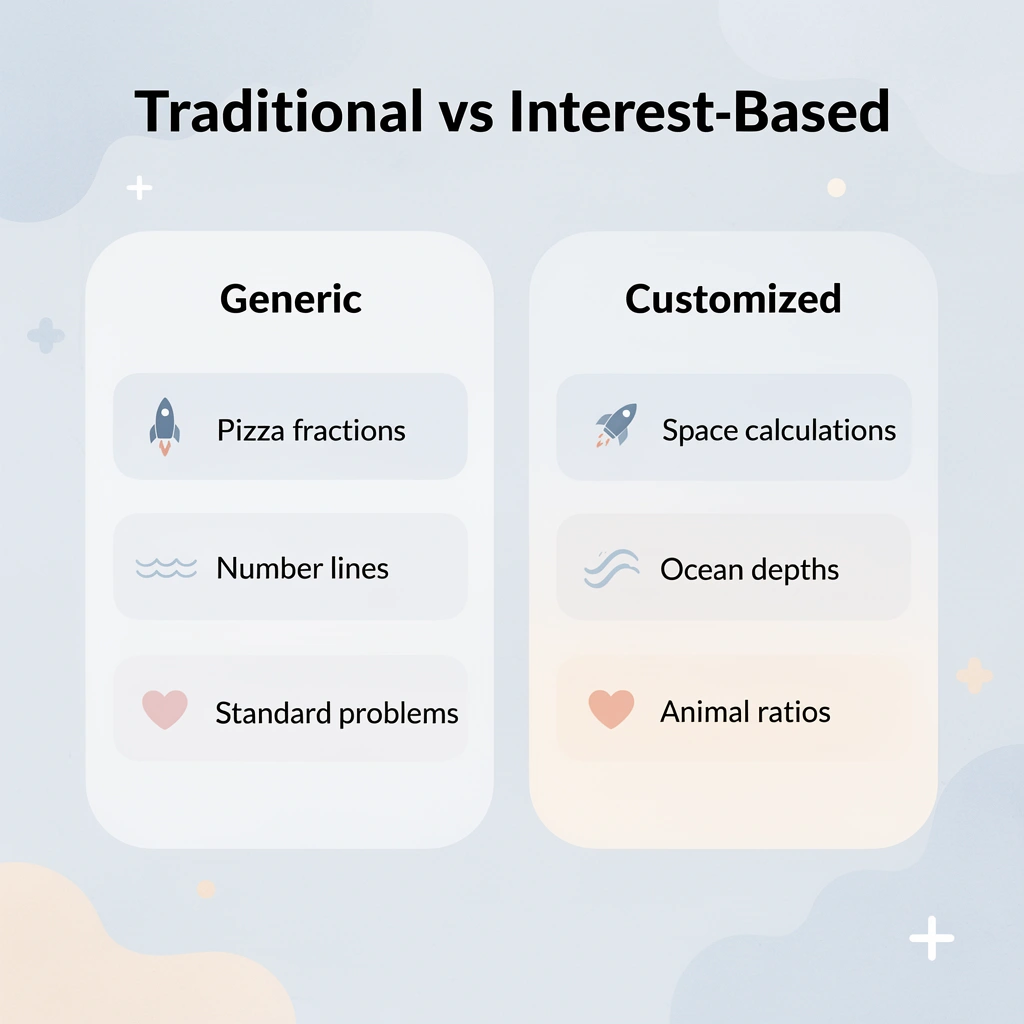
Retention depends on repeated exposure in varied contexts. Your child needs to encounter equivalent fractions through cooking measurements, then map scales, then ratio problems involving their favorite animal populations. Each application reinforces the underlying concept while preventing the mental shutdown that occurs when worksheet twelve resembles worksheets one through eleven.
⚠️ Warning: The best reinforcement materials let you adjust difficulty instantly. When your fifth grader masters two-digit multiplication, you need three-digit problems immediately, not next week after ordering new workbooks. When they struggle with a concept, you need multiple approaches at the same foundational level, not advancement to harder material.
Free resources work when they let you customize rather than forcing you to adapt to predetermined content. You're creating exactly what your child needs right now for the specific concept causing confusion or requiring additional practice. That responsiveness prevents gaps from widening and maintains momentum when understanding clicks.
Related Reading
- Michigan Homeschool Laws
- Accredited Homeschool Curriculum
- Georgia Homeschool Requirements
- 4th Grade Homeschool Curriculum
- 3rd Grade Homeschool Curriculum
- 2nd Grade Homeschool Curriculum
- Science Homeschool Curriculum
- Alabama Homeschool Laws
- Illinois Homeschool Laws
- How To Homeschool In California
- Homeschool Reading Curriculum
- North Carolina Homeschool Laws
- Homeschool Art Curriculum
- California Homeschool Laws