10 Best 6th Grade Homeschool Curriculum in 2026
Discover the 10 best 6th-grade homeschool curriculum options for 2026. My Coloring Pages reviews top programs to help you choose the perfect fit.


Sixth graders stand at a crucial academic crossroads, transitioning from foundational skills to more complex analytical thinking. Parents need a 6th-grade homeschool curriculum that challenges without overwhelming, while honoring their family's unique pace and educational values. The key lies in balancing core subjects like language arts, mathematics, science, and social studies with materials that match both the child's learning style and the parent's teaching approach.
Quality educational resources shouldn't strain budgets or require endless searching. Smart homeschool families supplement their curriculum with ready-made materials that fill gaps and reinforce learning across multiple subjects. For visual aids, creative writing prompts, and engaging activities that support core lessons, families can download 69,451 free+ coloring pages to enhance their homeschool experience.
Summary
Key Takeaways
- Homeschooled students score 15-30 percentile points above public school students on standardized academic achievement tests, according to the National Home Education Research Institute. Sixth grade represents a transition year in which cognitive shifts toward abstract thinking and emotional changes benefit from flexible, personalized instruction rather than rigid institutional schedules that treat all students the same.
- Three to four hours of focused academic work covers core subjects without burnout, compared to the six-hour school day that includes transitions, administrative tasks, and waiting time. The rhythm matters more than the clock. Breaking learning into 30 to 45-minute blocks with short transitions maintains concentration while allowing flexibility when concepts need additional time or when students grasp material quickly.
- Research shows that 87% of peer-reviewed studies on social, emotional, and psychological development find that homeschool students perform statistically significantly better than those in conventional schools. Social competence develops through meaningful interactions across age groups in community activities, sports teams, and interest-based clubs, rather than in artificial age-segregated classroom environments, where interaction is limited and often superficial.
- Curriculum selection paralysis affects homeschooling families facing hundreds of competing approaches, each claiming to be the right fit. Parents frequently switch curricula mid-year when math programs move too slowly, writing assignments feel disconnected, or science lessons assume unavailable lab equipment. Each switch costs time, money, and momentum while students lose continuity and parents lose confidence in their judgment.
- More than 3.4 million children in America are homeschooled, according to the PRiME Center at St. Louis University, yet many families struggle with maintaining consistent routines without external accountability. Small inconsistencies compound over time when math gets skipped on difficult mornings, writing assignments get postponed during resistance, and science experiments never happen because gathering materials feels overwhelming, creating hidden gaps that aren't obvious until later concepts require foundations that weren't solidly built.
- My Coloring Pages addresses this by letting homeschooling families generate customized educational resources instantly, creating visual aids and themed worksheets that reinforce exactly what they're covering, rather than settling for generic materials designed for an imaginary average student.
Should You Homeschool a 6th Grader?
Yes, consider homeschooling a 6th grader if you can provide structured, personalized teaching tailored to their individual learning speed. Research from the National Home Education Research Institute shows homeschooled students score 15-30 percentile points above public school students on standardized tests. Sixth grade is a critical transition year where flexibility and individual attention often outweigh institutional structure.

🎯 Key Point: The middle school transition at 6th grade represents a pivotal academic moment where personalized instruction can have the greatest impact on long-term educational outcomes.
"Homeschooled students score 15-30 percentile points above public school students on standardized tests." — National Home Education Research Institute
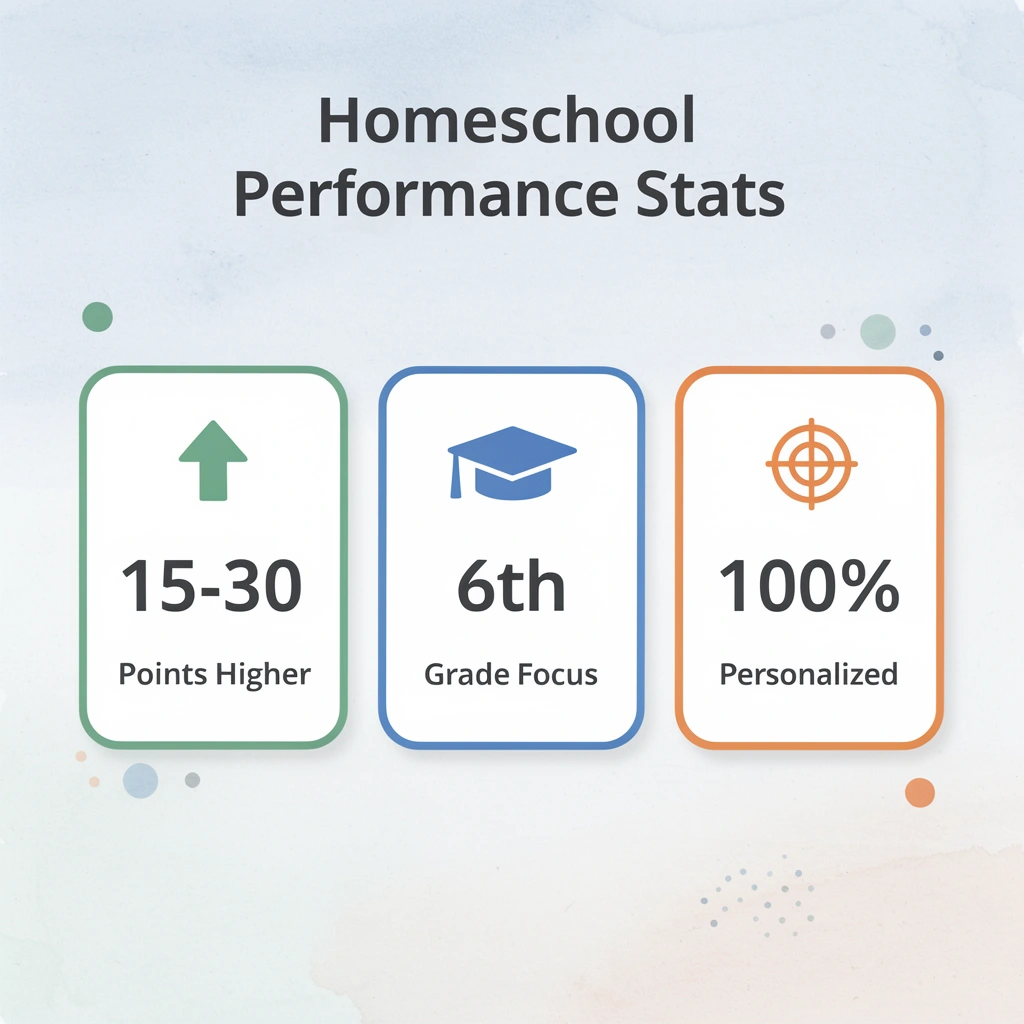
🔑 Takeaway: These significant performance gaps suggest that the individualized approach of homeschooling can be particularly effective during the 6th-grade transition period when students need maximum flexibility and attention.
What makes sixth-grade developmentally unique for learning?
Sixth grade brings cognitive shifts toward abstract thinking, emotional changes, and identity development. Traditional schools treat this year as another step in a rigid sequence, yet sixth graders vary significantly in their readiness across subjects. One student might understand algebraic concepts while struggling with paragraph structure; another might write beautifully but need extra time with fractions.
How does homeschooling address individual learning differences?
Homeschooling lets you meet students where they are. When a child needs three weeks to master ratios instead of the curriculum's planned five days, you can give them that time. When they're ready to move faster through a unit on ancient civilizations, because they're interested, nothing holds them back. This responsiveness to each student becomes crucial during a year when forcing everyone through the same content at the same speed creates unnecessary stress.
What academic concerns do parents have about homeschooling?
Parents often worry that taking a sixth-grader out of a traditional school means giving up academic rigor. The opposite proves true when instruction matches what the student needs. Reading comprehension, structured writing, and foundational maths skills develop through quality practice and reinforcement, not classroom time. A student who receives targeted help with topic sentences and transitions improves faster than one who sits through generic lessons that don't address their specific gaps.
How do sixth graders build essential academic skills?
Sixth graders need consistent coverage of core subjects with clear goals: strengthening their ability to analyze what they read, organize their thoughts on paper, and work confidently with fractions, decimals, and early pre-algebra concepts. These skills develop through deliberate practice, immediate feedback, and opportunities to revisit concepts that didn't stick initially.
How does homeschooling address social development concerns?
The idea that middle schoolers need a traditional school to grow socially ignores how peer interactions work. According to the National Home Education Research Institute, 87% of peer-reviewed studies on social, emotional, and psychological development show homeschool students perform statistically significantly better than those in conventional schools. Social competence comes from meaningful interactions, not from sitting in rows for six hours.
What social opportunities do homeschooled sixth graders have?
Homeschooled sixth graders develop social skills through community activities, sports teams, interest-based clubs, and interaction with people of different ages. A student who volunteers at a local library, participates in a robotics club, and plays on a community soccer team gains broader social experience than one whose interactions are limited to same-age classmates.
How do you balance structure with flexibility in homeschooling?
Homeschooling works best when you set up clear routines while staying flexible. Sixth graders need help moving toward independence, not complete freedom or rigid schedules. Set expectations for daily work, maintain consistent subject coverage, and create accountability without adopting the school's inflexibility.
A student might spend Monday mornings on maths, Tuesday and Thursday afternoons on writing projects, and Friday mornings on science experiments, with freedom to adjust when a concept needs more time or a topic sparks deeper exploration.
What makes homeschooled students thrive academically?
Students who do well are those whose parents maintain steady academic expectations while adjusting the pace and method to match the child's progress. Without that structure, results vary, much as they do in traditional schools, where some teachers excel, and others simply manage their classrooms.
Personalized Resources That Actually Help
Traditional curricula assume all sixth graders need the same materials at the same time. A student studying the solar system benefits more from custom worksheets that match their reading level and interests than generic textbook pages. Visual aids that connect to your child's hobbies make abstract concepts like ratios concrete in ways that standardized materials cannot.
Platforms like My Coloring Pages let homeschooling families generate customized educational resources instantly. Rather than searching for hours or settling for generic worksheets, our platform helps you create targeted resources supporting exactly what you're teaching that week.
How does homeschooling address social stress and confidence challenges?
Sixth grade often brings social stress and challenges to confidence that traditional schools struggle to address. Students who feel behind may shut down rather than ask for help in front of peers, while those who grasp concepts quickly may disengage from boredom. Homeschooling creates space to build confidence through mastery rather than comparison. A student needing extra time with writing mechanics can work at their own pace without shame, while one ready for advanced reading can explore challenging texts without waiting for the class to catch up.
Why does emotional support matter as much as academic instruction?
This emotional support matters as much as teaching academics. When students feel safe making mistakes and working through confusion, they develop resilience and genuine understanding: habits that serve them far beyond middle school.
How does homeschooling prepare students for future educational transitions?
Students who spend a year building strong foundational skills, developing confidence, and learning at their own pace often return to traditional settings better prepared than they left. When considering high school STEM programs or specialized courses, prioritize mastering core competencies over checking boxes on a grade-level checklist.
What documentation should you maintain for academic progress?
Keep track of progress through portfolios, standardized testing, or regular assessments that show growth over time. This creates a clear record for transitioning to a traditional school and helps identify areas that need more attention.
Making homeschooling work for a middle schooler presents unexpected challenges that often differ from what people anticipate.
Related Reading
- Homeschool History Curriculum
- Easy Peasy Homeschool
- Homeschool Curriculum
- Homeschool Math Curriculum
- Online Homeschool Curriculum
- Homeschool Resources
- Online Homeschool Programs
- Christian Homeschool Curriculum
- Homeschool Planner
- Homeschool Schedule
- Kindergarten Homeschool Curriculum
- Best Homeschool Programs
- Free Homeschool Curriculum
- Homeschool Schedule
- Best Homeschool Curriculum
- Accredited Homeschool Programs
- How To Homeschool
- Time For Learning Homeschool
- K12 Homeschool
Challenges of Homeschooling 6th Graders
The obstacles aren't academic gaps or curriculum confusion: they're daily rhythms, emotional shifts, and balancing structure with flexibility. Sixth graders occupy an awkward space between childhood dependence and teenage autonomy, and homeschooling amplifies every tension in that transition.
🎯 Key Point: The biggest homeschooling challenges for 6th graders stem from developmental changes, not academic content. Focus on creating flexible routines that adapt to their growing need for independence.
"Middle schoolers need structure, but they also crave autonomy. The challenge is finding the balance between guidance and freedom during this critical developmental phase." — National Home Education Research Institute

⚠️ Warning: Don't underestimate the emotional complexity of 6th grade. What worked in elementary years may suddenly feel too restrictive or childish for your emerging teenager.
Building Independence While Maintaining Accountability
Sixth graders need help developing self-direction. The challenge is to create systems in which students take ownership without constant supervision while consistently completing assignments. Too much freedom leads to half-finished projects; too much oversight keeps them dependent on you for every decision.
How do you bridge the gap between perceived and actual abilities?
You're teaching them to check their own work, manage time across subjects, and recognize when they need help. But metacognition doesn't develop naturally at this age. Students claim to understand concepts after skimming the surface, or spend three hours perfecting a cover page while ignoring the assignment itself. The gap between what they think they can handle and what they actually manage creates daily friction.
Curriculum Selection Paralysis
The problem isn't finding resources. According to the Pew Research Center, 3% of U.S. children ages 5-17 are homeschooled, and the market has responded with numerous options: classical education supporters, unschooling philosophies, online academies, textbook publishers, and hybrid models, each claiming to be the right fit with different visions of what sixth grade should accomplish.
Why do parents switch curricula mid-year?
Parents switch curricula mid-year because the math program moves too slowly, the writing assignments don't align with their child's interests, or the science curriculum assumes lab equipment they don't have access to. Each switch costs time, money, and momentum, while students lose continuity, and you lose confidence in judging what's working.
Maintaining Rigor Without Replicating School Stress
Sixth-grade content grows complex. Pre-algebra introduces variables and equations. Writing shifts from simple paragraphs to structured arguments with evidence. Reading comprehension requires analyzing themes, understanding perspective, and making inferences. Ensure your student masters these skills without the artificial pressure of grades, class rankings, and arbitrary deadlines that create traditional school stress.
What happens when expectations don't match your child's pace?
The balance is delicate. Set expectations too low and your student falls behind peers who will become college roommates or coworkers. Push too hard, and you recreate the anxiety you were trying to escape. A student who needs more time with fractions to understand them deeply will feel behind when comparing themselves to grade-level standards, even though a deeper understanding matters more than keeping pace.
Social Complexity Increases at This Age
Eleven and twelve-year-olds care deeply about belonging and develop identity through peer comparison and group dynamics. Traditional school provides constant peer interaction; homeschooling requires you to actively create social opportunities rather than assuming they'll happen automatically.
Finding consistent peer groups becomes harder as interests change. Sports teams, music lessons, and community activities provide interaction, but they're organized around adult supervision rather than the natural social learning that occurs when children work through conflicts, form friendships, and discover where they fit. You're managing your child's social calendar the way traditional schools do, through recess and lunch periods.
Parental Burnout Accelerates
Teaching multiple subjects to a sixth grader while managing household responsibilities, possibly working, and addressing your child's emotional needs can lead to cumulative exhaustion. You're the curriculum director, guidance counselor, administrator, and motivational coach. The mental load of planning lessons, tracking progress, researching resources, and adapting to what works compounds over time.
Why does isolation intensify homeschool fatigue?
Being alone makes the tiredness worse. You can't ask a coworker how they explained ratios, whether writing difficulties are normal, or if you're asking too much. Online forums help, but they can't replace quick feedback from someone who knows your child and sees what's happening. You question your choices constantly because there's no official confirmation that you're doing the right thing.
Motivation Drops as Autonomy Rises
Sixth graders want control over their lives but lack the executive function skills to manage it productively. They resist assignments that feel pointless yet cannot explain why or connect short-term work to long-term goals. The intrinsic motivation that makes homeschooling powerful in theory becomes a daily negotiation in practice.
A student who loved reading in fourth grade might suddenly resist every book assignment. Another who enjoyed math puzzles now complains that pre-algebra is boring. They're asserting independence by pushing back against your structure, but they lack the capacity to create a productive structure of their own.
Resource Limitations Become More Apparent
As subjects become more specialized, generic materials stop working. A sixth grader studying ancient civilizations benefits from primary source documents, maps, and visual timelines that address their specific questions. One way to learn about ecosystems is to use diagrams and interactive models that match their current understanding. Store-bought workbooks assume an average student who doesn't exist, leaving you searching for supplementary materials that fit your child's needs.
How can you create customized resources efficiently?
Generic resources create friction as your sixth grader's interests and learning gaps become more specific. You spend hours adapting worksheets, simplifying texts, or creating visual aids from scratch. Platforms like My Coloring Pages let homeschooling families generate customized educational resources instantly, creating themed content for specific learning units or transforming curriculum concepts into engaging visual materials that support your teaching.
Missing Infrastructure and Opportunities
Regular schools provide students access to science labs, art studios, sports facilities, and specialized equipment unavailable in most homes. They offer competitions, performances, and group projects that motivate students and provide authentic audiences for their work. Enrolling homeschooled children in robotics teams, science fairs, or school plays requires substantial effort and is often infeasible.
The gap becomes more noticeable as children in regular school discuss experiences that your child cannot access. You can find alternative options and community programs, but locating them requires constant research and effort. Some opportunities simply aren't available outside schools.
Balancing Emotional and Academic Growth
Sixth graders are figuring out who they are, managing friendships, dealing with body changes, and learning about the world around them. They're forming their own ideas, questioning what adults tell them, and testing boundaries. These growth tasks are as important as academic learning, but they don't fit easily into lesson plans or curriculum guides.
You're supporting a child who might excel at maths but worries about their appearance, or navigate friendships while struggling with self-control. Unlike traditional teachers who share emotional support work with counselors and coaches, homeschooling parents handle both academics and emotional needs simultaneously, with emotional needs often disrupting carefully planned academic lessons.
Inconsistency Creates Hidden Gaps
Without an external structure, homeschooling can become irregular. You skip maths on difficult mornings, postpone writing when your child resists, and never gather materials for science experiments. These small inconsistencies accumulate over time, creating gaps that aren't obvious until you encounter a concept that builds on skills you never quite mastered.
Why does flexibility sometimes work against homeschool families?
The flexibility that makes homeschooling powerful also makes it easy to drift off track. You meant to cover fractions thoroughly, but moved on when your child grasped the basics. You planned to work on the weekly paragraph structure, but other priorities kept interrupting.
According to the PRiME Center at St. Louis University, more than 3.4 million children in America are homeschooled, and many families struggle to maintain consistent routines without institutional accountability. This leads to uneven progress that becomes apparent only when building on weaker-than-expected foundations.
How to Homeschool a 6th Grader Efficiently
Start with a rhythm that balances consistency and breathing room. Sixth graders need predictable structure to build habits, but rigid schedules create resistance. Aim for a sustainable daily pattern rather than copying institutional timelines.

🎯 Key Point: The sweet spot for 6th-grade homeschooling is structured flexibility - enough routine to build learning momentum without the rigidity that causes burnout.
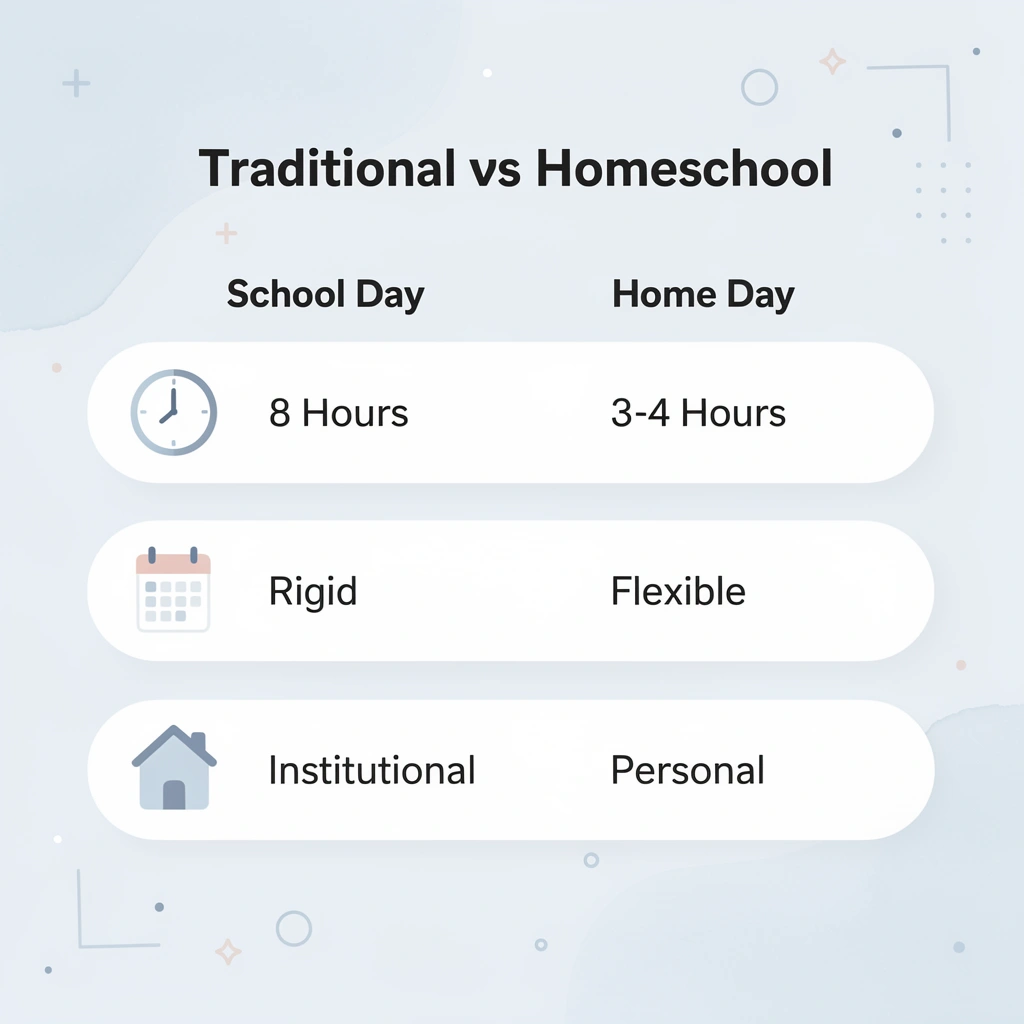
⚠️ Warning: Avoid the common mistake of trying to replicate a traditional 8-hour school day at home. Most successful homeschooling families find that 3-4 hours of focused learning time is more effective than longer, less intensive sessions.
Create a Flexible Daily Rhythm
Three to four hours of focused schoolwork covers the main subjects without exhausting students. Break this into 30 to 45-minute blocks with short breaks between subjects. Schedule maths in the morning when mental energy is at its peak, followed by language arts, then reading, and a rotating science or social studies block.
The rhythm matters more than the clock. Some days your student finishes maths in twenty minutes because the idea clicks; other days, fractions need an extra session before moving forward. Flexibility within structure means you honor the pattern while adapting to actual understanding rather than arbitrary time limits.
Match Curriculum to Actual Ability, Not Grade Level
Pick materials that match your student's actual ability level, not their grade level. A sixth grader who reads at an eighth-grade level but struggles with organizing paragraphs needs harder texts alongside structured writing instruction. Another student might excel at math reasoning but need regular practice with basic operations.
Look for programs that cover the main subjects thoroughly while allowing you to adjust difficulty levels. The best programs build basic skills progressively and adapt when your student needs greater challenge or additional support. Let your child work independently on easier subjects while you provide direct instruction on harder material.
Build Toward Independence Gradually
Sixth grade is where you start stepping back without disappearing. Students need to learn how to fix their own mistakes, manage their time, and recognise when they need help. Create weekly checklists to track progress, use learning journals for students to reflect on what confused them, and build portfolios that demonstrate their growth over time.
What makes the transition to independence feel awkward?
The transition feels awkward because students claim understanding they haven't achieved, or spend excessive time on trivial details while avoiding substantive work. You're teaching metacognition alongside content by regularly asking "How do you know you've learned this?" and "What would you do differently next time?" These questions build the self-awareness that enables independent learning.
Use Weekly Patterns Instead of Daily Perfection
Maths and language arts require four to five weekly sessions to develop skills. Science and social studies benefit from two to three focused sessions for deeper exploration. Electives and enrichment fit into one to three days, depending on your interests and available energy.
This weekly view prevents discouragement when daily plans change, such as when Wednesday's science experiment shifts to another day. You ensure all content is covered across the week while accepting that some days won't proceed as planned. The pattern creates responsibility without rigidity.
Prioritize Core Skills Relentlessly
Spend two to two and a half hours daily on maths, reading comprehension, and structured writing. These build the foundation for everything else. Gaps here compound: a student who never learns topic sentences will struggle with every writing assignment through secondary school; one who skips the basics of fractions hits a wall in algebra.
Keep science and social studies interesting, but make them less prominent in terms of time. A sixth grader who reads fluently, writes clearly, and works confidently with pre-algebra concepts can catch up on content knowledge. One with weak core skills faces increasingly difficult remediation as material builds on itself.
Make Learning Feel Relevant
Motivation falls apart when work feels disconnected from anything that matters. Projects requiring research, organization, and presentation teach more than isolated worksheets. Real-world applications like budgeting an imaginary trip, calculating cooking measurements, or analyzing news articles demonstrate why these skills matter beyond "because it's in the curriculum."
Creative elements keep students interested without compromising rigor. Studying ancient Rome becomes more engaging through timeline projects and documentaries. Ecosystems make more sense after nature walks, where students identify relationships they've read about. The content stays challenging while recognizing that eleven and twelve-year-olds need context to care.
Build Social Connection Deliberately
Academic progress happens alongside social development, not instead of it. Sports teams, interest-based clubs, community service, and group classes build confidence and social competence. These are essential parts of development, not extras to fit in after schoolwork.
Look for activities that bring your student into contact with different ages and backgrounds rather than age-segregated groups. A student who volunteers at the food bank, takes art classes at the community center, and plays recreational soccer develops broader social awareness than one whose interactions remain within narrow demographic bands.
Assess Without Constant Testing
You need to know what your student understands without relying on formal tests that create anxiety. Discussions reveal comprehension better than multiple-choice questions. Short written reflections show whether students can explain concepts in their own words. Project-based evaluation demonstrates whether they can apply knowledge rather than recognise correct answers.
These formative assessments happen naturally during instruction. When your student explains their mathematical reasoning, you hear exactly where understanding breaks down. When they summarise a chapter, you know whether they're grasping the main ideas or getting lost in details. This ongoing feedback matters more than periodic test scores.
Reinforce Learning Systematically
Understanding something during the lesson doesn't mean you'll remember it later. Students need structured practice that strengthens neural connections and reveals gaps before they become permanent problems. Short writing tasks after reading, practice problems, revisiting earlier concepts, and review activities that connect new material to previous learning all help combat forgetting without reinforcement.
Generic worksheets and textbook pages often don't match what you're teaching. As your sixth grader's learning needs become more specific, misaligned materials create problems rather than supporting mastery. Platforms like My Coloring Pages let you generate customized practice resources instantly, creating visual aids and themed worksheets that reinforce exactly what you covered that week.
Balance Structure With Adaptability
Too much structure leads to burnout; too little results in inconsistent progress and hidden gaps. Balance comes from maintaining fixed subject coverage while keeping flexible timing and an adjustable workload. Your student knows maths happens every morning and writing three times weekly, but specific content and pace shift based on actual mastery.
This steady rhythm improves focus, strengthens memory through consistent practice, and builds self-discipline when motivation fluctuates without the rigidity that makes learning feel punitive.
Allow Transition Time for New Homeschoolers
Students transitioning from regular school to homeschooling need time to adjust. Start with easier schoolwork, independent reading, and hands-on projects that build confidence without overwhelming them. This approach reduces stress while you identify their actual skills and learning style.
The change might take weeks or months, depending on the student's previous school and how they handle transitions. Pushing too hard, too fast, causes resistance to learning, which is harder to reverse than academic gaps. Building trust and establishing good learning habits matter more in the early stages than covering specific topics.
Adapt Based on What You See, Not What You Planned
Pay attention to resistance, boredom, and struggle as information. Persistent resistance signals a mismatch between ability level and approach. Boredom indicates you need to increase the challenge or change methods. Struggle reveals where concepts need different explanations or more practice.
Homeschooling works when you adjust based on actual results rather than following predetermined plans. The curriculum serves your students' learning, not the other way around. When something isn't working, change it immediately rather than waiting until the end of the semester.
Choosing the right curriculum determines how much adapting you'll need later.
Related Reading
- Homeschool Room
- Homeschool Report Card Template
- Homeschool Room Ideas
- Homeschool Vs Public School
- Language Arts Homeschool Curriculum
- Homeschool Preschool
- Texas Homeschool Requirements
- How To Homeschool Your Kids
- How To Homeschool In Texas
- Homeschool Coop
- Pre K Homeschool Curriculum
- Florida Homeschool Requirements
- 1st Grade Homeschool Curriculum
- Colorado Homeschool Laws
- Abeka Homeschool Curriculum
- Georgia Homeschool Laws
- Kentucky Homeschool Laws
How to Choose the Right 6th Grade Homeschool Curriculum
Choosing a curriculum starts with understanding your student's current skill levels, not their age. Test where they actually are in math, reading comprehension, and writing before looking at programs. A sixth grader might read at a ninth-grade level but still need fourth-grade fraction review, and using grade-level materials can create either boredom or frustration, depending on the subject. Select a curriculum that adapts to these realities—you might use different grade levels within the same program, or combine materials from multiple sources to match your student's actual abilities.
🎯 Key Point: Your child's chronological age doesn't determine their academic readiness. Always assess individual skill levels first before selecting any curriculum materials.
"Academic placement based on skill level rather than age leads to 30% better learning outcomes and significantly reduced student frustration." — Educational Assessment Research, 2023
💡 Pro Tip: Create a simple skills assessment chart to track your child's abilities across different subjects before making any curriculum purchases.

Start by Defining Your Educational Philosophy
Before comparing programs, decide what matters most to your family. Some parents prioritize classical education, placing a heavy emphasis on literature and primary sources. Others want mastery-based progression where students don't advance until they've understood concepts. Still others prefer project-based learning that connects subjects through real-world applications.
How does your philosophy determine curriculum success?
Your philosophy determines which curricula will work. A family that values independence and self-directed learning will struggle with rigid daily lesson plans. One that needs a clear structure and sequential progression will struggle with open-ended approaches requiring constant parental curriculum design. According to the National Home Education Research Institute, homeschooling families report higher satisfaction when curriculum aligns with their educational values rather than academic reputation alone.
Identify Core Subject Requirements First
Math, language arts, science, and social studies form the foundation. Math requires systematic skill-building with fractions, decimals, ratios, and early algebraic thinking. Language arts demands reading comprehension practice, structured writing instruction covering paragraphs through multi-paragraph essays, and grammar integrated into writing rather than taught in isolation.
Science should include hands-on exploration of earth, life, and physical science concepts to build scientific thinking. Social studies covers history, geography, and basic civics that help students understand how societies function. Establish these four areas before adding foreign languages, art programs, or specialized electives.
Match Format to Your Student's Learning Style
Visual learners need diagrams, charts, and graphic organizers to make abstract concepts concrete. Auditory learners benefit from video lessons, discussions, and the explanation of concepts aloud. Kinesthetic learners require hands-on activities, manipulatives, and movement-based learning.
Watch how your student naturally approaches new information. Do they read instructions first or prefer watching demonstrations? Do they fidget during seated work but focus during building projects? These patterns reveal which curriculum formats work best with their natural learning style.
Evaluate Independence Features Carefully
The sixth-grade curriculum should gradually shift responsibility from parent to student. Look for clear lesson instructions students can follow independently, self-checking components that let them verify their own work, and built-in review that surfaces gaps before they become permanent problems.
Programs requiring intensive parental involvement for every assignment create unsustainable workloads. Your student needs to learn to read directions carefully, attempt problems independently, and recognise when they genuinely need help rather than avoid effort. This metacognitive development matters as much as content mastery.
Prioritize Flexibility Over Rigid Pacing
Curricula with strict daily schedules assume all students learn at the same rate. Your sixth grader might understand ratios in three days or need three weeks, depending on their prior knowledge of fractions. Programs that let you slow down, speed up, or skip material you've already covered elsewhere prevent frustration when following someone else's timeline.
Most quality curricula offer sample lessons or trial periods. Use them. Watch whether your student engages or resists, whether ideas build logically, and whether the workload suits your family's situation.
Check for Real-World Application
Sixth graders lose interest quickly when work seems pointless. A curriculum that connects maths to budgeting, science to environmental issues, and writing to persuasive arguments keeps students motivated better than abstract exercises. Look for programs with projects, discussions, and activities that require students to apply skills beyond worksheets.
Generic curriculum packages often create friction as sixth graders' interests and skill gaps become more specific. Platforms like My Coloring Pages let homeschooling families generate customized educational resources instantly, creating visual aids and themed content for specific learning units that align with your curriculum's focus, rather than settling for misaligned materials.
Look for Built-In Assessment Tools
Good curricula include regular check-ins that reveal gaps in understanding before moving ahead. These need not be formal tests: discussion prompts, short writing reflections, and problem sets asking students to apply concepts in new ways all demonstrate whether students have truly learned the material.
Programs with clear progress tracking help you spot patterns. If your student consistently struggles with word problems but handles computation easily, you know where to focus support. If writing assignments show strong ideas but weak organization, you can focus on paragraph structure without starting over.
Consider Your Own Teaching Capacity
Some curricula require substantial subject knowledge and constant lesson preparation, while others provide scripted lessons and detailed answer keys that work without deep subject expertise. Be honest about your time, energy, and expertise. A beautifully designed classical curriculum demanding two hours of daily prep won't work if you're managing younger children or working part-time.
The best curriculum is one you'll use consistently. Ambitious programs that sit unused because they're too demanding help nobody. Simpler approaches you implement regularly beat sophisticated materials that create stress and avoidance.
Plan in Short Cycles, Not Full Years
Commit to four to six weeks at a time rather than buying entire year-long programs upfront. This avoids sunk cost pressure and lets you adjust when something isn't working: whether your student needs more visual support in maths, the writing program's tone feels condescending, or science lessons assume lab equipment you don't have.
Short planning cycles let you respond to emerging interests. A student fascinated with ancient Egypt can spend extra time on that unit without derailing your year's plan, or one struggling with fractions can slow down and build solid foundations before advancing.
Test Before You Fully Commit
Never buy a complete curriculum without trying it first. Ask for samples, use free trial periods, or borrow materials from other homeschooling families. Spend one to two weeks working through lessons together, observing your student's level of interest, whether the difficulty is appropriate, and whether the teaching style matches their learning style.
Real experience reveals problems that reviews miss. A highly rated maths program might move too slowly for your student, or a popular literature curriculum might assume your sixth grader can sustain longer reading periods than they actually can. Testing prevents costly mistakes and builds confidence in curriculum choices.
10 Best 6th Grade Homeschool Curriculum in 2026
The best sixth-grade curricula combine clear structure with flexibility to match learning speeds, support growing independence, and cover core subjects thoroughly. What matters is finding one that fits your student's abilities, your teaching capacity, and your family's daily reality well enough to use consistently.
🎯 Key Point: The right curriculum balances your teaching confidence with your students' learning preferences for sustainable homeschool success.
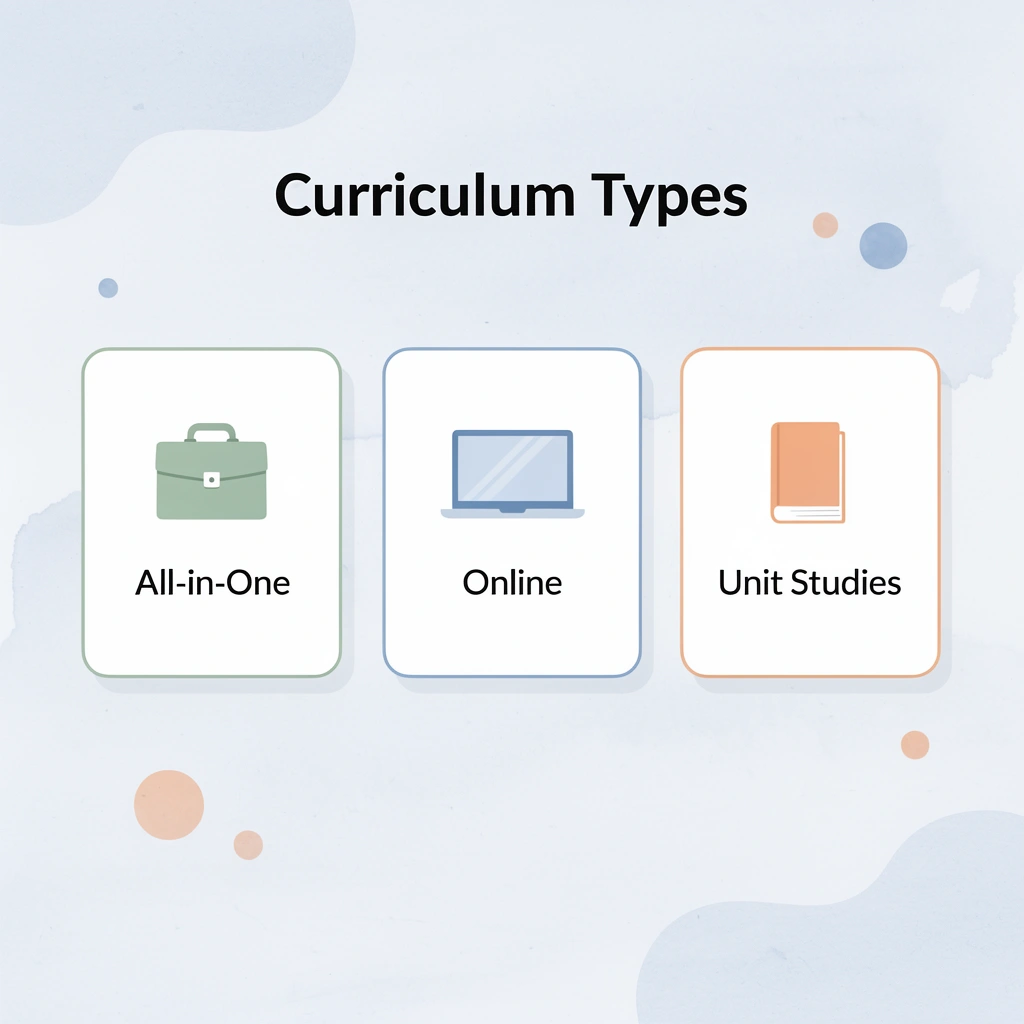
Each program addresses different learning styles, parental involvement levels, and educational philosophies. Your choice depends on whether your sixth grader thrives with digital lessons or physical materials, whether you want comprehensive packages or prefer building your own approach, and how much daily teaching time you can provide.
"The most successful homeschool families choose curricula that match their teaching style and their child's learning preferences, not necessarily the most popular option." — National Home Education Research Institute, 2024

💡 Tip: Consider your student's independence level when choosing between self-directed programs and curricula requiring more parental guidance.
1. Time4Learning Grade 6
This online platform teaches maths, language arts, science, and social studies through interactive, self-grading video lessons. The system adapts pacing to each student: those who grasp concepts quickly progress faster, while others spend more time on challenging material. Parents receive detailed reports tracking student progress.
What are the main benefits for busy families?
One strength is that it reduces the teaching burden on parents. Your sixth grader logs in, follows lesson sequences, completes assignments, and receives immediate feedback without requiring parental explanation of each concept. This works well for families in which parents work during school hours or have multiple children.
What are the potential drawbacks to consider?
The main limitation is screen time. Three to four hours of daily computer-based learning can cause eye strain and make students restless, particularly those who need movement and hands-on learning. The program also lacks practical experiences that help some learners retain information more effectively than videos and interactive exercises.
This program works best for busy parents with students who are comfortable with technology and can manage their own learning.
2. Sonlight Grade 6
This program uses real books to build learning instead of textbooks. Students read historical fiction, biographies, and primary sources while completing structured assignments in history, reading comprehension, and writing. The instructor's guide provides discussion questions and activity suggestions that connect readings to broader concepts.
How does literature-based learning create deeper understanding?
Reading becomes the way to understand history, culture, and human behavior. A sixth grader studying ancient civilizations reads novels set in those periods, analyses primary documents, and discusses how societies functioned, creating depth that textbook summaries cannot match.
What challenges should families expect with this approach?
This approach requires strong reading stamina and parental engagement. You're leading discussions, guiding analysis, and ensuring students understand rather than merely checking worksheets. Students who struggle with reading or prefer visual learning will find this tiring.
Best for families who value learning through discussion and have students reading at or above grade level.
3. Abeka Grade 6
This traditional curriculum provides students with textbooks, workbooks, and structured lesson plans across all subjects. The academic rigor matches private schools, with clear daily assignments, regular testing, and sequenced skill development.
What are the benefits of this structured approach?
The predictability helps families seeking a school-at-home structure. You know exactly what to teach each day, assessments measure progress against clear standards, and the progression prepares students for standardized testing. Parents who attended traditional schools often feel more confident following this familiar model.
What challenges might families encounter?
The rigid structure creates problems when students need different pacing. A sixth grader who grasps concepts quickly sits through unnecessary repetition, while one needing extra time feels rushed and develops gaps. The workload feels heavier than more flexible approaches.
Best for families seeking traditional academic rigor with clear expectations and structured progression.
4. BJU Press Grade 6
This program offers video-based lessons and parent-led teaching options that cover all core subjects, with Christian worldview integration, clear explanations, and systematic skill development. Video lessons reduce preparation time while maintaining strong teaching quality.
How does the balanced teaching approach work?
The balanced approach works for parents seeking guidance without commitment to a single teaching method. You can use video instruction for subjects where you feel less confident while teaching others directly. The materials support middle school transitions with increasing complexity and independence expectations.
What are the program limitations and best fit?
The program works best when you follow the planned sequence rather than skipping around. Families seeking highly flexible, interest-led learning may find the structure limiting.
Best for families seeking guided structure, teaching support, and integration of Christian content.
5. Oak Meadow Grade 6
This Waldorf-inspired curriculum focuses on creativity, art integration, and project-based learning. Subjects connect through themes rather than existing as separate classes: students might study a historical period through literature, create art from that era, and write from the perspectives of people who lived then.
How does the low-pressure approach benefit students?
The low-pressure approach reduces anxiety for students who shut down under academic stress, making learning feel exploratory rather than evaluative. Flexible pacing accommodates students who need time to process and create.
What are the potential drawbacks of this curriculum?
The trade-off is reduced academic intensity. Families preparing students for competitive high school programs or standardized testing may find gaps in systematic skill development. The approach also requires significant parental involvement in planning and facilitating activities rather than following predetermined lesson plans.
Best for creative learners who struggle with rigid systems and families prioritizing exploration over acceleration.
6. Moving Beyond the Page (Ages 10-12)
This program integrates literature, science, and social studies through hands-on projects and critical thinking activities. Units connect multiple subjects around central themes, requiring students to research, analyze, and create rather than passively receive information.
How does this program keep students engaged?
Engagement stays high because students pursue genuine questions rather than completing isolated worksheets. A unit on ecosystems might involve building terrariums, researching species relationships, reading related literature, and presenting findings: this builds understanding that survives beyond the test.
What challenges should families expect?
The time investment is significant. Projects require materials, preparation, and guidance that busy families struggle to provide consistently. Students who prefer clear right-or-wrong answers may find the ambiguity of project-based work challenging.
Best for curious, advanced learners who thrive with intellectual challenge and hands-on investigation.
7. Calvert Grade 6
This blended program combines digital lessons with physical workbooks through an accredited-style system. It includes lesson plans, grading support, and progress tracking to create accountability comparable to that in traditional schools.
How does the blended learning approach work?
The balance reduces screen fatigue while maintaining effective digital instruction. Students watch video lessons, complete online practice, and then reinforce learning through workbook exercises. The formal structure supports families planning to return to traditional school or seeking documentation that mirrors institutional records.
What are the flexibility limitations?
Flexibility suffers under this structured approach. The subscription model locks you into their pacing and sequence, making it harder to adjust when students need different speeds. Families wanting to customize heavily or skip material their student already knows will find the system limiting.
Best for families wanting complete, formal systems with both digital and hands-on components.
8. Power Homeschool (Acellus)
This affordable online platform offers video-based lessons across all subjects with automatic grading and self-paced learning. Students progress through instructional videos, practice problems, and tests, with the system adjusting difficulty based on their performance.
What makes this platform ideal for busy families?
This approach suits families where students work independently throughout the day. Your sixth grader can complete full school days without requiring you to explain concepts or check work. The low cost makes it accessible for budget-conscious families.
What are the potential drawbacks to consider?
The minimal personalization means that students who need different teaching approaches or hands-on learning won't receive them. Video quality and teaching style vary across subjects, and some students find the presentation dry compared to more engaging platforms. Minimal parent involvement suits busy families but removes relationship-building through shared learning.
Best for independent learners who can stay motivated through video instruction without hands-on activities or parental interaction.
9. Master Books Grade 6
This flexible, subject-based curriculum lets you mix and match components rather than buy complete packages. You can select their math program while using different resources for language arts, or combine their science materials with another publisher's history curriculum.
What are the benefits of this modular approach?
The low cost and ability to mix and match help parents whose students need different learning approaches for different subjects. You're not locked into one publisher's teaching style or philosophy. The materials work well for families with Christian worldview preferences who want to pick and choose subjects.
What challenges should you expect with this curriculum?
The planning burden increases when you create your own curriculum instead of following a set path. You must ensure you're covering all necessary skills and developing a plan for what to teach and when across different subjects.
Best for parents who want to build customized curricula without having to start from scratch.
10. Positive Action Grade 6
This character-focused program integrates life skills, emotional learning, and personal development through activity-based lessons. Students develop self-awareness, decision-making, relationship skills, and responsible behavior alongside academic content, building confidence and social-emotional competence that traditional academics alone cannot address.
Who benefits most from this character-focused approach?
The program helps students who struggle with motivation by teaching conflict resolution, goal-setting, and emotional regulation, with immediate real-world application. It works well for families prioritizing whole-child development over cognitive achievement alone.
What are the program limitations to consider?
The program doesn't provide complete instruction in core subjects, so you'll use it alongside math, language arts, and content-area classes rather than as a standalone solution. Families seeking academic rigor without character education components won't find value here.
Best for families prioritizing character development and life skills alongside traditional academics.
How do you customize the curriculum for your child's specific interests?
Generic curriculum packages create friction as your sixth grader's learning becomes more specific—the student fascinated by marine biology needs ocean-themed practice problems, the one studying ancient Rome benefits from period-specific visual aids. Platforms like My Coloring Pages let you generate customized educational resources instantly, creating visual aids and themed content that reinforce exactly what you're covering, rather than settling for materials designed for average students.
What makes a curriculum actually effective for your family?
What makes a curriculum work well is whether your student learns when using it, whether you can use it regularly given your family's situation, and whether it builds the basic skills sixth graders need. The best program is the one you'll use tomorrow, next week, and three months from now when the initial excitement fades, and daily routines reveal what works.
Having the right curriculum matters only if you have supplementary resources that clarify difficult concepts and maintain student engagement when motivation wanes.
Download 69,777+ free worksheets for 6th graders
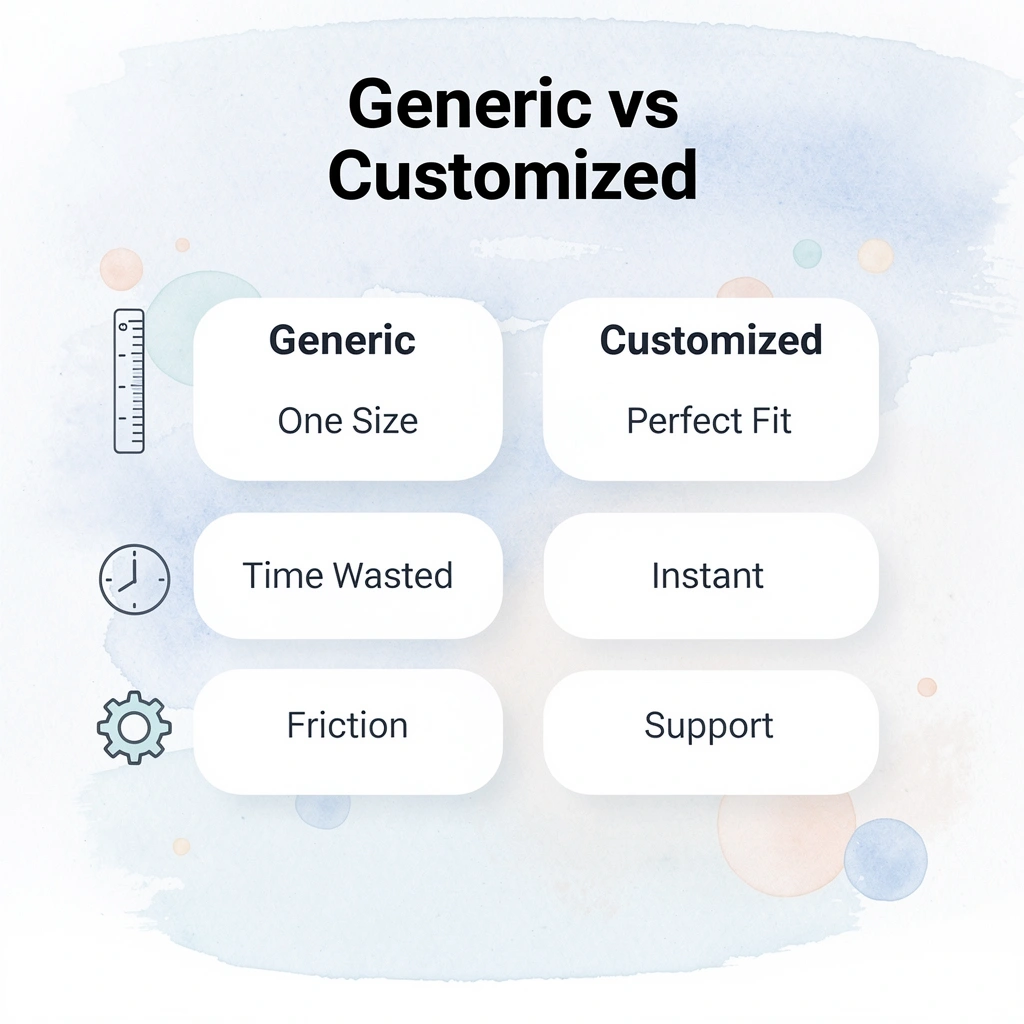
The right supplemental resources make the difference between a curriculum that sits on the shelf and learning that sticks. Generic worksheets designed for imaginary average students create friction rather than support. You need materials that match what you're teaching this week, not what some curriculum designer thought all sixth graders should learn in March.
🎯 Key Point: Most homeschooling parents spend hours searching Pinterest boards, adapting textbook pages that don't quite fit, or driving to teacher supply stores hoping to find something relevant. This scavenger hunt wastes time you could spend teaching. Worse, the materials you finally settle on rarely match your specific curriculum focus or your students' current skill level. A worksheet on paragraph structure doesn't help if your child already understands topic sentences but struggles with transitions. A fraction practice page becomes busywork if they've mastered the concept and need ratio applications instead.
"Generic educational materials create friction rather than support, forcing students to work through content designed for someone else's classroom rather than their specific learning needs." — Educational Resource Research, 2024
My Coloring Pages solves this by letting you generate customized educational resources instantly. Create visual aids for the ecosystem unit you're covering now, themed math practice around your child's obsession with space exploration, or historical coloring pages that reinforce the time period you studied yesterday. Our platform provides access to 69,451+ free coloring pages and, more importantly, lets you create exactly what your sixth grader needs when they need it, turning abstract concepts into concrete visual learning that matches their interests and your teaching goals.
💡 Tip: The difference between adequate homeschooling and genuinely effective learning often comes down to whether you have the right supplemental materials at the right moment. When a concept isn't clicking through text alone, visual reinforcement tailored to that topic bridges the gap. When motivation drops, themed materials connected to current interests reignite engagement without sacrificing academic rigor.
Stop settling for generic worksheets that don't fit your needs. Generate resources on demand that match your sixth grader's learning style, current curriculum unit, and genuine interests rather than forcing them through materials designed for someone else's classroom.
Related Reading
- 5th Grade Homeschool Curriculum
- How To Homeschool In California
- Georgia Homeschool Requirements
- Alabama Homeschool Laws
- 2nd Grade Homeschool Curriculum
- Homeschool Reading Curriculum
- California Homeschool Laws
- 4th Grade Homeschool Curriculum
- North Carolina Homeschool Laws
- Homeschool Art Curriculum
- Accredited Homeschool Curriculum
- 3rd Grade Homeschool Curriculum
- Illinois Homeschool Laws
- Michigan Homeschool Laws
- Science Homeschool Curriculum