13 Tips on How to Homeschool Your Children Effectively
Learn how to homeschool effectively with 13 proven tips from My Coloring Pages. Get practical strategies for curriculum, scheduling, and success.


Deciding how to homeschool children involves navigating curriculum choices, lesson planning, daily schedules, and finding engaging educational materials. The path to successful home education becomes challenging when balancing multiple grade levels while keeping children motivated and excited about learning. Creating an effective homeschool environment requires practical strategies and access to resources that simplify teaching responsibilities. Quality educational materials that match children's interests and learning needs form the foundation of successful home instruction.
Supplementing lessons with hands-on activities transforms abstract concepts into engaging learning experiences. Ready-to-print resources save preparation time while providing personalized learning tools that maintain student interest without straining budgets. Educational activities, such as themed worksheets, reinforce core subjects, from alphabet practice to geography and science concepts. Homeschool families can enhance their curriculum and create more interactive lessons by downloading 55,689+ free coloring pages.
Summary
- Homeschooled students score 15 to 30 percentile points above public school students on standardized tests, according to the National Home Education Research Institute. This academic advantage stems from one-on-one instruction that adapts to the child's pace rather than forcing comprehension to match a fixed schedule. The gap isn't marginal; it reflects what happens when learning bends around the learner instead of the system.
- College enrollment data show that 66.7% of homeschooled students attend college, compared to 57.5% of public school students, according to findings from the National Center for Education Statistics. Universities actively recruit homeschoolers because they arrive with self-discipline, time-management skills, and independent-learning capabilities developed through years of self-directed study. These competencies translate directly into higher success rates in higher education that admissions teams recognize and value.
- Socialization concerns about homeschooling miss where real-world interaction actually happens. The National Home Education Research Institute found that 87% of homeschooled students regularly participate in two or more outside activities, engaging with mixed-age groups through sports, volunteer projects, co-ops, and community programs. This breadth of interaction across age ranges often produces stronger communication skills than the artificial age segregation of traditional grade levels.
- Homeschool effectiveness depends entirely on execution, not the inherent superiority of the method. Parents who commit to curriculum planning, regular assessment, consistent structure, and community engagement produce students who thrive academically and socially. Those who treat homeschooling casually see predictable results of neglect, which has nothing to do with whether home education works and everything to do with whether adults follow through on daily teaching responsibilities.
- Physical learning environments shape attention spans more than most parents realize. A dedicated workspace with proper lighting, minimal distractions, and clear boundaries signals that learning happens here, separating education from spaces used for eating, playing, and entertainment. Children focus better when the environment doesn't compete for their attention with toys, screens, or household activity flowing through the same area.
- My Coloring Pages addresses the persistent gap between what parents teach and what generic worksheets actually reinforce by generating custom coloring pages that match specific lesson content, whether that's the water cycle for one child or the Roman Empire for another, serving multiple grade levels simultaneously without separate preparation for each subject.
Table of Contents
- Do Homeschooled Kids Do Well?
- Pros and Cons of Homeschooling
- Is Homeschooling Suitable For Your Child?
- 13 Tips on How to Homeschool Your Children Effectively
- 15 Educating Homeschool Worksheets for Children
- Stop Using Random Worksheets—Match Them to What Your Child Is Actually Learning With My Coloring Pages
Do Homeschooled Kids Do Well?
Homeschooled students consistently meet or exceed academic and social benchmarks set by traditional schools. When organized thoughtfully, homeschooling produces results that match or surpass conventional education, often in less time and with more personalized attention.
🎯 Key Point: The evidence shows that well-structured homeschooling delivers comparable or superior academic outcomes while offering flexibility and individualized learning that traditional classrooms often can't provide.
"Homeschooled students consistently demonstrate academic performance that meets or exceeds national standards across multiple subject areas." — Florida Department of Education Study
💡 Tip: The key to successful homeschooling lies in thoughtful organization and consistent implementation of structured learning plans that leverage the personalized attention advantage inherent in the homeschool model.
Academic Performance Tells a Clear Story
Homeschooled students score 15-30 percentile points above public school students on standardized academic achievement tests, according to the National Home Education Research Institute. One-on-one instruction allows parents to spot confusion early, adjust teaching methods mid-lesson, and reinforce concepts until students achieve genuine understanding rather than superficial mastery. 66.7% of homeschooled students go on to college compared to 57.5% of public school students, according to the National Center for Education Statistics. Universities actively recruit homeschoolers because they arrive with self-discipline, time management skills, and the ability to learn independently: survival tools for higher education that homeschoolers develop out of necessity.
Socialization Happens Differently, Not Less
The idea that homeschoolers lack social skills stems from a misunderstanding of how socialization works. Homeschooled children interact with mixed-age groups through community sports, volunteer projects, co-ops, and extracurricular activities. They learn to communicate with adults, younger children, and peers across grade-level age gaps. This variety often builds stronger confidence and adaptability in real-world settings where teamwork extends beyond same-age peers.
How can hands-on learning enhance academic concepts?
Most homeschool families use hands-on learning to reinforce academic concepts and develop creative problem-solving skills. When a geography lesson needs visual reinforcement or a science unit requires labeled diagrams, platforms like My Coloring Pages let parents generate custom coloring pages instantly. A child studying the water cycle remembers it better through active engagement with a diagram they've coloured themselves. This personalized approach allows multiple age groups to learn simultaneously without separate preparation for each child.
Execution Determines Everything
Homeschooling results depend on parental involvement, available resources, and consistent structure. A poorly planned homeschool creates the same problems as an underfunded classroom. Parents who commit to curriculum planning, regular assessment, and community engagement produce students who thrive academically and socially. Those who treat homeschooling as optional see predictable results of neglect. When homeschooling works, it refuses to treat all children the same way. Learning becomes efficient, focused, and responsive to the individual learner rather than the system.
Pros and Cons of Homeschooling
The Freedom to Shape the Day
Homeschooling gives you control over the calendar, curriculum, and learning context. You decide when school starts, which subjects get priority, and how religious or philosophical values fit into lessons. Families can travel mid-semester without permission slips, schedule appointments flexibly, and avoid social hierarchies and bullying. According to the Pew Research Center, 83% of parents worry about safety, drugs, and negative peer pressure in school environments. Homeschooling eliminates those concerns.
How can real-world experiences become part of learning?
Practical skills, artistic pursuits, volunteering, and trades become valid classes. A child interested in astronomy can spend three weeks building a telescope and mapping constellations. Another passionate about carpentry can learn geometry through building furniture. Teachable moments happen in the kitchen, garden, museum, and hardware store: experiences difficult to replicate in 45-minute blocks dictated by a bell.
Individualized Education That Moves at the Child's Pace
Traditional classrooms cannot adapt teaching to 25 students, but homeschooling meets each child where they are. If fractions need an extra 15 minutes, you take it. If a child learns multiplication in two days instead of two weeks, you move forward. [Homeschooled students score 15-30 percentile points above public school students on standardized academic achievement tests, according to the National Home Education Research Institute, because teaching adapts to understanding rather than forcing understanding to fit a fixed schedule.
How can you customize materials for multiple children?
This customization extends across multiple children. One child might need visual aids for science while another thrives on hands-on experiments. Platforms like My Coloring Pages let you generate custom materials instantly: the water cycle for a third grader or the Roman Empire for a sixth grader, serving multiple age groups without separate prep for each child.
Stronger Relationships and Shared Victories
Learning together builds stronger relationships than academic progress alone. You witness fractions finally clicking into place, pride when reading a whole chapter book, and the frustration that precedes breakthroughs—moments that forge trust and understanding. Field trips to historical sites, backyard experiments, and afternoons at the park serve as both education and bonding time. Siblings learn to work together, negotiate, and support each other's learning rather than compete for a teacher's attention.
The Weight of Constant Responsibility
Homeschooling doesn't stop when you're tired. You're doing the job of parent, teacher, curriculum planner, and principal simultaneously: writing lesson plans, grading assignments, finding resources, and handling multiple subjects across different grade levels. Even ready-made curriculum packages require changes, supervision, and consistent use. Younger children who aren't school age yet compound the challenge while you teach older kids. Parents report struggling to find time for basic self-care, exercise, or personal hobbies. The workload is constant and includes no summer off unless you deliberately plan it.
Financial and Social Tradeoffs
Most homeschooling families lose one income or significantly reduce work hours. Extracurricular activities, sports teams, and specialized classes cost more when accessed outside the public school system. High schoolers may lack access to advanced electives such as metalworking, robotics labs, or AP courses that require equipment and expertise beyond a home setup.
How do social challenges affect homeschooling families?
Making social opportunities happen requires planning: you need to set up playdates, co-op meetups, and group activities that would occur naturally in a traditional school. Siblings spending the whole day together might fight more often, and children might struggle to see a parent as both an authority figure and a teacher. These challenges don't determine whether homeschooling works. What matters is whether your family can commit to structure, seek community, and adapt when something isn't working.
Related Reading
- Homeschool
- Easy Peasy Homeschool
- Homeschool Curriculum
- Homeschool Math Curriculum
- Online Homeschool Curriculum
- Homeschool Resources
- Online Homeschool Programs
- Christian Homeschool Curriculum
- Homeschool Planner
- Homeschool Schedule
- Kindergarten Homeschool Curriculum
- Homeschool History Curriculum
- Best Homeschool Programs
- Free Homeschool Curriculum
- Homeschool Schedule
- Best Homeschool Curriculum
- Accredited Homeschool Programs
- How To Homeschool
- Time For Learning Homeschool
- K12 Homeschool
Is Homeschooling Suitable For Your Child?
Homeschooling works well when your family can provide structure, your child learns better with personalized pacing, and you create social opportunities. The decision depends on assessing your schedule, your child's personality, and your capacity for daily teaching.
🎯 Key Point: The success of homeschooling hinges on three critical factors: your family's ability to maintain consistent structure, your child's need for individualized learning, and your commitment to proactively building social connections.
"Homeschooling requires parents to honestly assess their capacity for daily instruction and their child's unique learning style before making the commitment." — Educational Research Foundation
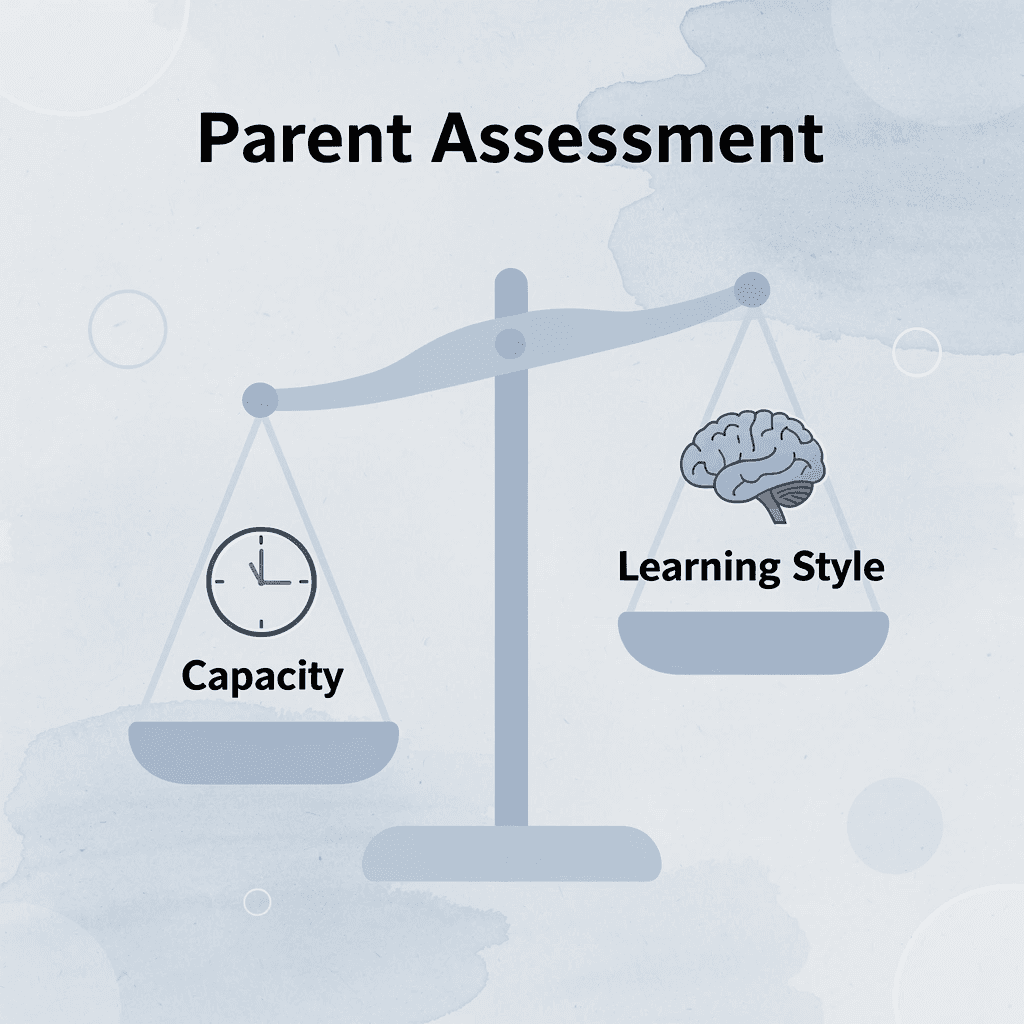
⚠️ Warning: Don't underestimate the time commitment required for effective homeschooling. Most families need to dedicate 4-6 hours daily to instruction and preparation, plus additional time for curriculum planning and progress assessment.
What time commitment does homeschooling actually require?
Homeschooling requires full-time commitment. You're planning lessons, teaching multiple subjects, grading work, and managing administrative tasks like attendance records and standardized testing requirements. According to the National Home Education Research Institute, 87% of homeschooled students regularly participate in two or more outside activities, which means coordinating sports schedules, co-op meetups, and extracurricular commitments. If both parents work full-time or a single parent carries the household income, the maths rarely works without significant financial restructuring. Teaching doesn't pause when you're exhausted, sick, or managing younger siblings simultaneously.
How do successful homeschool families structure their days?
Parents who succeed treat homeschooling like a job with set hours and clear limits: waking up early to prepare materials, maintaining consistent start times, and protecting teaching time from distractions. Those who approach it casually, assuming flexibility means teaching whenever inspired, typically struggle within months. The structure you build determines whether education happens or whether days fall apart into chaos.
What educational background do you need to homeschool effectively?
You don't need a teaching degree to homeschool effectively, but you do need the willingness to learn alongside your child. Educational workshops, homeschooling seminars, and online courses help parents develop curriculum planning skills and teaching strategies. What matters more than your college transcript is whether you can research unfamiliar subjects, break concepts into understandable pieces, and admit when you need outside help. High school science labs, advanced mathematics, and foreign languages often require tutors or co-op classes because few parents have expertise across all disciplines.
How do you manage the daily challenges of homeschooling?
The real challenge is sustaining effort over time. Preparing lessons for multiple grade levels requires creativity and organization. When a history unit needs explanatory pictures or a geography lesson needs labeled maps, parents often spend hours sourcing age-appropriate materials. Platforms like My Coloring Pages create custom educational coloring pages instantly, whether you need the solar system for a second grader or the branches of government for a fifth grader. The tool works for multiple children without requiring separate prep work.
How does your child's learning style affect homeschool success?
Some children thrive with one-on-one instruction and self-directed projects, while others need peer collaboration, group discussions, and classroom social energy to stay engaged. A child who asks endless questions benefits from homeschooling's flexibility to explore tangents deeply. A child who needs external motivation, structured peer interaction, or a competitive environment may struggle without the social framework of a traditional school. Neither preference indicates intelligence—they're temperament differences that determine which environment produces better outcomes.
What family dynamics should you consider before homeschooling?
Watch how your child responds to independent work, unstructured time, and adult-led instruction. If they resist parental authority during homework, that dynamic will intensify when you become their full-time teacher. Siblings who clash frequently may find all-day proximity exhausting rather than bonding. Homeschooling amplifies existing family dynamics, both positive and negative.
Socialization Requires Intentional Effort
Your child won't naturally meet other kids unless you intentionally create opportunities to do so. Homeschool co-ops, community sports leagues, volunteer projects, and interest-based clubs become necessary rather than optional. Research from the Pew Research Center shows 83% of parents worry about school environment safety, drugs, and negative peer pressure, which homeschooling avoids entirely, but you're trading one set of challenges for another. The job of arranging playdates, group activities, and social experiences falls entirely on you. Naturally outgoing children may adapt easily, while shy or anxious children may need extra support to build friendships outside structured school settings.
Related Reading
- Homeschool Room
- Homeschool Report Card Template
- How To Homeschool Your Kids
- Colorado Homeschool Laws
- Abeka Homeschool Curriculum
- Georgia Homeschool Laws
- 6th Grade Homeschool Curriculum
- Homeschool Preschool
- Homeschool Room Ideas
- 1st Grade Homeschool Curriculum
- How To Homeschool In Texas
- Homeschool Vs Public School
- Homeschool Coop
- Pre K Homeschool Curriculum
- Kentucky Homeschool Laws
- Homeschool Report Card Template
- Texas Homeschool Requirements
- Florida Homeschool Requirements
13 Tips on How to Homeschool Your Children Effectively
Good homeschooling requires careful planning, regular communication with your child, and smart resources suited to your child's learning pace. These thirteen ways help you build a strong plan that transforms good ideas into real, measurable progress.
🎯 Key Point: The foundation of effective homeschooling lies in creating a structured approach that adapts to your child's unique learning pace while maintaining consistent communication and measurable outcomes.

"Successful homeschooling requires intentional planning and adaptive strategies that respond to each child's individual learning style and developmental needs." — National Home Education Research Institute
💡 Best Practice: Start with clear objectives, establish daily routines, and use assessment tools that help you track your child's academic growth and adjust your teaching methods accordingly.
1. Build a Routine That Creates Momentum
Consistent wake times, designated learning blocks, and predictable transitions eliminate mental friction that drains energy before lessons begin. Research on child development routines shows that structure helps young children develop self-confidence and adjust to change more easily because they understand what's expected.
How does sleep discipline create learning momentum?
Start with sleep discipline. The same bedtime and wake time every day, including weekends, helps establish the body rhythm that supports focus. When a child wakes at 7:00 AM on Tuesday and 10:00 AM on Thursday, their attention span suffers because their body never settles into a state ready to learn. Small morning tasks like making the bed build momentum as they are completed. Admiral William H. McRaven noted that accomplishing the first task of the day creates pride that carries into subsequent tasks, and on difficult days, returning to a made bed offers clear proof of discipline.
What daily transitions help children shift into learning mode?
Eating breakfast and getting dressed before lessons helps children transition from home mode to school mode. Those who stay in pajamas often struggle to shift into a state of readiness for learning. Your daily schedule should have clear start and finish times with built-in breaks, but avoid being so rigid that it punishes natural learning rhythms. A written to-do list gives children clear targets and the satisfaction of crossing off completed items, building confidence throughout the day.
2. Communicate Before, During, and After Learning
Morning check-ins clarify expectations, prevent confusion, and ensure your child has the necessary materials. Review the to-do list, answer questions about assignments, and ensure your child has the necessary materials. Clear deadlines keep work on track and prevent it from spiraling out of control. This five-minute conversation avoids hours of frustration later.
What should you discuss after each learning session?
End each day with a debrief, asking children to explain what they learned. This retrieval practice strengthens memory retention and reveals what they understand and what they don't. Praise specific efforts: "You worked through that fractions problem even when it was frustrating" means more than "good job today." Targeted encouragement fills the validation gap many homeschooled children experience in the absence of peers in the classroom.
How do you maintain effective communication with teachers and tutors?
Stay connected with teachers or tutors who support your child's schoolwork. Send emails with specific questions rather than asking if your child is "doing okay"—children rarely volunteer their struggles. Teachers know which concepts challenge most students. Asking about those patterns helps you address problems before they escalate. One parent discovered their child had struggled with sentence structure for two weeks only after asking the tutor what other students found difficult.
3. Designate a Learning Space That Minimizes Distraction
Your physical environment significantly affects your ability to focus. A dedicated learning space with good lighting, fresh air, and a comfortable chair signals that learning happens here. The kitchen table can work if you clear away distractions, but children focus better in a space reserved for learning rather than one shared for eating, playing, and watching television.
How do you minimize distractions in your homeschool space?
Remove toys, video games, and phones from the study area. If tablets or computers are needed for lessons, use app blockers and parental controls to prevent access to distracting websites during school hours. Think about where this space fits in your home: will you need to watch closely, or can your child work independently? Where will you keep teaching materials, paperwork, and finished assignments to prevent clutter in the learning area?
4. Create Organization Systems That Prevent Chaos
Homeschooling without organization leads to stressful searches for lost worksheets and missed deadlines. A calendar tracking important dates, test requirements, and extracurricular commitments keeps everything visible and enables you to plan backward from deadlines rather than discovering them the night before. Keep daily attendance records even if your state doesn't require them: this documentation proves educational compliance or facilitates transfer to a traditional school if needed. Set up separate binders for each subject area and another for administrative paperwork such as enrollment forms, testing records, and correspondence with educational authorities. Daily filing takes two minutes but saves hours of reconstruction later.
5. Schedule Breaks That Match Attention Spans
Younger children need to move around every 10 to 15 minutes, while older children and teenagers can work for 40-minute blocks before needing a break. Pushing past these limits reduces comprehension and increases frustration.
What activities work best during homeschool breaks?
Physical activity during breaks improves focus when learning resumes. A quick walk outside, jumping jacks, or playing catch increases blood flow to the brain and burns off restless energy. Healthy snacks and adequate water throughout the day help prevent blood sugar crashes that can make you feel unmotivated. Some families follow a traditional school schedule with morning recess, lunch, and afternoon breaks; others prefer flexible timing based on natural energy dips. Both work if used consistently.
6. Facilitate Social Interaction Beyond Siblings
Children miss daily time with other kids when learning at home, which can create developmental gaps if not addressed. Sports leagues, art classes, martial arts, dance, music lessons, and volunteer opportunities provide structured environments where friendships form naturally. These activities serve as an essential social infrastructure that automatically replaces what traditional schools provide.
How do you manage the responsibility of arranging social interactions?
You must do all the work to set up these interactions. Playdates, group outings, and cooperative projects need advance planning and consistent follow-through. Some children adapt easily to making friends outside structured settings; others struggle with social initiation when peer groups aren't pre-assembled. Watch how your child responds and adjust the frequency and type of social activities accordingly.
7. Connect With Other Homeschooling Families
Other local homeschoolers face the same challenges you do, and their solutions often work in your situation. Meeting regularly to discuss curriculum choices, discipline strategies, and time management creates a support network that reduces isolation. Your children benefit from talking with peers who share the homeschooling experience and from organizing group field trips or learning activities, which helps distribute the planning work.
What resources do online homeschooling communities provide?
Online homeschooling groups connect you with experienced families who have already navigated your current challenges. Ask the questions you fear might seem silly—someone else shares your concern. Share your honest struggles rather than an idealized version of your homeschool experience. Homeschool conferences link you with experts who have refined teaching methods over decades and offer workshops spanning record-keeping to advanced mathematics.
8. Set Goals Using the SMART Framework
Goal-setting teaches children to break large ambitions into achievable steps, a skill that serves them long after homeschooling ends. Goals should span multiple categories—academics, sports, music, savings, and personal development—to maintain engagement.
What makes a goal effective and achievable?
Each goal must be Specific, Measurable, Attainable, Relevant, and Time-bound. "Learn to read better" lacks specificity, whereas "Read three chapter books at a fourth-grade level by December 31st" provides clear targets and a deadline. Measurable goals let children track progress and stay motivated. Attainable goals push abilities without setting children up to fail. Relevant goals align with what the child wants. Time-bound goals create urgency that prevents procrastination.
9. Implement a Reward System That Motivates
Kids respond better to visible rewards than to unclear promises. A reward chart showing different rewards based on task difficulty makes progress easy to see. Breaking it into categories—such as school subjects, household chores, and extracurricular activities—helps kids understand how different types of work contribute to their overall goals.
How can you turn screen time into motivation?
Screen time works better as something your child earns rather than something they automatically get. An extra thirty minutes of gaming after completing weekly reading goals transforms gaming from a source of conflict into a motivator. Rewards need not be expensive: extra time at the park, choosing dinner, or staying up fifteen minutes later all work. Being consistent is critical: give rewards right away when you promise them. Delayed or forgotten rewards teach children that promises don't matter.
10. Understand Legal Requirements and Curriculum Options
Homeschooling rules vary by location. Before starting, find out which subjects your child must study, how their learning will be assessed, and whether formal tests are required. Some places mandate a specific curriculum, while others allow you to choose. Understanding these rules up front helps you avoid rushing to meet unexpected deadlines.
How do you choose between structured and flexible curriculum approaches?
Decide whether you'll follow a structured curriculum or take an interest-led approach. Structured programs provide lesson plans, materials, and clear progression but offer less flexibility. Unstructured approaches let you follow your child's interests but require more planning and subject expertise. Many families blend both methods, using formal curriculum for core subjects while exploring other topics more freely.
11. Remember Your Original Reasons
Stressful days make you question your homeschooling choice. Write down your reasons now, while they're clear, and keep them accessible: display them in a frame on your desk or file them in your administrative binder. When frustration peaks, reading those original motivations reminds you that today's difficulty doesn't invalidate the larger purpose. These reasons might include providing religious instruction, avoiding negative peer pressure, accommodating learning differences, or creating schedule flexibility for family travel. They represent values important enough to restructure your entire life around. Reconnecting with those values during hard moments restores the perspective that temporary struggles cannot erase.
12. Stay Flexible and Include Fun
Some days fall apart despite perfect planning. Your child might get sick, you might feel tired, or a lesson plan that worked yesterday might not work today. Sticking rigidly to the schedule during these moments creates anger and exhaustion. Switching to a documentary, visiting a museum, or taking the afternoon off preserves your relationship and prevents homeschooling from becoming something everyone resents.
How can you make learning enjoyable throughout the day?
Include fun activities throughout each day, not as rewards for finishing work. Reading together, cooking experiments that teach measurement, building projects that demonstrate engineering principles, and nature walks that explore biology all count as learning. Trips outside the home break routine and provide real-world examples for concepts that might seem abstract.
13. Use Worksheets to Reinforce Learning
After introducing a new concept, children need practice that reinforces understanding without requiring constant supervision. Worksheets involving coloring, tracing, matching, or sequencing keep young learners engaged while solidifying their learning. A geography lesson about continents becomes more memorable when children color and label a world map. A biology unit on plant parts sticks better when students trace and identify roots, stems, and leaves.
How can you find worksheets that match your lessons?
The challenge is finding or creating worksheets that match your teaching at the right difficulty level. Generic workbooks rarely align with your lesson plan, and creating custom materials consumes time you don't have. Platforms like My Coloring Pages generate custom coloring pages based on your specific topic, whether you need the water cycle for a third grader or the Roman Empire for a sixth grader. The same tool serves multiple age groups simultaneously without requiring separate preparation for each child.
What makes these strategies effective for consistent progress?
These thirteen strategies create the structure that enables consistent progress. Knowing what works is only half the equation; the other half is having the right materials ready when you need them. Our collection of 55,689+ free coloring pages provides the materials you need, giving you instant access to engaging resources whenever you need them.
15 Educating Homeschool Worksheets for Children
Finding worksheet resources that match your curriculum saves hours of searching and works for each child's skill level. The platforms below range from AI-powered generators that create custom materials to extensive libraries organized by subject and grade. The right combination depends on whether you need focused practice for specific gaps or complete coverage across multiple subjects.

🎯 Key Point: The most effective homeschool worksheet strategy combines AI-generated custom content for targeted skill gaps with comprehensive library resources for broader curriculum coverage.
"Parents who use a mix of custom-generated worksheets and curated educational libraries report significantly higher engagement and learning outcomes compared to single-source approaches." — Homeschool Education Research, 2024
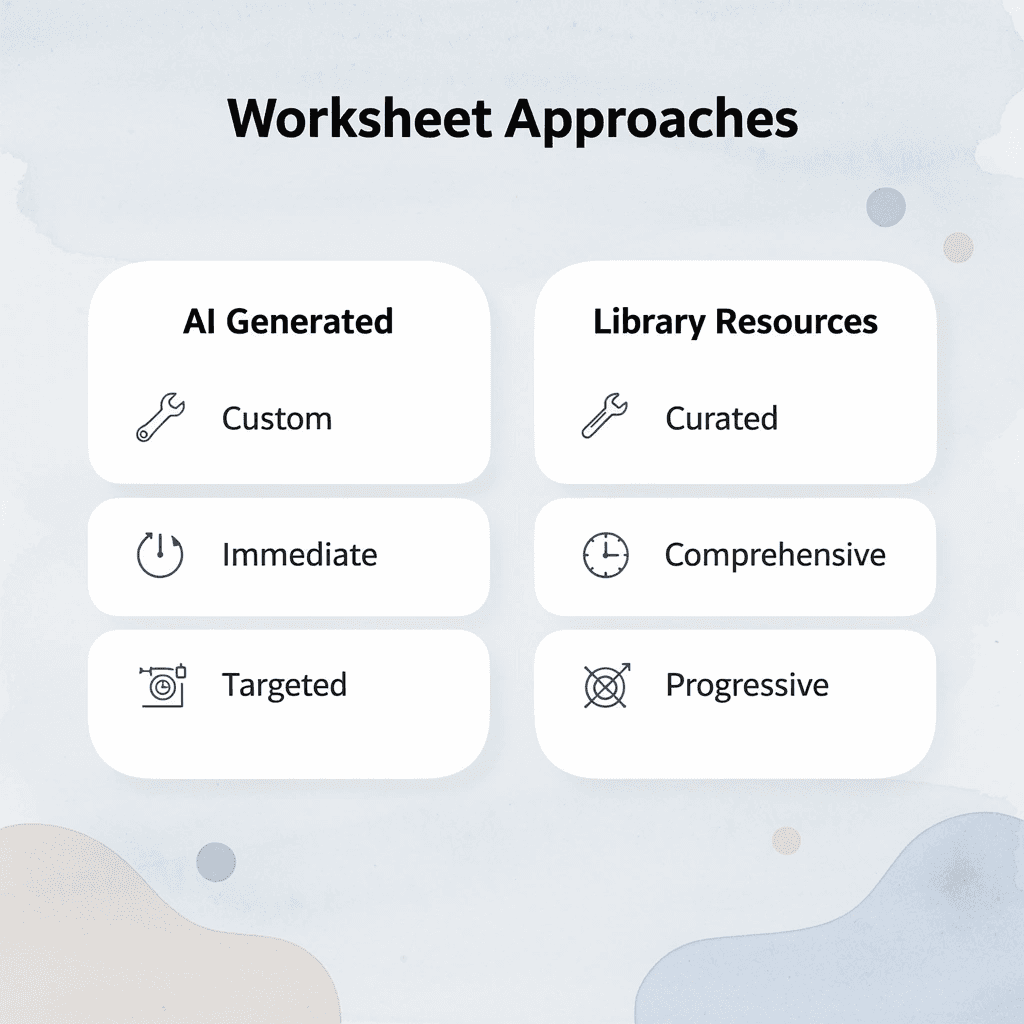
💡 Tip: Start with AI worksheet generators when you need immediate practice materials for a specific concept your child is struggling with, then supplement with library resources for comprehensive skill building and grade-level progression.
1. Homeschool Genie
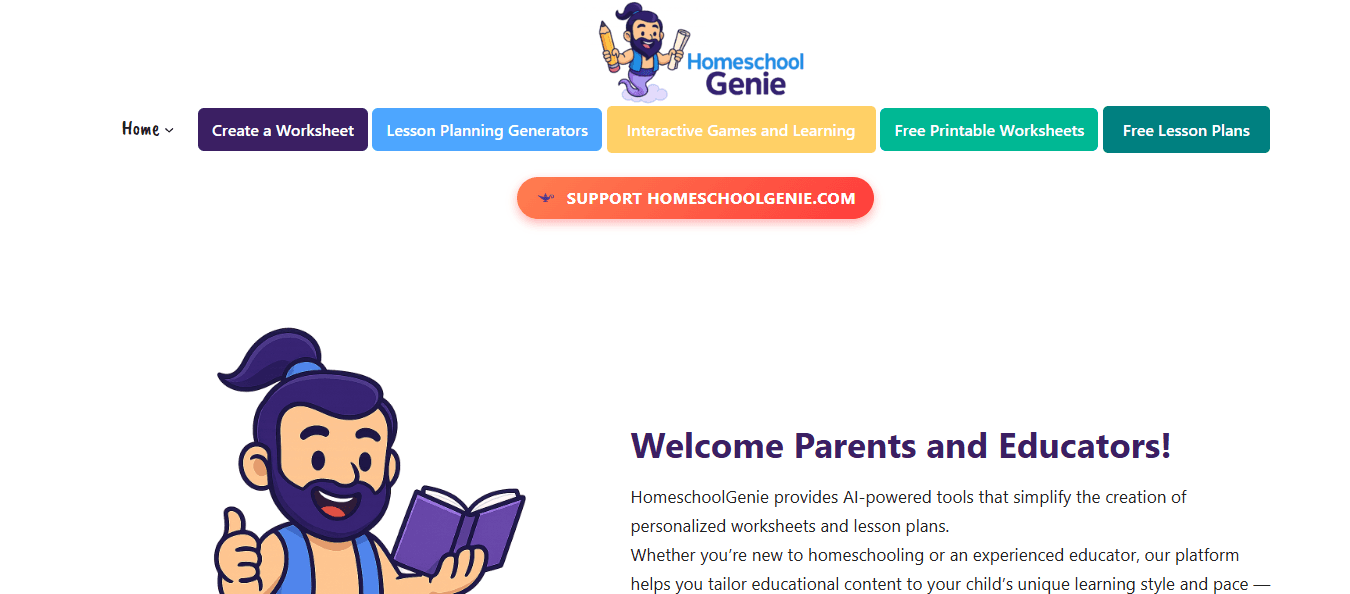
This AI-powered platform creates worksheets based on grade level, subject, and specific learning goals. You can input any concept—reading comprehension, spelling patterns, writing prompts, or math operations—and the system generates customized content in seconds. This speed proves invaluable when you discover, mid-lesson, that your child needs more practice with a concept they haven't mastered. Rather than stopping to search through workbooks or generic websites, you can create exactly what you need and continue teaching.
2. Education.com
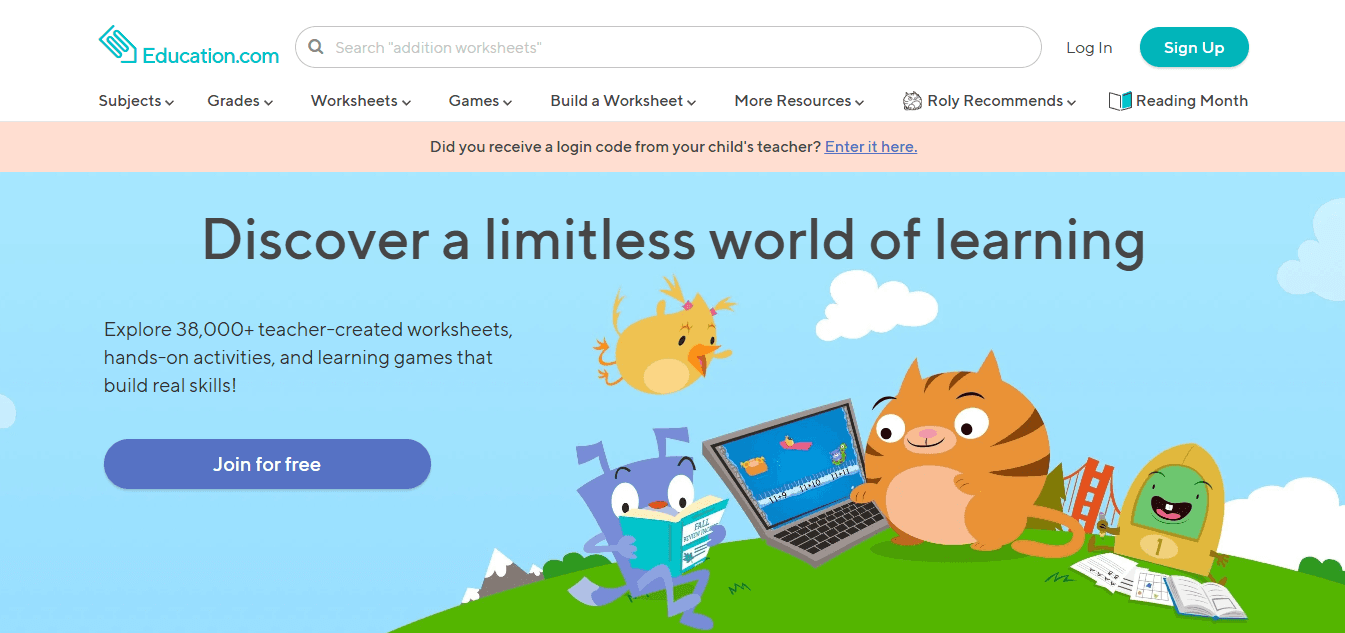
15 Worksheets Website offers over 25,000 free printable worksheets organized by grade, subject, and educational standards. The filtering system lets you narrow results by specific skills, which is helpful when teaching multiplication to one child while another needs help with sentence structure. Materials can be downloaded immediately without creating an account or paying, though premium memberships unlock additional resources.
3. K5 Learning
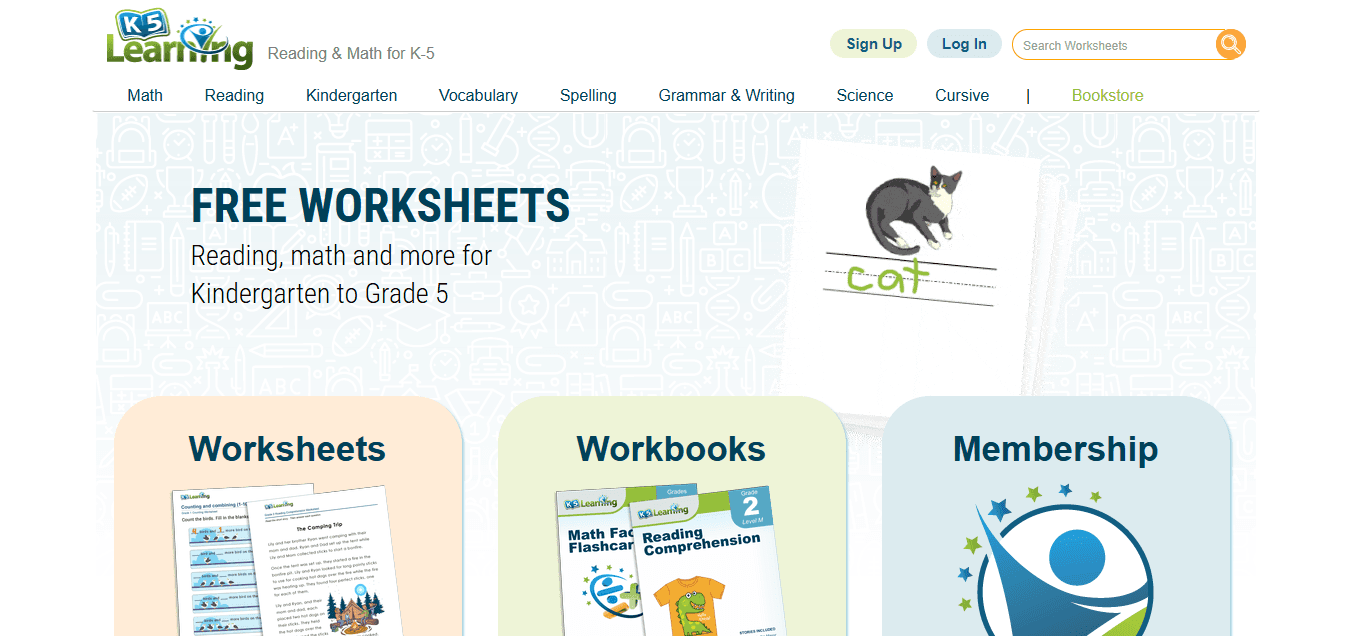
This platform organizes worksheets around skill-based progression in maths and reading. You select the exact skill your child struggles with—whether subtracting with regrouping or identifying main ideas—and access targeted practice sheets. While you cannot fully customize materials from scratch, the detailed skill selection effectively tailors learning to individual gaps.
4. TES

Teachers worldwide upload worksheets to this global library, creating diverse teaching approaches and presentation styles. Search by topic, difficulty level, and age range, then combine resources from different educators to build lessons matching your teaching sequence. This variety proves helpful when your child learns better from visual explanations than text-heavy instructions, or when you want multiple practice sets on the same concept presented differently.
5. 123 Homeschool 4 Me
Over 1,000,000 worksheets and activities, organized by grade and subject, provide materials for most lessons. The resources are pre-made rather than customizable, but the volume allows you to select and arrange materials matching your curriculum. Parents typically use this to supplement structured programs, filling gaps in their main curriculum's practice.
6. Homeschool.com

Beyond worksheets, Homeschool.com offers planners and curriculum-building tools to design a complete homeschool system. You can mix subjects, create schedules, track progress, and access worksheets that integrate with your lesson plans. Organized record-keeping prevents the chaos that disrupts consistent teaching.
7. CleverLearner

CleverLearner focuses on early childhood concepts like numbers, shapes, colors, and basic science for preschool and kindergarten learners. You select topics based on your child's interests or learning gaps, then create themed learning sessions. Materials use pictures to support learning and simple directions suited to children still developing fine motor skills and attention spans.
8. MegaWorkbook
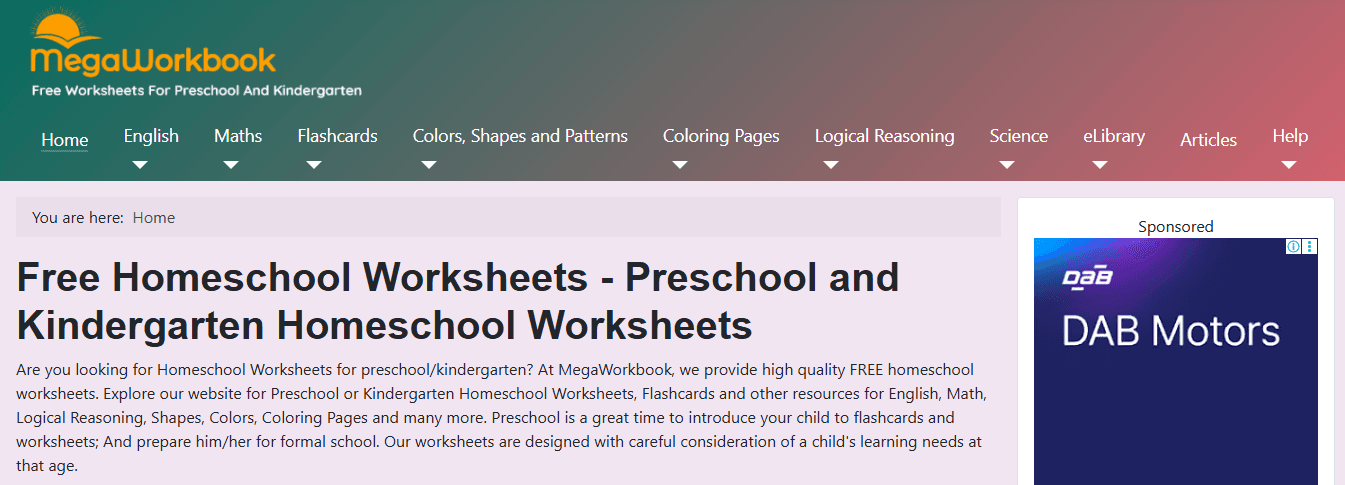
Designed by homeschoolers, this platform covers math, logic, and English across multiple grade levels. Worksheets function independently or as part of larger units, offering flexibility for quick practice or cross-curricular lessons. The homeschool-created origin is evident in clear answer keys and realistic completion time estimates.
9. CK-12 Foundation
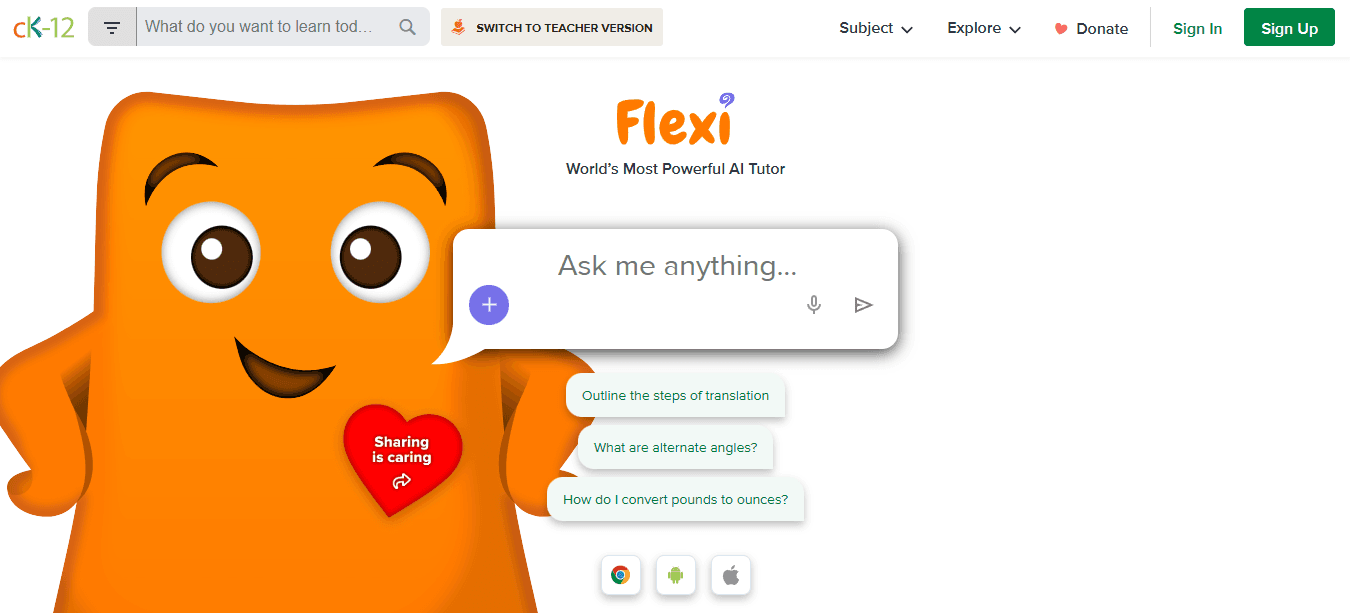
Learning materials you can customize include worksheets, interactive simulations, and practice questions with adjustable difficulty levels. The STEM focus proves especially useful for science and maths, where hands-on experiments and problem-solving clarify abstract concepts. You can progress through topics from beginner to advanced level without switching platforms.
10. The Good and the Beautiful

You can download worksheets and complete unit studies, using them as written or adapting them to fit your lesson plans. The materials balance structure and flexibility, with clear learning goals while allowing you to adjust pace and focus based on your child's progress.
11. NASA for Educators

NASA's science worksheets and activities bring real-world space exploration, physics, and Earth science into your lessons. You can build custom STEM units around topics that connect with current events or your child's interests. The credibility of the source increases engagement, as children connect more deeply with content tied to actual space missions and scientific research.
12. Smithsonian Learning Lab

Interactive worksheets and resources from museum archives let you create custom collections for history, science, and culture lessons. Browse artifacts, photographs, and documents to build learning experiences around primary sources rather than textbook summaries. This approach teaches research skills while making abstract historical periods tangible through actual objects and firsthand accounts.
13. National Geographic Kids

Printable worksheets and activities cover animals, geography, ecosystems, and natural phenomena. Select topics based on your child's interests—ocean life, volcanoes, endangered species—to create learning experiences that match their curiosity. High-quality photography maintains the magazine's standards, keeping students engaged during independent work.
14. Createful Journals

Editable worksheet templates in PowerPoint format give you complete control over colors, content, layout, and structure. You can modify existing templates or build new ones from scratch to create materials that match your teaching approach and your child's learning style. This requires more time than using ready-made worksheets but delivers customized results.
What problems do generic worksheets create?
Most worksheet platforms assume you'll use generic materials and adapt your teaching around them. When available worksheets don't reinforce what you've taught, searching through libraries wastes time and breaks momentum. Children lose focus during the gap, and you end up using imperfect materials or abandoning reinforcement activities altogether.
How can custom content generators help?
Platforms like My Coloring Pages create custom coloring pages tailored to your curriculum. Need pages about the water cycle for science or historical figures for a timeline project? Describe your topic, and the system generates visual worksheets at the appropriate difficulty level. Our platform serves both a second-grader learning about continents and a fifth-grader studying ancient civilizations, without requiring separate searches or subscriptions.
15. My Coloring Pages

This platform creates fully customized worksheets from text descriptions or uploaded images, generating topic-specific visual learning materials that match your child's studies. You can design letter tracing sheets, science diagrams, themed activities, or concept reinforcement pages tailored to your exact lesson.
Why does visual customization matter for early learners?
Visual customization matters for early learners who need creative engagement alongside skill practice, turning abstract concepts into concrete, interactive images through coloring and labeling. Generic worksheets often fail to reinforce what you taught, forcing you to either skip emphasized concepts or add verbal explanation to bridge gaps. Custom generation eliminates that friction, creating practice that extends your teaching rather than working around it.
What makes worksheets effective for learning?
The worksheets work only if they match what your child needs to learn today, not what a curriculum designer thought most children should learn at this age.
Stop Using Random Worksheets—Match Them to What Your Child Is Actually Learning With My Coloring Pages
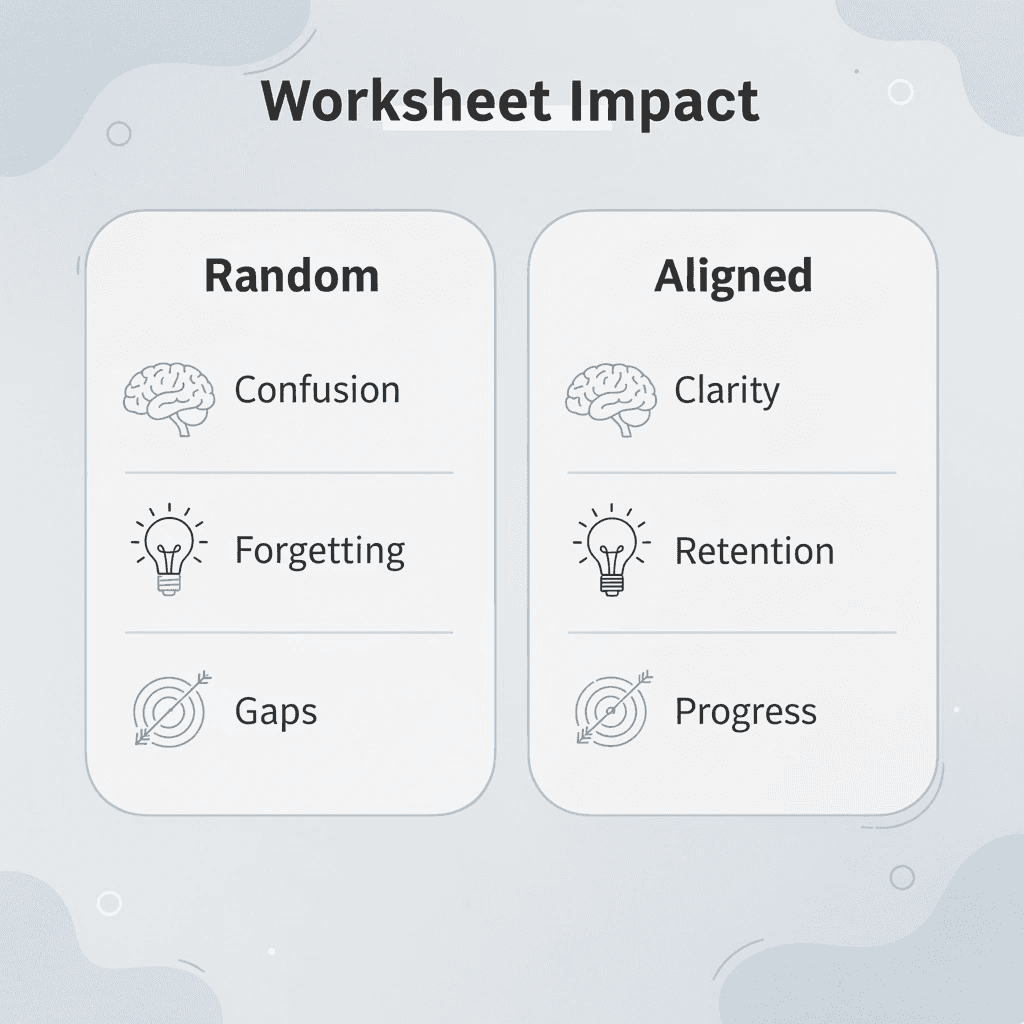
When you finish teaching a lesson on the solar system, and your child completes a worksheet about farm animals, nothing sticks. Worksheets reinforce understanding only when they target the exact concept you taught at the difficulty level your child needs right now.
🎯 Key Point: Generic worksheets create confusion when your child practices skills they've already mastered or encounters vocabulary you never introduced.
Most homeschooling parents grab whatever printables appear first in search results because creating custom materials takes time. Generic worksheets create confusion when your child practices skills they've mastered or encounters vocabulary you never introduced. Our My Coloring Pages tool generates topic-specific coloring pages instantly based on what you're teaching, whether that's photosynthesis for one child and the American Revolution for another.
"Alignment between teaching and practice is the difference between children who remember what they learned yesterday and those who start each day relearning what they forgot."
Start by identifying the single concept your child struggled with during today's lesson. If fractions caused confusion, find a worksheet focused exclusively on comparing fractions with unlike denominators. After completion, ask your child to explain their answers aloud. Verbal explanation reveals whether they understand the process or merely copied patterns.
Worksheet Type | Best For | Learning Outcome |
|---|---|---|
Topic-Specific | Reinforcing today's lesson | Strong retention |
Generic/Random | Busy work | Confusion and gaps |
Visual/Coloring | Younger learners | Dual engagement |
Keep finished worksheets organized by subject and date in a simple folder system. This record shows progress over weeks and months, revealing when a concept needs revisiting. Repeated errors on similar problems signal the need to slow down and reteach before moving forward. That feedback loop works only when worksheets measure what you taught.
💡 Tip: Use completed worksheets as a progress tracker—repeated errors on similar problems signal the need to slow down and reteach before advancing.
For visual learners and younger children, worksheets combining images with practice make concepts concrete. A geography lesson about continents becomes memorable when children color and label a world map. A science unit on animal habitats sticks better after tracing ecosystems and identifying which animals live where. Coloring while engaging with content creates dual engagement that passive reading cannot match.

Alignment between teaching and practice is the difference between children who remember what they learned yesterday and those who start each day relearning what they forgot. When worksheets reinforce your instruction, learning compounds rather than resets.
Related Reading
- 5th Grade Homeschool Curriculum
- How To Homeschool In California
- Georgia Homeschool Requirements
- Alabama Homeschool Laws
- 2nd Grade Homeschool Curriculum
- Homeschool Reading Curriculum
- California Homeschool Laws
- 4th Grade Homeschool Curriculum
- North Carolina Homeschool Laws
- Homeschool Art Curriculum
- Accredited Homeschool Curriculum
- 3rd Grade Homeschool Curriculum
- Illinois Homeschool Laws
- Michigan Homeschool Laws
- Science Homeschool Curriculum