Florida Homeschool Requirements You Must Know About
Florida homeschool requirements guide: legal steps, record keeping, and compliance essentials from My Coloring Pages. Start homeschooling confidently.
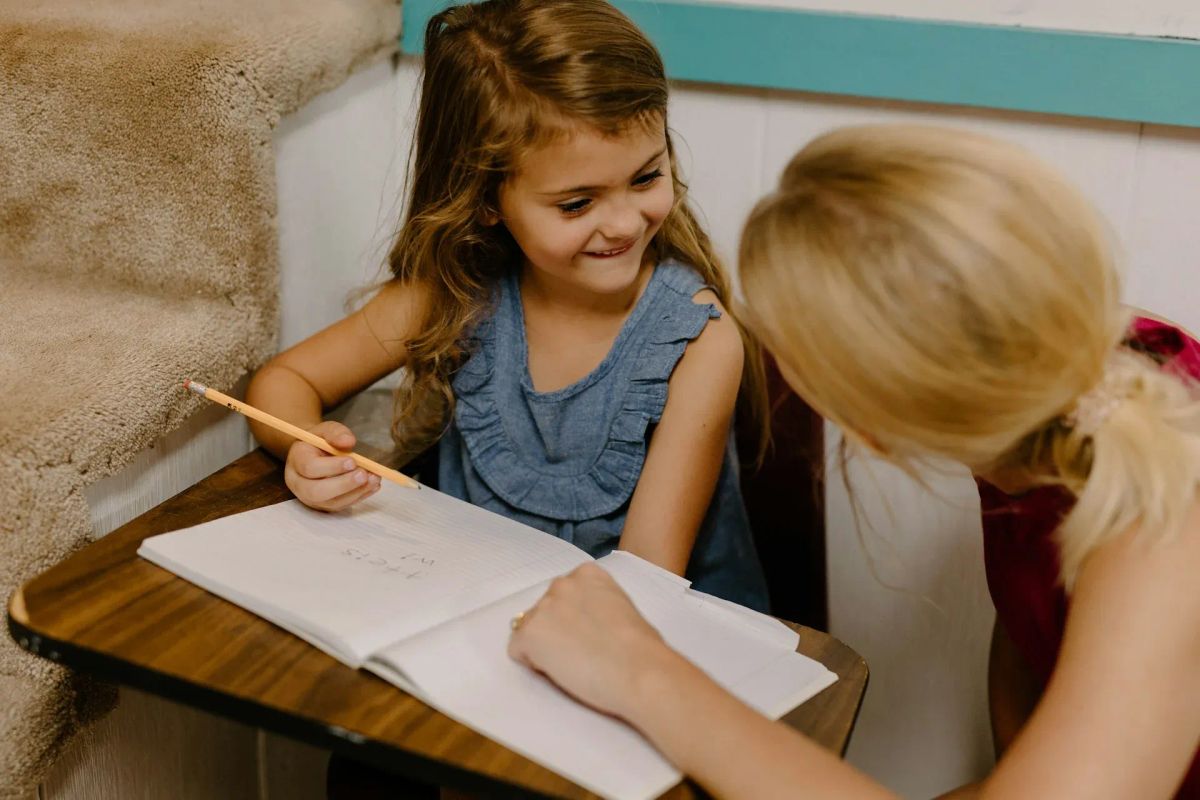
Florida homeschool requirements include portfolio evaluations, annual assessments, and proper record-keeping that can overwhelm parents new to home education. The state mandates sequentially progressive instruction across core subjects, along with documentation that proves educational progress. Understanding these legal obligations helps families create compliant learning environments while focusing on their children's educational growth.
Beyond meeting compliance standards, successful homeschooling requires engaging materials that keep young learners motivated during daily lessons. Quality educational resources transform required instruction into enjoyable activities that children eagerly anticipate. Parents seeking creative learning tools can download 69,451+ free coloring pages to supplement their curriculum with hands-on activities.
Table of Contents
- Is Homeschooling Legal in Florida?
- Legal Framework of Homeschooling in Florida
- Florida Homeschool Requirements You Must Know About
- How to Homeschool in Florida
- How to Choose the Right Homeschool in Florida
- 10 Best Homeschool Programs in Florida
- Download 69,451+ free worksheets for homeschooling in Florida
Summary
- Florida's homeschool population grew by 46 percent between 2019 and 2024, from 106,000 to 155,532 students. Major districts like Miami-Dade process over 10,000 active home education registrations annually, reflecting how mainstream this educational choice has become. The surge isn't a temporary pandemic response; it represents a sustained shift in how families approach their children's education.
- The state requires only four compliance actions under its Home Education Statute: filing a one-time notice of intent, maintaining a home portfolio, submitting an annual evaluation, and filing a termination notice when your program ends. Florida mandates no minimum instructional hours, no specific number of school days, no state-approved curriculum, and no teaching credentials for parents. This lighter regulatory framework trusts families to provide "sequentially progressive instruction" without dictating methodology or schedule.
- Portfolio requirements exist in a legal gray area that confuses many families. You must maintain documentation of educational activities and work samples, but districts cannot demand inspection without 15 days' written notice, and even then, submission isn't mandatory. The portfolio serves as insurance, proving that education occurred if questions arise, but it stays in your possession unless specific circumstances trigger a review. This creates accountability on paper without routine intrusion in practice.
- Homeschooled students score 15 to 30 percentile points above public school students on standardized tests, according to the National Home Education Research Institute, but that advantage disappears when families force children into learning formats that fight their natural processing styles. Visual learners struggle through audio-heavy programs regardless of ratings. Kinesthetic learners need hands-on projects, not additional workbooks. The best program matches how your child's brain actually works, not which curriculum ranks highest in reviews.
- Curriculum costs accumulate faster than most families anticipate, ranging from $500 to $1,500 per child annually before adding field trips or extracurricular activities. Florida doesn't require an expensive packaged curriculum, but you need tangible work samples and documented activities to meet portfolio compliance requirements. Finding quality educational materials that generate legitimate portfolio artifacts while costing nothing addresses both financial constraints and documentation requirements simultaneously.
- My Coloring Pages addresses this resource gap by offering download 69,451+ free coloring pages that families can customize for letter formation practice, number recognition exercises, or thematic units aligned with specific learning objectives, creating legitimate portfolio artifacts that demonstrate sequentially progressive instruction without the expense of a packaged curriculum.
Is Homeschooling Legal in Florida?
Yes, homeschooling is fully legal in Florida and one of the fastest-growing educational choices in the state. Florida law allows parents to educate their children at home with minimal bureaucratic interference, trusting parents to direct their children's education while maintaining basic accountability measures.
🎯 Key Point: Florida stands out as one of the most homeschool-friendly states in the nation, with streamlined regulations that prioritize parental rights over government oversight.
"Florida has become a leading destination for homeschooling families due to its minimal regulatory requirements and strong legal protections for educational choice." — National Home Education Research Institute
💡 Tip: Florida's homeschool laws are designed to be accessible and straightforward, making it easier for families to transition from traditional schooling to home education without extensive paperwork or approval processes.
What do the enrollment statistics reveal about Florida homeschooling?
Florida's homeschool population grew from about 106,000 students in the 2019-2020 school year to 143,000 by 2020-2021, a 35.2 percent increase. By the 2023-2024 school year, the number of students reached 155,532, representing a 46 percent increase over five years.
How are major school districts handling the homeschool surge?
According to FOX 13 Tampa Bay, Hillsborough County saw enrollment grow by 7,000 students between 2020 and 2024. Major school districts now process thousands of homeschool registrations annually. Miami-Dade County Public Schools, the fourth largest district in the nation, processes over 10,000 active home education registrations annually. This scale has shifted homeschooling from an alternative to a common choice.
Why the Misconception Exists
The myth that Florida heavily restricts homeschooling stems from confusion with other states. New York requires curriculum approval, quarterly reports, and standardized testing at specific grade levels. Massachusetts requires home visits in some districts. Pennsylvania asks for portfolio reviews and annual evaluations by certified teachers. Parents relocating from these states to Florida often expect similar barriers and are surprised by Florida's lighter regulatory approach.
What does Florida actually require from homeschool families?
The confusion reflects a misunderstanding of Florida's actual requirements. Parents must file a notice of intent, keep a portfolio, and submit an annual evaluation, but these demonstrate that education is occurring rather than controlling how it occurs. The state allows a full year of instructional time before any evaluation is due, and if progress concerns arise, families receive a probationary period for remedial instruction before facing consequences.
How can you meet Florida's requirements affordably?
When you need materials that meet Florida's requirement for "sequentially progressive instruction" without expensive curriculum packages, our platform, My Coloring Pages, offers 69,451+ free downloadable coloring pages you can customize for your child's learning goals. Our coloring pages create hands-on activities for letter recognition, number sense, or thematic units aligned with your child's interests, letting you document educational activities while keeping lessons engaging. Understanding what Florida requires to maintain legal homeschooling status determines whether you navigate compliance confidently or encounter unexpected obstacles.
Related Reading
- Homeschool
- Homeschool History Curriculum
- Easy Peasy Homeschool
- Homeschool Curriculum
- Homeschool Math Curriculum
- Online Homeschool Curriculum
- Homeschool Resources
- Online Homeschool Programs
- Christian Homeschool Curriculum
- Homeschool Planner
- Homeschool Schedule
- Kindergarten Homeschool Curriculum
- Best Homeschool Programs
- Free Homeschool Curriculum
- Homeschool Schedule
- Best Homeschool Curriculum
- Accredited Homeschool Programs
- How To Homeschool
- Time For Learning Homeschool
- K12 Homeschool
Legal Framework of Homeschooling in Florida
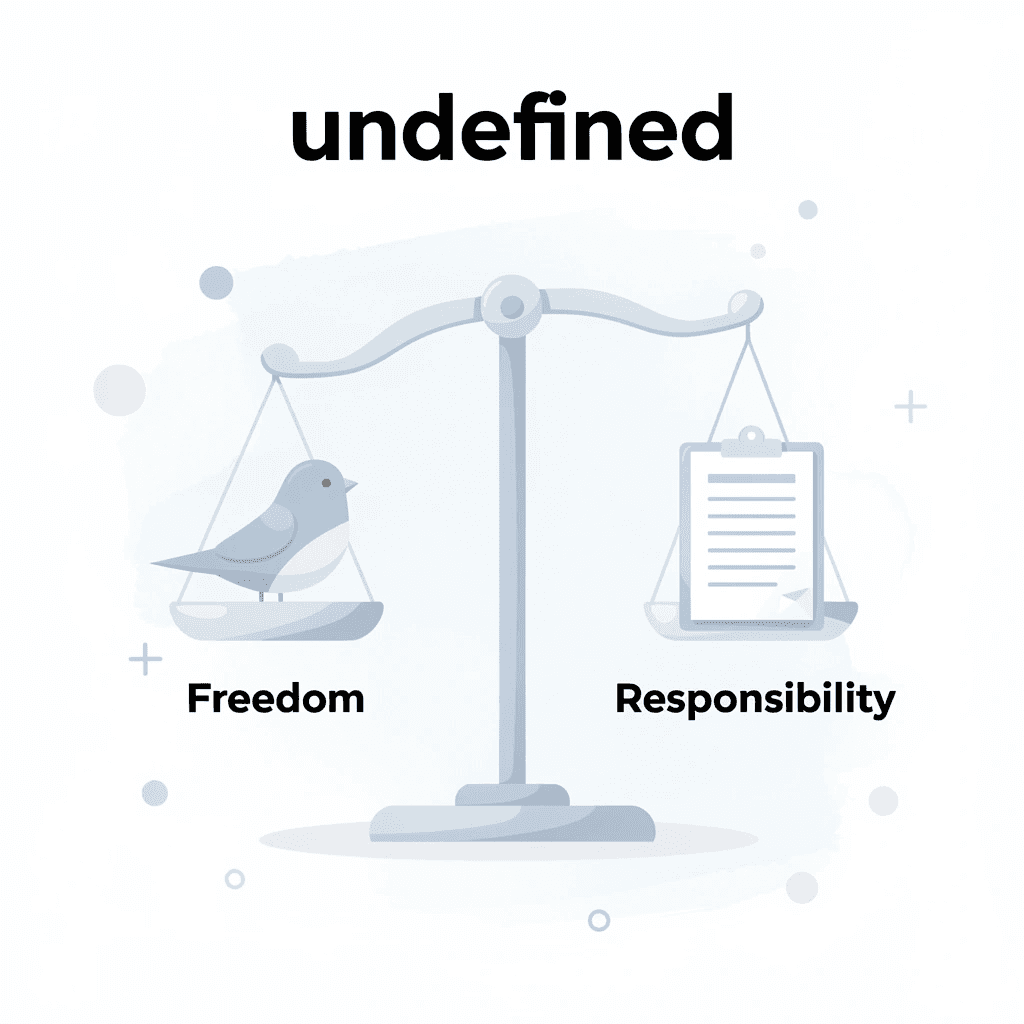
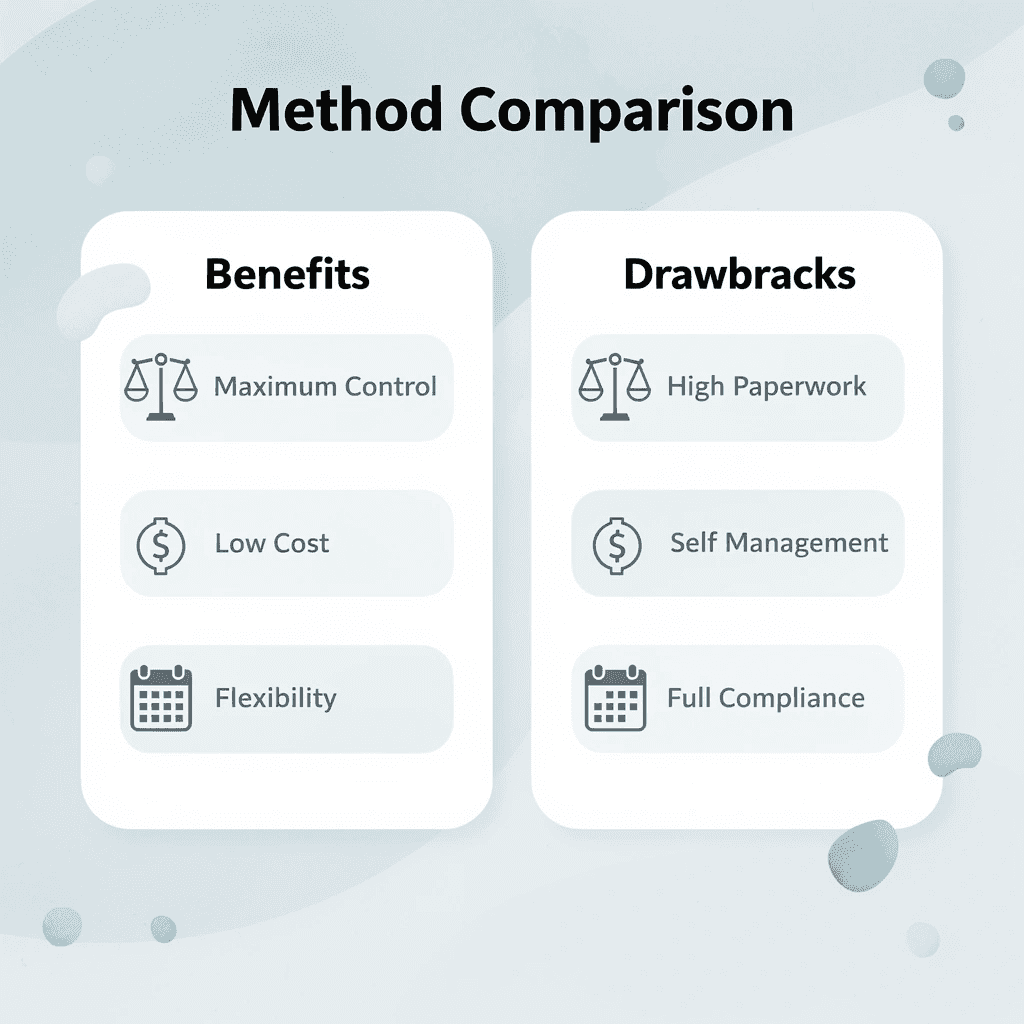
Florida has three legal ways to homeschool. The first way is under the Home Education Statute (Florida Statute 1002.41), which lets you register directly with your county superintendent and maintain full control over curriculum and instruction. The second way is to enroll your child in a private umbrella school that provides oversight and administrative support. The third way is to hire a state-certified private tutor. Each pathway differs in documentation requirements, levels of administrative involvement, and educational freedom.
🎯 Key Point: The Home Education Statute offers the most educational freedom but requires you to handle all record-keeping and compliance responsibilities yourself.
"Florida's Home Education Statute allows parents to maintain complete control over curriculum choices while meeting basic state requirements." — Florida Department of Education
Homeschool Method | Administrative Burden | Educational Freedom | Cost |
|---|---|---|---|
Home Education Statute | High | Maximum | Low |
Umbrella School | Low | Moderate | Moderate |
Private Tutor | Minimal | Limited | High |
⚠️ Warning: Each method has specific documentation requirements and reporting deadlines that you must follow to remain compliant with Florida law.
What are the four specific obligations under Florida's Home Education Statute?
The Home Education Statute requires four specific obligations. First, file a written notice of intent with your county district school superintendent within 30 days of beginning your program—this one-time filing establishes your legal status. Second, maintain a portfolio that includes a log of educational activities (including titles of reading materials) and samples of your child's work. Third, submit an annual evaluation showing educational progress through one of five approved methods: a portfolio review by a Florida-certified teacher, a nationally normed standardized test, a state student assessment test, an evaluation by a licensed psychologist, or any method mutually agreed upon with the superintendent. Fourth, file a notice of termination when you complete your program or move to a different county.
How does the portfolio requirement work in practice?
The portfolio requirement exists in a legal gray zone. You must maintain it, but the district cannot request an inspection without providing 15 days' written notice, and inspection is not mandatory. Your portfolio serves as proof of your educational conduct if questions arise and remains with you unless specific circumstances require review.
What Florida Doesn't Require
Florida doesn't require a teaching certificate, formal educational credentials, a state-approved curriculum, or annual lesson plan submissions. There are no minimum instructional hours per day or specific school days per year. The state requires only "sequentially progressive instruction" without dictating pace, schedule, or methodology. When documenting educational activities for your portfolio, platforms like My Coloring Pages offer 69,451+ free customizable coloring pages that serve as legitimate portfolio artifacts demonstrating letter formation, number recognition, or thematic content aligned with your child's developmental stage, meeting documentation requirements while keeping instruction personalized.
The Probation Period and Progress Accountability
If your annual evaluation shows your child isn't making enough progress, the district must notify you in writing. You then have a full calendar year to provide remedial instruction before further action occurs. Only if your child still shows no progress at year's end would your homeschool program face scrutiny or possible termination.
Moving Counties and Re-Enrolling in Public School
When you move to a new Florida county, file a termination notice with your original county and a notice of intent with your destination county within 30 days. If you re-enroll your child in public school, the district must place them based on age and yearly evaluations you've submitted, not automatically in a lower grade due to homeschool status. Homeschool students retain access to public school extracurricular activities, including sports teams, and can enroll part-time in specific courses such as career and technical programs. Children with disabilities qualify for special education testing and services while homeschooling.
Florida Homeschool Requirements You Must Know About
Florida has four legal requirements: filing a notice, maintaining a portfolio, submitting an annual evaluation, and filing a termination notice. The challenge lies in implementation: determining what documentation proves compliance with rules, how much documentation you need, and which evaluation method aligns with your teaching style.
🎯 Key Point: While Florida's homeschool laws appear straightforward, the devil is in the details—knowing exactly what documentation satisfies each requirement can save you from compliance headaches down the road.
"The four core requirements form the foundation of Florida homeschool compliance, but understanding the practical application of each requirement is where most families need guidance." — Florida Department of Education Guidelines
⚠️ Warning: Don't wait until your annual evaluation is due to figure out your documentation system—start organizing your portfolio from day one to avoid scrambling later.
What information must you include in your notice of intent?
You have 30 days from when you begin homeschooling to submit a written notice of intent to your county district school superintendent. The notice must include your name, address, and your child's name, birthdate, and current grade level. Some counties provide a standard form on their website; others accept a simple letter. Either approach satisfies the law as long as you submit it in writing and retain proof of delivery.
How often do you need to file the notice of intent?
This filing is one-time only. You don't renew it annually or update it when your child advances to a new grade. According to the Florida Parent Educators Association, this process falls under Statutes 1003.21 and 1002.41, which establish the legal framework for home education programs across the state. The district acknowledges receipt and adds your child to their homeschool registry.
What exactly is the portfolio requirement?
The portfolio requirement creates anxiety because it exists in a legal grey area. You must keep it at home, but submit it only if specifically requested with 15 days' written notice. It serves as insurance—proof you're providing education if questions arise—but remains in your possession unless inspection is triggered.
What components must your portfolio include?
Your portfolio needs two components: a log of educational activities (titles of reading materials, recorded during instruction) and samples of your child's work (writings, worksheets, workbooks, creative materials). The statute doesn't specify how many samples, logging frequency, or documentation format. This ambiguity offers flexibility, but you need sufficient documentation to demonstrate educational progress if the review is conducted.
How can you create portfolio samples efficiently?
Resources that create real work samples solve two problems at once. Platforms like My Coloring Pages offer 69,451+ free, customizable coloring pages that align with specific learning goals, including letter formation, number recognition, and thematic units. These coloring pages serve as portfolio artifacts that demonstrate step-by-step, progressive instruction, meeting documentation requirements while keeping lessons aligned with your child's developmental stage and interests.
What are Florida's five evaluation options?
Florida offers five evaluation options. A portfolio review by a Florida-certified teacher assesses your documentation and educational progress in writing. A nationally normed standardized test administered by a certified teacher generates percentile scores comparing your child to age peers. A state student assessment test uses Florida's testing framework. A licensed psychologist can provide a clinical assessment of academic development. The fifth option allows you to propose any other valid measurement tool with a written superintendent agreement, though this requires negotiation and is rarely used.
How does your evaluation choice affect documentation?
The evaluation method you choose determines what you document throughout the year. Portfolio review relies on daily logs and work samples as evidence. Standardized testing makes your child's test performance the sole measure of progress. You must submit a copy of the evaluation to your superintendent annually; most families align this with the anniversary of their notice of intent.
When do you need to file a notice of termination?
When your homeschool program ends, you have 30 days to file a written notice of termination with your superintendent. This applies when you graduate your child, move to another county, or enroll in public or private school. The termination notice closes your active registration and removes your child from the homeschool roster. If you move counties within Florida, file a termination notice with your original county and a notice of intent with your destination county to maintain continuous legal coverage during the move.
What happens if you don't file termination paperwork?
The termination requirement catches families who drift away from homeschooling without formally ending it. If you stop teaching at home but never file a termination, your child remains on the homeschool registry, and the district expects annual evaluations that never arrive. This creates compliance issues that surface when you re-enroll in public school or when truancy concerns prompt district follow-up. A five-minute termination notice prevents months of administrative cleanup.
How to Homeschool in Florida
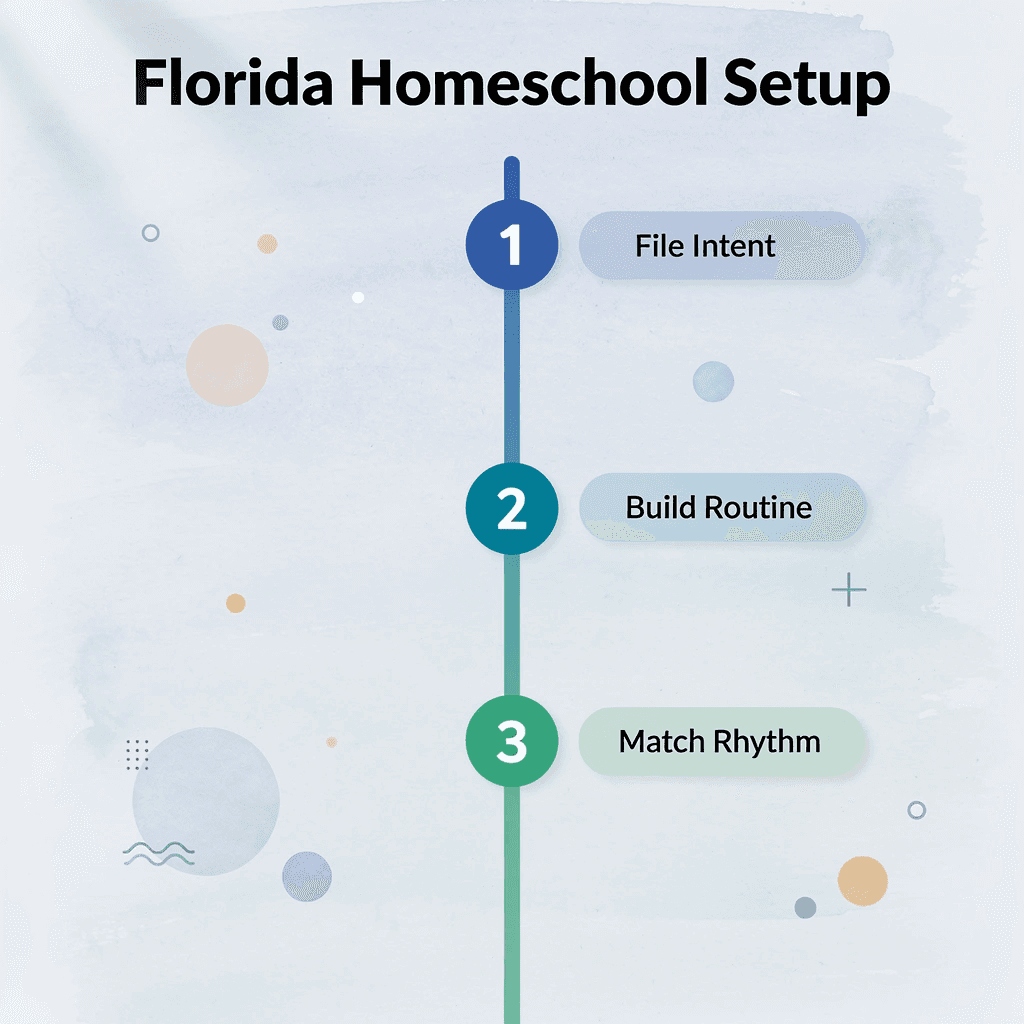
File your notice of intent, then build your daily routine around your child's natural learning rhythm. Most families find that 2-4 focused hours per day accomplish more than six hours of forced seat time, and Florida law gives you complete freedom to structure those hours however your child learns best.
🎯 Key Point: Florida's flexible homeschool laws allow you to customize your child's education schedule to match their peak learning times, whether that's early morning or afternoon sessions.
"Most families find that 2-4 focused hours per day accomplishes more than six hours of forced seat time in traditional classroom settings." — Florida Homeschool Experience Survey, 2024
File Your Notice of Intent Within 30 Days
Write a letter to your county superintendent that includes your name, address, and your child's name and birthdate. Some districts provide a template, while others accept a plain letter with these four pieces of information. Mail it certified mail or deliver it in person, and keep your receipt. This filing remains active until you submit a termination notice.
Which evaluation method should you choose before starting
Florida offers five evaluation options: a portfolio review by a certified teacher, a nationally normed standardized test, a state assessment, an evaluation by a licensed psychologist, or a mutually agreed-upon method with your superintendent.Pick one now because your choice determines what you document all year. Portfolio families need consistent work samples and activity logs, while testing families focus on academic preparation for a single assessment day. Waiting until May to decide creates unnecessary stress and incomplete documentation.
How can you create portfolio evidence without an expensive curriculum
When you need materials that create proof of learning without an expensive packaged curriculum, customizable resources solve two problems at once. My Coloring Pages offers 69,451+ free downloadable pages you can modify for letter formation practice, number recognition, or themed units matching your teaching goals. These become real work samples that show step-by-step instruction, meet documentation requirements, and keep lessons personalized to your child's developmental stage and interests.
Keep Your Portfolio Simple and Current
Update your portfolio weekly instead of rebuilding it in June. A basic notebook works fine: write the date, list what you read, note completed activities, and file 2–3 work samples per subject each month. A sample entry: "Monday, March 4: Read Chapter 3 of Charlotte's Web, completed 10 spelling words, practiced multiplication tables, watched documentary about Florida ecosystems." Five minutes of daily documentation prevents hours of reconstruction later. Save worksheets, photos of projects, writing samples, or drawings with labels in a three-ring binder or cloud folder. When evaluation time arrives, everything is already organized.
Build Your Schedule Around Attention Spans, Not Arbitrary Time Requirements
Florida does not require a minimum number of school hours or a 180-day school calendar. Your child's ability to focus determines your schedule. A kindergartener might work well for 90 minutes before needing to move around, while a middle schooler might concentrate for three hours with interesting material. According to the Florida Parent Educators Association, families report that focused teaching of 2-4 hours daily covers more content than 6 hours in a traditional classroom because it eliminates transitions, waiting, and off-task time.
Connect with Local Homeschool Groups for Support and Resources
Join your county's homeschool community through organizations like the Florida Parent-Educators Association. These groups run co-ops where children take classes together, organize field trips to museums and nature centers, and host park days for socialization. Other families share which evaluators understand homeschool methods, which standardized tests are manageable, which curriculum works for struggling readers, and how to handle high school transcript creation. This peer knowledge prevents costly mistakes and reduces isolation.
How to Choose the Right Homeschool in Florida
Start with how your child learns, not the program that sounds most impressive. Watch how your child responds to new information: do they need to see it, touch it, or hear it explained? A visual learner will struggle through an audio-heavy program regardless of its rating. A kinesthetic learner needs hands-on projects, not another workbook. The best program matches your child's brain.
🎯 Key Point: The most successful homeschool choice isn't about finding the "perfect" curriculum—it's about finding the perfect match for your child's unique learning style.
"Children who receive instruction matched to their learning preferences show 23% better retention and increased engagement compared to mismatched teaching methods." — Educational Psychology Research, 2023
⚠️ Warning: Don't choose a program based on other parents' success stories. What works for their visual learner might be wrong for your auditory learner.
How do you identify your child's learning style?
Visual learners benefit from colorful materials, diagrams, and videos that demonstrate concepts. Platforms like Time4Learning or Khan Academy work well because they present information in graphical form. Hands-on learners need experiments, building projects, and real-world activities that let them manipulate objects to understand complex ideas. Auditory learners thrive with read-alouds, discussions, and audio lessons. According to the National Home Education Research Institute, homeschooled students score 15 to 30 percentile points above public school students on standardized academic achievement tests, but this advantage disappears if a child is forced into a learning format that contradicts their natural processing style.
What free resources can supplement your curriculum?
Resources like My Coloring Pages, with 69,451+ free downloadable pages, let you create customized activities for visual and kinesthetic learners without the cost of a packaged curriculum. The collection helps you adapt pages for letter formation practice, number recognition, or thematic units that match concepts your child struggles with. Color coding, pattern recognition, and fine motor practice make abstract ideas concrete, letting you add to any core curriculum with activities matched to your child's developmental needs.
Decide Between a Home Education Program and an Umbrella School
Florida has two main ways to homeschool. With a home education program, you file paperwork directly with your county, maintain a portfolio of your child's work, and choose the evaluation method. You have full control over curriculum, pacing, and teaching approach. With an umbrella school, you enroll your child in a private school that handles state compliance, provides official transcripts, and may assist with curriculum selection. Choose home education if you want maximum freedom and minimal oversight. Choose an umbrella school if you need organizational support, prefer to avoid paperwork, or want an official private school transcript for college applications.
Look for Programs with One-on-One Advising
Some programs provide a dedicated academic advisor who learns your child's strengths, struggles, and learning preferences. This advisor helps you choose a curriculum, set realistic goals, address failing lessons, and provide emotional support. A consistent person who knows your situation beats calling a general helpline where you repeatedly explain your child's needs. If you're new to homeschooling, choose programs with personalized guidance over those with impressive curriculum libraries but no human support.
Check for Scholarship Approval Before Committing
Florida offers several scholarships, including the Personalized Education Program (PEP) and the Family Empowerment Scholarship for Students with Unique Abilities (FES-UA). If you plan to use scholarship funding, ensure your chosen program appears on that scholarship's approved provider list, as some scholarships cover only specific curricula or umbrella schools. Check the Florida Department of Education website for current approved provider lists before making financial commitments. Selecting a program based on scholarship eligibility addresses structural fit, not whether that program delivers results for students like yours.
Related Reading
- Homeschool Room
- How To Homeschool Your Kids
- Colorado Homeschool Laws
- Abeka Homeschool Curriculum
- Georgia Homeschool Laws
- 6th Grade Homeschool Curriculum
- Homeschool Preschool
- Homeschool Room Ideas
- 1st Grade Homeschool Curriculum
- How To Homeschool In Texas
- Homeschool Vs Public School
- Homeschool Coop
- Pre K Homeschool Curriculum
- Kentucky Homeschool Laws
- Homeschool Report Card Template
- Texas Homeschool Requirements
10 Best Homeschool Programs in Florida
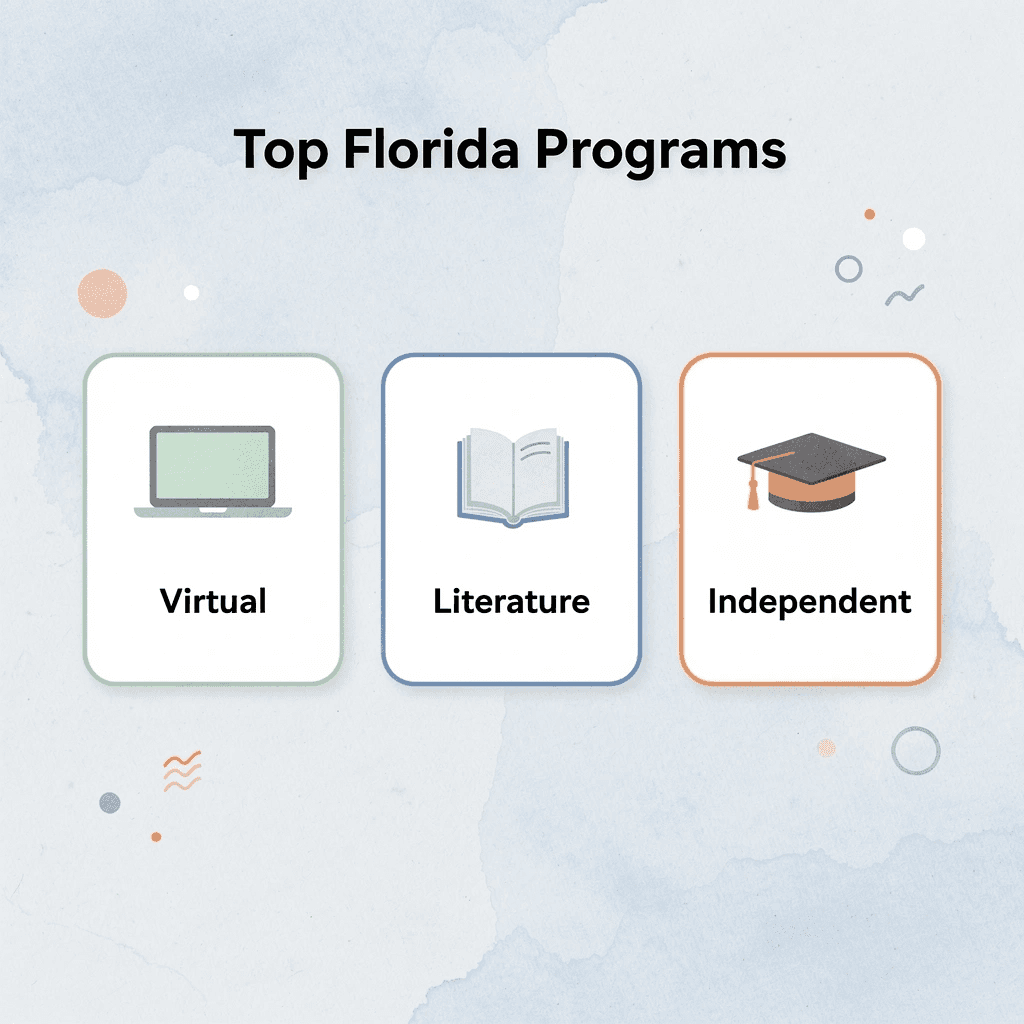
Florida Virtual School offers state-certified teachers and full accreditation at no cost. Sonlight delivers a literature-based curriculum with biblical worldview integration for families seeking faith-centered education. Northgate Academy provides regionally accredited Christian high school diplomas through self-paced online courses that adapt to individual learning speeds. Your choice depends on which structure matches how your family learns, not which program ranks highest.
🎯 Key Point: The best homeschool program isn't the one with the highest rating—it's the one that matches your family's learning style and educational goals.
"Florida Virtual School serves over 200,000 students annually, making it one of the largest virtual education providers in the United States." — Florida Department of Education, 2024
💡 Tip: Consider your child's learning preferences before choosing between teacher-led instruction (Florida Virtual School), parent-guided curriculum (Sonlight), or independent study (Northgate Academy).
1. Florida Virtual School (FLVS)
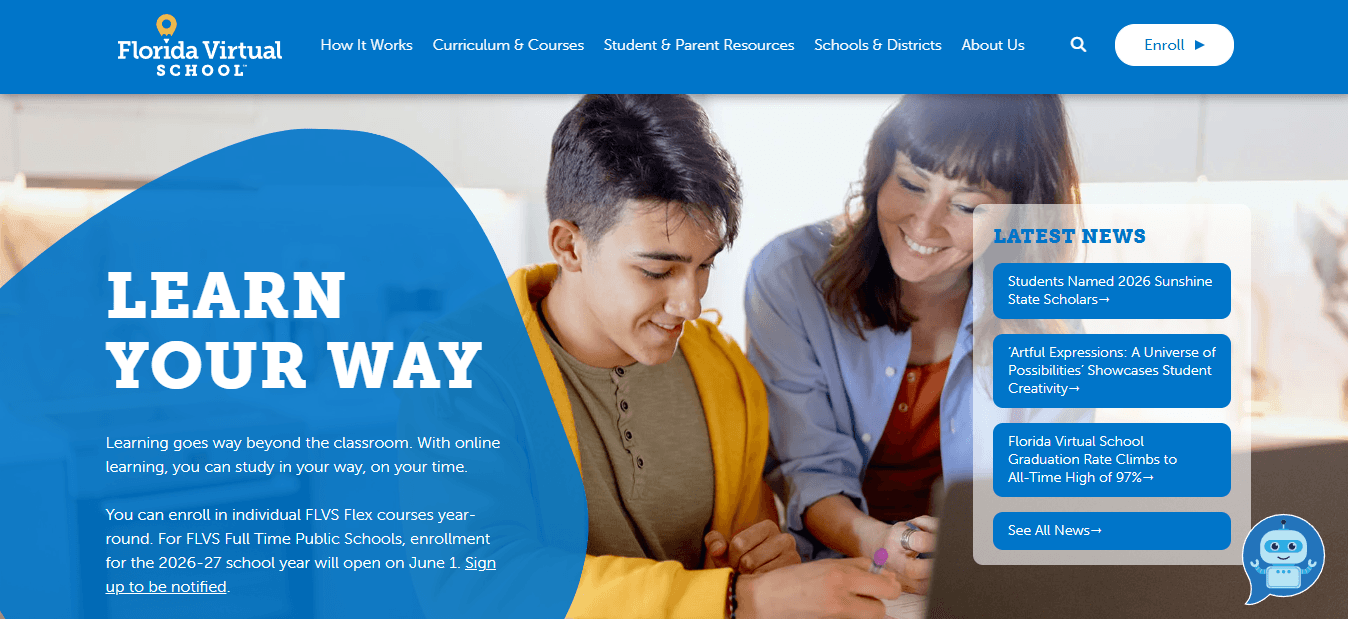
FLVS operates as Florida's state-approved virtual school with over 200 online courses taught by Florida-certified teachers. You can enroll full-time as a public school student or take individual courses while maintaining your home education registration. The platform offers complete flexibility in pacing whilst maintaining structured weekly goals.
How does FLVS work for homeschool families?
One parent shared that her fifth grader completes about three hours of independent work daily, leaving afternoons free for hands-on activities, field trips, and passion projects like flight lessons. Certified teachers monitor progress and provide support without requiring physical attendance or rigid scheduling. The program includes AP courses, honors tracks, and career and technical education options that give high schoolers college-level rigor without the expense of private programs.
Is FLVS right for your homeschool?
Consider FLVS if you want a certified teacher's support with a flexible schedule. Skip it if you prefer to control the curriculum yourself or minimize screen time.
2. Miami-Dade Online (MDO) / K12 Florida
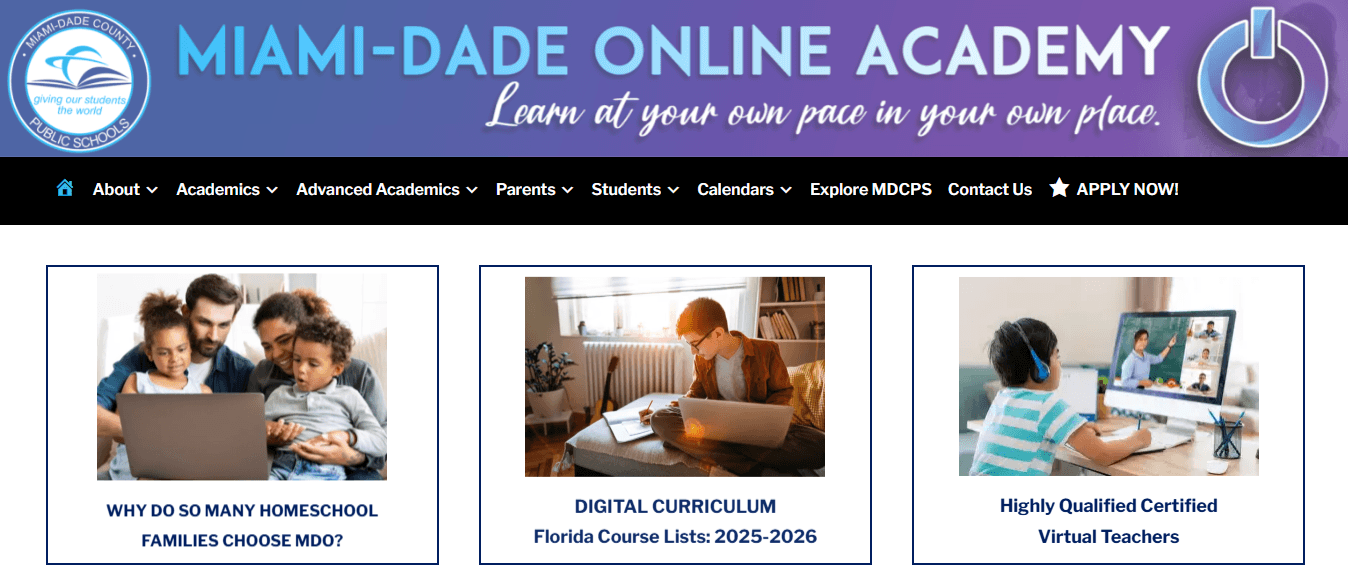
This full-time online public school serves Miami-Dade residents through the K12 platform. Students earn an official Miami-Dade County Public Schools diploma equivalent to those from traditional public schools. Florida-certified teachers provide instruction, and parents can customize the learning schedule within the platform's structure.
How does MDO compare to traditional homeschooling?
The program reports a 100% graduation rate and offers honors, AP, and dual-enrollment courses. It's public school instruction delivered at home with professional teachers and district accountability, not parent-directed homeschooling. The K12 platform provides digital curriculum across core subjects, but you follow their scope and sequence rather than designing your own.
Should you choose MDO for your family?
Choose MDO if you live in Miami-Dade County and want a public school diploma from home. Skip it if you live elsewhere or prefer homeschooling with parent-directed learning.
3. Connections Academy (Florida)
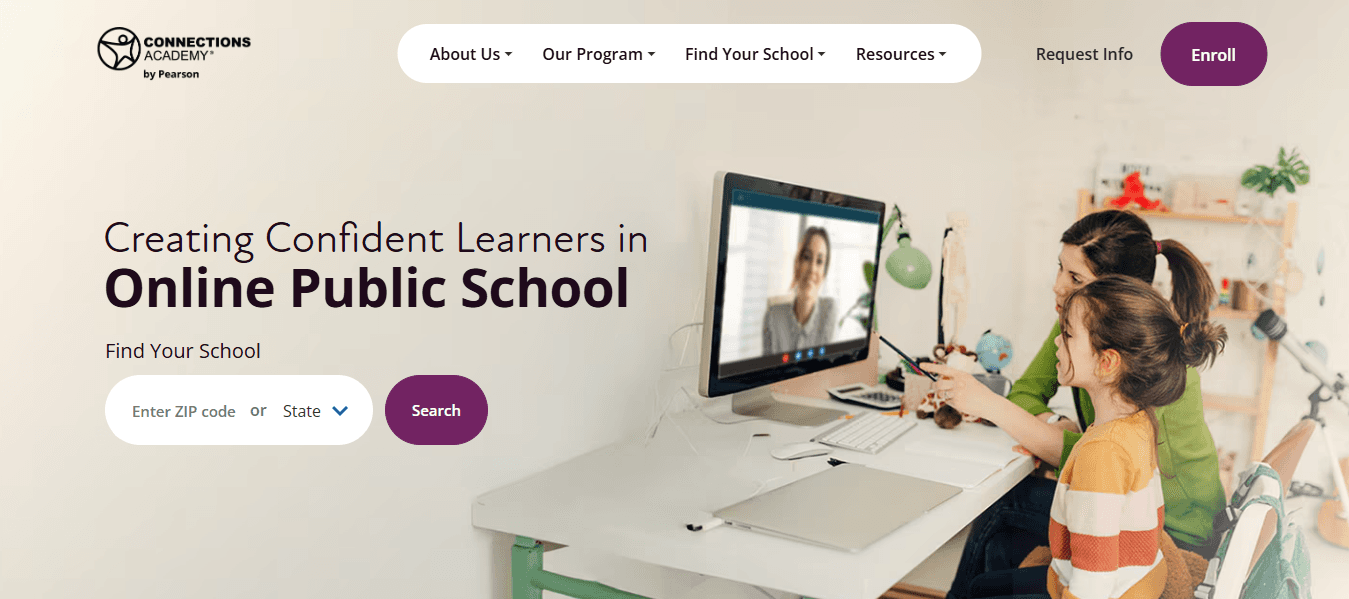
Connections Academy provides Florida residents with a free online public school taught by certified teachers who grade all work. The structured daily schedule mirrors traditional schools, easing the transition for students who benefit from routine and predictability.
What special support does Connections Academy offer?
Parents report that teachers respond quickly and provide strong special education support. Students with IEPs receive accommodations and services matching those of traditional public schools, filling a gap many homeschool programs ignore. Virtual clubs and social events enable students to connect with peers without requiring in-person attendance.
Is Connections Academy right for your family?
Consider Connections Academy if your child thrives with structure or needs special education services. Skip it if you want to create your own curriculum or prefer an unschooling approach.
4. Sonlight Curriculum
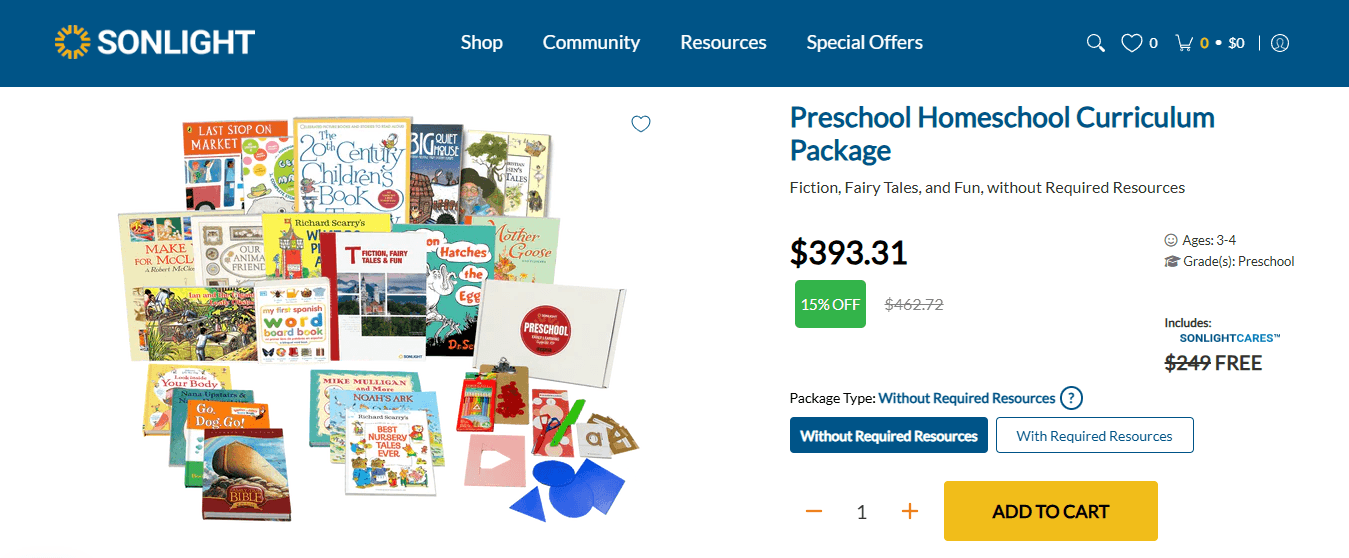
Sonlight builds complete curricula around real books instead of textbooks, using literature to teach history, science, Bible, and language arts. The program provides fully planned four or five-day schedules that eliminate prep time, allowing you to open the instructor guide and begin teaching immediately.
How does Sonlight integrate faith-based learning?
A Christ-centered worldview shapes every subject, integrating biblical principles into science, history, and character development. Miacademy recognizes Sonlight among the top homeschool curricula for its literature-based approach and parent support. Sonlight appears on Florida's approved vendor list for the PEP Scholarship, allowing you to use scholarship funds for their materials.
Is Sonlight the right choice for your family?
Choose Sonlight if you like reading aloud, want to minimize preparation time, and prefer faith-based education. Skip it if you need non-religious content, your child dislikes reading, or you prefer digital formats.
5. Northgate Academy
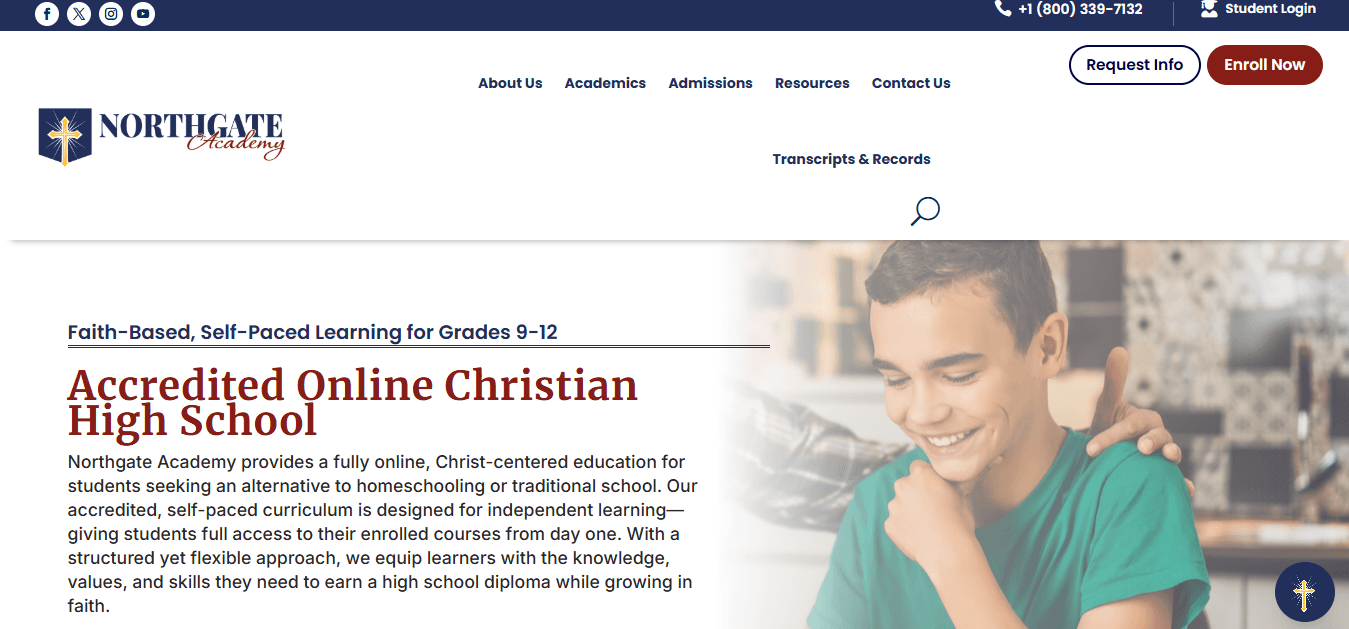
Northgate Academy is a fully accredited online Christian high school for grades 9-12, offering a regionally accredited diploma through Cognia, which is recognized nationwide for college admissions and employment. Self-paced courses include automatic grading and record keeping, eliminating transcript-building work for homeschool parents.
How does Northgate Academy work for Florida families?
Florida families can use Northgate Academy as their private school umbrella option to meet state requirements while the academy handles curriculum and documentation. Students can transfer existing credits without losing academic progress, and monthly tuition makes it more affordable than traditional private schools.
Is Northgate Academy right for your family?
Choose Northgate Academy if you need an accredited Christian high school diploma and prefer minimal parental grading. Skip it if you have elementary- or middle-school students or prefer a secular education.
6. The School House Anywhere (TSHA)
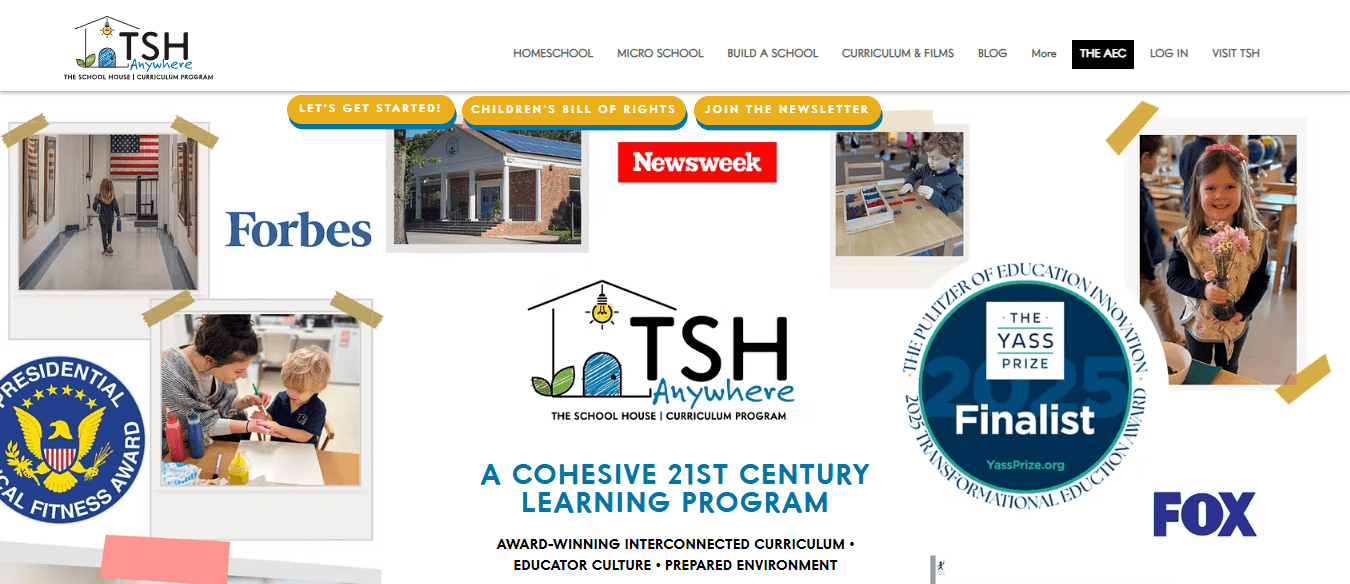
TSHA delivers an accredited homeschool program using the American Emergent Curriculum, which adapts lessons to your child's interests and pace. Children learn through hands-on projects and inquiry-based discovery rather than predetermined lesson sequences, with minimal screen exposure.
What makes TSHA's approach unique?
The screen-free approach focuses on real-world activities, experiments, and creative work. The non-profit offers affordable tuition with flexible payment plans and maintains a supportive online community where families share project ideas and strategies.
Is TSHA right for your family?
Choose TSHA if you want to limit screen time, value project-based learning, and prefer child-led exploration. Skip it if you need a structured textbook progression or a fully digital solution requiring minimal parent involvement.
7. Time4Learning
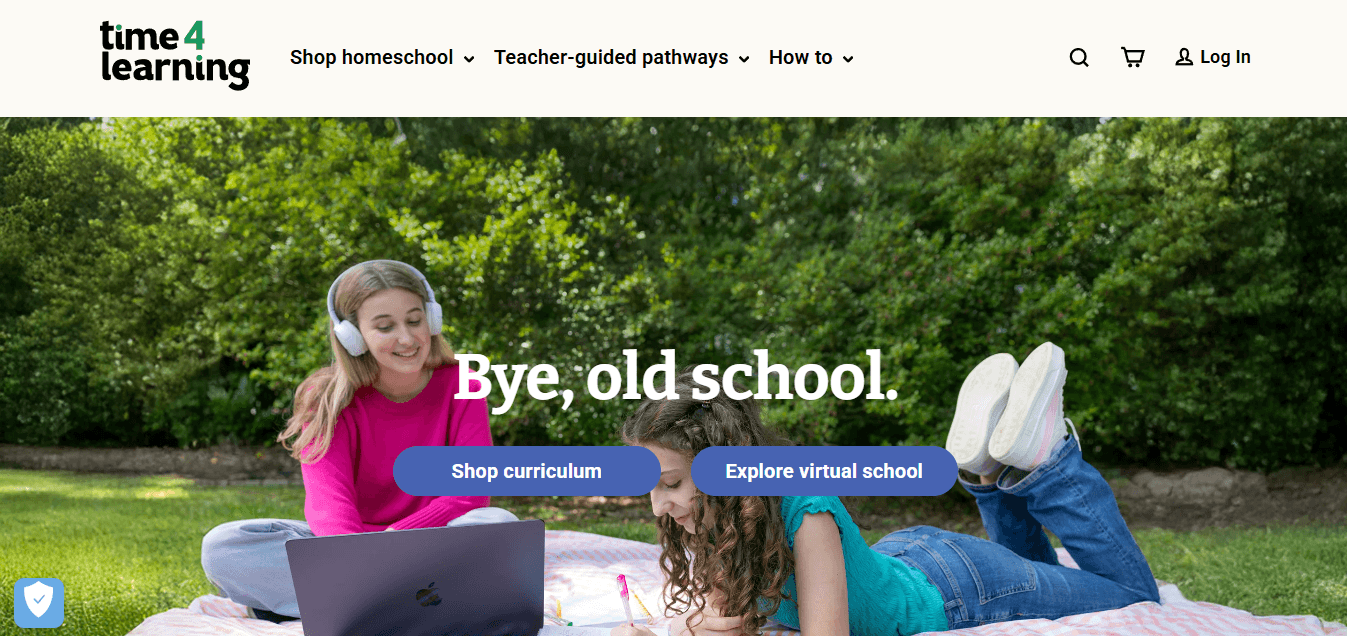
Time4Learning offers interactive, multimedia lessons in all core subjects through a subscription-based platform. Automated grading and progress tracking reduce parent workload, making it popular among working parents and those managing multiple children at different grade levels. Interactive videos, animations, and activities engage students without requiring parent-led instruction. The monthly subscription allows for cancellation at any time without long-term commitments. Time4Learning appears on Florida's PEP Scholarship-approved vendor list, enabling families to use scholarship funds for subscriptions. Consider Time4Learning if you want a low-prep, engaging online curriculum with automatic recordkeeping. Skip it if you prefer literature-based or hands-on approaches, or if you're reducing screen time.
8. Covenant Light Private School (CLS)
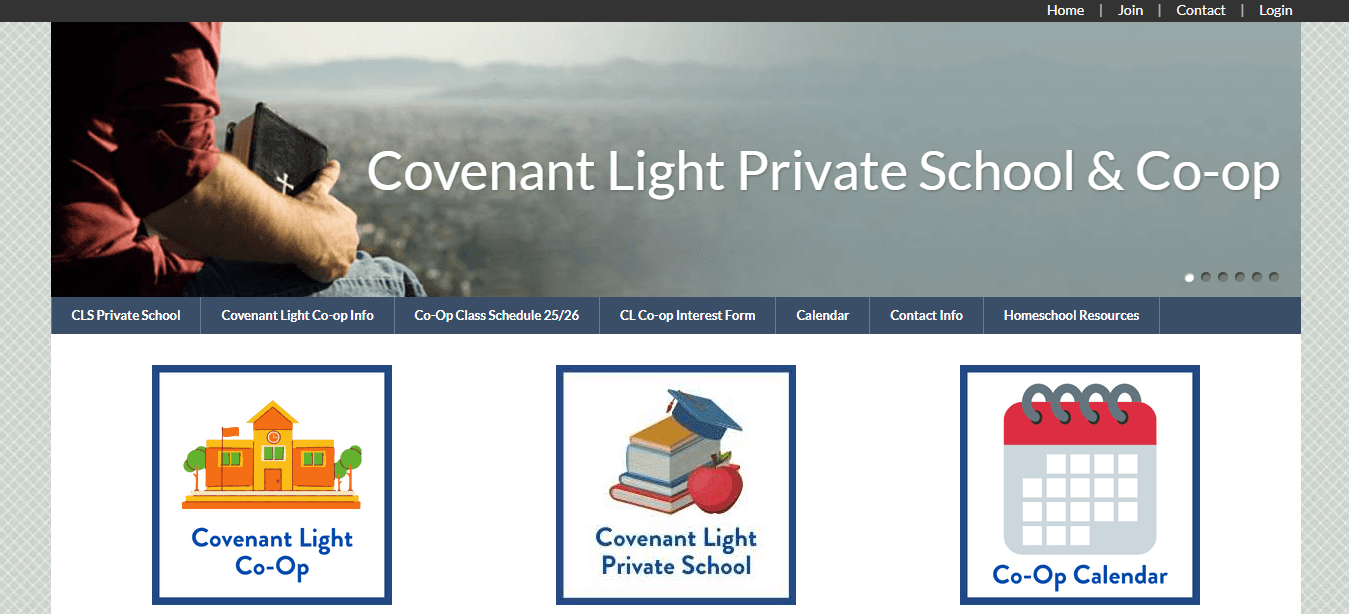
CLS functions as both an umbrella school and a co-op serving Lake County and surrounding areas in Central Florida. Families enroll with CLS instead of registering with the county school board. The school handles legal compliance and record-keeping, while parents remain the primary teachers and select their own curriculum.
What community activities does CLS offer?
The co-op offers academic and elective classes, field trips, park days, social events, science fairs, and spelling bees. These activities create in-person community connections that purely online programs cannot match. Co-op participation is optional for umbrella enrollment, giving families flexibility to use only the services they need. CLS has served homeschool families since 1992.
Is CLS the right choice for your family?
Choose CLS if you live near Lake County, want umbrella school protection, and desire an in-person community. Skip it if you live far from Central Florida or prefer independent homeschooling without organizational membership.
9. Pasco Flex Education Program
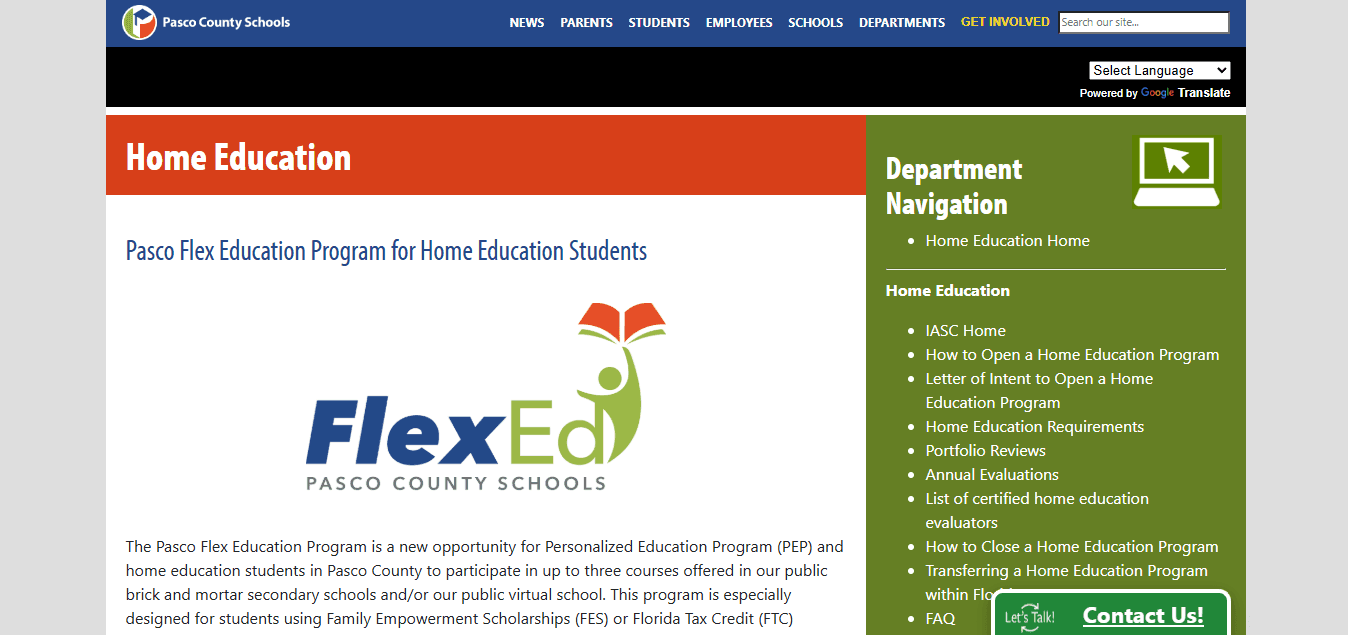
Pasco Flex allows home education students in Pasco County to take up to three courses at their zoned public school or through Pasco eSchool. This hybrid model provides access to specialized courses—such as lab sciences, foreign languages, and electives—that require equipment or expertise most families cannot provide at home.
How does Pasco Flex maintain home education status?
Students maintain their home education status while using certain resources. The program accepts both PEP scholarship students and traditional home education students; however, transportation is not provided, and students do not earn a Pasco County Schools diploma through partial enrollment.
Should you consider Pasco Flex for your family?
Consider Pasco Flex if you live in Pasco County and your teen needs special classes or lab work. It's not suitable if you live outside Pasco County or prefer a traditional full-time public school.
10. Umbrella Schools (Allendale Academy, Applewood Private Education, Life Learning Academy)
Umbrella schools provide private school coverage for Florida homeschool families, handling state compliance while you remain the primary educator. They issue official private school transcripts and diplomas, which some families prefer over home education documentation for college applications and employment verification. Florida Unschoolers offers a free umbrella option that removes cost as a barrier. You choose your own curriculum and teaching methods while the umbrella school manages legal requirements and recordkeeping. This appeals to families seeking private school benefits without co-op participation or regular meetings.
Should you choose an umbrella school for your Florida homeschool?
Consider umbrella schools if you want private school status without joining a co-op. Skip them if you prefer filing directly with your county, which remains simple and free under Florida's home education law. Most families struggle with quality control when programs lack curriculum standards or testing requirements to measure student progress. This concern intensifies when state scholarship money funds programs with minimal oversight, raising legitimate questions about educational outcomes versus regulatory compliance.
How can you create portfolio documentation without an expensive curriculum?
When you document educational activities for portfolio reviews, free resources that create authentic work samples solve multiple problems. Platforms like My Coloring Pages offer 69,451+ customizable coloring pages aligned with specific learning goals, including letter recognition, number patterns, and thematic units. These become real portfolio artifacts showing hands-on learning activities, offering flexibility to supplement any core program while meeting documentation requirements for annual evaluations. Choosing a program based on accreditation status and curriculum philosophy addresses only part of the equation: whether you can afford it and access materials without straining your budget.
Download 69,451+ free worksheets for homeschooling in Florida
Curriculum materials cost $500 to $1,500 per child every year before field trips or extracurriculars. Florida's home education law doesn't require a packaged curriculum, but you need real work samples and documented activities for portfolio requirements. Free quality materials that meet state standards address both needs.
Free resources vary significantly in quality, accuracy, and accessibility. Some contain errors or poor formatting; others lock content behind email capture forms. The challenge is finding free materials worth using that you can access immediately.
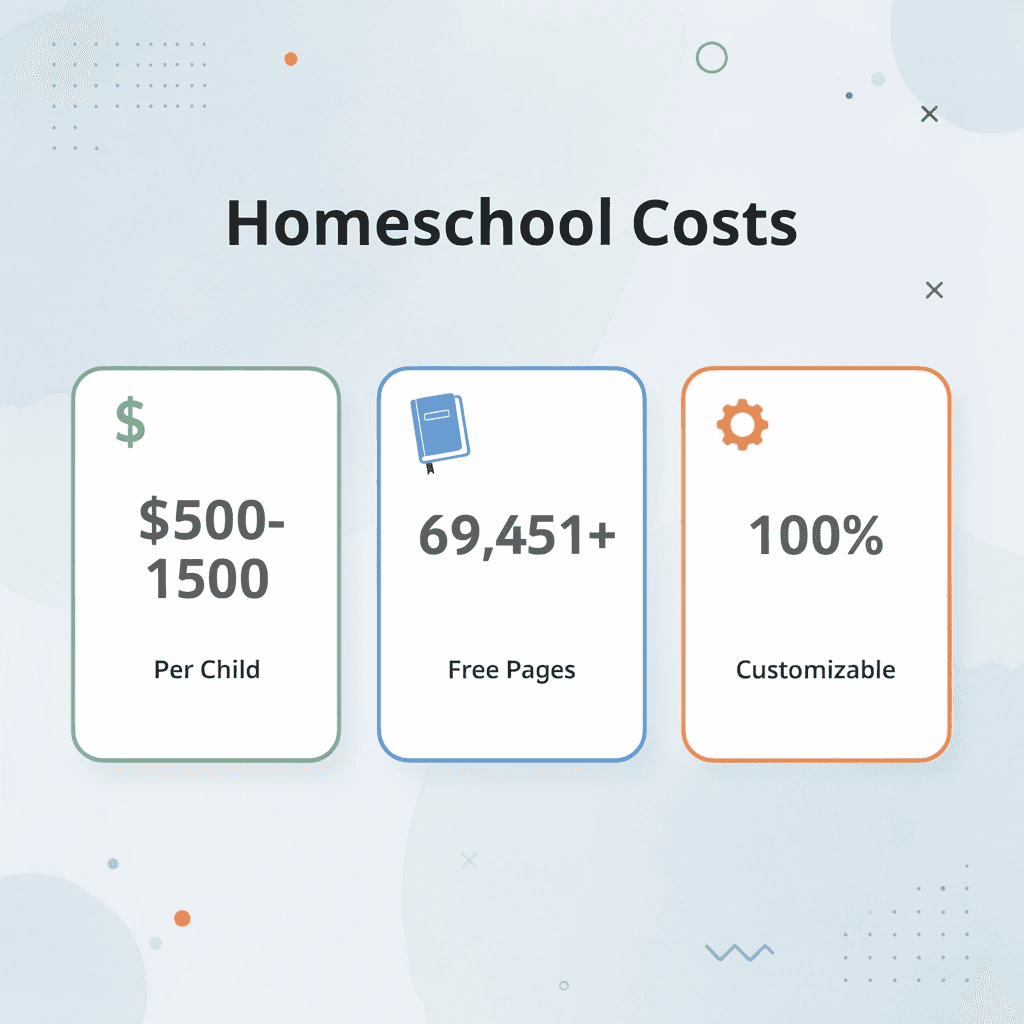
🎯 Key Point: Customizable materials let you target exact learning needs instead of settling for generic content that may not match your child's current skill level.
Platforms like My Coloring Pages provide 69,451+ free customizable coloring pages. The platform lets you create pages for letter formation practice where children color objects starting with specific sounds, number recognition exercises matching written numerals, or thematic units reinforcing science concepts like life cycles. Each completed page serves as a legitimate portfolio artifact demonstrating sequentially progressive instruction.
"When basic worksheets cost nothing, your PEP scholarship stretches further toward experiences that can't be downloaded—lab equipment, musical instruments, and field trips."
Customization matters more than quantity. Generic worksheets force your child to work on publisher-selected content regardless of actual learning gaps. Generating pages targeting the exact skill your child needs today eliminates the mismatch between available materials and instructional needs.
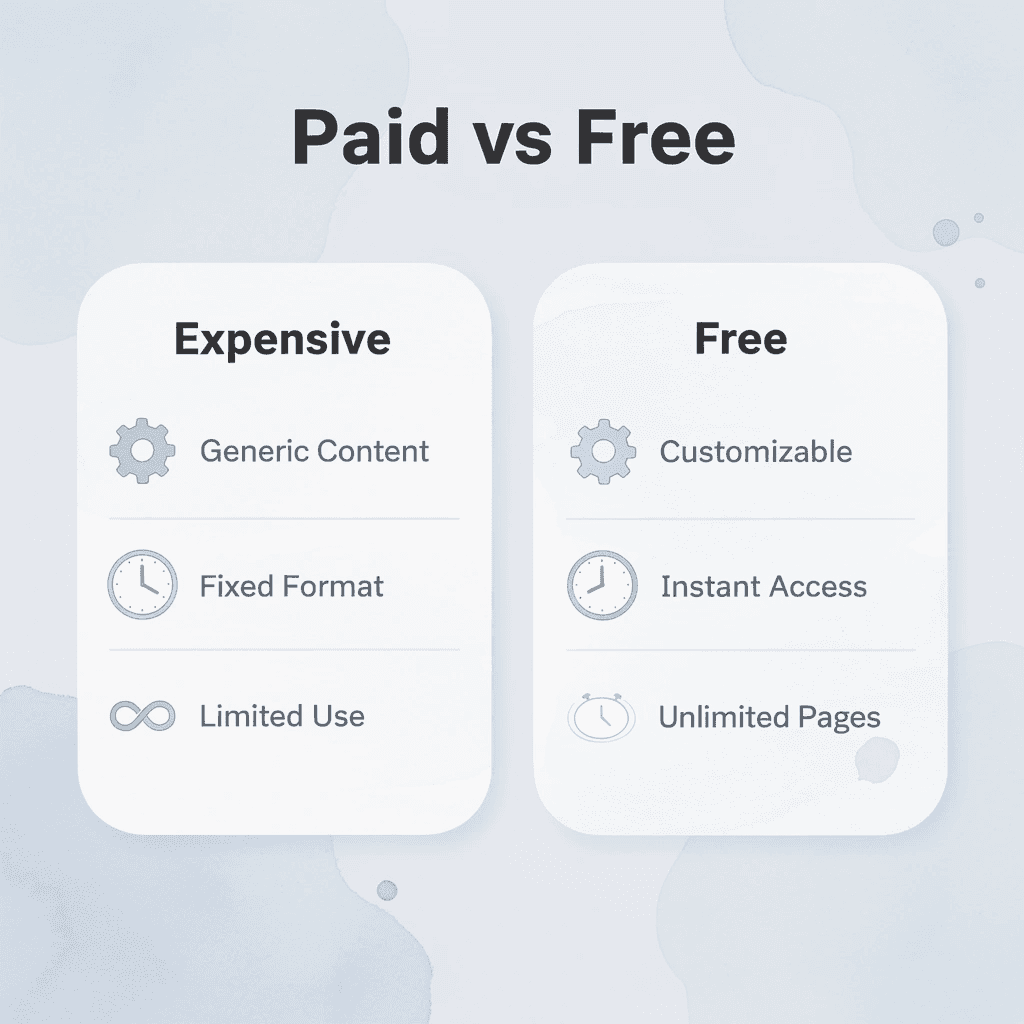
💡 Tip: Use free resources to experiment with different teaching approaches without financial risk—if your child responds better to visual learning, you can shift your approach using cost-free materials.
Free resources let you experiment with different teaching approaches without financial risk. If your child responds better to visual learning, you can shift your approach using cost-free materials. If a topic needs practice, you can generate additional pages instead of waiting for delivery or store visits.
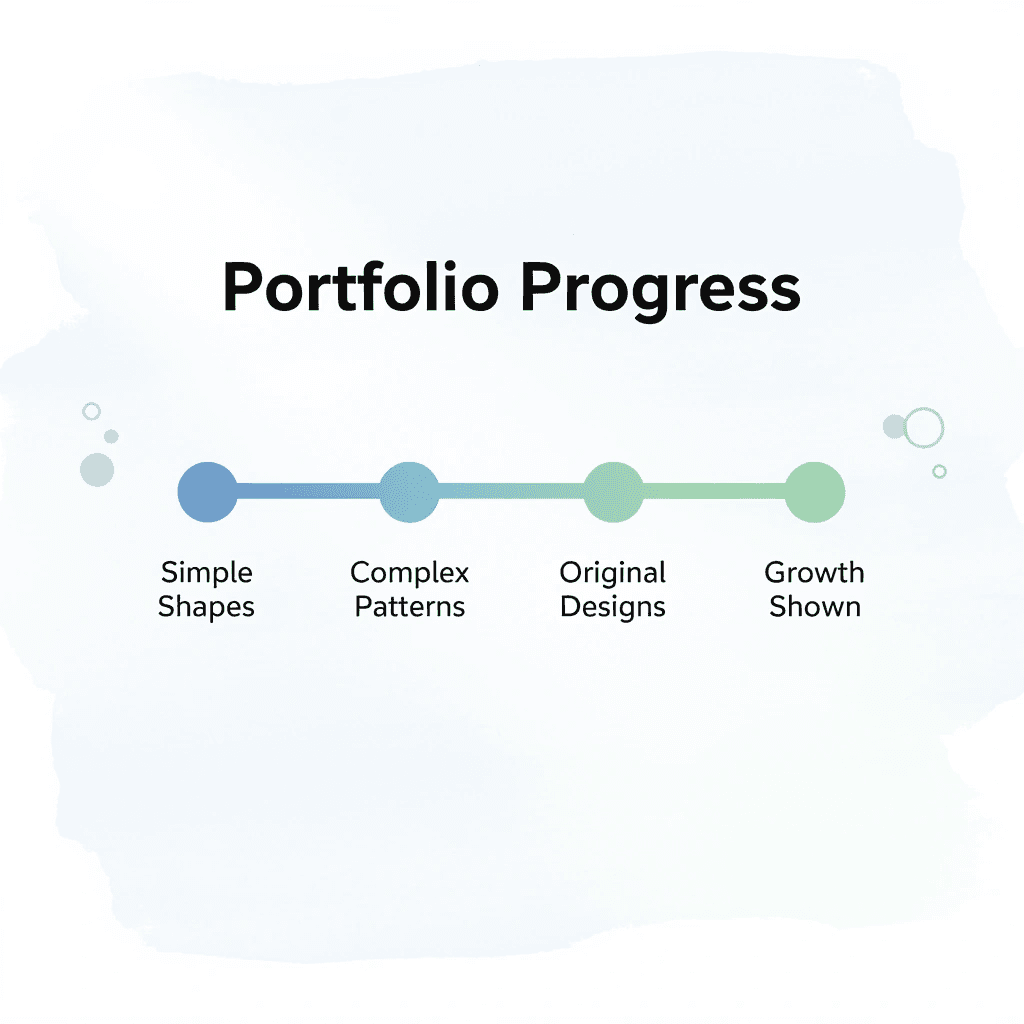
Time Period | Skill Demonstration | Portfolio Value |
|---|---|---|
September | Simple shapes coloring | Foundation skills |
December | Complex patterns | Skill progression |
March | Original designs | Educational growth |
Portfolio requirements become easier with consistent work samples showing progression. A child coloring simple shapes in September, then complex patterns in December, then original designs in March, demonstrates educational growth without expensive assessment tools.
⚠️ Warning: Don't wait for perfect materials—free quality resources available right now often work better than expensive packages that arrive weeks later when your child's interest has moved on.
Florida families using scholarship funds can redirect dollars toward experiences that can't be downloaded: lab equipment, musical instruments, sports fees, and field trips. When basic worksheets cost nothing, your PEP scholarship stretches further. Having materials always available matters more than most families realize. When your child shows sudden interest in a topic, you can create supporting materials while motivation is high, rather than promising to find something later. This responsiveness turns curiosity into momentum for learning.
Related Reading
- 5th Grade Homeschool Curriculum
- How To Homeschool In California
- Georgia Homeschool Requirements
- Alabama Homeschool Laws
- 2nd Grade Homeschool Curriculum
- Homeschool Reading Curriculum
- California Homeschool Laws
- 4th Grade Homeschool Curriculum
- North Carolina Homeschool Laws
- Homeschool Art Curriculum
- Accredited Homeschool Curriculum
- 3rd Grade Homeschool Curriculum
- Illinois Homeschool Laws
- Michigan Homeschool Laws
- Science Homeschool Curriculum