
Importance of Homeschool Co-ops and How to Choose One
Discover how homeschool co-ops benefit your family and find the perfect fit. My Coloring Pages guides you through selection criteria and success tips.


Managing homeschool curriculum across multiple grade levels while keeping younger children engaged presents a common challenge for many families. Homeschool co-ops provide an effective solution by allowing families to share teaching responsibilities, pool resources, and create richer educational experiences together. These collaborative groups help parents leverage their individual strengths while building supportive communities around shared learning goals.
Success in co-op environments depends heavily on having accessible, quality educational materials for all age groups. Parents need reliable resources that can adapt to various learning situations, from structured group activities to quiet independent work for younger siblings. For families seeking engaging preschool activities that complement their co-op curriculum, they can download 69,451+ free coloring pages to support both home learning and group instruction time.
Table of Contents
- Are Homeschool Co-ops Important for Parents?
- Benefits of Homeschool Co-ops
- How Homeschool Co-ops Work
- How to Choose a Good Homeschool Co-op
- 7 Best Homeschool Co-ops for Helping Parents in 2026
- Download 69,451+ Free Worksheets to Supplement Homeschool Learning
Summary
- Over 1.7 million children joined a homeschool cooperative in the U.S. last year, reflecting how many families now view co-ops not as a compromise but as a strategic enhancement to their homeschool model. Research by Medlin (2013) in the Peabody Journal of Education found that homeschool students demonstrate equal or higher social skills than traditionally schooled peers, and co-ops amplify this advantage by providing consistent, structured peer interaction without sacrificing the flexibility that drew parents to homeschooling in the first place.
- Co-ops address the expertise gap by allowing families to pool teaching strengths, with one parent leading science labs, another teaching debate, and someone else handling art projects. This rotation gives students exposure to different instruction styles and content areas that would be difficult to replicate on their own, while parents teach one subject well rather than eight subjects adequately. The collaborative approach also makes expensive materials like microscopes, art supplies, and musical instruments accessible through shared ownership rather than individual purchase.
- Studies on homeschooling sustainability show that lack of support and isolation are key reasons families quit. Co-ops distribute the teaching load across families who understand the commitment because they're living it too, providing both practical help and emotional support from others who don't question educational choices or judge family size decisions. When you're responsible for every subject every day, the weight compounds quickly, but co-ops create breathing room without sacrificing control over curriculum, schedule, or teaching style.
- According to North Carolinians for Home Education, 122,000 homeschools operate in just one state, reflecting how many families are navigating curriculum decisions simultaneously. Co-ops simplify this development by distributing research and preparation across multiple parents who can share what's already working in their households, whether using pre-made curricula, developing custom content, or blending both approaches based on the group's educational goals.
- The gap between weekly co-op meetings poses a real risk to retention, as concepts introduced on Monday can feel fuzzy by Friday without reinforcement. After each session, spending ten minutes asking your child to explain what they learned signals whether immediate reinforcement is needed rather than waiting until confusion compounds. My Coloring Pages addresses this by allowing parents to generate topic-specific coloring pages in minutes, turning abstract co-op lessons into concrete visual practice that children can revisit throughout the week.
Are Homeschool Co-ops Important for Parents?
Yes, homeschool co-ops address three significant challenges: parental isolation, lack of specialist teachers, and teaching burnout. According to Multisori's Homeschool Cooperative Guide, over 1.7 million children were enrolled in a homeschool cooperative in the U.S. last year. This reflects families viewing co-ops as a valuable complement to homeschooling rather than a fallback option.

🎯 Key Point: Homeschool co-ops address the most common challenges parents face: social isolation, subject expertise gaps, and educator fatigue.
"Over 1.7 million children joined a homeschool cooperative in the U.S. last year." — Multisori's Homeschool Cooperative Guide

🔑 Takeaway: The 1.7 million participation number demonstrates that co-ops have moved from an alternative option to a mainstream solution for homeschooling families seeking community support and specialized instruction.
Co-ops address the socialization concern directly
One of the most common criticisms of homeschooling is the lack of peer interaction. Co-ops address this directly by providing weekly group classes, public speaking opportunities, and team-based learning that supplement personalized home instruction. Research by Medlin (2013) in the Peabody Journal of Education found that homeschool students demonstrate equal or higher social skills compared to traditionally schooled peers. Co-ops amplify this advantage through consistent, structured peer interaction, enabling children to practice classroom functioning skills and group dynamics while maintaining the flexibility that drew families to homeschooling.
They fill the expertise gap without replacing parental control
Homeschooling allows students to learn at their own pace, but co-ops fill the gap in specialized subjects such as science labs, debate, and group projects. Parents teach based on their strengths, exposing students to different instructors and subjects that would be difficult to teach on their own. This mixed approach—independent learning at home and collaborative learning in co-ops—lets families control what, when, and how their children learn while reducing pressure on any single parent to master every subject.
Parent burnout is real, and co-ops help prevent it
Teaching multiple children across different grade levels while managing a household creates exhaustion that few people outside homeschooling understand. Studies on homeschooling sustainability show that lack of support and isolation are key reasons families quit. Co-ops help by sharing teaching responsibilities, providing emotional and practical support, and giving parents structured breaks. When you're responsible for every subject every day, the weight builds up quickly. Co-ops spread that load across families who understand the commitment because they're living it too.
The flexibility concern is overblown
Some worry that co-ops make homeschooling rigid, but most meet only once or twice weekly, and families retain control over curriculum, schedule, and teaching style. Co-ops add structure without removing freedom. They work best when you want more social interaction for your child, need help teaching certain subjects, or seek a support system that understands your approach. But knowing co-ops can be helpful differs from understanding how they deliver value in practice.
Related Reading
- Homeschool History Curriculum
- Easy Peasy Homeschool
- Homeschool Curriculum
- Homeschool Math Curriculum
- Online Homeschool Curriculum
- Homeschool Resources
- Online Homeschool Programs
- Christian Homeschool Curriculum
- Homeschool Planner
- Homeschool Schedule
- Kindergarten Homeschool Curriculum
- Best Homeschool Programs
- Free Homeschool Curriculum
- Homeschool Schedule
- Best Homeschool Curriculum
- Accredited Homeschool Programs
- How To Homeschool
- Time For Learning Homeschool
- K12 Homeschool
Benefits of Homeschool Co-ops
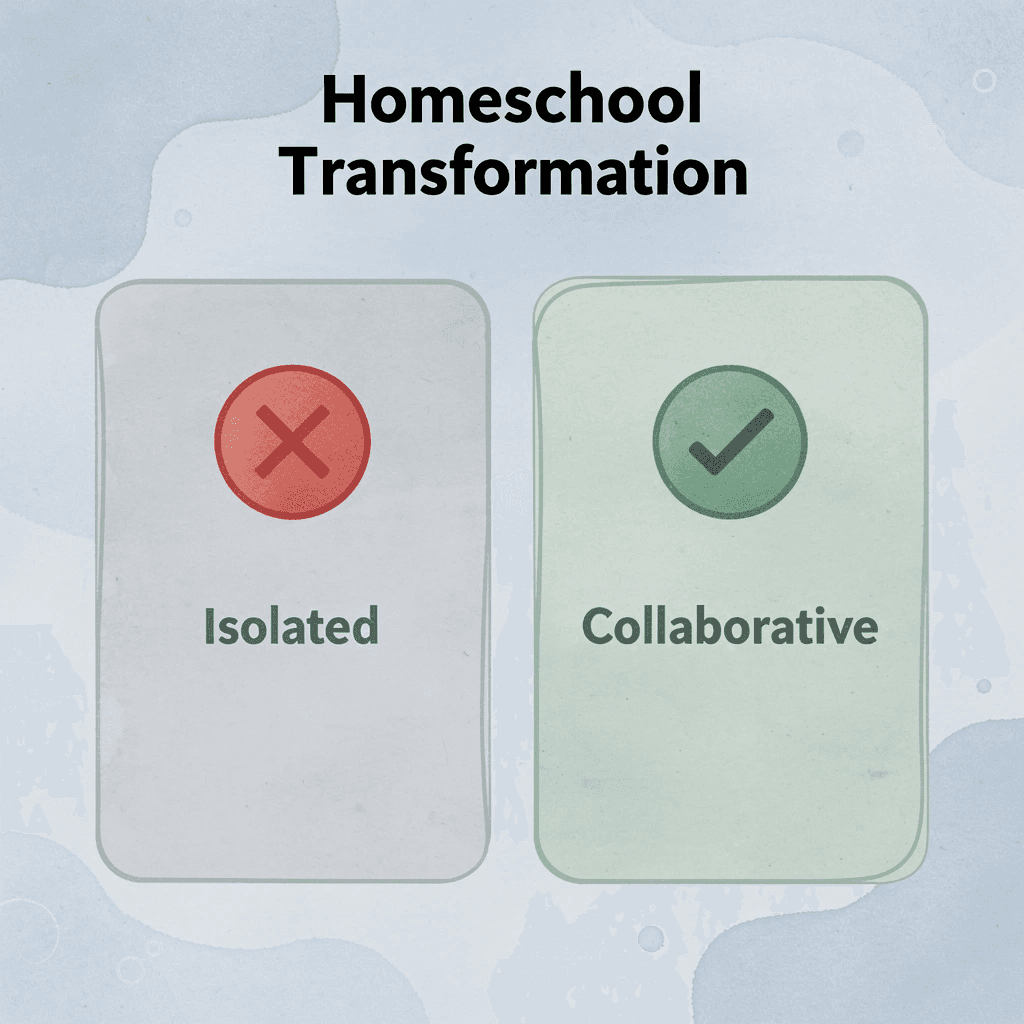
Co-ops create consistent peer interaction, pool teaching expertise across families, and reduce the pressure of being the sole instructor. Children learn to navigate group dynamics, while parents teach their strengths, and others handle specialized subjects like chemistry labs.

🎯 Key Point: Homeschool co-ops transform the isolated homeschool experience into a collaborative community where families share both teaching responsibilities and educational costs.
"Homeschool co-ops allow parents to leverage their individual strengths while providing children with diverse learning experiences and social interaction that mirrors traditional classroom settings." — National Home Education Research Institute
💡 Tip: Look for co-ops that offer STEM labs, foreign language classes, or advanced subjects that might be challenging to teach at home. This allows you to focus on your core curriculum while ensuring your child gets a comprehensive education.
How do co-ops address socialization concerns for smaller families?
It's fair to worry that children might feel isolated in a homeschool co-op with only one or two peers. Co-ops address this by bringing children together for structured group work, public speaking practice, and collaborative projects that require negotiation, compromise, and teamwork.
What makes co-op collaboration mirror real-world experiences?
These mirror real-world collaboration: mixed-age groups, project-based learning, and peer accountability that develop naturally when children see the same faces weekly.
How do co-ops consolidate social activities for homeschool families?
Many families join multiple activities (karate, ballet, 4H, church groups) to compensate for smaller households, but co-ops consolidate that effort into one place. Friendships formed in co-ops often extend beyond class time into playdates and spontaneous gatherings because parents share similar educational philosophies.
How do co-ops pool teaching strengths and resources?
Co-ops let families pool teaching strengths: one parent leads science labs, another teaches debate, and someone else handles art projects. This rotation exposes students to different instructional styles and content areas that would be difficult to cover on their own. The collaborative approach also makes expensive materials (microscopes, art supplies, musical instruments) accessible through shared ownership rather than individual purchase.
What tools help co-ops create custom educational materials?
For families adding to hands-on learning, tools like My Coloring Pages help co-ops create custom educational materials for group projects. Parents generate topic-specific coloring pages (historical figures, scientific diagrams, geography maps) that serve as group activities or take-home practice, requiring only prompts that match weekly lessons.
How do co-ops reduce teaching burden for parents?
Teaching multiple children across different grade levels while managing a household can be stressful. Co-ops distribute that load across families who understand the commitment because they're living it too. When you teach one subject well rather than eight subjects adequately, quality improves and stress decreases. Parents also gain emotional support from others who share their values, rather than question their educational choices or judge their family-size decisions, creating a genuine community.
What flexibility do parents maintain in co-op arrangements
The structure gives you breathing room without sacrificing control. You still choose what to teach, set the pace at home, and maintain flexibility for travel or family needs. But once or twice a week, someone else takes the lead while you watch, help, or simply show up as a parent rather than as the teacher.
How Homeschool Co-ops Work
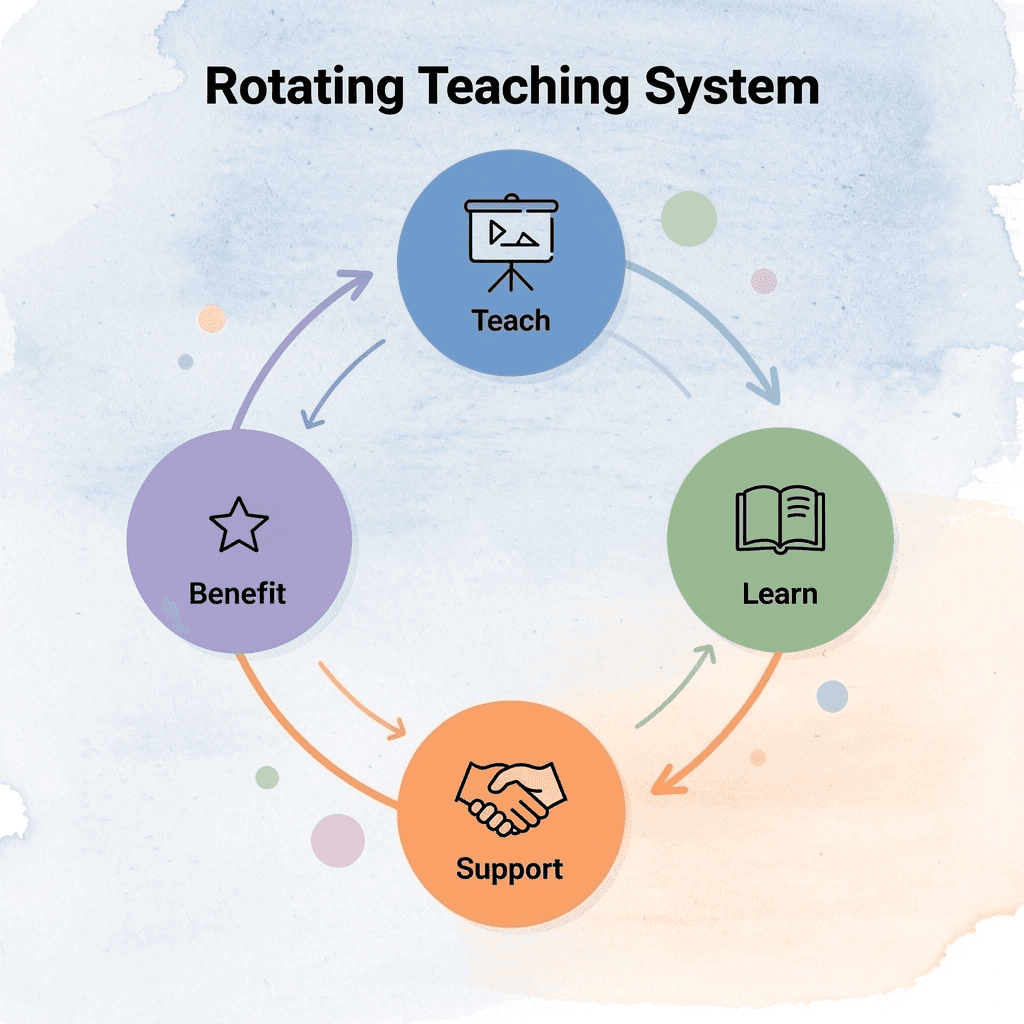
Co-ops work through three connected systems: shared teaching responsibilities, collaborative scheduling, and pooled financial resources. Each family contributes based on their strengths and availability, creating a distributed model where no single parent carries the entire educational load. Families rotate teaching duties, coordinate meeting times, and split costs to keep participation accessible and sustainable.

🎯 Key Point: The rotating responsibility system ensures that parents can focus on their areas of expertise while benefiting from other families' specialized knowledge and teaching skills.
"Shared teaching responsibilities create a sustainable model where families can provide high-quality education without the burnout of managing every subject alone." — National Home Education Research Institute
💡 Tip: Most successful co-ops establish clear expectations for each family's contributions upfront, including teaching commitments, attendance requirements, and financial obligations to avoid confusion later.
Co-op Component | How It Works | Family Benefit |
|---|---|---|
Teaching Rotation | Parents teach their expertise subjects | Access to specialized instruction |
Shared Scheduling | Coordinated meeting times and calendars | Consistent structure without solo planning |
Pooled Resources | Split costs for materials and activities | Reduced expenses per family |

How do member roles distribute the teaching load strategically?
Every family divides responsibilities based on individual strengths. One parent might lead science experiments with biology knowledge, while another handles art or organizes field trips. Administrative tasks—enrollment, budgets, and supply purchases—fall to members with available time or organizational skills. This rotation prevents burnout and exposes children to different teaching styles and subject expertise that a single household cannot replicate.
Why does the shared teaching model work so effectively?
The shared model works because it acknowledges reality: you can't be great at everything. Teaching one subject well, rather than eight adequately, improves quality and reduces pressure. Children benefit from seeing multiple adults model different approaches to problem-solving, classroom management, and content delivery, mirroring how expertise is distributed in workplaces and community settings.
How do co-ops balance scheduling with different family needs?
Co-ops meet on schedules that families create together: weekly, fortnightly, or monthly. Some follow traditional school calendars to align with after-school activities or work, while others adjust schedules around younger children's nap times or pair morning meetings with afternoon homeschool lessons. Finding a workable schedule requires open discussion about potential conflicts before finalizing a calendar.
How does collaborative curriculum planning work in practice?
Curriculum planning happens when families work together, pooling resources to create lesson plans using pre-made curricula, custom content, or both. According to North Carolinians for Home Education, 122,000 homeschools operate in just one state. Co-ops simplify curriculum development by spreading research and preparation across multiple parents who share what's already working in their households.
What financial models do homeschool co-ops typically use?
Some co-ops operate at low cost by using donated supplies, free meeting spaces in churches or community centers, and volunteer labor. Others charge membership fees to pay for classroom rentals, teaching materials, or special events such as field trips or guest speakers. Costs vary widely, from free to several hundred pounds per family each semester, depending on how the group is organized and what it aims to do. Financial models typically involve shared contributions, with families taking turns buying materials, paying membership fees based on affordability, or organizing fundraising activities to reduce individual costs.
Why is financial transparency important in homeschool co-ops?
Talking about money early prevents misunderstandings, especially when families have different spending capacities. Co-ops work best when everyone is open about finances and shares the teamwork spirit that brought the group together.
How to Choose a Good Homeschool Co-op
Choosing the right co-op means finding one that aligns its operations, values, and expectations with what your family can do and cares about. Start by identifying your must-haves (secular versus faith-based, structured curriculum versus social focus, available days), then try the group before committing. The decision comes down to finding where your family can show up regularly without straining your resources.

🎯 Key Point: The best co-op isn't necessarily the most popular one—it's the one that aligns with your family's values, schedule, and energy levels.
"The most successful homeschool co-op experiences happen when families find groups that match their educational philosophy and practical constraints." — Homeschool Co-op Research, 2023
Must-Have Factor | Questions to Ask |
|---|---|
Educational Approach | Secular or faith-based? Structured or flexible? |
Schedule Compatibility | Which days work? How many hours weekly? |
Cost & Commitment | Registration fees? Volunteer requirements? |
Age Appropriateness | Classes for your children's ages and levels? |
⚠️ Warning: Don't commit to a full semester without attending a trial session or open house—what looks good on paper might not work for your family's actual dynamics.

What should you decide about philosophy and structure before visiting?
Before visiting a co-op, decide whether you want a faith-based or secular community. This matters more than most families realize. When educational philosophy, values, and worldview align, authentic relationships form more quickly because you avoid fundamental disagreements over curriculum content or teaching methods. Some families thrive in diverse groups that celebrate different backgrounds and homeschool approaches, but this requires comfort with ongoing negotiation around shared activities and content choices. Knowing what you're searching for prevents wasting months testing incompatible groups.
How do co-op structures differ from informal groups?
The structure question is equally important. Co-ops typically require volunteer teaching or classroom help, meet weekly for formal instruction, and follow curriculum-based lesson plans. Groups focus on field trips, park days, and social gatherings, with no teaching obligations. If you need help teaching science labs and want regular academic teamwork, a loose social group won't meet that need. If you're seeking low-commitment friendships and occasional outings, a co-op with required teaching rotations will feel excessive.
How do you align scheduling commitments with your actual availability?
Decide which days you can participate before researching options. Automatically eliminate groups that meet on days you cannot attend, regardless of how appealing their curriculum or community seems. Overcommitting to a schedule you cannot sustain creates guilt, inconsistency, and eventual dropout, disrupting both your family and the group that counted on your participation.
What tools help with hands-on project preparation?
Co-ops that use hands-on projects often need quick access to extra materials to match weekly lesson plans. Tools like My Coloring Pages let families create custom educational coloring pages (historical timelines, anatomy diagrams, geography maps) in minutes without design skills. Our platform helps parents create exactly what the co-op is teaching that week, transforming preparation from a research project into a simple prompt.
How should you approach trial visits before joining
Ask to attend one or two events as a visitor before signing membership agreements or paying fees. This trial period lets you observe group dynamics, assess whether teaching styles match your preferences, and gauge whether your children connect with the other kids. Since not every member attends every event, one session isn't representative of the full community. Give the group at least three interactions before deciding whether it's the right fit.
Why does persistence matter more than initial impressions?
Persistence matters more than most parents expect. Friendships take time, especially in homeschool settings where families arrive with different social histories and comfort levels. Showing up once, failing to connect immediately, and quitting robs your children of potential relationships that might form with repeated exposure. Be proactive, start conversations, and recognise that connection is a skill that improves with practice.
Be honest about your capacity to volunteer
Many co-ops require teaching rotations or classroom help as part of membership. If you have a newborn, young children with high needs, or work obligations that prevent regular participation, ask leaders for temporary exemptions before declining membership. Most co-op organizers understand that life circumstances change and may offer reduced volunteer requirements or allow financial contributions instead of time commitments. Don't sign up for obligations you can't meet, but don't assume you're automatically disqualified.
Trust your intuition after giving it a fair chance
If a group feels forced, unwelcoming, or misaligned after multiple visits, move on. Real connections should create positivity for you and your children, not stress or obligation. Staying in a misaligned group wastes everyone's time and energy. The goal is to find your people, not to force yourself into a community that doesn't share your values or communication style. But knowing how to choose still leaves the practical question of where to start looking.
Related Reading
- Homeschool Room
- How To Homeschool Your Kids
- Colorado Homeschool Laws
- Abeka Homeschool Curriculum
- Georgia Homeschool Laws
- 6th Grade Homeschool Curriculum
- Homeschool Preschool
- Homeschool Room Ideas
- 1st Grade Homeschool Curriculum
- How To Homeschool In Texas
- Homeschool Vs Public School
- Pre K Homeschool Curriculum
- Kentucky Homeschool Laws
- Homeschool Report Card Template
- Texas Homeschool Requirements
- Florida Homeschool Requirements
7 Best Homeschool Co-ops for Helping Parents in 2026
The best homeschool co-ops solve specific problems: structured academic progression, specialized subject instruction, or consistent peer interaction. What works for one family creates friction for another, so identify which model addresses your constraints around teaching capacity, social needs, and philosophical alignment.
🎯 Key Point: The most successful co-op choice isn't about finding the "best" option—it's about matching the co-op's strengths to your family's specific educational gaps and lifestyle needs.

"Homeschool co-ops that focus on targeted problem-solving rather than general enrichment show higher parent satisfaction rates and better long-term participation." — National Home Education Research Institute, 2024
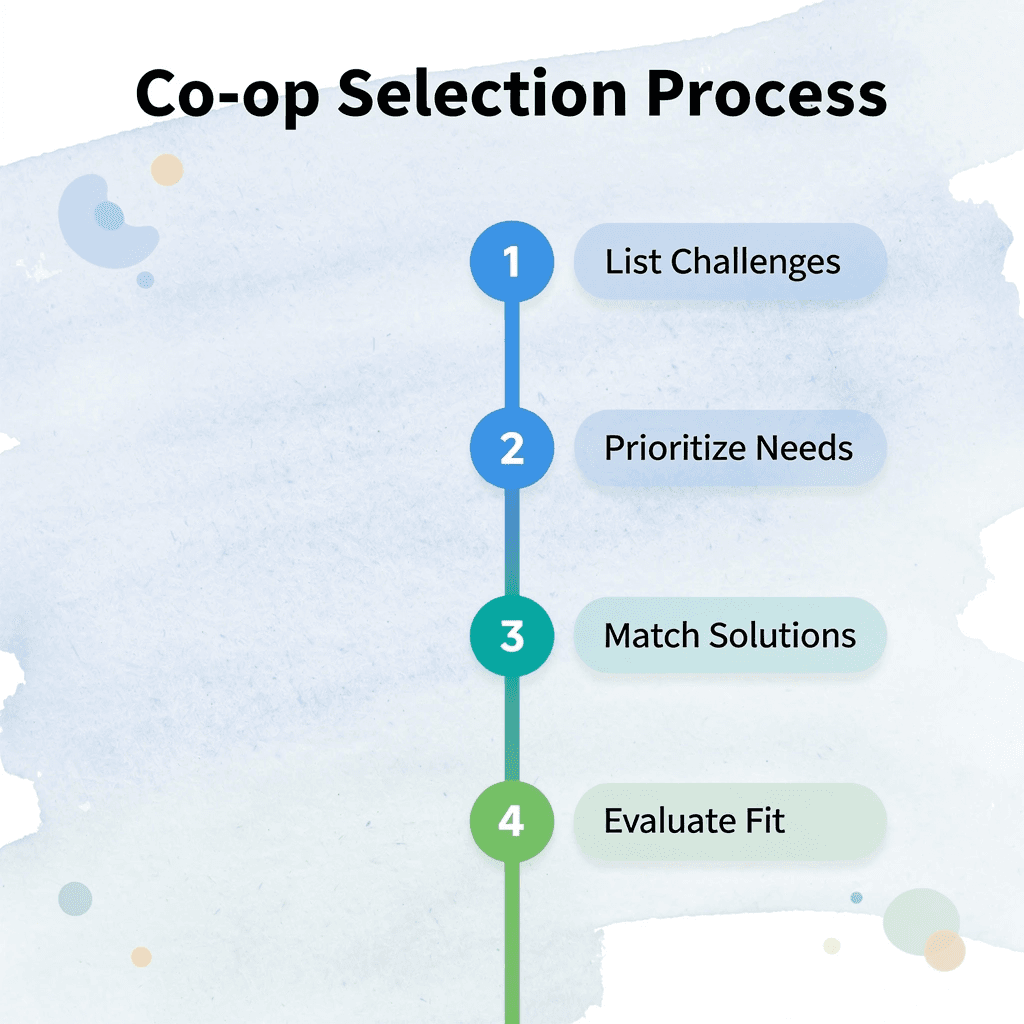
💡 Tip: Before evaluating any co-op, list your top 3 challenges in homeschooling—whether it's advanced math instruction, science labs, or social opportunities—then prioritize co-ops that directly address these specific pain points.
1. Classical Conversations (Best for Structured Academic Progression)
Classical Conversations blends homeschool freedom with the structure of private schools. Students meet weekly for community learning days featuring memory work, science demonstrations, and public presentations. The program follows the classical education trivium (grammar, logic, rhetoric stages), providing parents with a clear academic plan rather than requiring them to create a curriculum from scratch. Families complete assignments at home during the week, then gather for group review and new content instruction. This model creates accountability while allowing parents to control pace and teaching style.
What makes this structure appealing for homeschool co-ops?
The structure appeals to parents who want discipline but struggle to create it independently. Weekly attendance requirements and participation expectations prevent the drift that occurs with complete isolation. The cost is higher than that of informal co-ops because it covers curriculum development, teacher training materials, and organizational infrastructure supporting hundreds of local communities. For families needing external structure to maintain consistency, that investment prevents burnout from having to build everything themselves.
2. University-Model Co-ops (Best for Outsourcing Difficult Subjects)
Programs like One Day Academy and Veritas Press Scholars Academy operate as part-time private schools, with students attending teacher-led classes two or three days a week and completing coursework at home on other days. This model suits middle and high school families seeking support with advanced math, lab sciences, or foreign languages that require specialist knowledge or expensive equipment. Teachers handle instruction during class days, parents supervise practice and learning at home, and students experience classroom settings without committing to full-time traditional schooling.
What are the benefits and tradeoffs of this model?
This model helps parents be confident in teaching elementary subjects but uncertain about advanced ones. Science labs with proper equipment, debate tournaments, and group writing workshops occur on scheduled class days. Families maintain flexibility for travel, family needs, or self-paced learning on home days. The tradeoff is less scheduling freedom: you must commit to specific days you will attend, which limits surprise field trips or longer family visits during the school year.
3. Academic Co-ops (Best for Core Subject Collaboration)
Parent-led or teacher-led academic groups work together to teach core subjects like mathematics, writing, and science without following a set curriculum. Families take turns teaching based on their expertise: one parent leads weekly writing workshops, another organizes science experiments, and others manage mathematics groups divided by skill level. This flexibility allows customization to what children need, rather than forcing them to participate in subjects they've already mastered or aren't developmentally ready to tackle.
How does family commitment affect academic co-op success?
Quality depends entirely on families who participate and their teaching ability. When parents arrive engaged and involved, children benefit from different teaching styles and peer learning that reinforces ideas through group discussion. When families treat co-op as childcare or skip lesson preparation, the experience deteriorates quickly. The informal structure demands more communication and coordination than institutional models, but it preserves control over educational philosophy and content choices that matter to families with strong curriculum or worldview preferences.
4. Enrichment Co-ops (Best for Preventing Burnout Through Engagement)
Activity-based co-ops focus on creativity, hands-on projects, and learning through experience rather than traditional classroom instruction. Weekly meetings might include art projects, drama performances, STEM challenges, or group-building activities that help children who struggle with desk-based schoolwork. These groups supplement the main curriculum with experiences that make learning feel like discovery rather than obligation.
How can enrichment co-ops integrate visual learning projects?
Many enrichment co-ops use visual learning projects requiring quick access to custom materials. Tools like My Coloring Pages let parents create topic-specific coloring pages in minutes without design skills. A co-op studying ancient civilizations can generate historically accurate coloring pages of architecture, clothing, or artifacts that children color together, then use for presentations or take home for extra practice. This AI-powered approach transforms preparation into a simple prompt, freeing parents to focus on leading the group rather than sourcing materials.
What are the limitations of enrichment co-ops?
Enrichment co-ops don't teach maths or develop writing skills; they work best as add-ons to your existing curriculum, providing fun activities and peer interaction that prevent learning from becoming tedious. Families who use them strategically to maintain children's enthusiasm and foster friendships find they reduce resistance to challenging schoolwork at home.
5. Local Community Co-ops (Best for Accessible Entry Points)
Grassroots co-ops organized through Facebook groups, church networks, or homeschool directories offer the lowest barrier to entry. These groups typically meet weekly for combined activities such as park days, field trips, or rotating host homes where children play while parents coordinate schedules and share resources. Minimal financial commitment and flexible participation make them ideal for families testing whether co-op involvement suits their needs.
How consistent are local community co-ops?
According to Homeschool Co-op Finder, over 1,000 co-ops operate across 47 states. However, finding one near you presents challenges. Some maintain steady attendance and clear expectations, while others dissolve after a few months when organizing families lose momentum or conflicts arise around scheduling or activity choices. Success depends on finding a group in which participating families share similar levels of commitment and communication styles.
What are the trade-offs of local community co-ops?
The advantage is simplicity: you show up, meet other homeschool families, and decide whether the group culture fits without signing contracts or paying fees. The disadvantage is inconsistency. When leadership changes frequently or participation fluctuates, planning becomes difficult, and children struggle to form lasting friendships.
6. Micro Co-ops (Best for Deep Personalization)
Small groups of three to ten families create highly customized learning environments where every child receives individual attention. These close-knit co-ops form when families with similar educational beliefs split from larger networks to create something tailored to their specific goals. Teaching rotates among parents who know each child's learning style, strengths, and challenges well enough to adjust instruction in real time rather than follow predetermined lesson plans.
How do micro co-ops adapt to family needs and schedules?
Small co-ops allow families to pause during emergencies, move quickly through familiar topics, or spend extra weeks on challenging concepts without keeping pace with larger groups. Repeated interactions among the same families strengthen relationships, fostering friendships that extend beyond scheduled co-op time into spontaneous gatherings and mutual support.
What are the limitations of micro co-ops?
The constraint is limited subject variety. With only a few families participating, you're limited to the group's expertise. If no one feels comfortable teaching science labs or foreign language instruction, those subjects either get outsourced or skipped entirely. Micro co-ops work best when families have strong curriculum foundations at home and use the co-op for socialization, accountability, and targeted subject collaboration rather than comprehensive academic coverage.
Online Co-ops (Best for Accessing Specialized Instruction)
Virtual co-ops connect families around the world through video conferencing. They offer group classes in specialized subjects like Latin, computer programming, or advanced maths that may not be available locally. Students join scheduled Zoom sessions where teachers deliver lessons, lead discussions, and assign group projects completed between meetings. This format provides access to expert teachers regardless of location while accommodating family schedules.
How do online co-ops solve geographic limitations?
Online co-ops solve the expertise gap without requiring in-person attendance. A family in a rural area can access the same quality of instruction as those in densely populated regions. The tradeoff is reduced physical interaction: children build friendships through screen-based communication rather than face-to-face play, which suits some personalities better than others. Families prioritizing academic instruction or specialized subject access find online formats more satisfying than those seeking primarily social benefits.
Why did online co-ops gain popularity after the pandemic?
The model gained significant traction during the pandemic, and many families discovered they preferred the convenience even after restrictions lifted. No driving to meeting locations, no coordinating younger siblings' schedules, no geographic limitations. For families managing complex logistics or living in areas with few homeschool options, online co-ops provide community and instruction that would otherwise require relocating or abandoning homeschooling. But access to co-op options means nothing without the practical materials needed for collaborative learning to work smoothly.
Download 69,451+ Free Worksheets to Supplement Homeschool Learning
Co-ops work best when you connect group sessions to home practice. The gap between weekly meetings creates risk: concepts introduced on Monday feel fuzzy by Friday, and without reinforcement, retention drops sharply. Simple follow-up materials that revisit key ideas prevent this drift without adding burden to your teaching load.
💡 Tip: The 7-day gap between co-op sessions is your biggest enemy—bridge it with daily 5-minute reviews to maintain momentum.

Most parents treat co-op days as complete learning experiences, but two hours weekly cannot replace daily practice. After each session, spend ten minutes asking your child to explain what they learned. If they struggle to articulate concepts, reinforce immediately rather than letting confusion compound. Quick visual reinforcement through worksheets, coloring activities, or simple review exercises bridges the gap between exposure and understanding. Tools like My Coloring Pages let you generate topic-specific materials in minutes without design skills, turning abstract co-op lessons into concrete visual practice your child can revisit throughout the week.
"Without daily reinforcement, students lose 65% of newly learned information within 7 days of initial exposure." — Educational Psychology Research, 2023
🔑 Takeaway: Transform 2-hour weekly sessions into daily learning touchpoints using simple visual materials that require zero prep time.
Related Reading
- 5th Grade Homeschool Curriculum
- How To Homeschool In California
- Georgia Homeschool Requirements
- Alabama Homeschool Laws
- 2nd Grade Homeschool Curriculum
- Homeschool Reading Curriculum
- California Homeschool Laws
- 4th Grade Homeschool Curriculum
- North Carolina Homeschool Laws
- Homeschool Art Curriculum
- Accredited Homeschool Curriculum
- 3rd Grade Homeschool Curriculum
- Illinois Homeschool Laws
- Michigan Homeschool Laws
- Science Homeschool Curriculum