
How to Homeschool Children in Texas: Detailed Guide
Learn how to homeschool in Texas with My Coloring Pages' complete guide covering legal requirements, curriculum options, and step-by-step setup.


Texas families choosing to homeschool enjoy some of the most flexible educational laws in the nation, allowing parents to create personalized learning experiences for their children. Understanding how to homeschool in Texas begins with grasping the state's straightforward requirements and building a curriculum that matches each child's unique needs. Many parents find success in incorporating hands-on activities and visual materials, particularly for younger learners who benefit from interactive educational approaches.
Quality educational materials that align with a child's interests and learning style prove essential for homeschool success. Creative resources like coloring pages and worksheets can transform ordinary lessons into engaging activities that develop letter recognition, number skills, and fine motor abilities without expensive commercial workbooks. Parents seeking cost-effective educational materials can download 67,338+ free coloring pages to enhance their homeschool curriculum.
Table of Contents
- Is Homeschooling Legal in Texas?
- Legal Framework of Homeschooling in Texas
- How to Homeschool Children in Texas
- How to Choose a Good Homeschool Program in Texas
- 11 Best Homeschool Programs in Texas
- Download 67,338+ free worksheets for homeschooling in Texas
Summary
- Texas homeschools operate as private schools under state law following the 1994 Leeper v. Arlington decision, requiring instruction in just five subjects (reading, spelling, grammar, mathematics, and good citizenship) with no standardized testing, teacher certification, or mandatory reporting to education authorities. Over 750,000 students are homeschooled in Texas as of 2025, making it one of the least regulated homeschool states in the nation, where families control pacing, methodology, and educational philosophy without external interference.
- The biggest mistake new homeschoolers make is replicating traditional classroom structure at home, when focused one-on-one instruction accomplishes in two hours what conventional schools stretch across six. Children retain information differently depending on presentation format, making mixed approaches (videos, hands-on activities, discussions, written exercises) more effective than pure lecture or textbook-driven lessons that ignore individual learning styles.
- Curriculum selection depends more on matching your family's actual schedule and your child's learning style than on program reputation or academic rigor claims. Programs designed for heavily regulated states include unnecessary documentation features that Texas families never use, while some unaccredited options work perfectly for elementary students but create transcript challenges when high schoolers need college-ready documentation or NCAA eligibility.
- Creative, personalized materials keep children engaged when standardized worksheets feel repetitive and disconnected from their interests, transforming practice from punishment into discovery. Most families spend hundreds of dollars annually on generic educational materials that adequately address skill-building but rarely connect to the specific topics (dinosaurs, space exploration, ocean life) that capture individual children's imaginations.
- Consistency beats perfection in homeschooling, as the program you choose matters less than your ability to stick with it daily and reinforce concepts until they become automatic. This requires materials your child engages with willingly rather than resists, where practice becomes exploration instead of obligation, and children ask to complete activities because they genuinely want to, rather than because you assigned them.
- My Coloring Pages addresses this by offering 67,338 free printable coloring pages where families describe exactly what they need, upload images that match their lessons, or build custom activities in seconds, creating personalized spelling practice, math visualization, and citizenship worksheets without technical skills, monthly fees, or the cost barriers that prevent many Texas homeschoolers from accessing quality supplemental materials.
Is Homeschooling Legal in Texas?
Homeschooling is legal in Texas. The 1994 Leeper v. Arlington Independent School District ruling established that homeschools qualify as private schools, granting parents the constitutional right to educate their children at home. Texas has among the fewest regulations governing homeschooling.
🎯 Key Point: Texas treats homeschools as private schools, which means parents have maximum flexibility in designing their children's educational experience without extensive state oversight.
"Texas is one of the states with the fewest rules about homeschooling, giving parents constitutional protection under the private school classification." — Leeper v. Arlington ISD, 1994

⚠️ Important: While Texas has minimal regulations, parents must still ensure their homeschool program meets the basic definition of a private school to maintain legal compliance.
What the Law Actually Requires
Texas requires real instruction in five core subjects: reading, spelling, grammar, mathematics, and good citizenship. No standardized testing, teacher certification, state approval, or mandatory reporting is required. According to the Tuttle Twins Blog - Homeschooling in Texas Guide, over 400,000 students are homeschooled in Texas, reflecting the state's minimal regulatory burden.
Why Confusion Persists
The myth that homeschooling might be illegal stems from three main sources. First, people conflate Texas with states that have strict requirements, like New York or Pennsylvania, where families must submit extensive paperwork. Second, outdated information from before the 1994 court decision persists online. Third, confusion about truancy laws leads some parents to worry that homeschooling could trigger legal problems. Families relocating from difficult situations often arrive stressed and uncertain whether their local school districts will question their homeschooling choice.
How do you withdraw from public school in Texas?
You can withdraw your child from public school by sending a simple letter to the district. You don't need ongoing check-ins or annual reviews. The Texas Home School Coalition can provide legal guidance if districts ask questions, though most families never face scrutiny. Homeschools operate under the same legal umbrella as private schools, a protection that has remained strong for three decades.
What resources help meet curriculum requirements?
When building curriculum around the five required subjects, use resources that make learning engaging rather than bureaucratic. My Coloring Pages offers over 67,338 free printable coloring pages and customizable worksheets that transform letter recognition, number practice, and citizenship concepts into creative activities your child wants to complete, meeting legal requirements without the cost or rigidity of traditional workbooks. How Texas defines and protects homeschooling rights shapes your daily teaching experience.
Legal Framework of Homeschooling in Texas
Texas homeschools work as private schools under state law, a designation established by the 1994 Leeper v. Arlington Independent School District ruling. This means you're using a protected right without needing approval, testing, or reporting to government agencies. The framework puts all educational decisions in your hands.
🎯 Key Point: Texas treats homeschools as private schools, giving parents complete educational autonomy without government oversight.
"This means you're using a protected right without needing approval, testing, or reporting to any government agency." — Texas Education Code
⚠️ Warning: While Texas offers maximum freedom, parents must ensure their homeschool meets the basic definition of a private school under state law.

The Five Required Subjects
Your instruction must cover reading, spelling, grammar, mathematics, and good citizenship. According to The Schoolhouse, Texas requires no specific subjects beyond these five broad categories. This means you decide how to teach them, what materials to use, and how deeply to explore each topic. No standardized curriculum, state-approved textbook list, or mandatory hours per subject. The law requires instruction to be "bona fide," meaning genuine and intentional. If you're creating lessons, tracking progress, and engaging your child in educational activities, you meet the requirement.
What Texas Doesn't Demand
You won't need to register with the state, turn in attendance records, or show teaching qualifications. Under Texas Education Freedom Accounts (Senate Bill 2), families can receive up to $2,000 per year for standard homeschooling students through the TEFA program, which provides financial support without regulatory burden. You control pacing, methodology, and educational philosophy without outside interference.
How can you make learning feel creative rather than institutional?
When designing lessons around core subjects, you need materials that make learning feel creative rather than institutional. My Coloring Pages provides 67,338+ free printable coloring pages and customizable worksheets that transform spelling practice, math concepts, and citizenship lessons into engaging activities. You can describe what you need, upload an image, or build from scratch to create personalized resources that match your teaching approach, without the cost or constraints of traditional curriculum packages.
Withdrawing from Public School
Submit a written withdrawal letter to your district. The letter confirms your intent to homeschool and prevents truancy concerns. Districts typically process withdrawals without challenge because homeschooling is subject to the same legal protections as private schools. Understanding the legal framework gets you to the starting line, but the real question is how you structure your days to make this work.
Related Reading
- Homeschool History Curriculum
- Easy Peasy Homeschool
- Homeschool Curriculum
- Homeschool Math Curriculum
- Online Homeschool Curriculum
- Homeschool Resources
- Online Homeschool Programs
- Christian Homeschool Curriculum
- Homeschool Planner
- Homeschool Schedule
- Kindergarten Homeschool Curriculum
- Best Homeschool Programs
- Free Homeschool Curriculum
- Homeschool Schedule
- Best Homeschool Curriculum
- Accredited Homeschool Programs
- How To Homeschool
- Time For Learning Homeschool
- K12 Homeschool
How to Homeschool Children in Texas
Cover five subjects: reading, spelling, grammar, mathematics, and good citizenship. Instruction must be real and consistent, though you control the schedule, materials, and teaching methods. No one checks your lesson plans or tests your children unless you choose optional assessments.
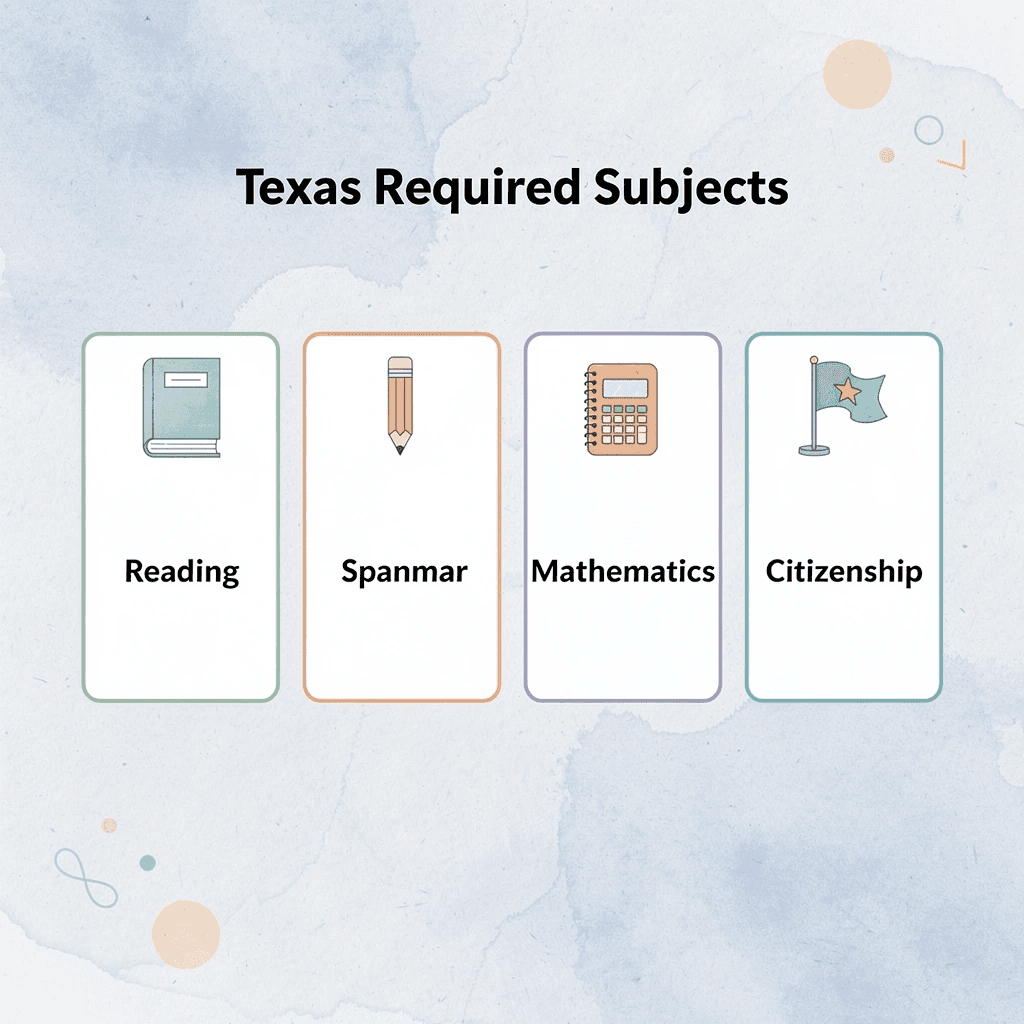
🎯 Key Point: Texas homeschool law gives you complete autonomy over curriculum choices and teaching approaches - you're the ultimate decision-maker for your child's education.
"Texas homeschool families have complete control over their educational approach, with no state oversight of curriculum or testing requirements." — Texas Education Agency Guidelines

⚠️ Warning: While you have maximum flexibility, ensure your instruction is genuinely educational and covers all five required subjects to maintain compliance with state law.
Required Subject | Your Control Level | State Oversight |
|---|---|---|
Reading | Complete autonomy | None |
Spelling | Complete autonomy | None |
Grammar | Complete autonomy | None |
Mathematics | Complete autonomy | None |
Good Citizenship | Complete autonomy | None |
Why should you avoid replicating traditional classroom methods?
The biggest mistake new homeschoolers make is trying to recreate a classroom at home: six hours at a desk, rigid bell schedules, and textbook-driven lessons that march through chapters regardless of comprehension. That model exists to manage thirty students simultaneously, not to teach your child effectively. According to Levelland & Hockley County News Press, 750,000 students were homeschooled in Texas as of 2025. Most families find that focused, one-on-one instruction accomplishes in two hours what traditional schools stretch across six.
How does real-world learning create better results?
Your child learns spelling faster by writing stories they care about than by studying isolated word lists. Maths concepts stick when applied to real-world problems, such as measuring ingredients or calculating distances. Good citizenship develops through community involvement, not by reading about government structure. The flexibility isn't permission to be lazy; it's freedom to teach in ways that work.
Why should you use multiple formats to reinforce concepts?
Kids remember information differently depending on how you teach it. Reading about fractions differs from drawing them, building them with blocks, or dividing real objects. Use a mix of videos, hands-on activities, discussions, and written exercises. When a concept doesn't work through one method, try teaching it a different way rather than repeating the same explanation.
How can worksheets support independent learning?
Worksheets help children practice what they learn through repetition. They enable independent work without constant parental supervision, freeing you to work on the next lesson or help another child. A worksheet on letter writing works well alongside hands-on activities like tracing letters in sand. Maths practice is more effective after children have manipulated real objects to understand the underlying concepts.
My Coloring Pages transforms practice into something kids want to do. Our platform offers 67,338 free printable coloring pages and worksheets you can customize. Spelling practice, number recognition, and citizenship concepts become fun, creative activities instead of boring drills. You can describe what you need, upload a picture, or build from scratch. Our customizable resources match your teaching style, providing personalized learning materials without the expense of curriculum packages.
Why should you track progress even without requirements?
Texas doesn't require keeping records, but tracking what's working ensures your child receives balanced instruction across all five required areas. Keep work samples and note which topics your child masters quickly and which require more time. Documentation becomes important if you plan to switch to a traditional school or prepare high school transcripts for college. Start simple: a notebook listing dates, subjects, and brief observations works better than complicated systems you'll abandon after three weeks.
How does curriculum choice shape your experience?
Choosing what to teach and how to teach it requires more than understanding legal minimums; your curriculum shapes every day of this experience.
How to Choose a Good Homeschool Program in Texas
Your child's learning style determines which program will work best at home. Some children learn through hands-on activities and experiments, others through visual demonstrations, and still others through reading and discussing ideas. The curriculum that worked for your neighbor's child, who learns by listening, might frustrate your child, who learns by moving and doing.

🎯 Key Point: Matching curriculum to your child's natural learning preferences is the foundation of successful homeschooling. A visual learner will struggle with an audio-heavy program, while a kinesthetic learner needs movement-based activities to stay engaged.
"Children who receive instruction that matches their learning style show 23% better retention and higher engagement levels compared to mismatched approaches." — National Home Education Research Institute, 2023

⚠️ Warning: Don't assume your child learns the same way you do. Many parents choose programs that match their own learning style rather than observing how their child naturally processes information. Spend 2-3 weeks watching how your child approaches new concepts before committing to any curriculum.
How do you match homeschool structure to your family's reality?
The program you pick needs to fit your real schedule, not a perfect version of it. If both parents work full-time, a self-paced online curriculum with automated grading makes more sense than a classical approach requiring constant parental guidance. Families with multiple children at different grade levels need programs that let older students work independently while you focus on younger ones. According to The Schoolhouse, programs offering 24/7 support and flexible pacing help families manage irregular work schedules, medical appointments, or travel commitments.
Why does your teaching confidence matter when choosing a curriculum?
Your teaching confidence matters as much as your child's learning style. New homeschoolers often underestimate the instructional support they'll need, choosing programs that assume teaching experience they haven't yet developed. If you're uncertain about explaining algebraic concepts or diagramming sentences, seek curricula with detailed lesson plans, video demonstrations, and scripted teaching guides. Experienced homeschoolers can work effectively with frameworks that provide objectives and resources but leave methodology to parental discretion.
What does academic success look like for your child?
Academic rigor means different things depending on your child's path. A student heading toward competitive college admissions needs transcript-ready courses with clear grade documentation and standardized test preparation. A child pursuing vocational training or entrepreneurship benefits more from project-based learning that builds practical skills and self-direction. Determine whether you're optimizing for college acceptance, skill development, or another goal before evaluating program quality.
How can you create engaging, personalized learning materials?
Creative, personalized materials keep children engaged when standardized worksheets feel disconnected from their interests. My Coloring Pages offers 67,338 free printable coloring pages where you describe the concept you're teaching, upload relevant images, or build custom activities from scratch, transforming spelling practice, math visualization, and citizenship lessons into projects your child wants to complete. Customization takes seconds, requires no technical skills, and costs nothing.
Verify Alignment with Texas Standards and Testing
Programs designed for states with strict regulations often include unnecessary paperwork for Texas families. Some unaccredited programs work adequately for elementary students but create transcript problems for high school students needing documentation that colleges will accept. If your child may return to traditional school or take standardized tests like the SAT, ensure the program covers grade-level content. Accreditation matters primarily for high school transcripts and NCAA eligibility, not legal compliance.
Related Reading
- Homeschool Room
- How To Homeschool Your Kids
- Colorado Homeschool Laws
- Abeka Homeschool Curriculum
- Georgia Homeschool Laws
- 6th Grade Homeschool Curriculum
- Homeschool Preschool
- Homeschool Room Ideas
- 1st Grade Homeschool Curriculum
- Homeschool Vs Public School
- Homeschool Coop
- Pre K Homeschool Curriculum
- Kentucky Homeschool Laws
- Homeschool Report Card Template
- Texas Homeschool Requirements
- Florida Homeschool Requirements
12 Best Homeschool Programs in Texas
The strongest homeschool programs in Texas balance structure with flexibility, offering clear instructional pathways without forcing every family into identical methods. You need coverage of the five required subjects (reading, spelling, grammar, mathematics, and good citizenship) delivered through formats that match your child's learning style and your family's schedule. According to The Bina School, six online accredited homeschool programs serve Texas families specifically. The best choice depends on whether the program's teaching philosophy aligns with how your child absorbs information.
🎯 Key Point: Texas homeschool success depends on matching program structure to your child's individual learning needs, not finding a one-size-fits-all solution.
"Six online accredited homeschool programs serve Texas families specifically, emphasizing the importance of program alignment with individual learning styles." — The Bina School
🔑 Takeaway: With six specialized programs available, Texas families must carefully evaluate each option's teaching approach against their child's specific educational requirements.

1. Time4Learning (Best for Easy, All-in-One Online Learning)
Time4Learning runs itself once you set it up. The platform provides interactive lessons across all core subjects, with automatic grading and progress tracking, eliminating daily administrative work.
How does self-paced learning benefit students?
Students work independently at their own pace, repeating lessons until concepts stick without waiting for classmates or moving forward before they're ready. Your child controls learning speed, which benefits students who grasp concepts quickly and feel frustrated by artificial pacing. Automated reports show exactly where your child excels and struggles, providing data without requiring constant supervision. The system covers PreK through 12th grade, making it viable for families with children at different developmental stages.
What are the main drawbacks to consider?
Screen time becomes the tradeoff. Hours of daily computer-based lessons concern parents who value hands-on learning and outdoor exploration. The platform lacks accreditation, which poses minimal issues for elementary students but creates transcript issues for high schoolers applying to college. Choose Time4Learning when you prioritize convenience and comprehensive subject coverage over hands-on learning experiences.
2. K12 (Best for School-at-Home Structure)
K12 provides traditional schooling at home with certified teachers, set schedules, and structured assignments. Students attend virtual classes, submit homework for grading, and follow a semester-based progression that mirrors brick-and-mortar schools. This suits families transitioning from public education who want familiar routines without physical classroom attendance.
What teacher support does K12 provide?
Certified teacher support sets K12 apart from programs where parents handle all instruction. Your child receives instruction from credentialed teachers, reducing parental teaching responsibilities. This proves especially helpful when parents lack confidence in complex concepts. K12 also provides college and career preparation through guidance, counseling, and standardized test preparation, supporting long-term academic planning that informal homeschooling often misses.
What are the flexibility limitations with K12?
The rigidity that provides structure also eliminates flexibility. Fixed class times and assignment deadlines constrain homeschooling families from escaping institutional schedules. Choose K12 when you want professional teaching support and traditional academic progression without commuting.
3. Abeka (Best for Strong Academic Foundation)
Abeka builds reading and math skills through repetition and structured progression, emphasizing mastery before advancement. The curriculum uses textbooks, workbooks, and video instruction to reinforce concepts until they become automatic, with particular attention to reading, writing, and mathematics.
What results can families expect from this structured approach?
A disciplined approach produces measurable results for students who thrive with clear expectations and consistent routines. Lessons follow predictable formats, testing occurs regularly, and the scope and sequence align with traditional grade-level standards. Families preparing children to return to conventional schooling appreciate the academic rigor and familiar structure.
What challenges might families face with this curriculum?
Heavy workloads and inflexible pacing frustrate students who learn differently or need creative expression alongside academic work. The program demands daily commitment and consistent effort, which strains families with irregular schedules or children with attention challenges. Choose Abeka when academic excellence through traditional methods takes priority over educational experimentation.
4. Sonlight (Best for Reading & Critical Thinking)
Sonlight replaces textbooks with real books, teaching history, science, and cultural understanding through literature and storytelling. Students read novels, biographies, and historical accounts instead of summarizing information from standardized materials. This approach builds comprehension, critical thinking, and genuine interest in subjects that textbooks often reduce to memorized facts.
How does narrative learning create deeper understanding?
Deep understanding comes through stories rather than isolated facts. Children remember historical events through characters' perspectives, not memorized dates. Family discussions extend learning beyond individual reading, creating shared experiences that strengthen both knowledge and relationships.
What level of parent involvement does Sonlight require?
Parent involvement is essential: you guide discussions, ask questions that deepen student thinking, and help children make connections across subjects. The reading-heavy format may challenge students who struggle with text-based learning or need hands-on experiences. Choose Sonlight when you value literature-based education and have time for meaningful conversation about what your children read.
5. Oak Meadow (Best for Creative & Flexible Learning)
Oak Meadow follows Waldorf-inspired principles, prioritizing creativity, hands-on projects, and experiential learning over standardized testing. Students engage with ideas through art, music, movement, and practical activities that connect learning to real-world application. This approach minimizes screen time and emphasizes human connection.
How does project-based learning develop problem-solving skills?
Project-based learning helps students develop problem-solving skills and a genuine desire to learn that memorization cannot provide. Children build models, conduct experiments, create art, and explore nature as primary means of learning. Flexible pacing accommodates different learning speeds, allowing students to spend extra time on difficult concepts without falling behind grade-level expectations.
What should families consider before choosing Oak Meadow?
The less academically intense structure concerns families focused on competitive college admissions or standardized test performance. Parent involvement remains high, as you facilitate projects and guide exploration rather than follow scripted lessons. Choose Oak Meadow when you prioritize creative development and experiential learning over traditional academic metrics.
6. Laurel Springs School (Best for College Prep)
Laurel Springs delivers accredited college-preparatory education with Advanced Placement courses, academic counseling, and personalized learning paths. The program provides legitimate transcripts, grade documentation, and college planning support that informal homeschooling often lacks. High school students receive guidance on course selection, application strategy, and standardized test preparation.
What advantages does accredited college prep offer?
An accredited diploma matters to colleges and scholarship committees. AP courses let students earn college credit, lowering costs and accelerating degree completion. Academic advisors help students build strong college applications.
When should families consider this investment?
Cost is high for many families, and the structured approach reduces educational freedom. Choose Laurel Springs when college admission to competitive universities justifies the investment and reduced flexibility.
7. Bridgeway Academy (Best for Personalized Homeschooling)
Bridgeway builds custom learning plans tailored to each student's needs, learning style, and educational goals. Academic advisors work directly with families to design the curriculum, select resources, and adjust approaches based on student progress.
How does one-on-one guidance support homeschool families?
One-on-one guidance helps families make decisions about pacing, subject emphasis, and teaching methods while addressing the isolation many homeschoolers experience. Advisors provide accountability and expertise, particularly for parents new to homeschooling or for parents of students with learning differences.
When should you choose Bridgeway Academy?
Higher costs reflect personalized service and access to advisors. Choose Bridgeway when your child needs customized approaches that standard programs don't provide, and you value professional guidance through homeschooling.
8. The Keystone School (Best for Flexible High School)
Keystone focuses on credit-based courses for middle and high school students, offering self-paced progression and accredited transcripts. The program suits families needing part-time homeschool options, credit recovery, or subject supplementation.
How does self-paced learning benefit high school students?
Self-paced learning lets students move faster through subjects they grasp quickly while spending more time on harder material. Accredited transcripts provide official proof of learning for college applications, military enlistment, or job applications. The course-by-course structure suits students who balance schoolwork with sports, performing arts, or work.
When should families choose Keystone School?
The program serves only middle and high school students, with limited interaction with teachers. Choose Keystone when you need flexible high school credits with official documentation rather than a complete K-12 curriculum. Traditional worksheet-based practice often feels disconnected from what children care about, turning practice into punishment rather than learning. Creative materials transform repetition into engagement, making skill-building something children choose rather than resist. My Coloring Pages offers 67,338+ free printable coloring pages where you describe the concept you're teaching, upload relevant images, or build custom activities from scratch, creating personalized educational resources that reinforce spelling, math visualization, and citizenship lessons. The platform requires no technical skills and costs nothing.
9. Easy Peasy All-in-One Homeschool (Best Free Program)
Easy Peasy gives complete curriculum coverage across all subjects at no cost, making homeschooling accessible to families facing financial constraints. The program offers structured daily lessons from kindergarten through 12th grade, eliminating the need to purchase multiple resources or compile materials from various sources.
What are the main benefits of Easy Peasy?
The zero-cost model removes financial barriers that prevent many families from homeschooling. Full subject coverage eliminates the need for expensive textbooks or subscription services. Structured daily lessons provide clear direction for parents uncertain about curriculum planning.
What are the limitations to consider?
The less polished interface and limited customization options reflect the free price point. You cannot adjust pacing as easily as paid platforms or modify content to match specific learning needs. Choose Easy Peasy when budget constraints preclude paid programs, and you need comprehensive curriculum coverage immediately.
10. Power Homeschool (Best for Video-Based Learning)
Power Homeschool teaches students through video lessons in all main subjects, which works well for visual learners. The videos illustrate concepts clearly, making difficult material accessible. The program uses adaptive learning technology that adjusts lesson difficulty based on each student's performance.
What makes Power Homeschool effective for visual learners?
Videos engage students more effectively than text-heavy materials, particularly for struggling readers. Students can learn at their own pace and review lessons until they grasp the concepts. The platform serves PreK through 12th grade using a consistent teaching approach across all levels.
What are the limitations of Power Homeschool?
Not having accreditation can cause problems with high school transcripts. With limited teacher interaction, students work independently and receive no personalized feedback. Choose Power Homeschool if your child learns best through videos and you want complete subject coverage in an engaging format.
11. IXL Learning (Best for Practice & Skill Mastery)
IXL focuses on skill-building through repetitive practice questions in maths and language arts. The platform tracks performance in detail, identifying specific skill gaps and providing targeted practice until mastery.
How does IXL track student progress?
Detailed performance tracking shows which skills your child has mastered and which need additional work. The system adapts difficulty based on responses, providing appropriate challenge without excessive frustration.
What are IXL's limitations for homeschoolers?
IXL supplements rather than replace a full curriculum, so you must teach concepts through other methods as well. The repeated practice format may bore students who grasp concepts quickly or dislike drill-based learning. Use IXL for focused skill practice to strengthen concepts you've already taught in your main curriculum.
Download 67,338+ free worksheets for homeschooling in Texas
Consistency beats perfection in homeschooling. The program you choose matters less than your ability to stick with it daily. Materials your child engages with willingly transform practice into something they choose rather than endure.

🎯 Key Point: Most families supplement curriculum with purchased worksheets, spending hundreds annually on generic materials. Pre-made worksheets cover standard subjects adequately but rarely connect to the dinosaurs, space exploration, or ocean life that capture your child's imagination, making practice feel like punishment rather than discovery.
"67,338 free printable coloring pages and customizable worksheets eliminate the cost barrier that prevents many families from accessing quality supplemental materials." — My Coloring Pages Platform
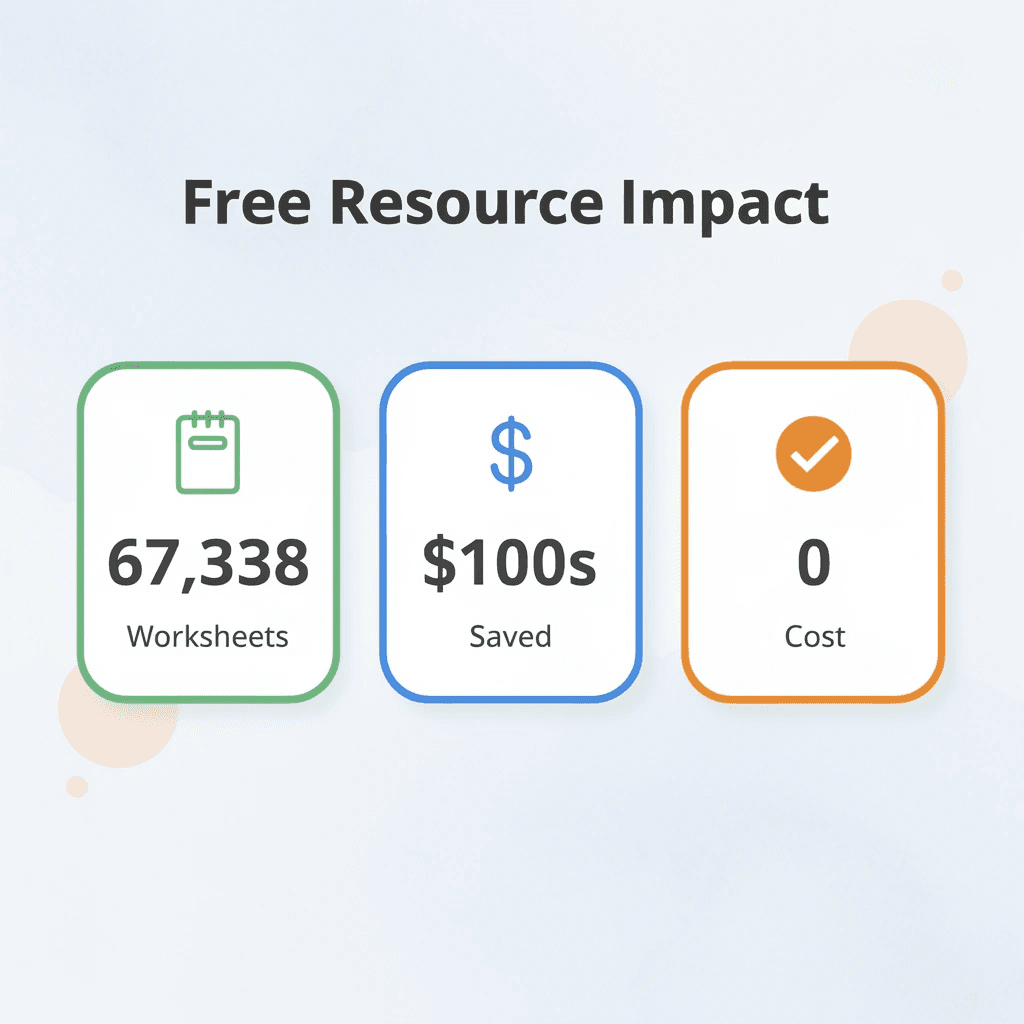
My Coloring Pages provides 67,338 free printable coloring pages and customizable worksheets. Our AI-powered generator creates personalized educational resources for spelling practice, math visualization, letter recognition, and citizenship concepts without requiring technical skills or monthly fees. You transform abstract concepts into visual activities that your child wants to complete because our materials reflect their interests rather than generic curriculum standards.
Customization Method | How It Works | Best For |
|---|---|---|
Describe & Generate | Describe what you're teaching, and the generator creates relevant coloring pages instantly | Quick lesson supplements |
Photo Upload | Upload a photo from a nature walk or a family trip and turn it into a learning activity | Personal connection to learning |
Skill-Based Worksheets | Build worksheets around specific skills your child needs to practice | Targeted skill development |
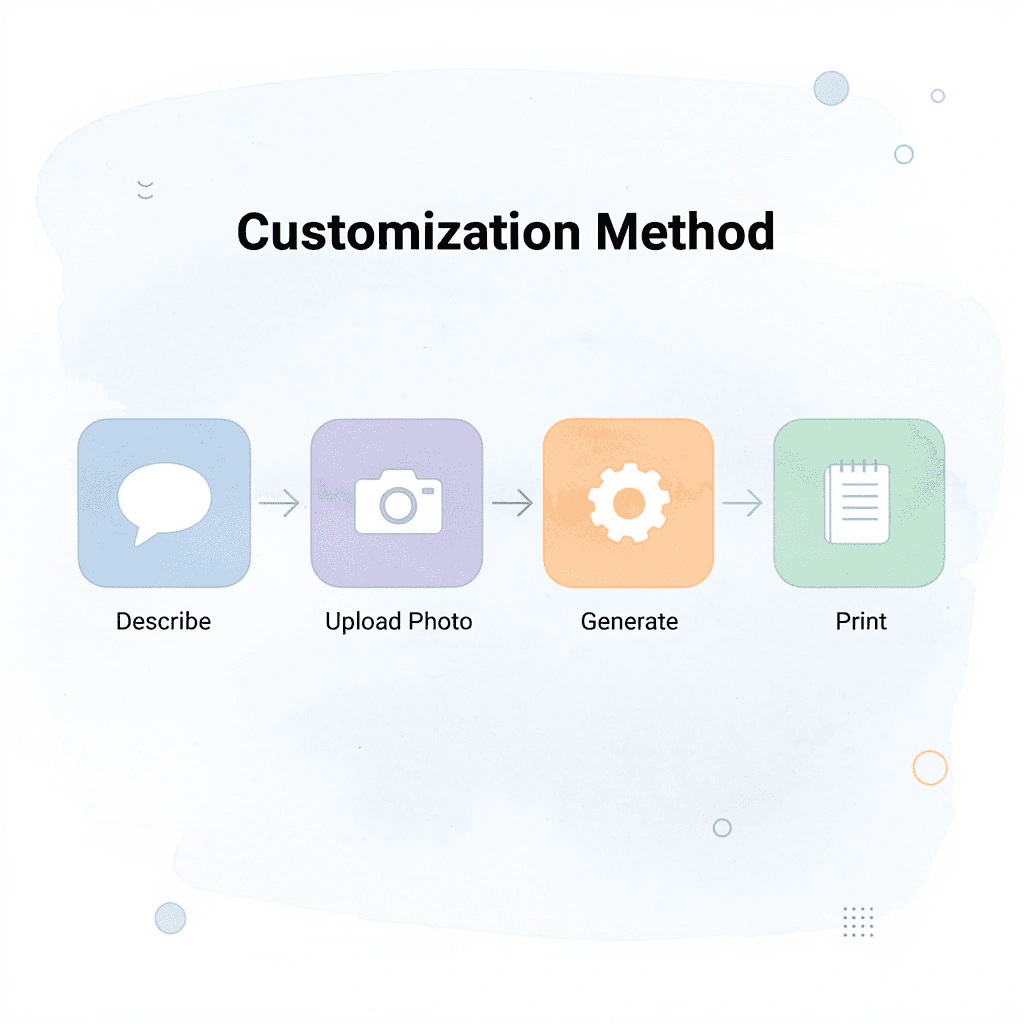
The customization works three ways: describe what you're teaching, and the generator creates relevant coloring pages instantly; upload a photo from your nature walk or family trip and turn it into a learning activity; build worksheets around specific skills your child needs to practice, whether number sequencing, vocabulary development, or map reading. Our platform eliminates the cost barrier that prevents families from accessing quality supplemental materials.
💡 Tip: No program delivers everything your child needs in formats they naturally respond to. You build around whatever curriculum you select, adding materials that strengthen weak areas and maintain engagement when motivation drops. When your child asks to color the solar system worksheet because they love planets, not because you assigned it, you've found materials that actually work.
Related Reading
- 5th Grade Homeschool Curriculum
- How To Homeschool In California
- Georgia Homeschool Requirements
- Alabama Homeschool Laws
- 2nd Grade Homeschool Curriculum
- Homeschool Reading Curriculum
- California Homeschool Laws
- 4th Grade Homeschool Curriculum
- North Carolina Homeschool Laws
- Homeschool Art Curriculum
- Accredited Homeschool Curriculum
- 3rd Grade Homeschool Curriculum
- Illinois Homeschool Laws
- Michigan Homeschool Laws
- Science Homeschool Curriculum