10 Best Pre-K Homeschool Curriculum in 2026
Discover the best Pre K Homeschool Curriculum options for 2026. My Coloring Pages reviews top programs to help you choose the perfect fit for your child.

Four-year-olds possess natural curiosity and eagerness to learn, yet finding the right Pre K homeschool curriculum can feel overwhelming for parents managing lesson planning and age-appropriate activities. Many homeschooling families struggle to find educational materials that match their child's unique learning pace while sparking genuine excitement about fundamental concepts such as letters, numbers, shapes, and colors. Building a successful early learning foundation at home requires practical resources that make teaching both effective and enjoyable. The key lies in accessing materials that engage young minds while supporting structured learning goals.
Successful preschool homeschooling depends on having diverse, ready-to-use educational materials that capture children's attention and reinforce core concepts. Parents need resources that seamlessly integrate into daily routines without requiring extensive preparation time or specialized teaching experience. Quality educational materials should offer variety, visual appeal, and hands-on learning opportunities that keep young children engaged throughout their lessons. Families looking to enhance their homeschool resources can download 69,451+ free coloring pages, including alphabet tracing sheets, number recognition activities, and themed educational content.
Table of Contents
- Is Homeschooling Pre-K a Good Idea?
- Benefits of Homeschooling Pre-K
- 10 Tips on How to Homeschool Pre-K
- How to Design Pre-K Homeschool Curriculum
- 10 Best Pre-K Homeschool Curriculum in 2026
- Download 69,451+ Free Pre-K Homeschool Worksheets
Summary
- The Perry Preschool Project found that children who received quality early education were 44% more likely to graduate high school and earn higher incomes as adults, but the critical factors were language exposure, meaningful interaction, and guided play, not institutional attendance. These elements are abundant in engaged home environments, where parents respond immediately to curiosity and weave learning naturally into daily routines such as cooking, gardening, or storytelling.
- Homeschooled students score 15 to 30 percentile points above public school students on standardized academic achievement tests, according to the National Home Education Research Institute. While this data reflects older students, 87% of peer-reviewed studies on social, emotional, and psychological development show homeschool students perform statistically significantly better than those in conventional schools, particularly in areas like emotional security and self-directed learning.
- The most effective Pre K homeschooling doesn't require elaborate lesson plans or teaching credentials. It requires consistent engagement across developmental areas that matter during ages 3 to 5, including language exposure, fine motor skills, basic numeracy, and social-emotional growth through conversation, play, and hands-on activities woven naturally into daily routines.
- Attention spans for 3- to 5-year-olds max out at 10-15 minutes for focused activities. Daily 15-minute reading sessions produce better literacy outcomes than sporadic hour-long sessions, because consistency matters infinitely more than duration in building foundational skills like vocabulary, comprehension, and positive associations with learning.
- Research shows that 36% of states hit record homeschool enrollment in 2024 to 2025, reflecting growing recognition that home-based learning produces strong outcomes when parents create language-rich environments through constant conversation, immediate answers to questions, and vocabulary building woven naturally into daily activities.
- Parents often struggle to find age-appropriate materials that match their child's current interests, leaving generic workbooks unused because the pictures don't engage their child. My Coloring Pages addresses this by letting parents download 69,451+ free coloring pages and generate custom worksheets in seconds, matching whatever their child is currently fascinated by while developing fine motor control and concept recognition without requiring design skills or expensive specialty materials.
Is Homeschooling Pre-K a Good Idea?
Yes, homeschooling Pre-K is a developmentally appropriate choice for children ages 3-5. Research shows early learning quality matters far more than location. When parents create engaging, language-rich environments at home with intentional play and exploration, children develop the cognitive, social, and emotional foundations they need without the stress of premature separation or rigid schedules.
🎯 Key Point: The quality of early learning experiences matters significantly more than the setting where they occur.
"Research shows early learning quality matters far more than location when it comes to Pre K development." — Early Childhood Research, 2023
🔑 Takeaway: Homeschooling Pre K allows for personalized, developmentally appropriate learning that respects each child's natural pace and individual needs.

What does research show about early education outcomes?
The Perry Preschool Project showed that children who received quality early education were 44% more likely to graduate high school and earn more as adults. Key factors included language exposure, meaningful interaction, and guided play: elements common in engaged home environments, where parents respond to curiosity, adjust activities to developmental readiness, and integrate learning into daily routines such as cooking, gardening, or storytelling.
How do homeschooled students perform academically?
According to the National Home Education Research Institute, homeschooled students score 15-30 percentile points above public school students on standardized academic achievement tests. For Pre-K ages, the advantage is more pronounced: young children thrive with one-on-one attention, quick feedback, and the emotional safety that home provides.
What makes homeschooling Pre-K most effective?
How well something works depends on parental involvement, not perfection. Children ages 3–5 need to talk with others, explore new things, and develop fine motor skills through activities like drawing, building, and coloring.
A child sorting laundry learns to organize items into groups. A child describing their coloring page develops language skills. A child measuring ingredients practices early maths concepts.
How can simple tools support Pre-K learning?
Platforms like My Coloring Pages support this approach without adding complexity. Our platform helps parents create custom coloring pages that match their child's interests—dinosaurs, construction trucks, family pets—turning a simple activity into a learning experience focused on words, colors, and fine motor development.
The barrier isn't creating perfect curricula; it's recognizing that engaged daily interaction is the curriculum.
The hidden cost of the alternative
Many parents send upset 3- and 4-year-olds to preschool to help them learn how to be around other kids and prepare them for school. They watch their children cry at drop-off and develop anxiety. Parents are told that children will adjust and that separation from parents fosters independence. Yet research from the National Home Education Research Institute shows that 87% of peer-reviewed studies on children's social, emotional, and mental development find homeschool students outperform those in traditional schools. Young children need to feel safe first; independence grows naturally from that foundation.
What happens when you respect your child's readiness instead of following set timelines?
Benefits of Homeschooling Pre-K
Homeschooling Pre K offers five clear advantages beyond traditional preschool environments. These benefits appear in how children engage with learning, how families organize their daily routines, and how early development unfolds when centered around the child's actual needs rather than institutional constraints.
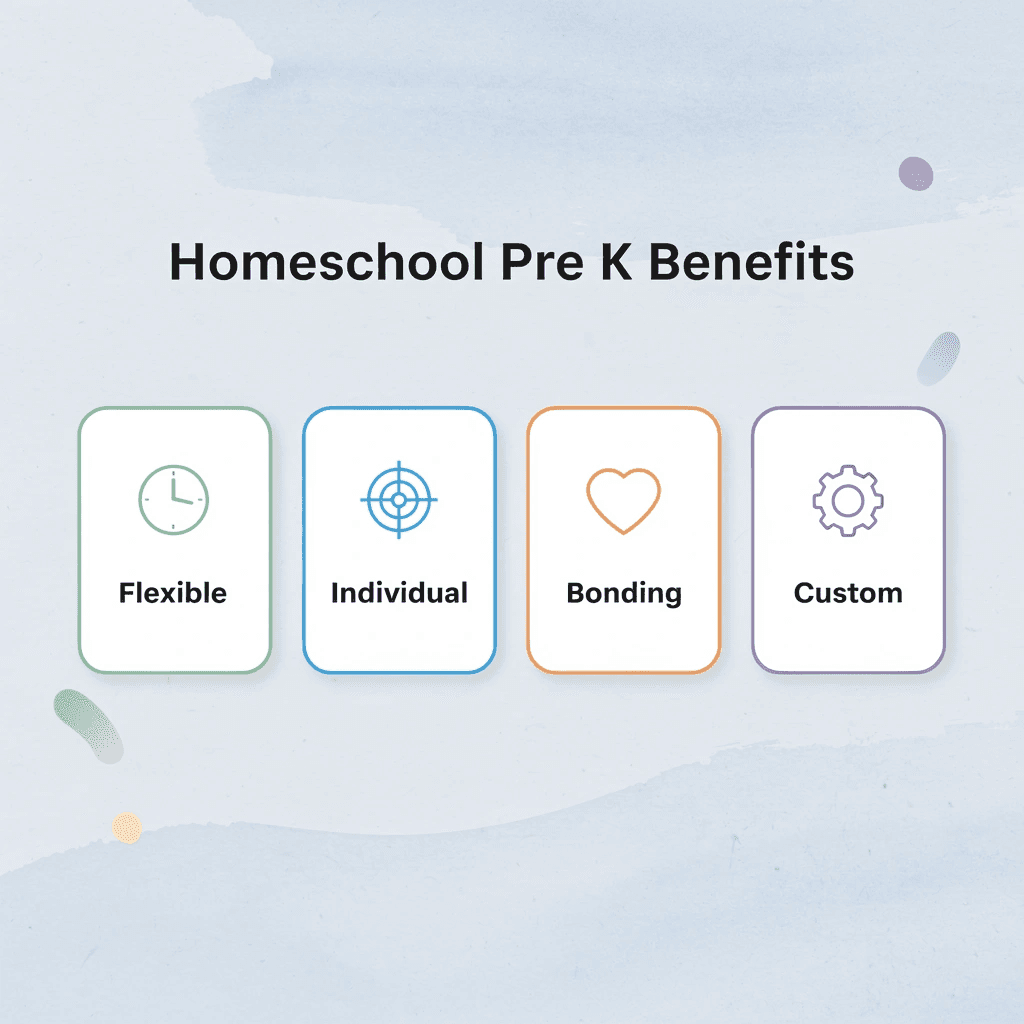
Benefit | Impact |
|---|---|
Flexible Schedule | Learning adapts to the child's natural rhythm |
Individualized Pace | No pressure to keep up or slow down |
Family Bonding | Stronger parent-child connection |
Custom Curriculum | Focus on the child's interests and strengths |
Safe Environment | Learning without social pressures |
🎯 Key Point: The most significant advantage is individualized attention - your Pre K child receives 100% focused instruction tailored to their unique learning style and developmental stage.
"Children who receive individualized early education show 25% better preparation for formal schooling compared to traditional classroom settings." — Early Childhood Education Research, 2023

💡 Tip: Start with short learning sessions of 15-20 minutes and gradually increase as your child's attention span develops - this natural progression builds stronger learning habits than forcing longer periods too early.
How does flexible scheduling match your child's natural development?
Pre-K homeschooling lets you build learning around your child's natural rhythms instead of following set schedules. A child who focuses best mid-morning can tackle challenging activities then, while a late riser gets the sleep their developing brain needs.
You can continue an activity when genuine interest emerges (spending an extra hour observing insects in the backyard) or shift immediately when attention wanes—a flexibility impossible in classrooms managing 15-20 children simultaneously.
How can you personalize the curriculum around your child's interests?
This flexibility extends to curriculum choices. When your child shows intense interest in construction vehicles, you can build an entire week around that fascination, incorporating counting games with toy trucks, vocabulary development through equipment names, and fine motor practice through themed activities.
Platforms like My Coloring Pages simplify personalization: parents can generate custom coloring pages that match their child's interests within seconds, transforming a standard activity into targeted learning without graphic design skills or expensive workbooks.
How does one-on-one interaction improve Pre K learning outcomes?
One-on-one interaction lets you notice when a concept clicks or confusion emerges, adjusting your approach in real time rather than discovering gaps weeks later through standardized assessments. This responsiveness matters during the Pre-K years when foundational skills like letter recognition, number sense, and language development establish patterns that persist throughout formal education.
Why are homeschool environments more effective for Pre-K development?
According to Veritas Press, 36% of states hit record homeschool enrollment in 2024-25, reflecting growing recognition that home-based learning produces strong results. For Pre-K specifically, parents create language-rich environments through constant conversation, responsive questioning, and vocabulary-building woven naturally into daily activities like cooking, running errands, and play.
Children in institutional settings spend considerable time waiting, moving between activities, or competing for adult attention. At home, the adult-to-child ratio supports continuous engagement and transforms every moment into a learning opportunity.
How does homeschooling strengthen parent-child relationships?
Learning together strengthens relationships beyond academics. Parents become guides who help their children discover new things and share in their excitement as they develop new skills. Working through problems as a team builds trust and establishes communication patterns that create a strong foundation for later years when schoolwork intensifies and emotions become more complex.
What are the emotional costs of traditional preschool separation?
The other choice means dealing with separation anxiety daily, stressful, rushed mornings, and children spending their most alert and energetic hours away from the people who know them best. Many parents send upset preschoolers to institutional settings, believing it builds independence, then watch their children develop behavioral issues or sleep disruptions from accumulated stress. Young children build security first; independence follows naturally from that foundation, not from forced separation before they're developmentally ready.
Lower stress levels for everyone involved
Homeschooling Pre-K eliminates morning chaos from timed drop-offs, afternoon meltdowns from overstimulation, and parental guilt around pickups. Without homework, evenings allow unstructured play, family meals, and the downtime young children need to process their experiences.
This reduced stress benefits learning directly. Children absorb information more effectively when they feel safe and unhurried. Parents teach more patiently without managing institutional schedules, permission slips, fundraisers, and administrative overhead. The energy saved gets redirected toward reading together, exploring nature, building with blocks, and having extended conversations where real learning happens.
Related Reading
- Homeschool History Curriculum
- Easy Peasy Homeschool
- Homeschool Curriculum
- Homeschool Math Curriculum
- Online Homeschool Curriculum
- Homeschool Resources
- Online Homeschool Programs
- Christian Homeschool Curriculum
- Homeschool Planner
- Homeschool Schedule
- Kindergarten Homeschool Curriculum
- Best Homeschool Programs
- Free Homeschool Curriculum
- Homeschool Schedule
- Best Homeschool Curriculum
- Accredited Homeschool Programs
- How To Homeschool
- Time For Learning Homeschool
- K12 Homeschool
10 Tips on How to Homeschool Pre-K
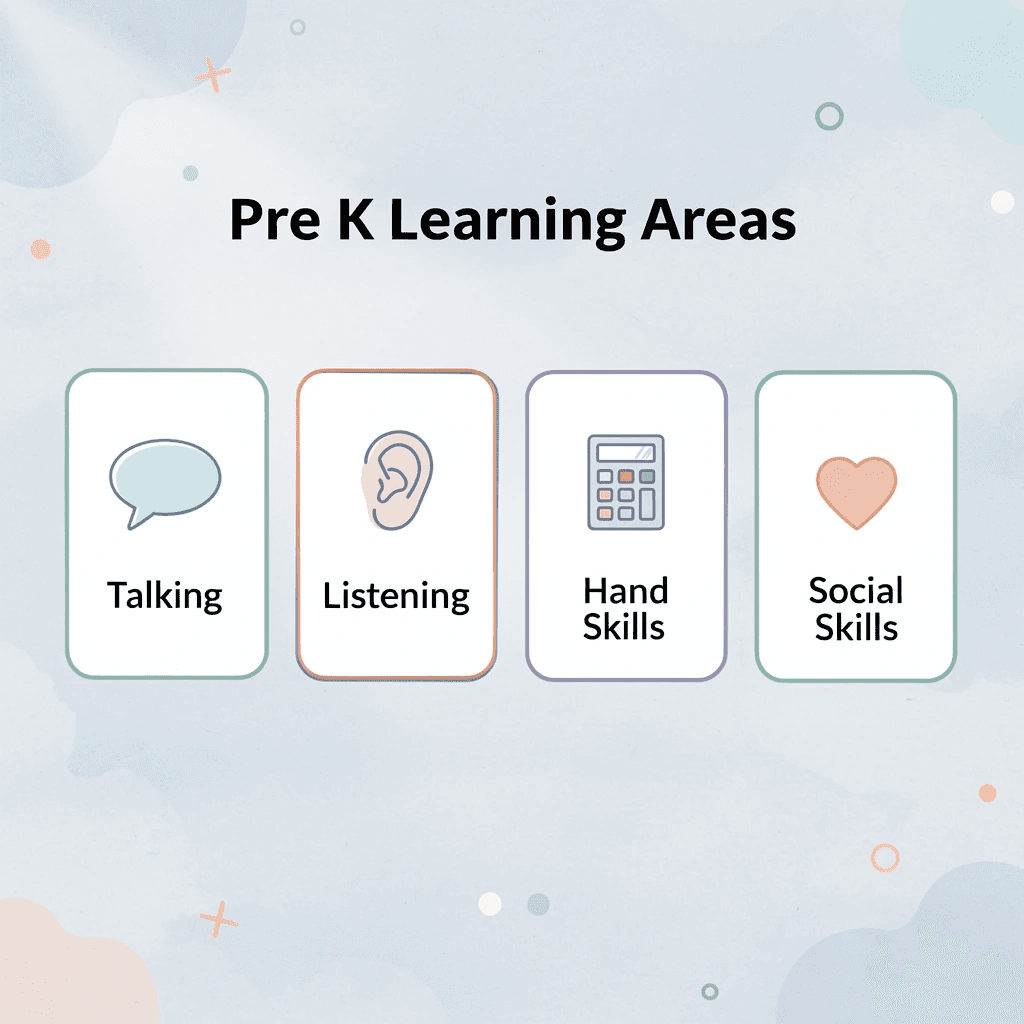
Good Pre-K homeschooling doesn't require fancy lesson plans or teaching degrees. Focus on spending regular time in areas that matter for children ages 3–5: talking and listening, hand skills, basic maths, and emotional and social skills. Weave learning into everyday routines through conversation, play, and hands-on activities that build essential skills.
🎯 Key Point: The most effective Pre K homeschooling happens through natural interactions and play-based learning rather than formal curriculum structures.

"Children learn best through hands-on activities and meaningful interactions during their early years when brain development is at its peak." — Early Childhood Education Research
💡 Tip: Remember that consistency matters more than perfection - short daily activities in these core areas will build a strong foundation for your Pre K learner.
Why should you focus on developmental readiness over grade standards?
Young children develop at different rates. One four-year-old might recognize all their letters while another struggles with three. Forcing academic timelines creates frustration and damages the natural curiosity that drives learning. Observe where your child is now: can they hold a crayon with control, recognize colors, and count objects to five? Start there, not where some curriculum chart suggests they should be.
What does research say about early childhood learning priorities?
The Center on the Developing Child at Harvard University says early childhood learning should focus on executive function (memory, attention, self-control), language development, and social-emotional skills rather than formal academics. These abilities determine how well children learn everything else later. A child who can focus, control emotions, and communicate clearly will pick up reading and maths naturally when developmentally ready. A child who is drilled on letters before being ready often develops lasting anxiety about learning.
How does conversation become your primary teaching tool?
Talk constantly. Describe what you're doing while cooking, ask questions during errands, and narrate observations during walks. This language-rich environment builds vocabulary, comprehension, and cognitive connections more effectively than worksheets. When your child asks why the sky is blue, engage with the question. When they describe their drawing, ask follow-up questions that extend their thinking.
Why does quality conversation matter more than quantity?
Research shows that early language exposure strongly influences later academic success and IQ scores. Quality matters more than quantity. Responsive conversation, where adults listen and build on what children say, produces better outcomes than one-sided instruction. Your child explaining why they colored the dinosaur purple teaches more than you explaining color theory does.
Why should learning sessions be short and frequent?
Kids ages 3-5 can focus on one activity for about 10-15 minutes. Activities longer than that may cause pushback and lead children to view learning as tiring. Plan your day with short, engaging activities interspersed with breaks for free play or movement: ten minutes of letter sounds followed by outdoor play; fifteen minutes of block building while discussing shapes and sizes, then a snack.
How does consistency impact learning outcomes?
Consistency matters more than duration. Daily 15-minute reading sessions produce better literacy outcomes than sporadic hour-long sessions. Build rhythms your child can anticipate: morning circle time, afternoon story, evening drawing. Predictability creates security, and children learn best when they feel secure.
How does play work as your main instructional method?
Pretend play, building activities, and open-ended exploration are all forms of learning. When children run a pretend store, they practice counting, social interaction, problem-solving, and language simultaneously. When they build block towers, they experiment with physics, spatial relationships, and planning. When they color detailed pictures, they develop fine motor control and color recognition while making creative decisions.
What does research show about playful learning effectiveness?
Hirsh-Pasek's research on playful learning shows that play helps children learn language, develop creativity, and solve problems more effectively than direct instruction. A child who plays with toy vehicles learns more about transportation, mechanics, and spatial reasoning than a child who watches truck videos.
Build weekly themes instead of subject schedules
Pre-K children think in experiences and interests, not subjects. Organize learning around weekly themes that naturally bring together multiple skills. A week on ocean animals might include reading ocean books (literacy), counting fish (maths), drawing sea creatures (fine motor skills), and discussing habitats (general knowledge): everything connects to a central interest that keeps children engaged.
This approach lets you follow your child's curiosity. If they're obsessed with construction equipment, build learning around that. Next month, they might fixate on butterflies or outer space. The specific content matters less than the skills you're developing: observation, vocabulary, categorization, comparison, and creative expression.
Why is daily fine motor practice essential for pre-K development?
Hand strength and coordination develop through repeated practice with varied activities. Coloring, drawing, cutting with safety scissors, building with small blocks, stringing beads, and tracing build the muscle control children need for writing. These activities should feel like purposeful creative play, not drills.
How can parents find engaging fine motor activities that match their child's interests?
Parents often struggle to find age-appropriate materials matching their child's interests. Generic workbooks sit unused because the pictures don't engage kids. Our My Coloring Pages tool solves this by letting parents generate custom coloring pages in seconds that match their child's fascinations—such as specific dinosaur species, favorite storybook characters, or family pets.
The activity develops fine motor control and color recognition while keeping kids engaged through personalization, without requiring graphic design skills or specialty materials.
Read aloud daily without exception
Reading together builds vocabulary, comprehension, print awareness, and foundational understanding that written symbols carry meaning. Children who hear stories daily enter formal reading instruction with larger vocabularies, better listening comprehension, and positive associations with books.
Make it interactive. Ask prediction questions ("What do you think happens next?"). Let your child retell the story in their own words. Point out interesting words and discuss their meanings. Notice patterns in stories together. This active engagement turns reading into a mental exercise that strengthens language processing and critical thinking.
Why is social interaction crucial for homeschooled children?
Homeschooling doesn't mean isolation. Young children need regular interaction with peers and adults beyond immediate family to build communication skills, emotional regulation, perspective-taking, and conflict resolution. Unlike institutional settings, you control the timing, duration, and context rather than forcing daily separation before your child is ready.
How can you create quality social opportunities?
Organize regular playdates, join homeschool co-ops, and participate in community activities like library story time or park programs. These structured opportunities provide peer interaction without managing 20 classmates simultaneously for six hours daily. Quality matters more than quantity: two focused hours weekly with consistent playmates often produce better social development than daily exposure in chaotic group settings.
Use simple materials to track progress informally
Watch how your child grows without formal tests. Can they recognize more letters than last month? Are they counting higher? Has their drawing become more detailed? Keep samples of their work, photograph block constructions or art projects, and note new skills. This documentation helps you notice progress that feels invisible day-to-day.
The goal is to ensure consistent growth across all areas of development. If growth stalls in one area—language development plateaus or fine motor skills aren't improving—change activities to provide more practice. This responsive teaching works because you observe one child deeply instead of managing group averages.
How do you create a predictable weekly rhythm for pre-K learning?
Children thrive with predictable rhythms. Create a basic weekly pattern that includes all developmental areas without feeling rigid: Monday emphasizes language and literacy, Tuesday focuses on numbers and patterns, Wednesday explores science and nature, Thursday incorporates art and music, and Friday reviews the week's theme through play and projects. The structure provides consistency while the content varies based on interests and needs.
What balance prevents over-planning and under-planning in a pre-K homeschool curriculum?
This framework prevents the common homeschooling pitfall of planning too much—detailed daily schedules that exhaust everyone—or too little, leaving days without purposeful learning. You need sufficient structure to ensure your child develops skills fully, while balancing it with flexibility to follow their energy and interests each day.
How to Design Pre-K Homeschool Curriculum
Decide what your child needs to learn by the end of the year, not what a standard checklist says they should learn. Pre-K learning goals should be based on how children develop: knowing 10-20 letters and the sounds they make, counting objects up to 20, holding writing tools correctly, following directions with multiple steps, and talking about what they did in complete sentences. These goals provide direction without excessive pressure on your child, since you can adjust your pace based on when your child is ready to learn, rather than following a set schedule.
🎯 Key Point: Child-centered goals are more effective than rigid curriculum standards because they adapt to your child's natural development pace.
"Pre-K children develop at vastly different rates, with some mastering letter recognition at age 3 while others aren't ready until age 5." — National Association for the Education of Young Children, 2023
💡 Pro Tip: Write down your child's current abilities first, then set goals one step ahead to maintain motivation and confidence.

How should you organize your pre-K curriculum structure?
Organize your curriculum into five core areas: early literacy, early maths, fine motor skills, cognitive and language growth, and general knowledge through rotating themes. This structure ensures comprehensive weekly development without the rigidity of timed subject blocks. A four-year-old doesn't compartmentalize reading, science, and art; they explore interests that naturally integrate multiple skills simultaneously.
How does domain-based planning integrate into daily activities?
Planning around domains, rather than subjects, weaves learning throughout the day. Morning cooking becomes maths practice (measuring, counting) and literacy (reading recipe steps). Afternoon outdoor time becomes a science observation and vocabulary-building session. Evening drawing develops fine motor control and creative expression. The curriculum becomes your framework for intentional engagement, not a schedule that fragments natural learning patterns.
How do you design effective weekly curriculum targets?
Plan each week around 1-2 letters, 1 number concept, 1 theme, and 1 motor skill focus. Week one might address the letter A, counting 1-3, an animal's theme, and tracing straight lines. By Friday, your child should recognize A, count three objects accurately, know basic animal vocabulary, and show improved line control.
This structure creates measurable progress without daily pressure, allowing five days to approach the same concepts through varied activities.
Why does weekly mapping prevent curriculum drift?
The weekly map stops curriculum drift, ensuring skills are built in a planned way without rigid daily lesson plans that collapse when your child is sick, distracted, or unmotivated. You know what the week should accomplish; how you get there stays flexible.
How do you create a consistent daily rhythm?
Set up a regular daily routine: 10 minutes working on letters, 10 minutes doing number activities, 10 minutes exploring the weekly theme, 10 minutes practicing fine motor skills, and 15 minutes reading together (55 minutes total). This schedule repeats daily, with specific activities varying based on your child's mood and the week's focus. Monday might use letter stamps and stickers, Tuesday tries letter-hunt games, and Wednesday practices custom coloring pages featuring objects that start with that letter.
How can you personalize learning materials without design skills?
Generic alphabet worksheets often sit unused because the pictures don't engage. Tools like My Coloring Pages solve this by creating custom content in seconds. Need letter A practice? Our platform lets you create coloring pages of alligators, apples, or astronauts based on your child's interests. The learning goal remains unchanged while personalization keeps kids engaged without requiring design skills or expensive specialty workbooks.
How can you track progress through daily observations?
Keep track of progress through completed work samples, observation notes, and brief weekly check-ins. Can your child recognize this week's letters when you point to them randomly? Do they count objects accurately? Can they recall theme vocabulary? This five-minute Friday check-in tells you whether to move forward or spend another week reinforcing concepts. Young children need adults who notice what they can do now that they couldn't do last month.
Why should you include regular review weeks in your schedule?
Include a review week every fourth week to revisit previous letters, numbers, and themes through games and activities. Spaced repetition strengthens memory far more effectively than constant forward progress, which leaves gaps. Reuse the same materials (worksheets, coloring pages, activity cards) to build mastery and confidence. Your child will complete tasks faster and more accurately than the first time, reinforcing that effort produces improvement.
10 Best Pre-K Homeschool Curriculum in 2026
The best Pre-K curriculum meets your child's developmental needs across literacy, numeracy, fine motor skills, and general knowledge while fitting your teaching style, your child's learning preferences, and your desired balance of structure and flexibility.

🎯 Key Point: The most effective Pre-K homeschool programs adapt to multiple learning styles while covering essential developmental milestones that prepare children for kindergarten success.
"Quality early childhood education programs that focus on developmental appropriateness show significant improvements in children's school readiness and long-term academic outcomes." — National Association for the Education of Young Children, 2024
⚠️ Warning: Avoid curricula that are too rigid or academic-heavy for 4-5 year olds - the best programs balance structured learning with play-based activities that keep young learners engaged and motivated.
1. Time4Learning Pre-K
This online platform delivers animated lessons in early maths and language through games and activities. Automated progress tracking eliminates the need to record mastery manually, offering parents structure without planning time. The tradeoff: children spend significant time on devices, reducing hands-on learning that builds spatial reasoning and tactile exploration skills many Pre-K children need.
Best for families comfortable with technology as a primary teaching tool and children who respond well to visual, game-based learning.
2. The Good and the Beautiful Pre-K
This print-based curriculum emphasizes simplicity with short lessons that help young children learn to read. The materials feature abundant pictures and require minimal parent preparation. Lessons take 15-20 minutes daily and build a strong reading foundation. However, math receives less focus, so you'll need to supplement with additional number activities to help your child develop balanced skills.
Best for beginners who feel overwhelmed by curriculum planning and want a clear, simple structure focused on reading readiness.
3. Playing Preschool (Busy Toddler)
This play-based curriculum organizes hands-on activities into themed units with daily lesson plans, requiring parent involvement and the preparation of materials. The research-backed approach recognizes that young children learn through active exploration rather than passive instruction. Engagement stays high because activities feel like play rather than schoolwork. The trade-off is preparation time: you'll spend it gathering materials, setting up activities, and actively participating rather than supervising.
Best for families who believe play is learning and have the time and energy to implement activity-based education consistently.
4. Blossom and Root Early Years
This curriculum focuses on nature and literature with a flexible structure that encourages curiosity through outdoor activities and creative expression. It prioritizes wonder and exploration over academic checklists. Some parents appreciate the loose academic structure for its freedom, while others worry about tracking their child's progress.
This approach works best for parents who want creative, child-led learning and believe formal academics can wait while their child develops a strong foundation of curiosity.
5. Sonlight Preschool
Literature drives this curriculum through read-aloud books, discussion prompts, and light activities that support language development and comprehension. Shared reading strengthens relationships while expanding vocabulary. However, reading becomes the primary vehicle for all learning, potentially disengaging children who need hands-on or movement-based activities. The curriculum assumes parents enjoy reading aloud and have children who can sit still for stories.
Best for families who prioritize reading and storytelling as the foundation for all learning.
6. Abeka Pre-K
Traditional and structured, Abeka provides phonics-based reading instruction alongside math and writing practice with clear lesson plans and assessments. The academic foundation mirrors formal school settings with strong skill progression. However, the rigidity can overwhelm young children who are not developmentally ready for structured academics or families who prefer play-based approaches. This curriculum doesn't bend: you follow the plan or go off-script.
Best for parents who want a school-like structure at home and for children who respond well to clear expectations and systematic skill-building.
7. Oak Meadow Pre-K
Waldorf-inspired creative play, storytelling, and hands-on activities define this gentle curriculum, which prioritizes imagination and balanced development. Academic pressure remains minimal, prioritizing emotional and creative growth over early literacy and numeracy. Parent guidance is essential: the curriculum provides philosophy and suggestions rather than scripted lessons, requiring you to interpret the approach and design activities in line with the principles.
Best for families who want creative, low-stress early learning and feel confident adapting educational philosophy into daily practice.
8. Mother Goose Time
Monthly theme kits arrive with crafts, activities, and skill-based learning materials ready to use. The hands-on approach keeps children engaged through varied activities that feel structured yet fun. You'll spend time organizing components and guiding activities rather than opening a workbook. The subscription cost is high compared to free or one-time purchase options like those available through My Coloring Pages.
Best for parents who want guided, hands-on learning with materials provided and can manage the setup and financial commitment.
9. Easy Peasy All-in-One Homeschool (Pre-K)
This free online curriculum provides daily lesson plans covering basic subjects at no cost. The complete system eliminates the stress of deciding what to teach next. However, the quality and customization options are limited: free resources cannot match the production value or personalization of paid curricula.
Best for budget-conscious families needing full curriculum coverage and comfortable with basic online materials.
10. Custom Worksheet and Activity-Based Reinforcement
Worksheets reinforce learning through tracing, matching, and coloring activities that build fine motor skills while supporting letters, numbers, and themed instruction. Paired with a main teaching program, they strengthen retention by providing targeted practice that makes abstract concepts concrete.
Parents often struggle finding worksheets that match both their learning goals and their child's interests; generic alphabet pages sit unused because the pictures don't engage. According to the National Center for Education Statistics, 3.7 million students were homeschooled in the United States, reflecting growing demand for customizable educational resources that adapt to individual learning needs.
How can parents create custom content that maintains engagement?
Platforms that address this gap let parents create custom content in seconds. Need letter A practice? Generate coloring pages of alligators, astronauts, or apples based on your child's interests. The learning goal remains constant while personalization maintains engagement without requiring design skills or expensive specialty workbooks.
Best for parents who want steady practice alongside any main curriculum and need materials that evolve with their child's interests without constant purchasing.
How do you match curriculum to your teaching style?
Your decision depends on being honest about your teaching style and energy level. Do you want minimal planning with ready-made systems? Time4Learning or Mother Goose Time removes decision fatigue. Do you prefer simple, structured lessons you can complete quickly? The Good and the Beautiful provides clear direction. Do you value play-based learning and have time for preparation? Playing at Preschool or Blossom and Root prioritizes engagement through hands-on activities.
Which curriculum fits different family priorities?
Families who enjoy reading choose Sonlight. Parents seeking traditional schooling pick Abeka. Easy Peasy suits families with tight budgets, though it lacks polish. Oak Meadow serves creative families drawn to nature-based learning. Extra practice and targeted skill building complement any program when additional support is needed.
What matters most when choosing a curriculum?
The curriculum that works best is the one you'll use next Tuesday morning when your toddler didn't sleep, you have three errands to run, and formal lessons feel impossible. Choose based on what's realistic for your life, not on idealized visions of homeschool perfection.
But even the perfect curriculum means nothing without printable materials you can use immediately when learning moments arrive.
Related Reading
- Homeschool Room
- How To Homeschool Your Kids
- Colorado Homeschool Laws
- Abeka Homeschool Curriculum
- Georgia Homeschool Laws
- 6th Grade Homeschool Curriculum
- Homeschool Preschool
- Homeschool Room Ideas
- 1st Grade Homeschool Curriculum
- How To Homeschool In Texas
- Homeschool Vs Public School
- Homeschool Coop
- Kentucky Homeschool Laws
- Homeschool Report Card Template
- Texas Homeschool Requirements
- Florida Homeschool Requirements
Download 69,451+ Free Pre K Homeschool Worksheets
The biggest problem parents face is analysis paralysis. With so many Pre K curricula available, it's easy to keep comparing and never start. Meanwhile, your child is ready to learn now, and the perfect curriculum sitting unchosen helps nobody.

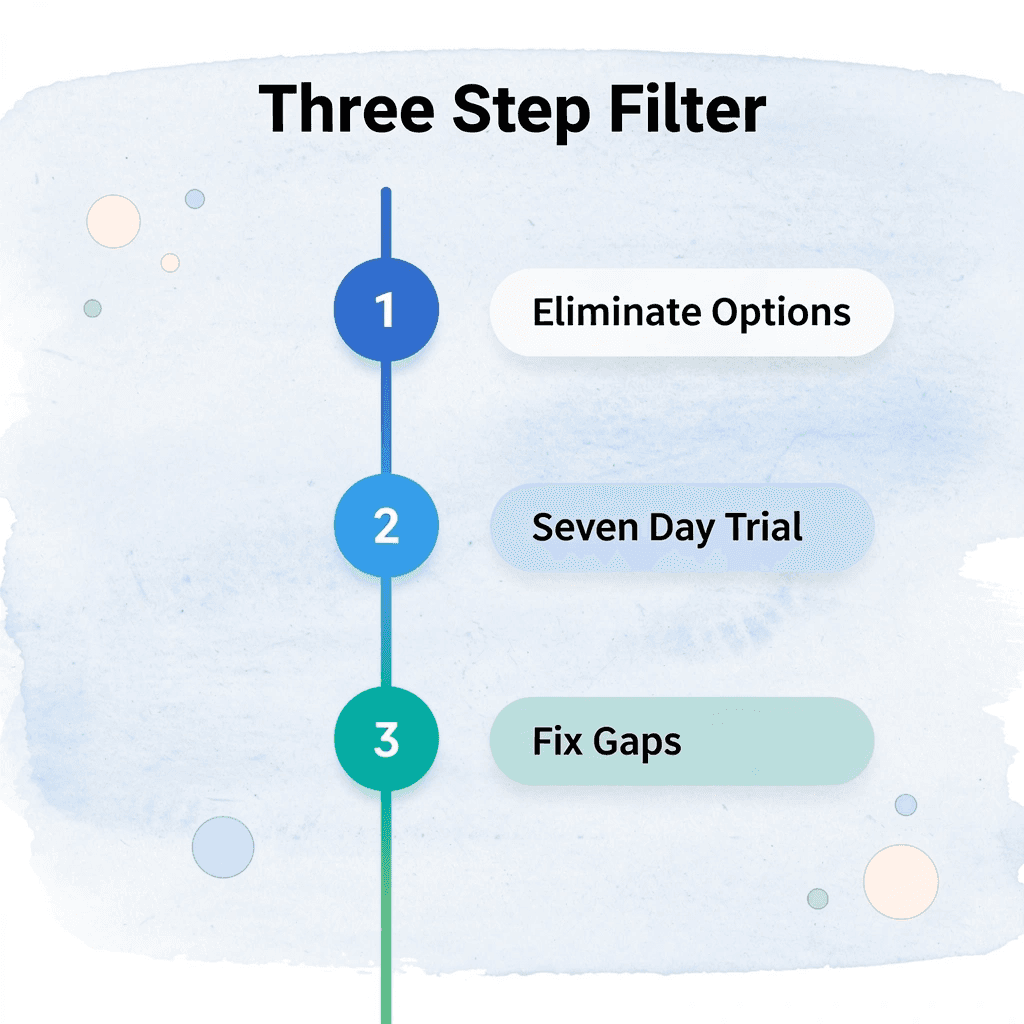
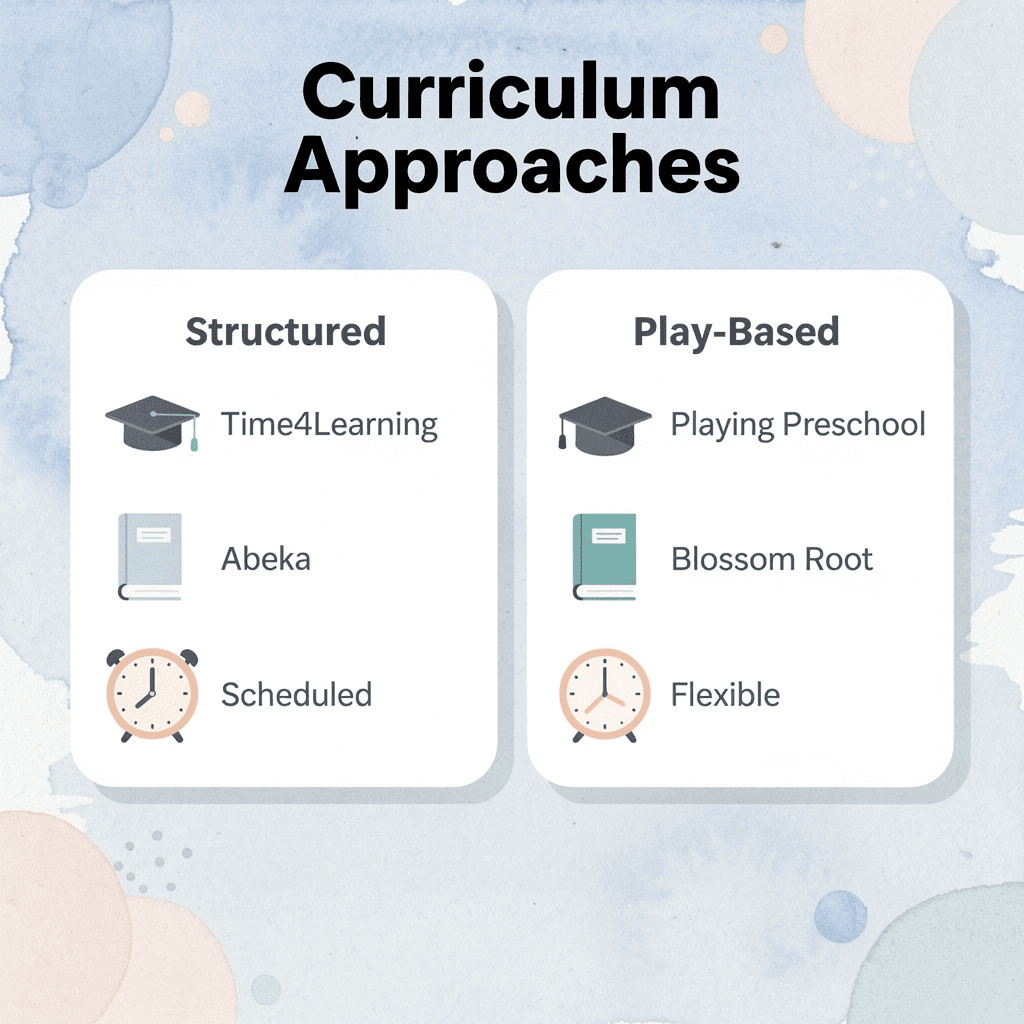
Break that cycle with a three-step filter. First, eliminate options based on your actual reality. Low time? Keep only structured programs like Time4Learning or Abeka. Want play-based learning? Narrow to Playing Preschool or Blossom and Root. Need simplicity? The Good and the Beautiful removes complexity. Narrow to two or three options that match how you actually live.
🎯 Key Point: Most curricula reveal their true fit within 5 days of actual implementation, not theoretical comparison shopping.
Second, run a seven-day trial week with one curriculum. Test whether your child engages, whether you can follow it consistently, and whether it feels too easy or overwhelming. Most curricula reveal their fit within five days of use.
"The goal isn't finding a perfect curriculum on paper—it's choosing one that works in real life, then strengthening it where needed."
Third, fix gaps instead of switching programs entirely. If your child enjoys the curriculum but struggles with specific skills, reinforce weak areas with targeted practice. Simple, focused worksheets covering tracing, matching, letter recognition, or number practice strengthen retention and fine motor development without requiring a complete curriculum overhaul.
💡 Tip: Generate custom worksheets that match your child's current interests rather than relying on generic workbooks that may sit unused.
Time Available | Recommended Curriculum Type | Best Options |
|---|---|---|
Low time | Structured programs | Time4Learning, Abeka |
Flexible schedule | Play-based learning | Playing Preschool, Blossom and Root |
Want simplicity | All-in-one solutions | The Good and the Beautiful |
Most parents need materials they can print immediately when learning moments arise, not elaborate systems that require advance preparation. Generic workbooks often sit unused because the content doesn't match your child's current interests. You bought the alphabet book, but your child only wants to learn about ocean animals this week.
Platforms like My Coloring Pages address this by allowing parents to generate custom worksheets in seconds. Our platform helps you create personalized learning materials that match your child's interests: need letter B practice? Generate pages featuring butterflies, bears, or buses based on what your child loves. Working on number recognition? Create counting activities with their favorite characters. Personalization maintains engagement without requiring design skills or constant specialty purchases.
The goal isn't finding a perfect curriculum on paper—it's choosing one that works in real life, then strengthening it where needed. Your child needs consistent practice, not the theoretically optimal program you never implement.
Related Reading
- 5th Grade Homeschool Curriculum
- How To Homeschool In California
- Georgia Homeschool Requirements
- Alabama Homeschool Laws
- 2nd Grade Homeschool Curriculum
- Homeschool Reading Curriculum
- California Homeschool Laws
- 4th Grade Homeschool Curriculum
- North Carolina Homeschool Laws
- Homeschool Art Curriculum
- Accredited Homeschool Curriculum
- 3rd Grade Homeschool Curriculum
- Illinois Homeschool Laws
- Michigan Homeschool Laws
- Science Homeschool Curriculum