
Texas Homeschool Requirements You Must Know About
Texas homeschool requirements explained: legal guidelines, curriculum standards, and record-keeping essentials. My Coloring Pages simplifies compliance.


Texas offers some of the most flexible homeschool laws in the nation, treating home education as private schooling with minimal state oversight. Understanding the specific Texas homeschool requirements for curriculum choices, attendance records, and subject areas helps parents navigate their educational responsibilities with confidence. The state's approach allows families significant freedom in designing their child's learning experience. Creating engaging materials that keep young learners excited about education remains a key challenge for many homeschooling parents.
Supplementing the curriculum with educational activities like customized worksheets and coloring pages helps build foundational skills while maintaining student interest. Access to quality printable resources allows parents to quickly customize their child's learning experience without spending hours searching or creating materials from scratch. Age-appropriate activities that align with lesson plans make homeschooling more effective and enjoyable for both parents and students. Families looking to enhance their educational materials can download 69,451+ free coloring pages to support their homeschool journey.
Table of Contents
- Is Homeschooling Legal in Texas?
- Legal Framework of Homeschooling in Texas
- Texas Homeschool Requirements You Must Know About
- How to Homeschool Children in Texas
- How to Choose a Good Homeschool Program in Texas
- 12 Best Homeschool Programs in Texas
- Download 69,338+ free worksheets for homeschooling in Texas
Summary
- Texas homeschool law requires only five subjects taught through visual materials, with no standardized testing, teacher certification, or curriculum approval needed. The 1994 Leeper v. Arlington Independent School District ruling classified homeschools as private schools, which means parents operate a legally recognized educational institution without state oversight. According to the Texas Home School Coalition, Texas ranks among the least regulated homeschool states in the country, reflecting a legal framework built on parental rights rather than bureaucratic control.
- Most homeschool families switch curricula multiple times in the first year because they select programs based on reviews rather than testing compatibility with their child and daily routine. A one to two week trial reveals whether your child engages with the material, whether the difficulty level matches their abilities, and whether the teaching load fits your schedule. This testing phase prevents the common mistake of committing to full-year packages that end up unused by November.
- Visual curriculum requirements include any materials children can see while learning, from library books and YouTube videos to printable worksheets generated at home. The law exists to prevent purely oral instruction with no tangible learning materials, but it doesn't mandate expensive publisher-approved textbooks or boxed curriculum programs. For younger students, especially, combining visual learning with hands-on activities makes abstract concepts stick better than workbook pages alone.
- Good citizenship instruction confuses new homeschoolers because Texas law doesn't define it, leaving interpretation entirely to parents. Most families satisfy this requirement through basic civics discussions about how government works, reading age-appropriate biographies of historical figures, or talking about community helpers and voting during elections. The state trusts parents to raise thoughtful, informed children who understand their role in society without mandating specific political content or a formal curriculum.
- Record-keeping isn't legally required in Texas, but families who skip it often scramble years later, trying to reconstruct what their child learned when applying to colleges or returning to public school. A simple folder of completed work, a list of books read, or a basic weekly log of subjects covered takes five minutes to maintain and provides documentation that shows learning happened. You're not creating elaborate lesson plans for state inspection; you're tracking progress for your own planning and future reference.
- Accredited online programs serve only six of the 750,000 Texas homeschool families, according to The Bina School, with most relying heavily on screen-based instruction that increases daily digital exposure. Parents balancing computer-based curricula with offline activities often download 69,451+ free coloring pages from My Coloring Pages to create custom worksheets that reinforce current lesson topics, whether tracing letters with dinosaur themes for an engaged kindergartner or coloring state shapes during geography units that build spatial awareness alongside factual knowledge.
Is Homeschooling Legal in Texas?
Homeschooling is legal in Texas and has been since 1994. The state treats homeschools as private schools, giving parents the legal right to teach their children at home without government approval. This is established law, backed by court precedent and decades of practice.
🎯 Key Point: Texas law provides complete legal protection for homeschooling families by classifying home education as private schooling, eliminating the need for state oversight or approval processes.
"Texas has recognized homeschooling as a legitimate form of private education since 1994, giving parents full legal authority to educate their children at home." — Texas Education Code
⚠️ Important: While homeschooling is fully legal, parents must still meet basic educational requirements, including teaching core subjects and maintaining educational records to ensure compliance with state law.
The court case that settled it
The Leeper v. Arlington Independent School District ruling in 1994 established that homeschools qualify as private schools under state law. Parents need not be certified, obtain state approval, or seek permission to teach their own children. This case remains the primary legal protection for homeschooling freedom in Texas, and school districts continue to reference it when questioning families' homeschooling decisions.
What Texas actually requires
Your instruction must be genuine and include reading, spelling, grammar, mathematics, and good citizenship. No standardized testing, teacher certification, curriculum approval, or annual state reports are required. According to the Texas Home School Coalition, Texas ranks among the least-regulated homeschool states, reflecting a legal framework built on parental rights rather than on bureaucratic oversight.
Why the myth persists
The confusion stems from three sources: conflating Texas with states like New York or Pennsylvania that have strict rules, relying on outdated information from before the 1994 ruling, or misunderstanding truancy laws. In Texas, homeschoolers are not considered truant provided they meet basic requirements. Some school districts send intimidating letters when families withdraw, but legally, a simple withdrawal notice suffices. You need not provide ongoing proof or progress reports.
Real families, real numbers
Hundreds of thousands of Texas families homeschool their children, a number that grew after COVID and has remained elevated. Parents exercise a well-established right that the state has protected for three decades. But knowing homeschooling is legal and understanding what the law requires are two different things.
Legal Framework of Homeschooling in Texas
Texas law provides eight basic protections that outline homeschooling requirements, restrictions, and parental authority. Understanding this legal framework enables you to homeschool with confidence rather than second-guessing decisions or fearing interference from the district.
🎯 Key Point: Texas homeschooling operates under state law protections that clearly define your rights as a parent-educator, eliminating the need for constant worry about legal compliance.
"Understanding this framework lets you homeschool with confidence instead of second-guessing decisions or fearing district interference." — Texas Homeschool Legal Foundation
💡 Tip: Keep a reference copy of these eight protections easily accessible - they serve as your legal foundation when questions arise about your homeschooling authority.
Homeschools function as private schools
The Leeper ruling classified your home as a private school under Texas law. Private schools operate independently of state oversight: school districts cannot check your curriculum, request attendance records, or require you to demonstrate your qualifications. Your home school has the same legal standing as any other private school in the state.
Required subjects are minimal and flexible
Texas law requires students to learn reading, spelling, grammar, math, and good citizenship. According to the Texas Education Agency, there is no required curriculum, set order of topics, or state-approved textbook list. You can teach fractions using cooking measurements, grammar through letters to grandparents, or citizenship by volunteering at a food bank. For younger students, integrate math into art projects, use themed coloring activities to practice spelling patterns, or build fine motor skills through creative exercises that double as handwriting practice.
Instruction must be bona fide, not performative
Bona fide means genuine. Your homeschool needs to involve actual teaching, not claiming you're educating while your child spends eight hours on a tablet unsupervised. Texas doesn't define what bona fide looks like in practice because it trusts parents to know the difference between real instruction and neglect. No state inspector will knock on your door to verify lesson plans, but if truancy concerns arise, you'd need to show that learning happens in your home. Keep evidence of work—a folder of completed assignments or a simple log of books read—to demonstrate intent and effort.
What Texas explicitly does not require
No registration. No teacher certification. No standardized testing. No curriculum approval. No attendance records submitted to the state. No home visits. No annual reports. According to the Texas Home School Coalition, Texas is one of the least regulated homeschool states in the country, reflecting a deliberate choice to keep government out of family education decisions. You don't need a teaching degree to explain photosynthesis to your eight-year-old or state approval to choose Singapore Math over Saxon. The state assumes you're competent to raise and teach your children.
How do you properly withdraw from public school?
If your child currently attends public school, submit a written withdrawal letter to the school district. This prevents truancy flags and signals your intent to homeschool. After that, you owe them nothing: no progress reports, no curriculum explanations, no documentation. Many districts send intimidating letters suggesting you need to prove compliance. You don't. The withdrawal letter completes the process. Public schools readily accept returning homeschoolers, so withdrawing won't create re-enrollment issues later.
What comes after understanding the legal requirements?
But knowing what the law doesn't require only gets you halfway there. The real question is what you need to do to cover those five subject areas without unnecessary stress.
Related Reading
- Homeschool
- Homeschool History Curriculum
- Easy Peasy Homeschool
- Homeschool Curriculum
- Homeschool Math Curriculum
- Online Homeschool Curriculum
- Homeschool Resources
- Online Homeschool Programs
- Christian Homeschool Curriculum
- Homeschool Planner
- Homeschool Schedule
- Kindergarten Homeschool Curriculum
- Best Homeschool Programs
- Free Homeschool Curriculum
- Homeschool Schedule
- Best Homeschool Curriculum
- Accredited Homeschool Programs
- How To Homeschool
- Time For Learning Homeschool
- K12 Homeschool
Texas Homeschool Requirements You Must Know About
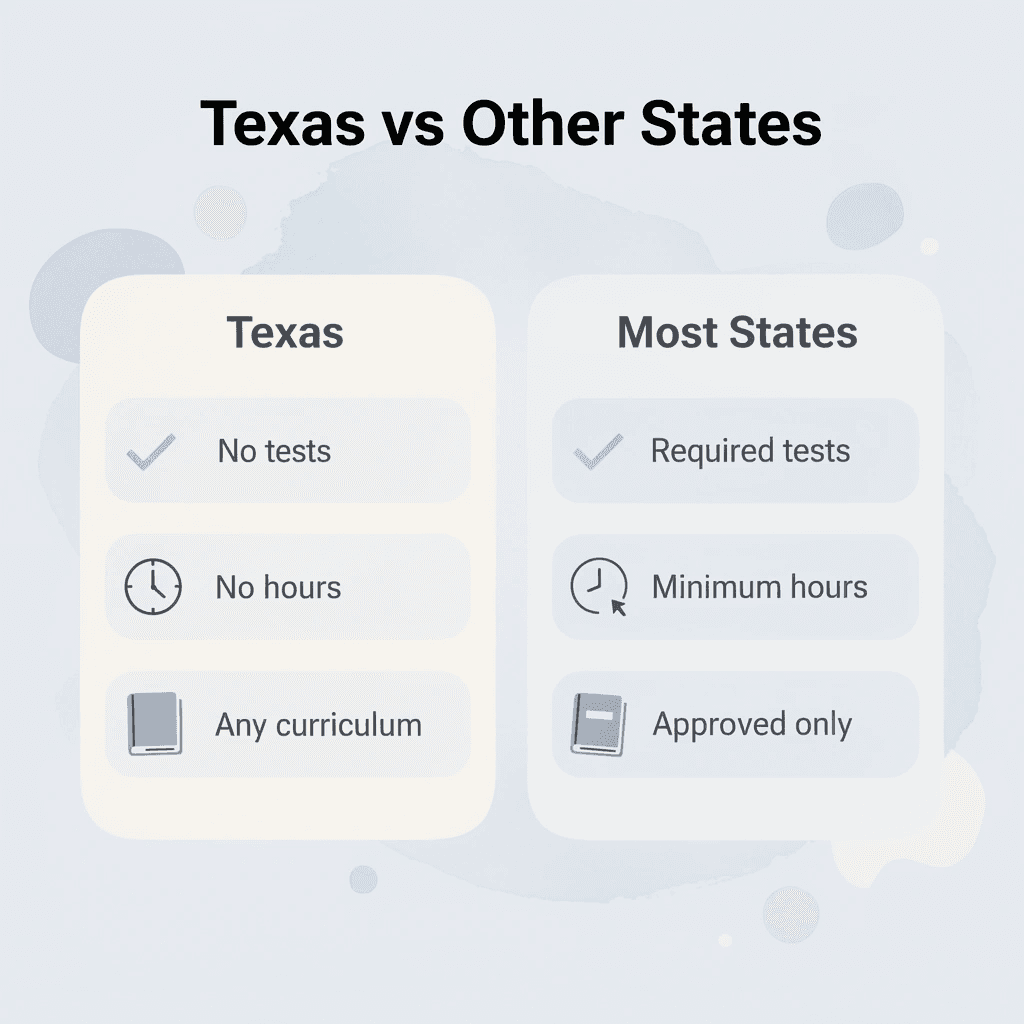
Texas homeschool law requires six core elements: real instruction through visual materials covering reading, spelling, grammar, mathematics, and good citizenship. No minimum hours, standardized tests, or curriculum approval are needed.
🎯 Key Point: Texas has one of the most flexible homeschool laws in the nation - you have complete freedom in choosing your curriculum and teaching methods as long as you cover the core subjects.
"Texas homeschool law requires six core elements with no government oversight on curriculum approval or minimum hours." — Texas Education Code, Chapter 25
⚠️ Warning: While Texas doesn't require record keeping, it's essential to maintain attendance records and academic progress documentation in case of future inquiries or college applications.
Required Subject | Texas Requirement | Your Freedom |
|---|---|---|
Reading | Must be covered | Choose any curriculum |
Spelling | Must be covered | Choose any curriculum |
Grammar | Must be covered | Choose any curriculum |
Mathematics | Must be covered | Choose any curriculum |
Good Citizenship | Must be covered | Choose any curriculum |
Visual curriculum means more than textbooks
A visual curriculum doesn't require expensive boxed programs or accredited lesson plans. It means your child learns from materials they can see, such as books, workbooks, worksheets, videos, computer programs, or anything displayed on a screen. The law exists to prevent purely oral instruction with no tangible learning materials. A library book counts. A YouTube science video counts. Printable worksheets you generate at home count. If your child can look at it while learning, it qualifies.
Why is the good citizenship requirement so vague?
The good citizenship requirement confuses new homeschoolers because Texas law doesn't define it. Most families meet this by teaching basic civics: how government works, the Constitution, Texas history, and the Pledge of Allegiance. You're helping your child understand how their community and country function. For younger students, good citizenship might mean discussing community helpers, talking about voting during elections, or reading age-appropriate books about historical figures. The state leaves the meaning to you because parenting and teaching citizenship are naturally intertwined.
How can younger children learn citizenship through hands-on activities?
For families with younger children, this flexibility enables creative approaches that feel like exploration rather than formal instruction. A kindergartner learning letter formation through themed worksheets builds fine motor skills and lays the foundation for spelling. A first-grader tracing state shapes develops geographic knowledge alongside hand-eye coordination. Parents who download custom educational coloring pages can align visual learning with their current topic—whether animals for science or historical figures for citizenship—while meeting curriculum requirements without purchasing workbooks that may not match their child's learning style.
Age requirements matter for enrollment, not graduation
Children must attend school (public, private, or homeschool) if they are at least six years old by September 1st and haven't turned 19 yet. However, there is no minimum age for graduation. You decide when your child has completed their education. Some families graduate students at 16 after completing rigorous coursework; others wait until 18. The diploma you create and sign carries the same legal weight as any private school diploma in Texas. Colleges and military recruiters must accept it by the same standards as other high school diplomas.
What you actually don't have to do
No registration with the state. No contact with your local school district unless withdrawing a currently enrolled student. No minimum school days or hours per day. No teaching credentials or college degree required. No curriculum approval process. No annual testing. No progress reports to government agencies. Texas law protects homeschool families from these requirements because the 1994 Leeper ruling classified homeschools as private schools. You may need documentation only if you re-enroll your child in public school, apply to college, or enlist in the military. Even then, a transcript you create yourself usually suffices. The tricky part isn't understanding the requirements; it's figuring out how to teach five subjects without burning out in the first month.
How to Homeschool Children in Texas
Teach the five required subjects—reading, spelling, grammar, math, and good citizenship—using any visual materials: books, worksheets, or videos. You need consistency, materials, and genuine commitment, but not a teaching degree or state approval.

🎯 Key Point: Texas homeschool law is remarkably flexible—you have complete freedom to choose your curriculum, teaching methods, and daily schedule as long as you cover the five core subjects.
"Texas requires only that homeschool instruction be bona fide (genuine) and cover the five essential subjects using visual materials." — Texas Education Agency Guidelines

⚠️ Warning: While Texas has minimal requirements, consistency is crucial—sporadic teaching won't meet the bona fide instruction standard and could create legal complications if questioned.
Required Subject | Visual Materials Examples | Flexibility Level |
|---|---|---|
Reading | Books, e-readers, educational apps | Complete freedom |
Spelling | Workbooks, online programs, flashcards | Complete freedom |
Grammar | Textbooks, videos, interactive software | Complete freedom |
Math | Worksheets, manipulatives, and online courses | Complete freedom |
Good Citizenship | History books, documentaries, and civics materials | Complete freedom |
Build around visual materials, not rigid schedules
The visual curriculum requirement gives you more flexibility than most parents realize. A library book on fractions qualifies. A YouTube channel explaining sentence structure qualifies. Printable worksheets you generate at home qualify. The law requires something tangible to anchor learning, but that can be a three-dollar thrift store workbook or a bookmarked website. Parents often discover that their children learn better from a mix of free resources, library books, and simple worksheets that match their interests than from expensive curriculum packages. For younger students, combining visual learning with hands-on activities makes abstract concepts stick: a kindergartner tracing letters builds fine motor skills and letter recognition simultaneously, while a first grader coloring state maps develops spatial awareness alongside factual knowledge.
Teach good citizenship through real life, not textbooks
Good citizenship confuses new homeschoolers because Texas law doesn't define it. You're not preparing your child for a civics exam; you're helping them understand how communities work and why participation matters. This happens through conversations about elections, reading age-appropriate biographies, discussing current events at dinner, or volunteering together. For younger children, it might mean talking about community helpers, explaining why we follow rules, or reading about historical events. The requirement exists to ensure children understand their role in society, not to mandate a specific political perspective. You satisfy it by raising a thoughtful, informed person who understands how government works at a basic level.
Create records even though the state doesn't require them
Texas doesn't require you to keep records, but you'll regret skipping it. Maintain a simple folder of finished work, a list of books read, or a basic log of subjects covered each week. This helps you track your child's progress, identify learning gaps, and provide proof of what your child studied if they return to public school or apply to college. Parents who skip this step often struggle years later trying to remember what their child learned in seventh grade. A basic portfolio of work samples and a subject log takes five minutes a week and saves hours of stress later.
Mix methods instead of relying on one approach
Children learn in different ways, and homeschooling lets you adjust to each child's learning style. Use videos for science concepts, hands-on projects for maths, read-alouds for literature, and written exercises for grammar. Switching between these methods keeps children focused and improves retention. A child who struggles with workbook maths might understand fractions perfectly when measuring ingredients for cookies. A reluctant reader might love graphic novels after refusing chapter books. You can combine a formal reading program with library books, educational videos, and creative projects that teach the same skills. According to the Lamb County Leader-News, 750,000 students are homeschooled in Texas, and those families use everything from classical education models to unschooling approaches. The common thread isn't the method—it's ensuring those five subjects get covered consistently.
How can worksheets make learning feel like play?
Worksheets reinforce concepts without feeling like formal lessons, especially for younger students who need repetition to build skills. A spelling worksheet where children trace and color words combines handwriting practice with visual memory. A maths worksheet with pictures to count makes abstract numbers concrete.
Parents who create custom worksheets based on their child's current interests find that learning feels less like school and more like exploration. A child obsessed with dinosaurs will engage more deeply with a dinosaur-themed spelling list than generic vocabulary words. A first grader learning about community helpers might color pictures of firefighters and police officers while practicing letter formation. These activities satisfy visual curriculum requirements while building foundational skills in a playful format.
Why does matching curriculum to learning style matter?
Materials and good intentions only get you so far if the curriculum doesn't match how your child learns.
Related Reading
- Homeschool Room
- How To Homeschool Your Kids
- Colorado Homeschool Laws
- Abeka Homeschool Curriculum
- Georgia Homeschool Laws
- 6th Grade Homeschool Curriculum
- Homeschool Preschool
- Homeschool Room Ideas
- 1st Grade Homeschool Curriculum
- How To Homeschool In Texas
- Homeschool Vs Public School
- Homeschool Coop
- Pre K Homeschool Curriculum
- Kentucky Homeschool Laws
- Homeschool Report Card Template
- Florida Homeschool Requirements
How to Choose a Good Homeschool Program in Texas
Match the program to how your child learns and whether your family can keep it going long-term. A curriculum that works for a self-directed reader might frustrate a hands-on learner who needs tactile projects to understand abstract concepts. The best program is one your child will engage with consistently and that you can teach without burning out by October.
🎯 Key Point: The most expensive or highest-rated homeschool program means nothing if it doesn't match your child's learning style and your family's capacity to sustain it throughout the school year.
"Educational success depends not on the curriculum itself, but on the consistent implementation and student engagement with the chosen program." — National Home Education Research Institute
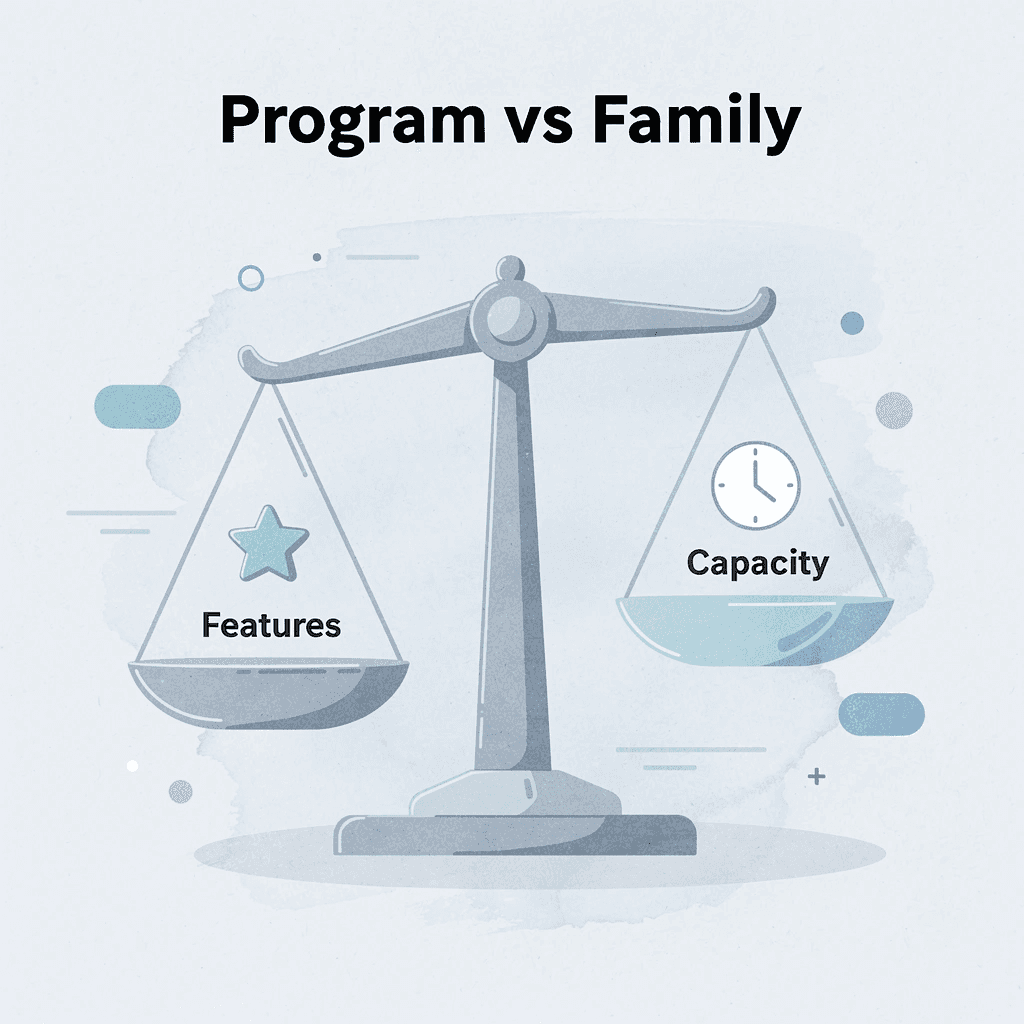
⚠️ Warning: Many families choose overly ambitious programs in August only to switch mid-semester when the workload becomes unsustainable. Start with a manageable approach you can actually maintain daily.
Start with learning style, not curriculum reputation
Your child's learning pattern determines everything else. Some children absorb information through reading and writing, others through building, touching, or moving. A visual learner thrives with video lessons and graphic organizers; an auditory learner needs discussion and verbal explanation. Watch how your child approaches new information: Do they prefer to watch videos or read instructions? Do they remember stories or need diagrams? Programs that ignore these patterns create daily friction and force compliance rather than teaching. A kindergartner who learns letters through songs and movement will resist a workbook-heavy phonics program. A first grader who thinks spatially might struggle with abstract maths worksheets, but understands fractions instantly when building with blocks.
Evaluate whether your schedule supports the structure
Some programs require fixed lesson times and must be completed in order. Others let you teach math at breakfast, read aloud at bedtime, and skip subjects entirely on chaotic days. Neither approach is better, but one will work better for your family. If you work from home with unpredictable meetings, a rigid schedule creates constant stress. If you need outside accountability to stay consistent, a loose framework might leave you perpetually behind. Evaluate your worst week, not your best one: the program needs to survive sick days, work deadlines, and kitchen floods. Flexibility sounds appealing until you've skipped science for three months because nothing forced you to prioritize it. Structure sounds oppressive until a pre-planned lesson saves you from scrambling to teach fractions while answering work emails.
Assess your teaching comfort level honestly
New homeschoolers need programs with detailed lesson plans, scripted instruction, and clear daily objectives. Experienced parents might prefer curriculum frameworks that let them adapt content or skip sections their child already understands. Your confidence matters more than your credentials. If explaining long division makes you anxious, choose a program with video instruction or detailed teaching guides. If you love researching topics and creating custom lessons, a prescriptive curriculum will feel limiting. The right fit acknowledges where you are, not where you think you should be.
What does educational success mean for your homeschool family?
Academic rigor matters to some families, while others prioritize creativity, critical thinking, or mastery over speed. A classical education program focuses on logic, rhetoric, and Latin. A Charlotte Mason approach emphasizes the use of living books and nature study. An unschooling philosophy follows the child's interests entirely. These represent different definitions of what an educated person looks like. If your goal is college preparation, choose a program that aligns with standardized expectations and produces transcripts that colleges recognize. If you want your child to think independently and pursue deep interests, prioritize programs that allow exploration over coverage. You cannot optimize for everything simultaneously.
Why is community support more important than curriculum quality?
The most overlooked factor isn't curriculum quality or teaching philosophy: whether other families using the same approach can help when you get stuck.
12 Best Homeschool Programs in Texas
Texas families can choose from fully online schools with certified teachers to flexible, literature-based curricula you manage yourself. The right fit depends on how much structure versus freedom you want, your child's learning style, and how much time you can dedicate to teaching. Understanding what each program delivers matters more than chasing the most popular name.
🎯 Key Point: The best homeschool program isn't necessarily the most expensive or well-known—it's the one that matches your family's specific needs and available time commitment.
"Understanding what each program delivers matters more than chasing the most popular name when selecting homeschool curricula." — Texas Homeschool Research, 2024
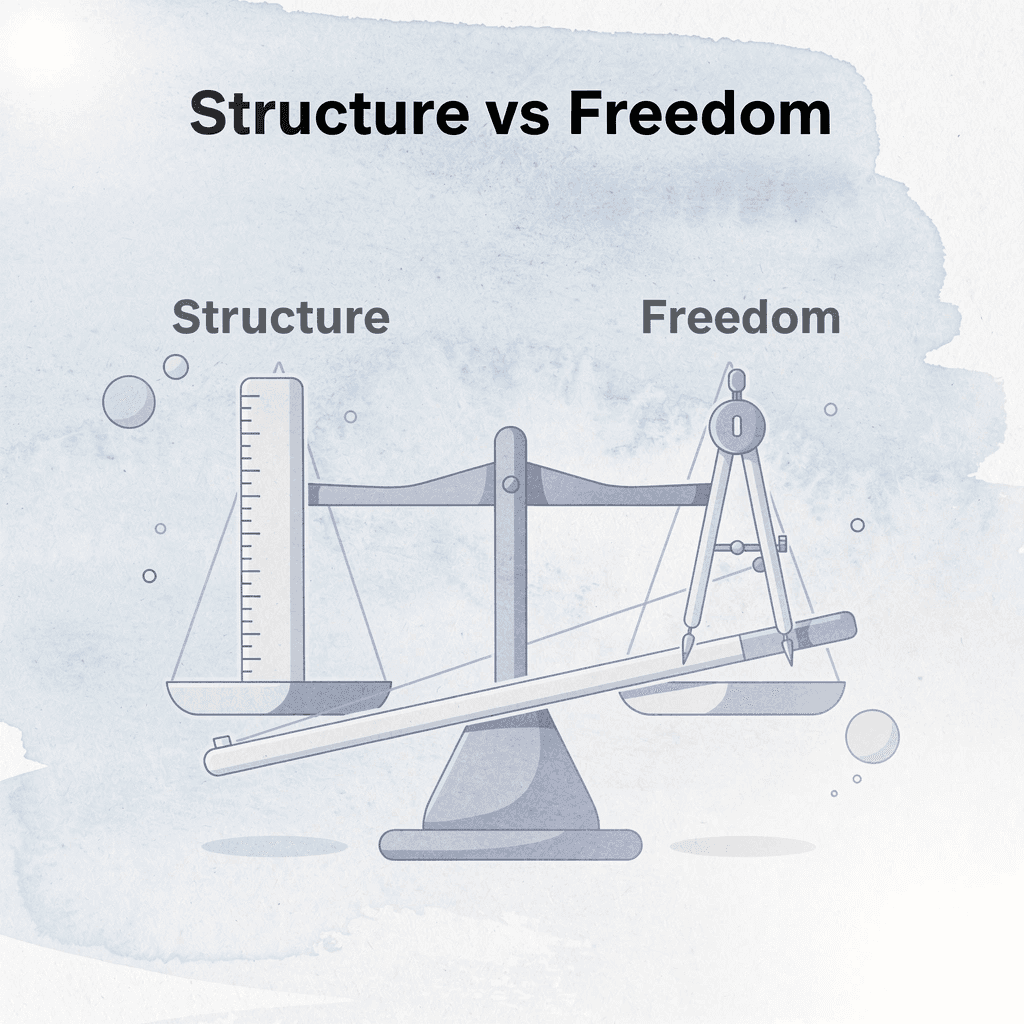
💡 Tip: Before committing to any program, consider doing a trial run for at least 2-3 weeks to see how well it fits your child's learning pace and your family's daily routine.
1. Time4Learning automated lessons with minimal parent involvement
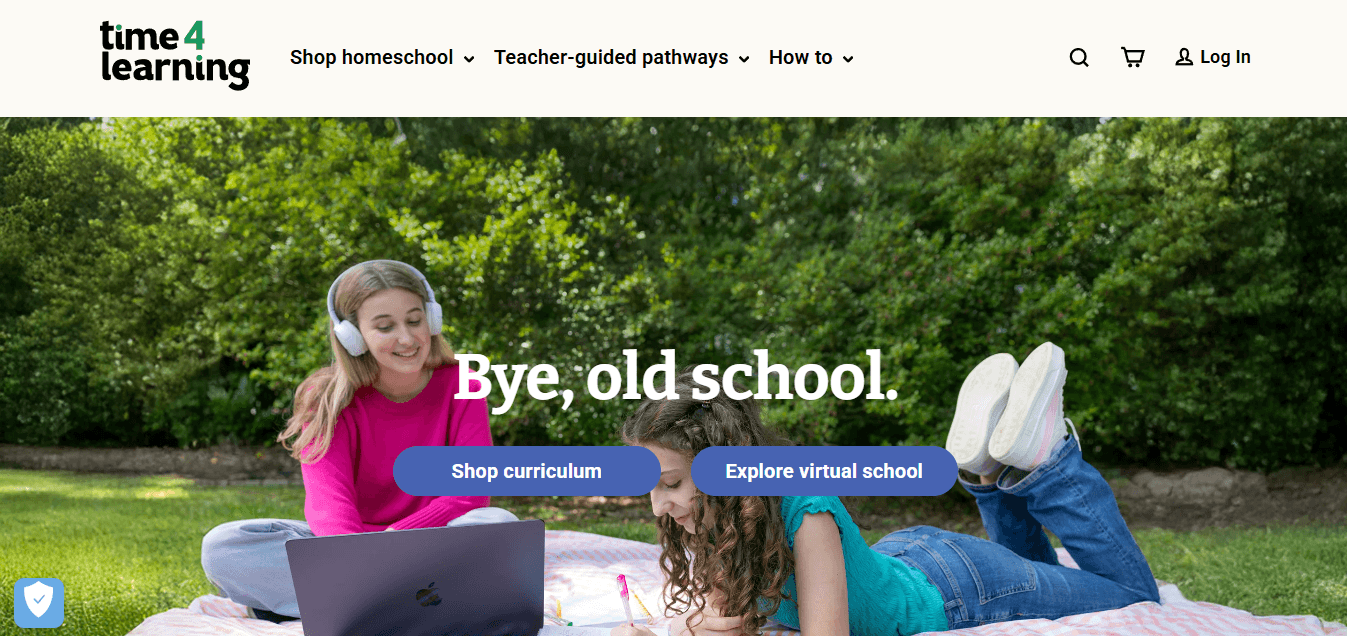
Time4Learning offers a complete online curriculum for PreK through 12th grade covering all main subjects with interactive lessons, automatic grading, and built-in progress tracking. Your child logs in, completes lessons, and the system records everything automatically, appealing to parents who want minimal involvement.
How does the self-paced learning system work?
Lessons move at each student's own speed, allowing students to revisit ideas without waiting for teacher assistance. Automatic reports show what your child completed, the time spent on each subject, and areas of difficulty. For families managing work schedules or multiple children, this eliminates the daily stress of planning lessons and checking assignments.
What are the main limitations to consider?
The main limitations are screen time and lack of accreditation. Students spend most of their learning hours on a computer, which matters if you're limiting digital exposure. The program also doesn't provide an accredited diploma, a concern if your high schooler plans to apply to competitive colleges or military programs. Choose this if you need a structured, self-running system, but supplement with offline activities to balance screen use.
2. K12 traditional school structure delivered at home
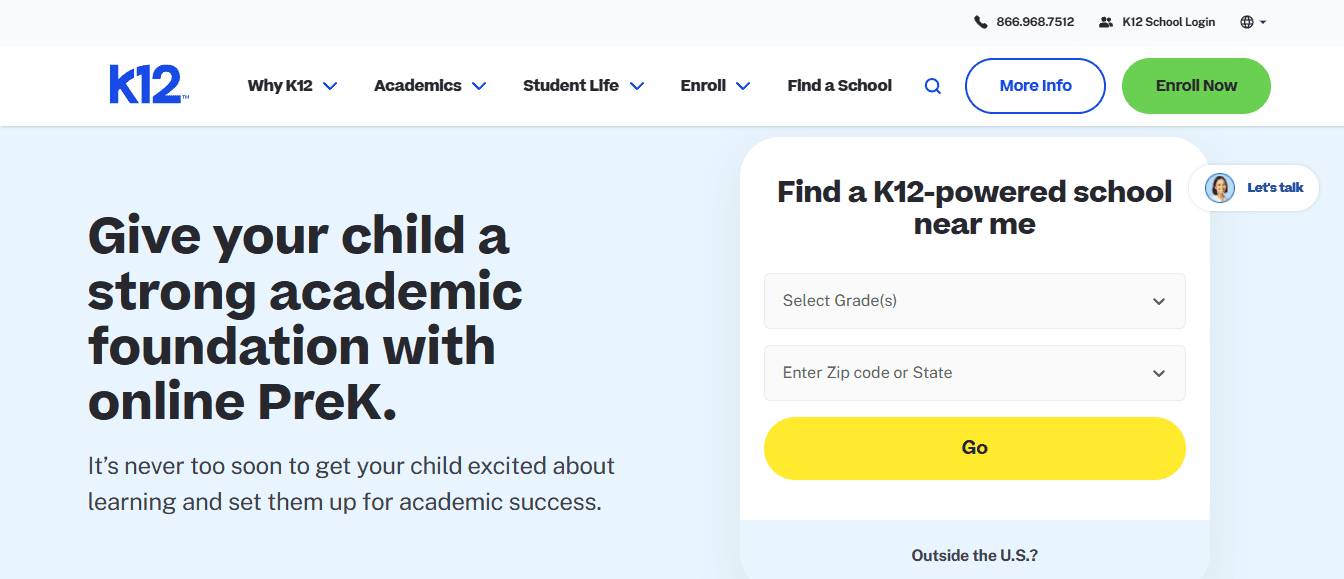
K12 operates as a full online school with certified teachers, fixed schedules, and assignments that mirror traditional classroom expectations. Students attend live virtual classes, submit homework to teachers, and follow a structured calendar. It's a public school moved to your apartment, not homeschooling in the flexible, parent-led sense.
What are the benefits of K12's structured approach?
The benefit is external accountability. Teachers manage instruction, grade assignments, and provide feedback, allowing parents to oversee the process without carrying the teaching load. The program includes college and career prep resources for high schoolers preparing for post-graduation plans.
What are the drawbacks of this rigid system?
The downside is that it's rigid. You lose the ability to change your schedule: your child must attend classes at set times, meet deadlines, and follow a predetermined pace. K12 won't let you customize the curriculum or skip topics your child has already mastered. Choose this if you want a school that happens at home, not homeschooling.
3. Abeka: rigorous academics with a heavy workload
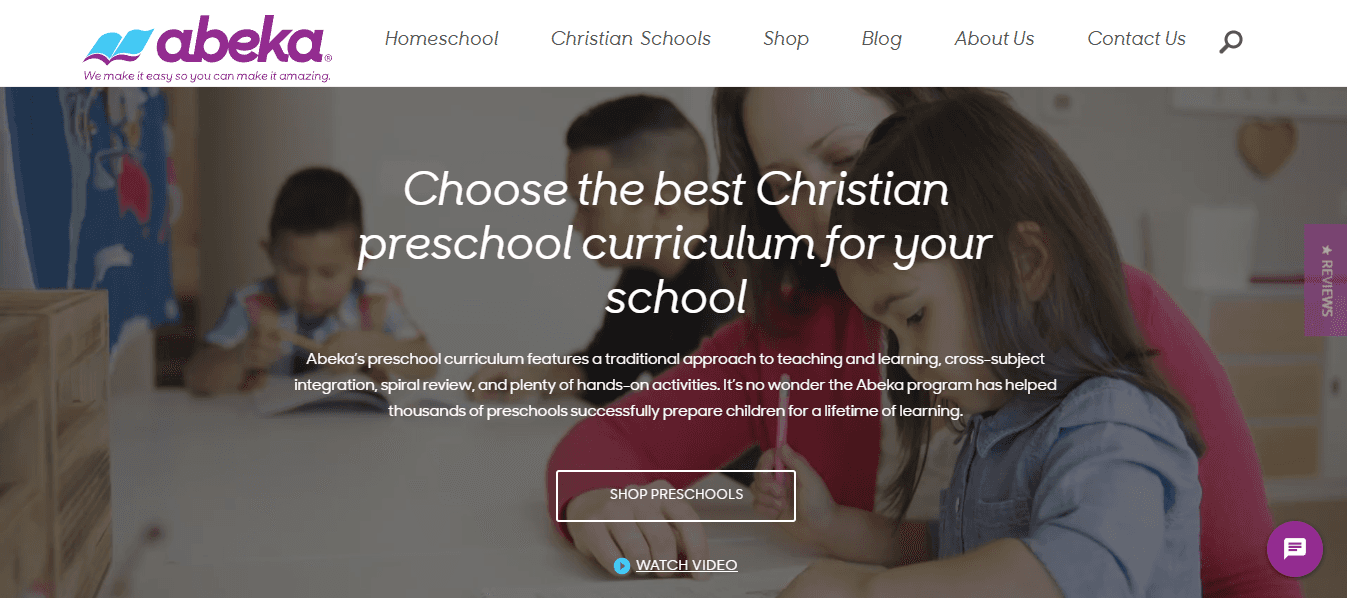
Abeka delivers a textbook-and-video-based curriculum with a strong academic foundation in reading, writing, and maths. The program uses structured daily lesson plans, regular testing, and high expectations for mastery. Parents appreciate its clear benchmarks and proven track record.
Who struggles with Abeka's intensive workload?
The workload is heavy, requiring rapid progress through material with little flexibility. This intensity suits children who thrive on routine and challenge but can overwhelm those who need more time to learn concepts or prefer exploratory learning. The traditional, strict approach frustrates families seeking creative or project-based instruction.
Should you choose Abeka for your homeschool?
Choose Abeka for disciplined, academically focused homeschooling that prepares students for standardized testing and college admissions. Skip it if your child learns better through discussion, hands-on projects, or self-directed exploration.
4. Sonlight literature-based learning through real books

Sonlight replaces textbooks with real books, teaching history, science, and critical thinking through storytelling and discussion. The curriculum centers on reading aloud together, asking questions, and exploring ideas through narrative rather than worksheets.
Why do children learn better through stories than through textbooks?
Children remember stories better than facts listed in textbooks. A history lesson taught through a biography of Harriet Tubman stays with them longer than a chapter summarizing the Underground Railroad. Sonlight's book lists expose students to diverse perspectives and cultures, building empathy alongside knowledge.
What are the challenges of using the Sonlight curriculum?
The main limitation is parent involvement. You cannot give your child a Sonlight lesson and walk away—the program requires daily read-alouds, discussion leadership, and comprehension guidance. It is also reading-intensive, which may challenge reluctant readers or students who learn better through visual or hands-on activities. Choose this if your child loves books and you have time to work together.
5. Sonlight: literature-based learning through real books
Oak Meadow follows a Waldorf-inspired approach that emphasizes creativity, hands-on projects, and flexible pacing. The curriculum prioritizes experiential learning over rote memorization through art, nature study, and real-world application, with minimal screen time. The program works well for creative children who need space to explore ideas deeply. Projects replace worksheets, making learning feel like discovery rather than school. Flexible pacing lets students spend extra time on topics of interest without falling behind.
What are the potential drawbacks of Oak Meadow?
The downside is lower academic intensity compared to rigorous programs like Abeka. Some families worry about standardized tests and college readiness. The program also requires significant parent involvement to guide learning and support projects. Choose Oak Meadow if you prioritize creativity and exploration over speed and standardized benchmarks.
6. Laurel Springs School accredited college prep with personalized paths
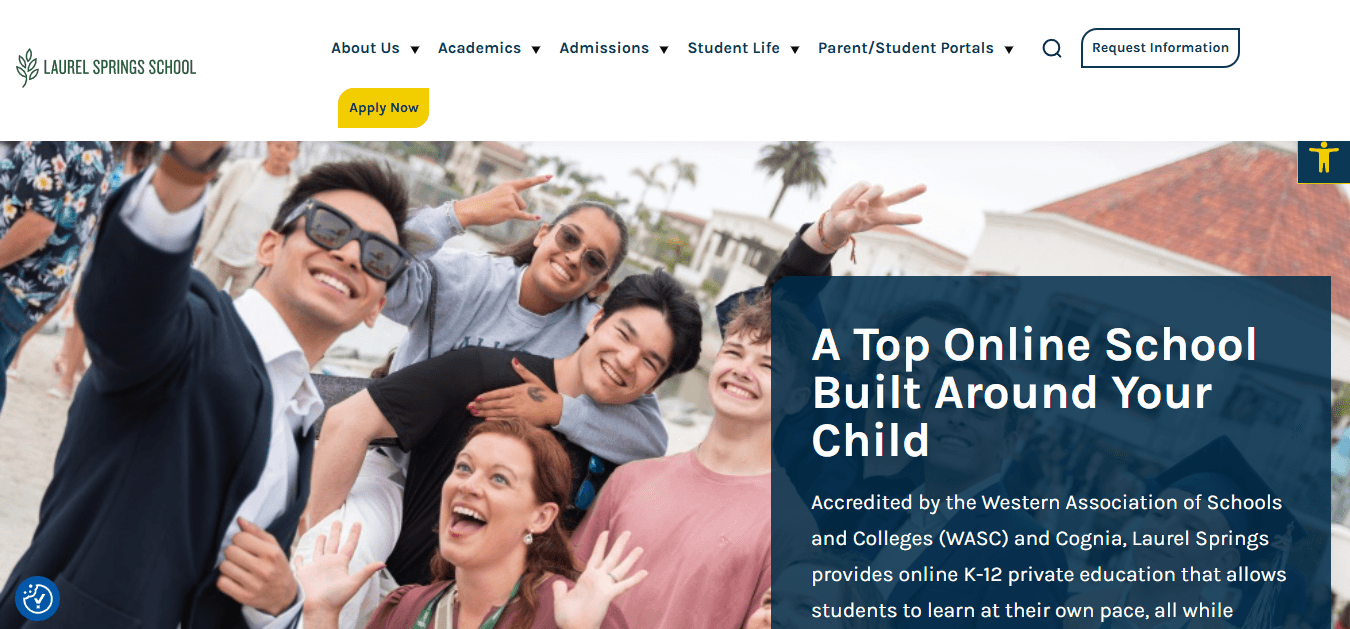
Laurel Springs offers an accredited online private school focused on college preparation, featuring AP courses, academic counseling, and personalized learning plans. An accredited diploma is essential for admission to competitive universities and for scholarship applications.
How do students customize their learning experience?
Students work with academic advisors to build learning paths matching their goals and interests. AP courses prepare high school students for college-level work, and transcripts meet university admissions standards. Flexible pacing lets students accelerate in subjects where they excel or take more time in challenging areas.
What are the main drawbacks to consider?
The main limitation is cost: Laurel Springs charges private school tuition, which may be out of reach for many families. The program also offers less freedom than DIY homeschooling, since you're working within their curriculum framework rather than building your own. Choose this if college readiness is your top priority and you can afford the investment.
7. Bridgeway Academy customized plans with advisor support
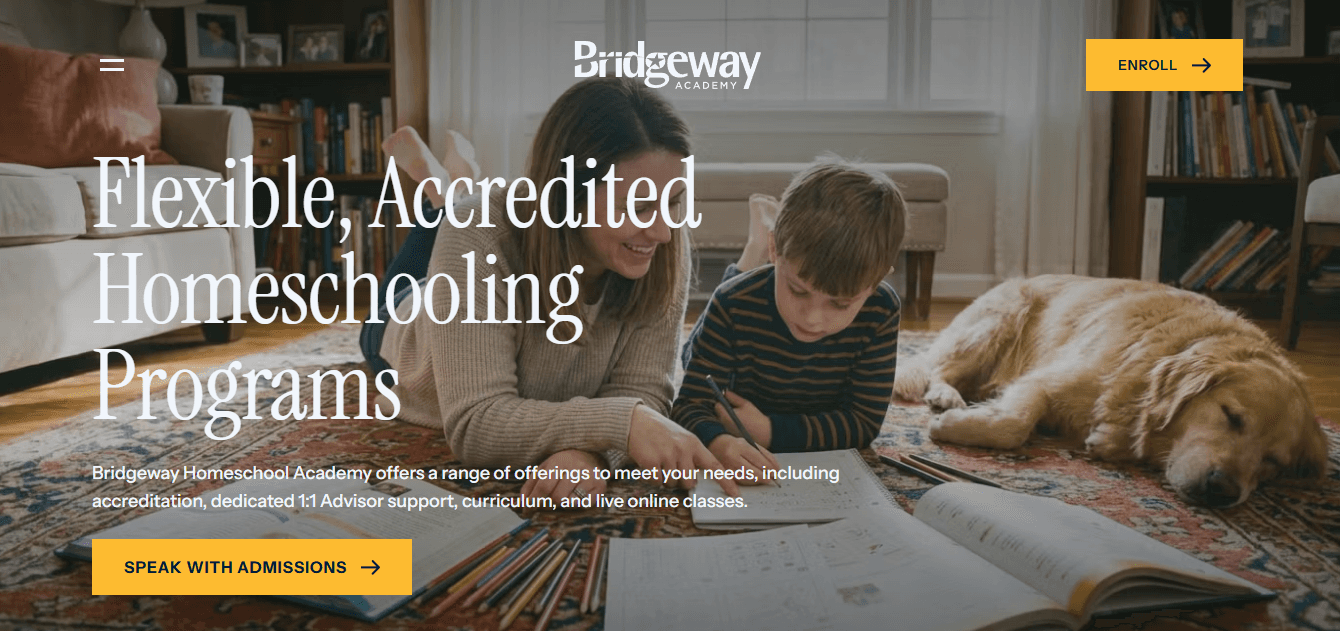
Bridgeway builds a custom learning plan for each student with one-on-one guidance from an advisor. The program combines accreditation with flexibility, allowing families to choose their own curriculum while receiving support from experienced educators. Advisors assist with planning and record-keeping and ensure that students meet graduation requirements.
What are the benefits of personalized learning plans?
The benefit is personalization. Your child's learning plan reflects their strengths, challenges, and goals rather than forcing them into a one-size-fits-all system. Advisors provide accountability without micromanaging, helping parents who want guidance but not full outsourcing. Bridgeway also handles transcript creation and accreditation, simplifying high school planning.
What are the potential drawbacks to consider?
The downside is higher cost and planning requirements. Bridgeway charges more than self-paced online programs because you're paying for advisor time and customization. The program also requires parents to research and select a curriculum upfront. Choose this if your child needs a tailored approach and you value expert guidance.
8. The Keystone School flexible high school with credit-based courses
Keystone offers self-paced, credit-based courses for middle and high school students, producing accredited transcripts that colleges recognise. You can take courses full-time or part-time, making them ideal for families seeking to supplement other curricula or needing flexibility while maintaining official documentation for college applications.
What makes Keystone School effective for homeschoolers?
The strength lies in combining flexibility with credibility. Students complete courses at their own pace rather than following fixed schedules, and accredited transcripts eliminate the need to create and defend homemade documentation. Families can also use individual courses for difficult subjects like chemistry or advanced maths while handling other subjects independently.
What are the limitations of Keystone School?
The limitation is focus. Keystone doesn't serve younger students well, and the course catalog emphasizes traditional academics over creative or exploratory learning. Choose this if you need a flexible high school solution with official transcripts.
9. Easy Peasy All-in-One Homeschool free full curriculum

Easy Peasy provides a free online curriculum covering all subjects from kindergarten through 12th grade. Daily lessons are planned and organized, eliminating the need for parents to create their own scope and sequence.
What are the main benefits of Easy Peasy?
The main benefit is cost: families can access a complete curriculum without spending money on textbooks, subscriptions, or materials. The program covers all required Texas subjects and provides sufficient structure to keep students progressing steadily. For families with limited budgets, Easy Peasy eliminates the cost of curriculum.
What are the limitations to consider?
The downside is polish and customization. The interface feels basic compared to paid platforms, with limited customization options and a fixed path that leaves little room for adapting to individual learning styles. Choose this if budget is your primary concern, and you can supplement with library books or free resources to fill gaps.
10. Power Homeschool video-based lessons with adaptive technology
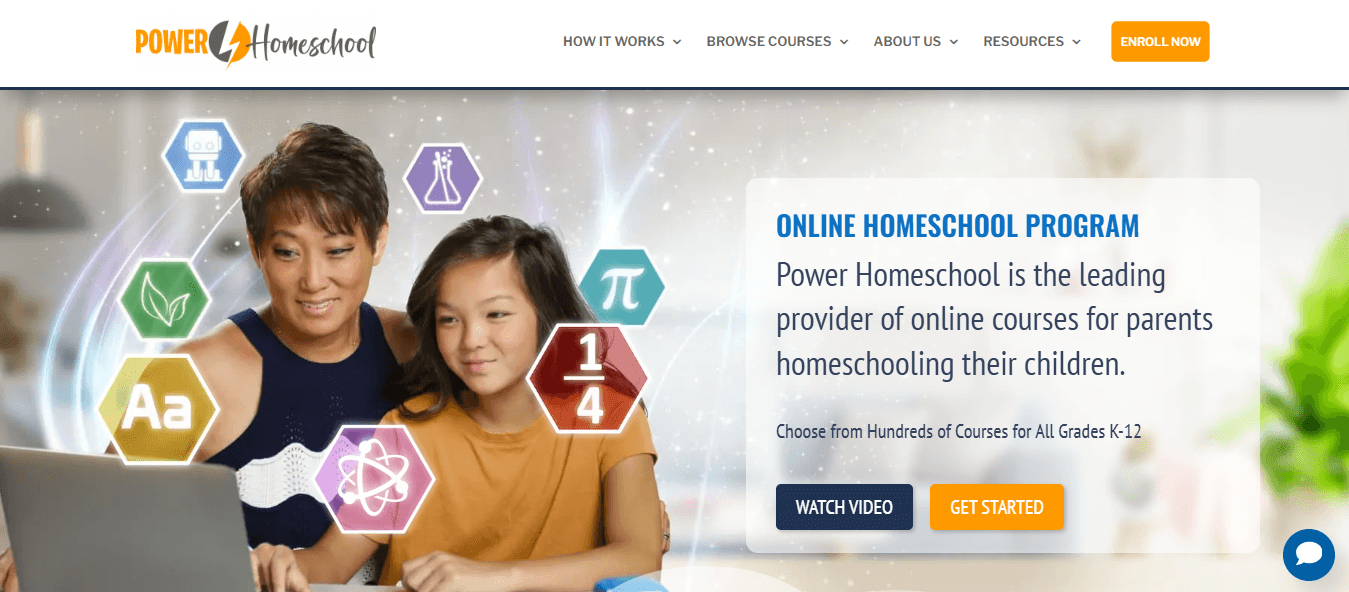
Power Homeschool uses video instruction and adaptive learning technology to deliver lessons across all subjects. The program adjusts based on student performance, providing extra practice in weak areas and accelerating through mastered content.
What are the main strengths of Power Homeschool?
The strength is engagement. Video lessons feel more dynamic than textbooks and help students who struggle with traditional reading-based instruction. Adaptive technology identifies gaps and adjusts pacing automatically, reducing the need for parents to track progress manually. Power Homeschool covers all subjects, eliminating the need to piece together multiple resources.
What limitations should parents consider with Power Homeschool?
The main limitation is the lack of accreditation and minimal teacher interaction. Students work independently through video lessons without live instruction or feedback from certified teachers. The program also significantly increases screen time, which concerns parents seeking to balance digital and offline learning. Choose this if your child prefers video lessons and you want a self-paced system that requires minimal parental guidance.
11. IXL Learning practice-based platform for skill mastery
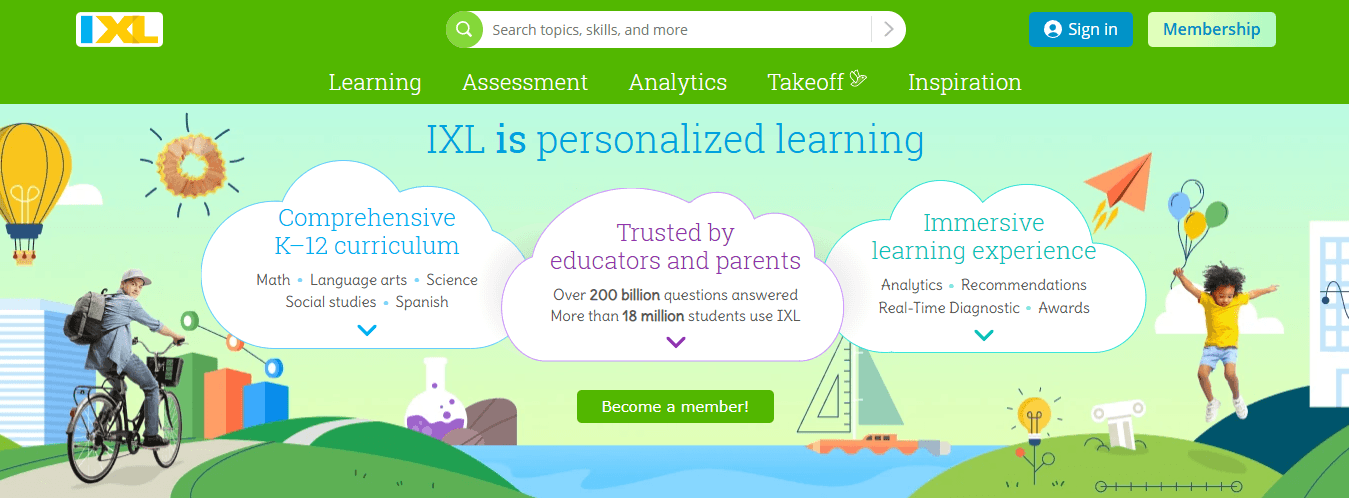
IXL focuses on repetition and mastery through thousands of practice questions in maths and language arts. The platform tracks performance in detail, showing which skills your child has mastered and which need more work. IXL works best as a supplement to a main curriculum, providing targeted practice that builds fluency.
What are the key benefits of using IXL?
The benefit is precision. IXL identifies specific skill gaps and provides unlimited practice until mastery, with detailed analytics helping parents pinpoint where their child struggles and inform teaching decisions. The program covers topics from early elementary through high school.
What are the limitations to consider?
The downside is that IXL isn't a full curriculum—it provides practice but not initial instruction, so you need another resource to introduce concepts. The repetitive format also bores some students. Choose this if you need a supplement for skill-building, not a standalone curriculum.
12. My Coloring Pages: visual reinforcement for younger learners

For younger students, pictures and visual tools help them retain what they learn without increased screen time. Kindergarteners and first graders need hands-on activities to understand abstract concepts. When a child traces letters on themed worksheets, they build fine motor skills while learning spelling. When a student colors state shapes during geography lessons, they develop spatial awareness and learn facts.
Why do parents choose offline activities over digital programs?
According to The Bina School, six online accredited homeschool programs serve Texas families, though many rely heavily on screen-based instruction. Parents balancing digital learning with offline activities often create custom worksheets aligned with their lesson plans. A dinosaur-themed spelling list engages a child obsessed with paleontology more effectively than generic vocabulary words. A first-grader learning about community helpers might color pictures of firefighters and police officers while practicing letter formation, thereby combining citizenship instruction with handwriting development.
How can families create personalized learning materials at home?
Platforms like My Coloring Pages let families create personalized coloring pages and worksheets that match their weekly topics, such as animals for science units or historical figures for citizenship lessons. Customizable worksheets made at home meet visual curriculum requirements while giving parents control over content and pacing, without adding cost or screen time.
Download 69,338+ free worksheets for homeschooling in Texas
The problem isn't choosing between programs—it's sticking with one long enough to see results. Most families switch curricula multiple times in the first year because they choose based on reviews rather than on how well it works with their child and their daily routine. Use a short trial period to assess how engaged your child is, the difficulty of the material, and whether the teaching load fits your schedule before committing to a full year.
🎯 Key Point: The biggest mistake homeschooling families make is curriculum hopping instead of giving their chosen program enough time to work.
"Most families switch curricula multiple times in the first year because they picked based on reviews instead of testing how well it works with their child and daily routine."

💡 Tip: Before committing to any full curriculum, run a 2-3 week trial to evaluate three critical factors: your child's engagement level, the difficulty appropriateness, and whether the daily time commitment fits your family's realistic schedule.
Narrow down to 2-3 programs based on your situation
Pick options that match your constraints, not your aspirations. If you work full-time and need minimal involvement, online programs with video instruction make sense. If you want strong academics and can dedicate time to teaching, textbook-based curricula provide that structure. If your child learns through exploration and you value flexibility, mix-and-match approaches work better.
Parents who choose based on what sounds impressive rather than what fits their reality end up frustrated by November. A classical education program requires hours of reading aloud and discussion: wonderful until you're managing a toddler while facilitating a Socratic dialogue about ancient Greece with your seven-year-old. An unschooling approach offers freedom but demands confidence in letting learning happen organically, which terrifies parents who need visible proof of progress. Match the method to your teaching style and available time, not to what other homeschoolers say worked for them.
Test before committing long-term
Run a one or two-week trial and watch three things. Is your child engaged or resisting? Resistance appears as constant complaints, dragging through lessons, or needing repeated reminders to focus. Engagement shows up as questions, voluntary reading ahead of time, or talking about what they learned at dinner. Is the level appropriate? Material that's too easy creates boredom; content that's too hard generates frustration and shutdown. You're looking for the zone where your child stretches but doesn't break. Is it manageable for you daily? A curriculum that requires two hours of prep time each evening won't fit your actual schedule.
Some programs offer sample lessons or money-back guarantees. Use them. A week of actual teaching yields more than 100 online reviews. You'll discover whether the pacing matches your child's processing speed, whether the teaching style aligns with how they absorb information, and whether you can sustain the daily effort required. Parents who skip this step and commit to full-year packages based on curriculum-fair presentations often spend months trying to force a mismatch.
Build around the program, not against it
No curriculum is perfect on its own. Rather than constantly switching when you hit a weak spot, improve it by adding support where needed. A strong math program paired with weak reading instruction is complemented by library books and read-alouds. A literature-heavy curriculum lacking hands-on science supplements with simple experiments using household materials. A screen-based program balances with offline activities that reinforce the same concepts through tactile practice. Most families handle supplementation by buying more curriculum, which creates clutter and decision fatigue. Workbooks accumulate on shelves unused, and as your child's interests shift and learning needs change, those static workbooks become irrelevant. A dinosaur workbook gathers dust once your kindergartner moves on to space exploration.
Families find that generating custom worksheets aligned with current topics maintains engagement without accumulating unused materials. Platforms like My Coloring Pages let you create themed practice pages matching your weekly lessons, whether letter tracing with community helper images for citizenship lessons or number recognition worksheets featuring your child's favorite animals.
The goal isn't finding a flawless curriculum—it's choosing one you can stick with consistently, because consistency drives results in homeschooling. A mediocre program used daily beats an excellent program used sporadically. Children learn through repetition and accumulated practice, not through perfect lesson plans executed inconsistently. Pick something good enough, commit to it for at least one full semester, and supplement weak spots rather than abandoning ship when you hit friction. Your decision should survive your worst week, not just your best one. The program that works is the one you'll use when your dishwasher floods, your toddler gets sick, and you have three work deadlines.
Related Reading
- 5th Grade Homeschool Curriculum
- How To Homeschool In California
- Georgia Homeschool Requirements
- Alabama Homeschool Laws
- 2nd Grade Homeschool Curriculum
- Homeschool Reading Curriculum
- California Homeschool Laws
- 4th Grade Homeschool Curriculum
- North Carolina Homeschool Laws
- Homeschool Art Curriculum
- Accredited Homeschool Curriculum
- 3rd Grade Homeschool Curriculum
- Illinois Homeschool Laws
- Michigan Homeschool Laws
- Science Homeschool Curriculum