
Kentucky Homeschool Laws Detailed Guide
Kentucky homeschool laws explained: requirements, curriculum rules, and compliance steps. My Coloring Pages provides the complete legal guide.


Choosing to homeschool children in Kentucky requires understanding the state's specific requirements for legal compliance. Parents must navigate notification procedures, attendance records, standardized testing, and evaluation options to ensure their homeschool meets state law. Kentucky homeschool laws provide clear guidelines that allow families to create enriching learning environments while fulfilling legal obligations.
Quality educational resources that align with curriculum goals don't need to strain budgets or take hours of online searching. Printable materials like coloring pages and worksheets can supplement lessons across subjects, including science, history, math, and language arts. These hands-on activities keep learning engaging and students motivated while supporting educational standards. Download 69,777+ Free Coloring Pages to enhance your homeschool curriculum with ready-to-use materials.
Table of Contents
- Is Homeschooling Legal in Kentucky?
- Kentucky Homeschool Laws
- How to Homeschool Legally in Kentucky
- How to Choose the Right Homeschool Program in Kentucky
- 10 Best Homeschool Programs in Kentucky
- Download 69,777+ Free Worksheets for Homeschooling in Kentucky
Summary
- Kentucky's homeschool framework operates through private school classification rather than dedicated homeschool statutes, creating one of the least regulated educational environments in the United States. Families file a single annual notification with their local district, meet a 1,062-hour instructional requirement spread across 170 days, and face zero mandated testing or curriculum approval processes. This legal structure grants maximum flexibility but also places full accountability for educational outcomes on parents, with no external benchmarks to confirm progress.
- The instructional hour requirement of roughly 6.25 hours daily exists only as a legal threshold, not a practical constraint on how teaching time is structured. No law defines what constitutes an instructional hour, meaning reading together at breakfast, building projects that teach geometry, or cooking activities demonstrating fractions all count toward the annual total. Families maintain attendance logs and scholarship reports privately, submitting them only if a truancy complaint triggers an investigation, which rarely occurs when an annual notification is filed, and children aren't absent from home during typical school hours.
- Subject requirements specify eight core areas (reading, writing, spelling, grammar, mathematics, science, history, and civics) but impose no standards for depth, sequence, or instructional methods. A literature-based curriculum that teaches history through historical fiction satisfies the law in the same way as traditional textbook approaches with separate workbooks. This absence of prescribed standards means families can align with classical education models, unschooling philosophies, or rigorous college-prep academics without seeking state approval or demonstrating compliance with external benchmarks.
- Teacher qualification requirements don't exist in Kentucky homeschool law, granting parents identical legal standing to educate their children regardless of formal credentials or educational background. Courts have consistently blocked attempts to impose certification requirements on homeschooling families, recognizing parental authority over educational decisions. This creates practical challenges for families uncertain about their ability to teach advanced subjects, but it eliminates bureaucratic barriers in states that require documented teaching credentials or annual evaluations by certified educators.
- Curriculum selection becomes the sole accountability mechanism in Kentucky since mandatory testing would reveal mastery gaps that families must otherwise identify independently. Programs range from structured all-in-one packages like Abeka, providing daily lesson plans and video instruction to literature-based approaches like Sonlight, built around read-aloud books, each creating different documentation trails for scholarship reports families maintain privately. The absence of external evaluation means that curriculum effectiveness becomes apparent only through long-term observation of skill development rather than through standardized benchmark comparisons.
- Most homeschooling families spend hours each week searching scattered educational websites for supplemental worksheets that match specific lesson plans, downloading generic materials that require modification to fit children's current interests or skill levels. My Coloring Pages addresses this by offering an AI-powered generator that creates custom educational coloring pages and activities on demand, eliminating the time and cost of maintaining adequate supplemental resources across math, science, history, and language arts subjects.
Is Homeschooling Legal in Kentucky?
Yes, homeschooling is legal in Kentucky. The state treats homeschools as private schools under KRS 159.030 and 159.160, which means Kentucky has one of the most flexible educational environments in the country, with minimal state oversight and substantial instructional freedom.

🎯 Key Point: Kentucky's classification of homeschools as private schools gives families maximum flexibility in choosing curriculum, teaching methods, and educational approaches without extensive government interference.
"Kentucky has one of the most flexible educational environments in the country with very little state oversight and a lot of instructional freedom." — Kentucky Homeschool Legal Framework

⚠️ Important: While Kentucky offers exceptional educational freedom, homeschooling families must still ensure they meet the basic requirements outlined in state statutes to maintain their legal homeschool status.
Kentucky Has No Homeschool Law (Technically)
Kentucky does not have a separate legal category for homeschooling. When you educate your children at home, you are establishing a non-public private school that operates in your living room. This distinction matters: the state cannot impose homeschool-specific regulations because they do not exist legally. Courts have ruled that Kentucky cannot prescribe standards for homeschools operating as private schools, so the government's reach into your curriculum, methods, and daily operations stops at your front door.
The "Strict Requirements" Are Numerically Minimal
Kentucky's homeschool requirements are simpler than they sound. You need 1,062 hours of instruction across at least 170 days each year—roughly 6.25 hours per day. However, no law specifies how those hours should be organized, what subjects you teach, or how you track learning. Compare this to states requiring daily supervision logs, quarterly evaluations by certified teachers, or annual curriculum approvals. Kentucky requires none of these. The hourly requirement is a legal threshold, not a practical limit on teaching time.
What does the annual filing process involve?
You'll submit one notification to your local school district within the first two weeks of your school year. The district cannot reject your notice because it's not an application requiring approval. Under KRS 159.160, you're providing statutory notice of your private school's existence, not requesting permission to operate. This single-page form typically asks for basic information such as your school's name, your children's names and ages, and your contact details. Once filed, you're done until next year.
Where can you find supplemental learning materials?
When families need extra materials that align with their teaching approach, our platform, My Coloring Pages, offers over 69,777 free printable resources covering science, history, math, and language arts. Our customizable worksheets and coloring pages let you create hands-on learning activities tailored to your children's interests and grade levels without the cost or time of searching multiple websites.
What does zero testing and evaluation mean for Kentucky homeschoolers?
Kentucky eliminates standardized testing and yearly assessments. Children will never take state-required exams to demonstrate learning. Only a few U.S. states offer this much freedom from testing, and Kentucky is one of them. You decide how to measure your children's progress, what goals matter for their growth, and when they've learned something well enough to move forward. The lack of outside testing requirements doesn't mean you can't assess learning; it means the state trusts you to choose what assessment looks like in your educational setting.
What else should you understand about Kentucky homeschool laws?
But understanding what the law allows is only half the picture.
Related Reading
- Homeschool History Curriculum
- Easy Peasy Homeschool
- Homeschool Curriculum
- Homeschool Math Curriculum
- Online Homeschool Curriculum
- Homeschool Resources
- Online Homeschool Programs
- Christian Homeschool Curriculum
- Homeschool Planner
- Homeschool Schedule
- Kindergarten Homeschool Curriculum
- Best Homeschool Programs
- Free Homeschool Curriculum
- Homeschool Schedule
- Best Homeschool Curriculum
- Accredited Homeschool Programs
- How To Homeschool
- Time For Learning Homeschool
- K12 Homeschool
Kentucky Homeschool Laws
Kentucky doesn't regulate homeschools through dedicated laws; instead, it includes them under private school rules in KRS 159.030 and 159.160. This creates a regulatory environment in which your responsibilities are limited to basic operational requirements rather than educational outcomes.

🎯 Key Point: Kentucky treats homeschools as private schools, which means you'll follow the same minimal regulations that apply to all private educational institutions in the state.
"Kentucky's approach creates one of the most flexible homeschool environments in the nation, with operational requirements but no mandated testing or curriculum oversight." — National Home Education Research Institute, 2024

💡 Tip: Understanding that you're operating under private school statutes rather than specific homeschool laws helps clarify why Kentucky's requirements focus on attendance and operational aspects rather than educational outcomes or standardized testing.
What paperwork do you actually need to file?
The yearly notification to your local school district is your only paperwork requirement. Within the first two weeks of your school year, submit a single form with your school's name ("The Smith Family School" is sufficient), your children's names and ages, and your address. You need not include a curriculum outline, teaching credentials, or educational philosophy statement. The district receives this as a legal notice, not an application for evaluation. They cannot request additional information, schedule home visits, or impose conditions on your homeschool's operation. This notification satisfies KRS 159.160, and you remain legally compliant until the next filing period.
How do the instructional hour requirements work in practice?
The 1,062 instructional hours spread across 170 days create the only measurable standard Kentucky enforces: approximately 6.25 hours daily. The state neither defines what counts as an instructional hour nor requires documentation. Reading together at breakfast counts. Building a birdhouse teaches geometry and biology. Cooking demonstrates chemistry and maths. You maintain attendance records and scholarship reports (progress documentation) privately. No one collects these unless a truancy complaint triggers an investigation, which rarely happens when you've filed your annual notice.
What subjects does Kentucky expect homeschoolers to cover?
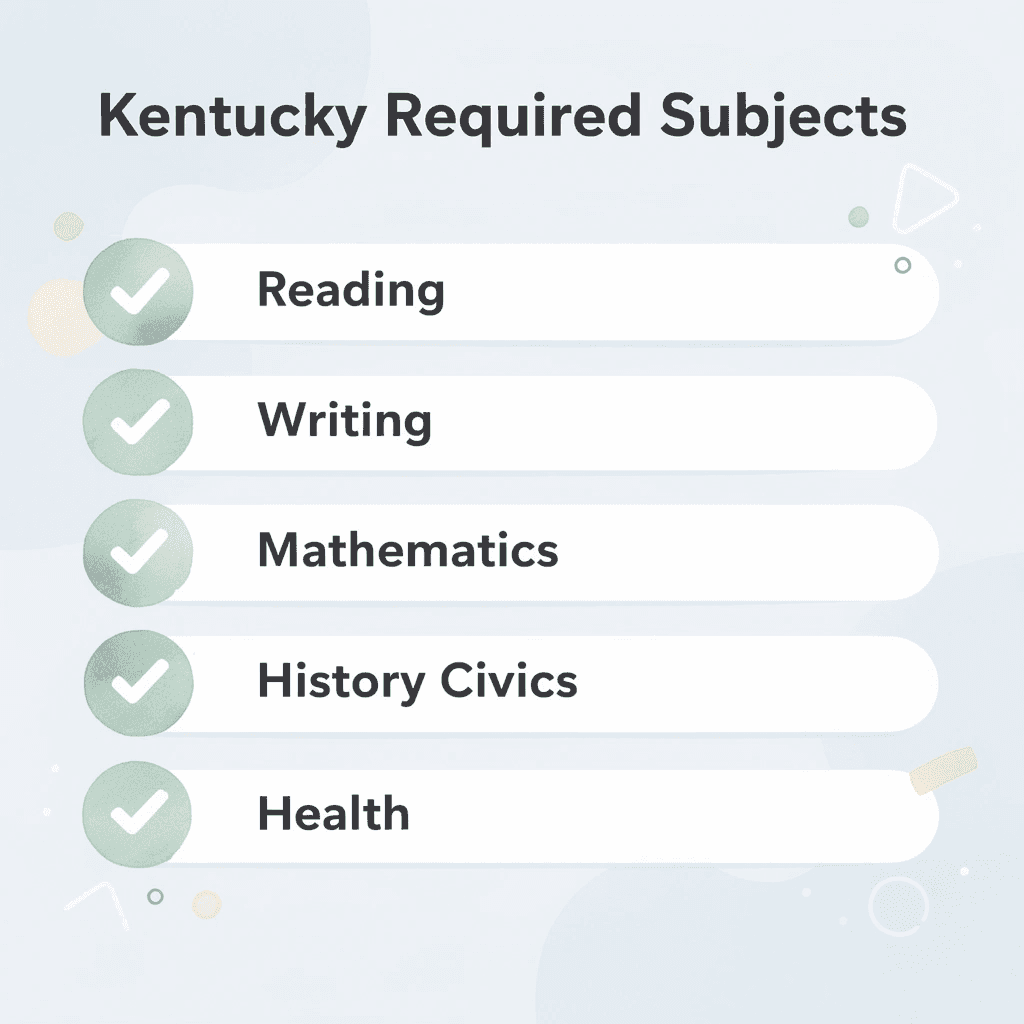
State guidance suggests instruction should cover reading, writing, grammar, mathematics, science, history, and civics. Kentucky law doesn't specify mandatory subjects, textbook lists, or learning standards for private schools. According to Kentucky Youth Advocates, 38,222 students were homeschooled in Kentucky as of July 2024, with no required curricula. You could teach ancient Greek philosophy and marine biology exclusively if that matched your educational vision. Most families align with traditional subjects to prepare children for standardized tests or transition back to conventional schools, but legally, you control every subject choice.
How can you find educational resources for different subjects?
Platforms like My Coloring Pages offer over 69,777 free printable resources covering science, history, math, and language arts. The AI-powered generator creates custom coloring pages and educational activities tailored to your weekly lessons, whether on photosynthesis, the Revolutionary War, or fraction concepts, eliminating the need for separate subject workbooks.
Teacher Qualifications Don't Exist Here
Kentucky has zero requirements for who teaches your children. You don't need a college degree, teaching certification, or professional development courses. The parent who barely graduated high school has the same legal standing as the parent with a PhD in education. This intentional design recognizes parents as the primary educators of their children, regardless of formal credentials. Your qualification is your relationship with your children and your commitment to their learning. Courts have consistently upheld this principle, blocking attempts to impose teacher certification requirements on homeschooling families. The tension between legal freedom and practical responsibility requires careful navigation.
How to Homeschool Legally in Kentucky
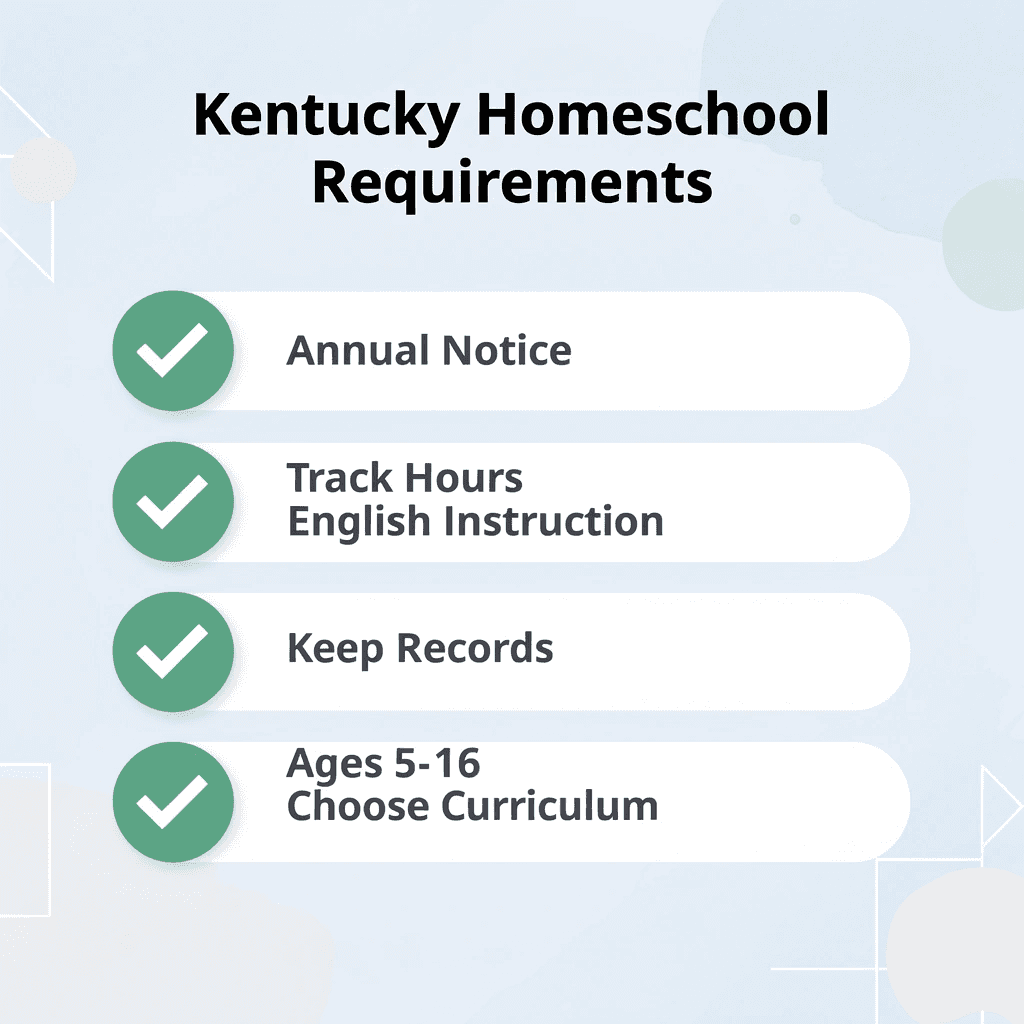
Starting a homeschool in Kentucky requires an annual notice to your district, tracking of instructional time, core subjects taught in English, basic home records, no testing requirements, no credential requirements, compliance with compulsory attendance ages (5-16), and complete curriculum control. The whole legal framework involves a single annual filing with no government approval needed before instruction begins.
🎯 Key Point: Kentucky has no testing requirements or credential requirements for homeschooling parents, making it one of the most flexible states for home education.
⚠️ Warning: While Kentucky doesn't require pre-approval, you must file your annual notice and maintain proper records to stay compliant with compulsory attendance laws for ages 5-16.
"Kentucky homeschool law requires only basic record-keeping and annual notification, with complete curriculum control remaining with parents." — Kentucky Department of Education
Requirement | Details |
|---|---|
Annual Notice | File with the local district |
Age Range | 5-16 years old |
Testing | None required |
Credentials | None required |
Language | Core subjects in English |
Records | Basic home records |
Approval | No pre-approval needed |
Send Your Annual Notice of Intent
During the first two weeks of your school year, mail or deliver a written notice to your local school district superintendent. Include your homeschool name (which can be something informal like "The Johnson Home Academy"), each child's full name and age, and your current address. This is a statutory notification under KRS 159.160, not an application; the district cannot reject it, request curriculum details, or impose conditions beyond those specified by the law. File once per year, keep a copy for your records, and you've satisfied your only bureaucratic obligation until next September.
Meet the Instructional Time Threshold
Homeschool Think Tank reports that Kentucky requires 1,170 hours of instruction per year over at least 170 days. That averages roughly 6.9 hours daily, though the law doesn't specify when your school day starts, how you organize those hours, or what activities count as instruction. Reading aloud at breakfast counts. Building a terrarium teaches biology. Measuring ingredients shows fractions. You control the schedule: four intensive days per week, year-round schooling with frequent breaks, or a traditional September-through-May calendar. The state requires only that you accumulate the minimum hours and days by year's end.
Teach Required Subjects in English
Kentucky requires instruction in reading, writing, spelling, grammar, mathematics, science, history, and civics. The law specifies subjects, not methods or materials—no grade-level benchmarks or approved textbook lists exist. You could teach American history through historical fiction, math through carpentry projects, or science through backyard ecology studies. English must be the main language of instruction, though bilingual families can use other languages to support learning. No curriculum requires state approval, and no official checks whether your approach meets quality standards.
Keep Attendance and Scholarship Records at Home
Keep two types of records private: attendance records (tracking instruction days and hours in a calendar or spreadsheet) and scholarship reports (documenting progress via grade books or narrative descriptions). Neither requires a specific format, and you only submit them to the district if a truancy investigation occurs. Store them safely at home for at least the current school year. These records can serve as unofficial transcripts if your children move to public school or apply to college, though the state doesn't review them while your children are homeschooling.
Skip All Testing and Evaluation Requirements
Kentucky eliminates standardized testing mandates, annual assessments, and portfolio reviews entirely. You determine whether your child has mastered multiplication, understands photosynthesis, or reads at grade level through methods that make sense for your family.
How can families still track academic progress voluntarily?
Some families use standardized tests to prepare for college admissions or to compare progress against national norms, but the law does not require it. When you need hands-on materials that match your teaching approach, platforms like My Coloring Pages offer over 69,777 free printable resources spanning science, history, math, and language arts. The AI-powered generator creates custom coloring pages and educational activities tailored to your weekly curriculum, whether covering the water cycle, the Civil War, or geometric shapes, eliminating the time and cost of sourcing quality materials from scattered online sources.
What comes after understanding the legal requirements?
But knowing the legal steps only gets you to following the rules, not to the harder question of what works for your children.
How to Choose the Right Homeschool Program in Kentucky
Your curriculum choice matters more in Kentucky than in most states because you won't receive outside feedback through required testing or yearly evaluations. The program you select becomes your only accountability system, so it must show measurable progress. You're choosing a complete educational framework, not supplementary materials.

🎯 Key Point: Without state-mandated assessments, your homeschool program serves as both curriculum AND progress tracker—making this decision doubly important for Kentucky families.
"In Kentucky, homeschool families have complete autonomy over curriculum selection, making the choice of educational program the primary determinant of academic accountability." — Kentucky Department of Education Guidelines

⚠️ Warning: Don't underestimate the importance of built-in assessment tools. Many Kentucky homeschool families realize too late that their chosen curriculum lacks adequate progress monitoring features.
Start With the Eight Required Subjects
Kentucky law requires instruction in reading, writing, spelling, grammar, mathematics, science, history, and civics. Any program you consider needs clear coverage of these areas, but the state doesn't dictate the depth of coverage or the order you follow. A literature-based curriculum that teaches history through historical fiction and writing through narration satisfies the requirement as fully as a traditional textbook approach with separate workbooks for each subject. The legal threshold is subject to presence, not instructional method.
Decide Between Structured Packages and Custom Combinations
All-in-one programs like Abeka, Time4Learning, or The Good and the Beautiful provide a complete curriculum with lesson plans, materials, and grading rubrics. This works when you want someone else to make decisions about what to teach and in what order, or when you need support as a new homeschooler. The downside is reduced flexibility: if your child excels in maths but struggles with reading, you must follow the program's pace for both subjects. Mix-and-match approaches let you combine Singapore Math with a phonics-focused reading program and project-based science, but you become responsible for ensuring nothing gets missed and that your plan covers all eight required subjects coherently.
How do you identify your child's natural learning style?
A curriculum that works well for one family creates daily frustration for another because learning styles vary significantly. Visual learners need diagrams, charts, and graphic organizers. Kinesthetic learners require hands-on experiments, building projects, and movement-based activities. Auditory learners thrive with discussion-based lessons, podcasts, and read-aloud instruction. Most families discover their children's learning preferences through observation rather than formal assessments. Watch how your child approaches new information. Do they immediately start drawing pictures to understand a concept, or do they ask you to explain it verbally first? That pattern reveals which curriculum structure will feel intuitive versus which will require constant adaptation.
How can you streamline the creation of educational resources?
Most homeschooling families spend hours searching Pinterest, Teachers Pay Teachers, and educational blogs for worksheets that match their lesson plans. Platforms like My Coloring Pages eliminate the need for scattered search by generating custom educational activities on demand. Need a worksheet reinforcing photosynthesis vocabulary for a child interested in carnivorous plants? Create it in seconds, rather than using generic plant diagrams. Our AI-powered generator adapts to what you're teaching this week—multiplication facts, state capitals, or the water cycle—saving you time and subscription fees from maintaining multiple educational resource accounts.
Verify the Program Supports Long-Term Documentation
Kentucky requires you to maintain attendance logs and scholarship reports privately, so your curriculum must produce trackable evidence of what you taught and what your children learned. Some programs include built-in record-keeping features like automated attendance tracking, printable grade reports, and lesson completion logs. Others leave documentation to you, which works if you're comfortable creating your own systems, but becomes burdensome when managing multiple children or working part-time. The records you keep now serve as proof of academic rigor for high school transcripts and college applications, particularly since Kentucky doesn't issue official homeschool diplomas.
Related Reading
- Homeschool Room
- Homeschool Report Card Template
- Homeschool Room Ideas
- Homeschool Vs Public School
- Language Arts Homeschool Curriculum
- Homeschool Preschool
- Texas Homeschool Requirements
- How To Homeschool Your Kids
- How To Homeschool In Texas
- Homeschool Coop
- Pre K Homeschool Curriculum
- Florida Homeschool Requirements
- 1st Grade Homeschool Curriculum
- Colorado Homeschool Laws
- Georgia Homeschool Laws
- 6th Grade Homeschool Curriculum
10 Best Homeschool Programs in Kentucky
You need a curriculum that covers Kentucky's eight required subjects and fits how you like to teach. It should create documentation showing your students are ready for college. The programs below range from strict traditional academics to literature-based learning, from free online platforms to classical education. Your choice depends on how your children learn best and what daily preparation you can manage.

💡 Tip: Kentucky homeschool law requires instruction in reading, writing, spelling, grammar, history, mathematics, civics, and health and safety — make sure your chosen program covers all these areas.
"The right homeschool curriculum should align with both state requirements and your family's learning style to ensure academic success and legal compliance." — Kentucky Department of Education Guidelines
🎯 Key Point: Documentation is crucial for Kentucky homeschoolers — choose programs that provide transcripts, progress reports, and standardized assessments to demonstrate your child's academic growth and college readiness.
1. Abeka Homeschool

Families seeking structure often choose Abeka because every school day is planned with textbooks, workbooks, quizzes, tests, and video instruction that mirrors classroom teaching. The phonics foundation builds strong early readers, and the curriculum follows a clear path from kindergarten through twelfth grade. Children complete more worksheets weekly than some programs assign monthly, demonstrating progress but requiring substantial daily work. Parents who appreciate checking items off a list find this comforting; those needing flexibility for therapy appointments or other commitments often feel constrained. The program requires Monday through Friday schooling, September through May, roughly six hours daily, which meets Kentucky's requirement of 170 days and 1,062 hours but allows little room for adjustments.
2. Time4Learning

Working parents and families managing multiple grade levels choose Time4Learning because it automatically delivers and grades lessons. Children log in to complete interactive lessons in maths, language arts, science, and social studies, with the system automatically tracking progress. Monthly pricing is more affordable than full-year curriculum packages, and you can pause or cancel at any time. However, the screen-heavy approach concerns families wanting to limit technology use, and some subjects lack the depth of textbook-based programs. Students needing hands-on activities to understand abstract concepts struggle with digital-only instruction. Yet if you're balancing employment with teaching multiple grade levels, automated grading and self-paced lessons provide the breathing room traditional curricula cannot.
3. Sonlight

Families who believe stories teach better than textbooks choose Sonlight because the entire curriculum is built around read-aloud books that integrate history, geography, science, and literature. This approach develops critical thinking and comprehension beyond what workbook questions achieve. The instructor-guided plan specifies which books to read each week and provides discussion questions, but you must obtain the physical books and dedicate daily reading time. Parents who dislike reading aloud or have children who resist sitting still find this demanding. Those who already read together and value deep conversations find that Sonlight feels less like school and more like enriched family time that covers all required subjects.
4. The Good and the Beautiful

Families wanting gentle, visually engaging lessons without complex preparation choose this curriculum for its Charlotte Mason principles and open-and-go simplicity. Materials arrive beautifully illustrated, lessons flow naturally without rigid pacing, and costs stay low compared to comprehensive programs. Younger elementary students thrive with the story-based approach and hands-on nature activities. The challenge arises in middle and high school, where academic rigor may not meet the expectations of competitive colleges. This works well if you're homeschooling through eighth grade before transitioning to public high school, or if your philosophy prioritizes character development and love of learning over test scores. For students preparing for AP courses and selective university admissions, you'll need supplementary materials in upper grades.
5. Classical Conversations

Families seeking community and long-term academic structure choose Classical Conversations for its weekly co-op gatherings and clear progression through grammar, logic, and rhetoric stages. Children attend weekly meetings where trained tutors lead memory work, presentations, and group activities; parents reinforce concepts at home.
How does the classical education model work?
The classical model emphasizes memorization in early years, analytical thinking in middle school, and persuasive communication in high school. Weekly attendance requirements limit schedule flexibility, and tuition and materials costs exceed those of most other options.
Which families benefit most from this approach?
Families that value social interaction and external accountability find the community support worth these constraints. Families needing travel flexibility, managing unpredictable health schedules, or preferring autonomy often feel constrained by the weekly obligation.
How can you create custom educational materials efficiently?
Most homeschooling families collect subject workbooks, only to discover their child dislikes generic worksheets that don't align with their interests. Searching Teachers Pay Teachers and Pinterest for materials aligned with the child's current interests consumes weekend hours and yields files requiring customization. Platforms like My Coloring Pages generate custom educational activities on demand. Our platform lets you create multiplication practice featuring favorite video game characters or a solar system coloring page with recently discovered moons in seconds, eliminating the need for outdated materials or multiple subscription services.
6. BJU Press Homeschool
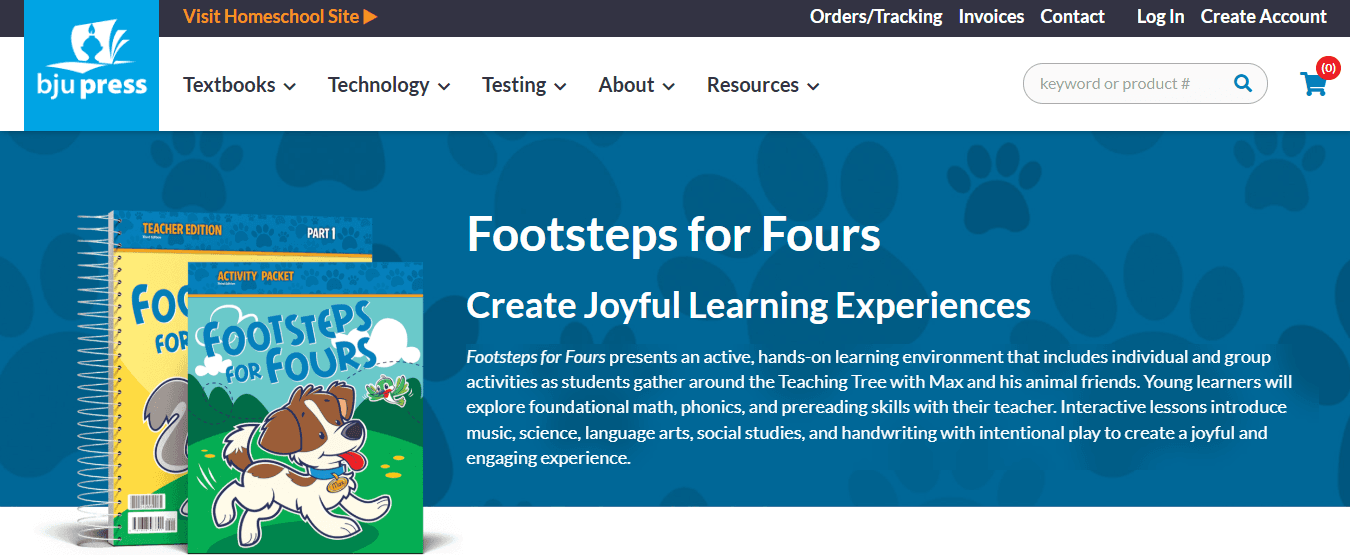
Parents who choose BJU Press value teacher-led video instruction that eliminates the need to teach every concept from scratch. They also appreciate avoiding the busywork of some traditional programs. Built-in testing and grading systems simplify record-keeping for Kentucky's scholarship reports. The integration of the Christian worldview appeals to some families and poses challenges for others. Academic rigor remains consistently high across grade levels, preparing students well for standardized tests and college admissions. The curriculum follows traditional September-through-May calendars, which suits families preferring standard schedules but limits flexibility for year-round schooling with frequent breaks.
7. Easy Peasy All-in-One Homeschool

Budget-conscious families choose Easy Peasy for its complete kindergarten through twelfth-grade curriculum available free online. Daily assignments appear on the website, organized by grade level and subject, requiring only internet access and a printer for occasional worksheets. The academic depth does not match that of paid programs, and the basic website interface lacks the polish of commercial platforms. Students preparing for rigorous college programs often need supplementary challenging materials in high school. Easy Peasy delivers strong value for families managing tight budgets, needing temporary curriculum while deciding on long-term plans, or homeschooling younger children where foundational skills matter most.
8. Singapore Math
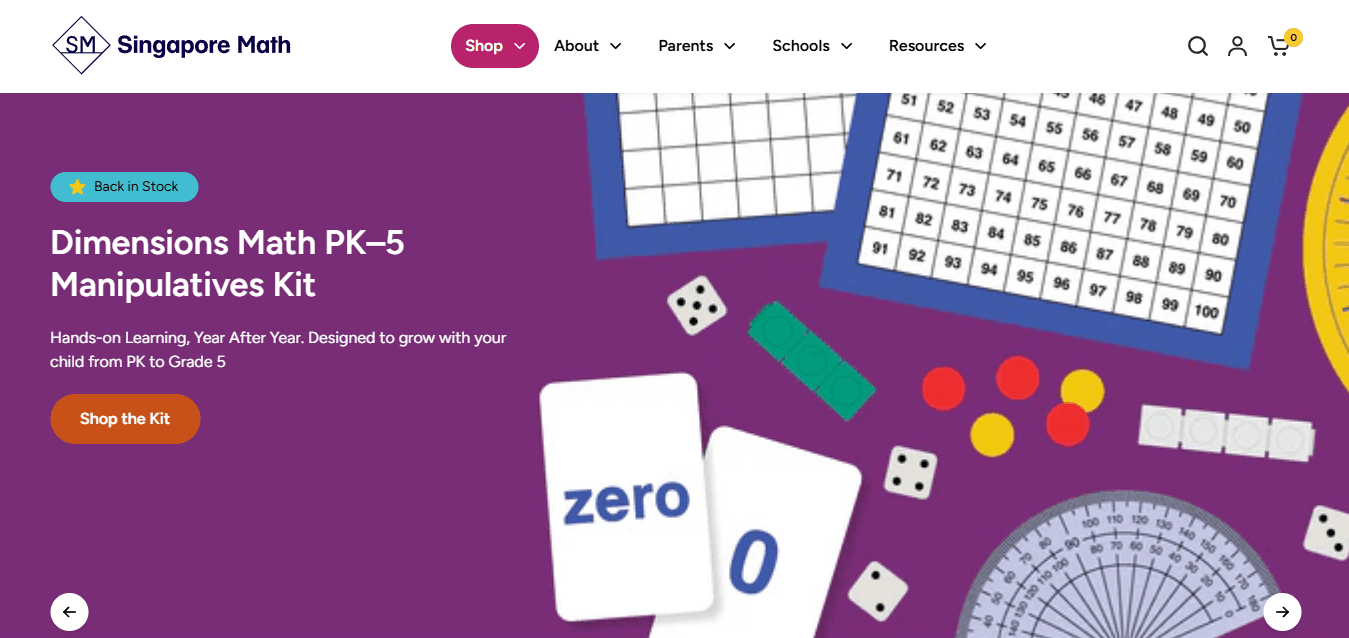
Families that prioritize understanding math over memorizing steps choose Singapore Math because it builds strong foundations before teaching algorithms. Students learn why multiplication works before memorizing times tables, understand place value deeply before adding multi-digit numbers, and visualize fractions with concrete examples before working abstractly. This creates problem-solvers who apply mathematical thinking to novel situations rather than students who get stuck when problems don't match memorized patterns. The program covers mathematics only, so you need separate curricula for reading, science, history, and other subjects. The initial learning curve feels steep for parents accustomed to traditional instruction, and younger students sometimes progress more slowly than with drill-based programs. However, students who complete Singapore Math through middle school typically test several grade levels ahead in mathematical reasoning.
9. Oak Meadow

Creative families who value artistic expression choose Oak Meadow because Waldorf-inspired education combines academics with art, music, and nature study. Lessons incorporate storytelling, drawing, crafting, and outdoor exploration as core learning activities. The flexible pacing accommodates children who need extra time to master concepts or who wish to explore interesting topics in depth. Parent involvement stays high because you're creating learning experiences rather than assigning textbook pages. Families who prefer structure find the open-ended approach frustrating because there are no clear benchmarks to assess progress against traditional grade levels. If your children learn best through creating and exploring, Oak Meadow transforms homeschooling into an artistic practice. If you need measurable results, the lack of structure will create anxiety.
10. Calvert Homeschool

Families seeking accredited records and a formal academic structure choose Calvert because it functions like a private school at home. The curriculum provides traditional textbook instruction with clear learning goals, regular assessments, and official transcripts. Accreditation matters primarily for families planning to return to public school or seeking outside validation for college applications. The structured approach offers less flexibility than unaccredited programs, where you control every choice. You'll follow Calvert's scope and sequence, use their materials, and complete assessments on their timeline. Parents concerned about Kentucky's lack of oversight appreciate having an outside institution monitor progress, while those who chose homeschooling for educational freedom often feel accreditation requirements recreate the constraints they left behind.
What factors should guide your curriculum decision?
Your curriculum decision depends on three factors: preparation time, your child's learning style, and budget. Open-and-go programs like The Good and the Beautiful or BJU Press require minimal prep, while literature-based curricula like Sonlight demand significant advanced reading.
Does your child need external accountability and social interaction, or do they focus better working independently? Classical Conversations provides community; Time4Learning offers solitary digital work. What's your honest budget, including hidden costs like printer ink, supplemental materials, and co-op fees? Easy Peasy costs nothing. Classical Conversations requires substantial ongoing investment.
How do you handle curriculum changes and adaptations?
Programs that look perfect in catalogs sometimes create daily frustration in actual use, while curricula you initially dismissed become surprising fits once you understand your family's rhythm. Most homeschoolers switch programs at least once as children's needs evolve and what worked brilliantly in second grade feels wrong by fifth. Kentucky's flexibility lets you change direction mid-year without permission or amended filings. That freedom to adapt matters more than choosing the theoretically perfect program initially. Even the best curriculum needs supplemental materials to remain engaging year after year.
Download 69,777+ Free Worksheets for Homeschooling in Kentucky
The best curriculum leaves gaps that only focused practice can fill. Without Kentucky's testing requirements to show weak spots early, mastery problems emerge months later when your child cannot apply last semester's math skills to current word problems. Extra worksheets catch these gaps before they compound.

🎯 Key Point: Free worksheets serve as your early warning system for learning gaps that traditional curriculum might miss in homeschool settings.
"Extra practice materials help identify and address learning gaps before they compound into larger academic challenges." — Educational Research Foundation, 2023

💡 Tip: Use targeted worksheets to regularly assess your child's retention of previously learned concepts—don't wait for formal testing to discover knowledge gaps.
The Retention Problem Nobody Warns You About
Most homeschool programs introduce ideas clearly but move forward before children master the material. Your third grader understands fractions during the lesson, completes the workbook page correctly, then forgets the process entirely by next month because the curriculum introduces decimals without revisiting fractions. You discover the problem when preparing for a comprehensive review or when your child stares blankly at a problem type they solved confidently six weeks earlier.
Traditional schools catch this through regular quizzes and standardized benchmarks that force review. You lack that external check. The responsibility falls entirely on you to notice when learning didn't stick, which becomes nearly impossible when teaching multiple subjects to multiple children, whilst managing a household. Targeted worksheet practice creates the repetition that transforms understanding into automatic recall, but only if you build it in before gaps become chasms.
Matching Practice to Actual Learning Styles
Your curriculum teaches one way. Your child learns from others. A visually oriented child struggles through verbal math explanations in their textbook, not because they can't understand math, but because the presentation doesn't match how their brain processes information. The same idea shown through diagrams or color-coded visual aids suddenly becomes clear.
Generic worksheets from your curriculum publisher rarely offer different formats. You get the same problem types arranged identically, which helps children who learn through that specific approach and frustrates everyone else. Finding extra materials that present the same content through different visual formats used to require hours of searching educational websites, downloading files that almost matched your needs, and settling for close enough.
Platforms like My Coloring Pages eliminate fragmented searches by generating worksheets tailored to both the concept you're teaching and your child's specific interests. Need multiplication practice for a child obsessed with dinosaurs? Create custom pages featuring prehistoric creatures instead of generic objects. Teaching state capitals to a visual learner? Generate coloring-based geography activities rather than text-heavy memorization lists.
Building a Sustainable Practice Routine
Consistency matters more than volume. Fifteen minutes of focused worksheet practice daily builds stronger retention than hour-long weekend review sessions. The challenge is maintaining that consistency when homeschooling already demands constant decisions about what to teach, how to explain difficult concepts, and whether your child understands or simply mimics the example problem.
Effective practice targets the specific skill taught that day rather than mixing review with new material. After your main math lesson on multiplying fractions, the practice worksheet should contain only fraction multiplication problems, not a mix of previous concepts. This focused repetition moves skills from working memory into long-term retention. Once your child demonstrates automaticity (solving problems quickly without referring back to examples), rotate that skill into mixed review while concentrating daily practice on the new concept you're currently teaching.
The routine breaks down when gathering appropriate materials takes longer than the practice itself. You finish today's science lesson on photosynthesis, realize you need reinforcement activities, spend twenty minutes searching for plant cell diagrams at the right difficulty level, and lose the momentum that makes practice feel like a natural extension rather than separate busywork.
When Your Curriculum Lacks Depth
Some programs introduce topics beautifully but provide few practice problems. Three example problems help students become familiar with the topic, but that familiarity fades without additional practice. This is especially true for maths and phonics, where automaticity determines whether children can apply skills independently or need help each time.
You notice this problem when your child asks for help on every problem, despite understanding the concept when the teacher explained it. They haven't practiced enough to learn the process, so each new problem feels like learning it from scratch. Adding more practice materials can fix this pattern, but only if they match where your curriculum left off. If they're too easy, your child will complete them without thinking; if they're too hard, frustration will replace confidence.
Making Practice Feel Different From Lessons
Kids dislike worksheets that resemble regular classwork because they feel like punishment for not learning fast enough at first. Changing the worksheet's appearance while preserving the learning content transforms practice into something they want to do rather than something they must do because they fell behind.
Worksheets with coloring, activity pages with games or puzzles, and materials about your child's interests transform practice into something they choose to do rather than something they must do. A child who complains about addition problems will happily complete the same problems if they're part of a treasure map to color after solving each equation. The maths is identical, but how the child feels about doing it differs entirely.
The Hidden Cost of Scattered Resources
Most homeschooling parents pay for three or four different educational platforms because no single source provides everything they need. One site has strong math worksheets but weak science materials. Another offers excellent reading comprehension but charges separately for answer keys. A third provides beautiful printables that don't align with current lesson plans. Parents pay monthly fees to multiple services while spending hours each week searching for specific resources.
This fragmentation costs more than money: it costs decision fatigue. Every supplemental activity requires choosing which platform to check first, comparing options across sites, and determining whether any existing resource matches closely enough. That mental load accumulates through dozens of small decisions each day until curriculum planning feels overwhelming.
Adapting Materials as Children Grow
What worked in second grade feels wrong by fifth grade because children's developmental needs change faster than most curricula recognise. Younger primary students need concrete, hands-on materials with immediate visual feedback. Middle schoolers need abstract-thinking challenges with less-obvious structure. Supplemental materials that supported early learning become obstacles to independence if you don't evolve them alongside your child's capabilities.
Your fourth grader suddenly resists coloring activities they loved last year—not because the content is too easy, but because the format feels babyish. You need materials covering the same skills through presentation styles that respect their growing maturity. Finding age-appropriate resources for foundational concepts requires either purchasing new curriculum components or searching extensively for materials that match both the academic level and the developmental stage.
Kentucky's freedom to adapt mid-year without filing amended plans lets you shift your supplemental approach when it stops working. That flexibility only helps if you have access to varied materials that let you experiment without financial commitment to full curriculum changes.
Related Reading
- 5th Grade Homeschool Curriculum
- How To Homeschool In California
- 4th Grade Homeschool Curriculum
- Science Homeschool Curriculum
- 2nd Grade Homeschool Curriculum
- California Homeschool Laws
- North Carolina Homeschool Laws
- Georgia Homeschool Requirements
- Homeschool Art Curriculum
- 3rd Grade Homeschool Curriculum
- Illinois Homeschool Laws
- Alabama Homeschool Laws
- Accredited Homeschool Curriculum
- Michigan Homeschool Laws
- Homeschool Reading Curriculum