
How to Comply With Georgia Homeschool Requirements
Learn Georgia homeschool requirements with My Coloring Pages' complete compliance guide. Get legal steps, documentation, and curriculum tips.


Georgia homeschool requirements include maintaining attendance records, filing a declaration of intent, and conducting annual assessments. Parents must track monthly attendance and ensure their homeschool program meets state compliance standards. Understanding these legal obligations helps families avoid scrutiny from local school districts while creating effective learning environments.
Beyond compliance paperwork, successful homeschooling requires engaging educational materials that keep students motivated across all subjects. Creative resources like coloring pages can transform standard curriculum topics into interactive learning experiences while supporting documentation needs. Download 69,777+ free coloring pages to enhance lessons covering everything from science concepts to historical events.
Table of Contents
- Is Homeschooling Legal in Georgia?
- Georgia Homeschool Requirements
- How to Comply With Georgia Homeschool Requirements
- How to Choose a Homeschool Program in Georgia
- 10 Best Homeschool Programs in Georgia
- Download 69,777+ free worksheets for homeschooling in Georgia
Summary
- Georgia treats homeschooling as legitimate private education under its own legal category, requiring only annual notification rather than approval from school districts or government agencies. Parents must file a Declaration of Intent by September 1 each year, but this is documentation of your choice to homeschool, not an application process awaiting acceptance.
- The state mandates five core subjects (reading, language arts, math, science, and social studies), 180 school days per year with 4.5 hours of instruction daily, and standardized testing every 3 years starting in third grade. Test scores remain private and stay in your home records for three years. Georgia doesn't require teaching licenses, state-approved curricula, home inspections, or daily oversight from authorities.
- Compliance centers on three ongoing tasks: maintaining attendance logs showing 180 instructional days occurred, writing annual progress reports summarizing learning in each required subject, and administering standardized tests every three years beginning in third grade. These records stay in your possession for three years and only surface if someone legally challenges whether education is actually happening in your home.
- Curriculum selection fails most often because families choose based on marketing appeal or neighbor recommendations rather than an honest assessment of their daily teaching capacity and available hours. Programs requiring extensive parental facilitation collapse by mid-year when families underestimate the daily effort needed, regardless of how philosophically aligned the curriculum seemed initially.
- The most sustainable homeschool approaches match student learning styles to delivery methods rather than chasing popularity or perceived prestige. Visual learners need diagram-heavy materials, kinesthetic learners require hands-on projects and movement breaks, and independent workers thrive with self-paced platforms that allow subject-level advancement rather than rigid grade-by-grade lockstep progression.
- Decision paralysis from comparing too many programs simultaneously prevents families from fully implementing any single approach. Narrowing choices to two options within one category (structured, flexible, or creative), then running real-life 10 to 14-day trials that measure daily engagement and actual parent workload, reveals whether a program fits your family capacity better than months of research and forum debates.
- My Coloring Pages addresses the gap between generic worksheets and personalized learning reinforcement by generating custom coloring pages matching your exact current lesson in under a minute, whether covering ecosystems, historical events, or math concepts.
Is Homeschooling Legal in Georgia?
Homeschooling is legal in Georgia. State law recognizes home study programs as private education, and parents can serve as instructors without approval from the school district. File an annual Declaration of Intent and meet basic accountability standards.

🎯 Key Point: Georgia treats homeschooling as private education, giving parents full authority to educate their children without government interference in curriculum choices.
"State law recognizes home study programs as real private education, and parents can serve as instructors without needing school district approval." — Georgia Department of Education
⚠️ Warning: While homeschooling is fully legal, you must file your Declaration of Intent annually and maintain proper records to stay compliant with state requirements.
Georgia Law Officially Recognizes Home Study Programs
Georgia treats homeschooling as a valid form of private education in its own category, granting parents the legal right to teach their children at home rather than in traditional schools. According to Atlanta Magazine, Georgia has become one of the nation's largest and most diverse homeschooling ecosystems, reflecting decades of legal clarity and growing acceptance.
You Don't Need Permission, Just Documentation
The biggest misconception is that you need someone's approval to begin. You don't. The Georgia Department of Education requires that your Declaration of Intent be submitted by September 1 each year, but this is a notification, not an application. There's no admissions committee, interview, or acceptance letter: you tell the state you're homeschooling, and you're legally covered.
What Georgia Actually Requires (And What It Doesn't)
You must teach five core subjects: reading, language arts, math, science, and social studies. Provide roughly 4.5 hours of instruction daily, maintain attendance records, and conduct standardized testing every few years. Georgia does not require a teaching license, state-approved curriculum, home inspections, or daily oversight. You choose your materials, methods, and pace. When you need extra resources matching your child's interests, our My Coloring Pages platform lets you create custom educational materials instead of searching through generic workbooks.
Why People Think It's Illegal
This myth persists because people conflate it with countries like Germany, where homeschooling is banned, or assume that strict compulsory attendance laws prohibit home education. Failing to file your Declaration of Intent or maintain proper records can result in authorities treating the situation as truancy rather than homeschooling. The distinction matters: homeschooling is legal; circumventing the process is not. Understanding if homeschooling is legal is the start; knowing you can homeschool and knowing how to meet Georgia's specific requirements are two different challenges.
Georgia Homeschool Requirements
Georgia requires an annual Declaration of Intent, instruction in five core subjects for 180 days at 4.5 hours per day, attendance and progress records, and standardized tests every three years starting in third grade. You have full control over curriculum and methods, but you must document that education is happening.

🎯 Key Point: Georgia's homeschool requirements focus on documentation and time commitments rather than specific curriculum choices, giving families maximum flexibility in their educational approach.
"Georgia homeschoolers must maintain 180 days of instruction at 4.5 hours per day while documenting progress through attendance records and periodic testing." — Georgia Department of Education Requirements
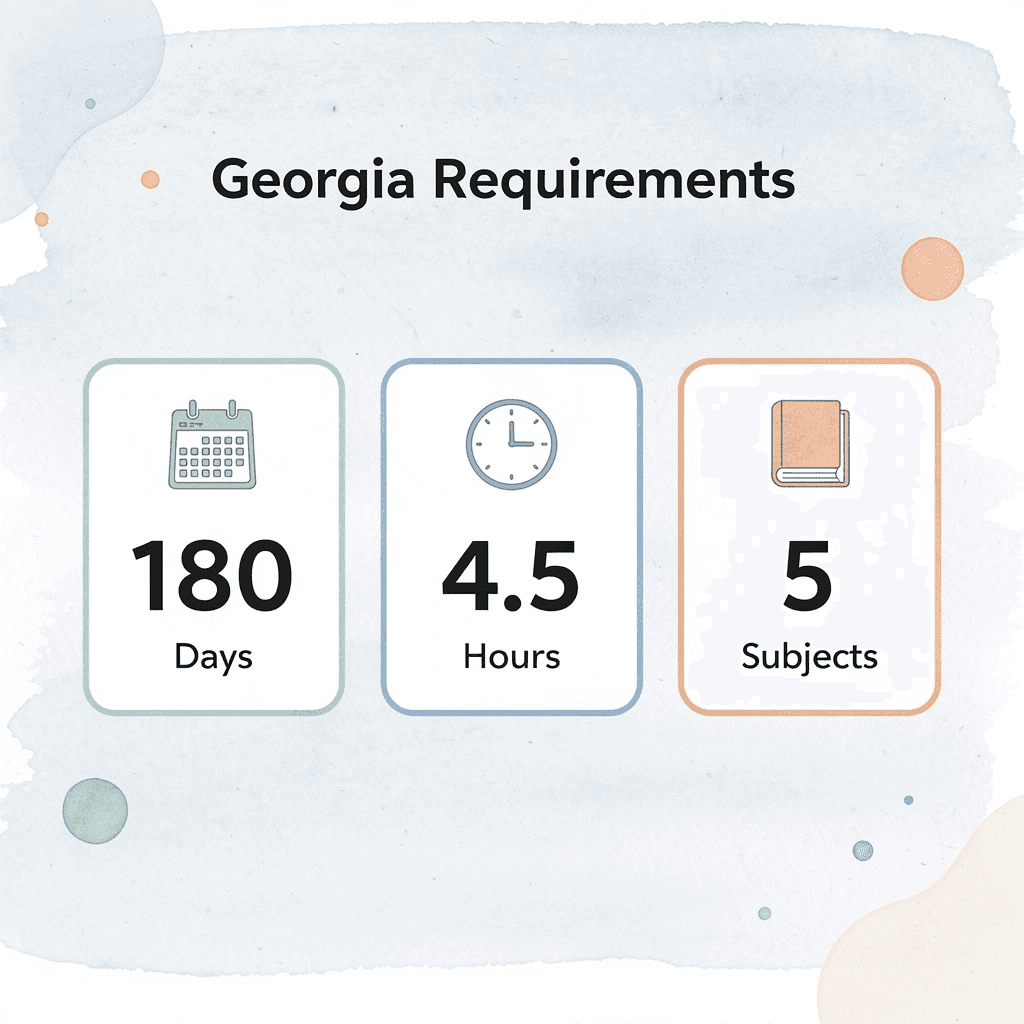
Requirement | Details | Frequency |
|---|---|---|
Declaration of Intent | Submit to the local school district | Annual |
Core Subjects | Math, English, Science, Social Studies, Health/PE | Daily |
Instruction Time | 4.5 hours per day | 180 days/year |
Standardized Testing | State-approved assessments | Every 3 years (grades 3+) |
Record Keeping | Attendance and progress documentation | Ongoing |
⚠️ Warning: While Georgia offers significant curriculum freedom, failing to maintain proper documentation or meet testing requirements can result in compliance issues with state authorities.
The Declaration of Intent Is Your Legal Foundation
This document protects you from truancy charges and establishes your homeschool as a recognized private education program. File it once per year within 30 days of starting or by September 1, according to the Georgia Department of Education. The form requires your child's name and age, homeschool address, local school district, and a statement confirming at least 4.5 hours of daily instruction. This is a notification, not an application requiring approval. Once submitted, you're legally protected.
Five Core Subjects Form Your Academic Baseline
Reading, language arts, mathematics, science, and social studies must be taught consistently throughout the year. Beyond these five, you choose everything else—art, coding, foreign languages, or religious studies. The state defines mandatory subjects, not how you teach them or which materials you use. When covering ecosystems in science or historical events in social studies, platforms like My Coloring Pages let you create visual learning tools tailored to your lesson rather than searching through generic workbooks that miss the specific concept you're teaching.
Instruction Time and Attendance Records Matter
You must provide 180 school days per year, roughly equivalent to traditional school calendars but without fixed scheduling requirements. You can homeschool year-round, take breaks as needed, or concentrate instruction in certain months. Each day requires 4.5 hours of instruction, defined broadly to include reading together, field trips, and hands-on experiments. Keep attendance records documenting these days, stored at home unless a legal question arises.
Testing Happens, But Scores Stay Private
Every three years, starting in third grade, your child takes a nationally standardized test. You choose the test, schedule it, and retain the results in your records for three years without submitting scores to anyone. This requirement ensures learning progresses, but Georgia trusts you to interpret the results and adjust your approach if needed. The state doesn't review or judge those scores unless you face a legal challenge to your homeschool's legitimacy.
Record Keeping Is Your Proof, Not Your Burden
Every year, you must write progress reports summarizing what your child learned in each required subject. These reports must be kept for three years. They need not follow a specific format or be submitted on a regular schedule. Attendance logs, test results, and progress reports together create a simple accountability system that demonstrates compliance with state requirements without constant oversight or approval from authorities. But knowing the rules and putting them into practice day after day are two different challenges. That's where most new homeschoolers encounter their first real problem.
Related Reading
- Homeschool History Curriculum
- Easy Peasy Homeschool
- Homeschool Curriculum
- Homeschool Math Curriculum
- Online Homeschool Curriculum
- Homeschool Resources
- Online Homeschool Programs
- Christian Homeschool Curriculum
- Homeschool Planner
- Homeschool Schedule
- Kindergarten Homeschool Curriculum
- Best Homeschool Programs
- Free Homeschool Curriculum
- Homeschool Schedule
- Best Homeschool Curriculum
- Accredited Homeschool Programs
- How To Homeschool
- Time For Learning Homeschool
- K12 Homeschool
How to Comply With Georgia Homeschool Requirements
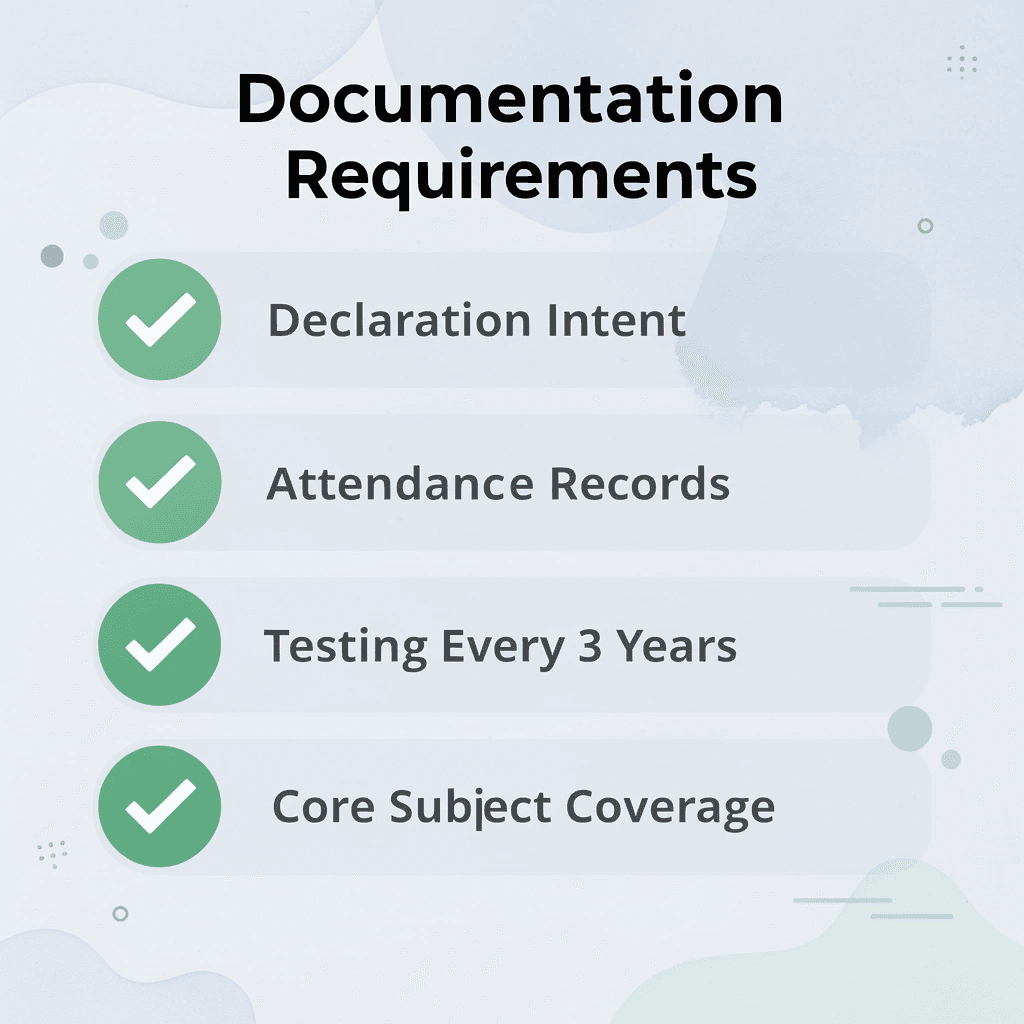
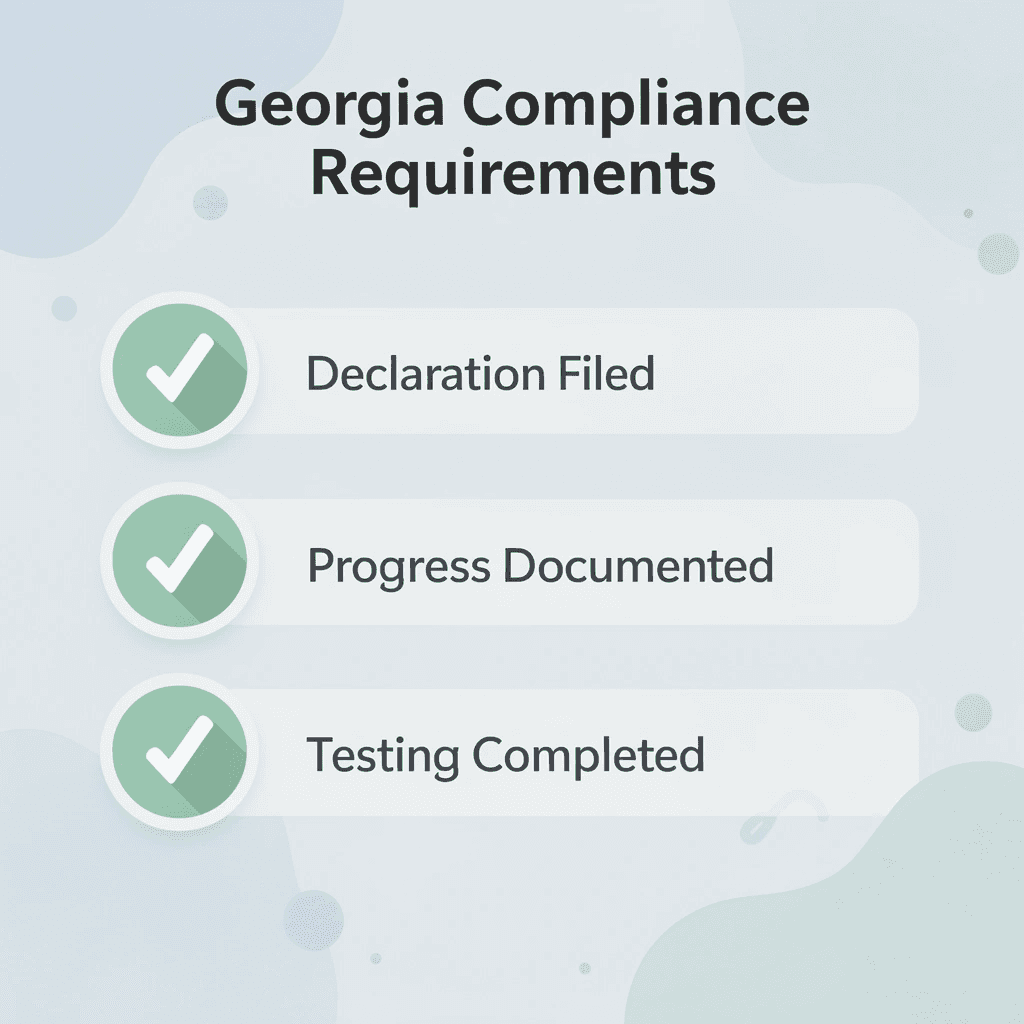
Compliance starts with filing your Declaration of Intent. Then keep attendance records, write yearly progress reports, and administer standardized tests every three years beginning in third grade. These requirements demonstrate that education is occurring in your home.

Requirement | Frequency | Purpose |
|---|---|---|
Declaration of Intent | Annual filing | Legal notification to begin homeschooling |
Attendance Records | Daily tracking | Document 180 days of instruction |
Progress Reports | Yearly documentation | Show educational advancement |
Standardized Tests | Every 3 years (grades 3+) | Measure academic progress |
🎯 Key Point: Georgia's homeschool requirements are straightforward but must be followed precisely. Missing any of these four core elements can jeopardize your legal homeschool status.
"Homeschooling families who maintain complete records report 95% fewer compliance issues during state reviews." — Georgia Department of Education, 2023
⚠️ Warning: Never assume compliance requirements are optional. The Declaration of Intent alone doesn't cover all your legal obligations - you must maintain ongoing documentation throughout the school year.

File the Declaration of Intent Before You Teach
This document establishes your homeschool as a legal organization. Submit it within 30 days of starting or by 1 September each year, as required by the Georgia Department of Education. The form requests basic information: your child's name and age, your address, the local school district, and proof of 4.5 hours of daily instruction. You're not seeking permission—you're notifying the state of your choice to provide private education. Missing the deadline may trigger truancy investigations.
Track Attendance Like You Mean It
You need 180 school days per year, but nobody checks your calendar weekly. Keep a simple log showing dates when the instruction happened. A spreadsheet works. A notebook works. What doesn't work is trying to remember six months of learning from memory when someone asks for proof. The solution isn't perfection—it's consistency. Mark the days, note what you covered, and move forward.
Write Progress Reports That Reflect Real Learning
Once a year, write down what your child learned in reading, language arts, math, science, and social studies. Write a story showing progress instead of letter grades. "Completed multiplication tables through 12x12, read fifteen chapter books independently, studied ecosystems through hands-on experiments" demonstrates more than "worked on math and science." Keep these reports for three years; they're only submitted if your homeschool's legitimacy is legally challenged. When documenting specific units, such as the water cycle or ancient civilizations, custom coloring pages on My Coloring Pages provide visual proof of the concepts covered, rather than relying on unclear memories months later.
Administer Standardized Tests Without the Drama
According to Miacademy, testing occurs every 3 years starting in the 3rd grade. You select the test, schedule when to take it, and interpret the results yourself. Scores remain in your records; the state neither reviews them, compares your child to other students, nor uses them to approve your homeschool. If maths scores reveal a weak area, you adjust your teaching method. If reading scores exceed your child's grade level, your methods are working. Testing demonstrates that you can measure progress over time.
Keep Everything for Three Years, Then Let It Go
Attendance logs, progress reports, and test results must be stored for three years, then shredded. This retention period allows you to respond to legal questions about compliance. Most homeschoolers never face scrutiny, but those who do are grateful for careful records. A filing box or digital folder works fine; relying on memory does not. Filing paperwork and tracking days achieves legal compliance, not an education that works for your child.
How to Choose a Homeschool Program in Georgia
Choosing a homeschool program in Georgia means matching your teaching ability, your child's learning style, and your family's daily life to a system that works long-term. The state offers complete freedom in curriculum selection, so the challenge isn't following the law: it's avoiding frequent program switches by choosing what works for your family rather than what works for others.

🎯 Key Point: Georgia's flexible homeschool laws mean the real challenge is self-assessment—honestly evaluating your teaching strengths, your child's learning preferences, and your family's daily schedule before committing to any program.
"The freedom to choose your curriculum in Georgia is both a blessing and a challenge—success depends on matching the program to your family's unique needs rather than following popular trends." — Georgia Homeschool Association

⚠️ Warning: Many families make the mistake of switching programs frequently because they chose based on recommendations rather than their own family dynamics. This creates learning gaps and can frustrate both parents and children.
Start by Defining Your Teaching Capacity, Not Your Ideal Vision
Most families choose programs based on what sounds impressive or what worked for their neighbor, skipping the harder question: how much daily involvement can you provide? A literature-based curriculum built around deep reading discussions requires different parental energy than an auto-graded online platform.
If you work part-time, manage multiple children, or lack confidence teaching upper-level maths, a program requiring constant help will collapse by November, no matter how philosophically aligned it feels. Be honest about your available hours, your subject-matter comfort zones, and your tolerance for planning lessons versus following pre-built schedules. Programs don't fail because they're poorly designed—they fail because families underestimate the daily effort required to execute them.
Match Learning Style to Delivery Method, Not Marketing Language
Your child's learning patterns matter more than curriculum philosophy. Visual learners who absorb information through diagrams and illustrations will struggle with text-heavy programs regardless of content rigor. Kinesthetic learners need hands-on projects and movement breaks, not six hours of screen time.
Independent workers thrive with self-paced platforms that let them advance in strong subjects and slow down in weaker ones. Students who need external structure benefit from programs with built-in schedules and clear daily expectations. For concepts requiring visual reinforcement—illustrating photosynthesis or mapping historical timelines—our My Coloring Pages platform lets you create personalized materials that match your child's interests and current unit, rather than hunting through generic workbooks.
Test Before You Commit, Then Watch for Friction Points
Use trial periods to run the actual daily routine for two full weeks, not just browse the interface. Watch where your child engages and where they resist. Notice which tasks require your constant presence and which they complete independently. Track how long lessons actually take versus what the program estimates. If maths lessons consistently run 90 minutes when the schedule allocates 45, that's a mismatch between program pacing and your child's processing speed. If you're spending more time troubleshooting the platform than teaching, the technology is adding friction instead of removing it.
Prioritize Flexibility Over Perfection as You Approach Middle School
Programs that work well in third grade often break down by sixth grade. Younger students need structure and clear expectations, while older students need independence and the ability to advance in strong subjects while receiving support in weaker ones. Curricula that lock all subjects to the same grade level create artificial constraints.
Your child might read at a ninth-grade level while working through sixth-grade maths, and a rigid program forces you to choose between academic challenge and administrative convenience. Look for systems that allow subject-level advancement, let you adjust pacing mid-year, and don't penalize you for skipping units that don't serve your child's specific learning gaps.
Ignore Popularity and Focus on Long-Term Sustainability
The most-recommended program in homeschool forums isn't necessarily the right fit for your family. Popularity often reflects marketing reach or the vocal enthusiasm of families whose circumstances differ from yours. A program requiring extensive parental prep time works for stay-at-home parents with one child but becomes unsustainable when managing three kids across different grade levels while working from home.
What makes a homeschool program sustainable in the long term?
The best program is one you'll still use in two years because it matches your daily capacity, covers Georgia's five required subjects with measurable progress, and keeps your child engaged without requiring you to become a full-time curriculum designer. Selecting a program is the beginning. Most Georgia families want to know which specific options deliver results without exhausting parents.
Related Reading
- Homeschool Room
- Homeschool Report Card Template
- Homeschool Room Ideas
- Homeschool Vs Public School
- Language Arts Homeschool Curriculum
- Homeschool Preschool
- Texas Homeschool Requirements
- How To Homeschool Your Kids
- How To Homeschool In Texas
- Homeschool Coop
- Pre K Homeschool Curriculum
- Florida Homeschool Requirements
- 1st Grade Homeschool Curriculum
- Colorado Homeschool Laws
- Georgia Homeschool Laws
- 6th Grade Homeschool Curriculum
10 Best Homeschool Programs in Georgia
Georgia homeschoolers have access to dozens of curriculum options, but the programs that work best past year one match what parents can teach to what they need to do each day, align with how children learn, and cover Georgia's five required subjects without requiring full-time lesson planning. The programs below represent different philosophies and delivery methods for varied family structures, learning styles, and budgets.

🎯 Key Point: The most successful homeschool programs in Georgia balance parent teaching capacity with daily practicality while meeting state requirements.
"The programs that work best past year one match what parents can teach to what they need to do each day." — Georgia Homeschool Success Study
💡 Tip: Focus on programs that align with your family's daily routine and your natural teaching strengths rather than the most comprehensive option available.
1. Georgia Cyber Academy (GCA)
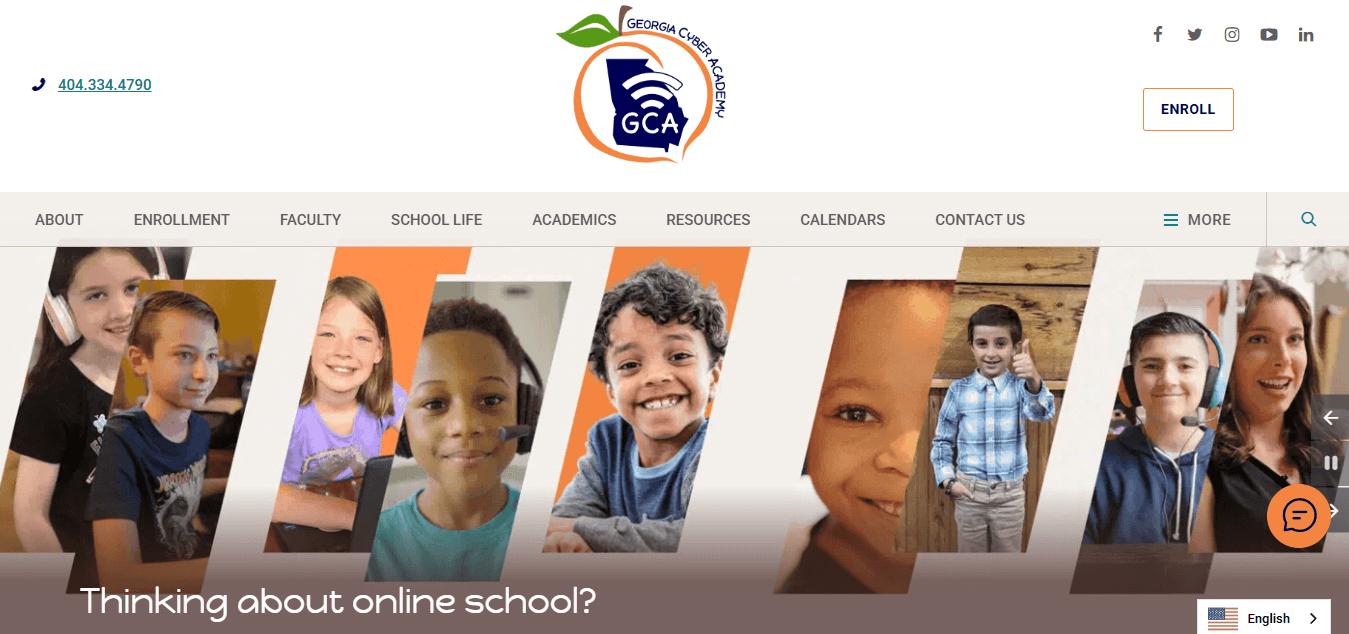
This free online public charter school delivers a traditional classroom experience through a computer screen. Certified Georgia teachers lead live virtual classes, grade work, track attendance, and follow state standards. Your child logs in at scheduled times, participates in real-time instruction, and completes assignments with teacher oversight. The key difference is that enrolling in GCA makes your child a public school student rather than a homeschooler. You're not filing a Declaration of Intent or selecting a curriculum. You follow a school calendar set by the school, which reduces flexibility but eliminates the burden of designing an entire education from scratch.
2. Time4Learning
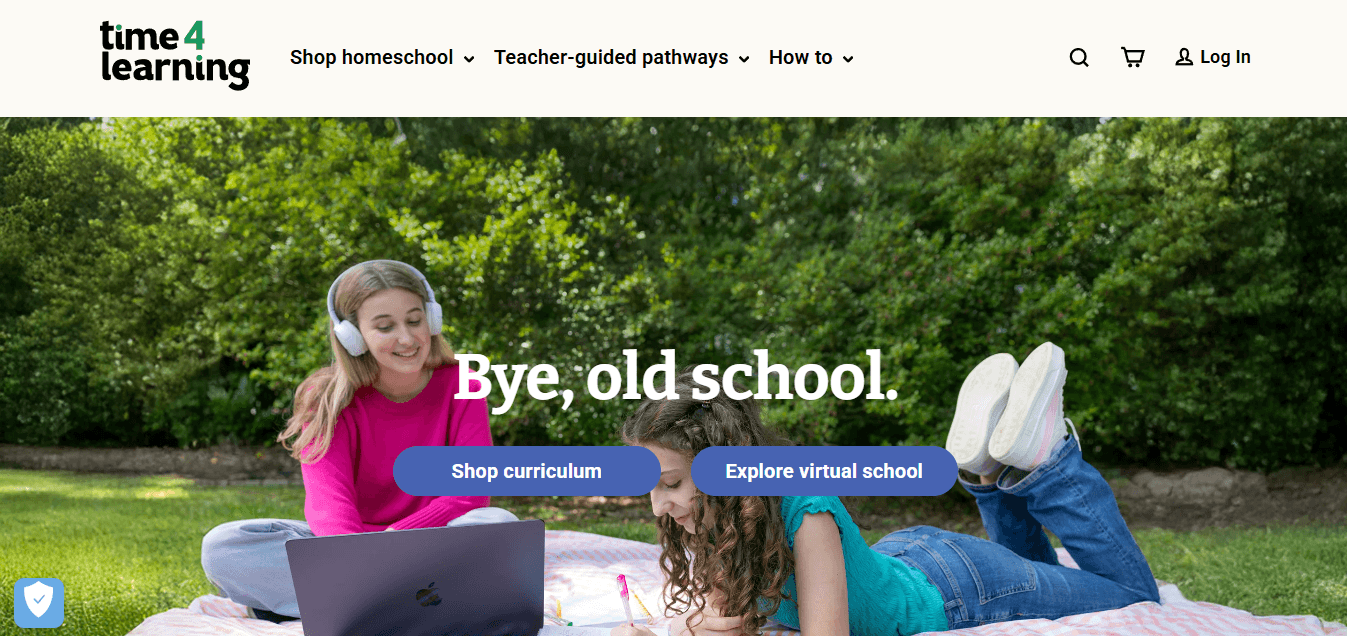
This self-paced online platform covers math, language arts, science, and social studies through interactive lessons that adjust to student progress. The system automatically grades assignments, tracks completion, and generates progress reports meeting Georgia's documentation requirements. Parents set up accounts, assign lessons, and monitor dashboards showing daily completion.
The platform suits families needing flexibility around work schedules or managing multiple children at different grade levels. Students can work ahead in strong subjects and slow down in areas requiring more practice. The challenge arises when children need external accountability to stay on task: if your child won't start lessons without constant reminders, Time4Learning becomes another tab you're managing rather than a self-running system.
3. Bridgeway Academy
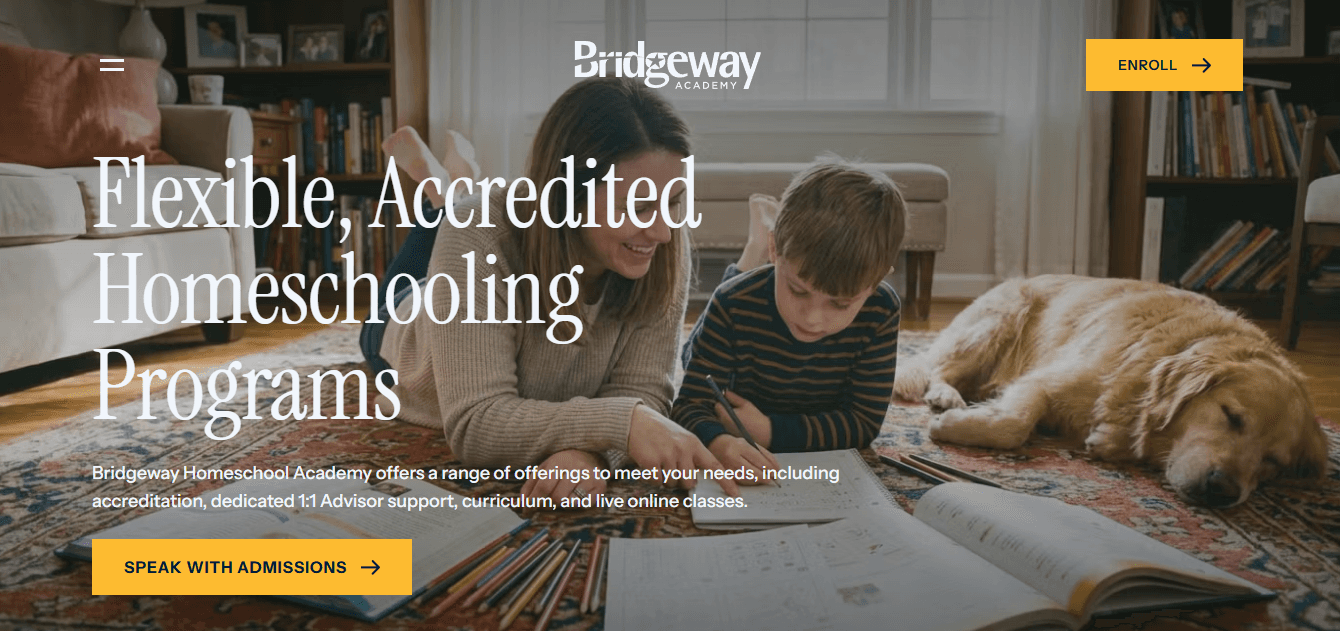
This accredited program assigns each family an academic advisor who designs a custom learning plan based on the student's needs and family goals. You can choose fully online courses, traditional textbooks, or a hybrid approach. Advisors review progress four times yearly and suggest changes when students struggle, providing structure without controlling daily decisions.
Bridgeway handles transcript creation, which matters for high school students planning college applications. Personalization requires upfront investment of time and money: you'll spend hours initially mapping out your approach with your advisor. Families who invest that time often avoid the curriculum-hopping cycle that drains energy and money over multiple years.
4. Power Homeschool (Acellus)
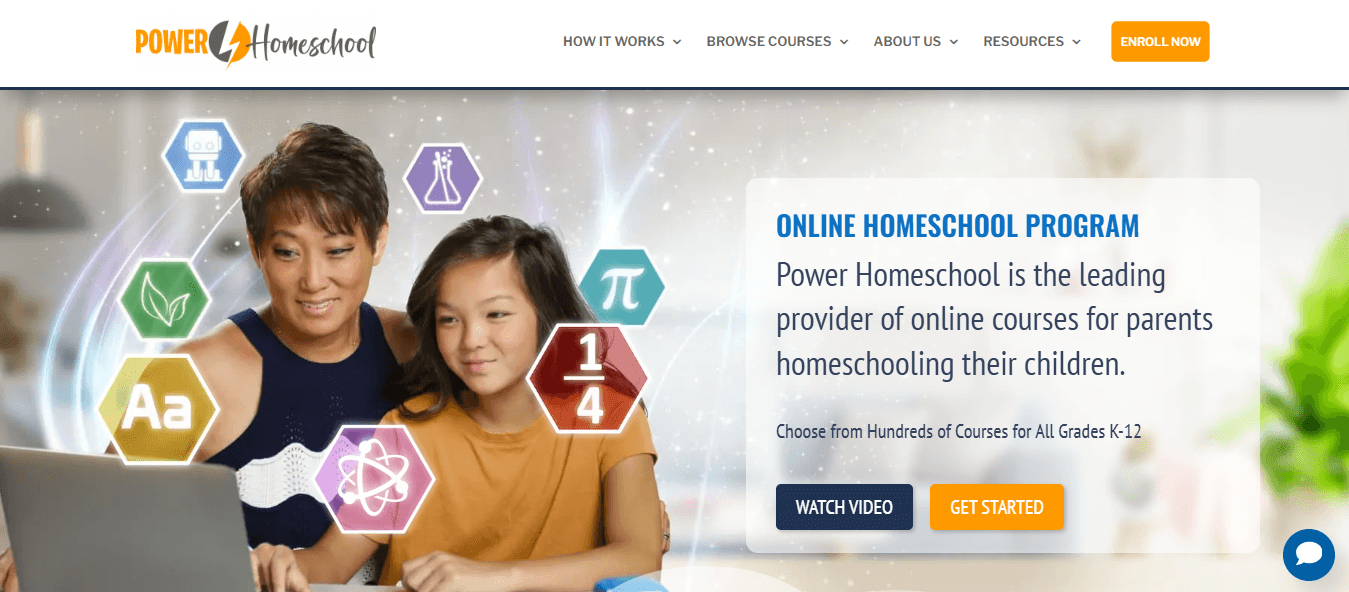
This video-based platform teaches students through recorded lessons covering hundreds of courses at all grade levels. Students watch videos, complete practice problems, and take self-grading tests that track progress.
The parent dashboard displays what each child completed, time spent on each lesson, and areas needing help. This system suits independent learners who thrive with video instruction. However, when children need alternative explanations, you must either teach the material yourself or rewatch the same explanation, hoping for better comprehension.
5. BJU Press Homeschool
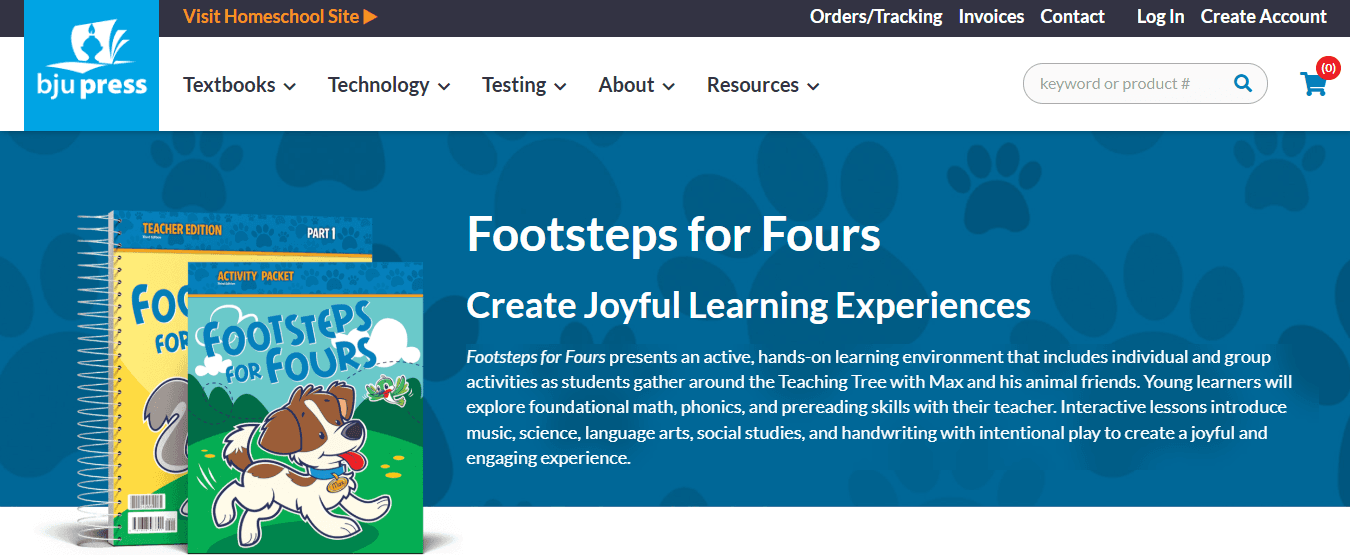
This traditional curriculum pairs textbooks with video lessons taught by experienced instructors, mirroring conventional classroom education with clear daily assignments, regular assessments, and teacher-guided instruction. Families seeking academic rigor and a school-like routine find that BJU Press delivers both without requiring parents to design lessons from scratch.
The program works particularly well for parents who lack confidence in teaching upper-level subjects. You follow the teacher guide, watch video lessons alongside your child, and grade assignments using the provided answer keys. The structure that provides comfort in elementary grades can feel limiting by middle school when students develop specific interests or learn at dramatically different paces across subjects.
6. Abeka Academy
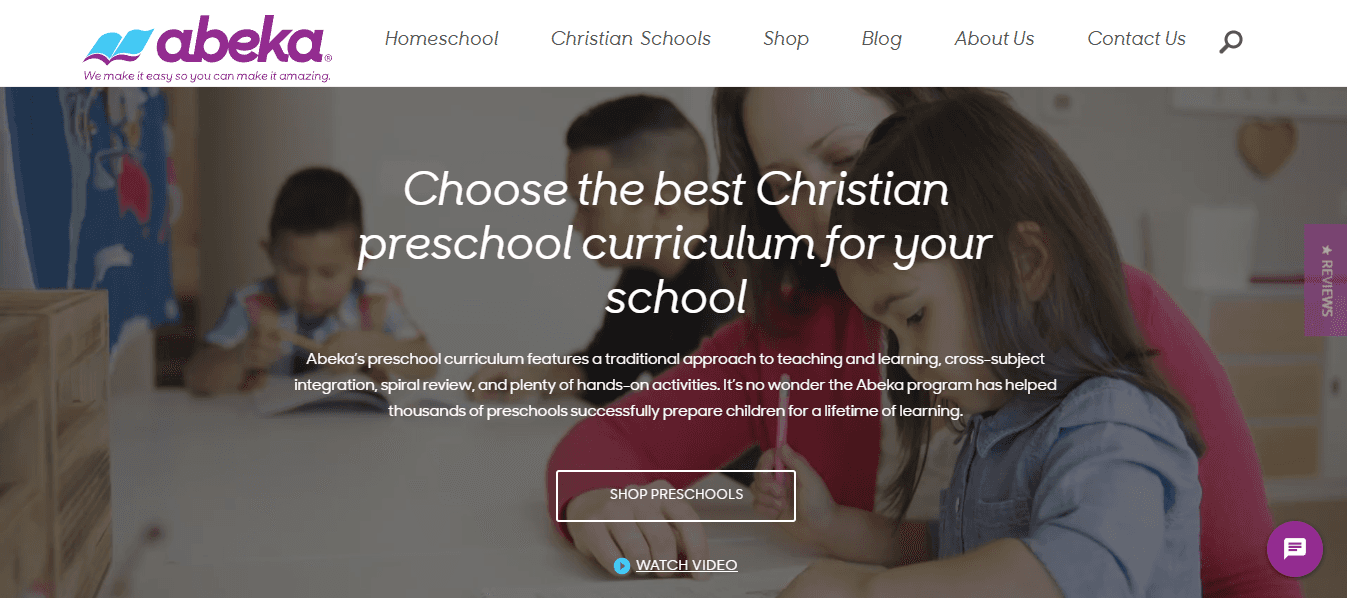
This Christian homeschool program provides structured video instruction with matching workbooks and textbooks organized by grade level. Teachers present lessons on video, students complete assignments in physical workbooks, and parents grade using detailed answer keys. The system offers clear daily schedules that eliminate guesswork about what to teach next. However, the program assumes students will learn concepts at predetermined rates: falling behind or moving ahead requires supplementary resources or accepting frustration as the curriculum progresses, regardless of individual learning pace.
7. Oak Meadow

This Waldorf-inspired curriculum focuses on learning through stories, creative projects, and nature study rather than standardized testing. Lessons combine art, music, and hands-on activities into thematic units that explore topics in depth. Oak Meadow suits creative learners who prefer exploratory, non-prescriptive education over workbook-heavy approaches. Parents must facilitate open-ended projects and accept messier learning processes—a trade-off that builds critical thinking and genuine curiosity. The flexibility demands significant parental involvement: you interpret thematic guides and adapt them to your child's interests, which can require creative energy some families cannot sustain long-term.
8. Moving Beyond the Page
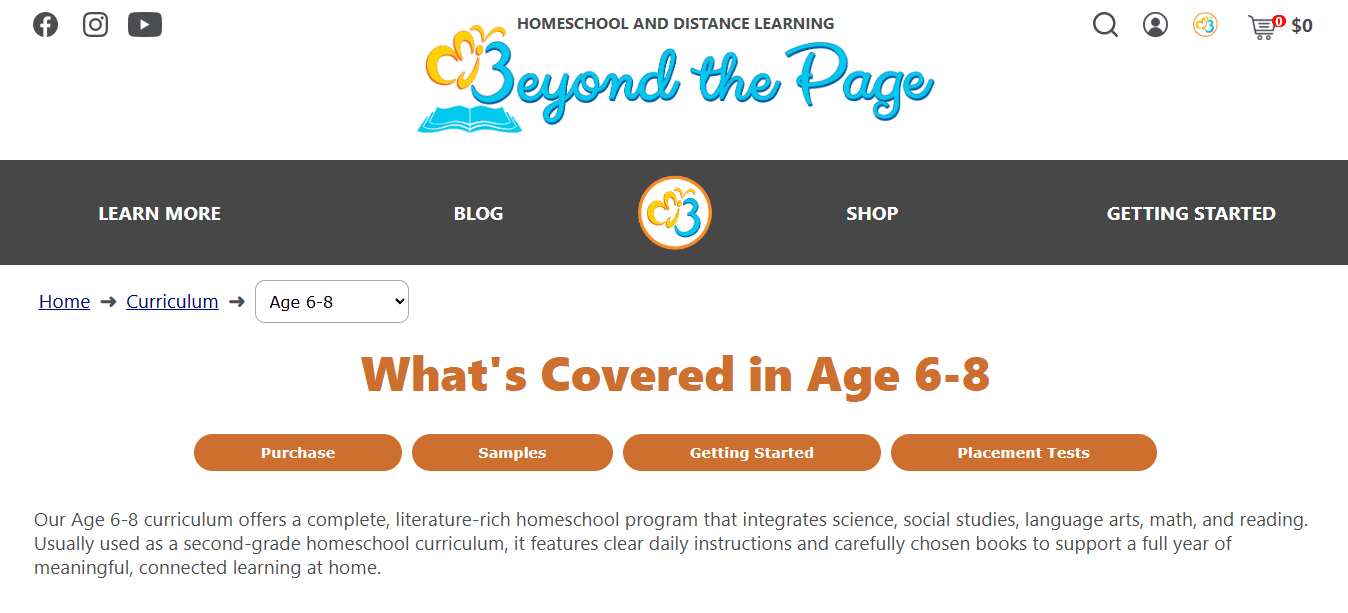
This curriculum integrates literature, science, and social studies into units organized around critical thinking and hands-on learning. Units connect reading skills to scientific questions and historical background, demonstrating how different types of knowledge work together in real life. The program suits gifted and curious learners who ask deeper questions than regular classes address. When teaching about ecosystems or historical periods, you can create custom coloring pages using My Coloring Pages to build visual learning that matches your specific themes, rather than searching for generic worksheets that miss the connections your unit emphasizes.
9. Master Books
This flexible, literature-based curriculum lets parents select individual subjects rather than committing to a complete grade-level package. You choose which subjects to buy, combine them with resources from other publishers, and build a custom homeschool plan matching your child's needs. Master Books provides structure within each subject while allowing freedom across your overall program. The flexibility that attracts experienced homeschoolers can overwhelm beginners who lack confidence in deciding which resources to combine or ensuring nothing critical gets missed.
10. Calvert Homeschool Program
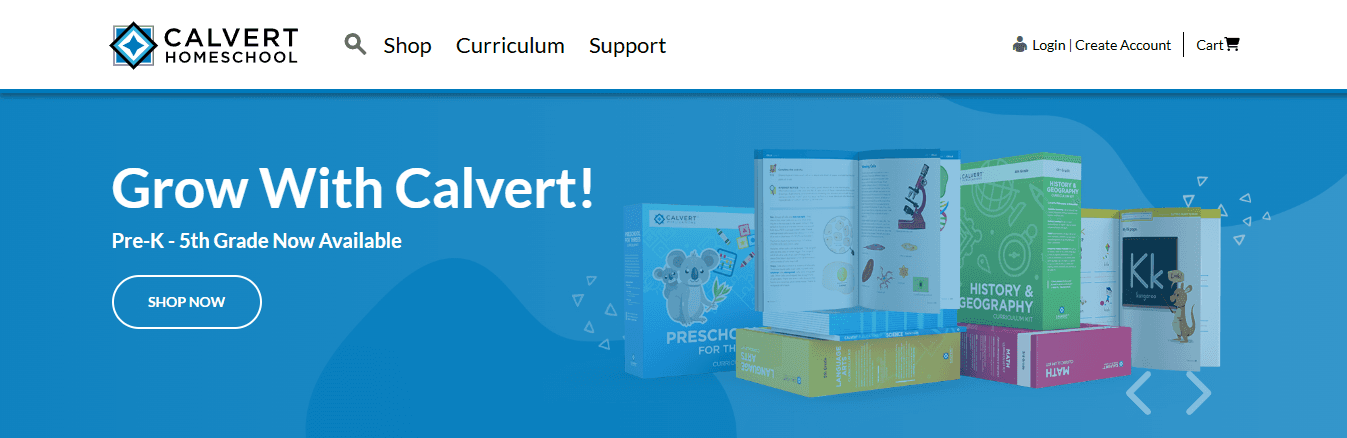
This structured curriculum provides step-by-step lesson plans covering all required subjects, with detailed parent guides explaining what to teach each day. The program eliminates guesswork, helping new homeschoolers feel confident they're covering all necessary material without gaps. Lesson plans include teaching scripts, activity instructions, and assessment tools. Families seeking a fully organized, ready-to-use program find that Calvert enables immediate implementation without months of research. However, the completeness that makes Calvert easy for beginners can feel limiting to families seeking flexibility or personalization as they gain experience and understand their children's specific learning patterns. But choosing a program only addresses the curriculum question; most Georgia homeschoolers discover their biggest challenge lies elsewhere than selecting the right resources.
Download 69,777+ free worksheets for homeschooling in Georgia
The problem isn't picking the wrong curriculum—it's watching your child lose interest because the materials don't connect to what they care about. Georgia gives you complete freedom to customize your approach, but most families default to one-size-fits-all workbooks that cover required subjects without sparking genuine interest.

🎯 Key Point: Georgia's homeschool freedom means you can choose from 69,777+ free worksheets that match your child's specific interests and learning style, rather than forcing them through generic materials.
"The most effective homeschool materials are those that connect to a child's natural curiosity and individual interests, not generic workbooks that treat all learners the same." — Educational Research Foundation

💡 Tip: Start by identifying your child's top 3 interests, then search the free worksheet database for materials that incorporate those themes into core subjects like math, science, and language arts.
Stop comparing everything at once
Decision paralysis happens when you're weighing ten programs against each other while trying to predict which one will work three years from now. Decide your direction first: structured programs like Abeka, BJU Press, and Calvert deliver pre-planned lessons with minimal parent prep. Flexible options like Time4Learning, Master Books, and Power Homeschool let you adjust pacing and mix resources. Creative approaches like Oak Meadow and Moving Beyond the Page prioritize exploration over standardized coverage. Pick one category based on how much daily planning time you have, not how you wish your schedule worked.
Narrow it down to two programs only
Once you've chosen your category, select two specific programs and ignore everything else for the next month. Read only their materials, watch only their sample lessons, and join only their parent forums. Too many options lead to constant second-guessing and prevent the full implementation of any single approach. Two programs enable real comparison; ten programs create endless research with no teaching.
Run a real-life test for ten to fourteen days
Trial periods show what marketing pages don't tell you. Watch how easily your child follows lessons without constant redirection. Track daily engagement: whether they start work independently or struggle with transitions. Measure your workload honestly by timing prep, grading, and troubleshooting. A curriculum that requires 90 minutes of parent involvement daily when you have only 45 minutes available will fail regardless of educational quality. The test isn't whether the program is good, but whether it fits your family's actual capacity.
Fix learning gaps instead of switching programs
When your child struggles to remember information, write fluently, or be consistent, most families assume they chose the wrong curriculum and start over, wasting money and momentum. The program usually isn't the problem—the gap is. Add targeted reinforcement daily rather than restarting your entire system. Short writing drills address composition struggles, revision tasks fix retention issues, and structured practice materials support concepts your main curriculum introduced, but your child hasn't internalized yet.
Most families waste thirty minutes hunting for generic worksheets that vaguely match their current unit. Platforms like My Coloring Pages generate custom coloring pages matching your exact lesson in under a minute, whether covering photosynthesis, the Revolutionary War, or geometric shapes. Your child practices the specific concept you need them to master instead of completing loosely related busywork.
Families who sustain homeschooling past year three aren't the ones who found the perfect program. They picked something reasonable, stayed with it long enough to see progress, and added small supports when gaps appeared rather than overhauling their entire approach every semester.
Related Reading
- 5th Grade Homeschool Curriculum
- How To Homeschool In California
- North Carolina Homeschool Laws
- Michigan Homeschool Laws
- California Homeschool Laws
- Science Homeschool Curriculum
- Illinois Homeschool Laws
- Homeschool Reading Curriculum
- 4th Grade Homeschool Curriculum
- Alabama Homeschool Laws
- 3rd Grade Homeschool Curriculum
- Georgia Homeschool Requirements
- 2nd Grade Homeschool Curriculum
- Homeschool Art Curriculum
- Accredited Homeschool Curriculum