
10 Best Accredited Homeschool Curriculum in 2026
Discover the 10 best accredited homeschool curriculum options for 2026. My Coloring Pages reviews top programs to help you choose the right fit.


Choosing the right accredited homeschool curriculum can feel overwhelming when parents face countless options, each promising to deliver the perfect education. Families want something that meets state requirements, matches their teaching style, and keeps children engaged without turning every lesson into a battle. The key lies in finding proven curriculum choices that combine academic rigor with flexibility while ensuring students receive a recognized, quality education that aligns with their unique learning needs.
Beyond selecting the core curriculum, parents need supplemental materials to reinforce concepts and make learning enjoyable. Creative activities and visual aids help students grasp difficult concepts while maintaining their interest throughout lessons. Parents looking to enhance their homeschool experience with engaging visual materials can download 69,777+ free coloring pages that complement any curriculum across subjects like geography, science, and math.
Table of Contents
- Is Accredited Homeschool Curriculum Important?
- Benefits of Accredited Homeschool Curriculum
- How to Supplement the Learning of Accredited Homeschool Curriculum
- How to Choose the Right Accredited Homeschool Curriculum
- 10 Best Accredited Homeschool Curriculum in 2026
- Download 69,777+ free worksheets for supplementing homeschool learning
Summary
- Accredited homeschool programs address specific credentialing issues, but aren't universally necessary for educational success. The value depends entirely on your family's goals, particularly around college admissions, potential school transitions, or the need for external validation. For families building custom learning experiences focused on mastery rather than institutional recognition, accreditation often adds unnecessary structure and cost without improving actual learning outcomes.
- Institutional recognition creates smoother pathways when your child's transcript needs to speak for itself to admissions officers or schools that have never met you. According to the National Home Education Research Institute, 66.7% of homeschooled students attend college compared to 57.5% of public school students, yet independent homeschoolers often spend hours creating supplementary documentation that accredited families never touch. The diploma carries weight because someone other than you verified the rigor, translating your work into a language institutions trust.
- Planning fatigue drives families toward structured programs more than concerns about curriculum quality. Creating custom history units sounds exciting in August, but by February, when you're managing multiple reading levels and trying to make photosynthesis engaging, pre-built curricula with built-in accountability systems become practical necessities. New homeschoolers consistently underestimate how quickly the burden of daily educational design compounds across months.
- Supplementation works only when you first identify specific gaps, then add targeted reinforcement rather than piling on more content. The mistake most families make is treating supplementation like insurance, adding materials without diagnosing actual needs. Learning science shows that varied repetition creates neural pathways stronger than any single instructional experience, with reinforcement after initial exposure mattering more than the quality of that first lesson.
- Program structure must match your daily reality, not abstract measures of curriculum quality. Working parents managing multiple children often need teacher-supported programs that reduce the daily instructional burden, while families with flexible schedules and strong subject confidence might prefer parent-led models that allow customization within accredited frameworks. Parents consistently underestimate how structure affects long-term sustainability, choosing demanding programs that work beautifully in September but collapse by March when life complexity increases.
- My Coloring Pages addresses the supplementation challenge by letting you generate custom educational materials instantly, creating exactly what matches your current lesson without the planning friction that makes generic worksheets feel like a second curriculum to manage.
Is Accredited Homeschool Curriculum Important?
Accreditation matters in certain situations, but it's not something every homeschool needs to succeed. Its usefulness depends on what your family wants to achieve, what your child plans to do in the future, and how much you need outside approval. For families planning to send their children to traditional colleges or considering switching to regular schools later, accreditation facilitates institutional recognition. For families creating their own learning plans that prioritize real understanding over grades and certificates, accreditation often imposes extra rules and unnecessary costs.

🎯 Key Point: Accreditation is a tool, not a requirement. Choose based on your long-term educational goals and whether you need institutional validation for your homeschool program.
"Accreditation provides institutional recognition that can smooth transitions to traditional schools, but adds administrative burden that may not align with personalized learning approaches." — Educational Policy Research, 2023

⚠️ Warning: Don't assume accreditation is always better. Many successful homeschoolers thrive without it, focusing instead on portfolio-based documentation and competency demonstration that colleges increasingly recognize.
Why do colleges and employers prefer accredited transcripts?
Accredited programs provide third-party quality verification that independent homeschool setups lack. According to the National Home Education Research Institute, homeschooling continues to grow across diverse family types, though schools and organizations don't always recognize it equally. When your child's transcript needs to convince college admissions officers or employers unfamiliar with your teaching, accreditation translates your work into a language they understand and trust. The diploma carries more weight because an independent party has verified that classes were challenging and well-taught.
How does accreditation help during school transitions?
This becomes important during transitions. If your teenager wants to attend a public high school for advanced science courses or dual-enrollment credits, accredited coursework transfers more easily. Schools accept documented grades from recognized programs more readily than parent-created transcripts, regardless of the quality of actual learning.
Why do families feel overwhelmed by curriculum structure decisions?
New homeschoolers often feel overwhelmed by curriculum choices and pacing decisions. Accredited programs remove that burden by providing lesson plans, grading rubrics, and teacher support, which appeals particularly to working parents or those lacking confidence in subjects like higher maths or laboratory sciences. You're outsourcing educational design to certified educators who've built sequential learning pathways.
How does planning fatigue affect homeschool curriculum choices?
Most families underestimate how quickly planning fatigue sets in. Creating custom history units sounds exciting in August, but by February, managing three reading levels and making photosynthesis engaging, pre-built curricula with built-in accountability systems start looking practical. Tools like My Coloring Pages help bridge that gap by letting you generate custom educational materials on demand without starting from scratch. Need Civil War maps for your history unit or cell diagrams for biology? You create exactly what matches your lesson in minutes, maintaining flexibility without the exhausting prep work that makes structured programs tempting.
What benefits do accredited programs offer?
Accredited programs include Advanced Placement courses, standard grading scales, and college prep tracks that align with traditional college expectations. This matters if your child applies to competitive universities that scrutinize course rigor or if scholarship applications require calculated GPAs. Admissions committees recognise this structure immediately.
What flexibility do you sacrifice with an accredited curriculum?
The trade-off: accredited curricula follow predetermined scopes and sequences designed for average learners, not your specific child's interests or pace. A student fascinated by marine biology might spend required time on geometry units they'd master faster independently, while missing opportunities to explore oceanography more deeply because it's not on the standardized syllabus. You gain institutional acceptance but surrender the customization that makes homeschooling powerful.
Related Reading
- Homeschool History Curriculum
- Easy Peasy Homeschool
- Homeschool Curriculum
- Homeschool Math Curriculum
- Online Homeschool Curriculum
- Homeschool Resources
- Online Homeschool Programs
- Christian Homeschool Curriculum
- Homeschool Planner
- Homeschool Schedule
- Kindergarten Homeschool Curriculum
- Best Homeschool Programs
- Free Homeschool Curriculum
- Homeschool Schedule
- Best Homeschool Curriculum
- Accredited Homeschool Programs
- How To Homeschool
- Time For Learning Homeschool
- K12 Homeschool
Benefits of Accredited Homeschool Curriculum
Accredited programs provide ten clear benefits to families navigating college admissions, changing schools, or seeking external verification of academic progress. Benefits include recognized credentials, structural support, and reduced paperwork.

🎯 Key Point: Accredited homeschool curricula provide essential institutional recognition that can make the difference between smooth transitions and bureaucratic roadblocks when your child applies to college or transfers schools.
"Accredited homeschool programs eliminate the most common barriers families face during college admissions and school transfers by providing standardized documentation that institutions immediately recognize and accept."

💡 Tip: The structural support from accredited programs means you get professional guidance on everything from transcript formatting to graduation requirements, ensuring your homeschool education meets all official standards without the stress of navigating complex regulations alone.
1. Recognized Diplomas and Official Transcripts
College admissions officers recognise transcripts from accredited institutions as meeting established standards, eliminating the need to explain or translate grading systems. According to the National Center for Education Statistics, 66.7% of homeschooled students pursue college compared to 57.5% of public school students. However, independent homeschoolers often spend considerable time creating extra documentation that accredited families never need. Non-accredited approaches require families to compile portfolios, detailed course descriptions, and reading lists to prove academic legitimacy. Accredited programs eliminate that burden since the institution's reputation precedes your child's application.
2. Seamless Credit Transfers During Educational Transitions
If your teenager moves to a public high school or your family relocates to another country, accredited coursework transfers easily. Schools accept documented grades from recognized programs because they trust the evaluation system behind them. The system rewards institutional conformity rather than learning quality, frustrating families who've built superior custom curricula but face bureaucratic resistance during transitions.
What happens without accredited homeschool curriculum documentation?
Without accreditation, schools often reject credits entirely or require placement testing that disregards completed work. A student who mastered calculus through independent study might retake algebra because the receiving school won't accept parent-verified transcripts. Accreditation removes that barrier by providing documentation that schools recognise as legitimate.
3. Pre-Built Academic Structure That Reduces Planning Fatigue
Accredited programs provide daily lesson plans, pacing guides, and grading rubrics that eliminate endless curriculum decisions. You're outsourcing educational design to certified educators who've sequenced learning pathways across grade levels. This matters most for working parents managing multiple children or those lacking confidence in subjects like chemistry or advanced mathematics, where content expertise determines teaching effectiveness.
Why do independent homeschool approaches often fail?
The structure prevents common homeschool problems. Families begin with ambitious custom plans in September, but by March, inconsistency creates learning gaps as maintaining momentum requires more energy than anticipated. Accredited programs enforce deadlines and track progress, providing accountability that independent approaches lack.
When you need extra materials that match specific units without extensive preparation, tools like My Coloring Pages let you generate custom educational content on demand—anatomical diagrams for biology or historical maps for your Civil War unit—in minutes, maintaining flexibility without the planning burden.
4. External Quality Assurance Through Regular Review
Accrediting bodies regularly review programs against academic standards to ensure they cover appropriate material and align with grade levels, creating consistency that independent curricula lack. When your child's transcript shows completion of "Algebra II," admissions officers know what that course covered because accreditation standards standardize the scope and sequence across institutions. The National Home Education Research Institute reports that homeschooled students score 15 to 30 percentile points above public school students on standardized tests, yet institutional gatekeepers still question non-accredited transcripts. Quality assurance removes that skepticism by providing third-party validation that your program met established benchmarks.
5. College Prep Pathways With Built-In Rigor Documentation
Accredited programs offer Advanced Placement courses, honors designations, and structured college-prep tracks that align with what competitive universities expect. This documentation provides clear proof of academic progress that admissions committees recognise immediately, while independent homeschoolers often struggle explaining why their custom approach equals traditional coursework. This creates a significant disadvantage when scholarship applications require calculated GPAs or committees assess transcript rigor against thousands of other applicants.
What are the creative constraints of structured programs?
The tradeoff is a creative constraint. Your marine biology enthusiast might spend required time on standardized geometry units they'd master faster independently, missing opportunities to dive deeper into oceanography because it's not on the predetermined syllabus. You gain institutional acceptance but surrender the customization that makes homeschooling powerful for families building education around specific interests and learning speeds. Most families don't anticipate how these structural advantages create unexpected limitations once locked into the system.
How to Supplement the Learning of Accredited Homeschool Curriculum
Supplementation works when you first identify specific gaps, then add targeted reinforcement rather than piling on more content. Most families treat supplementation like insurance, adding materials without diagnosing actual needs. Your child finishes the accredited lesson on fractions, but you're unsure if they truly understand or simply completed the assignment. This uncertainty drives families to add workbooks, videos, and apps until learning time becomes cluttered with redundant coverage. Effective supplementation targets precise weaknesses or extends genuine interests, not vague anxiety about curriculum completeness.
🎯 Key Point: Diagnose before you supplement – identify specific learning gaps rather than adding materials based on general worry about curriculum completeness.
"Targeted reinforcement addresses actual weaknesses, while random supplementation creates learning clutter that can overwhelm rather than strengthen understanding." — Educational Research Principles
⚠️ Warning: Adding multiple supplements without a clear purpose can create cognitive overload and make it harder for children to master core concepts.

What gaps should you identify before adding supplements?
Strong accredited programs can have predictable weak spots. Some move through concepts too quickly when your child needs more practice time. Others stop at basic coverage when your student wants to go deeper. Watch where your child struggles repeatedly or finishes assignments in half the expected time. Those patterns show whether you need extra practice or more advanced material.
Why do families typically supplement their curriculum?
Families most often add materials to fill learning gaps, support advanced subjects, or adapt to different learning speeds. The curriculum isn't broken—it's standardized for average learners while your child operates above or below that pace in specific subjects. Supplement only those identified areas rather than treating every subject as potentially inadequate.
Why does targeted practice matter more than lesson completion?
The difference between finishing a lesson and learning it shows up weeks later when concepts don't stick. Worksheets that revisit concepts in different formats build long-term retention because repetition with variation creates neural pathways that single exposure cannot. Learning science consistently shows that reinforcement after initial exposure matters more than the quality of that first lesson.
How can you create custom practice materials efficiently?
Most families dismiss worksheets as busywork, yet they remain the most efficient way to help students learn additional skills. When you need fraction practice sheets matching your current lessons or reading comprehension exercises at your child's level, tools like My Coloring Pages let you create custom educational materials instantly. You generate exactly what you need without searching through generic workbook pages that never quite match your lesson.
Why should you add depth selectively rather than universally?
Accredited curricula are designed to meet required standards, serving diverse learners across multiple states with varying requirements. When genuine curiosity emerges, targeted online resources, topic-specific videos, or hands-on projects enable deeper exploration without abandoning the core curriculum's structure. Research shows students retain 25 to 60 percent of material through varied online learning formats compared to 8 to 10 percent in traditional lecture-only approaches.
How do you implement selective enrichment effectively?
Add depth by aligning your child's interests with their school learning. Let other subjects progress at their normal pace. A child who loves marine biology doesn't need enrichment in every science unit, only those where their curiosity exceeds what the textbook teaches. This approach prevents excessive supplementation while respecting your child's genuine intellectual interests.
Why does learning fade without systematic review?
Without regular review, learning fades fast. Weekly review sessions mixing past and current material prevent learning gaps from accumulating and catch weak understanding before it worsens. Most accredited programs focus on moving forward rather than reviewing old material, since their scope and sequence require covering specific content by semester's end.
How can you create an effective Friday review routine?
Create a simple Friday review routine that cycles through recent topics, identifies what stuck and what didn't, then adds targeted practice where needed. This prevents discovering in February that your child can't remember the material from September, while the curriculum has moved three units ahead. Choosing the right accredited curriculum determines whether supplementation feels manageable or becomes a second full-time job.
Related Reading
- Homeschool Room
- Homeschool Report Card Template
- Homeschool Room Ideas
- Homeschool Vs Public School
- Language Arts Homeschool Curriculum
- Homeschool Preschool
- Texas Homeschool Requirements
- How To Homeschool Your Kids
- How To Homeschool In Texas
- Homeschool Coop
- Pre K Homeschool Curriculum
- Florida Homeschool Requirements
- 1st Grade Homeschool Curriculum
- Colorado Homeschool Laws
- Georgia Homeschool Laws
- 6th Grade Homeschool Curriculum
How to Choose the Right Accredited Homeschool Curriculum
Your first decision is whether you need accreditation at all, and if so, what kind. Programs carry accreditation, not textbooks or lesson plans on your shelf. If you want institutional recognition for transcripts, college admissions, or potential school transfers, you must choose an accredited school or program that uses specific materials, not purchase curriculum independently and assume it counts later.
🎯 Key Point: Accreditation belongs to programs and schools, not individual textbooks or curriculum materials you purchase independently.
"Understanding the difference between accredited programs and standalone curriculum is crucial for families planning their homeschool journey and future educational transitions."
⚠️ Warning: Buying high-quality curriculum does not automatically provide accreditation—you must enroll in an accredited program that uses those materials.
What outcomes should guide your accreditation choice?
Different goals require different approaches. If your teenager plans to attend a traditional university, regional accreditation carries more weight than national or religious accreditation. Admissions committees recognise transcripts from regionally accredited institutions without question, while other credentials may prompt requests for additional documentation or portfolio reviews.
Check what your district accepts before committing to a program that they might reject. The National Home Education Research Institute notes that homeschoolers attend college at higher rates than public school students do, yet families still face bureaucratic resistance when credentials don't meet institutional expectations. Your goal determines which accreditation type matters.
How does flexibility affect accreditation decisions?
Flexibility goals change how things work. Families who create custom learning experiences around specific interests or their child's pace often find that accreditation adds structure that impedes personalization. You gain credential recognition but lose the ability to spend three weeks on marine biology when your child's curiosity peaks or compress geometry into six focused weeks when concepts click quickly.
How do you match the structure level to your daily reality?
Accredited programs range from highly structured teacher-led models with fixed schedules and external grading to flexible self-paced options where you control timing and involvement. Structure filters options faster than any other factor because it determines whether the program fits your actual life.
Which families benefit from different types of structure?
Working parents managing multiple children often benefit from teacher-supported programs that reduce daily instructional burden, while families with flexible schedules and strong subject confidence may prefer parent-led models that allow customization within accredited frameworks.
A demanding program requiring two hours of daily parent instruction works beautifully in September but collapses by March when life complexity increases. Test your assumptions honestly: Can you maintain this level of involvement through illness, work deadlines, and family disruptions? The best curriculum fails when it demands more consistency than your household can sustain across months, not weeks.
Why does learning style matter more than curriculum reputation?
Your child's learning patterns matter more than a curriculum's popularity or online reviews. Visual learners struggle with text-heavy programs regardless of accreditation strength. Hands-on learners lose interest in video lecture formats even when content quality is high.
Students who learn best through reading thrive with independent workbook approaches that frustrate kinesthetic learners. When a program's teaching method doesn't match how your child processes information, it creates the impression that accredited programs are too rigid.
How can you supplement when materials don't match your child's needs?
When you need extra materials that match both your curriculum unit and your child's learning style, our My Coloring Pages tool lets you create custom educational content instantly. You can make visual fraction models for hands-on learners or vocabulary practice for reluctant readers, without searching through generic workbook pages that don't fit your lesson.
Test the program's built-in support systems
Strong accredited programs include grading infrastructure, progress tracking, transcript generation, and teacher feedback that reduce administrative workload. These features prove most valuable when managing multiple grade levels or teaching unfamiliar subjects like upper-level maths or laboratory sciences. Check what happens when your child struggles with a concept: does the program offer tutoring and re-teaching resources, or will you solve instructional problems independently while paying for an accredited structure?
10 Best Accredited Homeschool Curriculum in 2026
The ten programs below represent the strongest accredited options available, each addressing different family needs. Your choice depends on whether you prioritize college prep rigor, budget constraints, faith integration, or scheduling flexibility. Understanding what each does distinctively matters more than rankings.

🎯 Key Point: The best accredited homeschool curriculum isn't about top rankings – it's about finding the perfect match for your family's specific educational goals and lifestyle needs.
"Accredited homeschool programs provide the same diploma recognition as traditional schools while offering flexibility that most families can't find elsewhere." — National Home Education Research Institute
⚠️ Warning: Don't choose based on price alone – the cheapest option may lack essential features like college counseling, transcript services, or standardized test preparation that your student actually needs.
1. Bridgeway Academy

Bridgeway offers customizable learning paths within an accredited framework, allowing families to adjust pacing and teaching methods while maintaining institutional credential recognition. Parents can choose from online, textbook, or hybrid formats based on their child's learning preferences and their own level of involvement. The program includes college planning support and accommodates diverse learning needs without forcing students into rigid progressions.
What are the benefits and tradeoffs of Bridgeway's approach?
This flexibility appeals to families who want the benefits of accreditation without sacrificing the personalization of homeschooling. You receive a legitimate transcript for college applications while maintaining control over daily instruction. The trade-off is a higher cost than standardized programs, though families seeking to avoid curriculum-related burnout often find the investment worthwhile.
2. K12 Private Academy (Stride K12)
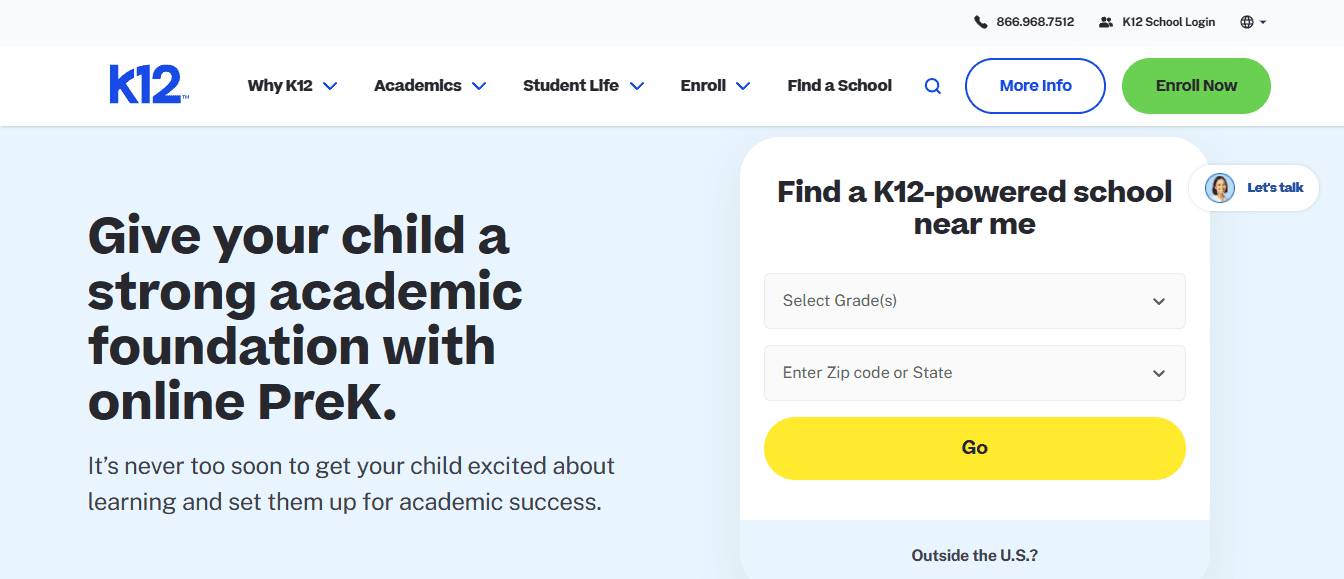
K12 functions as a traditional school moved online, with live classes, set schedules, and teacher-led instruction. This removes most teaching responsibilities from parents. Students attend scheduled lessons, submit assignments for grading, and progress through a standard curriculum developed by certified educators. According to Brighterly's analysis of homeschool programs, comprehensive programs like K12 offer over 3,000 lessons across grade levels, providing students with greater depth than most independent curricula.
Who benefits most from K12's structured approach?
Parents seeking to reduce the time spent on daily schooling choose K12 because it functions as outsourced education rather than parent-led homeschooling. Your role shifts to monitoring progress and providing support instead of teaching lessons. Students who thrive with external structure perform well, while self-directed learners or those needing flexible pacing struggle with its rigid scheduling.
3. Laurel Springs School
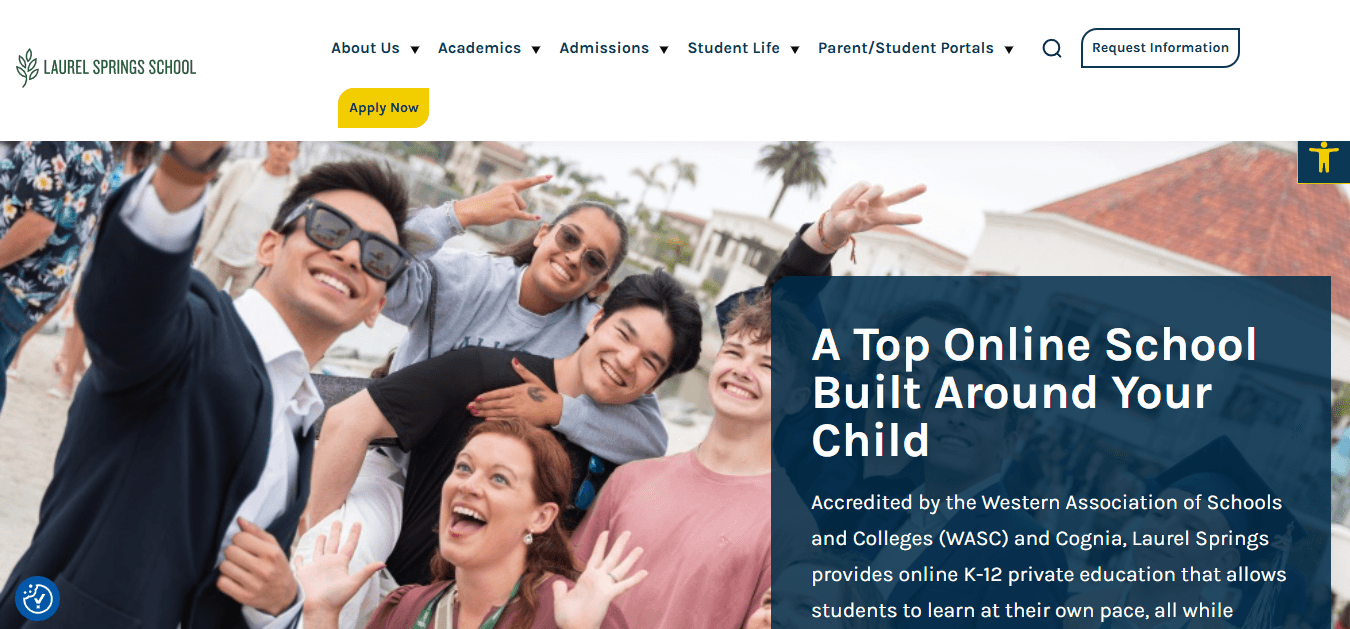
Laurel Springs focuses on college-bound students, offering honors and Advanced Placement courses, as well as dual-enrollment opportunities. These programs build strong transcripts for selective university admission. Personalized learning plans and academic counseling help students manage challenging coursework while maintaining the flexibility of homeschooling.
Why do families choose Laurel Springs for competitive college admissions?
Families seeking admission to Ivy League and highly competitive colleges choose Laurel Springs because it uses the language that admissions committees understand.
What are the potential drawbacks of this approach?
The curriculum focuses on advanced academic preparation rather than exploratory learning, making it ideal for motivated students with clear college goals but potentially overwhelming for those still determining their interests. Premium pricing reflects the college prep infrastructure and counseling support that independent homeschoolers must build through separate resources.
4. Forest Trail Academy

Forest Trail combines accreditation with budget-friendly pricing, offering self-paced and instructor-led options. The program provides printable worksheets alongside online learning to reduce concerns about screen time, and parents can monitor progress through the platform's tracking systems.
This approach works for families needing recognized diplomas without premium costs. Independent learners thrive with Forest Trail's model, though students who require frequent instructional support may find limited teacher availability frustrating compared to more expensive programs that offer robust tutoring.
5. Oak Meadow

Oak Meadow follows a Waldorf-inspired philosophy, emphasizing creativity, project-based learning, and connection with nature within an accredited structure. The curriculum prioritizes writing development and hands-on activities over standardized testing, appealing to families seeking official recognition without traditional academic approaches. Students explore fewer subjects in depth rather than covering numerous topics superficially.
How does Oak Meadow support creative learners?
Creative children who struggle with rigid formats thrive in Oak Meadow's environment, which combines art, outdoor experiences, and reflective practices. Multiple regional accrediting bodies validate transcripts for college admissions despite non-traditional instructional methods, making Oak Meadow effective for families committed to alternative philosophies but who require institutional credential acceptance.
6. Calvert Homeschool
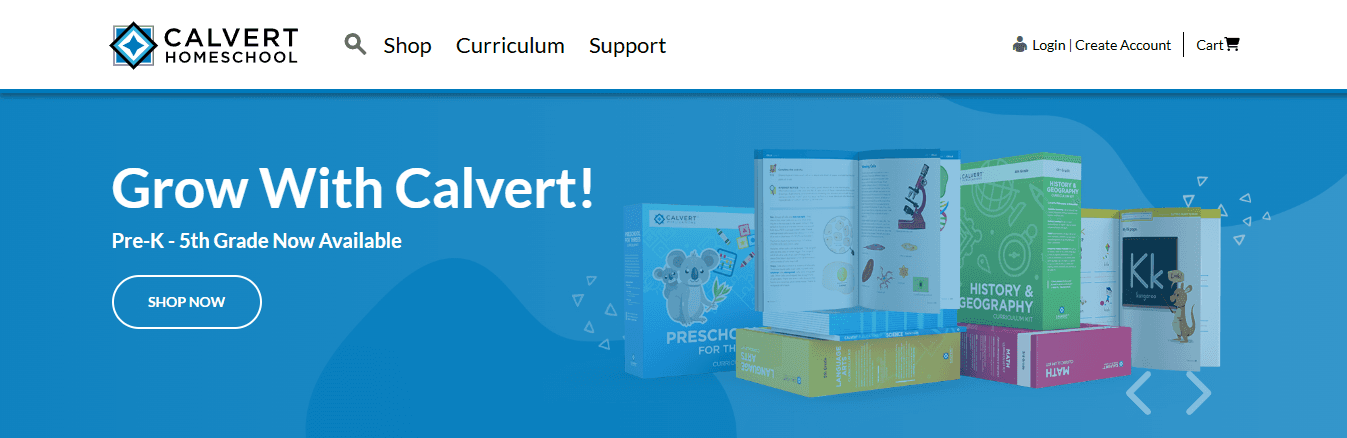
Calvert balances structure with flexibility through detailed lesson plans and progress tracking that guide parents without controlling daily schedules. The program supports both independent learning and parent-led instruction, allowing families to adjust their involvement based on the subject's difficulty and students' needs. Calvert's long-standing reputation carries credential weight that newer programs lack, particularly with traditional institutions evaluating transcripts. Families choose Calvert for clear direction without rigidity: it removes the planning burden while maintaining control over pacing. You follow established lesson sequences but adjust timing when your child needs extra practice or moves faster than expected.
7. Abeka Academy
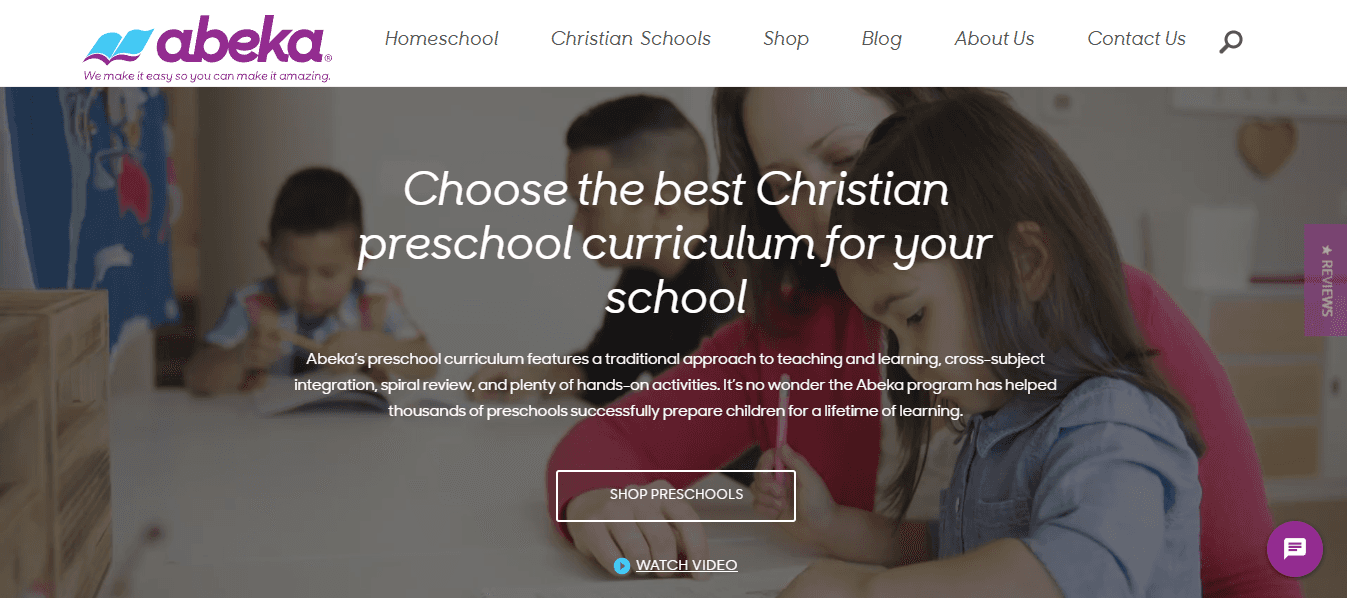
Abeka provides a traditional education through classroom-style videos, with a strong focus on phonics basics and step-by-step maths lessons. The curriculum is highly structured with limited flexibility, making it ideal for families who prefer traditional education methods and a school-like system at home.
How does Abeka's teaching format work?
Teacher-led video lessons provide direct instruction without requiring parental subject expertise. The program appeals to families prioritizing academic preparation over exploratory learning, though inflexible pacing frustrates those seeking personalized education.
Which students adapt best to Abeka's structure?
Students accustomed to classroom environments adapt easily to Abeka's format. However, students requiring alternative learning styles or flexible schedules may find the structure limiting.
8. The Keystone School
Keystone focuses on middle and high school students who work through self-paced online courses. The school offers credit recovery options and a wide range of electives to help students build customized transcripts.
How does Keystone's flexibility benefit busy teenagers?
The program gives teens flexibility as they balance school with work, sports, or other commitments, allowing them to progress at their own pace while earning accredited credit that colleges recognize on applications.
Which students thrive with Keystone's independent approach?
Independent teenagers who prefer minimal parental involvement thrive in Keystone's independent structure, though younger students or those who need frequent interaction with teachers may struggle. The credit recovery feature helps students who fell behind in traditional schools catch up without repeating entire grade levels, making Keystone valuable for families addressing specific academic gaps.
9. Time4Learning
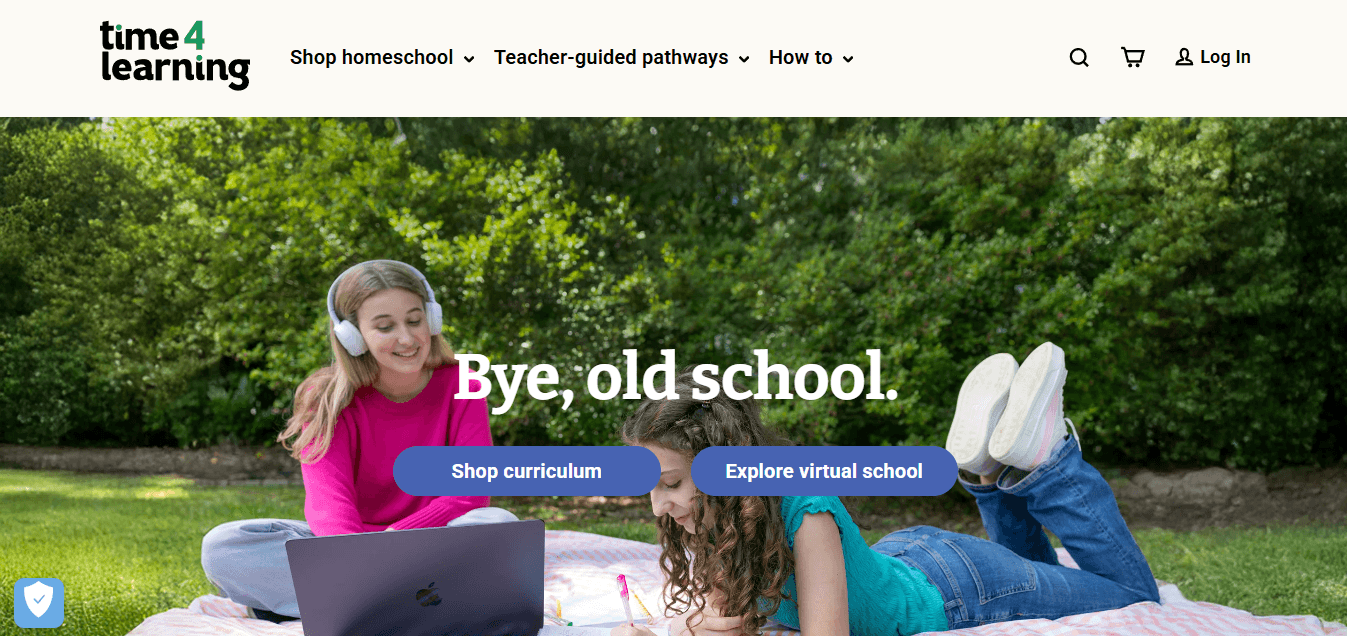
Time4Learning automates instruction through interactive online lessons with built-in grading, reducing parental workload from teaching to monitoring. The program gains accreditation through partnerships with umbrella schools, providing credential recognition while maintaining the ease of use that appeals to busy families.
How does Time4Learning work for different family needs?
Students work through a self-paced curriculum while parents track progress via automated reporting. Families overwhelmed by planning and grading choose Time4Learning for its hands-off approach to teaching and assessment.
Children comfortable with technology-based learning adapt easily, though families that limit screen time or prefer hands-on approaches find the digital-heavy format to be at odds with their educational values. Brighterly's user satisfaction data shows programs with strong automated systems achieve 4.5/5 satisfaction scores on Trustpilot, reflecting how operational ease impacts family experience beyond curriculum quality.
10. Liberty University Online Academy
Liberty integrates a biblical worldview throughout its accredited curriculum, providing faith-based education with recognized credentials. The structured program includes textbooks, teacher guidance, and systematic theology integration that shapes how subjects from science to history are presented.
How does faith integration appeal to different families?
The faith integration appeals to Christian families who view education as connected to spiritual development, though the religious perspective limits appeal for families seeking secular or multi-faith approaches. Students receive rigorous academic preparation alongside religious instruction, creating transcripts that satisfy both college admissions requirements and family values around faith-centered learning.
What supplemental resources strengthen curriculum understanding?
When the curriculum includes units on historical events, biological systems, or mathematical concepts, custom visual materials cement understanding. Our My Coloring Pages tool generates educational coloring pages matching your specific lesson in minutes. Need Revolutionary War maps for your history unit or cell diagrams for biology? You create exactly what reinforces the concept your child learned, maintaining engagement through hands-on reinforcement that generic worksheets cannot match. Selecting the right program matters only if you understand which supplemental resources strengthen learning and which add busywork to already full days.
Download 69,777+ free worksheets for supplementing homeschool learning
Your accredited program gives you essential structure. Supplemental worksheets help you retain what you learn. When a concept hasn't fully solidified after a lesson, targeted practice bridges the gap between passive exposure and deep understanding.

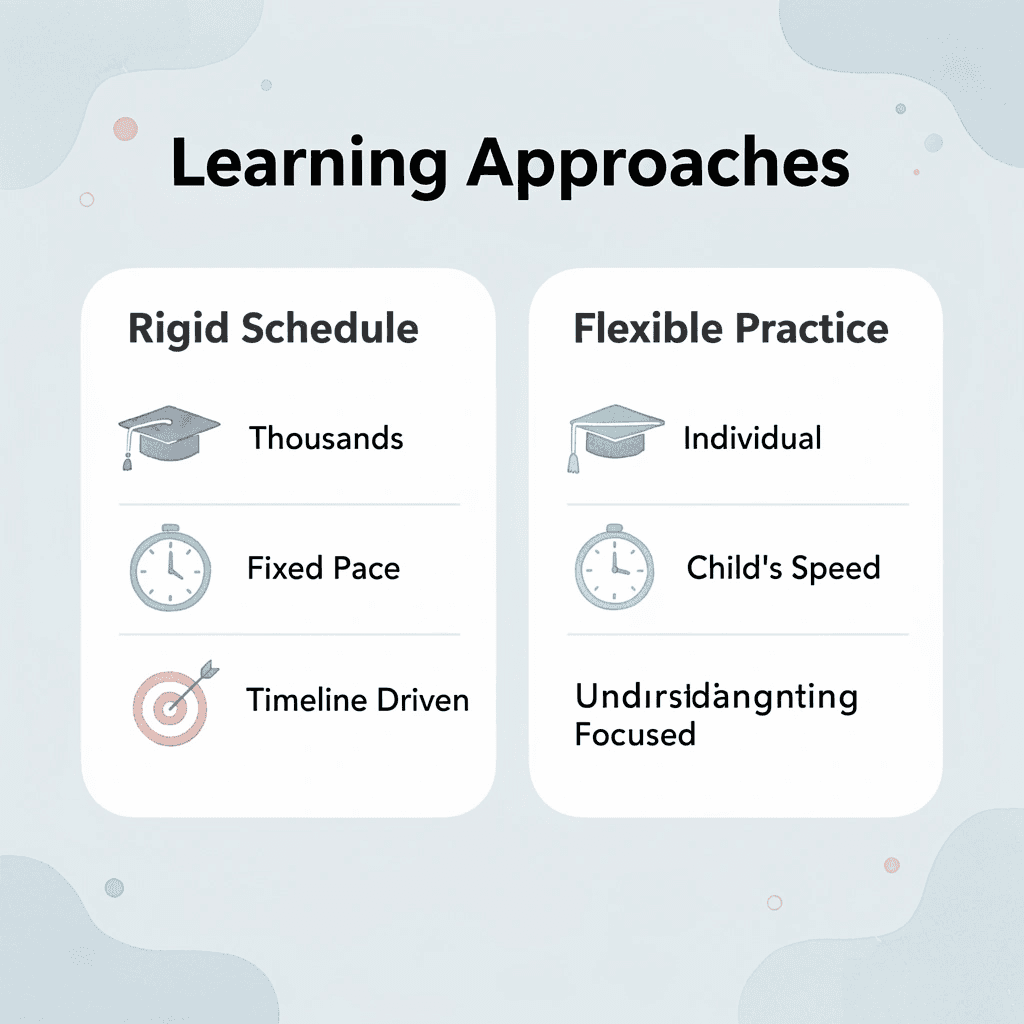
🎯 Key Point: Accredited curricula move forward on a rigid schedule to serve thousands of students across different states and learning speeds. They can't pause for your child's processing time. Worksheets fill that critical gap without derailing your timeline, maintaining forward momentum while reinforcing concepts that need more repetition.
"Without that second step, understanding dissolves within weeks—your child knows fractions in October but can't recall them in January." — Homeschool Learning Research, 2024
Most families treat supplemental practice as optional enrichment when it's actually foundational for long-term retention. The lesson introduces the concept. The worksheet embeds it. Without that second step, understanding dissolves within weeks—your child knows fractions in October but can't recall them in January.
💡 Tip: Use targeted worksheets immediately after each lesson to cement understanding before moving to the next concept.
Practice builds pathways that single lessons cannot
Learning science shows that practicing the same concept in different ways strengthens brain connections more than a single learning method. A fraction video and a textbook page provide initial understanding, but without additional practice in varied formats, that knowledge remains weak. Worksheets that approach the same idea through word problems, visual models, or real-world applications significantly strengthen retention.
Practice works best immediately after you first learn something, not weeks later when you study for a test. After each lesson, add one or two worksheets that reinforce the idea without reteaching it. This prevents weak understanding from accumulating into larger problems as you progress through the course.
Free resources eliminate the budget barrier
Adding extra materials shouldn't require buying a separate workbook series for every subject and grade level. Free worksheet libraries let you print exactly what matches today's lesson without committing to entire programs you might abandon next month.
The challenge with most free resources is finding materials that match your current unit. Generic fraction worksheets don't help when you're working on adding fractions with unlike denominators. You spend twenty minutes searching for the right difficulty level and topic focus—time better spent teaching or practicing.
Platforms like My Coloring Pages let you generate custom worksheets instantly. Need multiplication tables at your child's current level or vocabulary practice for specific words you're studying? You create exactly what fits the moment, maintaining momentum without the planning friction that makes adding extra materials feel like a second curriculum to manage.
Coloring-based learning works for reluctant practitioners
Some children resist traditional worksheet formats regardless of content quality. Coloring activities disguise practice as something more appealing, particularly for younger learners or those who find standard worksheets tedious. They solve the same math problems or review the same vocabulary, but the format feels different enough to reduce resistance.
This isn't about making everything fun. It's about removing friction between your child and the practice they need. If traditional worksheets work, use them. If your child resists more math problems, try the same content in a format that doesn't trigger resistance. The goal is concept mastery, so whatever format achieves retention wins.
Build a simple reinforcement system
Add one worksheet targeting each lesson's concept. Every week, mix in review sheets covering recent topics to catch what didn't stick. This rhythm prevents both overload and gaps from skipped reinforcement.
Track what you're reinforcing to avoid duplicating effort. If your child shows solid understanding after the initial lesson and one practice sheet, move forward. If they're struggling after multiple attempts, the issue isn't a lack of worksheets but a need for different instructional approaches or more foundational work.
Consistent, targeted practice ensures your child walks the educational path successfully rather than simply moving through it. Download what you need when you need it, practice immediately after learning, and watch understanding deepen in ways curriculum alone cannot achieve.
Related Reading
- 5th Grade Homeschool Curriculum
- How To Homeschool In California
- Homeschool Reading Curriculum
- Illinois Homeschool Laws
- North Carolina Homeschool Laws
- Alabama Homeschool Laws
- 2nd Grade Homeschool Curriculum
- Michigan Homeschool Laws
- Georgia Homeschool Requirements
- 4th Grade Homeschool Curriculum
- Accredited Homeschool Curriculum
- California Homeschool Laws
- Science Homeschool Curriculum
- Homeschool Art Curriculum
- 3rd Grade Homeschool Curriculum