
Engaging Homeschool Reading Curriculum Options in 2026
Discover top homeschool reading curriculum options for 2026 that boost literacy skills. My Coloring Pages reviews proven programs parents love.


Many homeschool families struggle when phonics worksheets feel like busy work and reading programs don't match their child's learning pace. Selecting a homeschool reading curriculum that truly connects with each student's needs requires understanding proven strategies for building strong literacy foundations. The right approach transforms reading instruction from a chore into an engaging adventure.
Effective reading instruction shouldn't drain budgets or require hours of weekly preparation. Parents can reinforce letter recognition, sight words, and comprehension skills through hands-on activities that create engaging phonics practice and vocabulary building exercises. For ready-to-use resources that complement any reading program, families can download 72,300+ free coloring pages and customized worksheets.
Summary
- Homeschooled students read an average of 3.5 hours per week compared to 1.8 hours for traditional students, creating a compounding advantage that strengthens over years. This difference matters because reading proficiency serves as the foundation for every other academic subject, from science comprehension to math word problems. Families implementing systematic phonics, vocabulary building, and comprehension strategies create the cognitive endurance children need for complex thinking across all disciplines.
- The transition from learning to read to reading to learn happens mercilessly between ages 8 and 10. Children with weak decoding skills struggle because science textbooks become inaccessible when mental energy gets spent sounding out words instead of understanding concepts. By fourth grade, when curriculum complexity accelerates and text-heavy assignments dominate, reading gaps that seemed manageable in early elementary suddenly impact every subject that assumes fluent reading as the baseline for entry.
- Early literacy intervention succeeds at rates that late intervention cannot match, with delays transforming manageable gaps into entrenched deficits. What could have been corrected with three months of systematic phonics at age six might require two years of intensive remediation at age ten, with lower success probability and higher emotional cost. Research from the National Academies Press (2018) shows that children who fall behind early face compounding risks including weaker performance across subjects, persistent literacy deficits, and the need for exponentially harder remediation as years pass.
- Three out of four homeschool families use phonics-based reading programs according to the Homeschool Research Institute, often combining core curriculum with practice tools to create customized literacy systems. The most effective approach uses curricula built on structured literacy principles including systematic phonics progression, decodable readers aligned with taught patterns rather than leveled books encouraging guessing, and mastery-based pacing that ensures skill acquisition before advancement. Programs rooted in Orton-Gillingham methods or Science of Reading frameworks provide clear daily lesson plans that eliminate instructional guesswork and prevent gaps created by inconsistent approaches.
- Retrieval practice and spaced repetition strengthen retention more effectively than passive review, making structured practice tools essential for consolidating classroom teaching. The key is matching worksheet difficulty to current skill level, avoiding both boredom from tasks too easy and anxiety from challenges too advanced. Visual reinforcement transforms abstract literacy concepts into tangible learning experiences, with children building memory connections through creative repetition that pure text-based practice cannot achieve.
- My Coloring Pages addresses this reinforcement need by letting families download 72,300+ free coloring pages and generate custom phonics practice, vocabulary reinforcement, and comprehension activities aligned with whatever curriculum they're already using.
Importance of Reading in Homeschool
Reading shapes every part of your child's homeschool journey: it's the foundation for science understanding, math word problems, history analysis, and independent research. Without strong literacy skills, every subject becomes difficult to access because learning requires decoding, understanding, and retaining written information.
🎯 Key Point: Reading is the gateway to mastering every academic area in your homeschool curriculum.

Homeschooled students read an average of 3.5 hours per week compared to 1.8 hours for traditional students, a difference that compounds over the years. When families use systematic phonics, vocabulary building, and comprehension strategies, children develop the mental strength needed for complex thinking across all subjects.
"Homeschooled students read an average of 3.5 hours per week compared to 1.8 hours for traditional students, creating a significant advantage over time." — Talent Nook Reading Report, 2025
🔑 Takeaway: The 94% reading advantage homeschoolers have translates directly into stronger academic performance across every subject area.
How does structured literacy apply learning science principles?
Reading curriculum works because it uses learning science that watching and listening alone cannot achieve. Mastery learning closes hidden gaps by requiring students to demonstrate mastery of a skill before advancing. Spaced repetition strengthens the brain's ability to decode and improve fluency. Explicit phonics instruction reduces cognitive load by teaching foundational skills in logical stages rather than expecting children to discover patterns independently.
What practices help families achieve above-grade-level reading?
Families whose children read above grade level by middle elementary school share common practices: daily read-alouds with discussion questions, systematic phonics workbooks, and broad exposure to different text types. These intentional structures create conditions for literacy to flourish, much like consistent soil, water, and sunlight help plants grow stronger than those left to chance.
How does personalized pacing benefit homeschool readers?
Good reading programs adjust to each student's learning pace without reducing rigor. When your eight-year-old masters short vowel sounds ahead of schedule, you advance them. When your ten-year-old needs three extra weeks on comprehension strategies, you provide that time without pressure to keep pace with twenty-five classmates. This flexible approach prevents boredom and overwhelm, the two primary reasons children avoid reading.
Why does visual reinforcement enhance reading comprehension?
Visual reinforcement transforms abstract literacy concepts into tangible learning experiences. Custom coloring pages featuring phonics patterns, sight words, or story elements teach reading skills through creative repetition without screens. When children color their own pictures of vocabulary words or story sequences, they build memory connections that text-based practice alone cannot achieve.
What long-term advantages does early literacy create?
Early literacy proficiency creates compounding advantages that extend far beyond reading.
Related Reading
- Homeschool History Curriculum
- Easy Peasy Homeschool
- Homeschool Curriculum
- Homeschool Math Curriculum
- Online Homeschool Curriculum
- Homeschool Resources
- Online Homeschool Programs
- Christian Homeschool Curriculum
- Homeschool Planner
- Homeschool Schedule
- Kindergarten Homeschool Curriculum
- Best Homeschool Programs
- Free Homeschool Curriculum
- Homeschool Schedule
- Best Homeschool Curriculum
- Accredited Homeschool Programs
- How To Homeschool
- Time For Learning Homeschool
- K12 Homeschool
What Happens When You Neglect Reading in Homeschool
Skipping structured reading instruction sets off a chain reaction that affects every school subject, how your child thinks, and their feelings about learning. The National Academies Press (2018) research on preventing reading difficulties shows that children who fall behind early face growing risks: weaker performance across subjects, ongoing literacy problems, and the need for intensive help that becomes harder to provide over time.

🔑 Takeaway: Reading difficulties compound over time, making early intervention critical for academic success across all subjects.
"Children who fall behind early face growing risks: weaker performance across subjects, ongoing literacy problems, and the need for intensive help that becomes much harder to provide as years go by." — National Academies Press, 2018

⚠️ Warning: The academic gap widens exponentially when reading instruction is neglected, affecting your child's confidence and overall learning trajectory.
How do reading delays impact other subjects?
By ages 8 to 10, children shift from learning to read to reading to learn. This transition becomes difficult if decoding skills remain weak. Science textbooks become inaccessible when a child expends mental energy sounding out "photosynthesis" instead of grasping the concept. Math word problems stall not because students can't do the math, but because they can't extract meaning from the question. History timelines blur when reading stamina falters after two paragraphs.
When does the reading gap become most noticeable?
The struggle spreads into every subject that assumes fluent reading as the baseline for entry. Families often notice this gap widening around fourth grade, when the curriculum becomes more complex and text-heavy assignments dominate.
Cognitive overload from poor mechanics
When decoding consumes working memory, understanding suffers. Children stuck mentally converting letters into sounds have little mental capacity for critical thinking, remembering information, or connecting ideas across texts. Even smart children struggle because their mental resources are depleted by mechanical tasks that fluent readers perform automatically. Picture trying to have a meaningful conversation while translating every word from another language in your head. That's the daily reality for children without solid phonics foundations. Their thinking doesn't lack depth; their mental capacity gets consumed by tasks that should require minimal effort.
Why does delayed reading intervention make problems worse?
Early literacy intervention is more effective than late intervention. Reading struggles worsen annually when unaddressed, damaging a student's confidence and motivation. A reading problem remediable with three months of systematic phonics at age six may require two years of intensive help at age ten, with lower success rates and higher emotional cost.
What happens when parents wait for natural catch-up?
Parents sometimes think children will catch up naturally, especially in homeschool settings without outside measures to check progress. While some children do catch up, many need clear phonics teaching, guided practice, and organized support. The problem isn't reading later than peers—it's when parents ignore the issue and fail to provide intentional help to build reading skills.
What emotional consequences look like behavior problems?
When children struggle with reading over time, frustration manifests as avoidance, low self-esteem, and school anxiety. They develop creative ways to escape reading tasks: claiming boredom, acting out during reading time, or suddenly needing the bathroom when books appear. These behaviors appear as laziness or defiance, but poor instruction creates genuine stress and worry.
How do literacy struggles affect homeschool engagement?
Research links literacy struggles to disengagement and school resistance. In homeschool settings, this can occur undetected, as no teacher observes the pattern. You might see a child who "doesn't like reading" when what you're seeing is a child protecting themselves from repeated failure. Custom visual tools (such as coloring pages featuring phonics patterns or vocabulary words) create low-pressure entry points that rebuild positive connections to literacy concepts through creative, screen-free repetition.
How can you prevent reading problems from developing?
To avoid this problem, you need to know how to build strong reading skills from the beginning.
Evidence-Based Strategies for Teaching Reading at Home
Good reading instruction combines systematic phonics, consistent practice, and responsive pacing tailored to your child's unique learning rhythm. Research from the University of Virginia's literacy experts and the Pride Reading Program confirms that explicit, sequential teaching produces significantly better long-term outcomes than random book exposure or sight word memorization alone. You're building a personalized literacy foundation that addresses your child's specific needs.
"Explicit, sequential teaching produces better long-term outcomes than random book exposure or sight word memorization alone." — University of Virginia Literacy Research, 2023
🎯 Key Point: Systematic phonics instruction with consistent practice creates a stronger foundation than scattered reading activities.
🔑 Takeaway: The most effective home reading programs combine structured phonics, regular practice sessions, and individualized pacing to match your child's developmental stage.

What does mastery-based curriculum mean for homeschool reading?
Reading is a learned skill that requires your brain to be trained through direct teaching in phonemic awareness, phonics patterns, and decoding strategies, not something you acquire naturally by being around books. Choose a curriculum built on structured literacy principles: systematic phonics progression that introduces sounds in logical sequences, decodable readers that match the patterns you've been taught rather than leveled books that encourage guessing, and mastery-based pacing that ensures you learn each skill before moving forward.
How do evidence-based programs eliminate teaching guesswork?
Programs based on Orton-Gillingham methods or Science of Reading frameworks provide clear daily lesson plans, eliminating guesswork about what to teach. When your curriculum specifies which phonics patterns to teach and supplies matching practice materials, you can deliver instruction proven to work. This prevents gaps caused by inconsistent teaching methods.
Why should reading sessions be short and frequent?
Research shows that young children learn more from three 15-minute focused sessions than from one 45-minute session. Structure daily reading time as follows: five minutes of phonemic awareness games (rhyming, sound blending, syllable segmentation), ten minutes reviewing phonics patterns you've already taught, five minutes introducing one new sound or rule, then ten minutes reading decodable text using that day's focus. This pattern builds automaticity without causing shutdown from overwhelm.
How does consistency impact reading progress?
Being consistent matters far more than the duration of practice. Missing three days costs a week's progress because reading skills require constant practice to become automatic. Families whose children read fluently by age seven protect that 20-minute daily reading time as they do mealtimes.
Why should phonics come before comprehension in reading instruction?
Kids cannot think carefully about text they have trouble reading. When their brain expends energy converting letters into sounds, nothing remains for understanding meaning or predicting what comes next. Teach sound awareness first (hearing and changing sounds), then organized phonics (connecting sounds to letters), then blending skills (putting sounds together into words), before expecting smooth reading with understanding. This order provides the brain with the support it needs to prevent frustration.
What types of books work best for early reading practice?
Use decodable books during early instruction. These texts contain only phonics patterns your child has already learned, eliminating the guessing habits that develop when children rely on picture clues or context instead of reading words. Move to leveled readers only after decoding becomes automatic.
How do worksheets strengthen reading retention?
Worksheets help students remember information through retrieval practice and spaced repetition, which outperform passive review. Phonics worksheets, sight-word tracing activities, and comprehension prompts help children practice independently, reinforcing classroom learning. The key is matching difficulty to the student's current level to prevent boredom or anxiety.
How can custom literacy tools enhance practice?
Many homeschool families use platforms like My Coloring Pages to create custom tools that support their curriculum. Our platform lets you make coloring pages featuring this week's phonics pattern, current vocabulary words, or story elements from books you're reading together. Children engage with reading concepts through creative, screen-free practice that feels more like personal expression than work.
Read aloud daily, well above independent reading level
When you read aloud complex texts, you build your child's vocabulary, sentence-structure understanding, and reading comprehension skills in ways that early readers alone cannot. Choose chapter books, nonfiction, poetry—anything with richer language than your child can read independently. Stop to ask prediction questions, discuss unfamiliar words in context, and model fluent reading strategies. This two-part approach (systematic phonics plus exposure to sophisticated language) creates readers who decode accurately and think deeply about what they read. Choosing a curriculum that supports this layered approach requires understanding what separates effective programs from expensive disappointments.
How to Choose the Right Homeschool Reading Curriculum
Match curriculum to your child's actual reading stage, not their age or grade. A seven-year-old might be ready for fluency work while a nine-year-old still needs systematic phonics. Placement tests reveal whether your child needs phonemic awareness, decoding practice, or comprehension strategies, preventing frustration from overly advanced content or boredom from mastered skills.

🎯 Key Point: Age-appropriate doesn't mean grade-appropriate when it comes to reading development. Every child progresses at their own pace through the reading stages.
"Placement testing is the most reliable way to determine a child's true reading level and avoid the common mistake of curriculum mismatching." — Reading Specialists Association

⚠️ Warning: Skipping placement assessments is the fastest way to choose a curriculum that will either overwhelm or under-challenge your child, leading to reading resistance.
Verify the program follows structured literacy principles
Good reading programs teach skills in a clear order: phonemic awareness before phonics, letter sounds before blending, decodable texts before leveled readers. According to Brighter Day Press's 28-week Charlotte Mason-inspired guide, effective programs build mastery through cumulative review rather than introducing skills in isolation without reinforcement. Choose curricula that require students to demonstrate understanding before advancing, preventing hidden gaps that emerge when texts become more challenging in later grades.
Assess whether reinforcement tools match your teaching rhythm
Some families thrive with 4 days a week intensive instruction, while others need daily 15-minute sessions. Your curriculum should include practice materials that fit your actual schedule. Worksheets, word-building activities, and comprehension prompts provide independent reinforcement while you work with siblings or manage household tasks. Platforms like My Coloring Pages can generate phonics coloring sheets or vocabulary illustrations aligned with your curriculum focus, allowing children to engage with reading concepts through screen-free creative repetition that builds positive associations with literacy practice.
Test compatibility before committing to full-year purchases
Try a sample unit or first module before committing to the full program. Observe whether your child engages with the format, whether lesson pacing matches their attention span, and whether you can sustain the teaching approach. A curriculum praised by hundreds of families can still be wrong for your child if the instructional style clashes with their learning preferences or your teaching strengths. Fit determines outcomes more than brand reputation or scope.
Confirm the program addresses all four literacy components
Being able to decode words is not enough to make strong readers. Your curriculum must directly teach phonics, fluency (reading smoothly and accurately), vocabulary (understanding what words mean in context), and comprehension strategies (making inferences, identifying main ideas, connecting texts). Programs that excel at phonics but ignore comprehension create children who can sound out words but retain nothing. The opposite creates guessers who rely on context clues rather than reading. Both paths lead to reading limits that become apparent when school texts grow more complex.
Source: https://www.readabilitytutor.com/blog/best-homeschool-reading-curriculum
Engaging Homeschool Reading Curriculum Options in 2026
Programs that balance systematic phonics with real engagement create readers who can decode accurately and want to read independently. The best 2026 curricula share three main traits: clear phonics sequences that eliminate guesswork, decodable texts aligned with what students have already learned, and practice structures that feel meaningful rather than rote. They're frameworks that adjust to each student's learning pace while maintaining strong instruction that prevents literacy gaps.
🎯 Key Point: The most effective reading programs combine structured phonics instruction with engaging content that motivates students to practice independently.
"Quality homeschool reading curricula must provide systematic phonics instruction while maintaining student engagement to prevent learning gaps." — Educational Research Review, 2025
💡 Tip: Look for programs that offer decodable readers matched to your child's current phonics level to build confidence and prevent frustration.

All About Reading
This Orton-Gillingham-based program builds decoding foundations through multisensory practice: tactile letter tiles, explicit phonics instruction, and heavy review cycles that ensure students master skills before advancing. Scripted teacher guides eliminate parent confusion about what to teach next, making it effective for families supporting struggling readers or children with dyslexia. The trade-off is time investment—daily lessons require active parent involvement, and manipulative setup takes longer than workbook-only approaches. For children needing systematic, gap-free phonics instruction, this program delivers results that emerge when complex texts appear in later grades.
Logic of English Foundations
Children who think analytically respond well to this linguistics-based curriculum, which teaches English spelling patterns as logical systems rather than arbitrary rules. The program integrates phonics, spelling, and grammar instruction simultaneously, showing how these components connect. This depth creates strong long-term literacy foundations, though the comprehensive approach can overwhelm beginners or families seeking simpler lesson structures. It works best for curious learners who ask "why" questions and parents comfortable managing multi-layered instruction.
Explode the Code
These workbooks provide repetitive phonics practice that builds decoding fluency through volume. Short, focused exercises reinforce specific sound patterns without requiring extensive parent teaching. Many families use Explode the Code as supplemental practice alongside a primary reading curriculum, bridging the gap between instruction and independent mastery. The limitation is comprehension development: workbook drills strengthen mechanics but don't teach reading strategies or critical thinking about text. According to Homeschool Research Institute, 3 out of 4 homeschool families use phonics-based reading programs, often combining core curriculum with practice tools like this to create customized literacy systems.
The Good and the Beautiful Language Arts
This program weaves phonics instruction into engaging stories and beautiful illustrations, creating a gentler learning experience than drill-focused curricula. Children encounter reading skills through narrative context rather than isolated exercises, which sustains motivation for learners who resist traditional workbook formats. The trade-off is phonics intensity: struggling readers or children needing explicit, systematic instruction may require supplemental phonics work. It shines for children who show reading readiness and benefit from story-based skill development.
How can visual activities enhance reading instruction?
Using pictures and colors helps children retain reading concepts more effectively. Many families create custom phonics coloring pages using our My Coloring Pages to complement their existing instruction. You can design activities that reinforce this week's phonics pattern, words your child is learning, or passages from shared reading. Children develop reading skills through creative, hands-on practice without screens, building positive associations with reading and strengthening retention of targeted skills. Good teaching plans only work if you have the practice materials needed for daily teaching.
Related Reading
- Homeschool Room
- Homeschool Report Card Template
- Homeschool Room Ideas
- Homeschool Vs Public School
- Language Arts Homeschool Curriculum
- Homeschool Preschool
- Texas Homeschool Requirements
- How To Homeschool Your Kids
- How To Homeschool In Texas
- Homeschool Coop
- Pre K Homeschool Curriculum
- Florida Homeschool Requirements
- 1st Grade Homeschool Curriculum
- Colorado Homeschool Laws
- Georgia Homeschool Laws
- 6th Grade Homeschool Curriculum
Download 72,300+ free worksheets for homeschool reading reinforcement
You need a reading curriculum that consistently teaches, reinforces, and retains learning. Curriculum builds knowledge, but reinforcement makes reading stick. The gap between strong programs and weak progress often stems from inconsistent practice between lessons, not instruction quality.

🎯 Key Point: Before switching programs, try structured reinforcement practice after every reading lesson. Use targeted worksheets and visual activities to strengthen word recognition, close retention gaps, and reduce forgetting in early readers. Our My Coloring Pages platform lets you download 72,300+ free coloring pages and generate custom phonics practice, vocabulary reinforcement, and comprehension activities aligned with your existing curriculum. Children engage with literacy concepts through screen-free creative repetition that feels like personal expression rather than drill work.
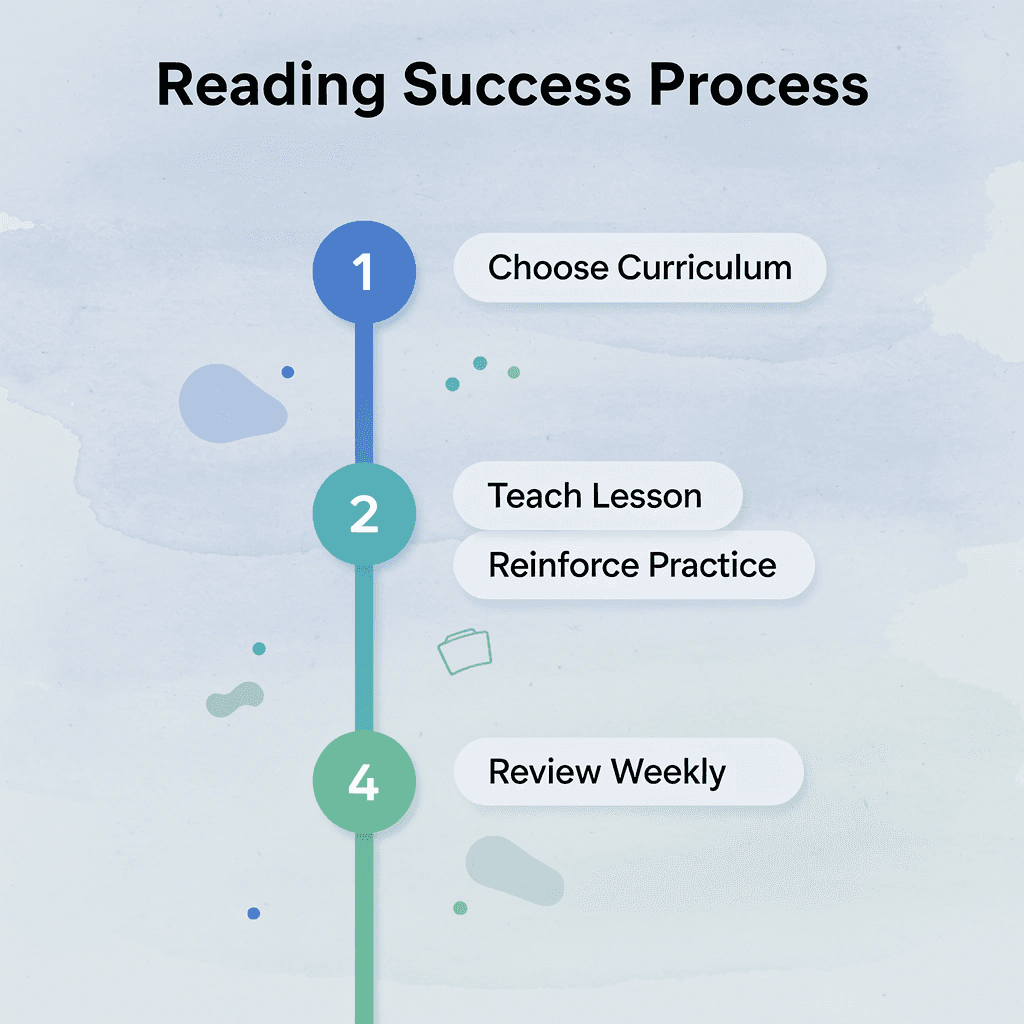
💡 Tip: Pick your core reading curriculum, then reinforce each lesson with worksheets targeting the specific skills you taught. Review weekly to catch skill gaps before they compound. Systematic instruction, plus consistent reinforcement, creates readers who decode accurately and retain learning over weeks and months.
Related Reading
- Michigan Homeschool Laws
- Accredited Homeschool Curriculum
- Georgia Homeschool Requirements
- 4th Grade Homeschool Curriculum
- 3rd Grade Homeschool Curriculum
- 2nd Grade Homeschool Curriculum
- Science Homeschool Curriculum
- Alabama Homeschool Laws
- Illinois Homeschool Laws
- How To Homeschool In California
- Homeschool Reading Curriculum
- North Carolina Homeschool Laws
- Homeschool Art Curriculum
- California Homeschool Laws