10 Best Science Homeschool Curriculum in 2026
Discover the top 10 science homeschool curriculum options for 2026. My Coloring Pages reviews hands-on programs that make learning engaging and effective.

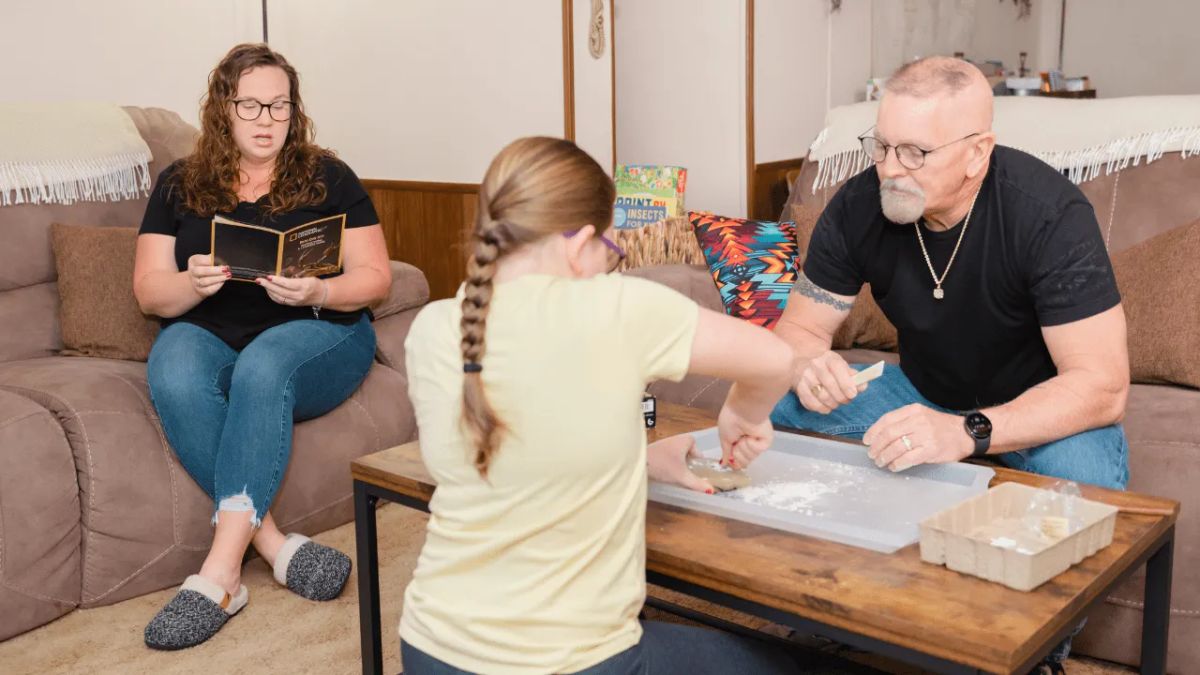
When children ask why the sky is blue or how plants grow, parents need resources that spark curiosity without turning science into a chore. Building an effective science homeschool curriculum requires materials that cover essential concepts in biology and chemistry, as well as physics and earth science. The key lies in finding tools that transform abstract ideas into hands-on learning experiences children actually enjoy.
Printable resources, such as diagrams of the human body, illustrations of the solar system, and visual aids for teaching the water cycle, help students connect with scientific concepts through creative activities. These materials fit seamlessly into lesson plans and make learning stick through personalized, engaging approaches. Parents looking to enhance their science lessons can download 69,777+ free coloring pages designed specifically to support homeschool education.
Table of Contents
- Should You Teach Science in Homeschool?
- Benefits of Teaching Science in Homeschool
- How to Teach Science at Homeschool
- 10 Homeschool Science Activities for Children
- 10 Best Science Homeschool Curriculum in 2026
- Download 69,777+ free worksheets for supplementing science learning
Summary
- Homeschool science education succeeds when students ask questions, test ideas through observation, and connect learning to the world around them. The National Home Education Research Institute found in their 2023 analysis that homeschool students score 15 to 30 percentile points higher on standardized tests, including science assessments, compared to their traditionally schooled peers. This advantage comes from the flexibility to follow curiosity, the freedom to spend hours on experiments rather than minutes, and the ability to connect abstract concepts directly to daily life.
- Traditional classrooms limit lab time to one or two sessions per week, squeezed between bell schedules and shared equipment. Meanwhile, homeschoolers turn kitchens into chemistry labs, backyards into ecosystems, and daily routines into opportunities for scientific thinking. A child observing how ice melts at different temperatures, tracking moon phases over weeks, or growing crystals from household materials engages with the same scientific method that professional researchers use.
- Most homeschool science activities fail not because parents lack credentials, but because experiments become entertainment without a connection to broader concepts. Trial and error becomes a strength rather than a source of embarrassment when students work at their own pace, building the mental habit of forming hypotheses, collecting data systematically, and drawing conclusions based on observed evidence. Documentation builds the habit of careful observation and clear communication, which defines scientific thinking.
- According to the National Center for Education Statistics, 3.7 million students were homeschooled in the United States during 2020-2021, representing families who chose home education despite the challenges of maintaining consistency as initial enthusiasm fades and competing priorities demand attention. The programs that succeed long-term reduce friction through clear instructions, manageable prep requirements, and built-in accountability that keeps families moving forward even when motivation fluctuates.
- Curriculum teaches concepts, but worksheets ensure students retain them through active engagement that builds neural pathways passive observation never creates. Labeling a plant cell diagram forces active retrieval of what chloroplasts do and where they sit within cellular structure, while filling in a water cycle worksheet demands that students reconstruct the sequence from memory rather than passively recognizing it when presented.
- My Coloring Pages addresses the gap between experiencing a science lesson and actually mastering it by providing 69,777+ free printable resources that supplement the curriculum without requiring parents to design materials from scratch or search across multiple websites for quality visuals.
Should You Teach Science in Homeschool?
Yes, you should teach science at home. The fear that you can't do it well stems from outdated ideas: that good science requires formal labs, expensive equipment, and certified teachers. Real science education happens when students ask questions, test ideas through observation and experimentation, and connect what they learn to the world around them.

🎯 Key Point: You don't need a PhD in chemistry or a fully equipped laboratory to provide your children with an excellent science education. The most important elements are curiosity, hands-on exploration, and helping students develop critical thinking skills.
"The best science education comes from encouraging natural curiosity and providing opportunities for hands-on discovery, not from expensive equipment or formal credentials." — National Science Education Standards

💡 Tip: Start with simple experiments using everyday materials from your kitchen and backyard. Baking soda volcanoes, plant growth observations, and weather tracking can teach fundamental scientific principles just as effectively as any traditional classroom setup.
The myth of the necessary lab
Traditional schools limit lab time to one or two sessions per week, squeezed between bell schedules and shared equipment. Students follow strict procedures designed more for classroom management than discovery. Homeschoolers transform kitchens into chemistry labs, backyards into ecosystems, and daily routines into opportunities for scientific thinking. A child watching ice melt at different temperatures, tracking moon phases over weeks, or growing crystals from household materials engages with the same scientific method that professional researchers use. The National Home Education Research Institute found in their 2023 analysis that homeschool students score 15 to 30 percentile points higher on standardized tests, including science assessments, compared to their traditionally schooled peers.
How does combining structure with exploration create educational depth?
Effective homeschool science combines structured curriculum, hands-on experiments, and real-world observation. Structure ensures students progress through foundational concepts, from basic physics to complex biological systems. Experiments transform abstract ideas into a tangible understanding, while real-world observations demonstrate why concepts matter beyond textbooks.
When a student learns about ecosystems in a textbook, observes decomposition in a compost bin, and records changes in a nature journal over months, they build deep, interconnected knowledge that passive classroom learning rarely achieves.
What makes the strongest homeschool science programs effective?
The strongest homeschool science programs weave together curriculum guides, library books, video demonstrations, and physical experiments into a reinforcing system. My Coloring Pages supports this approach with over 69,777 free printable resources that transform abstract scientific concepts into visual, hands-on learning tools. Download diagrams of cell structures, illustrations of geological formations, or detailed anatomy charts that students can color while learning about the spatial relationships and component parts of scientific systems.
How does personalization solve the real problem?
Traditional classrooms move at one pace regardless of whether students grasp photosynthesis in ten minutes or need three weeks. Homeschooling lets you slow down on concepts that require deeper exploration and accelerate through material your student already knows.
This flexibility matters in science, where missing one foundational concept creates confusion that compounds through every subsequent lesson. A student who never quite understood the water cycle will struggle with weather patterns, climate systems, and ecological relationships built on that same principle.
What causes homeschool science failures
Problems in homeschool science don't stem from parents' lack of formal training or from a lack of lab equipment. They arise when parents rely solely on videos without student practice, skip hands-on activities, or abandon structured curricula.
Science works as a connected system where ideas build on each other, not as separate facts to memorize. Even simple experiments with baking soda and vinegar teach chemical reactions, observation skills, hypothesis testing, and the scientific method when framed within an intentional learning approach.
How do you maintain consistency over time?
Knowing science education can work at home and sustaining it over the years as interests evolve are two distinct challenges.
Related Reading
- Homeschool History Curriculum
- Easy Peasy Homeschool
- Homeschool Curriculum
- Homeschool Math Curriculum
- Online Homeschool Curriculum
- Homeschool Resources
- Online Homeschool Programs
- Christian Homeschool Curriculum
- Homeschool Planner
- Homeschool Schedule
- Kindergarten Homeschool Curriculum
- Best Homeschool Programs
- Free Homeschool Curriculum
- Homeschool Schedule
- Best Homeschool Curriculum
- Accredited Homeschool Programs
- How To Homeschool
- Time For Learning Homeschool
- K12 Homeschool
Benefits of Teaching Science in Homeschool
Science education at home creates five distinct advantages that traditional classrooms struggle to replicate: the flexibility to follow curiosity, the freedom to spend hours on experiments instead of minutes, and the ability to connect abstract concepts directly to daily life. These benefits appear in how students approach problems, communicate discoveries, and maintain intellectual curiosity beyond required assignments.
Homeschool Science Advantage | Traditional Classroom Challenge |
|---|---|
Unlimited time for experiments | Fixed 45-minute periods |
Follow curiosity naturally | Rigid curriculum schedule |
Real-world connections daily | Abstract concepts only |
Individual pacing allowed | Group pace required |
Deep exploration encouraged | Surface coverage prioritized |
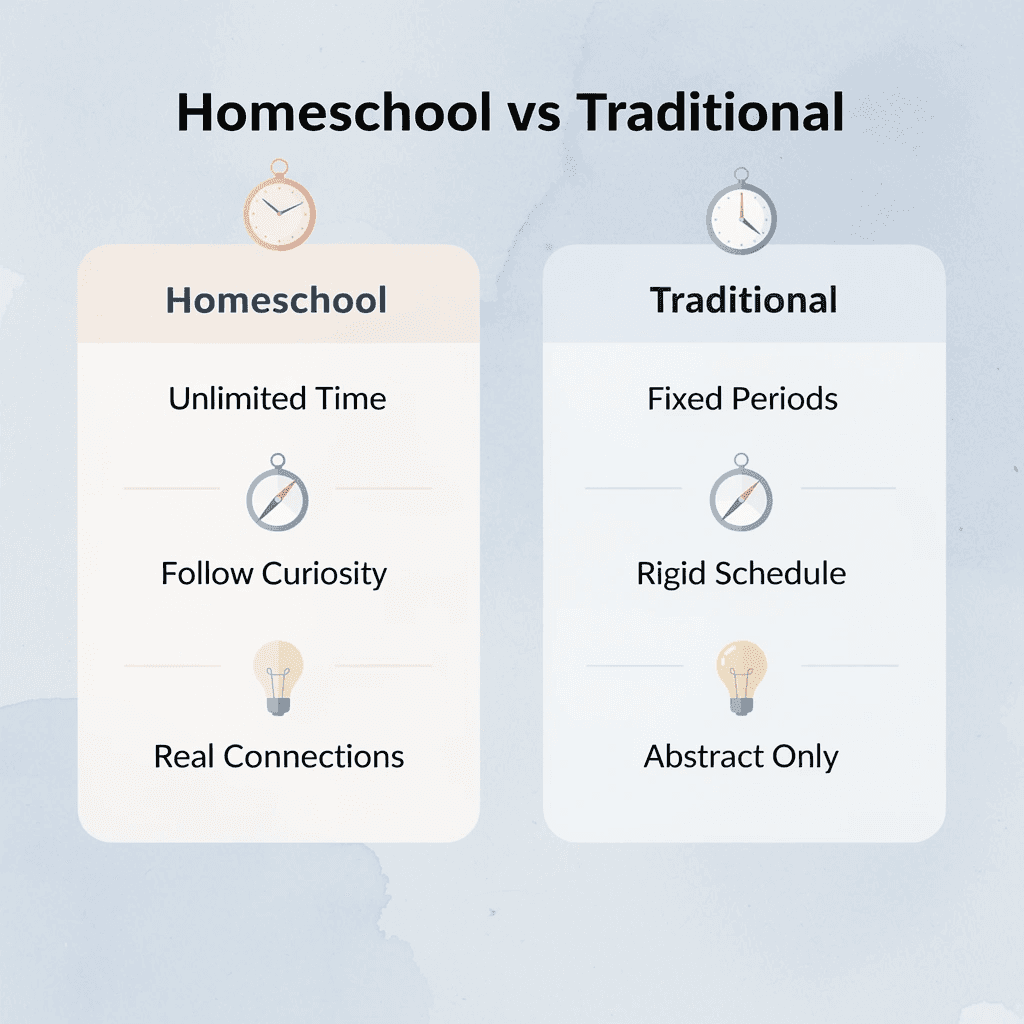
🎯 Key Point: The most significant advantage of homeschool science is the ability to transform passive learning into active discovery, allowing students to spend time conducting experiments rather than just reading about them.
"Students who engage in hands-on science activities for more than 60 minutes per week show 25% higher retention of scientific concepts compared to traditional lecture-based instruction." — National Science Education Research, 2023
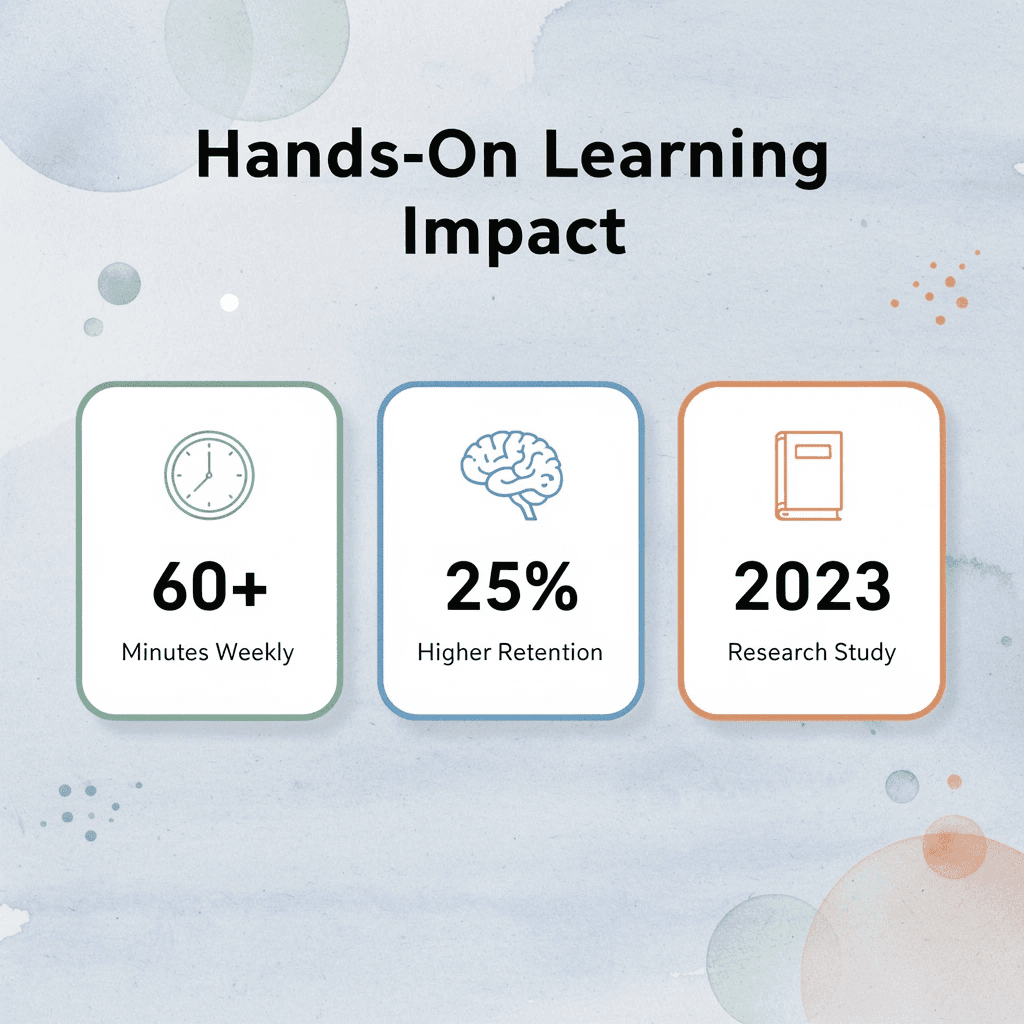
💡 Tip: Use your homeschool flexibility to turn every kitchen experiment, nature walk, or building project into a science lesson that reinforces critical thinking and problem-solving skills in real-world contexts.
Creativity flourishes through iterative experimentation
Trial and error becomes a strength rather than an embarrassment when students work at their own pace. A chemistry experiment that fails in the kitchen lacks the social weight of failure in front of 25 classmates. Students learn to adjust variables, test new approaches, and view unsuccessful attempts as data points rather than personal shortcomings. This iterative process mirrors how scientists work, in which most experiments produce unexpected results that lead to refined questions. The homeschool advantage lies in having time to run that experiment three more times on Tuesday afternoon, then twice again on Thursday morning, until the pattern becomes clear and understanding becomes genuine.
Analytical thinking develops through sustained observation
Making predictions and testing them against reality teaches students to examine evidence rather than accept surface explanations. When a child tracks which plants grow fastest under different light conditions over six weeks, they build the mental habit of forming hypotheses, collecting data systematically, and drawing conclusions based on observation rather than hope. Traditional science classes compress this into single lab periods where students rush to finish before the bell rings. Homeschoolers can extend observations across weeks or months, watching patterns emerge that short-term experiments never reveal.
Communication skills sharpen across multiple formats
Science notebooks teach students to document procedures clearly enough that someone else could replicate their work. Writing lab reports demands precision in language because vague descriptions produce vague results. Following detailed instructions for dissections or chemistry experiments builds careful reading habits where missing one step creates visible consequences. My Coloring Pages supports this documentation process by providing over 69,777 free printable resources that students can use to create custom diagrams, label anatomical structures, or illustrate scientific processes in their notebooks. Working through experiments together creates opportunities for students to explain their reasoning, defend their conclusions respectfully, and collaborate toward shared understanding.
Independent learning becomes self-sustaining
Discovery carries weight that passive instruction never achieves. When students figure out why vinegar and baking soda react violently, or how pulleys reduce the force needed to lift heavy objects, that knowledge sticks because they earned it through investigation rather than memorization. According to Veritas Press, 36% of states hit record homeschool enrolment in 2024-25, reflecting growing confidence that home-based education produces students who pursue knowledge independently. Students who learn to find answers through systematic investigation carry that approach into every subject and career challenge.
Cross-disciplinary connections multiply naturally
Science changes how students see art when they understand how light wavelengths create the colors painters use. Music becomes more interesting after learning how string length and tension affect pitch. Cooking becomes applied chemistry. Weather patterns connect to geography, geography to history, and history to current events.
Homeschool schedules allow these connections to happen naturally rather than being limited to artificial subject boundaries. A student who notices frost patterns on a window can spend the next hour researching crystallization, then the afternoon creating crystal growth experiments, then the evening sketching the formations they observed. This integrated learning builds understanding that spans disciplines rather than treating each subject as an isolated requirement.
What challenges arise with maintaining integrated learning?
The challenge is maintaining these benefits as ideas grow more complex and student interests evolve.
How to Teach Science at Homeschool
Start with stories, not textbooks. Science sticks when it enters through narrative rather than definition. The Charlotte Mason approach uses "living books" that present photosynthesis through the journey of a seed becoming a sunflower or explain gravity through the story of falling apples and orbiting moons. Children remember plots and consequences far better than isolated facts listed under chapter headings. Engaging narratives following real scientists or natural phenomena transform memorization into genuine curiosity.
🎯 Key Point: Living books create emotional connections to scientific concepts, making them stick longer than traditional textbook definitions.
"Children remember plots and consequences far better than isolated facts listed under chapter headings." — Charlotte Mason Educational Philosophy
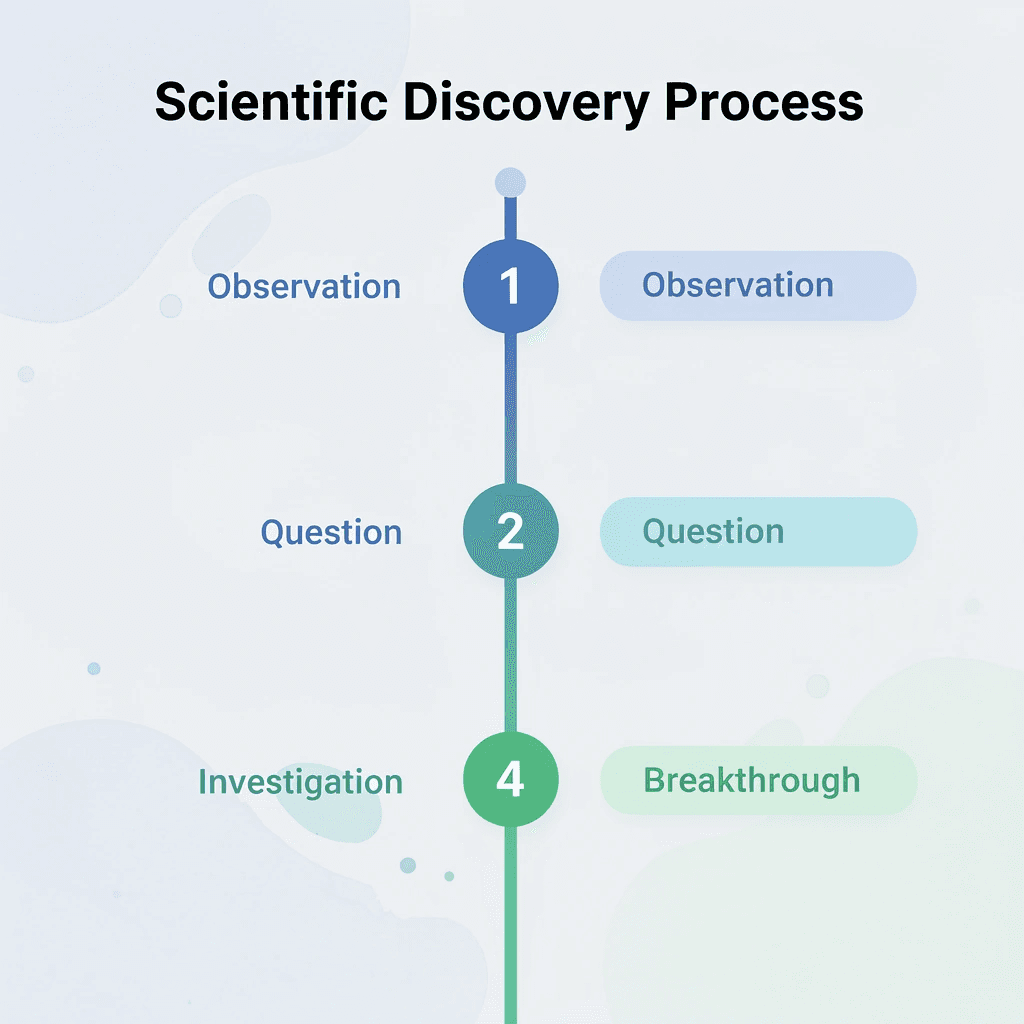
⚡ Pro Tip: Choose science stories that follow the complete journey of discovery - from initial observation to final breakthrough - to help children understand the scientific process naturally.
Pair every reading session with physical action
Reading creates understanding. Doing creates retention. After learning about plant biology through a living book, grow seeds in different light conditions and track their progress. After reading about density, layer liquids of different weights in a clear jar and watch them separate into distinct bands. The gap between knowing that oil floats on water and witnessing it in your kitchen teaches students that science describes reality, not abstract theory.
Use structured reinforcement to move from fun to comprehension
Experiments engage students in the moment, but without deliberate practice, they forget the principles demonstrated. After hands-on activities, worksheets provide the recall and application practice that transforms "that was cool" into "I understand how this works." Label diagrams of your observations. Answer questions requiring you to apply the concept to new scenarios. Explain the process in writing. My Coloring Pages offers over 69,777 free printable resources that turn abstract scientific concepts into visual learning tools students can color while absorbing spatial relationships, component parts, and system connections.
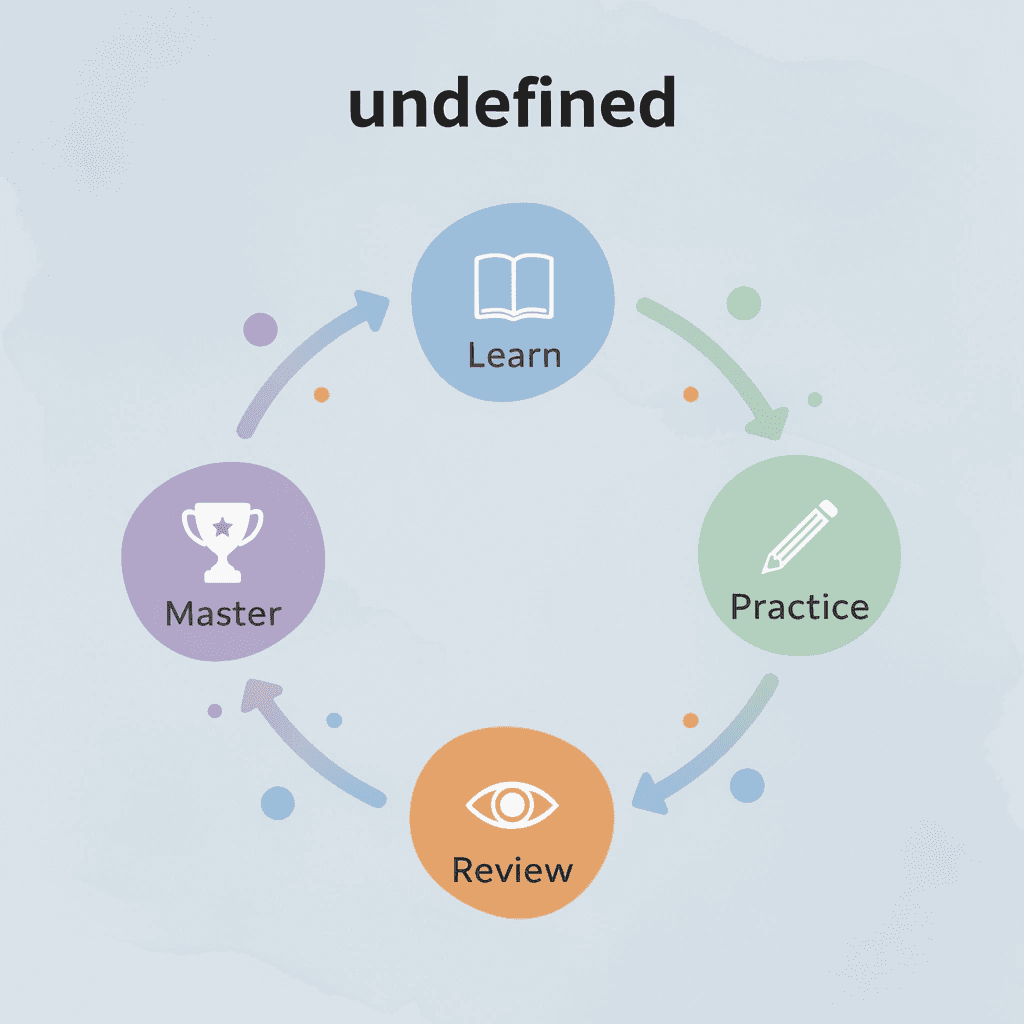
Follow the Learn, Do, Record cycle
This three-step system mirrors how professional scientists work. Learning introduces ideas through reading or video. Does apply those ideas through experiments or observations. Record documents, discoveries through notebooking, drawings, or written explanations. A nature journal tracking moon phases over six weeks demonstrates a better understanding of lunar cycles than any multiple-choice quiz, revealing the thinking process rather than recall ability. Documentation builds the habit of careful observation and clear communication, which defines scientific thinking.
Let student interests guide topic selection
Homeschooling's greatest advantage emerges when you abandon strict curriculum sequences. A child interested in weather can spend months exploring meteorology, atmospheric pressure, and climate patterns before studying biology. Another student interested in animals can study ecosystems, food chains, and adaptation without waiting for scheduled chapters to be released. Genuine interest creates motivation that forced learning never achieves: students ask deeper questions, explore side interests, and retain information longer when they care about the subject. The real challenge is maintaining consistency when enthusiasm fades and complexity increases.
10 Homeschool Science Activities for Children
Hands-on experiments turn abstract concepts into physical discoveries that students remember long after textbooks close. These ten activities require minimal equipment, take between fifteen minutes and several weeks to complete, and teach core scientific principles through direct observation.
🎯 Key Point: The most effective science learning happens when children can touch, see, and manipulate the concepts they're studying rather than just reading about them.

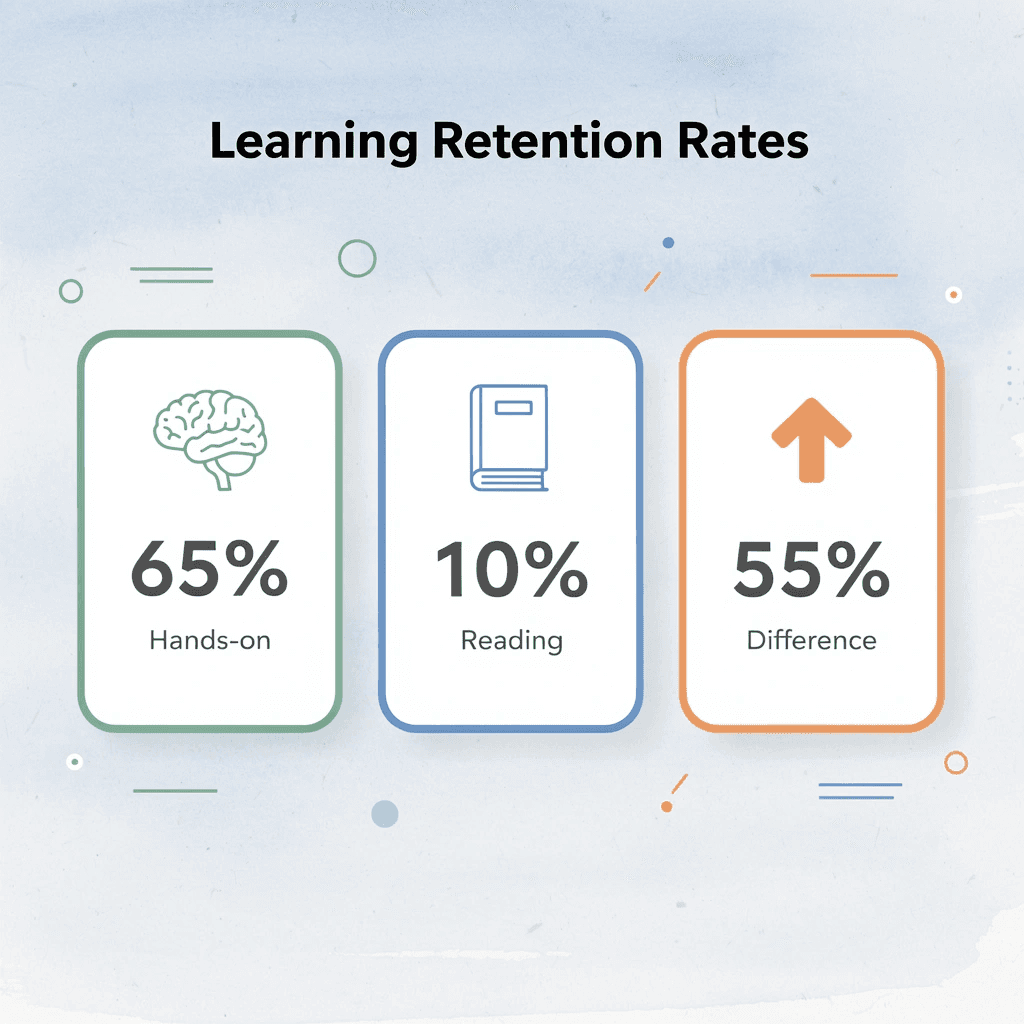
"Students retain 65% of information when they learn through hands-on activities, compared to just 10% from reading alone." — National Training Laboratory, 2019
Activity Type | Time Required | Key Concept |
|---|---|---|
Quick Experiments | 15-30 minutes | Basic principles |
Multi-Day Projects | 3-7 days | Complex processes |
Long-Term Studies | 2-4 weeks | Scientific method |
💡 Tip: Start with shorter experiments to build confidence and gradually introduce longer-term projects as your child develops patience for the scientific process.
1. Chemical reactions through volcanic eruption
Mix baking soda with vinegar in a plastic cup, add food coloring for visual impact, and watch carbon dioxide gas create foam that overflows like lava. This demonstrates acid-base reactions in which two substances react to produce a gas. The visible change helps students understand that matter can change form through chemical interaction. Extend this by asking students to draw each stage of the reaction and label what happens at each step. Students who sketch the before, during, and after states begin thinking about process rather than outcome.
2. Plant biology through seed germination
Place seeds on damp cotton or soil near sunlight and observe daily growth over two to three weeks. Students track how roots emerge first, followed by shoots pushing toward light, demonstrating phototropism and the plant's need for water, air, and energy. Create a growth chart where students measure stem height each morning and note leaf development. Watching cotyledons unfold and true leaves replace them teaches life cycles as changing systems rather than static textbook diagrams.
3. Color theory and capillary action through walking water
Fill three cups with water, add different food coloring to each, then connect them with folded paper towels. Water climbs the towel fibers through capillary action, mixing colors where streams meet. Primary colors combine into secondary colors, demonstrating that purple results from red and blue interacting rather than existing as a separate entity. Students observe that water moves against gravity through narrow spaces, that colors follow predictable mixing rules, and that scientific principles explain everyday phenomena, such as how plants draw water from soil to leaves.
4. States of matter through ice melting experiments
Place identical ice cubes in different conditions: direct sunlight, covered with salt, wrapped in cloth, and in shade. Students predict which melts fastest, then observe results that often contradict their assumptions. Salt lowers water's freezing point, accelerating melting faster than heat alone, while insulation slows the process even in warm environments.
How can parents teach science without formal expertise?
Parents who teach subjects without formal training often worry about explaining difficult topics. A child watching ice melt under different conditions learns through direct experimentation rather than requiring an adult to explain molecular bonds and phase transitions. The experiment itself teaches cause and effect, which matters more at elementary levels than understanding the chemistry behind why salt works.
How do you connect experiments to lasting learning?
Most homeschool science activities fail because experiments become entertainment rather than connecting to bigger ideas. A volcano that erupts once teaches nothing unless students understand what created the reaction and why it matters. My Coloring Pages provides over 69,777 free printable resources that transform these experiments into documented learning. The collection helps students reinforce their understanding by downloading diagrams to label, showing chemical reactions, plant anatomy, or water cycle stages, and converting quick observations into permanent understanding through visual reinforcement.
5. Water cycle demonstration through cloud formation
Fill a clear jar with water, spray shaving cream on top to represent clouds, then drop food coloring onto the cream. As coloured water soaks into the foam, it falls through like rain, demonstrating how clouds release precipitation when saturated. This visible representation helps students understand evaporation, condensation, and precipitation as connected stages rather than isolated vocabulary words. The simplicity matters because students can repeat this independently after seeing it once. Science education succeeds when children investigate questions through systematic experimentation rather than waiting for answers.
6. Magnetism exploration through material testing
Give students magnets and household objects such as paper clips, plastic toys, wooden blocks, aluminum foil, and steel screws. They predict which items will stick, test their predictions, and record results. This introduces the scientific method through immediate feedback, where predictions either match reality or require revision. The surprise comes when students discover that not all metals attract magnets, forcing them to refine their understanding from "magnets stick to metal" to "magnets attract ferromagnetic materials like iron and steel." This precision in thinking matters more than memorizing the periodic table elements.
7. Density and chemical reactions through lava lamp creation
Mix water, vegetable oil, food coloring, and an effervescent tablet in a clear container. Oil floats because it's less dense than water. The tablet releases carbon dioxide bubbles that carry coloured water upward, then releases it to sink again. Students observe density differences and gas formation while the mesmerizing motion captures their attention long enough for concepts to register. Homeschoolers can leave this experiment running for hours, watching patterns repeat until the mechanism becomes obvious through repetition rather than explanation, an advantage over traditional single-period science classes, where students rush to finish before the bell rings.
8. Biology and observation through insect study
Take a walk outside with a notebook and a magnifying glass. Watch insects in their natural habitats without disturbing them. Students can sketch observations, record behaviors like ants carrying food or bees visiting flowers, and note where different species appear. This teaches biodiversity, habitat preferences, and the value of patient observation in revealing patterns invisible to casual glances. Create a bug journal using worksheets that ask students to document insect anatomy, behavior, and ecological roles. This develops the habits of careful observation and systematic recording that define scientific fieldwork.
9. Surface tension demonstration through pepper and soap
Sprinkle black pepper across a shallow dish of water. The pepper floats on the surface because of the water's surface tension. Touch the center with a soap-covered finger and watch the pepper race toward the edges as soap molecules break the tension. At elementary levels, observation matters more than explanation. Students learn that liquids have properties beyond wetness, that substances interact predictably, and that science reveals hidden forces shaping everyday experiences.
10. Astronomy through shadow tracking
Place an object in direct sunlight early in the morning and trace its shadow with chalk or tape. Return every hour throughout the day to trace new shadow positions. By evening, students observe how shadows move and change length as Earth rotates relative to the sun. This transforms abstract astronomy into concrete observation and demonstrates planetary motion through evidence that students create themselves.
Why does sustained observation matter in science education?
The longer timeline teaches that some scientific understanding requires sustained attention rather than quick answers. Students who track shadows across a full day understand Earth's rotation more deeply than those who read that our planet spins.
10 Best Science Homeschool Curriculum in 2026
Choosing a curriculum means matching your family's learning style, available time, and educational priorities to programs that align with specific approaches. Some families need minimal prep with video-led instruction, others want deep thinking through guided discovery, and still others prioritize faith integration or alignment with public school standards. The ten programs below represent distinct philosophies that address different challenges homeschooling families face when building science education that works.
🎯 Key Point: The best science curriculum isn't the highest-rated one—it's the program that matches your family's specific needs and teaching confidence level.
"Homeschool families who align curriculum choice with their natural teaching style report 85% higher satisfaction and better student outcomes than those who choose based on popularity alone." — National Home Education Research Institute, 2024

💡 Pro Tip: Before comparing programs, honestly assess whether you prefer hands-on facilitation, minimal prep time, or comprehensive teacher guidance—this single factor will narrow your choices more effectively than any feature comparison.
1. Real Science Odyssey

Pandia Press built this curriculum around investigation rather than memorization. Students receive structured lesson plans paired with lab sheets that guide them through experiments with unpredictable outcomes.
How does the hands-on approach work in practice?
A chemistry unit provides materials lists, safety rules, and observation prompts that transform kitchen counters into laboratories where students test how substances interact, record results, and draw conclusions from their own evidence.
This works best for families who value hands-on learning with clear direction. Experiments use common household materials or inexpensive supplies rather than specialized equipment. Lab sheets ask students to predict outcomes before testing, observe carefully during experiments, and explain results afterward, teaching the scientific method through repeated practice.
What support do parents receive with this curriculum?
The program balances freedom with structure. Parents without formal science training appreciate the detailed instructor guides that explain not only what to teach but why each concept matters and how it connects to later learning. Students work through biology, earth science, chemistry, and physics across grades K through 8, with each level building on previous understanding.
2. Building Foundations of Scientific Understanding
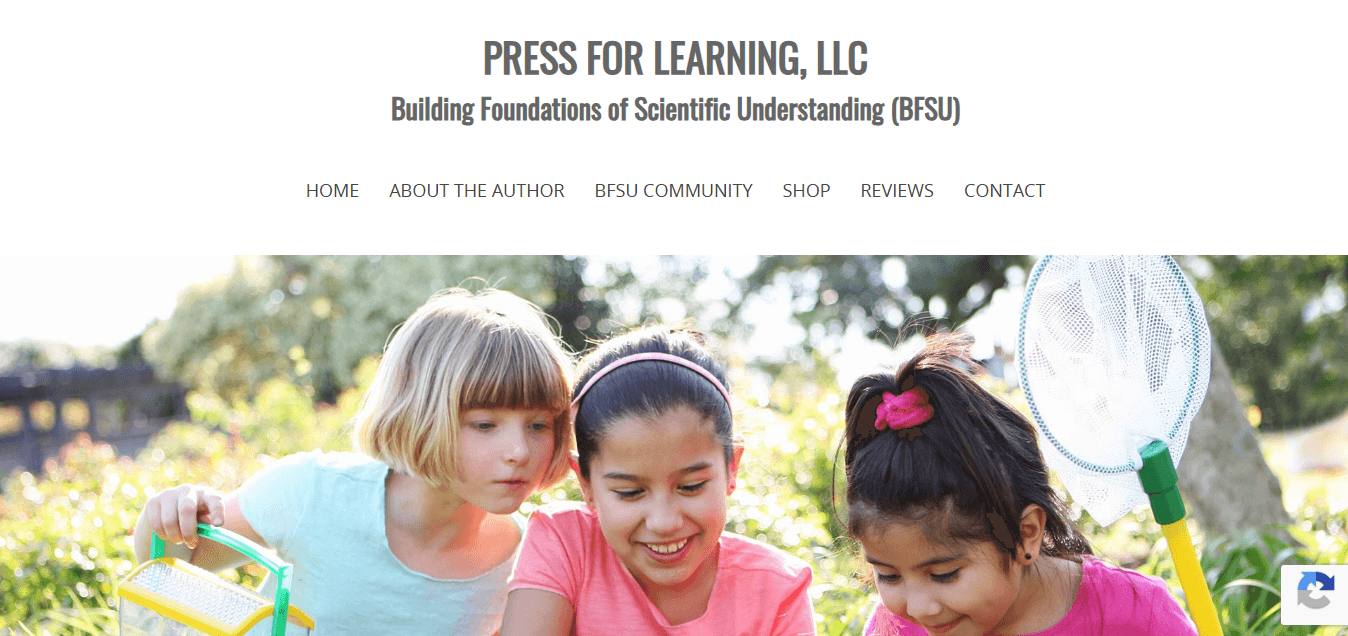
BFSU approaches science as a system of connected ideas that students build through asking questions and making observations. Rather than memorizing that photosynthesis converts sunlight into energy, students notice plants grow toward light, wonder why, test whether darkness affects growth, and gradually build understanding. This inquiry-based method mirrors how scientists develop theories, starting with observations that raise questions requiring systematic investigation.
What level of parental involvement does BFSU require?
The program requires more parent involvement than video-based curricula because adults lead discussions that help students explain and improve their thinking. Teaching notes predict common misunderstandings and pose questions that prompt deeper understanding without providing answers. A unit on matter prompts students to observe ice melting, water evaporating, and steam condensing, then explain what stays the same and what changes during these transformations.
Which students benefit most from this curriculum approach?
Strong academic learners thrive because the curriculum treats them as capable thinkers rather than passive receivers. It works for grades K through 6, with concepts spiraling upward in complexity. The program builds logical reasoning skills that transfer to mathematics, reading comprehension, and everyday problem-solving.
3. Noeo Science
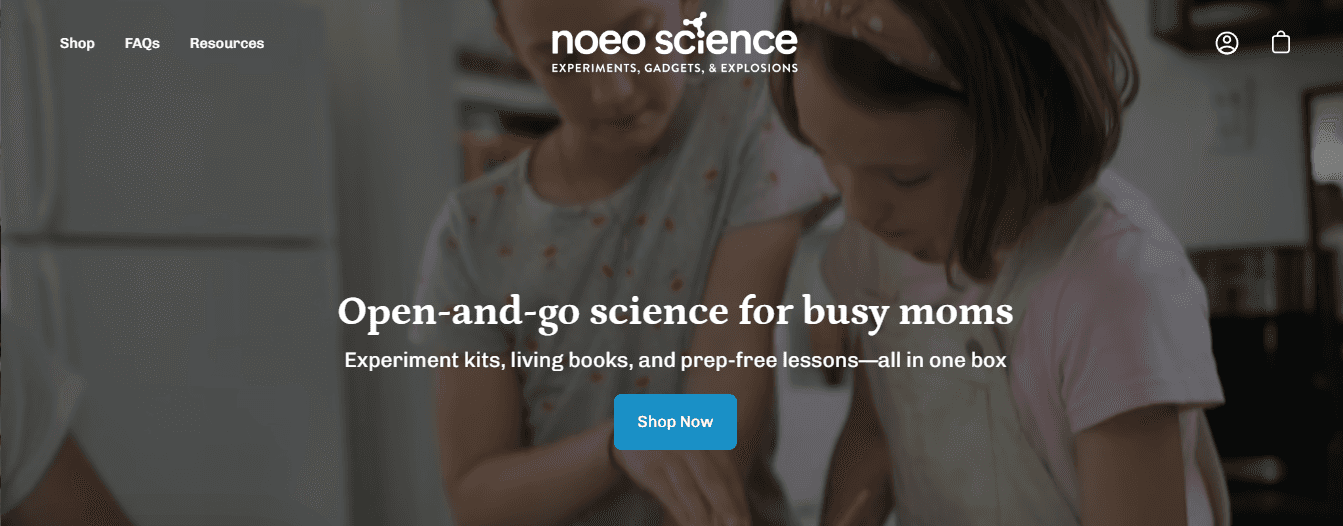
This curriculum pairs carefully selected science books with coordinated experiments that bring reading to life through hands-on investigation. A unit on astronomy includes picture books that show how planets move, chapter books that follow astronomers as they make discoveries, and reference texts that explain celestial mechanics. All are paired with activities like tracking moon phases or building scale models of the solar system. Reading provides context and vocabulary while experiments transform abstract concepts into concrete understanding.
How does the classical education approach shape science learning?
The classical education style focuses on great books that present science as part of human culture rather than separate technical knowledge. Students read about scientists as real people who face challenges, make mistakes, and feel excitement about discovery. This helps children see science as an ongoing human endeavor rather than a collection of facts created by distant experts.
What makes this program work for reading-focused families?
Families who value reading appreciate how the program builds reading skills while teaching science. The program progresses through grades 1–9, with each level adding age-appropriate difficulty. Parents receive book lists, experiment instructions, and discussion questions that work together as integrated units, with each component reinforcing the others. The primary cost involves purchasing recommended books, though many families obtain these from libraries.
4. Mystery Science

Video lessons built around interesting questions grab students' attention and sustain engagement through visual demonstrations. Instead of telling students why shadows change length, Mystery Science asks students to notice the pattern, consider what causes it, and then shows the answer through animation, demonstrating Earth's rotation relative to the sun. This question-first approach matches how people naturally learn, starting with students' existing curiosity rather than imposing topics they haven't thought to ask about.
How are the lessons structured and delivered?
Lessons run 30 to 45 minutes with all materials built into the video platform. Students watch demonstrations, participate in hands-on activities using common household items, and answer comprehension questions that check their understanding. Teachers receive discussion guides and extension activities, but can deliver the main lessons with minimal advance preparation.
Which students benefit most from this approach?
This works best for young students in grades K through 5 who are visual learners. The engaging video format maintains student attention better than textbook reading while building foundational concepts in life science, earth science, and physical science. Students requiring hands-on learning may need supplementary experiments beyond what the videos provide.
5. Science Mom Curriculum
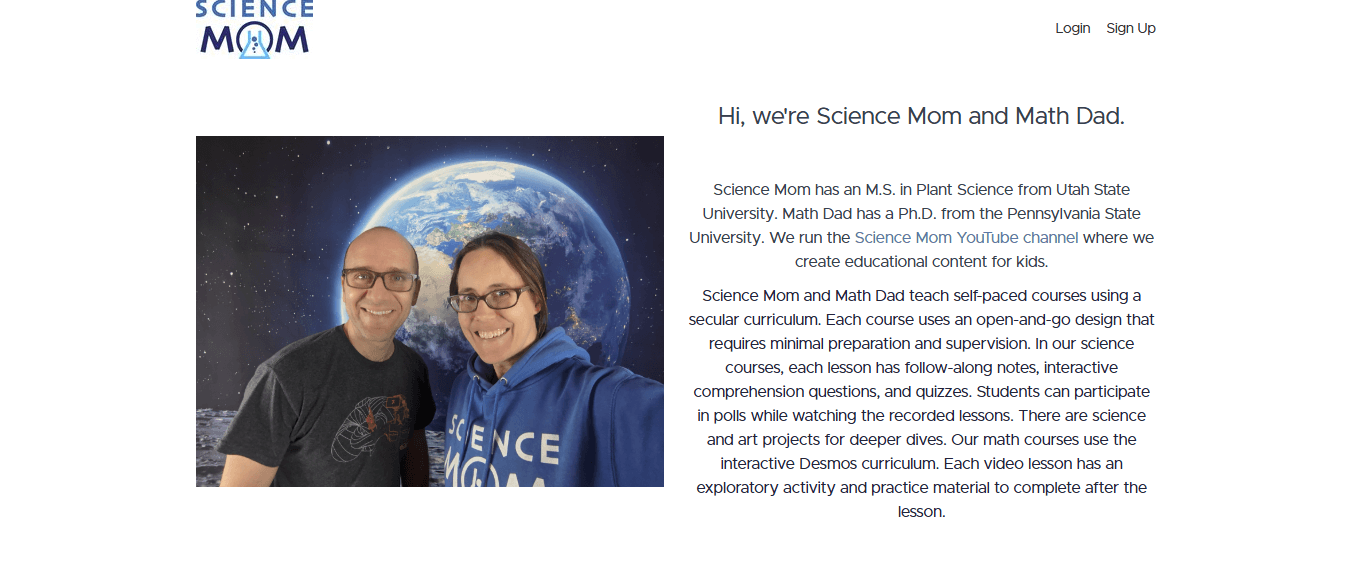
Teachers use videos to explain ideas, using pictures and diagrams to help students understand. Before conducting experiments, students watch these videos. For example, a chemistry lesson shows how molecules are structured using animated diagrams. Students then perform experiments where they observe molecules behaving exactly as the video demonstrated. This approach works well for students who benefit from instruction before independent exploration.
The program checks whether students understand the material before problems compound. After each video, students answer questions requiring them to apply what they learned rather than recall definitions. Worksheets ask them to predict experimental outcomes, explain their reasoning, and compare predictions to actual results. This cycle of learning, predicting, testing, and reflecting helps students develop lasting understanding.
What makes this program convenient for parents?
Parents appreciate how the program provides everything needed in one package: video instruction, experiment guides, worksheets, and assessment tools aligned around the same learning goals. Experiments use readily available materials and include clear safety instructions, making them accessible for families without science backgrounds. Students progress through content at their own pace, covering biology, chemistry, physics, and earth science across elementary and middle school levels.
How do successful programs maintain long-term engagement?
Most families struggle with consistency as initial excitement fades and competing demands emerge. Programs that work well in September often languish by March because the setup consumed too much time or the curriculum proved too complex for parents without science training. According to the National Center for Education Statistics, 3.7 million students were homeschooled in the United States during the 2020-2021 school year. Sustainable programs succeed by providing clear instructions, keeping prep work manageable, and building in accountability measures so families maintain momentum when motivation wanes.
Many homeschool science programs expect parents to create supplementary materials to help students understand concepts and visualize complex systems. This becomes challenging when teaching multiple subjects to several children while managing household responsibilities. My Coloring Pages addresses this need by offering over 69,777 free printable resources that transform difficult science concepts into visual learning tools students can color while studying the organization and structure of science. Download cell diagrams, geological formation illustrations, or detailed anatomy charts that align with your curriculum without requiring parents to create materials from scratch or search multiple websites for quality images.
6. BookShark Science
Learning science through carefully chosen books transforms science education into storytelling rather than rote study. Students read engaging narratives about ecosystems, then fiction set in those environments, then field guides identifying real species—all within a single unit that returns repeatedly to a central theme. This approach builds curiosity through stories that engage students with concepts before formal instruction begins.
How does the spiraling approach build lasting comprehension?
The program covers science topics with increasing complexity. A first grader learns that plants need sunlight. A third grader discovers how chlorophyll converts light energy. A fifth grader explores cellular respiration and the carbon cycle. This repeated exposure, with increasing difficulty, creates a lasting understanding that single-year coverage rarely achieves.
What makes this method work for book-loving students?
Students who love books thrive with this method because it leverages their reading strength to build science knowledge. Learning connects naturally to the real world as books link science to history, geography, and human experience. Parents receive detailed schedules showing which books to read when, which experiments accompany each unit, and which discussion questions deepen understanding. The main challenge is locating the recommended books, though many families use libraries to reduce costs.
7. Elemental Science

Elemental Science offers a classical education structure with experiment-based learning at affordable prices, making it accessible for single-income households and families teaching multiple children.
How does Elemental Science support parents new to teaching science?
Simple teacher guides help uncertain parents feel confident teaching science. Lessons include accessible background information, detailed instructions for experiments with material lists, and discussion questions that prompt students to explain their learning. The classical approach emphasizes observation, documentation, and discussion, teaching students to communicate their scientific thinking through writing and speaking.
How does the program accommodate multiple age levels?
The program works for multiple ages because experiments adjust in complexity based on student maturity. Younger children watch and describe observations; older students predict outcomes, control variables, and analyze results systematically. This flexibility allows families teaching multiple grade levels to participate in the same activity at appropriate levels for each student.
8. Apologia Science
Christian homeschool families often seek a science curriculum that integrates faith perspectives naturally rather than treating science and religion as separate subjects. Apologia teaches biology, chemistry, and physics through a biblical worldview that presents scientific discovery as revealing the order and beauty of creation.
How does Apologia provide college-prep science education?
The textbook format with coordinated experiments provides thorough college-prep coverage while maintaining clear Christian integration. Lessons ask students to consider the complexity of living systems as evidence of intentional design, a perspective that strengthens rather than contradicts families' religious beliefs.
What community support does Apologia offer homeschool families?
The program is popular in homeschool communities, fostering networks of families who share resources, coordinate lab sessions, and support one another. This community aspect reduces isolation and builds confidence in parents who are uncertain about their teaching abilities. While experiments require more specialized equipment than some programs, detailed instructions and strong teacher support enable families to implement them successfully.
9. Generation Genius
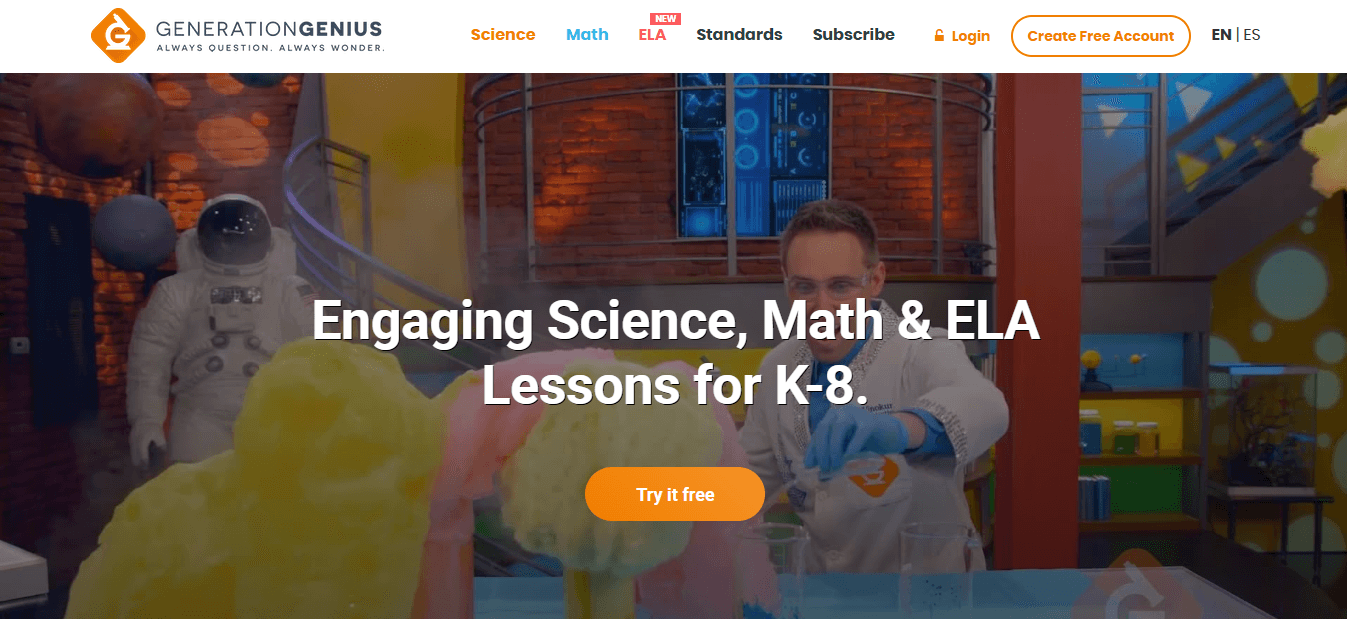
Content that aligns with the NGSS (Next Generation Science Standards) aligns with the science standards public schools follow, helping prepare students who may transition to traditional schooling. The video-based format uses engaging animations and clear explanations that make complex concepts accessible to visual learners.
How does Generation Genius provide immediate feedback?
Interactive questions built into videos immediately check understanding. Students must apply what they learn right away, rather than discover weeks later that they misunderstood something. This quick feedback catches confusion early, when it's still easy to address.
What are the benefits and limitations of the setup?
The quick lesson setup appeals to busy families: parents log in, select grade level and topic, and students watch professionally produced content with dynamic visuals. The main limitation is for kinesthetic learners who need hands-on activities beyond screen-based learning, though the program includes suggested supplementary activities.
10. Supercharged Science

STEM-focused experimentation centers on physics, chemistry, and engineering through projects that produce tangible results students can see, touch, and measure. Instead of reading about circuits, students build working electrical systems. Rather than memorizing chemical formulas, they create reactions that produce visible color changes, temperature shifts, or gas production.
How do hands-on experiments develop problem-solving skills?
Real experiments create engagement through immediate feedback, where success or failure becomes obvious through physical outcomes. Students learn to troubleshoot when projects fail, developing problem-solving skills that transfer beyond science to any domain requiring systematic investigation and iterative improvement.
What makes this approach work for hands-on learners?
Kids who love hands-on exploration thrive with this approach because it treats science as something to do rather than study. The online platform provides video instructions, materials lists, and explanations of the science principles behind each experiment.
Parents need to find supplies and oversee safety, while the program handles instructional design and content delivery. This approach works best for families with space for messy experiments and tolerance for projects that sometimes fail before succeeding.
The right curriculum creates a foundation for effective science education, not the complete structure that sustains learning across years of changing interests and increasing complexity.
Related Reading
- Homeschool Room
- Homeschool Report Card Template
- Homeschool Room Ideas
- Homeschool Vs Public School
- Language Arts Homeschool Curriculum
- Homeschool Preschool
- Texas Homeschool Requirements
- How To Homeschool Your Kids
- How To Homeschool In Texas
- Homeschool Coop
- Pre K Homeschool Curriculum
- Florida Homeschool Requirements
- 1st Grade Homeschool Curriculum
- Colorado Homeschool Laws
- Georgia Homeschool Laws
- 6th Grade Homeschool Curriculum
Download 69,777+ free worksheets for supplementing science learning
Curriculum teaches concepts. Worksheets ensure students remember them. Most homeschool families invest in quality curriculum but overlook the repetition layer that transforms passive exposure into understanding.
After your child finishes a lesson on photosynthesis or watches an experiment on density, they need immediate practice to recall, label, and explain the concept in their own words. Labeling a plant cell diagram forces active retrieval of what chloroplasts do and where they sit within the cellular structure. Filling in a water cycle worksheet requires students to reconstruct the sequence from memory rather than passively recognizing it when presented.
💡 Tip: Visual learning through worksheets transforms passive reading into active engagement, making complex scientific concepts stick in long-term memory.
My Coloring Pages provides 69,777+ free printable resources designed to reinforce scientific concepts through visual learning. The collection includes anatomy charts depicting skeletal systems, digestive organs, and muscle groups, which students label as they absorb spatial relationships. Download geological formation diagrams illustrating how sedimentary layers form over time. Access planetary system worksheets requiring students to position planets in the correct orbital sequence while noting their relative sizes.
"Visual learning through worksheets can improve retention rates by up to 65% compared to text-only study methods." — Educational Psychology Research, 2023
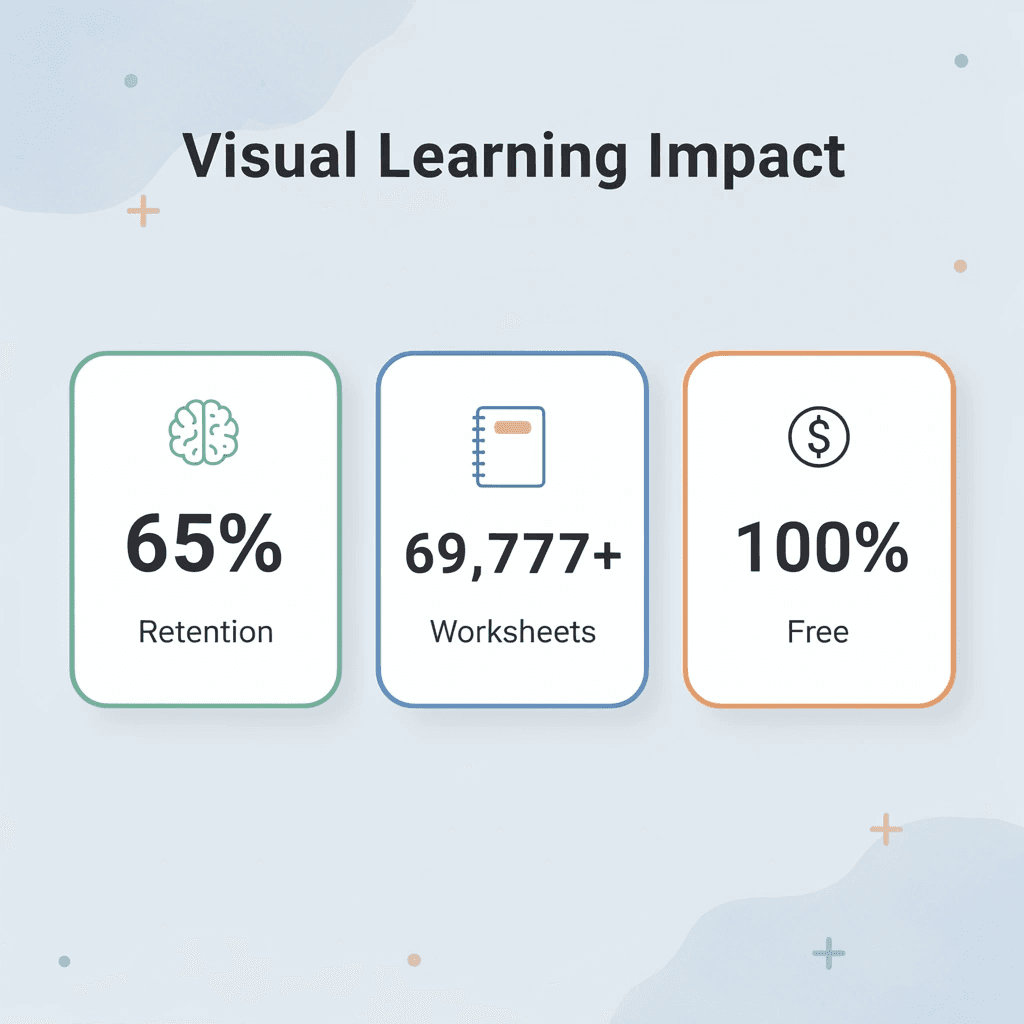
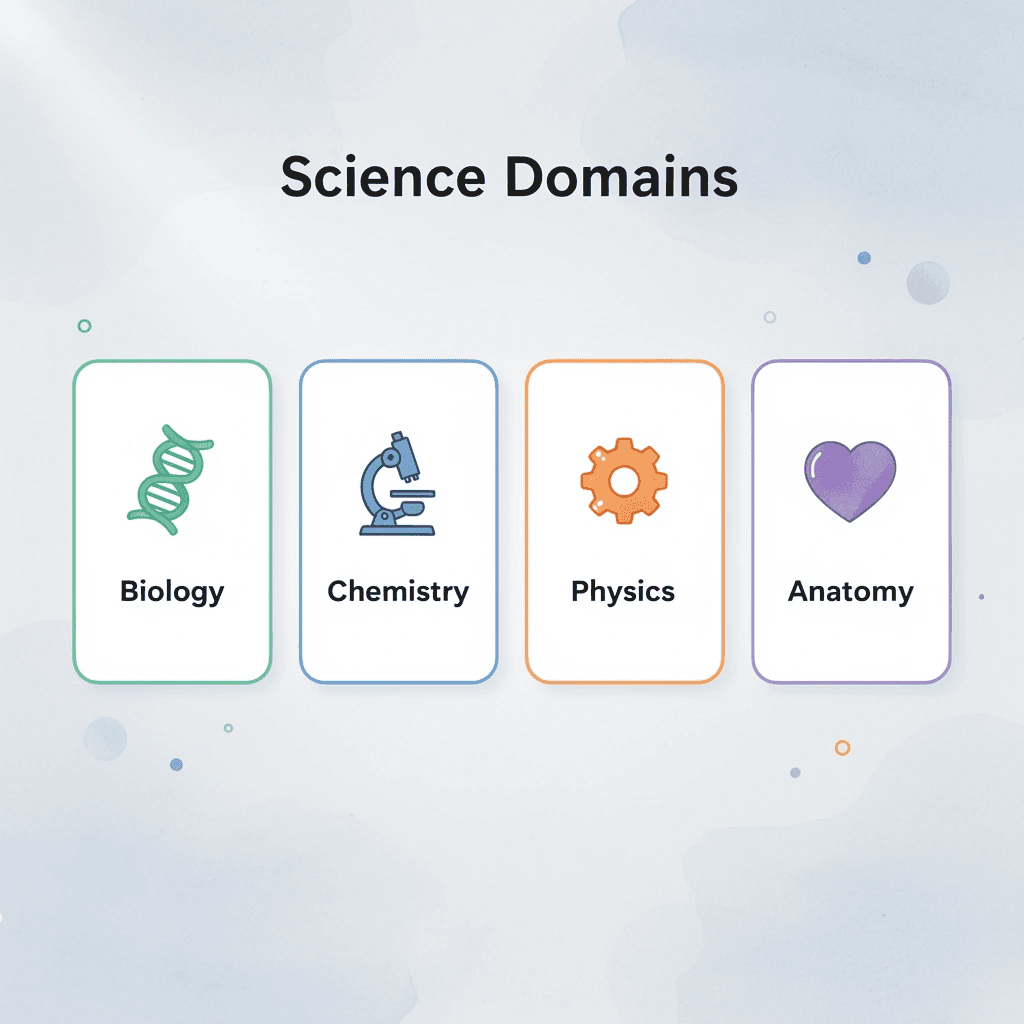
The collection spans every major science domain. Biology worksheets cover cellular structures, organ systems, plant anatomy, animal classifications, and ecosystem relationships. Chemistry resources include atomic structure diagrams, periodic table exercises, and molecular bonding illustrations. Physics materials show force diagrams, simple machine components, and energy transformation sequences. Earth science pages illustrate rock cycles, weather patterns, tectonic plate movements, and atmospheric layers.
Science Domain | Key Resources | Learning Focus |
|---|---|---|
Biology | Cellular structures, organ systems | Visual anatomy and classification |
Chemistry | Atomic diagrams, periodic table | Molecular understanding |
Physics | Force diagrams, simple machines | Energy and motion concepts |
Earth Science | Rock cycles, weather patterns | Natural processes |
Parents who create their own reinforcement materials spend hours searching for quality diagrams and checking scientific accuracy. Our comprehensive resources eliminate this burden by providing materials in formats ready for immediate use. Select the topic matching your current curriculum unit, download the PDF, and print as many copies as needed for review sessions, makeup work, or sibling instruction.
🎯 Key Point: The 69,777+ worksheets eliminate the need for parents to spend countless hours creating their own science reinforcement materials.
The visual nature of coloring-based worksheets serves students who struggle with text-heavy review methods. A child who can't explain photosynthesis verbally might successfully label a diagram showing sunlight entering leaves, chlorophyll capturing energy, and glucose molecules forming as output. Coloring while learning keeps hands busy and attention focused, particularly for kinesthetic learners.
Weekly review cycles work when you have materials that revisit previous topics without requiring the creation of new lessons. Students who label a heart diagram in September should label it again in October without referring to notes, revealing which parts they remember versus which they only temporarily memorized. This spaced repetition builds long-term retention, supporting advanced learning years later.
⚠️ Warning: Without proper reinforcement materials, students may only achieve temporary memorization rather than lasting comprehension of scientific concepts.
Science mastery requires the curriculum you already chose plus the reinforcement system that ensures concepts stick. Worksheets keep students engaged with material until understanding becomes permanent rather than fleeting.
Related Reading
- 5th Grade Homeschool Curriculum
- How To Homeschool In California
- Science Homeschool Curriculum
- Accredited Homeschool Curriculum
- Homeschool Reading Curriculum
- Michigan Homeschool Laws
- Alabama Homeschool Laws
- 3rd Grade Homeschool Curriculum
- California Homeschool Laws
- 2nd Grade Homeschool Curriculum
- Georgia Homeschool Requirements
- 4th Grade Homeschool Curriculum
- Homeschool Art Curriculum
- North Carolina Homeschool Laws
- Illinois Homeschool Laws